
The One Thing North Carolina Garden Ponds Need Before Winter Or The Fish Won’t Make It Through
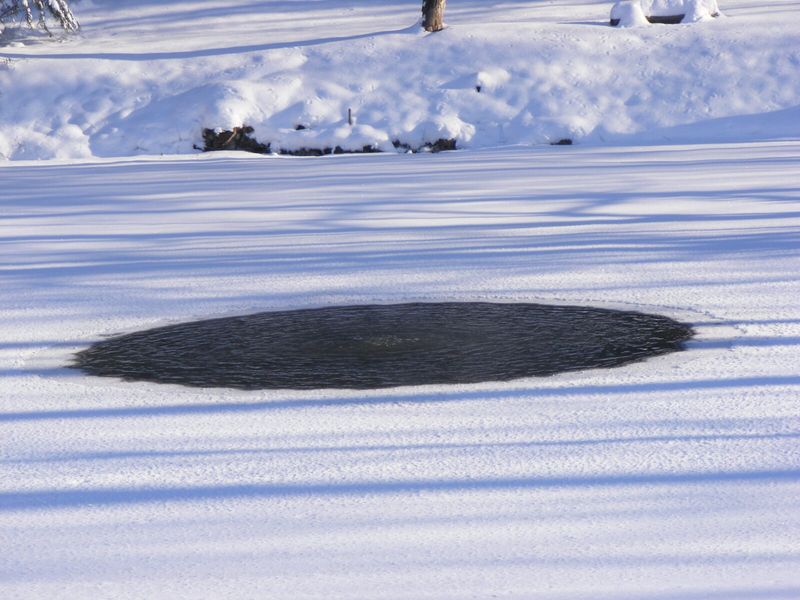
Every fall, North Carolina pond owners face a quiet threat that builds slowly under the surface of their backyard water. When ice and snow lock in for days at a stretch, oxygen levels can drop low enough to kill fish, frogs, and other aquatic life before anyone notices trouble.
The good news is that most winterkill is preventable, and knowing your pond’s specific risks puts you well ahead of the problem. Not every pond needs the same fix, but every pond owner benefits from checking in before sustained cold weather arrives.
Winterkill follows oxygen loss, not one cold night
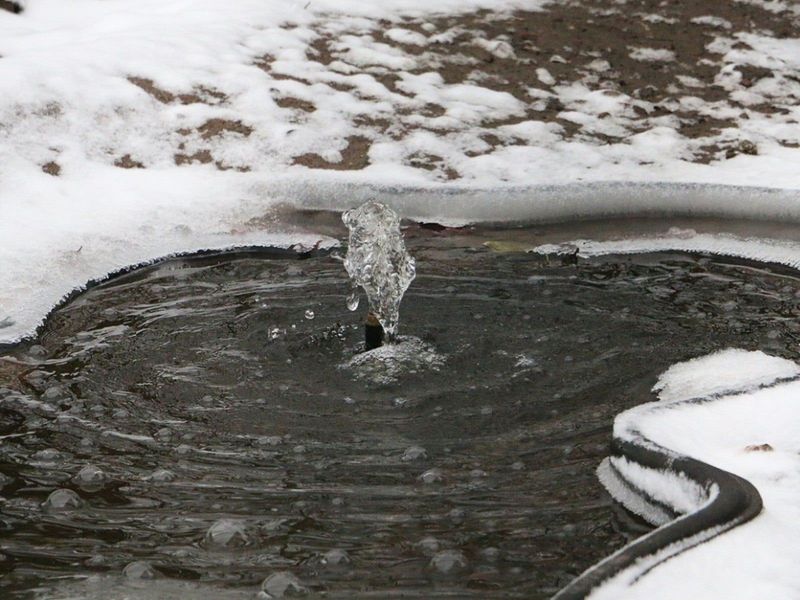
Oxygen depletion, not the cold itself, is what kills fish and other aquatic life in winter. When ice forms across a pond’s surface, it cuts off the direct exchange between water and air that fish depend on year-round.
Add a layer of snow on top of that ice, and you block the sunlight that submerged plants and algae need for photosynthesis, which is one of the main ways a pond replenishes its dissolved oxygen supply during daylight hours.
Meanwhile, the pond keeps consuming oxygen even in cold weather. Fish slow down but never fully stop breathing.
Decomposing leaves, dead aquatic plants, and other organic matter at the bottom continue breaking down, and that biological decay draws heavily on whatever oxygen remains in the water. Penn State Extension’s guidance on winterkill in ponds explains that fish, frogs, and other aquatic organisms can face serious danger when prolonged ice and snow cover cuts off both atmospheric exchange and light-driven oxygen production simultaneously.
Frogs and turtles that overwinter in the pond mud face the same oxygen crunch. They can absorb some oxygen through their skin, but a completely sealed, snow-covered pond can exhaust even that limited supply over a long cold spell.
Penn State’s pond ecology resource confirms that amphibians relying on cutaneous gas exchange are vulnerable when prolonged cover eliminates oxygen from the water column.
A single hard freeze overnight rarely creates those conditions on its own. The real danger accumulates over days or weeks of continuous cover, especially in shallow water with heavy organic loading.
Illinois Extension’s overview of farm pond fish kills and oxygen reinforces that winterkill is a slow-building oxygen crisis, not a one-night event. Understanding that distinction keeps pond owners from either panicking after one cold night or, worse, assuming a brief thaw has resolved the problem when sustained cold is still ahead.
Use local freeze history without treating it as a forecast
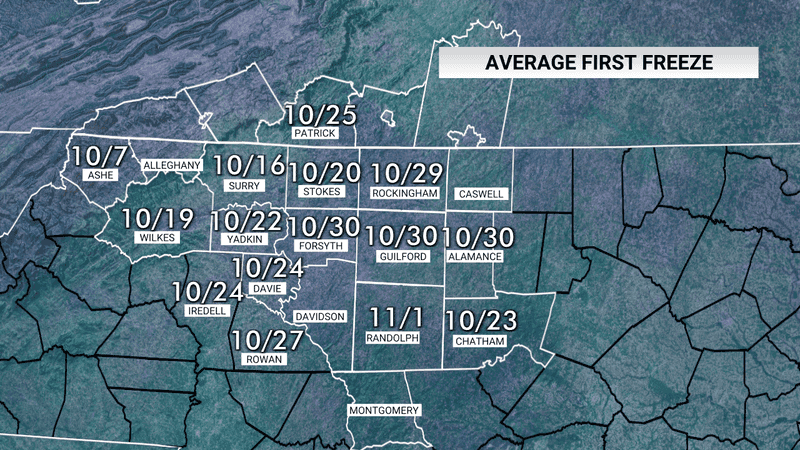
North Carolina does not freeze on a single statewide schedule. A mountain pond near Boone may see its first hard freeze weeks before a Coastal Plain pond near Wilmington even dips below 40 degrees Fahrenheit.
That regional spread matters when you are deciding how urgently to prep your equipment and clear debris before cold weather settles in.
The state’s climate office draws a useful distinction between a standard freeze and a hard freeze. A freeze is any reading at or below 32 degrees Fahrenheit, while a hard freeze, the threshold more commonly tied to serious plant and pond risk, is typically defined as 28 degrees Fahrenheit or below.
The NC State Climate Thresholds Tool lets you pull historical data on both thresholds for your specific area, so you can see how often your region actually hits sustained cold rather than guessing from a general sense of “it gets cold in November.”
For a deeper look at regional patterns, the NC State Freeze Date Explorer provides historical first-freeze timing across the state’s climate divisions, from the Blue Ridge down through the Piedmont and out to the Coastal Plain. Use it to understand your local baseline, not as a substitute for checking a current weather forecast when cold is actually approaching.
NC State’s fall freeze climatology notes show that the mountains can see hard-freeze conditions in October, while the Coastal Plain often stays above that threshold well into November or later. Treat the approach of your region’s typical first hard freeze as a reminder to complete your pond checklist, confirm equipment is ready, and reduce leaf accumulation.
That deadline is a practical preparation cue, not the moment when every pond becomes dangerous.
Assess the pond before choosing winter equipment
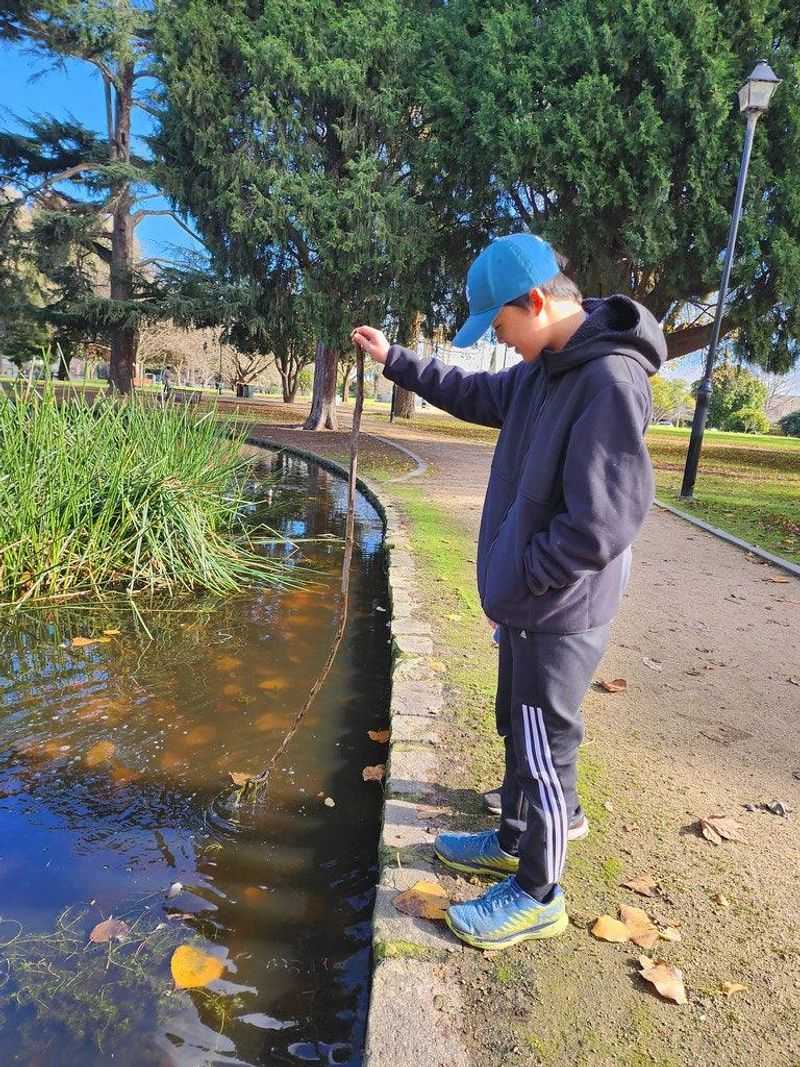
Before buying a de-icer or aerator, spend a few minutes honestly sizing up your pond’s actual risk. Two ponds sitting in the same North Carolina county can have completely different winterkill odds based on how they are built, stocked, and maintained.
A quick self-assessment can save you money and prevent the wrong intervention from making things worse.
Depth and volume are the starting point. Shallow ponds, roughly two feet or less throughout, can freeze much more completely than deeper ones and have less total water to dilute oxygen demands.
Penn State’s fish pond management guidance notes that depth figures cited across extension publications reflect different pond sizes, climates, and management goals rather than one universal backyard rule, so resist treating any single number as a guarantee.
Fish density matters just as much as depth. A heavily stocked koi pond in a shallow liner consumes far more oxygen per gallon than a lightly populated pond with a few native sunfish.
Thick aquatic vegetation adds to the oxygen demand as it dies back and decomposes through fall and winter. Piles of leaves on the bottom do the same.
Penn State’s winterkill resource lists shallow depth, heavy fish populations, dense vegetation, and accumulated organic matter as the primary risk factors for oxygen depletion under ice.
On the lower-risk side of the ledger, a deeper pond with light fish stocking, little organic debris, and either a natural inflow or a waterfall that stays open through mild winters may need little or no intervention. University of Nebraska Extension’s aeration decision guide reinforces that aeration is not necessary for every pond, and that ponds with adequate depth, low fish density, minimal decaying material, or flowing water often carry low winterkill risk.
Also factor in whether your pond has experienced winterkill before. A history of fish loss in a past cold winter is one of the clearest signals that your setup needs active management this season.
NC State Extension’s pond management guide supports a site-specific approach rather than a one-size prescription.
High-risk ponds benefit from an open exchange area
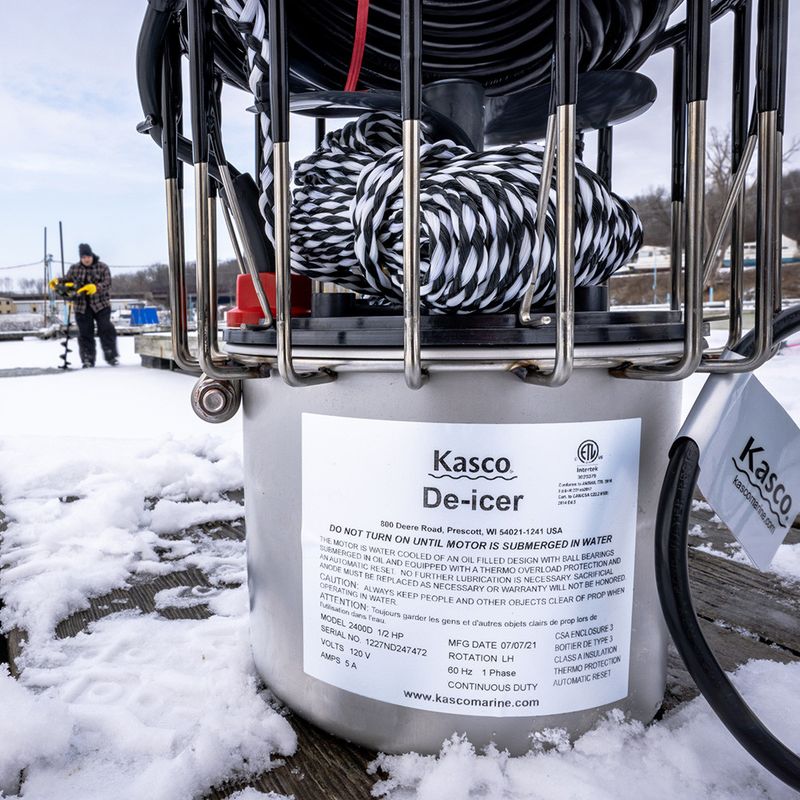
For ponds that check several risk boxes, the most practical step before prolonged ice forms is arranging a way to keep part of the surface open. An open patch allows atmospheric oxygen to diffuse into the water and lets carbon dioxide and other gases escape.
Without that exchange, oxygen levels can fall to dangerous levels over a long cold spell, regardless of how healthy the pond looked in October.
Two types of equipment serve that goal in different ways. A surface aerator or a diffuser repositioned to a shallow or near-surface location agitates the water, which adds oxygen directly and prevents ice from forming around it.
A pond de-icer, by contrast, is a heating element designed to maintain an ice-free opening. Penn State Extension recommends turning aeration on when ice begins forming and turning it off once the pond is ice-free again, rather than running equipment continuously through every mild stretch of winter.
A de-icer keeps a hole open in the ice so gases can exchange, but it does not itself agitate or oxygenate the water. Treating those two tools as interchangeable is a common and sometimes costly mistake.
If your pond’s primary problem is gas exchange being blocked by ice, a de-icer addresses that directly. If the pond also needs active oxygen addition because of heavy fish loading or significant organic debris, a surface aerator or shallow diffuser is the more appropriate choice, and the two can be used together in severe cases.
University of Nebraska Extension’s winter aeration overview makes clear that neither option guarantees survival in a pond that is severely overloaded, polluted, or too shallow to maintain a viable water column. The goal is targeted protection for ponds with meaningful risk, not a universal requirement.
Deeper, lightly stocked ponds that stay partly open or receive flowing water through winter may not need any equipment at all, and forcing aeration into a pond that does not need it can introduce its own complications. NC State Extension’s pond management guidance supports matching intervention to actual pond conditions rather than defaulting to the same setup for every backyard water feature.
Move aeration shallow for winter operation
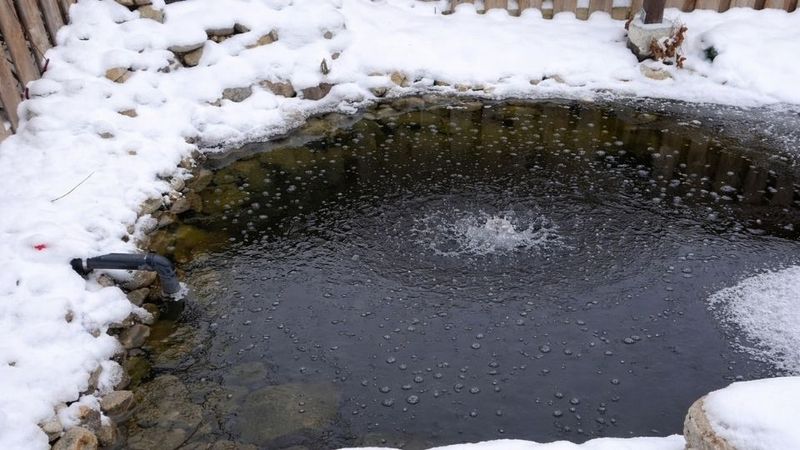
Running the same aeration setup year-round sounds convenient, but the position that works well in summer can create problems once ice forms. A bottom diffuser placed in its normal deep-water location during summer helps circulate the entire water column and prevents thermal stratification.
Under ice, that same aggressive mixing can pull oxygen-depleted water from the bottom upward, potentially worsening conditions rather than improving them.
Illinois Extension’s guidance on winter pond management specifically advises moving a bottom diffuser to a shallow position or near the surface during winter rather than leaving it in its deep-water summer location. The idea is to create localized agitation and maintain an open area without dramatically disrupting the entire water column or forcing cold, low-oxygen bottom water to the surface where fish may be holding.
Fountains and decorative aerators present a similar consideration. A fountain that looks beautiful in July may not be positioned or sized to meaningfully oxygenate a heavily stocked pond in January, and some units are not rated for cold-weather operation at all.
Clemson Cooperative Extension’s aeration and circulation guidance notes that equipment selection and placement both affect whether aeration actually improves pond oxygen levels or simply creates surface turbulence without reaching the fish.
University of Florida IFAS Extension and Oklahoma State University Extension’s urban pond management fact sheet both flag that poorly selected or positioned aeration equipment can mix layers in ways that make oxygen conditions worse, not better. The practical takeaway for North Carolina pond owners is to check your equipment’s winter rating, confirm the diffuser or aerator head is positioned shallow if you are operating under ice, and do not assume that any running device is doing the job.
If your equipment was installed by a pond professional, ask specifically about its recommended winter position before cold weather arrives. Ohio State Extension’s winter pond management notes similarly recommend suspending diffusers above the bottom rather than leaving them in their full-depth summer position through prolonged ice cover.
Remove the oxygen drain while preserving habitat
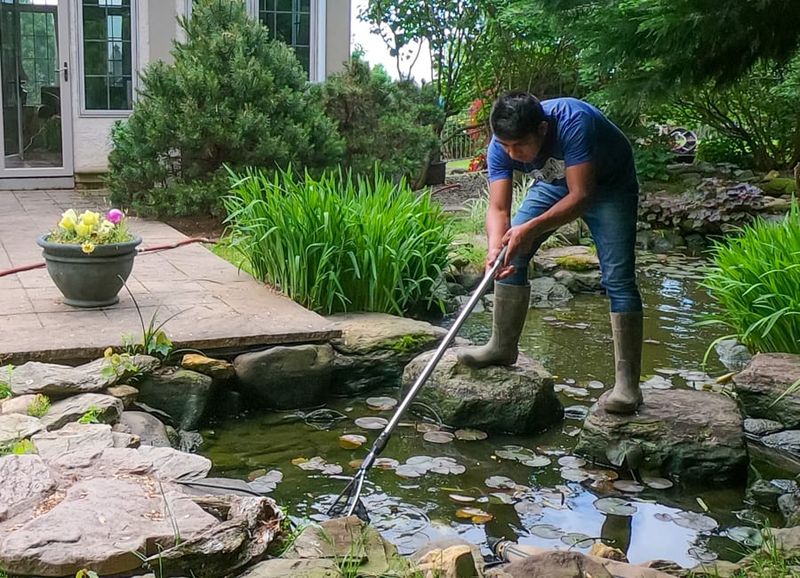
Fallen leaves are one of the most underestimated winterkill contributors in a backyard pond. As leaves decompose on the pond bottom, the biological process pulls oxygen from the water continuously, adding to the demand already created by fish and other aquatic life.
A pond that looks fine in October can develop a serious oxygen deficit by February if leaf accumulation goes unaddressed before ice forms.
Removing leaves and excessive dead vegetation from the pond surface and shallow areas before sustained cold is one of the most cost-effective steps a pond owner can take. Penn State Extension specifically identifies accumulated organic matter as a key driver of winter oxygen depletion, and University of Missouri Extension’s pond water quality guidance connects high biological oxygen demand from decomposing material to reduced dissolved oxygen levels throughout the water column.
That said, stripping a pond completely bare does more harm than good. Native marginal plants, submerged vegetation, and shoreline cover provide critical overwintering habitat for frogs, insects, and other wildlife that North Carolina pond stewards typically want to support.
NC State Extension’s reptile and amphibian guide and Penn State’s water for wildlife resource both support habitat-conscious management rather than total pond sterilization.
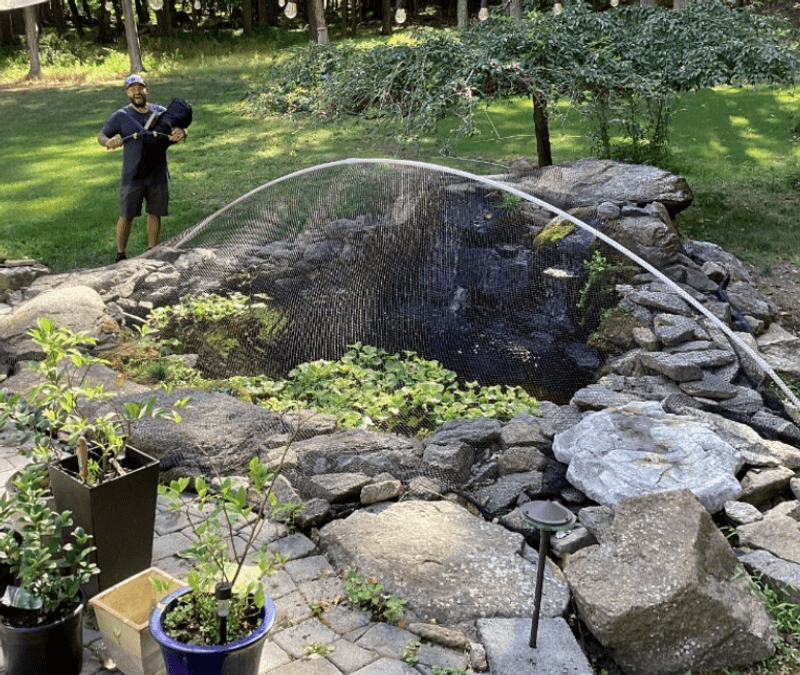
The practical target is reducing the organic load, not eliminating all plant life. Net out leaves that have blown in from surrounding trees, trim back dead emergent vegetation that will collapse into the water and decompose, and clear any thick mats of dying algae from shallow areas.
Leave native plants that provide structure, and keep shoreline cover that amphibians and small mammals depend on through winter. Debris reduction works best as part of a broader risk-management plan, not as a substitute for appropriate oxygen management in a pond that genuinely needs it.
Manage snow and ice without endangering people or wildlife
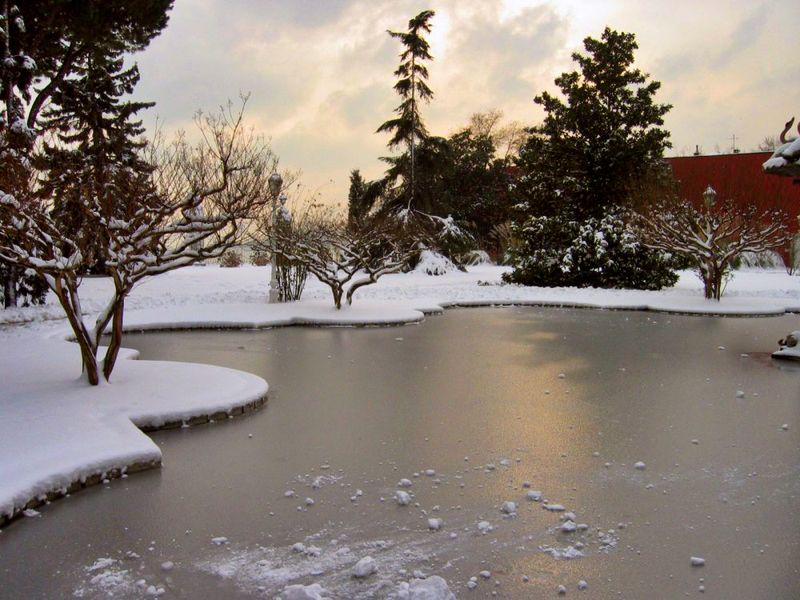
Snow on top of ice is a compounding problem. Ice alone reduces gas exchange between water and air, but clear ice still lets some sunlight through, which supports limited photosynthesis by submerged plants.
A thick layer of snow on that ice blocks both the light and whatever atmospheric exchange might have occurred through thin or porous ice, accelerating the oxygen decline below.
Extension guidance, including Penn State Extension’s winterkill recommendations and University of Missouri Extension’s pond management publication, sometimes suggests clearing roughly 25 to 30 percent of the ice surface of prolonged snow cover to restore light penetration. That is worth doing if you can do it safely, but safely means from the bank or a stable structure at the edge, using a long-handled tool, and never by walking onto ice of uncertain thickness.
Penn State’s farm pond safety guidance is explicit that pond ice poses serious fall hazards and should not be trusted to support body weight without confirmed thickness testing.
Do not strike or chop the ice to create an opening. The shockwave from chopping or hammering can injure or stun fish holding near the surface and creates a physical hazard for the person doing it.
A properly installed de-icer or aerator is the safe way to maintain an opening. Penn State’s pond fisheries management resource supports using equipment rather than manual ice breaking.
Fish and amphibians also need different management through this period. Some frogs overwinter buried in pond mud or tucked into shoreline debris rather than remaining suspended in open water.
NC State Extension notes that a water depth of at least 30 inches may help prevent a small wildlife pond from freezing solid and killing dormant animals, though that figure is a wildlife-pond guideline and not a universal minimum for all fish species or pond designs. Fish can eat frog eggs and tadpoles in spring, so Penn State recommends a fishless pond when attracting amphibians is the primary goal, a consideration worth keeping in mind when stocking decisions come up next season.
Penn State’s pond ecology overview reinforces that amphibians relying on cutaneous respiration face their own oxygen risks under complete ice and snow cover, separate from but often overlapping with the risks faced by fish.
Make a pond-specific plan before sustained cover arrives
A clear action sequence makes the difference between reactive panic during a cold snap and calm, effective preparation completed before ice forms. Start by pulling up your region’s historical freeze timing using the NC State Freeze Date Explorer so you know the typical window when sustained cold becomes a realistic possibility in your part of the state.
Then check a current local weather forecast regularly as that window approaches, since historical averages cannot tell you what this particular fall will bring.
Next, run through your pond’s risk factors honestly: depth, fish load, organic debris, vegetation, water movement, and any history of winterkill. Ponds that score high on multiple risk factors should have equipment confirmed, positioned correctly, and tested before prolonged ice and snow are in the forecast, not after.
Penn State Extension is consistent that preparation before ice forms is far more effective than emergency response once a pond is locked under cover. University of Nebraska Extension reminds owners that low-risk ponds may need nothing beyond leaf removal and a watchful eye through mild winters.
A brief overnight freeze is not a crisis. Rushing to intervene after one cold night, especially by chopping ice or pulling equipment out of storage without checking placement, can create more risk than it resolves.
High-risk ponds deserve attention before sustained cover arrives. The fish that make it through a North Carolina winter are usually the ones whose owners made a plan in October and followed through before the cold settled in for good.