
The One Thing North Carolina Spinach Needs When You Seed It This Fall Or The Leaves Turn Bitter
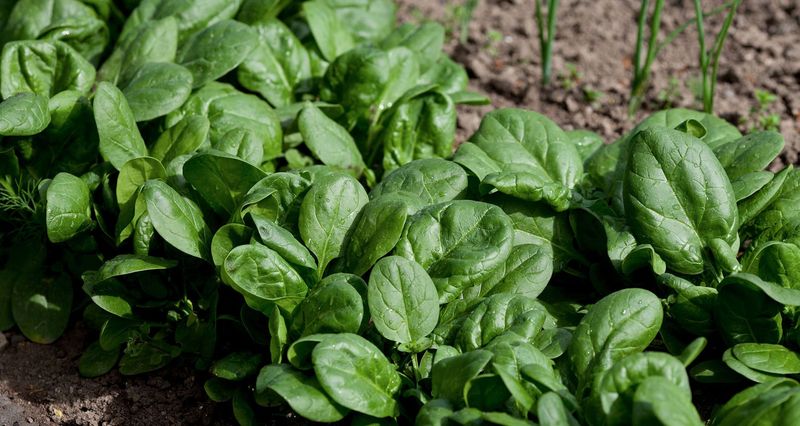
Spinach grown in North Carolina can be one of the most rewarding fall crops you raise, but the window for seeding it is narrower than most gardeners expect. Seed too late while summer heat still lingers, and young plants struggle before they ever get a real chance.
Get the timing right for your region, keep the seedbed moist, and you give yourself the best shot at tender, flavorful leaves well into the cooler months.
Seed spinach during the cooling fall window
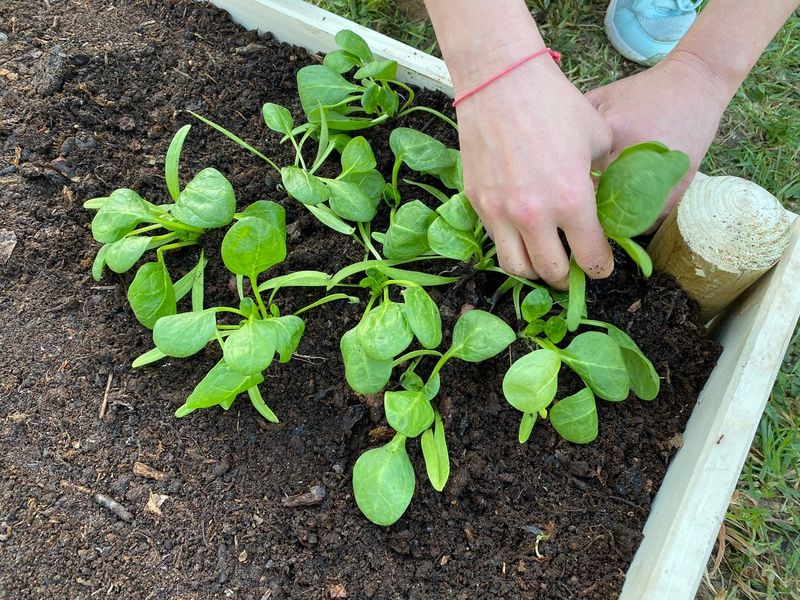
Regular spinach is a cold-hardy, cool-season annual, and that identity shapes everything about how you should approach fall planting in North Carolina. NC State Extension’s vegetable gardening handbook confirms that spinach belongs in the spring and fall garden here, and that well-established fall plants may tolerate cold temperatures and moderate freezes depending on local conditions and any frost protection you provide.
The crop is genuinely built for cool weather, which is exactly why the timing of your seed-to-soil moment matters so much.
The goal is to get seeds in the ground as summer heat begins to ease and day length starts to shorten, not after that window has already slipped by. Planting while the seasonal shift is happening gives seedlings time to germinate, put down roots, and build enough leaf mass to handle the cold that arrives later.
Utah State University Extension’s spinach guide notes that spinach thrives in cool conditions and that timing into that seasonal transition is central to a successful harvest.
Waiting until the last summer heat wave has fully passed often means waiting too long. By then, the cooling window may be too short for plants to establish before cold temperatures slow growth to a crawl.
University of Minnesota Extension’s guide to growing spinach reinforces that spinach needs adequate time in favorable conditions to develop properly before harsh weather sets in.
Timing into the fall window reduces risk, but it does not guarantee sweet leaves or create one statewide deadline that works for every North Carolina garden. Region, cultivar, local frost date, and soil conditions all shape the outcome.
Think of the cooling window as your main risk-management tool, one that stacks the odds in your favor without making any promises on its own.
Protect flavor from heat, stress, and bolting
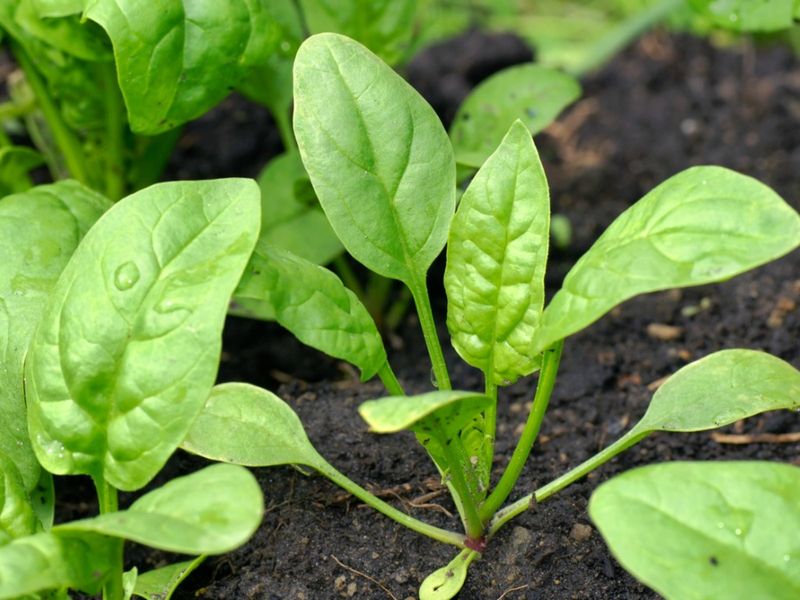
Bitter spinach rarely has a single cause, and understanding that fact changes how you approach the whole fall season. Heat, long day length, drought or other water stress, plant age, and flowering can each push spinach toward poorer flavor, and these factors often work together rather than in isolation.
Planting at the wrong point in the seasonal window can leave seedlings exposed to lingering summer conditions or give them too little time to establish before cold slows growth, but late seeding by itself is not the whole story.
University of Minnesota Extension’s guidance on cool-season crop problems explains that heat, drought stress, and plant age all contribute to bitterness in leafy greens. A plant that dries out repeatedly, even one seeded at a reasonable time, can develop off flavors well before it ever bolts.
Keeping stress low across the entire growing period matters, not just on planting day.
Bolting, the shift from leafy growth to flower and seed production, is the most visible sign that a spinach plant’s quality window is closing. USU Extension’s physiological problems guide for leafy greens notes that bolting is triggered by a combination of signals, with long day length playing a major role and heat and drought accelerating the transition.
A 2022 study on bolting genetics in spinach confirms that day length is a key driver, which is why fall planting into shortening days helps reduce the bolting pressure that commonly affects spring crops. No single temperature triggers bolting universally; the interaction of light, heat, water availability, cultivar, and plant age all play a role.
Fall’s shortening days are genuinely helpful here. Seeding as the days grow shorter puts plants through most of their growth cycle under conditions that are less likely to push them toward flowering prematurely.
That said, an unusual warm spell, a dry stretch, or a cultivar poorly suited to your region can still compromise flavor even in a well-timed planting.
One important distinction: regular spinach is not the same plant as Malabar spinach or New Zealand spinach. Those are heat-tolerant alternatives with different growth habits and different relationships to day length and temperature.
Guidance that applies to those plants does not carry over to the cool-season spinach you are growing this fall.
Match the planting window to your North Carolina region
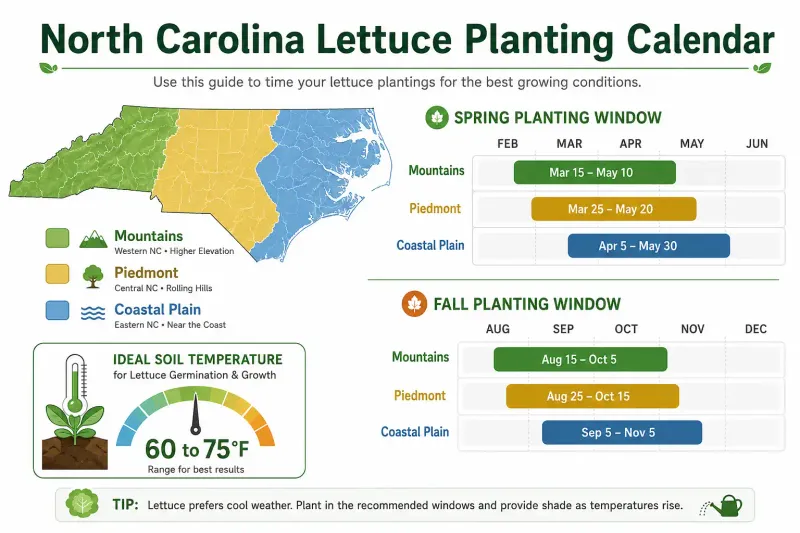
North Carolina spans enough climate variation that a single statewide planting date for spinach would be misleading. The mountains, Piedmont, and Coastal Plain all experience the fall cooling window at different times, and treating them as identical sets gardeners up for a mistimed planting.
NC State’s vegetable gardening handbook identifies August as the main fall-garden planting period for the Piedmont, while noting that shorter-season leafy greens can often be seeded a bit later, around September 1. Those dates are starting points, not fixed rules, and your local frost date along with your chosen cultivar’s days to maturity should drive the final decision.
Mountain gardeners in western North Carolina typically need to plant roughly 10 to 20 days earlier than Piedmont growers because the growing season closes sooner at higher elevations. Coastal Plain gardeners generally have a bit more flexibility, with the window extending roughly 7 to 14 days later than Piedmont timing.
The practical method for any region is to count backward from your expected first fall frost date. If your spinach variety needs approximately 50 to 60 days from seed to harvest, add a week or two as a buffer for slower germination in warm soil or an early cold snap, then count back from frost to find your target seeding date.
NC State’s Central North Carolina Planting Calendar and the Eastern North Carolina Planting Calendar list spinach as a fall-seeded crop with that approximate harvest range, and both are worth bookmarking as planning references.
Treat the 50-to-60-day estimate as a planning aid rather than a scheduled delivery date. Fall weather in North Carolina can vary considerably from year to year, and germination slows when soil stays warm longer than expected.
Building a small buffer into your count gives the planting a better chance of reaching harvestable size before hard freezes arrive. Check your county’s average frost dates through NC State’s local extension resources and adjust for your specific elevation and microclimate when you can.
Keep the seedbed evenly moist as seedlings establish
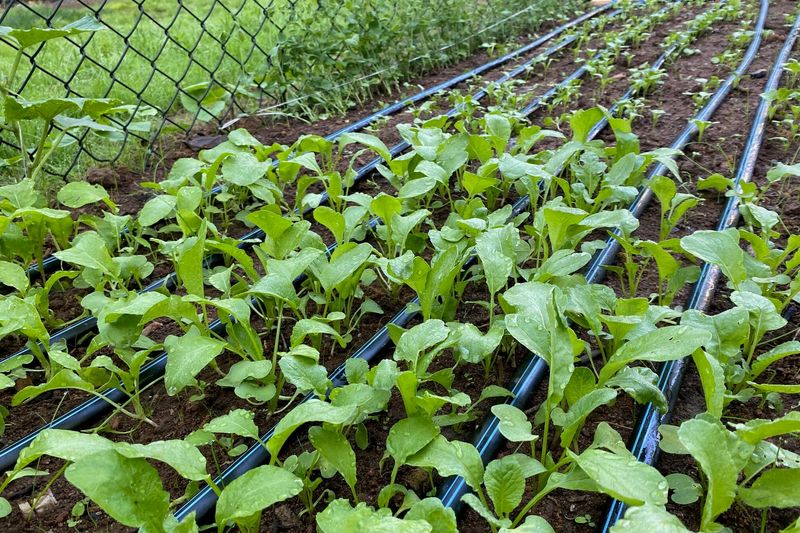
Regional timing sets up the opportunity, but moisture management is what allows that opportunity to pay off. Spinach seeds need consistent soil moisture to germinate reliably, and young seedlings that dry out even briefly can stall or develop stress that affects flavor later in the season.
UMN Extension recommends supplying about 1 inch of water per week when rainfall falls short, with more frequent watering in sandy soils that drain quickly. North Carolina’s Coastal Plain, with its lighter sandy soils, often needs closer attention during dry stretches than heavier Piedmont clay.
NC State specifically recommends slow, direct irrigation methods for vegetable beds, with soaker hoses being a practical choice for spinach rows. Overhead watering works but can leave the soil surface prone to crusting and may promote fungal issues in humid fall weather.
A soaker hose or drip line delivers water where roots can reach it without soaking the leaves, which is a small advantage worth taking when conditions are already warm at planting time.
Mulching lightly around seedlings after they emerge helps hold moisture in the top inch of soil, where spinach roots are concentrated early on. It also moderates soil surface temperature during the tail end of warm fall days, which can otherwise stress young plants even when air temperatures seem reasonable.
NC State notes that fall seedbeds may need protection from drying and surface heat, and a thin layer of straw or shredded leaves addresses both concerns at once.
Consistent moisture reduces stress and supports steady establishment, but it cannot override other problems. If heat and long days persist well into your planting window, or if you have chosen a cultivar poorly suited to fall conditions, regular watering alone will not protect flavor.
Think of moisture management as the follow-through that makes good timing count, rather than a standalone fix for any single risk factor.
Sow shallowly and thin plants for steady growth
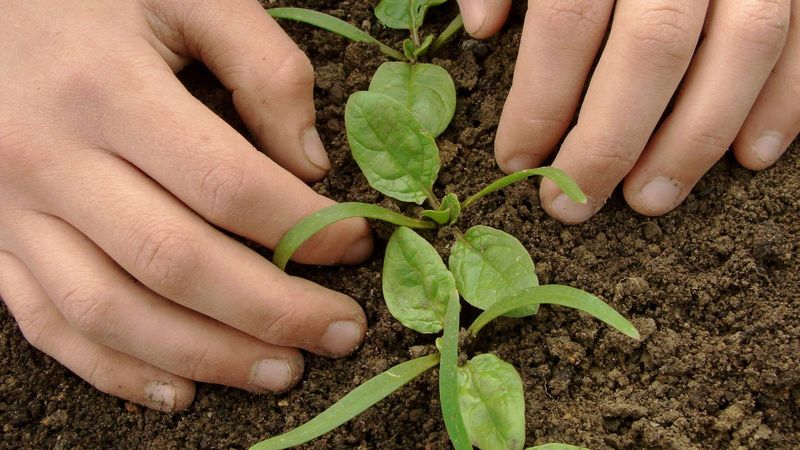
Once your timing and moisture plan are in place, the physical setup of the bed makes a real difference in how well plants develop. Sowing depth is the first detail to get right.
NC State’s cool-season vegetable guidance gives approximately one-half inch as a standard home-garden sowing depth for spinach, while commercial field production guides suggest slightly deeper placement around 0.8 to 1 inch. Your seed packet’s instructions should take precedence over any general figure because seed size, soil type, and cultivar can all shift the ideal depth.
Pressing seeds into soil that is too shallow risks drying out before germination; too deep and emergence slows in still-warm fall soil.
NC State’s vegetable handbook emphasizes thinning as an essential step that many home gardeners skip. Crowded seedlings compete for water, nutrients, and light, and reduced airflow between dense plants raises the risk of fungal problems during humid fall weather.
UMN Extension supports thinning to improve plant health and productivity across the season.
For standard full-leaf harvests, aim for about 6 inches between plants after thinning. NC State’s Central planting calendar and the Eastern calendar both list roughly 6 inches as the standard spacing for spinach.
If you are aiming for baby-leaf harvests, you can sow more densely and begin cutting earlier, before plants reach the size where crowding becomes a problem.
Cultivar selection is worth mentioning here as well. Varieties labeled slow-bolting, long-standing, or fall-adapted can extend your harvest window by resisting the shift to flowering a bit longer than standard types.
USU Extension notes that these varieties offer real advantages in timing flexibility, and UMN Extension’s cool-season crop guide echoes that cultivar choice plays a role in how long plants stay productive. No variety, however, is immune to the combined pressure of heat, drought, long days, and advancing plant age, so treat slow-bolting labels as a helpful feature rather than a guarantee.
Harvest while leaves remain tender and vegetative
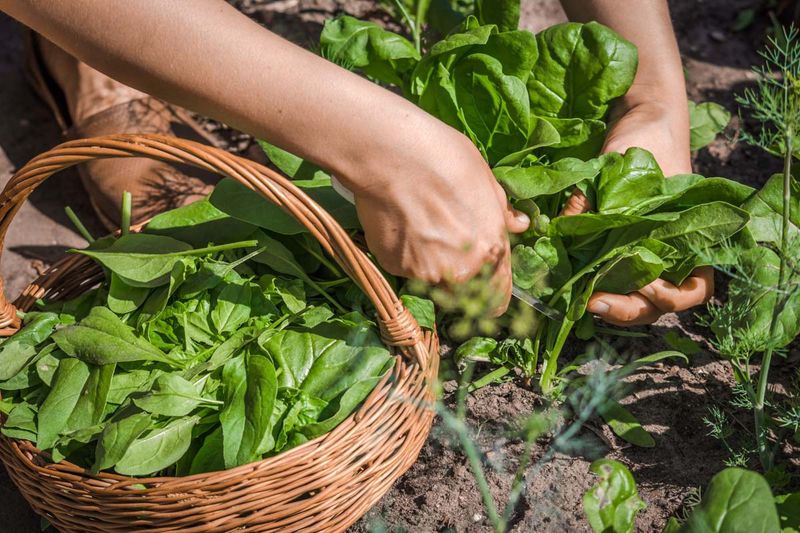
All the timing and moisture work you have done pays off at harvest, but only if you pick while the plant is still in its vegetative stage. Outer leaves can be removed one at a time while the center of the plant keeps producing, which stretches the harvest across several weeks.
Alternatively, you can cut the whole plant at the base once it reaches a good size. USU Extension’s spinach guide recommends harvesting before the plant shifts energy toward flowering, when leaves are at their most tender and flavorful.
Harvesting during the cooler part of the day, early morning or late afternoon, and refrigerating promptly helps preserve quality. UMN Extension notes that quick cooling after harvest slows the breakdown of texture and flavor in leafy greens.
Spinach left sitting in warm air after picking loses quality faster than most gardeners expect, so getting leaves into a sealed bag in the refrigerator the same day you pick makes a noticeable difference.
Bolting, when the plant sends up a central flower stalk, signals that the harvest window is closing and that leaf flavor is likely declining. UMN Extension’s cool-season crop resource describes bolted spinach as often bitter or unpalatable, but bolting alone does not make the plant toxic or unsafe.
If leaves from a bolting plant look healthy and uncontaminated, a taste-test is a reasonable way to judge whether they are still worth eating. Discard any leaves that show signs of disease, spoilage, or chemical contamination regardless of whether the plant has bolted.
NC State’s cool-season vegetable guidance supports harvesting outer leaves regularly to keep the plant productive as long as conditions remain favorable.
Watching for the first signs of a flower stalk and harvesting the whole plant at that point is often the smartest move. You lose nothing by acting early, and you preserve the quality you worked to build all season.
Use a regional plan instead of a magic deadline
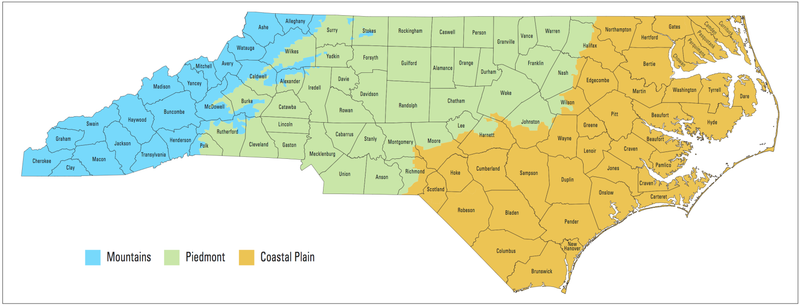
Pulling the whole approach together comes down to a short sequence of decisions, each one grounded in your specific North Carolina region. Start by identifying your location, Piedmont, Coastal Plain, or mountains, and look up your expected first fall frost date through NC State’s local extension resources.
Choose a spinach cultivar, check its days-to-maturity on the seed packet, and count backward from frost with a small buffer for slower germination. That calculation gives you a realistic seeding target for your garden, not a statewide deadline borrowed from somewhere else.
From there, prepare a firm, evenly moist seedbed, sow at the depth your seed packet recommends, and keep the soil consistently moist through germination and early growth. Thin seedlings to roughly 6 inches apart once they are established, and begin harvesting outer leaves while the plant stays vegetative.
NC State’s vegetable gardening handbook and UMN Extension’s spinach guide both support this sequence as the foundation of a productive fall planting.
Timing is the primary task, and moisture management along with timely harvesting are the follow-through steps that help protect the flavor you are aiming for. None of them, individually or together, guarantee that every leaf will stay sweet, but working through each step in the right order gives your North Carolina fall spinach its best realistic chance.