
Steady Moisture Is What North Carolina Fall Cabbage Needs When You Transplant – Or The Heads May Never Firm Up
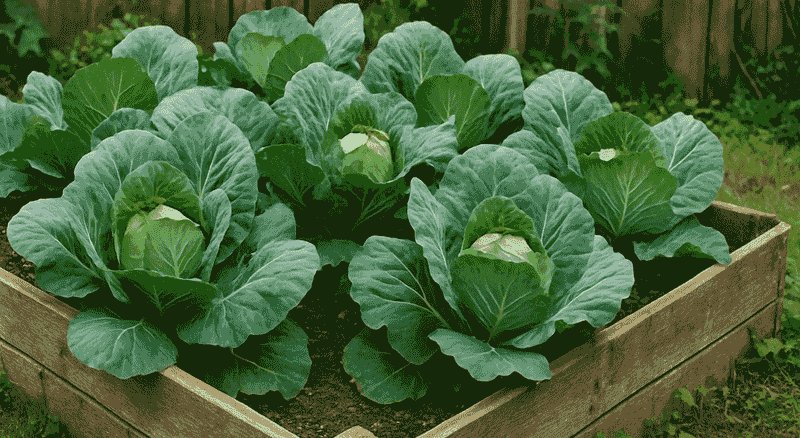
Fall cabbage is one of the most rewarding crops a North Carolina gardener can grow, but it can also be one of the most frustrating when heads come in loose, small, or not at all. Steady soil moisture starting the day you set transplants out is a high-priority requirement that protects your crop through the toughest part of establishment.
Watering alone cannot guarantee firm heads, though, because timing, cultivar choice, spacing, fertility, and pest control all play a role. Get the moisture right from the start, then manage the rest, and your fall cabbage has a real chance.
Thoroughly water the transplant to protect establishment
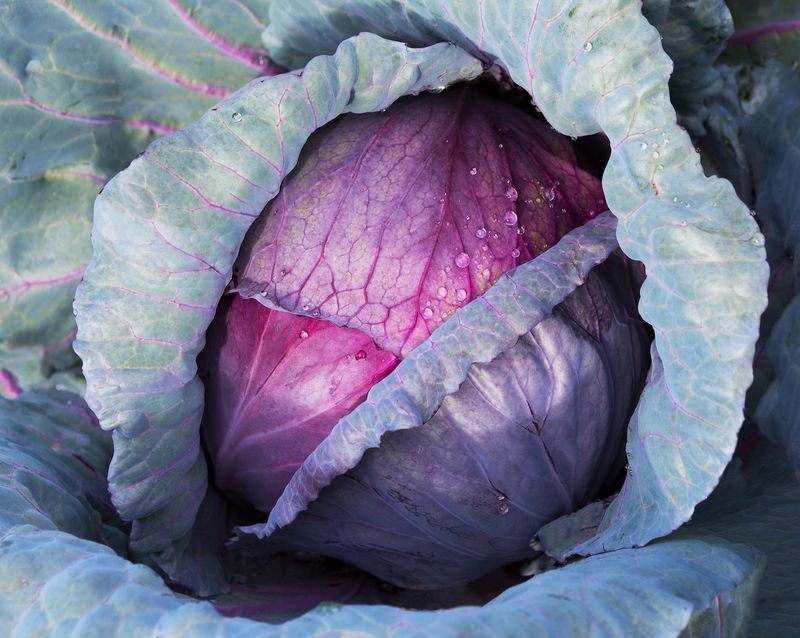
Watering each cabbage transplant thoroughly at planting is a foundational step, not a standalone fix. Pouring enough water around each plant so the soil settles firmly against the root ball closes air pockets and gives roots direct contact with moist soil from the first moment.
Without that initial saturation, roots can hang in dry gaps and begin stressing before they ever get a chance to spread.
Cabbage is shallow-rooted, and fall crops in North Carolina are typically transplanted during August heat, when the sun is still strong and the air is warm. UConn Extension’s guidance on vegetable crops in drought and heat identifies moisture stress during transplanting and establishment as a serious threat to crop quality and growth.
Young plants moving from a shaded greenhouse or seed tray into full sun and warm soil have almost no buffer against that stress if the root zone dries out quickly.
The UGA Cooperative Extension publication on commercial cabbage and leafy greens production specifically warns that young or bare-rooted transplants exposed to drying or severe stress after planting are more likely to bolt or form poor heads. That risk is real even in a backyard setting, and it is why the transplant watering step matters so much in the first place.
Still, thorough transplant watering cannot compensate for plants set out at the wrong time of year, transplants that were never properly hardened off, a root ball planted too shallowly or left partially exposed above the soil line, crowded spacing, a nutrient-depleted bed, active pest pressure, or disease in the soil. NC State Extension’s vegetable gardening handbook emphasizes that successful fall cabbage depends on the full package of correct timing, healthy plants, and good growing conditions.
Watering at transplanting is where that package starts, not where it ends.
Manage soil moisture instead of following a daily schedule
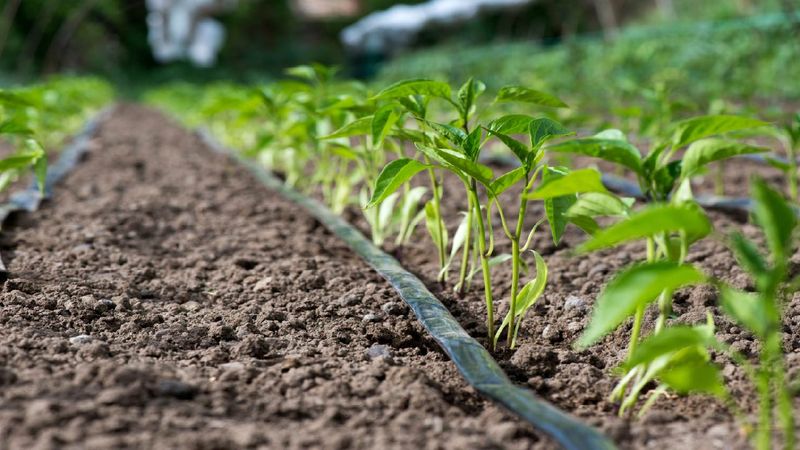
After that first thorough watering, the job shifts from a single event to an ongoing habit. Checking the root zone every day or two and keeping the soil moist but not muddy is more reliable than watering on a fixed calendar, because what the plant actually needs changes with rainfall, temperature, soil texture, mulch cover, and how large the plant has grown.
Sandy soils common to the Coastal Plain drain quickly and may need water more often than the heavier clay soils found across much of the Piedmont. A layer of straw or shredded leaf mulch over the root zone can slow evaporation and help the soil hold moisture longer between waterings, which is especially useful during hot late-summer weeks.
Mulch is a helpful tool, but it cannot replace checking the soil itself, and it will not correct problems caused by poor timing or damaged roots.
University of Minnesota Extension’s irrigation guidance for vegetables identifies head development as a critical irrigation period for cabbage and cautions against allowing the soil to dry out between waterings. A general benchmark from commercial production is roughly 1 inch of water per week, with sandy soils sometimes requiring up to 2 inches during hot, dry stretches.
That number is a starting point, not a prescription, because local rain, your specific soil, and plant size all shift the real requirement.
Repeated wilting followed by heavy soaking is the pattern to avoid. Each time a young cabbage plant wilts and then recovers, it experiences a growth check that can affect the quality and structure of the developing head.
Oklahoma State’s cole crop production fact sheet notes that waterlogged soil carries its own risks, including root disease and nutrient loss, so the target is steady and consistent moisture rather than constant saturation. Push a finger an inch or two into the soil near the root zone.
If it feels dry at that depth, water thoroughly. If it still feels moist, wait and check again tomorrow.
Protect moisture during head formation without chasing oversized heads
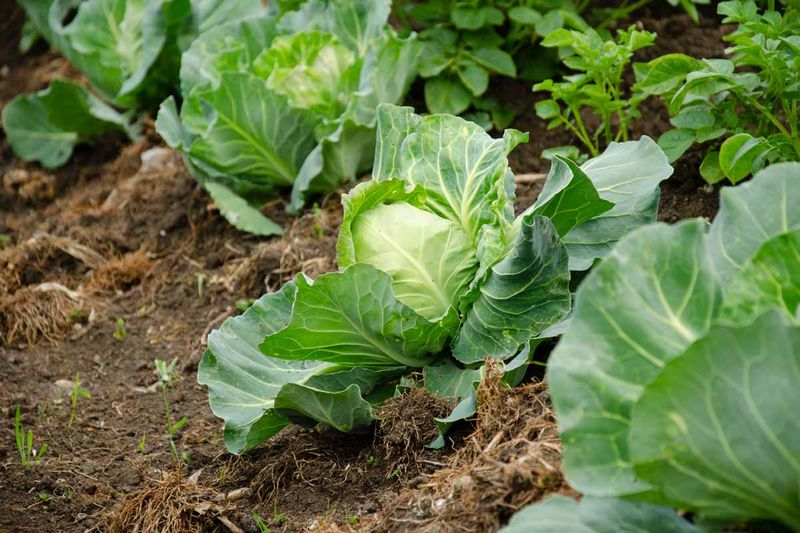
Head formation is the second critical window when moisture management really counts. Once the inner leaves begin curling inward to form the head, the plant is doing its most concentrated work, and repeated moisture stress during this period can interfere with that process in ways that no amount of later watering can fully undo.
The goal is to minimize those stress cycles, not to chase the largest possible head size.
Steady, non-stressed growth supports head development, but moisture alone cannot determine how large or dense a head becomes. UGA’s cabbage production bulletin notes that moisture deficits during late development and head formation cause serious yield reductions.
At the same time, Illinois Extension’s cabbage guide points out that a small but firm head can result from close spacing, an early-maturing cultivar, a late planting date, or insufficient time before cold weather stops growth. Adequate water does not override those factors.
A loose or puffy head, a head that never fully closes, and a head that simply never forms are three separate problems with different causes. Heat stress, uneven rapid growth, excess nitrogen, and certain cultivars all contribute to loose texture.
A head that fails to form at all often traces back to crowding, growing-point damage from insects, severe nutrient imbalance, or disease. A small but firm head may simply reflect a plant that ran out of warm growing days before it could bulk up.
Watering through head formation protects the crop’s potential, but that potential was largely set by your cultivar, planting date, spacing, and soil health before the first head leaf ever curled.
Continue irrigating as needed to prevent wilting while heads are developing. UMN Extension confirms that head development is cabbage’s critical irrigation period and that allowing the soil to dry out during this stage can reduce both quality and yield.
Keep the root zone consistently moist and check it regularly, especially during any dry spell that follows a period of rain.
Match the fall planting window to your North Carolina region
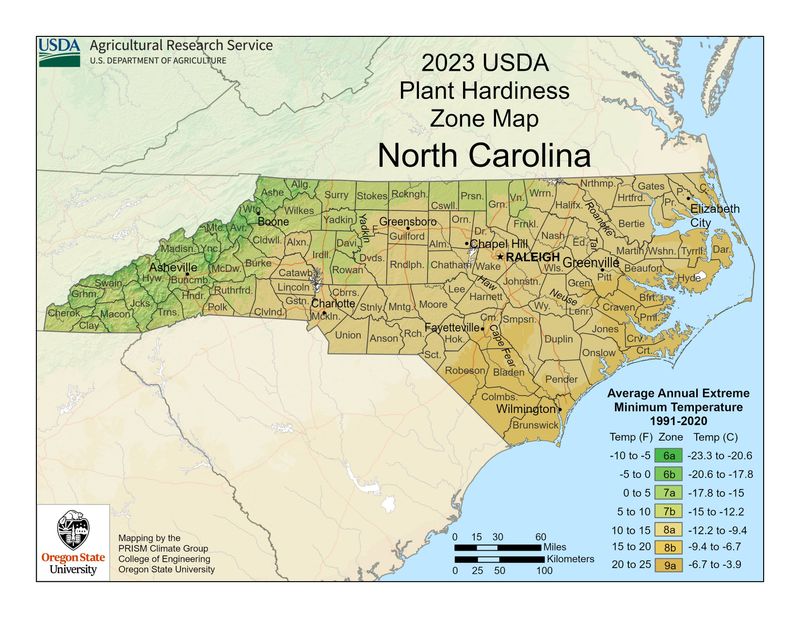
This article was updated in August 2025. Whether your garden falls within the recommended fall cabbage transplanting window depends on your specific location in North Carolina, your chosen cultivar’s days-to-maturity, and your local frost date.
There is no single statewide planting date that applies equally to Wilmington, Raleigh, Asheville, and Boone.
NC State Extension’s vegetable gardening handbook describes August as the primary fall-garden transplanting period for much of the state and recommends counting backward from both the cultivar’s maturity date and your expected first frost. The Piedmont serves as a rough middle reference point, with western North Carolina mountain areas generally running 10 to 20 days earlier and the Coastal Plain running 7 to 14 days later.
High-elevation areas in the far western part of the state may have a limited or unsuitable window for some fall cabbage schedules depending on cultivar choice. The Southeastern US Vegetable Crop Handbook lists fall cabbage transplanting dates of approximately August 1 through September 15 for eastern North Carolina as a general reference.
Fall cabbage is intentionally planted while the weather is still warm so plants have enough time to develop a full set of leaves before cooler temperatures slow growth. The plant needs that leaf canopy to support head formation.
Waiting until the weather feels cool before transplanting can leave the crop short of growing time before frost, which is one of the reasons firm, well-developed heads never materialize regardless of how well you water.
Transplant quality matters as much as timing. NC State recommends stocky, compact transplants with well-developed root systems that have been gradually hardened off before going into the ground.
Research on cabbage plug seedlings found that covering the root ball with soil at planting improved survival, root development, growth rate, head weight, and head-size uniformity compared with leaving the root ball partially exposed above the soil line. Set each transplant so the root ball is fully covered and the plant sits at or slightly below the surrounding soil level, then water immediately and thoroughly.
Give plants enough room and balanced nutrition
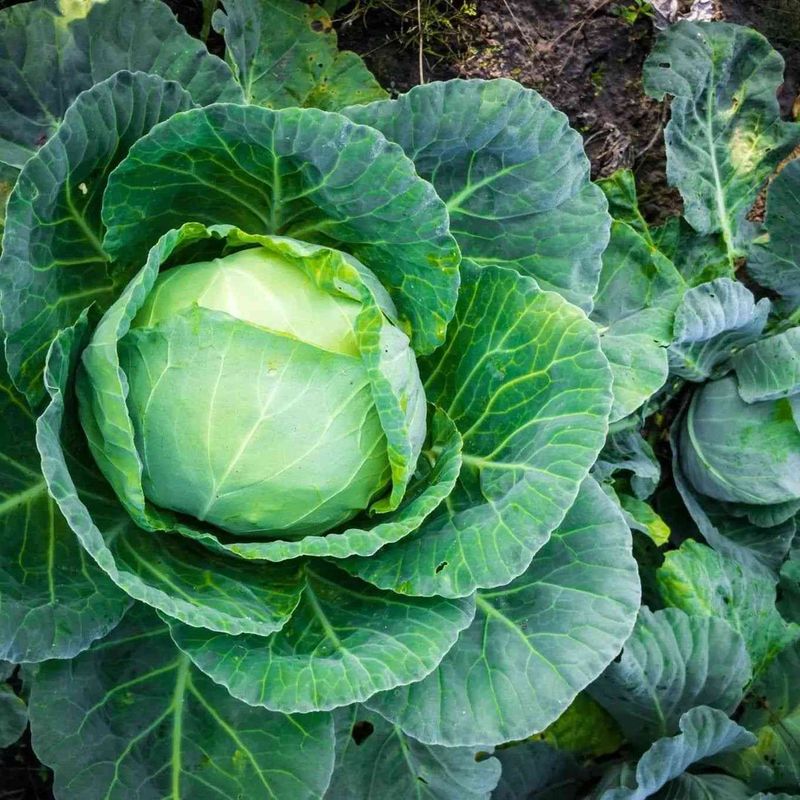
Spacing cabbage too close together is one of the quieter reasons heads come in small or loose. Crowded plants compete for water, light, and nutrients, and that competition limits how large and dense each head can become.
Rather than applying one universal number, follow the spacing recommendation on your specific cultivar’s seed packet or plant tag, since compact varieties and standard large-head types have genuinely different requirements. As a general reference, NC State Extension’s vegetable gardening handbook and the Southeastern handbook both suggest ranges that typically fall between 12 and 24 inches between plants depending on cultivar and intended head size.
Nutrition supports the rapid, continuous growth that fall cabbage needs, but fertilizer is not a substitute for adequate irrigation and cannot make up for a poorly timed planting. A soil test is the right starting point.
NC State’s 4R nutrient stewardship guidance for vegetable production recommends applying nutrients at the right rate, from the right source, at the right time, and in the right place, based on actual soil test results rather than routine applications. The 2025 North Carolina Agricultural Chemicals Manual supports soil-test-based nutrient management and cautions against adding amendments without documented need.
Cabbage may benefit from a nitrogen side-dress application around the midpoint of its maturity cycle to sustain active growth, but the timing and rate should follow soil-test recommendations and crop-specific guidance rather than a general habit. Excessive or late nitrogen can produce loose, poorly textured heads, contribute to tipburn, or cause heads to crack or burst before harvest.
Do not apply borax, Epsom salt, lime, or other amendments without a soil test confirming a specific deficiency or pH problem. Those products can injure plants, create nutrient imbalances, or create water-quality issues when applied without evidence of need.
UGA’s cabbage production bulletin makes clear that starter fertilizer at transplanting does not replace adequate irrigation. Fertility and water work together, and neither one substitutes for the other.
Diagnose the head problem before adding more water
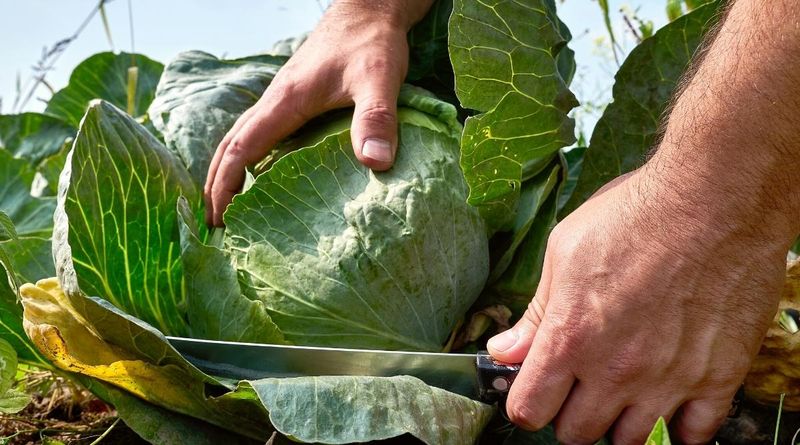
Not every cabbage problem traces back to drought, and reaching for the hose before diagnosing the actual issue can make some problems worse. Loose or puffy heads, complete failure to form a head, splitting, and bolting are four distinct outcomes with different causes, and they call for different responses.
Loose or puffy heads often result from heat stress, rapid uneven growth, certain cultivar characteristics, or excess nitrogen late in the season. A head that never forms at all can follow crowding, injury to the growing point from insect feeding, severe nutrient imbalance, or disease.
Splitting happens most often after heads have already reached maturity and then take up a sudden surge of water, either from heavy rain or overwatering, not from drought. Bolting, or the plant sending up a flower stalk before forming a head, can follow temperature stress, cold exposure of older transplants, or a prolonged interruption of vegetative growth.
Oklahoma State’s cole crop production fact sheet addresses these overlapping failure modes and their different causes.
Fall pest pressure in North Carolina deserves its own attention. Imported cabbageworms, diamondback moths, cabbage loopers, and harlequin bugs are among the insects that can damage fall brassicas, and some chewing pests are particularly active in late summer and early fall.
NC State’s guide to crucifer pests covers identification and management options for the region. Floating row covers can physically exclude many pests when installed at transplanting.
Bacillus thuringiensis (Bt) products target susceptible caterpillars, but any pesticide must be used strictly according to its current North Carolina label. For current rates, application timing, and preharvest intervals, consult the NC State Extension IPM handbook.
Clubroot is a soilborne disease that causes swollen, distorted roots and stunted above-ground growth. Plants affected by clubroot will not respond to irrigation because the root system cannot function properly regardless of how much water is available.
NC State’s clubroot of brassicas publication recommends using clean transplants from reputable sources, maintaining good drainage, practicing sanitation with tools and boots, and rotating brassica crops away from any infested bed for four to seven years. Once clubroot is established in a bed, it is very difficult to eradicate, which makes prevention far more practical than treatment.
Follow a steady-moisture routine through harvest
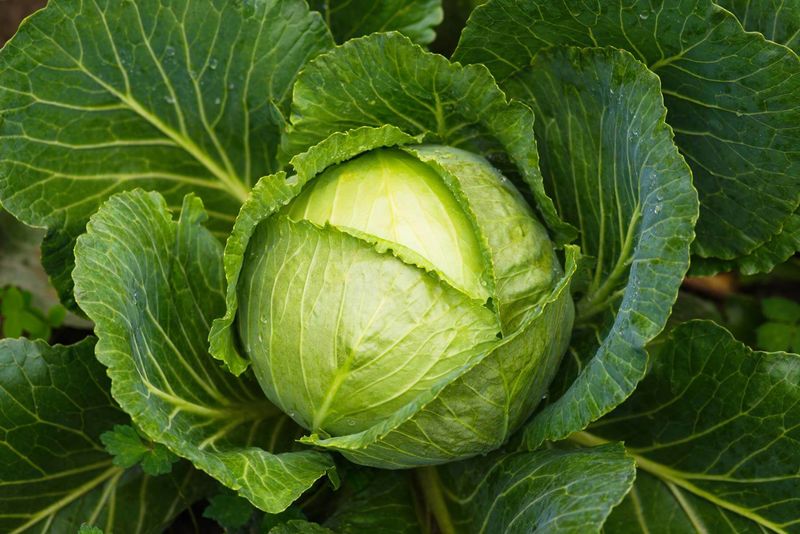
A reliable fall cabbage routine comes down to a sequence of decisions made in the right order. Choose a cultivar with enough days to maturity to fit between your transplant date and your local frost date, accounting for whether your garden is in the Piedmont, Coastal Plain, or mountain region.
Set out stocky, hardened transplants with the root ball fully covered, and water each plant thoroughly the moment it goes into the ground.
From that point forward, check the root zone consistently and keep it moist but not muddy through establishment and into head formation. Use soil moisture, rainfall, heat, and plant size to guide when you irrigate, not a fixed daily schedule.
NC State Extension’s vegetable gardening handbook and UMN Extension’s vegetable irrigation guidance both support consistent moisture as a key factor in cabbage quality, while cautioning against waterlogged conditions.
Once heads reach harvestable size, continue irrigating as needed to prevent wilting, but avoid unnecessary overwatering or sudden heavy saturation that can split mature heads. Oklahoma State’s cole crop guidance notes that splitting most often follows excess water after heads are already mature.
Harvest promptly once heads are firm and full rather than leaving them in the ground longer than needed. Steady moisture is a high-priority habit that protects everything else you have put into the crop, but it works best when timing, healthy roots, proper spacing, balanced fertility, and good plant health are already in place.
A well-watered cabbage grown under the right conditions is simply a cabbage that got every chance it deserved.