
The Most Underrated North Carolina Native Perennial That Keeps Blooming In Full Sun From Spring Through Fall
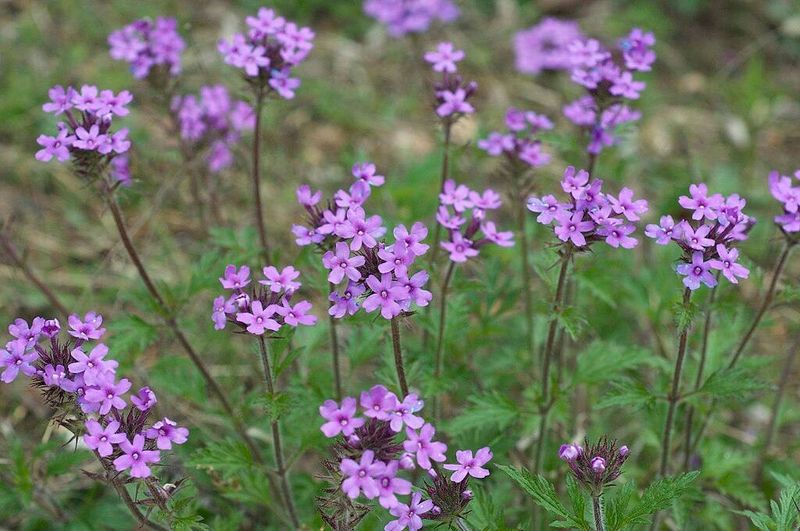
Most gardeners searching for a tough, long-blooming plant for a baking-hot, sunny border overlook one native that has been growing wild in North Carolina all along. Rose verbena, known scientifically as Verbena canadensis, can produce successive waves of pink, rose, purple, or lavender flowers from roughly April through September across the state’s Mountains, Piedmont, and Coastal Plain.
It handles heat, drought, humidity, and several soil types without much fuss, yet you rarely see it at the front of a garden center display. If your yard has a dry, sunny spot that eats other plants alive, this underrated native deserves a serious look.
Rose verbena is an underrated native candidate for sunny sites
Walk through most North Carolina garden centers and you will find shelves of non-native annuals and familiar ornamental grasses, but rose verbena rarely gets top billing. That oversight is hard to justify once you look at what NC State Extension’s plant profile for Verbena canadensis actually says about this plant’s range and tolerance.
The species goes by several common names, including rose verbena, rose vervain, and clump verbena. Its former scientific name was Glandularia canadensis, so older references may use that label.
Whatever name appears on the tag, this is a true North Carolina native, documented growing across the Mountains, Piedmont, and Coastal Plain.
For homeowners dealing with a hot, exposed, well-drained spot that seems to punish everything planted in it, rose verbena is a strong candidate worth considering. NC State documents its tolerance of heat, drought, humidity, and salt, along with its ability to grow in sandy, rocky, shallow, clay, and loamy soils when drainage is adequate.
That combination of documented tolerances is genuinely rare in a single native perennial.
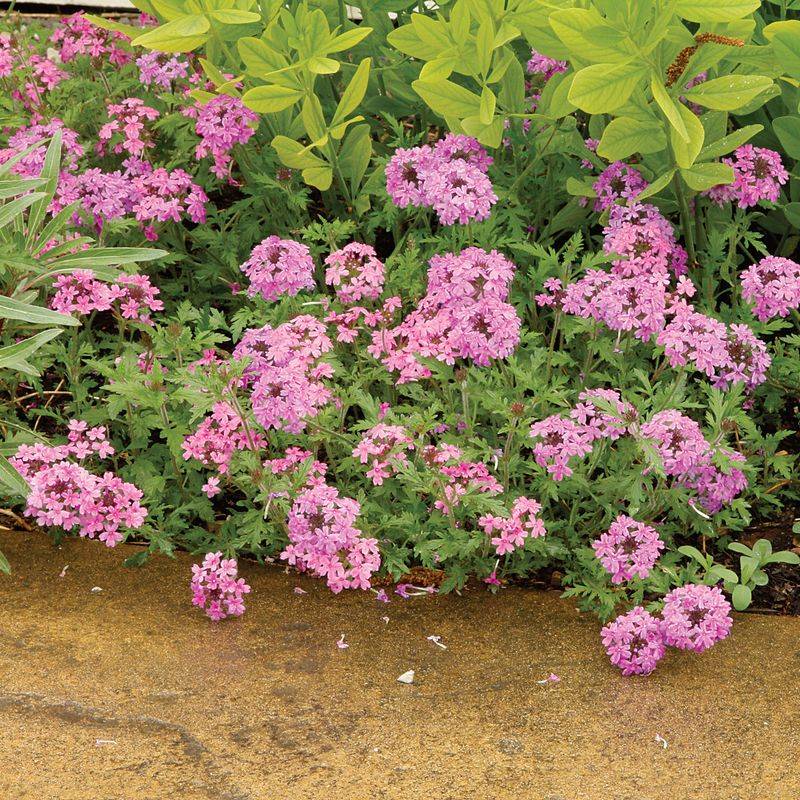
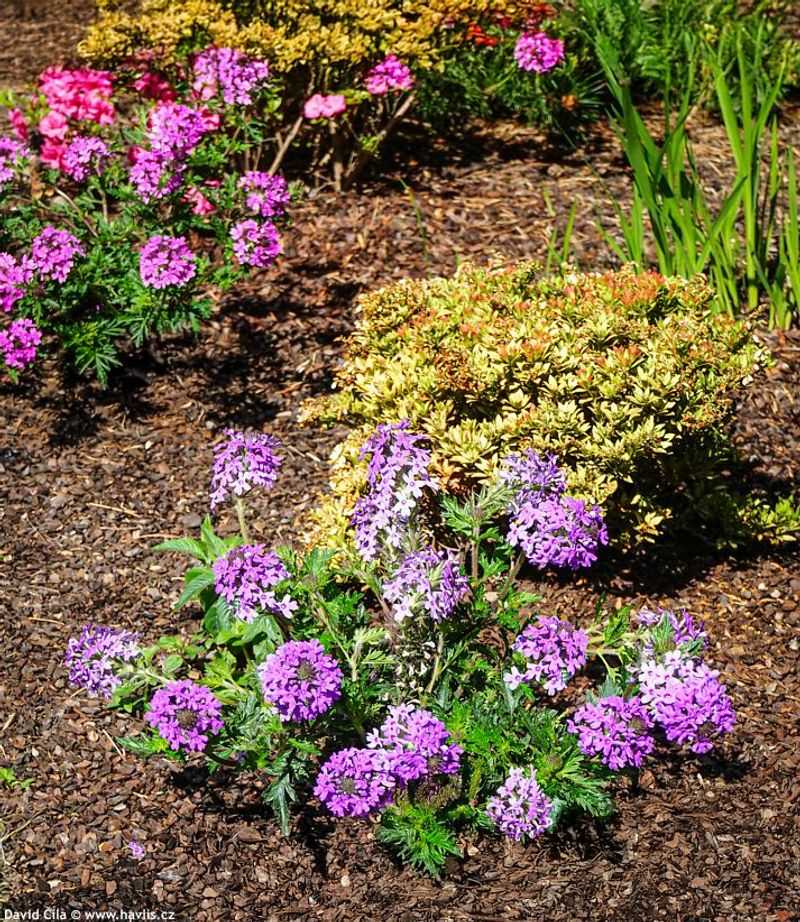
The plant stays low and spreading, typically reaching 8 to 18 inches tall and 1 to 2 feet wide. Its successive clusters of small pink, rose, purple, or lavender flowers can appear from spring into fall, making it useful for seasonal color in a border that gets punishing afternoon sun.
Calling it the state’s single toughest perennial would be an overreach, but describing it as underrated for many challenging full-sun residential sites is fair and well-supported.
One limitation worth knowing upfront: rose verbena is a short-lived perennial. It may self-seed under favorable conditions, but gardeners should treat it as a plant that will eventually need replacement rather than a permanent fixture.
That honest caveat does not diminish its value; it simply sets realistic expectations from the start.
Its long flowering season can extend seasonal color
One of the most useful things about rose verbena is how long its flowering window can stretch. NC State Extension lists the bloom period as spring through fall, with an approximate North Carolina range of April through September.
That is a span of roughly five to six months when successive clusters of small flowers can appear on a healthy, well-sited plant.
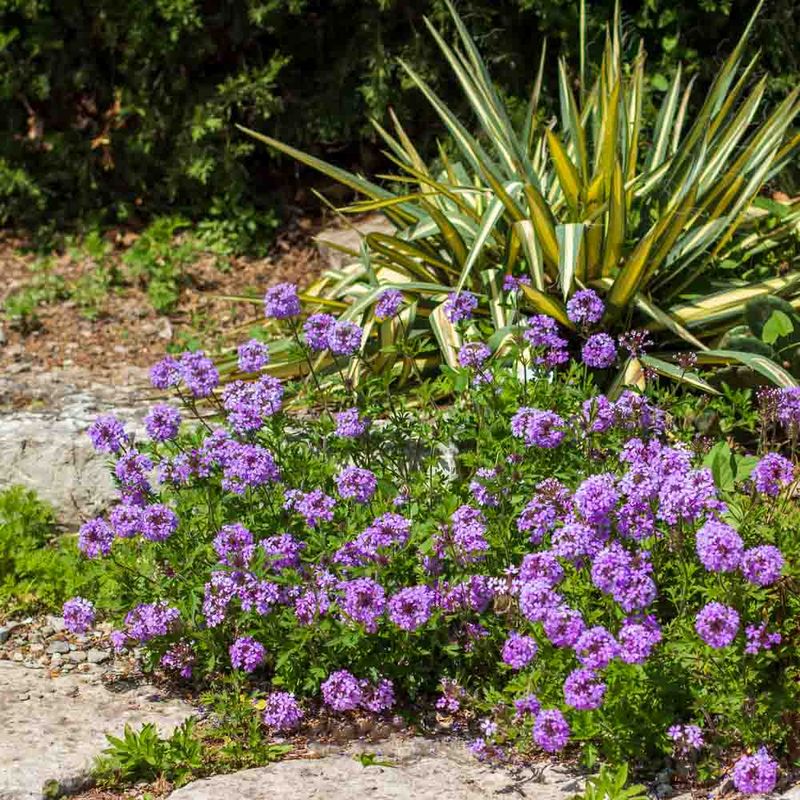
The flowers themselves are modest in size but striking in color. They appear in rounded clusters and come in shades of pink, rose, purple, and lavender, depending on the individual plant or cultivar.
A mass planting along a sunny slope or at the front of a dry border can produce a soft, colorful display that shifts and refreshes as new flower clusters open throughout the season.
Calling that display literally continuous, however, would overstate the case. What rose verbena delivers is a long succession of flowers, not an unbroken carpet of open blooms on every stem every single day.
During hot, dry stretches in midsummer, flowering can slow noticeably. A plant under drought stress or one that has set a heavy seed crop may pause or reduce its output before resuming later in the season.
Plant condition also matters. A well-established plant in good drainage that receives occasional attention tends to keep producing flower clusters more reliably than one left entirely on its own in compacted or poorly drained ground.
The realistic promise is a long-blooming native that can extend seasonal color well past the point where many other perennials have finished, not a plant that guarantees wall-to-wall color from the first warm day of April through the last week of September without any variation.
For North Carolina homeowners who want more months of color from a single planting in a full-sun site, that extended window is genuinely useful even when it includes occasional lulls.
Full sun and well-drained soil suit its nature
Rose verbena grew wild across North Carolina’s roadsides, sandhills, and dry open areas long before anyone planted it intentionally in a garden. That natural history tells you something important about where it performs best: give it full sun and soil that does not hold water, and it is likely to reward you.
Put it somewhere wet or shaded, and the outcome will be less encouraging.
Full sun, as defined by NC State Extension, means at least six hours of direct sunlight daily. Rose verbena can tolerate partial shade, but the case for planting it in a sunny border rests on its ability to handle the heat and exposure that most other perennials avoid.
A spot that gets six to eight hours of direct sun, especially with afternoon exposure, is exactly where this plant tends to show its strengths.
Soil type is more flexible than many gardeners expect. NC State’s plant profile documents its tolerance for sandy, rocky, shallow, clay, and loamy soils.
The common thread across all those types is adequate drainage. A sandy coastal soil and a rocky mountain slope are very different from each other, but both drain quickly, and rose verbena handles both reasonably well.
Where drainage is poor, the calculus changes. Persistently wet or waterlogged soil creates conditions that undermine this plant’s performance even if the sun exposure is perfect.
The UC Statewide IPM Program’s verbena guidance notes that excess moisture and poor drainage are associated with root and crown disease problems in verbenas, a risk that applies across the genus. Gardeners with heavy clay that drains slowly after rain should either amend the bed to improve drainage or choose a different location before planting.
Compacted soil presents a related problem. Even in a sunny spot, compaction limits root development and can reduce the plant’s ability to access the moisture and air it needs.
If the planting area has been heavily trafficked or has not been worked in years, loosening the soil before planting gives rose verbena a better start. Full sun and well-drained soil are not just preferences for this species; they are the site conditions where its documented tolerances actually pay off.
A low, spreading habit fits borders, slopes, and containers
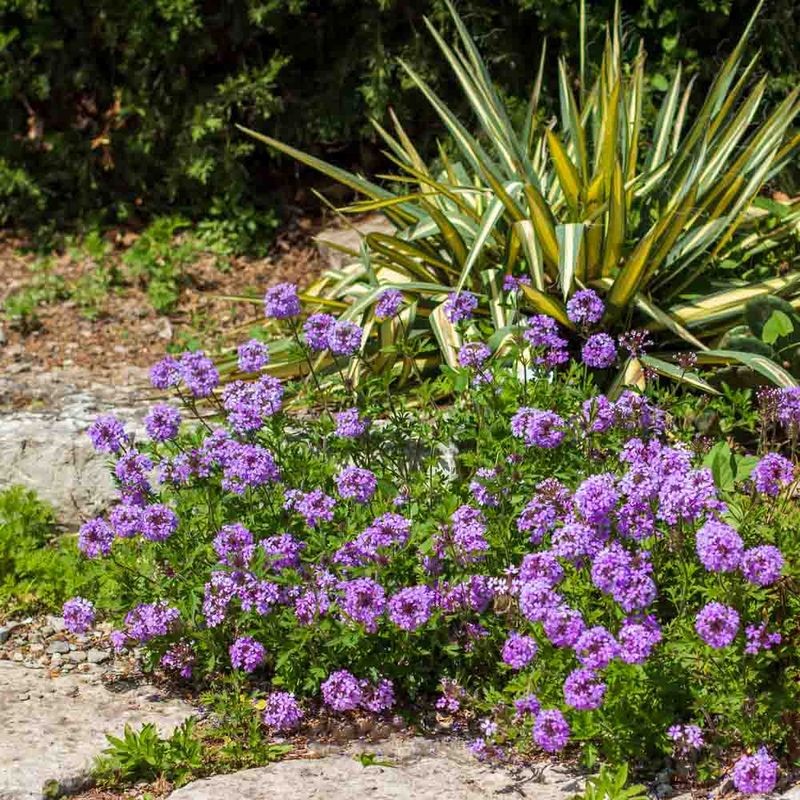
At 8 to 18 inches tall and roughly 1 to 2 feet wide, rose verbena stays close to the ground. That compact, spreading form is not a limitation; it is one of the plant’s most practical landscaping assets, especially in a full-sun yard where low-maintenance coverage over a difficult area is the goal.
The stems grow outward and root at the nodes as they spread, which means an established plant gradually covers more ground without becoming invasive. Front-of-border placements work particularly well because the plant stays low enough not to obscure taller neighbors while still producing enough flower clusters to register as a color contribution across the growing season.
Slopes and banks are natural fits. Erosion-prone areas in full sun often lack good candidates because many groundcovers prefer shade or moisture, but rose verbena’s dry-site tolerance and node-rooting habit make it a sensible choice for a sunny, well-drained bank that needs some stabilization and color.
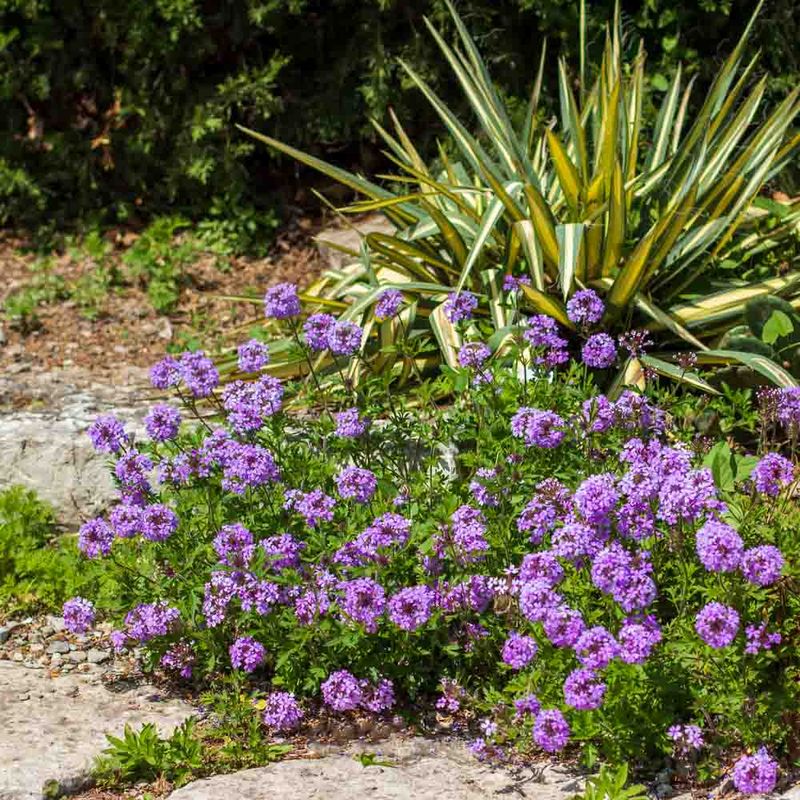
Rock gardens suit it for similar reasons: the fast drainage between stones mirrors the sandy and rocky soils where the species occurs naturally.
Containers are another option, particularly for homeowners who want to try the plant before committing it to a bed, or who have a sunny patio or deck area where a low, trailing perennial would add color without taking up much visual space. Keep drainage holes clear and avoid saucers that hold standing water, since the same drainage requirement that applies in the ground applies in a pot.
Matching this plant to a specific problem area in the yard, rather than planting it everywhere and hoping for the best, is the more productive approach. A sunny, well-drained spot at the edge of a driveway, along a south-facing retaining wall, or spilling over a rocky garden edge is where rose verbena’s low, spreading habit genuinely earns its place.
Planting at the right time gives it a stronger start
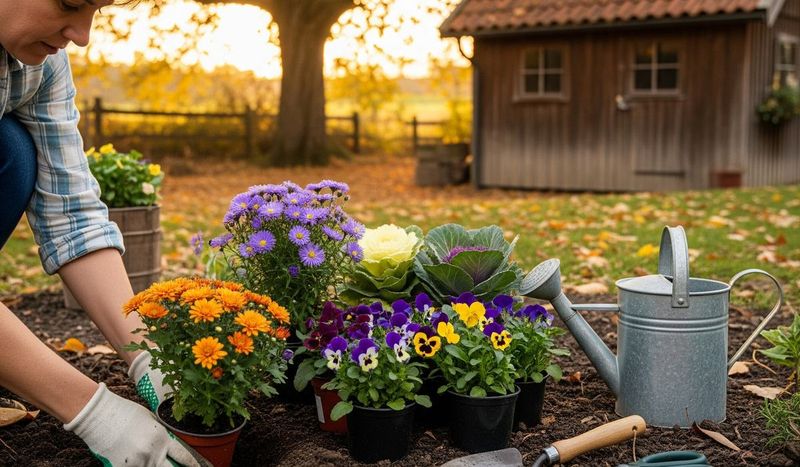
Timing a new planting thoughtfully can make a real difference in how well rose verbena establishes. NC State Extension’s landscaping for wildlife guide notes that fall planting generally works best for most native species in North Carolina because the state’s hot summers put significant stress on newly installed plants before their roots have had a chance to settle in.
A fall planting, roughly September through early November depending on your region, gives rose verbena several months of cooler temperatures and more reliable rainfall to develop a root system before it faces its first summer. Mountain gardeners should aim for the earlier end of that window to allow establishment before hard freezes arrive.
Piedmont and Coastal Plain gardeners typically have more flexibility.
Regardless of when you plant, newly installed specimens need supplemental water during the first few weeks. The NC State Extension Gardener Handbook’s native plants chapter advises keeping new natives well-watered through the establishment period, even species known for drought tolerance later in life.
Rose verbena is no exception. The roots need consistent moisture to knit into the surrounding soil, and skipping irrigation during a dry stretch in the first weeks can set the plant back significantly.
Once established, rose verbena tolerates drought, but that tolerance has limits. Extended dry periods can reduce growth and slow or pause flowering even in a plant that has been in the ground for a full season.
A deep, thorough watering during a prolonged dry spell is more useful than frequent shallow watering, which encourages surface rooting and leaves the plant more vulnerable to heat stress.
One firm caution: do not compensate for dry weather by watering heavily in a poorly drained spot. UC IPM’s verbena guidance links excess moisture and poor drainage to root and crown disease in verbenas.
If the site drains well, water generously during establishment and during serious summer dry spells. If the drainage is questionable, address that first before adding more water to the equation.
Simple maintenance can preserve a compact, attractive display
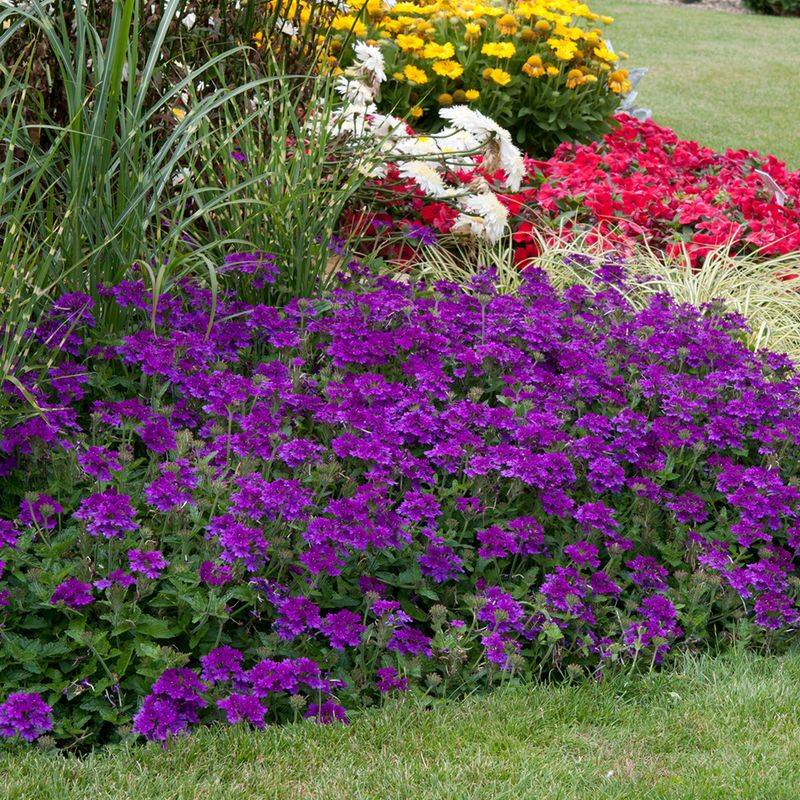
Rose verbena does not demand complicated care, but a little attention at the right moments can keep it looking better and may help it push out new flower clusters after a summer slowdown. The two most useful practices are deadheading and a light midsummer cutback.
Deadheading, which means removing spent flower clusters before they fully set seed, helps maintain a more compact and tidy form. NC State’s plant profile specifically notes that deadheading supports a more attractive, compact habit.
It also redirects the plant’s energy away from seed production, which can encourage more flowering rather than a rush to finish the season.
When flowering slows noticeably in midsummer, a more deliberate intervention can help. Clemson Cooperative Extension’s verbena factsheet recommends cutting the plant back by roughly one-fourth, then watering thoroughly.
This approach can prompt the plant to push new growth and resume flowering. There is no guarantee that every plant will respond the same way, but the combination of a moderate trim and a good drink of water gives a heat-stressed or overgrown plant a reasonable chance to rebound before fall.
Setting realistic expectations around maintenance matters here. Deadheading and a midsummer cutback can preserve appearance and may support continued flowering, but they do not extend the plant’s natural lifespan.
Rose verbena is a short-lived perennial, and no amount of attentive pruning changes that fundamental characteristic. A plant that is aging out of vigor will eventually need replacement.
Self-seeding sometimes occurs under favorable conditions, and seedlings can fill gaps left by a parent plant that has declined. However, self-seeding is not reliable enough to count on as a permanent replenishment strategy.
Seed germination depends on soil conditions, moisture, and timing, and not every site produces consistent seedlings. Plan to replace plants as needed rather than assuming the planting will perpetuate itself without any input from you.
Verify the plant and keep its wildlife value specific
Shopping for rose verbena requires a bit of detective work. The common name “verbena” covers a wide range of plants at most garden centers, including non-native species, hybrid selections, and cultivars that may or may not share the same wildlife value or regional adaptability as the straight native species.
When native status matters to you, verify the scientific name: Verbena canadensis.
That step is worth emphasizing because straight-species rose verbena can be genuinely difficult to find. NC State’s plant profile acknowledges that cultivars and hybrids are more commonly available in the nursery trade than the straight species.
A cultivar of Verbena canadensis may still provide good pollinator value and regional adaptability, but a plant labeled simply as “verbena” without a species name could be something else entirely. Ask the nursery staff directly or check the tag for the Latin name before buying.
For readers who want a locally propagated native source, the North Carolina Native Plant Society’s nursery listings offer a searchable directory of nurseries that sell nursery-propagated native plants. A locally sourced plant is more likely to be adapted to your region’s specific conditions, whether you garden in the Coastal Plain, Piedmont, or Mountains.
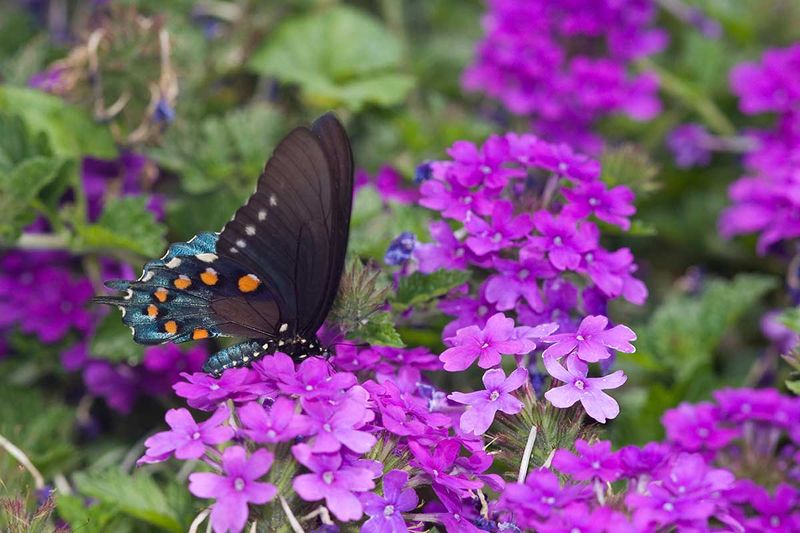
Rose verbena’s documented wildlife value is real but specific. NC State reports that the flowers provide nectar for butterflies, hummingbirds, and other pollinators, and that birds may eat the fruits.
Those are meaningful contributions to a residential wildlife garden. The evidence does not support additional claims about attracting specific species such as goldfinches or bats, deterring ticks, suppressing invasive plants, or providing special benefits for box turtles or fireflies.
Overstating wildlife benefits does not serve the plant or the gardener.
One distinction worth making clearly: rose verbena is not lemon verbena. Lemon verbena is Aloysia citriodora, a different plant from a different genus.
The ASPCA’s lemon verbena toxicity listing applies to that specific plant and does not establish the same classification for Verbena canadensis. If you are searching for pet safety information, make sure the source refers to the correct species.
Match the plant to the site instead of expecting a miracle
Rose verbena earns its place in a North Carolina garden when the site is chosen carefully, not when it is planted hopefully in whatever spot happens to be open. The central rule is straightforward: full sun, well-drained soil, and attentive watering during establishment are the conditions where this native’s documented strengths actually show up.
Its bloom is a long succession of flowers, not a literal wall of uninterrupted color. Flowering can slow in midsummer heat, and a short-lived perennial will not last forever in any site regardless of how well it is maintained.
NC State Extension’s profile is clear that the species is short-lived, which means eventual replacement is part of the realistic plan.
The action steps are simple: find a sunny, well-drained location in your yard, verify the scientific name Verbena canadensis before purchasing, water the new plant consistently through establishment, and treat it as a strong candidate for a difficult full-sun spot rather than a guaranteed solution for every challenging location. A plant that fits its site well tends to take care of itself more capably, and rose verbena in the right spot is a genuinely useful, colorful, wildlife-friendly addition to a North Carolina yard.