
The Most Underrated North Carolina Perennial That Just Keeps Blooming In Brutal Full Sun
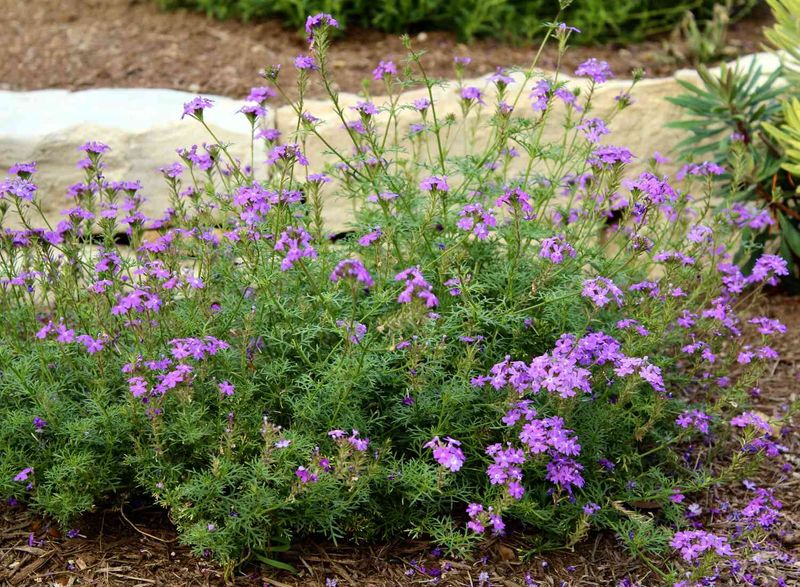
Most gardeners walk right past rose vervain at the nursery without a second glance, but this low-growing native has one of the longest flowering windows of any perennial suited to North Carolina’s punishing summer sun. Known by several names, including rose verbena and clump verbena, it is a true North Carolina native with documented heat and drought tolerance once it gets established.
If your sunny Piedmont bed has burned through one too many finicky plants, rose vervain deserves a serious look.
Rose vervain fits the sunny-yard challenge
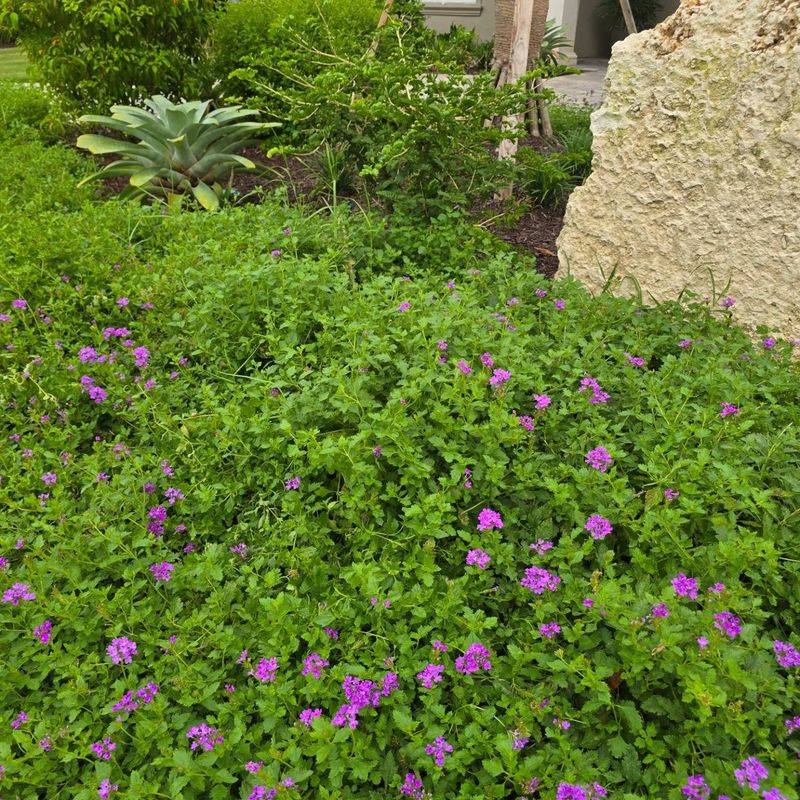
Rose vervain, sold under the names rose verbena and clump verbena, is the same plant botanists record as Verbena canadensisGlandularia canadensisVerbena canadensis. Older references sometimes use , but the NC State Extension plant page uses and identifies it as a native North Carolina herbaceous perennial.
Knowing the botanical name matters at the nursery, because the word “verbena” gets attached to several unrelated plants, and you want the right one.
NC State Extension’s rose vervain profile lists the species for the Coastal, Piedmont, and Mountain regions of North Carolina, confirms full-sun suitability, and describes heat and drought tolerance after establishment. That combination is genuinely useful in a Piedmont yard where summer temperatures routinely push into the 90s and west-facing beds can feel like a radiator by mid-afternoon.
The plant’s native range stretches from Virginia south through Florida, so it evolved alongside the same heat that challenges Piedmont gardeners every July and August.
The headline on this article calls it a perennial that “just keeps blooming,” and that phrase deserves a quick correction before going any further. Rose vervain can flower from spring into fall, with NC State recording an approximately April-to-September window for North Carolina.
That is a genuinely long seasonal display, but it does not mean every plant in every Piedmont yard will carry uninterrupted color across every single week of that range. Drainage, establishment, rainfall, and maintenance all shape what you actually see.
Whether rose vervain is the single most overlooked perennial in the state is a matter of opinion, not a claim any plant database can settle. What the evidence does support is this: it is a well-documented native with real full-sun credentials and a flowering season that can stretch across most of the warm months.
A long bloom season is not nonstop color
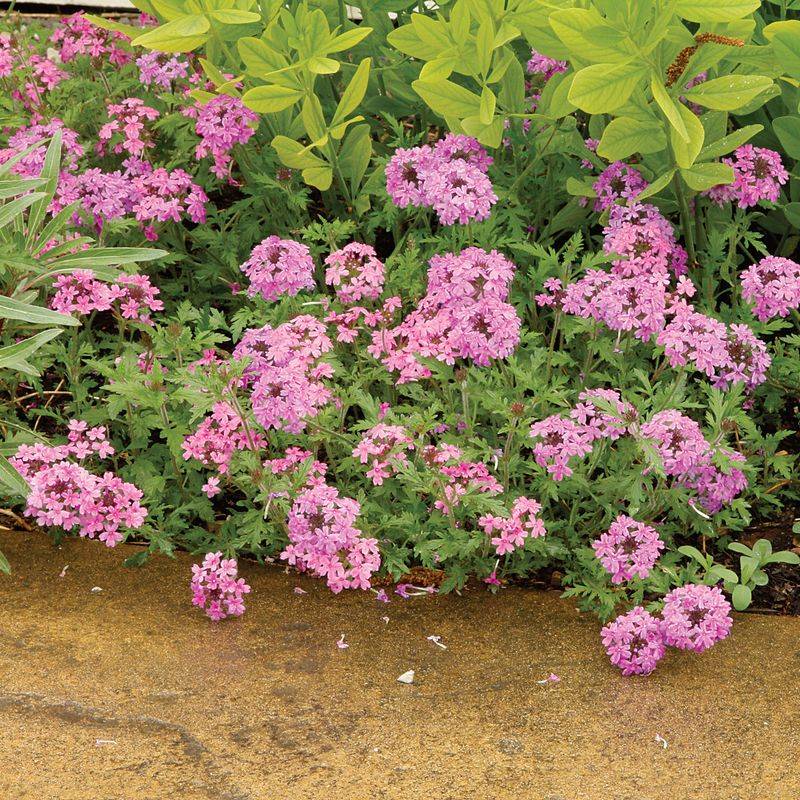
The flowers themselves are clusters of small, five-petaled blooms in shades ranging from soft pink to deeper rose-purple. They appear at the tips of the plant’s low, spreading stems and have a cheerful, almost wildflower quality that reads well from a distance.
The color holds up well in full sun without fading the way some softer pastels do by midsummer.
NC State records the North Carolina flowering period as approximately April through September. That is close to six months, which puts rose vervain in a genuinely competitive position for seasonal display.
What it does not guarantee is a steady, wall-to-wall carpet of bloom from the first week of April to the last week of September in your specific yard. Flowering intensity can slow during the hottest, driest stretches of a Piedmont summer, especially if the plant is still building its root system or if the site has drainage issues that stress the roots.
A garden in the Triad may see slightly different timing than one near the coast, and an unusually wet spring or dry July will shift the picture further.
Thinking of the April-to-September window as the plant’s active season, rather than a bloom guarantee, sets more realistic expectations. During that period, rose vervain will produce flowers repeatedly, particularly if you remove spent flower heads to redirect the plant’s energy.
A well-established specimen in a well-drained, sunny spot can deliver noticeable color across much of that range. A newly planted one in compacted soil that bakes without any supplemental water during a drought year may look ragged by August.
The difference between those two outcomes comes down to site selection and first-year care, which the next two sections address directly.
Match full sun with dependable drainage
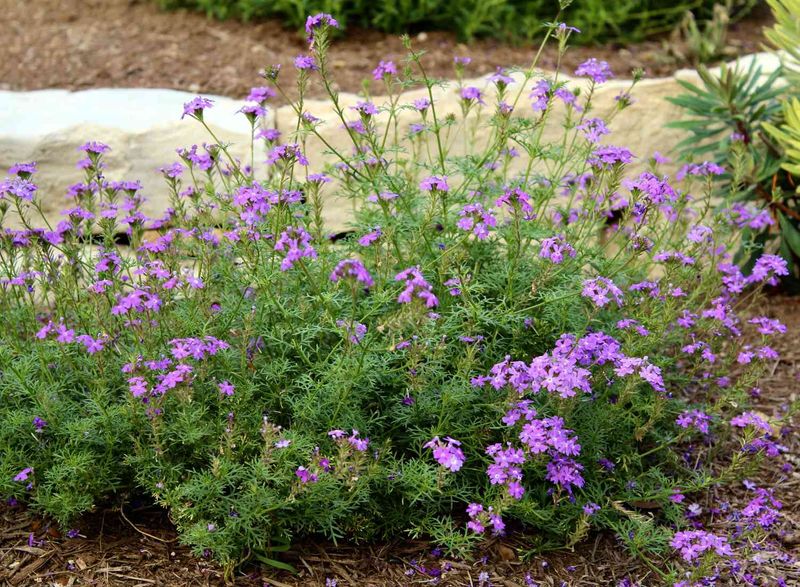
Full sun means at least six hours of direct sunlight each day. Rose vervain can tolerate partial shade, but the plant’s heat and drought credentials apply to genuinely sunny sites, not to spots that get dappled morning light and shade by noon.
If you are choosing between two locations and one gets consistent afternoon sun while the other is partly shaded, pick the sunnier one for this plant.
Soil texture matters less than drainage. NC State notes that rose vervain occurs naturally in dry, especially sandy soils, but the species can grow in clay, loam, sand, shallow rocky soil, and occasionally moist conditions.
The key phrase is “occasionally moist,” not “persistently wet.” Piedmont clay is not automatically a deal-breaker, but compacted or waterlogged clay absolutely is. If water pools on your bed for more than an hour after a hard rain, that site will stress rose vervain’s roots regardless of how much sun it receives.
A simple drainage test, pouring water into a hole and timing how fast it absorbs, can save you a failed planting.
The best residential placements take advantage of the plant’s low, spreading form while avoiding drainage traps. A sunny slope naturally sheds excess water and suits rose vervain well.
Rock gardens provide the sharp drainage the plant prefers and create a visually appropriate setting for its sprawling stems. Front borders work when the bed is raised slightly or amended to improve drainage.
Containers are a reliable option because you control the mix entirely; use a well-draining potting blend and make sure the container has adequate holes. NC State’s native plants handbook reinforces that site selection should account for soil texture, drainage, and pH alongside sun exposure, not sun alone.
Matching all of those factors gives rose vervain the foundation it needs to perform through a North Carolina summer.
Build drought tolerance with first-year care
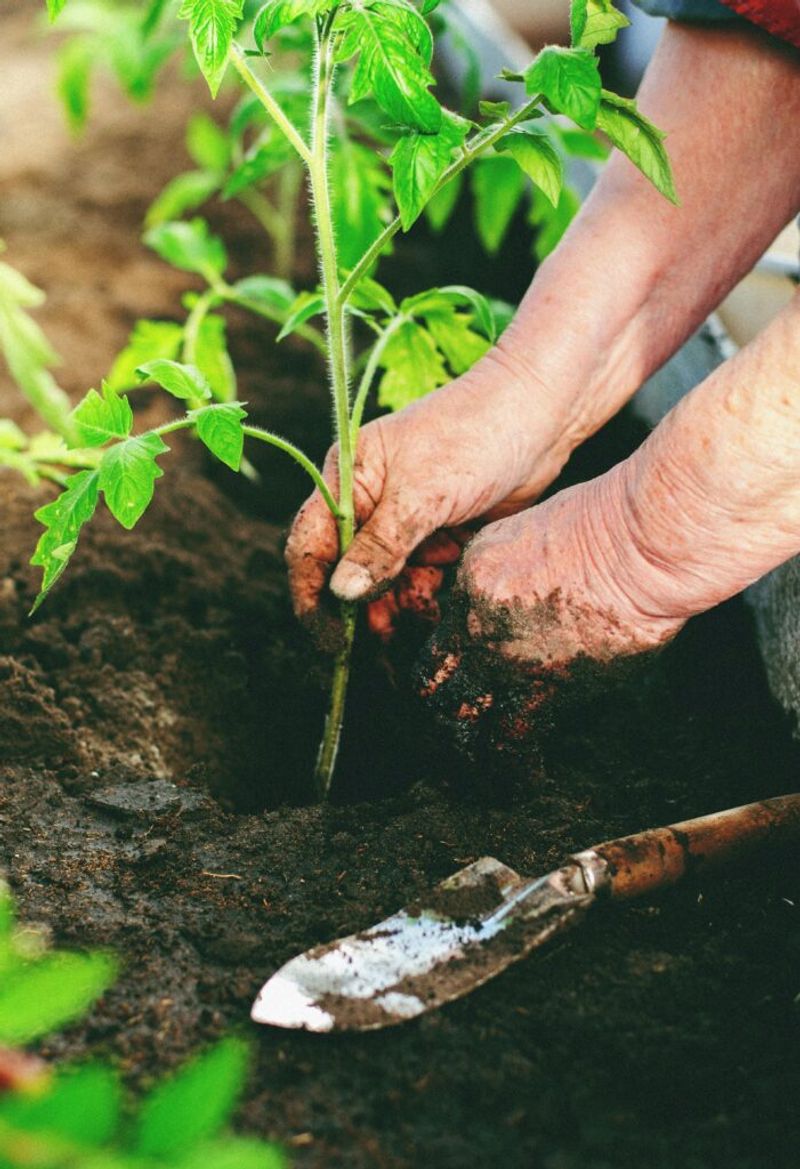
Drought tolerance is a mature-plant trait, not a day-one feature. A rose vervain you put in the ground this spring has not yet sent roots into the surrounding soil, which means it cannot pull moisture from a wide area the way an established plant can.
During that first growing season, it depends almost entirely on what you give it.
NC State’s wildlife-friendly landscape installation guidance recommends watering thoroughly at planting and continuing to water frequently during the first year. For a Piedmont gardener, that means checking soil moisture regularly from late spring through the heat of August and not skipping irrigation just because the plant’s label says drought tolerant.
A wilting plant in its first summer is telling you it needs water, not that it has failed.
Mulch is one of the most practical tools for bridging the gap between a new planting and an established one. NC State’s drought survival guidance recommends mulch to conserve soil moisture, moderate temperature, and reduce competition from weeds.
A two-to-three-inch layer around the plant, kept back from the crown, can meaningfully reduce how often you need to water during a dry stretch. Keep the mulch from piling directly against the stems, because rose vervain’s low habit means the crown stays close to the soil surface and excess moisture held against it can cause rot.
Once the plant has made it through a full season and roots have knit into the surrounding soil, it will handle dry periods with noticeably more resilience. That resilience is earned through the first year, not assumed from the start.
Use its spreading form where it can work
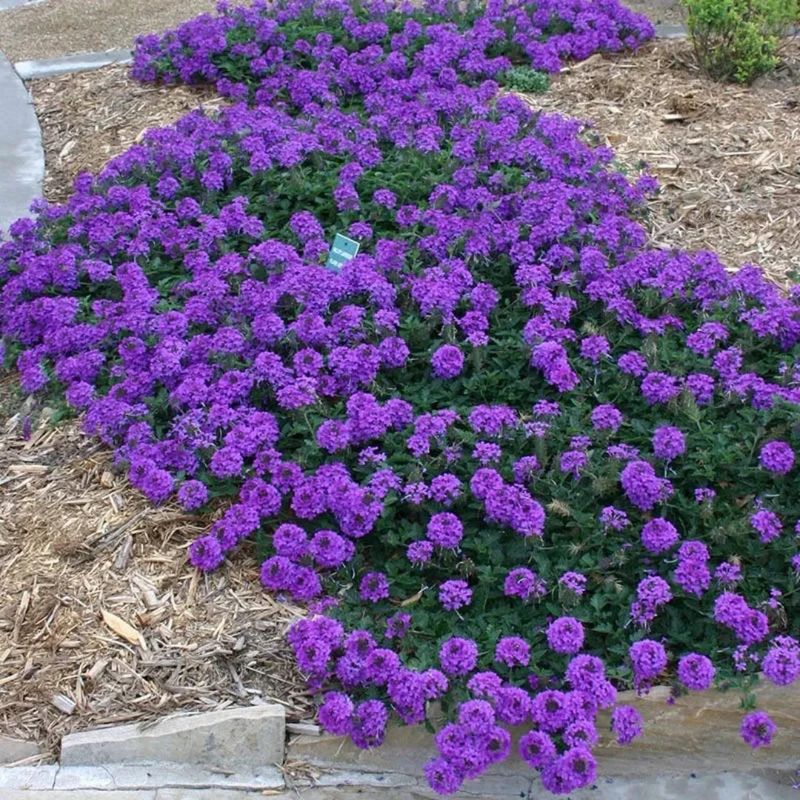
Rose vervain grows low to the ground, typically reaching six to twelve inches tall while spreading outward considerably wider. Stems root where they touch soil, which gives the plant a ground-cover quality that works well on slopes or in front-of-border positions where you want continuous low coverage.
That same rooting habit means it can migrate into a walkway or crowd a neighboring plant if you are not paying attention.
The best approach is to give it room from the start and check on its edges a few times each season. Placing it at the front of a border, where it has open ground in front of it rather than a close neighbor on every side, lets the spreading habit work in your favor rather than against it.
Rock gardens and sunny slopes are natural fits because the irregular terrain breaks up the spread and the visual informality suits a low, rambling plant. Containers offer the most control: the plant fills the pot attractively and the rim stops any wandering.
Deadheading spent flower clusters does two useful things. First, it keeps the plant looking tidy instead of letting brown seed heads accumulate.
Second, it encourages the plant to redirect energy toward new flower production rather than seed set, which can extend the display through more of that April-to-September window. Rose vervain can self-seed under suitable conditions, and NC State notes this as a possibility rather than a certainty.
If you want to encourage natural renewal, leaving a few spent heads in late summer is a reasonable choice. If you are gardening near a path or a formal bed, monitoring and removing seedlings where they are not wanted is the more responsible approach.
Add pollinator value without promising specific visitors
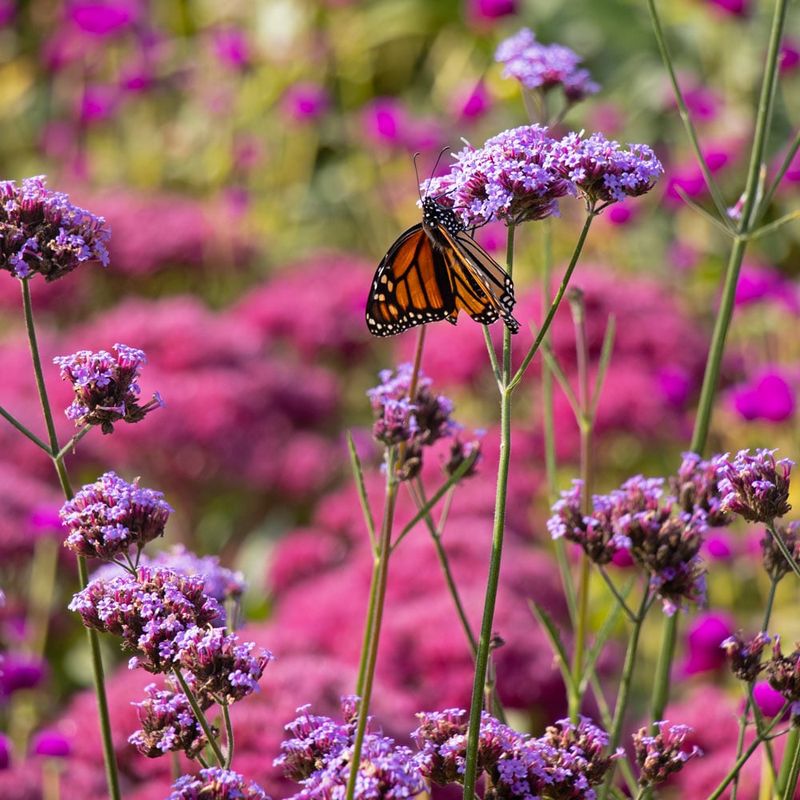
Rose vervain earns its place in a wildlife-friendly yard partly because of the floral resources it provides to pollinators. NC State identifies it as a pollinator plant and connects it to butterfly and hummingbird wildlife value.
For a Piedmont homeowner who is already thinking about tick-safe borders, native swaps, and supporting local wildlife, that is a meaningful addition to a sunny bed that might otherwise hold only ornamental annuals with little ecological function.
Keeping those claims proportionate matters. Planting rose vervain gives pollinators a food source during a long seasonal window.
Whether a specific butterfly species visits your yard, and how often, depends on what else is planted nearby, what habitat surrounds your property, local population levels, and weather patterns during any given season. The plant provides the resource; the rest is ecology in action, not a guaranteed outcome you can schedule.
Choosing natives thoughtfully also means looking beyond sun exposure. NC State’s native plants chapter advises matching plants to your specific ecoregion and accounting for soil texture, drainage, and pH when making selections.
A plant that thrives in sandy coastal soils may behave differently in Piedmont clay, even if both sites get full sun. Rose vervain’s listing for all three major NC regions gives it broader flexibility than many natives, but that regional range is not a substitute for reading your specific site conditions.
Pairing it with other regionally appropriate natives, rather than relying on a single species to carry all the wildlife value in a bed, produces a more resilient planting and a more useful habitat across the full season.
Buy Verbena canadensis and expect a short-lived perennial
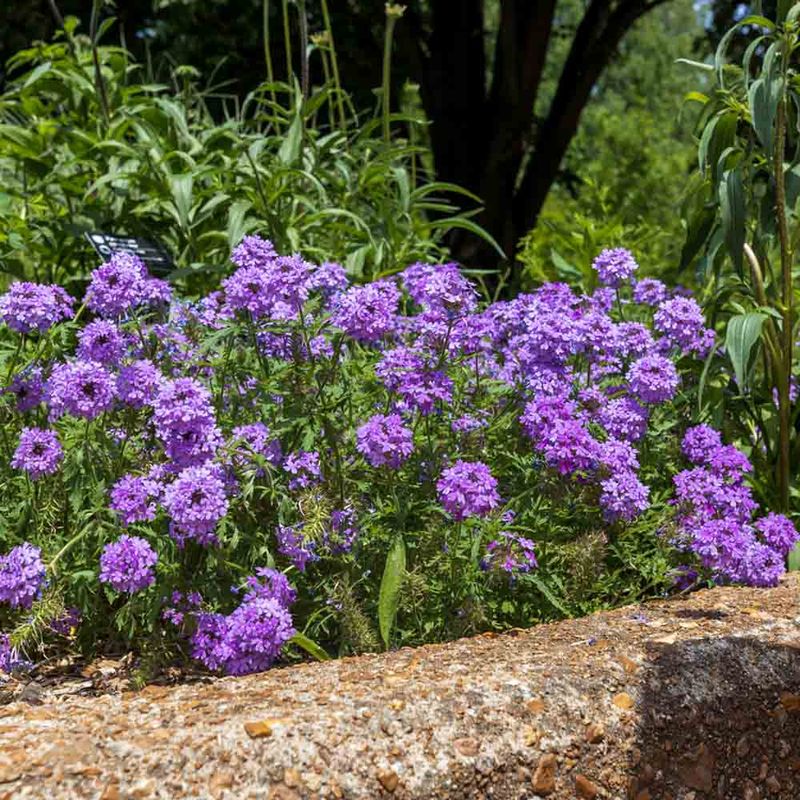
The word “verbena” appears on a lot of nursery tags, and not all of them point to the same plant. Brazilian verbena, also called purpletop verbena and sold as Verbena bonariensis, is a South American species that has naturalized across parts of North Carolina.
It grows tall and airy with small purple flower clusters at the top of long stems, and it is a common sight in disturbed areas and roadsides. NC State’s Brazilian verbena profile treats it as a separate, non-native species.
Picking up a pot labeled simply “verbena” without checking the botanical name risks bringing home the wrong plant for a Piedmont-native premise.
When you find the right one, NC State describes rose vervain as short-lived. That does not mean it will disappear after one season, but it does mean you should plan for eventual renewal.
Some gardeners divide spreading clumps every few years to refresh vigor. Others allow self-seeding to replenish the planting naturally.
Either approach works better when you set the expectation upfront rather than being surprised when a three-year-old plant starts to look tired.
Gaillardia comes up often in conversations about heat-tolerant, long-blooming perennials, and it is a credible option worth knowing. The NC State Gaillardia genus page covers multiple species and hybrids.
Gaillardia aestivalis is listed for the Coastal region rather than the Piedmont, and Gaillardia x grandiflora is a hybrid rather than a straight native species. Those distinctions matter if your goal is a plant with clean Piedmont-native credentials.
Rose vervain holds that position more directly, which is why it fits this particular premise better than Gaillardia does, even though both deserve space in a sunny NC yard.
Give rose vervain the conditions behind its promise
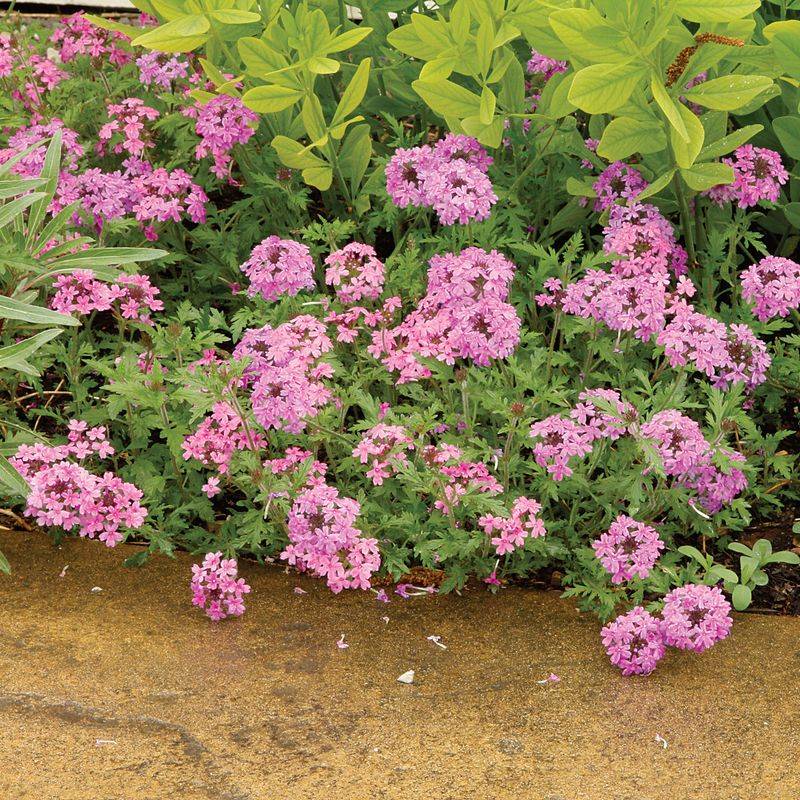
Putting rose vervain in the right spot comes down to four non-negotiable conditions: genuine full sun, well-drained soil, consistent water during the first year, and enough horizontal room for its spreading stems. Get those right, and you have a North Carolina native that NC State documents as capable of flowering from approximately April through September.
Apply mulch during dry stretches to protect the root zone, deadhead spent clusters to keep the display going, and check the edges of the planting a few times each season to manage spread near paths or neighboring plants. NC State’s drought guidance and its wildlife landscape installation advice both reinforce that establishment care determines how well a plant performs in the years that follow.
Rose vervain will not thrive on neglect, and it will not bloom without pause through every heat wave. What it will do, given the right site and a little attention in year one, is reward you with a long seasonal display that few other North Carolina natives can match in a fully exposed, sun-baked bed.
A plant that earns its keep from spring into fall, without demanding shade or constant irrigation once it finds its footing, is worth far more than a passing glance at the nursery.