
The Most Underrated North Carolina Native That Peaks In Late Summer When Every Other Flower Has Quit
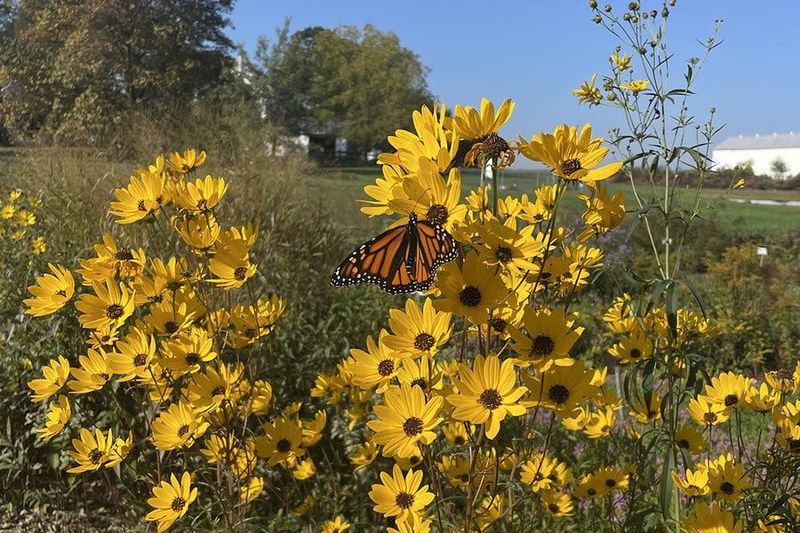
Late summer in a North Carolina yard can feel like a garden graveyard, with most spring and early summer flowers long gone and fall color still weeks away. Swamp sunflower, known botanically as Helianthus angustifolius, is one of the most conspicuous native perennials you can plant to fill that gap with vivid yellow blooms from mid-summer well into fall.
It grows across the Coastal Plain, Piedmont, and Mountains, and given the right spot, it can turn a dull August border into something worth stopping to look at. Understanding what this plant needs and how much room it demands will help you decide whether it belongs in your yard.
Swamp sunflower keeps the late-season border bright
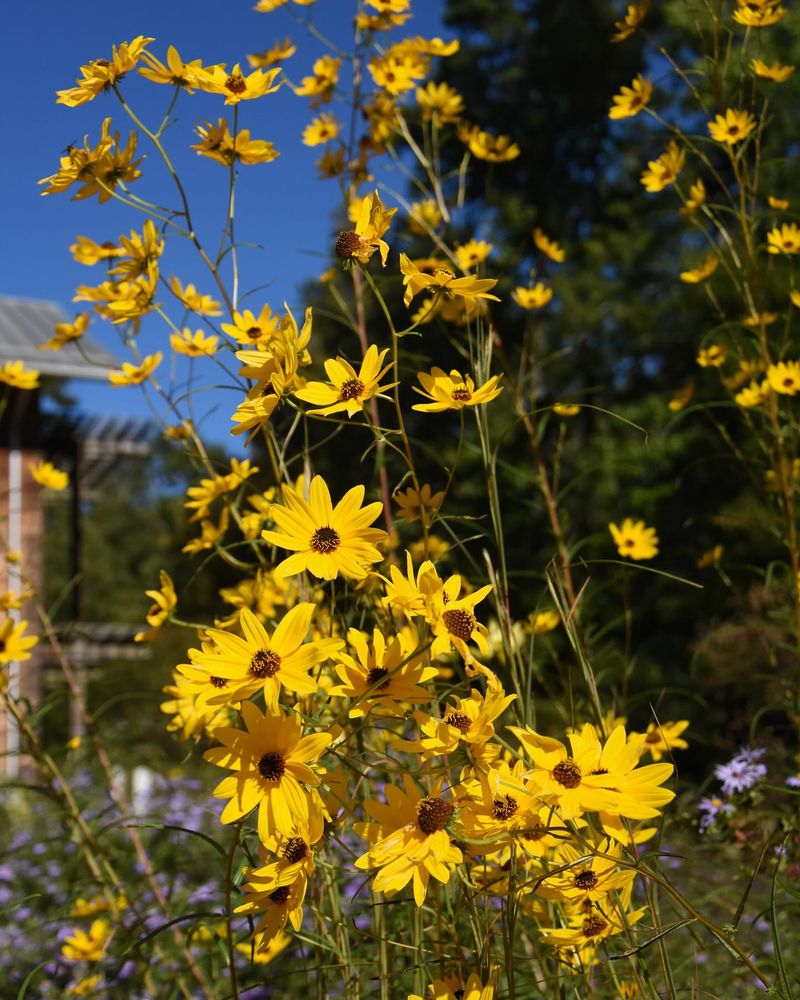
Yellow, daisy-like flowers on stems that can push past six or seven feet tall: that is the picture swamp sunflower delivers when most other perennials have already shut down for the season. Botanically named Helianthus angustifolius and also called narrowleaf sunflower, this herbaceous perennial is a genuine North Carolina native, and NC State Extension’s plant profile describes it as producing a profusion of late-season flowers from mid- to late summer into fall, precisely when little else is blooming in the residential garden.
Given enough room to spread and a site with full sun, a mass planting or broad back border can create a wall of golden color that reads from across the yard. That visual payoff is real, but it depends on matching the plant to the right conditions.
A single, cramped specimen tucked into a shaded corner will not deliver the same effect.
Framing swamp sunflower as the only North Carolina native still blooming at that time of year would be an overstatement. The NC State Extension Gardener Handbook’s native plants chapter lists many other late-summer and fall bloomers, including Joe-Pye weed, ironweed, goldenrod, asters, cardinal flower, blazing star, and black-eyed Susan.
What swamp sunflower brings to that company is sheer height and the density of its flower display, making it one of the most visually striking options in that group for homeowners with the space and site to support it.
Think of it as a strong, well-supported answer to the fading-garden problem rather than the only answer. If your yard has a sunny back edge with decent moisture, this plant can carry the color show from August through October in a way that few other natives match at that scale.
Native across North Carolina, selective about its site
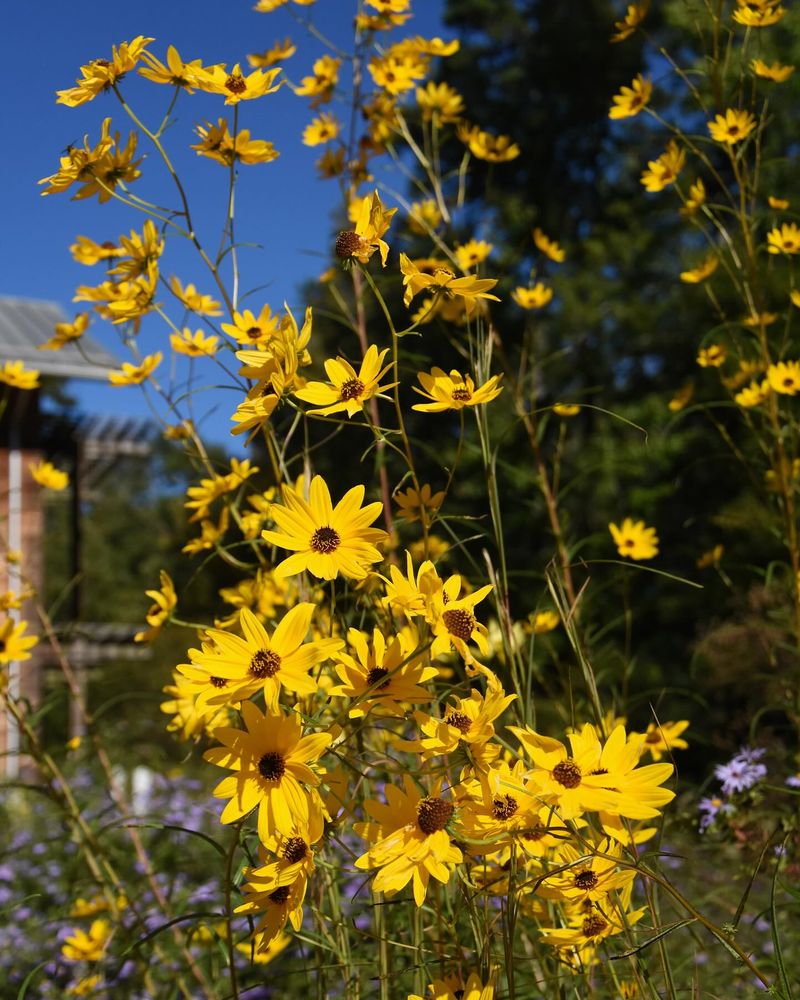
Helianthus angustifolius is native throughout all three of North Carolina’s major geographic regions. Coastal Plain gardeners near Wilmington or New Bern, Piedmont homeowners in the Raleigh-Durham or Charlotte areas, and mountain residents in the Asheville region can all legitimately consider it a local native.
That broad nativity is one reason it shows up so often on North Carolina native-plant recommendations.
Geographic nativity and reliable garden performance, though, are not the same thing. A plant being native to your region means it evolved here and can support local wildlife.
It does not mean it will thrive in every corner of your yard without the right conditions. Swamp sunflower performs best where it receives full sun and has access to adequate moisture throughout the growing season, and a shaded, dry, or compacted site will limit its flowering and overall health regardless of region.
The North Carolina Native Plant Society’s seasonal color guide places perennial sunflowers in the August-through-November bloom window, which lines up with the late-season gap this plant is meant to fill. Timing can shift by a few weeks depending on your elevation, local weather, and how well-established the plant is.
Mountain gardeners at higher elevations may see a shorter window than Coastal Plain gardeners.
Other late-season natives worth knowing alongside swamp sunflower include blue mistflower, trumpetweed, and native asters, all of which can extend the color show without requiring the same amount of vertical space. Mentioning those companions is not a reason to skip swamp sunflower; it is a reminder that building a layered late-season planting with several species gives you more flexibility and a more resilient display than betting everything on one plant.
Choose a sunny site with dependable moisture
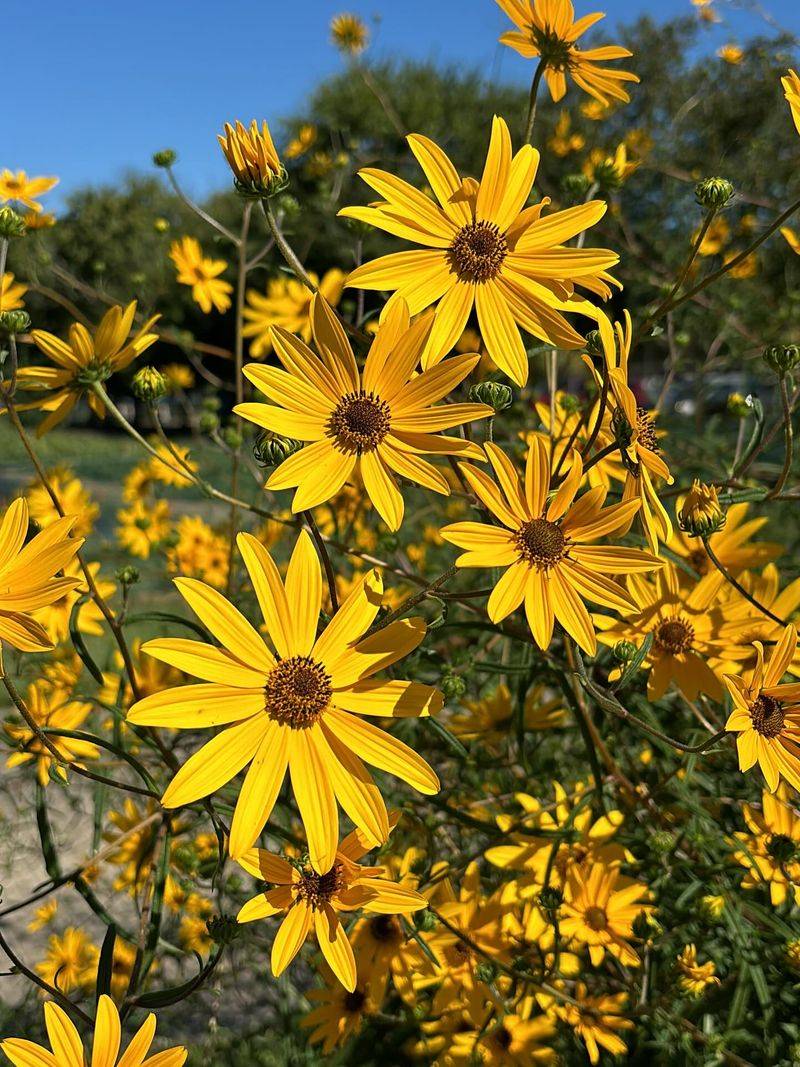
Before buying a single plant, walk your yard and honestly assess what the candidate spot actually offers. Swamp sunflower performs best in full sun, meaning at least six hours of direct sunlight daily.
Partial shade may produce taller, leggier stems with fewer flowers, and deep shade will largely shut the plant down. If your back border spends most of the afternoon in the shadow of a fence or tree canopy, this is not the right plant for that spot.
Soil moisture matters just as much as light. NC State Extension’s Helianthus angustifolius profile notes that the species prefers moist to occasionally wet acidic sandy-to-clay loams, which covers a wide range of North Carolina soils from the sandy Coastal Plain to the heavier clays of the Piedmont.
It can tolerate drier soil, but only when adequate moisture is supplied through rain or irrigation, particularly during establishment and summer dry spells.
The common name can cause confusion. “Swamp” sunflower does not mean the plant belongs in a permanently waterlogged bog or standing water. It means the species evolved in low-lying, moisture-retentive habitats, and it carries that preference into the garden.
A rain garden edge, a low spot that stays moist but drains after storms, or a bed that receives consistent supplemental water are all good candidates. Chronically saturated soil with no drainage can cause root problems.
Drier Piedmont or mountain sites can still work, but they require more attention during the first growing season and during summer droughts. A thick layer of mulch helps retain soil moisture and keeps roots cooler.
Gardeners on thin, rocky, or sandy soils that dry out quickly between rains should plan for regular watering rather than assuming the plant will fend for itself once established. Ruling out chronically dry or heavily shaded locations before planting saves frustration later.
Design around height and rhizomatous spread
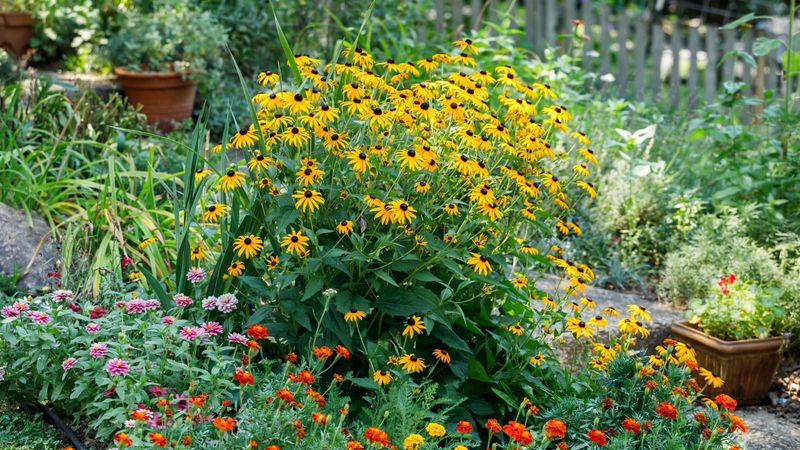
At maturity, swamp sunflower regularly reaches six to eight feet tall. That height is part of its visual power, but it also means the plant looks out of place and can shade out neighbors when squeezed into a narrow front-edge bed or a tightly planted formal border.
A back-of-border position, a broad naturalized bed along a fence line, or an informal screen between your yard and a neighbor’s property are more appropriate placements for a plant of this stature.
Spread is the other design factor that catches gardeners off guard. Helianthus angustifolius spreads by rhizomes, and NC State Extension’s plant profile specifically warns that it spreads aggressively.
Over several seasons, a small clump can expand into a wide colony. That behavior is an asset in a naturalized meadow or a large informal bed where you want coverage, but it can become a management burden in a small, tightly designed space.
The practical response is to choose a site where the plant has room to expand without crowding other perennials you value. If your space is limited, plan from the start to dig back the edges each spring or fall to keep the colony within bounds.
Root barriers can help in tighter situations, though they require installation before planting. Describing this behavior as aggressive spreading is accurate; calling the plant invasive is not supported by state sources, and it is not classified as invasive in North Carolina.
NC State’s native plant design guidance recommends matching plants to the site and the scale of the planting rather than forcing a large, vigorous species into a space it will quickly overwhelm. For swamp sunflower, that means thinking in terms of colony management from day one, not as an afterthought when the plant has already pushed into the vegetable garden three seasons later.
June pruning can create a shorter, bushier display
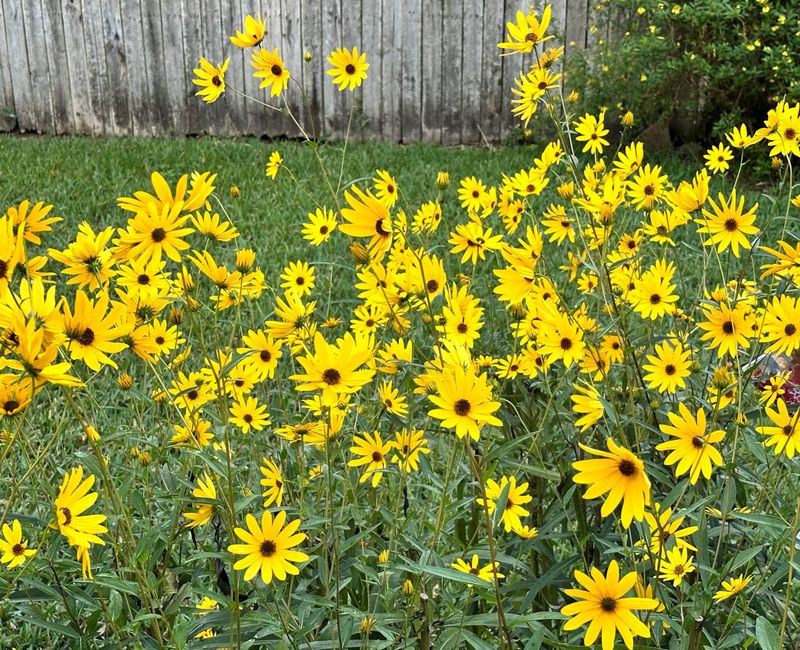
Stems reaching six to eight feet have a tendency to flop, especially in windy spots or during heavy summer rain. A plant that spends September leaning at a forty-five-degree angle against its neighbors is not the dramatic back-border statement most gardeners have in mind when they plant swamp sunflower.
Addressing this before it becomes a problem is simpler than staking a tangled mass of tall stems after the fact.
NC State recommends pruning plants back in June to encourage branching and produce shorter, more compact growth before the late-season bloom. NC Cooperative Extension’s late-blooming perennials guidance describes cutting stems by about one-third in mid- to late June as a reliable technique for getting shorter, bushier plants out of tall late-season natives.
The tradeoff is a modest delay in bloom time, which is usually worth accepting in exchange for sturdier stems and a tidier display.
Pruning in June does not guarantee that stems will stand upright through the season. In particularly exposed sites or after a wet summer that produces extra-lush growth, some flopping may still occur even on pruned plants.
NC State’s plant profile notes that stems can be flimsy and that staking may be needed. Bamboo stakes or a simple ring support installed while stems are still short enough to thread through are easier to manage than retrofitting support onto a plant that has already fallen over.
Shorter cultivars are another practical option for gardeners who want the flower color without managing eight-foot stems. Several named selections of Helianthus angustifolius top out closer to four or five feet, which can reduce but not always eliminate the flopping problem.
Ask your nursery specifically about cultivar height before buying, since plants sold simply as “swamp sunflower” without a cultivar name may be full-height wild-type seedlings.
Establish the perennial before expecting its full show
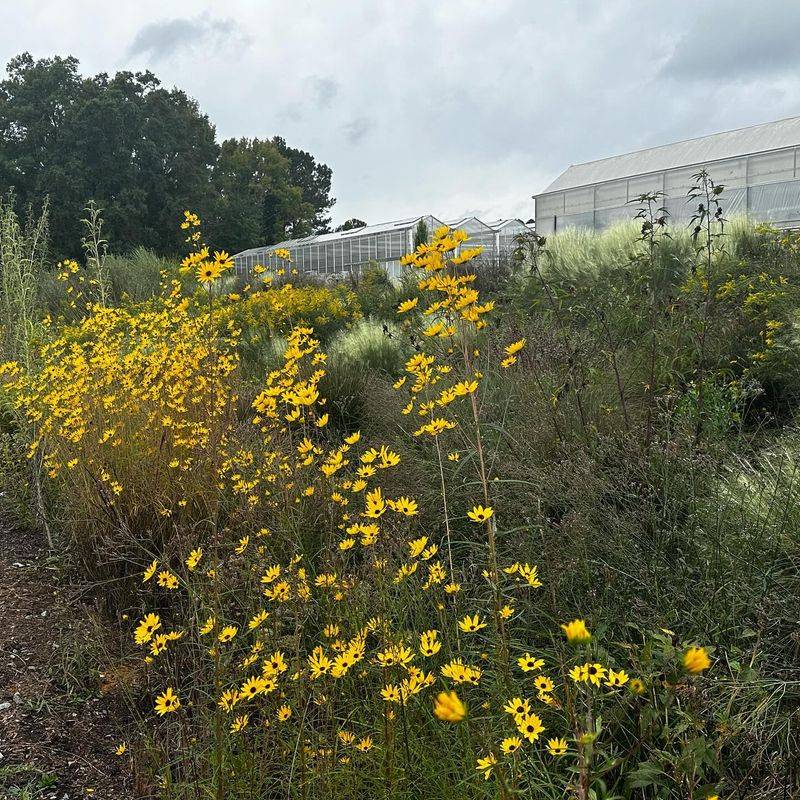
Buying the right plant is only the first step. How you source and establish it shapes whether you see a strong flowering display in the first year or spend a season waiting for a stressed plant to recover.
Choose nursery-grown stock from a reputable native-plant nursery that sources plants appropriate to your North Carolina region. A plant labeled simply “native sunflower” without regional provenance may represent a cultivar or ecotype from another part of the species’ range, which can affect cold hardiness, timing, and local wildlife compatibility.
NC State’s guide to selecting native plants for the garden emphasizes matching the plant to the site’s specific conditions, including sun exposure, soil type, and moisture regime, before purchasing. Buying a plant that fits the site is more effective than trying to modify a site to fit a plant you already have in hand.
If you are uncertain about soil drainage or pH, a basic soil test through NC State Extension can give you useful numbers before you start digging.
Water new transplants thoroughly at planting and continue watering regularly for the first several weeks until roots have had time to establish. The NC State Extension Gardener Handbook’s native plants section recommends applying approximately two to three inches of mulch around new plantings to conserve soil moisture and suppress weed competition.
Keep mulch a few inches away from the base of the stems to avoid rot.
Native status does not eliminate the need for irrigation during establishment or during drought. A newly planted swamp sunflower experiencing water stress in its first summer may survive but will likely produce fewer flowers and put most of its energy into root development rather than bloom.
Do not expect a first-year plant to deliver the same dense display as an established colony. Give it a full season to settle in before judging its performance.
Let healthy stems and seed heads support wildlife
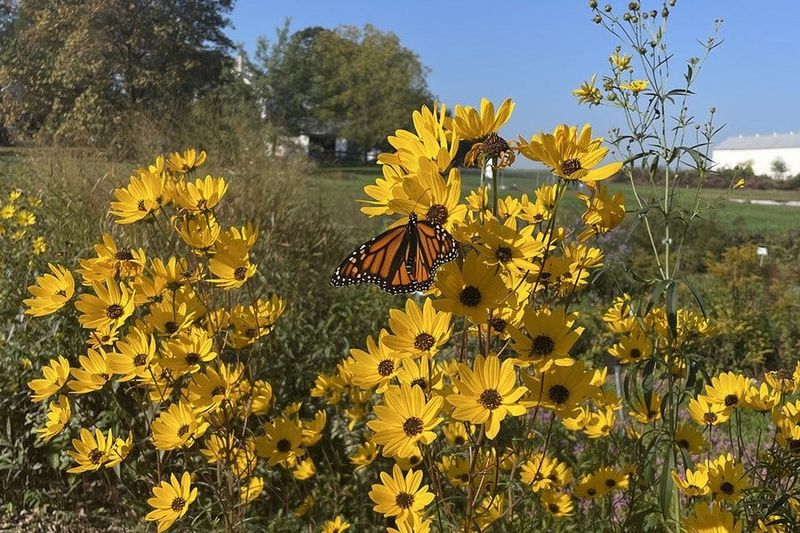
The flowers are the main attraction, but the plant’s value to your yard’s wildlife does not end when blooming slows. Swamp sunflower offers nectar and pollen to visiting insects while flowers are open, and its profile on the NC State Extension plant toolbox identifies it as bee-friendly, butterfly-friendly, and a larval host, meaning some insect species complete part of their life cycle on the plant itself.
Describing this as habitat and forage value is accurate; promising that specific species will show up in your yard would overstate what the plant can guarantee.
Seed heads that develop after flowering can provide food resources for seed-eating songbirds during fall and into winter. Penn State Extension’s native perennials for fall guide notes that leaving seed heads standing rather than cutting them immediately after bloom gives birds access to those resources through the lean months.
Hollow or pithy stems left standing can also provide shelter for cavity-nesting native bees that overwinter inside plant material.
Penn State’s fall garden care for pollinators guidance recommends leaving some leaf litter in place as well, since certain butterfly and moth larvae overwinter in the debris layer at the base of plants. Cutting everything to the ground immediately after the first frost removes that habitat before insects have finished using it.
The distinction worth making is between healthy plant material and diseased material. Swamp sunflower can develop rust, leaf spots, or powdery mildew, particularly in humid conditions or where air circulation is poor.
Penn State Extension cautions that a plant’s value to particular pollinator communities depends on its health and condition, not just its species identity. Diseased stems and heavily infected leaves should be removed and disposed of rather than left in place, since leaving infected material can carry disease into the next growing season.
Healthy stems and seed heads, by contrast, are worth leaving as long as your site and aesthetic tolerance allow.
Decide whether your yard has room for this late-season performer
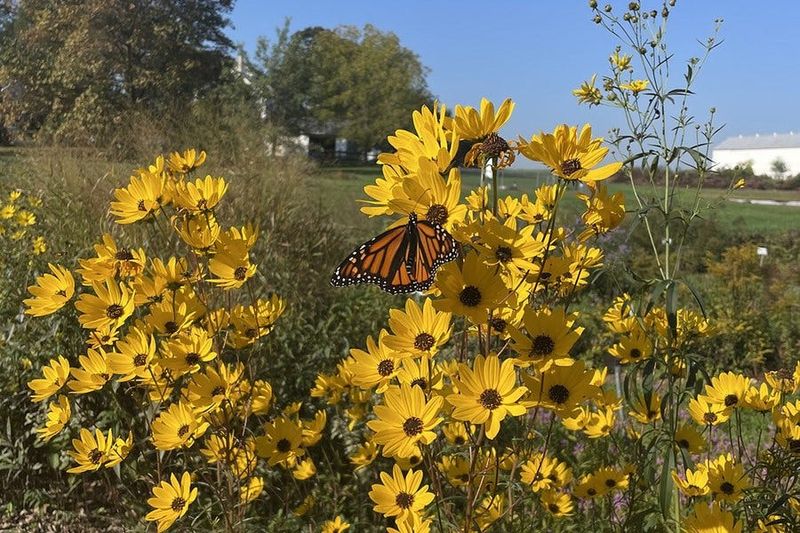
Swamp sunflower earns its reputation as one of North Carolina’s most conspicuous late-season native perennials when it is grown in the conditions it actually needs. Full sun, dependable moisture, and enough horizontal and vertical space for a tall, spreading colony are the three requirements that matter most.
If your yard checks those boxes, the plant can deliver genuine late-summer-to-fall color at a scale that few other natives match.
Accepting the full package is part of the bargain. That means seasonal June pruning to manage height, possible staking in exposed spots, and annual spread management to keep the colony from overtaking smaller plants nearby.
None of those tasks are especially difficult, but they are real commitments. A homeowner who wants a low-touch back border that runs itself may find the maintenance load more than expected in the first few seasons.
For yards where the site is right but the space is limited, shorter cultivars and a clear plan for containing rhizome spread can make the plant workable. For yards with dry, shaded, or cramped conditions, other late-season natives such as native asters, goldenrod, or blue mistflower may be a better fit without the same height and spread demands.
NC State’s plant profile and the Extension Gardener Handbook’s native plants chapter both point toward a roster of options rather than a single answer. Swamp sunflower is a strong choice, not the only choice, and a yard that gives it room will be rewarded with one of the most vivid native color displays North Carolina’s late summer has to offer.