
The North Carolina Native Shrub You Plant Once That Guards Your Yard’s Edge From Ticks For Years
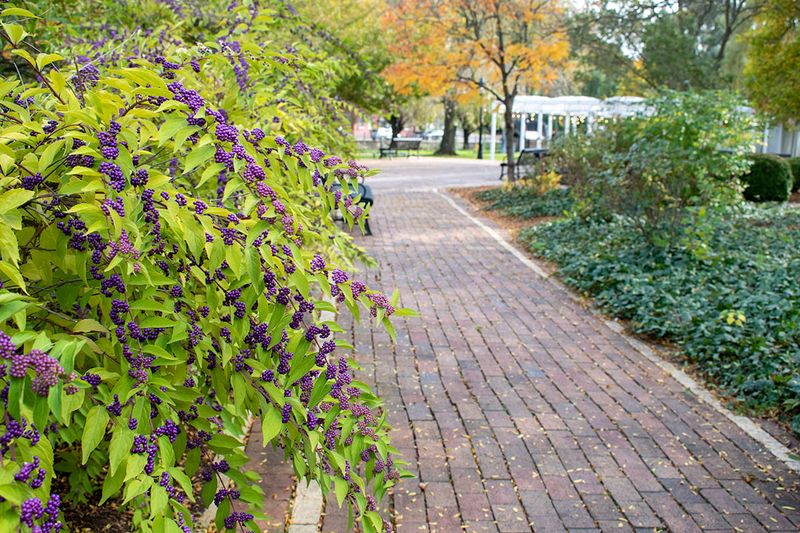
Ticks are a real problem for North Carolina homeowners, whether you garden in the Piedmont, along the Coastal Plain, or up in the mountains. A claim circulating online promises that one native shrub, planted once at your yard’s edge, can guard against ticks for years.
The shrub behind that promise is likely American beautyberry, and the science around it is genuinely interesting, but the full story is more nuanced than a single planting fix. Understanding what the research actually found, and what it did not, can help you use this beautiful native plant in a way that is both realistic and genuinely useful.
American beautyberry is a likely candidate, not a confirmed answer
No single source connected to the original shrub claim names or documents the plant it describes. Based on what is known about North Carolina natives with a connection to tick research, American beautyberry, known botanically as Callicarpa americana, is the most plausible candidate.
That identification is provisional, not confirmed, and readers should keep that distinction in mind throughout.
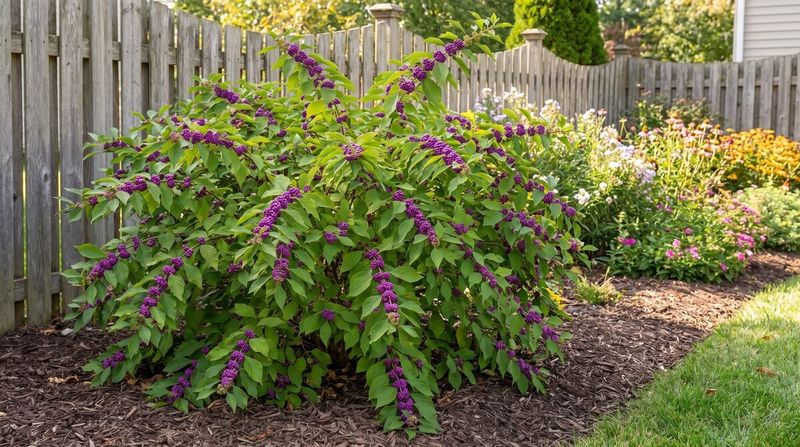
What makes beautyberry a reasonable fit is its profile as a native woody shrub found across all three major regions of North Carolina. NC State Extension’s plant profile describes it as a deciduous perennial that typically grows 3 to 8 feet tall and 3 to 6 feet wide, tolerates full sun to partial shade, and handles a range of soil textures as long as drainage is adequate.
That combination makes it adaptable from the sandy soils of the Coastal Plain to the clay-heavy Piedmont and the cooler mountain elevations.
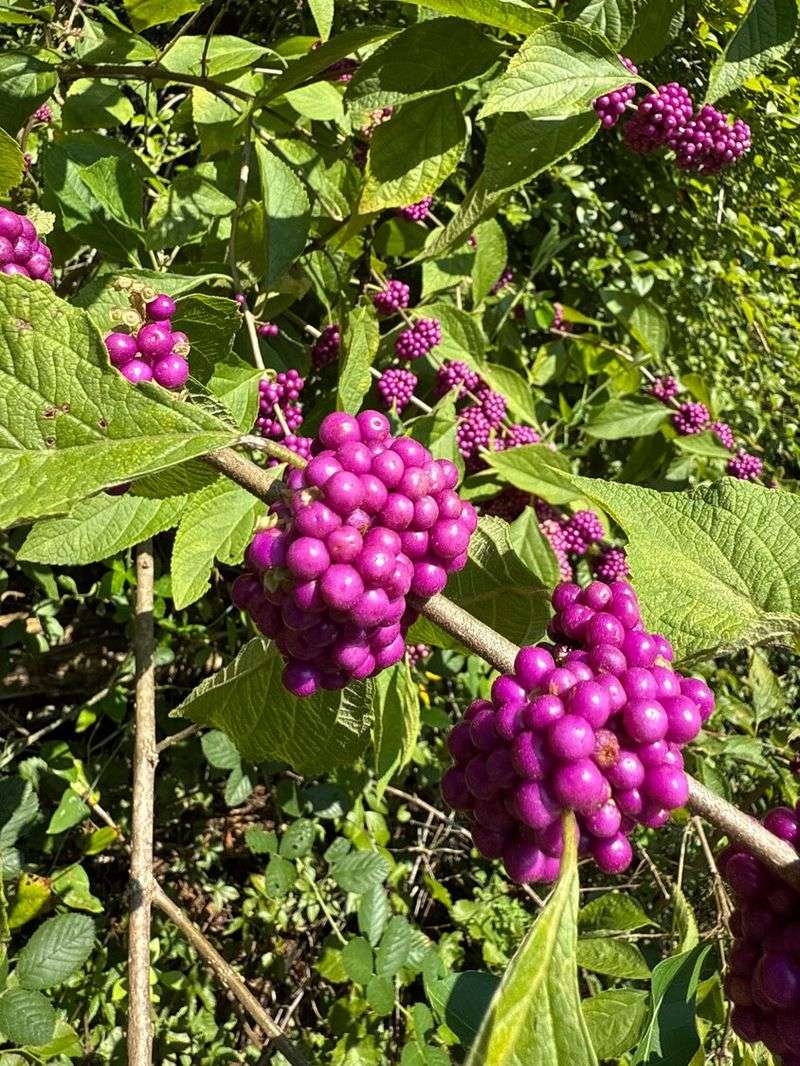
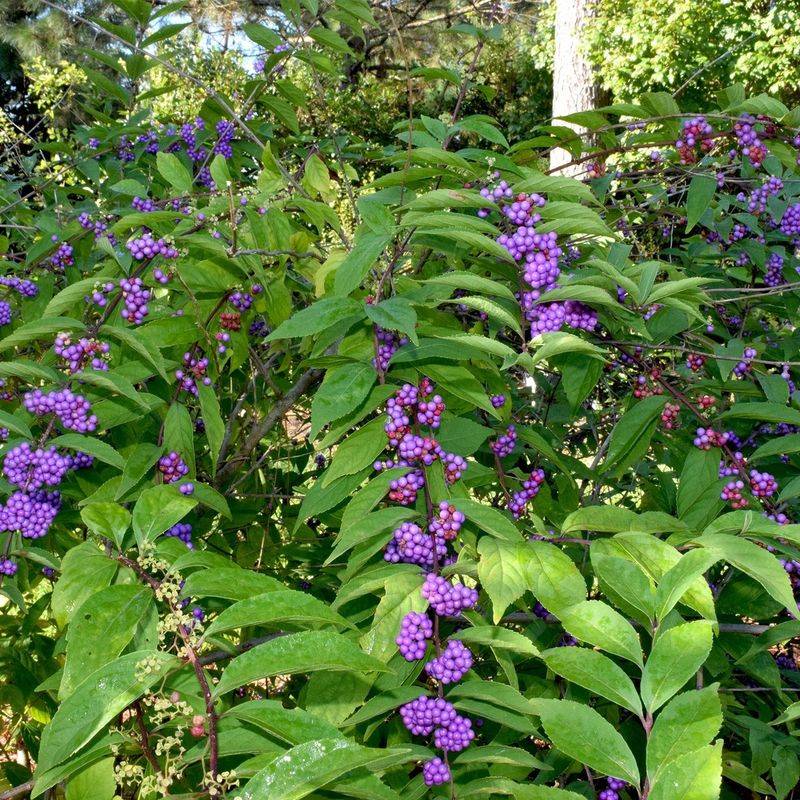
The shrub’s form is open and arching rather than dense or hedge-like. In late summer and fall, it produces tight clusters of vivid purple or bluish berries along its stems, typically from August through October, sometimes persisting into early winter.
Those berries attract a notable list of wildlife: American robins, brown thrashers, purple finches, eastern towhees, opossums, raccoons, and squirrels all use the fruit as a food source.
That wildlife value matters for the audience this article addresses. North Carolina homeowners who care about native plants and yard ecology want a shrub that does more than one thing.
Beautyberry earns its place in a wildlife-friendly border on the strength of its native status and its fall fruit, independent of any tick-related claim. The tick research connected to this plant is real, but it tells a narrower story than the original premise suggests, and that story deserves its own careful look.
What did the beautyberry tick research actually test?
The research behind the beautyberry-tick connection is legitimate science, but it is easy to misread what it actually demonstrated. Researchers at the USDA did not plant beautyberry shrubs around test yards and count ticks.
They isolated specific chemical compounds from the plant’s leaves and tested those compounds against ticks under controlled laboratory conditions.
The two compounds at the center of the work are callicarpenal and intermedeol. The USDA Agricultural Research Service publication reports that these compounds were extracted from American beautyberry leaves and evaluated for repellency against nymphs of two tick species common in the Southeast: blacklegged ticks, Ixodes scapularis, and lone star ticks, Amblyomma americanum.
Both species are found in North Carolina and are capable of transmitting disease.
The compounds were applied to treated cloth or used in controlled bioassay setups, not dispersed through the air by a living plant growing in a garden. Under those tested conditions, callicarpenal and intermedeol showed repellency against blacklegged tick nymphs that the researchers described as comparable to DEET.
That comparison is meaningful, but it applies only to the purified compounds at the concentrations used in the lab.
The peer-reviewed study also reported that repellency against blacklegged tick nymphs lasted approximately three hours after application. Against lone star tick nymphs, greater concentrations of the compounds were needed to achieve comparable results.
Those details matter: the protection was time-limited, concentration-dependent, and species-specific within the lab setting.
Nothing in the published research examined whether a beautyberry shrub growing in a residential yard releases these compounds at concentrations that would affect tick behavior outdoors. The leap from extracted compound in a controlled assay to living shrub in a North Carolina backyard is a significant one, and the evidence does not make that leap for us.
A living shrub is not a tested tick fence
Laboratory findings about extracted plant compounds are genuinely promising as a starting point for future repellent development, but they do not translate automatically into a claim about what a shrub does in your yard. The gap between those two things is where the original premise oversteps the evidence.
A 2026 University of Maryland Extension expert response makes this distinction directly. The response states that it is not aware of scientific studies showing that simply placing specific plant species in a landscape effectively repels ticks.
The expert commentary separates laboratory research on extracted botanical compounds from any evidence that whole plants growing in residential yards change tick abundance or movement. That distinction is the core issue with the original shrub claim.
The plant’s physical form reinforces this point. Beautyberry is deciduous and loses its leaves in winter, leaving bare stems from roughly late fall through early spring.
Its habit is open and arching, not dense or compact. It does not form the kind of continuous, tight canopy that might plausibly function as a physical barrier even if the chemistry were established for field conditions.
There is also a risk in the other direction. Any shrub or planting bed allowed to become overgrown near a home can add shade, retain leaf litter, and create the humid microhabitat that ticks prefer.
Beautyberry is not inherently a low-tick plant. Like any border shrub, it requires maintenance to avoid becoming part of the problem it is sometimes credited with solving.
The right framing is this: beautyberry is a native, wildlife-supporting shrub with genuine scientific interest behind compounds found in its leaves. Grown and maintained as part of a well-managed yard edge, it fits naturally into a broader tick-reduction strategy.
Treated as a standalone solution, it leaves homeowners with less protection than they believe they have.
Grow beautyberry for its real landscape benefits
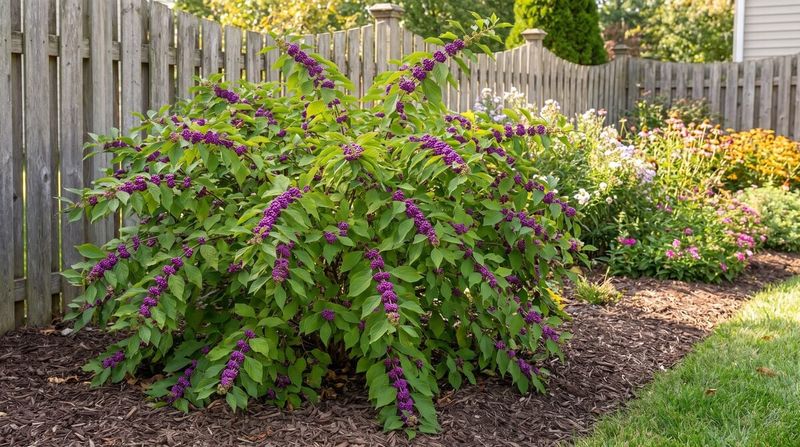
Planting beautyberry for what it reliably delivers, rather than for what it cannot guarantee, is the more satisfying approach. The shrub earns a place in a North Carolina yard edge on straightforward horticultural grounds before any tick-related reasoning enters the picture.
NC State Extension’s plant profile describes beautyberry as generally low-maintenance once established. It prefers adequate drainage over consistently wet feet, grows in full sun to partial shade, and does not demand amended or enriched soil.
A spot at the yard’s edge that receives morning sun and some afternoon shade suits it well across most of North Carolina’s regions.
The berry display is the plant’s signature feature. Clusters of vivid purple fruit wrap tightly around the stems from August through October and sometimes hold into early winter, providing color at a time when most shrubs have finished their seasonal show.
Wildlife use of those berries is consistent and well-documented, making the plant a practical choice for homeowners trying to support songbirds and small mammals on their property.
Pruning is straightforward but important to understand. Beautyberry flowers and fruits on new growth produced each season.
NC State’s Extension Gardener Handbook on woody ornamentals supports the practice of cutting the shrub back hard in late winter, potentially to about 1 foot from the ground, to encourage vigorous new shoots and a full berry set later in the season. Skipping annual pruning leads to a leggier plant with fewer berries over time.
On longevity, honesty serves the reader better than optimism. Mississippi State University Extension notes that some beautyberry plants may live as few as 10 years, though site conditions and care vary the outcome considerably.
Treating it as a productive perennial border shrub rather than a permanent fixture sets realistic expectations and encourages the kind of ongoing attention that keeps the planting healthy.
Build the actual defense at the lawn’s edge

A well-managed yard edge does more for tick reduction than any single plant. Public-health and extension guidance consistently points to the same set of physical habitat changes, and homeowners who combine those changes with a native planting like beautyberry are working with the evidence rather than against it.
The most widely cited structural recommendation is a three-foot-wide strip of wood chips or gravel placed between the mowed lawn and any wooded or brushy area at the property’s edge. CDC tick-prevention guidance describes this transition zone as a way to discourage contact with the brushy edges where ticks are most likely to be questing.
The strip is not a wall and will not stop every tick, but it creates a defined boundary and a drier, less hospitable surface that ticks are reluctant to cross.
The CDC Tick Management Handbook pairs that recommendation with a broader set of habitat modifications: remove leaf litter regularly, mow the lawn consistently, clear tall grass and brush near the home, and prune low-hanging branches and shrubs to let sunlight reach the ground. Each of those actions reduces the shaded, humid microhabitat that ticks need to survive and find hosts.
University of Maine Cooperative Extension’s landscape management guidance adds that woodpiles, debris piles, and bird feeders near the home can attract the small mammals that carry ticks through the yard, so managing those attractants is part of the edge strategy as well.
North Carolina Cooperative Extension’s tick pest alert echoes the same priorities for Tar Heel homeowners specifically: keep grass cut, clear brush, and maintain a clean, open edge. Beautyberry fits into this plan as a maintained shrub planted behind the wood-chip strip, on the wooded side of the transition zone rather than directly beside the patio or play area.
Managed that way, it contributes wildlife value without undermining the habitat changes that actually have public-health evidence behind them.
Maintain a wildlife-friendly border without making tick habitat
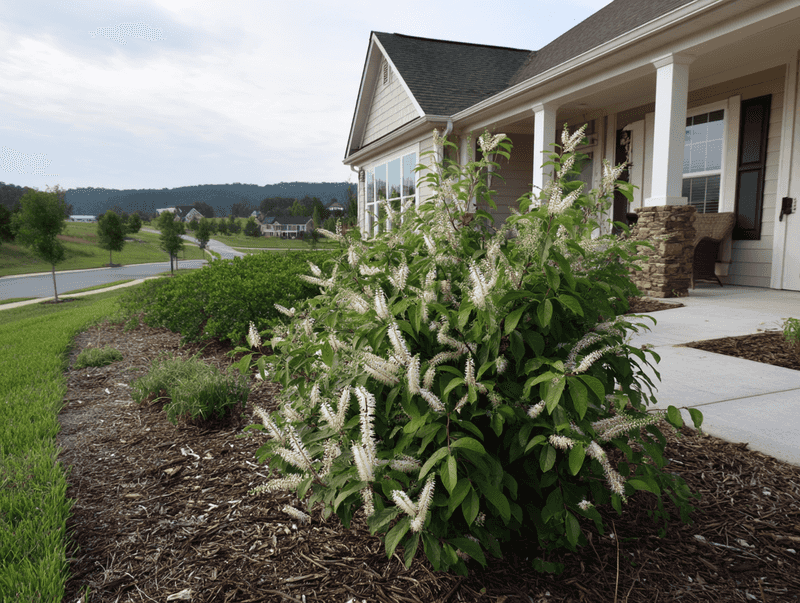
A native border planting is only as useful as the care it receives. Left unpruned and allowed to spread into dense, shaded thickets, beautyberry or any other shrub can create exactly the kind of humid, leaf-littered cover that ticks favor.
Keeping the planting open, airy, and maintained is not optional maintenance; it is the difference between a wildlife-friendly border and a tick-friendly one.
Annual late-winter pruning, as described in the previous section, keeps beautyberry from becoming overgrown. Raking out accumulated leaf litter from beneath and around the shrub each season removes the damp mat where ticks and their small-mammal hosts shelter.
Landscape management guidance from University of Maine Cooperative Extension consistently identifies leaf litter removal and vegetation thinning as among the most effective physical steps a homeowner can take at the yard’s edge.
On the question of deer: NC State’s beautyberry profile notes some deer resistance, but white-tailed deer do browse the plant’s leaves and fruits. Deer are one of the primary hosts for adult blacklegged ticks, so a yard that regularly attracts deer also brings ticks closer to the home.
Reducing deer access where feasible, through fencing or by removing attractants, supports the broader goal of keeping tick pressure lower near the house. Beautyberry alone will not keep deer out.
Personal protection remains essential regardless of how well the yard is managed. CDC guidance on preventing Lyme disease recommends EPA-registered repellents containing DEET, picaridin, IR3535, oil of lemon eucalyptus or PMD, applied according to label directions, along with 0.5% permethrin-treated clothing or gear.
After any time spent near the yard’s edge, a full body and clothing check is important. URI TickEncounter’s yard protection guidance reinforces that no single yard measure eliminates the need for personal checks.
Pets need daily tick checks and veterinarian-recommended prevention. CDC’s pet tick prevention page specifically warns that cats are highly sensitive to certain tick-prevention chemicals, and owners should consult a veterinarian before applying any product to a cat.
Dogs can carry ticks indoors without showing obvious signs, making daily checks and consistent prevention equally important for them.
Use beautyberry as a supporting plant, not a magic shield
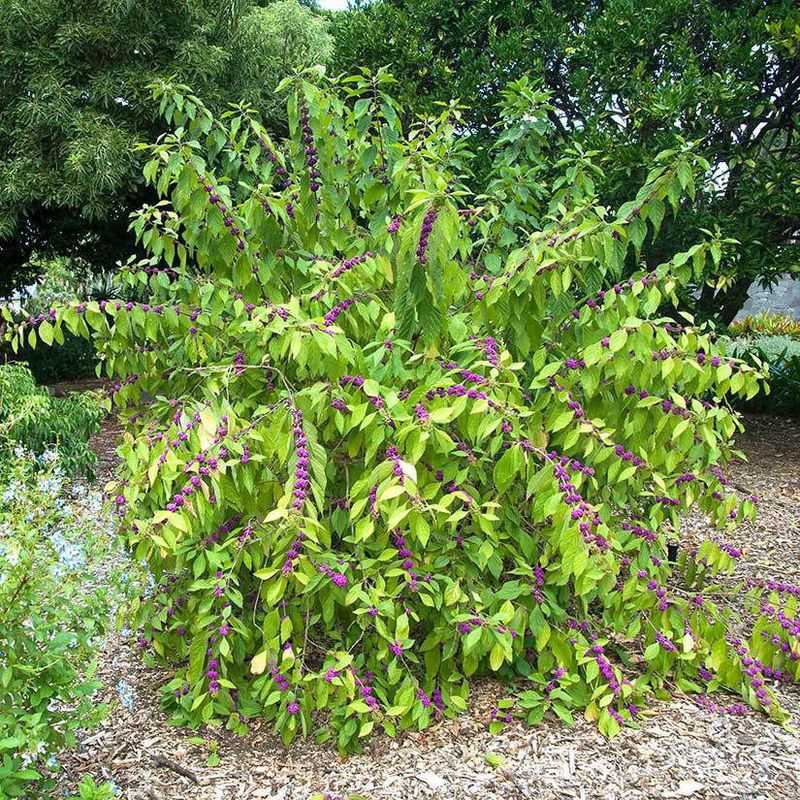
American beautyberry is a genuinely worthwhile native shrub for North Carolina yards. Its wildlife value is real, its adaptability across the Coastal Plain, Piedmont, and mountains is well-documented by NC State Extension, and the compounds found in its leaves have earned legitimate scientific attention.
The peer-reviewed USDA study on callicarpenal and intermedeol is a real finding, not folklore. But a laboratory result about isolated compounds is not the same as a proven yard barrier, and no field evidence supports the claim that planting beautyberry once keeps ticks out for years.
The practical takeaway is straightforward. Plant beautyberry at the wooded side of your yard’s edge, behind a maintained three-foot wood-chip or gravel transition strip.
Prune it annually in late winter, clear leaf litter from beneath it each season, and keep the surrounding edge open and sunny. Use EPA-registered repellents as directed by CDC guidance, check your body and clothing after yard work, and keep up with veterinarian-recommended prevention for your pets.
The goal is not a perfect tick-free yard, because no single plant or strategy delivers that. The goal is a yard edge that is less inviting to ticks, more hospitable to the songbirds and small mammals that belong there, and maintained with enough honesty to keep the people and pets who use it genuinely safer.
Beautyberry, grown with clear expectations, fits that goal well.