
The Most Underrated North Carolina Native That Quietly Keeps Ticks Out Of Your Backyard Garden
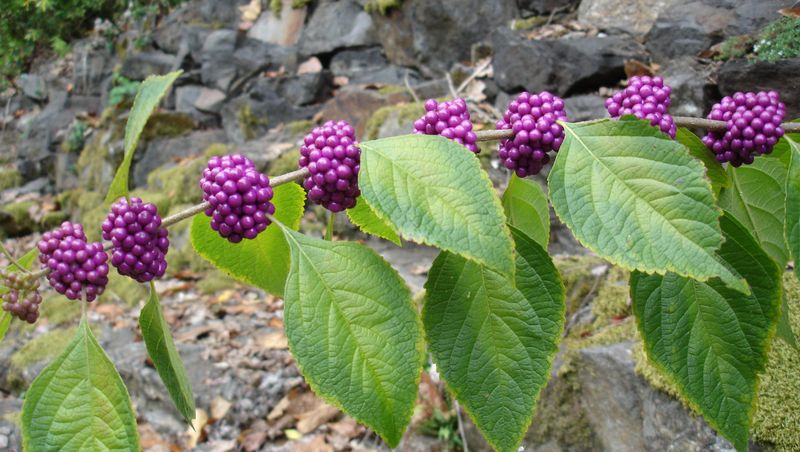
Somewhere between the azaleas and the black-eyed Susans, there is a shrub most North Carolina gardeners walk right past without a second glance. American beautyberry grows wild across the state, lights up the fall landscape with clusters of vivid purple berries, and carries a chemistry that researchers found genuinely interesting when they started looking at ticks.
The science is real, the plant is worth knowing, and the full story is more useful than the headline version you may have seen shared online.
American beautyberry is the native shrub behind the repellent-chemistry claim
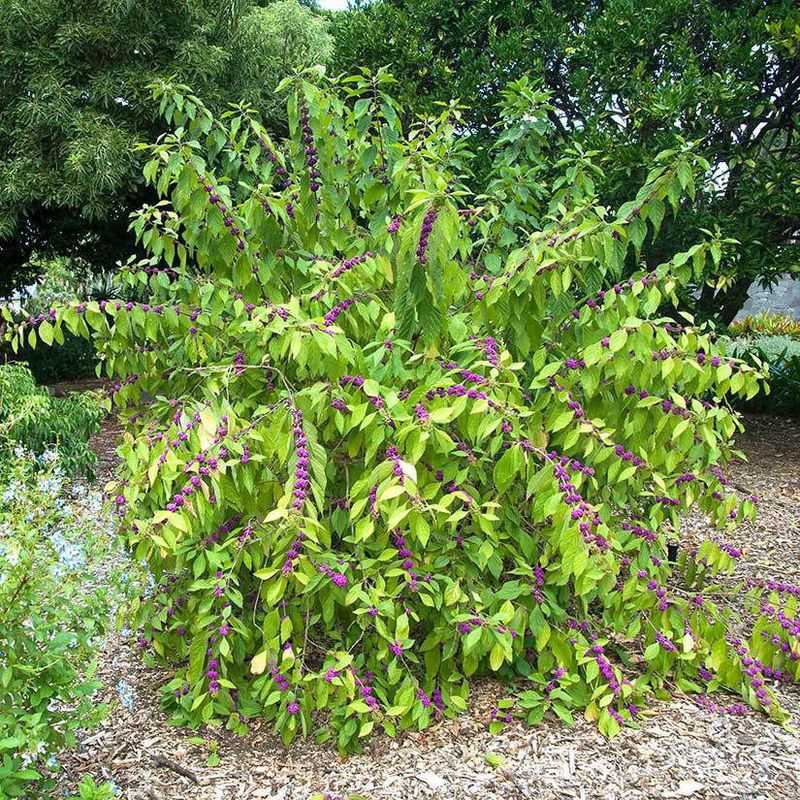
American beautyberry, botanical name Callicarpa americana, grows across all three of North Carolina’s major regions. NC State Extension’s plant profile lists it as native to the Coastal Plain, Piedmont, and Mountains, which means it is genuinely at home whether you garden in Wilmington, Greensboro, or Boone.
That broad native range is one of the first things that sets it apart from many ornamental shrubs that happen to survive in North Carolina but did not evolve here.
At maturity, the shrub typically reaches three to eight feet tall and three to six feet wide. It handles full sun to partial shade and asks for reasonably good drainage, though it tolerates a range of soil types found across the state.
Most gardeners would call it low-drama once established, and that understated quality may be part of why it gets overlooked.
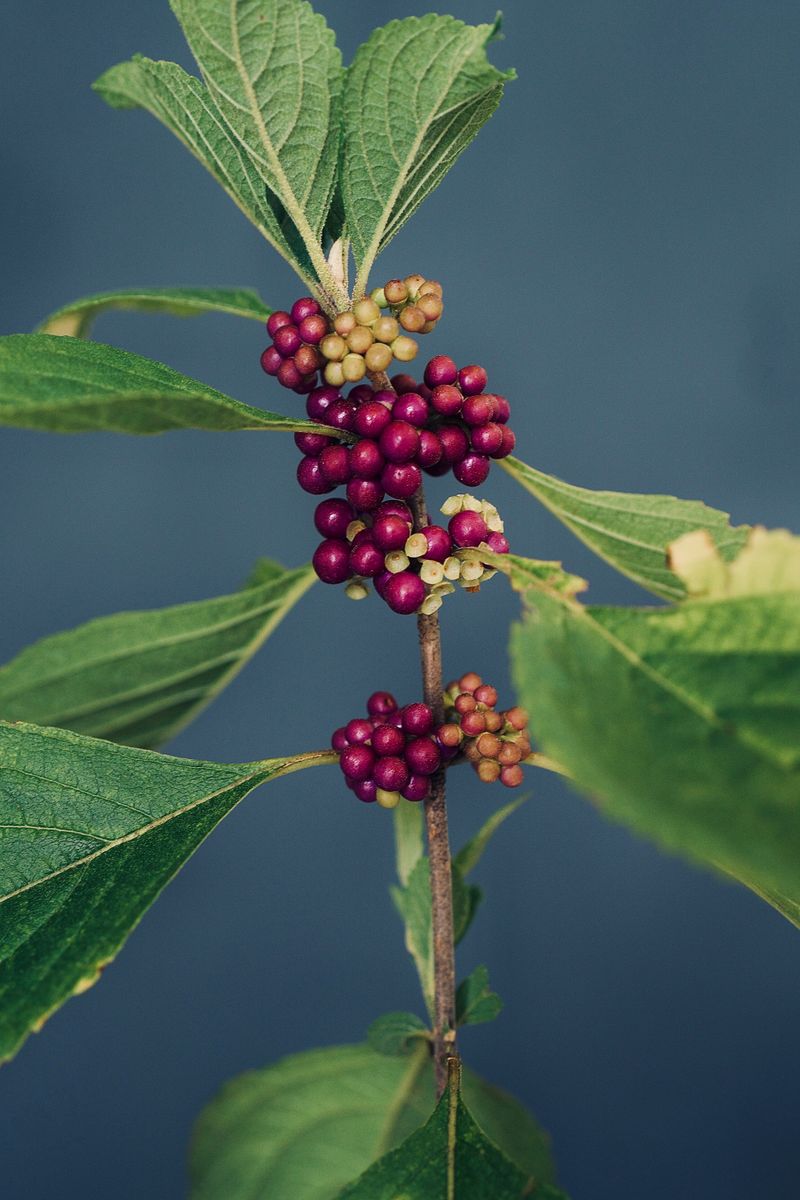
From approximately August through October, the plant earns every bit of attention it gets. The berry clusters turn a striking purple or bluish color and line the arching stems in a way that stops people mid-path.
Those berries feed American robins, brown thrashers, eastern towhees, and small mammals including opossums and squirrels. The wildlife value alone makes a case for adding it to a yard.
The repellent-chemistry angle adds a second reason to pay attention. NC State Extension notes that crushed beautyberry leaves produce a compound that can repel mosquitoes, ticks, and fire ants.
That is a meaningful detail, but the key word is “crushed” and the key phrase is “repel” at the chemistry level, not at the landscape level. The native status and the wildlife value stand on their own, and the leaf chemistry is a genuine bonus worth understanding accurately.
Its leaves yielded compounds that researchers tested against ticks
Callicarpenal and intermedeol are the two compounds that put American beautyberry on the tick-research radar. Both are terpenoids, a broad family of naturally occurring chemicals found in many plants.
Researchers isolated these compounds directly from American beautyberry leaves and then tested them under controlled laboratory conditions to see whether they could affect tick behavior.
The peer-reviewed study that generated the most interest found that both callicarpenal and intermedeol showed repellent activity against tick nymphs in a laboratory setting. That finding is what prompted the wave of popular coverage describing beautyberry as a tick-repellent plant.
The excitement was understandable, because natural compounds with that kind of activity are genuinely worth studying.
Where the popular coverage often went sideways was in the leap from “compounds isolated from leaves showed activity in a lab” to “plant your yard with beautyberry and ticks will stay out.” Those are two very different claims. The compounds were extracted and purified before testing.
The living shrub, standing in your garden, is not continuously releasing a measured dose of callicarpenal into the surrounding air or soil in a way that has been shown to affect nearby ticks.
NC State Extension’s language is careful on this point: crushed leaves produce a repellent chemical. Crushing is the operative step.
An uncrushed shrub sitting at the edge of your property line has not been demonstrated to function as a perimeter treatment. The chemistry is real and the laboratory findings are legitimate.
The gap between those findings and a planted shrub doing yard-wide work is where the claim needs to be handled with care.
The laboratory result does not predict a tick-free backyard
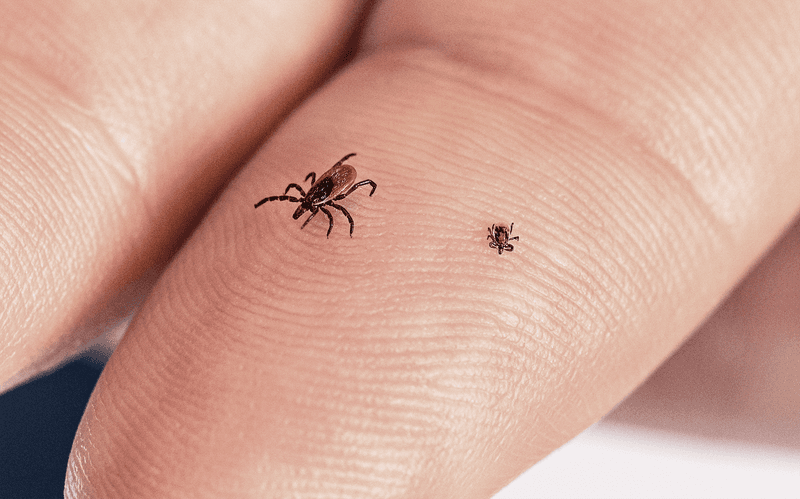
Understanding what the researchers actually did makes the finding both more credible and more limited. In the principal study, scientists applied isolated callicarpenal and intermedeol at specified laboratory doses to treated cloth wrapped around a human finger.
Tick nymphs were then introduced to see how many would cross or avoid the treated area. No intact shrubs were involved.
No crushed leaves were scattered around a garden bed. No residential landscapes were studied.
That study reported that callicarpenal repelled approximately 98% of blacklegged tick nymphs and intermedeol repelled approximately 96% at the test doses used. Those are striking numbers in a controlled setting.
Callicarpenal reached 100% repellency against blacklegged nymphs at three hours after treatment, but that figure dropped to 53.3% by the four-hour mark, showing that even under ideal laboratory conditions the effect fades over time.
Translating those numbers to a backyard requires a chain of assumptions that the research does not support. A living shrub would need to release the right compounds at the right concentrations into the surrounding area continuously enough to affect ticks that are questing in leaf litter, grass, or mulch nearby.
None of those steps have been tested in a residential setting, and no residential beautyberry field evidence was located for this article.
A separate residential landscape study of nootkatone, another plant-derived compound, illustrates why laboratory botanical-repellent results do not automatically translate to durable yard control. That study found that control declined rapidly after treatment and that one formulation was phytotoxic.
The point is not that beautyberry fails by association, but that the path from a promising compound to reliable residential performance is longer and harder than a single laboratory result can establish.
North Carolina’s tick species make broad promises especially risky
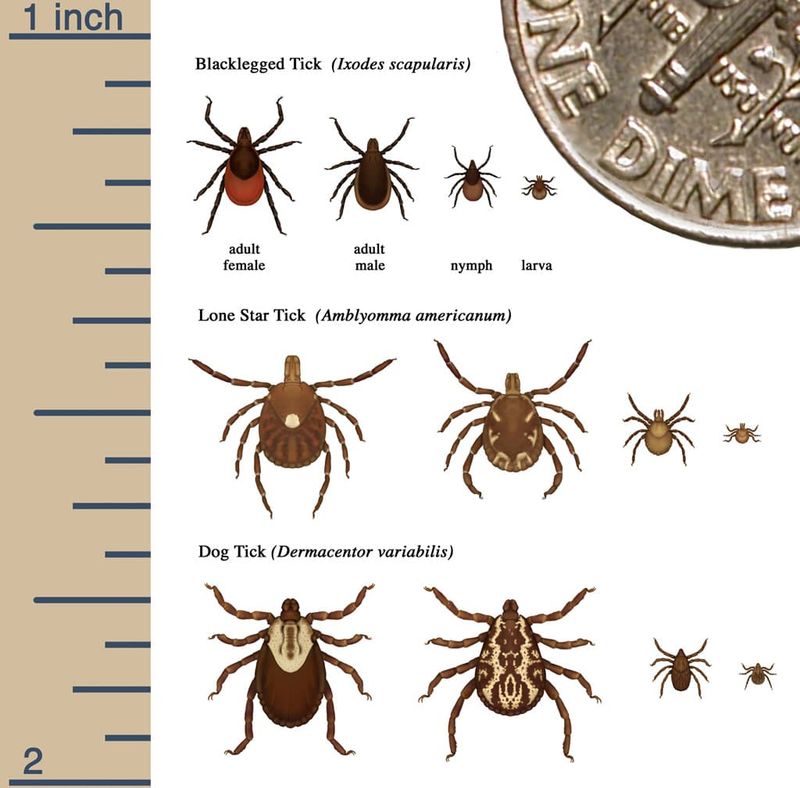
Tick exposure in North Carolina is not a single-species problem. The state’s 2024 tickborne disease report identifies blacklegged ticks as vectors of Lyme disease, anaplasmosis, and babesiosis; lone star ticks as vectors of ehrlichiosis; and American dog ticks as vectors of Rocky Mountain spotted fever.
Each species has its own habitat preferences, activity peaks, and geographic distribution across the state. A control approach that works against one may not work against the others.
That species diversity matters a great deal when evaluating the beautyberry research. The strongest results in the laboratory study were against blacklegged tick nymphs, which are among the smallest and hardest to spot.
Against lone star nymphs, the same compounds performed substantially worse. At the lower test dose, callicarpenal showed no significant repellency against lone star nymphs at all.
At the higher dose, callicarpenal repelled 20% and intermedeol 40% of lone star nymphs tested.
Lone star ticks are abundant across much of North Carolina, particularly in the Piedmont and Coastal Plain. A gardener who planted beautyberry specifically hoping for tick protection and then encountered a lone star tick would be relying on a compound that showed limited activity against that species under controlled conditions, let alone in an open yard.
The beautyberry laboratory result is genuinely interesting for blacklegged ticks. For lone star ticks, the same data offers much less comfort.
No plant has been shown to serve as a universal tick defense across all three of North Carolina’s medically important species. Treating any single native shrub as a comprehensive solution misrepresents both the plant and the risk.
Plant beautyberry for its native and wildlife value, not as a perimeter barrier
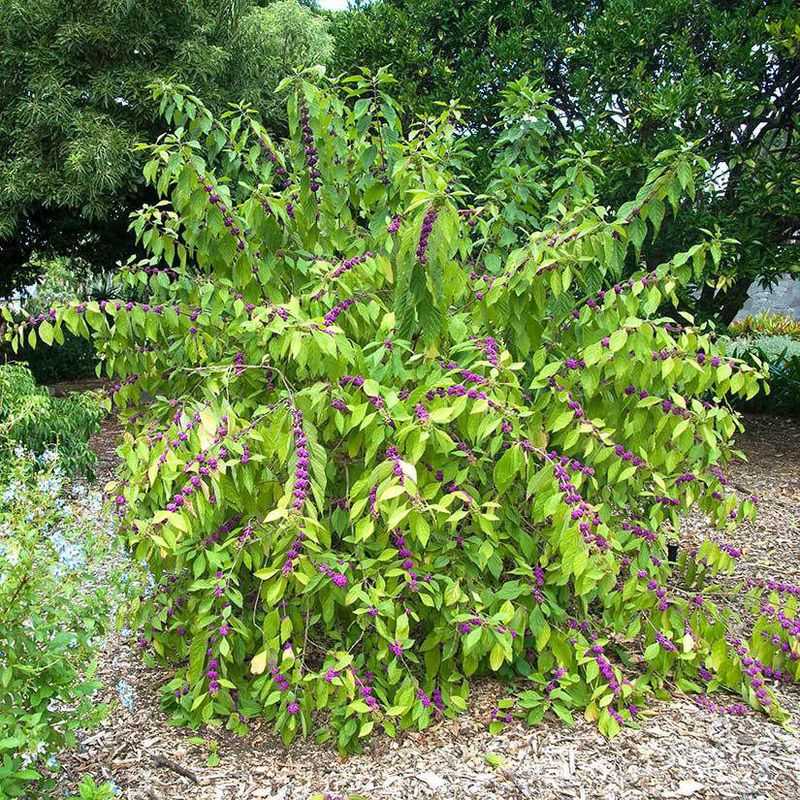
Grown for the right reasons, American beautyberry is a genuinely rewarding addition to a North Carolina yard. The shrub fits a range of sites: full sun to partial shade, with reasonable drainage.
It tolerates the clay-heavy soils common in the Piedmont and the sandier conditions of the Coastal Plain, though matching it to your specific light, moisture, and space is still worth doing before you buy. A mature plant reaching six to eight feet wide needs room to arch gracefully, and crowding it against a fence or into a tight corner works against its best qualities.
NC State Extension’s profile recommends late-winter pruning, since flowers and fruit form on new shoots. Cutting the shrub back hard in late February or early March encourages vigorous new growth and a full berry display by fall.
Planting two or more shrubs nearby can also improve fruit production, which means more food for the birds and small mammals that rely on those fall berry clusters.
When sourcing the plant, look for Callicarpa americana specifically. Not every plant sold as “beautyberry” at a garden center is the same species.
Several nonnative Callicarpa species are sold in the trade, and while some are attractive, they do not carry the same native-plant credentials or confirmed regional ecological relationships. NC State Extension’s native plants guidance recommends buying propagated native plants rather than digging specimens from the wild, which protects wild populations and typically gives you a healthier, more adaptable plant anyway.
Placement matters for another reason beyond aesthetics. CDC guidance on tick habitat emphasizes reducing moist, brushy, leaf-littered areas near the home.
A dense, unpruned beautyberry hedge immediately beside a patio, play area, or heavily used path could create exactly the kind of shaded, humid microhabitat that ticks favor. That is not a reason to avoid the plant; it is a reason to site it thoughtfully, maintain it regularly, and keep the area beneath it clear of deep leaf litter.
Build the proven tick protections around the planting
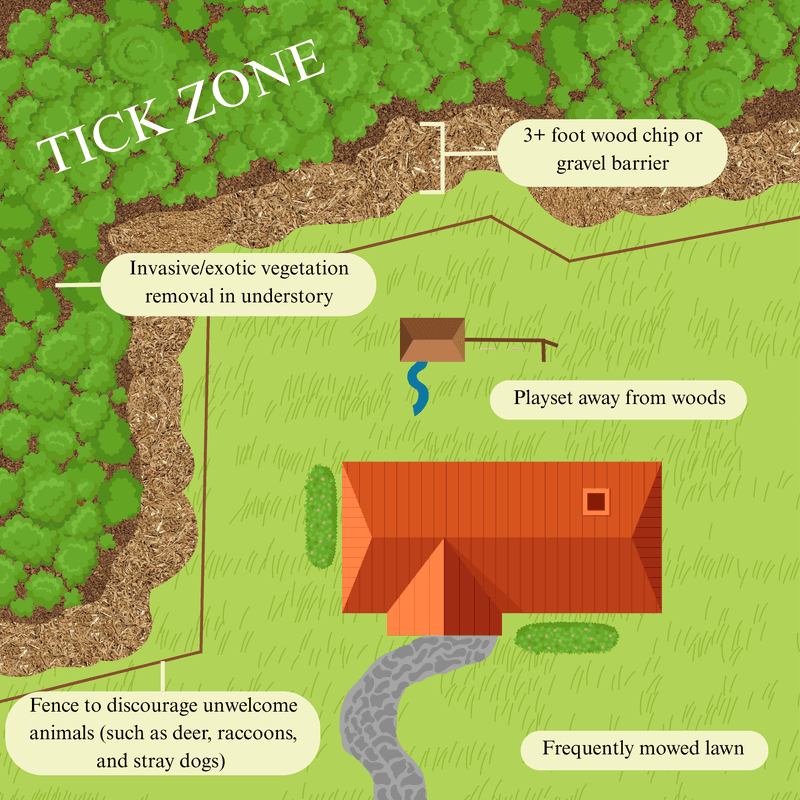
Beautyberry earns a place in a North Carolina yard on its own merits, but it does not replace the practices that actually reduce tick encounters. CDC’s tick-prevention guidance centers on habitat management around the home: remove leaf litter regularly, clear tall grass and brush near the house and at the lawn edge, mow on a consistent schedule, and place a three-foot-wide barrier of wood chips or gravel between your lawn and any adjacent wooded or brushy area.
Each of those steps targets the moist, sheltered zones where ticks actually wait for a host.
Personal protection layers on top of habitat work. EPA-registered skin repellents containing DEET, picaridin, IR3535, or oil of lemon eucalyptus are evaluated for both safety and effectiveness before they reach store shelves.
EPA’s repellent registration process requires that data, which is why registered products carry a level of confidence that homemade or unregistered preparations do not. That registration framework exists specifically to protect consumers from products that have not been evaluated for effectiveness or safety.
Permethrin-treated clothing or gear adds another layer for anyone spending extended time in wooded or brushy areas. The treatment bonds to fabric and remains effective through multiple wash cycles, making it practical for frequent outdoor workers and hikers alike.
After any outdoor activity in tick habitat, a thorough tick check from head to toe, including behind the knees, around the waistband, and in the hairline, catches any hitchhikers before they can attach and feed.
Pet owners carry an additional responsibility. Dogs and cats that go outdoors can bring ticks inside on their fur, which then puts the whole household at risk.
Veterinarian-recommended tick prevention for pets is a non-negotiable part of a layered plan, not an optional add-on. Beautyberry complements all of these measures by contributing to a yard that supports native wildlife and adds a native plant with interesting chemistry.
It does not stand in for any of them.
The responsible takeaway: a promising native, not a miracle solution
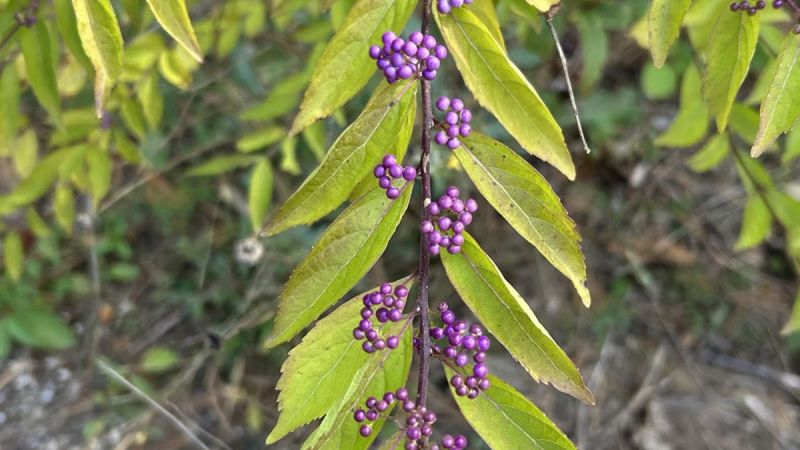
Callicarpa americana belongs in more North Carolina yards than it currently occupies. The case for planting it starts with native status, extends to fall wildlife value, and includes a genuinely interesting piece of leaf chemistry.
Researchers found that compounds isolated from its leaves showed laboratory repellency against blacklegged tick nymphs at rates that are hard to ignore. That is worth knowing and worth sharing accurately.
What the planted shrub has not been shown to do is keep ticks out of a residential landscape. The reviewed evidence does not establish yard-wide protection, and no residential beautyberry field evidence was located for this article.
Treating the plant as a perimeter barrier or a substitute for layered prevention misrepresents the science and could leave a gardener with a false sense of security in a state where tick-borne disease is a documented public health concern.
The practical path forward is straightforward. Verify that you are buying Callicarpa americana rather than a nonnative look-alike, match it to your site’s light and drainage, maintain it so it does not create dense tick habitat, and enjoy what it genuinely offers.
Then build your real tick defense with the habitat, personal, pet, and health measures that CDC guidance and your own doctor and veterinarian recommend. A native shrub with promising chemistry, well placed and honestly understood, is a fine thing to have in a North Carolina wildlife-friendly yard.
It just works best when you know exactly what it is and is not doing for you.