
The North Carolina Native Berry Shrub You Plant Once That Feeds Cedar Waxwings And Robins Every Winter For Decades
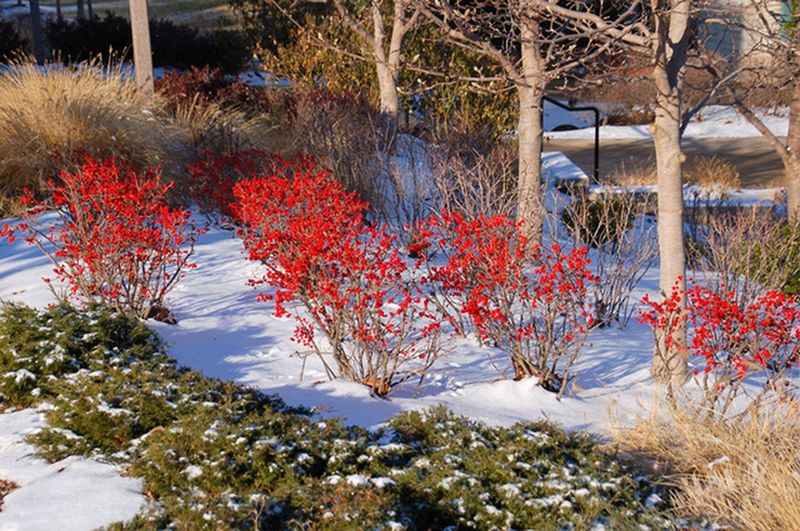
Every winter across North Carolina, flocks of cedar waxwings and American robins descend on yards with one thing in mind: berries. Common winterberry holly is a native shrub that can turn your yard into exactly that kind of cold-season stop.
Getting a reliable berry crop takes a bit more planning than planting a single shrub, but the payoff for your yard and its winter visitors is well worth understanding. Here is what you need to know before you dig.
Winterberry creates a distinctly North Carolina winter display
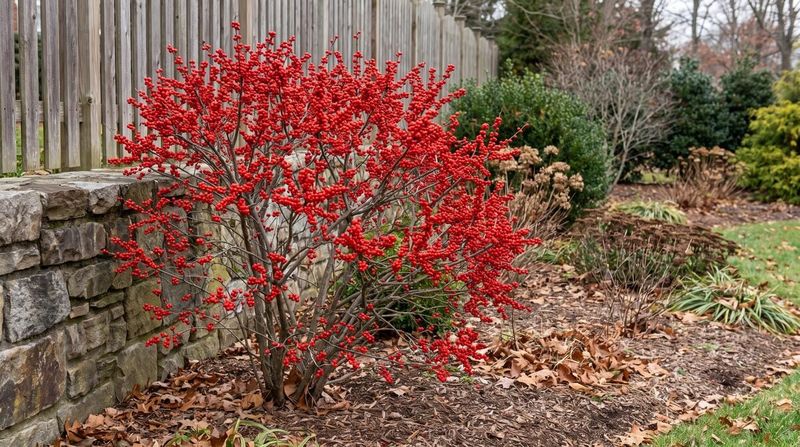
Common winterberry holly (Ilex verticillata) earns its name the moment the leaves drop. Where most shrubs look bare and forgettable in November, winterberry turns its naked stems into a gallery of bright red, orange, or yellow fruit that holds through the coldest months.
NC State Extension describes winterberry as a multi-stemmed, deciduous shrub with a mature size range of roughly 3 to 15 feet depending on the plant and cultivar, making it manageable in most residential yards.
The shrub is native across all three of North Carolina’s major regions. Whether your yard sits in the Blue Ridge Mountains, the rolling Piedmont, or the Coastal Plain, NC State’s native plants handbook lists winterberry as a regionally appropriate choice.
That wide native range means the plant is already adapted to local soils, insects, and seasonal rhythms in ways that non-native ornamentals simply are not.
One distinction matters before you shop: winterberry is not evergreen. Unlike American holly (Ilex opaca), which keeps its foliage year-round, winterberry drops every leaf in fall and relies entirely on its fruit for winter visual interest.
That means it is not a substitute for privacy screening in cold months. What it does offer is a seasonal spectacle that no evergreen can match: clusters of jewel-bright berries against bare wood on a gray January day.
One more point worth raising early: producing those berries reliably takes more than a single plant. A berry-producing planting generally involves at least one male and one female shrub, a detail covered fully in a later section.
Bare branches keep seasonal food visible
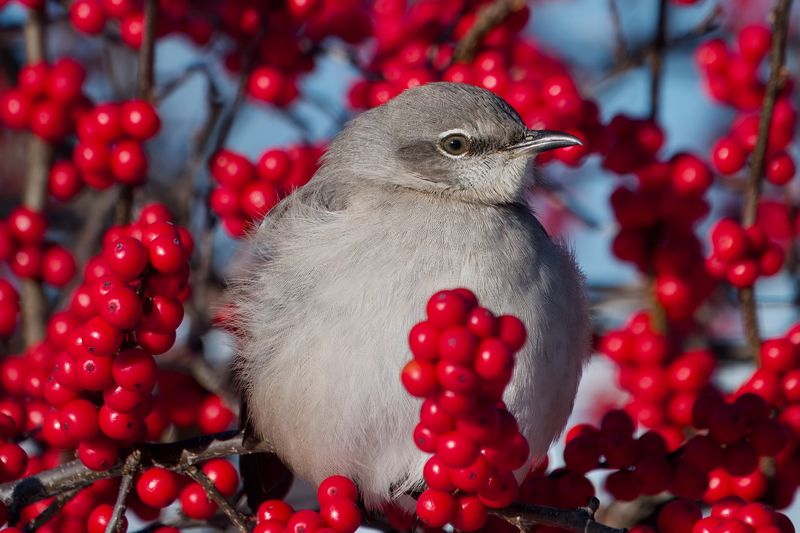
Fruit that ripens in late summer and hangs into the heart of winter is genuinely rare in the shrub world. Winterberry’s female plants do exactly that, producing berries that color up from late summer through fall and can persist well into the cold months.
NC State Extension notes that winterberry fruits are eaten by more than 48 bird species, a figure that reflects how broadly the plant fits into local food webs rather than just serving one or two flashy visitors.
Cedar waxwings are the birds most people hope to attract, and for good reason. They travel in tight, vocal flocks that can number in the dozens or even hundreds, and NC Audubon identifies berry-rich native shrubs as key food sources for cedar waxwings overwintering in the state.
American robins share that appetite. Many robins stay in North Carolina through winter rather than migrating south, shifting from earthworms to fruit as the ground freezes, and Audubon highlights native berry plants as critical food sources for robins during the cold season.
The bare branches of winterberry actually help here. With no foliage blocking the view, fruit is easy for foraging birds to spot from a distance, and it is equally easy for you to watch the action from a window.
That visibility is part of what makes a winterberry planting so rewarding in a residential yard.
Still, no shrub comes with a guaranteed reservation list. Cedar waxwing winter movements tracked by Audubon show that flocks follow food supplies across a wide range, so their arrival in any particular yard depends on what else is available nearby, how large your berry crop is, and factors like weather and surrounding habitat.
Planting winterberry improves your odds considerably, but bird visits remain a welcome bonus rather than a certainty.
A fruiting planting needs both sexes
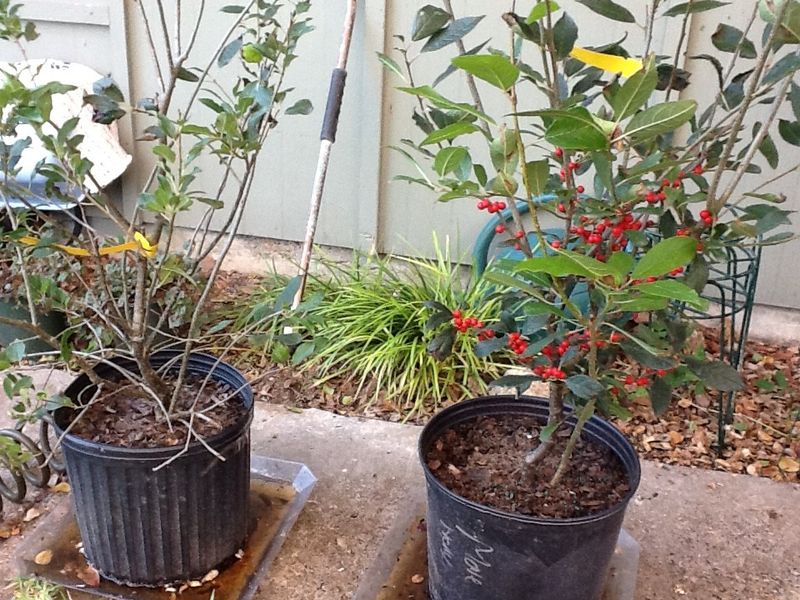
Here is the detail that surprises most first-time buyers: a single winterberry shrub, planted alone, will very likely produce no fruit at all. Winterberry is dioecious, which means male and female flowers grow on separate plants.
Female plants make the berries, but only after pollen from a compatible male reaches their flowers at the right time. No male nearby means no fruit, regardless of how healthy the female plant is or how ideal the site looks.
The fix is straightforward. NC State recommends pairing female plants with a compatible male pollinizer such as ‘Jim Dandy’ or ‘Southern Gentleman,’ placed within 50 feet and selected to share overlapping bloom periods with the female cultivar you choose.
Bloom timing is the part most people overlook: a male that flowers two weeks before or after your female is essentially useless for pollination. Check the cultivar tags or ask your nursery specifically which male pollinates which female.
University of Minnesota Extension notes that one male can pollinate roughly 20 females within about 40 feet, and NC State gives a similar ratio of one male for every 10 to 20 females. For a typical North Carolina home yard, one male plus one, two, or three females is all you need.
That small group gives you a solid berry crop without overwhelming a modest space.
Do not assume that a neighbor’s holly or a wild plant in a nearby woodland will supply compatible pollen. Wild or ornamental hollies may bloom at different times or belong to different species entirely, and you have no control over whether their pollen reaches your plants reliably.
Buying a named male cultivar matched to your female plants is the dependable path to a productive winterberry planting year after year.
The right moist site improves performance
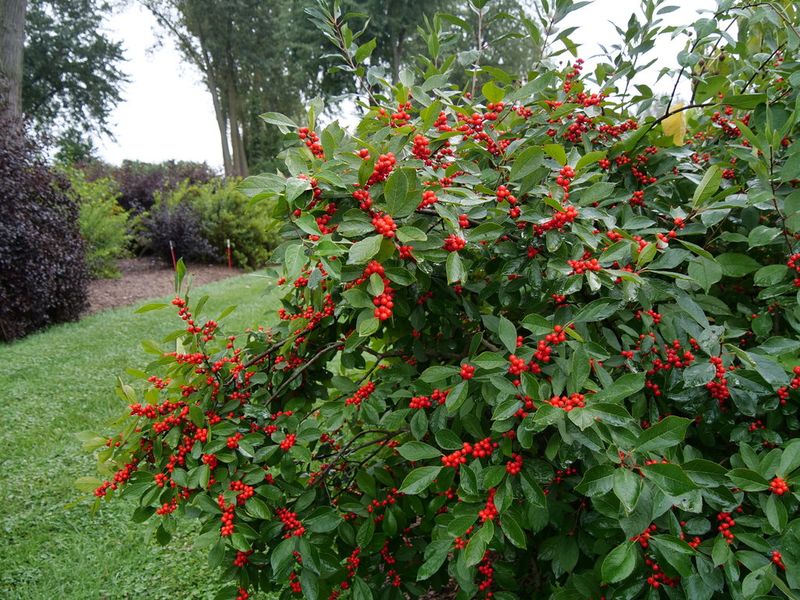
Before purchasing plants, walk your yard and pay attention to where water goes after a heavy rain. Winterberry is not fussy about light, tolerating full sun, partial shade, and even deep shade with reasonable results.
Soil moisture and soil chemistry are the conditions that matter most. The shrub performs best in moist, acidic soil and can handle genuinely wet spots that would drown most ornamentals, making it a natural candidate for rain garden edges or pond margins where Penn State Extension recommends winterberry as a reliable choice.
Dry soil is a different story. NC State Extension notes that dry conditions can cause fruit abortion or poor fruit set in winterberry, meaning the plant may survive but produce little or nothing worth watching.
If your yard has well-drained, sandy soil that dries quickly between rains, a low spot or a bed you can amend and mulch heavily will serve the shrub far better than a sunny, exposed slope.
Soil pH deserves equal attention. University of Minnesota Extension warns that neutral to alkaline soils can cause chlorosis, a yellowing of the leaves that signals the plant cannot absorb iron efficiently, and that sustained poor conditions can eventually contribute to decline.
In North Carolina, many Piedmont soils are naturally acidic, which works in your favor. Coastal Plain soils vary more widely, and some areas with limestone influence or heavy construction disturbance may lean alkaline.
A simple soil test from NC State’s soil testing lab costs a few dollars and tells you exactly where your pH sits. If the result shows pH above 6.5, amending with sulfur before planting and mulching with pine straw to maintain acidity over time gives winterberry its best start.
Choosing the right spot once means far less corrective work later.
Simple care protects the next berry crop
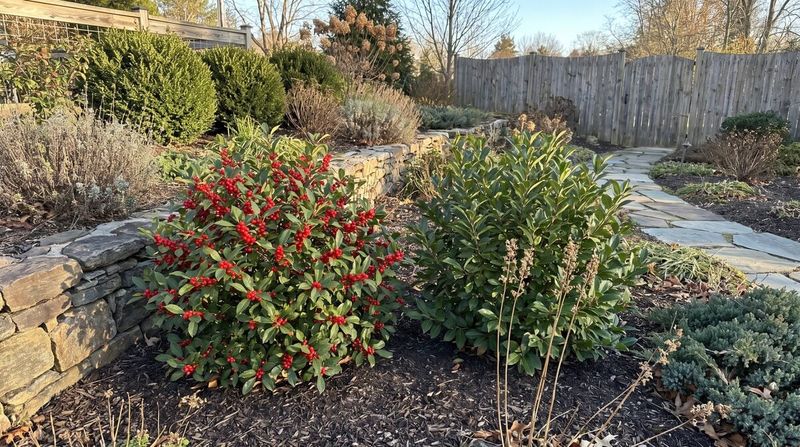
Winterberry’s reputation as a low-maintenance shrub is well earned. Once established in a suitable moist, acidic site, it generally needs little intervention beyond keeping the area mulched and watered through its first two growing seasons.
NC State’s plant profile describes winterberry as slow-growing and perennial, which means you are building something that earns its place in the yard gradually rather than demanding annual attention.
Pruning is where most berry crops get accidentally lost. NC State’s pruning guidance specifically cautions that holly flowers must be retained for fruit to develop later in the season.
Cutting back stems in spring or early summer removes the very wood that would have produced your berries. If you need to shape or reduce the shrub, the dormant season after the berries have dropped or been eaten is the least disruptive window, typically late winter before new growth begins.
Even dormant-season pruning carries one responsibility that is easy to overlook: inspect the plant for active nests before making any cuts. Penn State Extension’s hedgerow guidance reinforces checking for wildlife activity before pruning, a habit that protects nesting birds and keeps your yard a genuinely safe habitat rather than just a food source.
Dormant timing reduces the risk, but it does not eliminate it entirely, especially in mild NC winters when some birds nest earlier than expected.
Beyond pruning, keep a layer of organic mulch a few inches deep around the base, pull any weeds that compete for moisture, and water during extended dry spells in the first couple of years. After establishment, a well-sited winterberry largely takes care of itself and keeps producing for your winter visitors.
A winterberry planting supports birds without guaranteeing a timetable
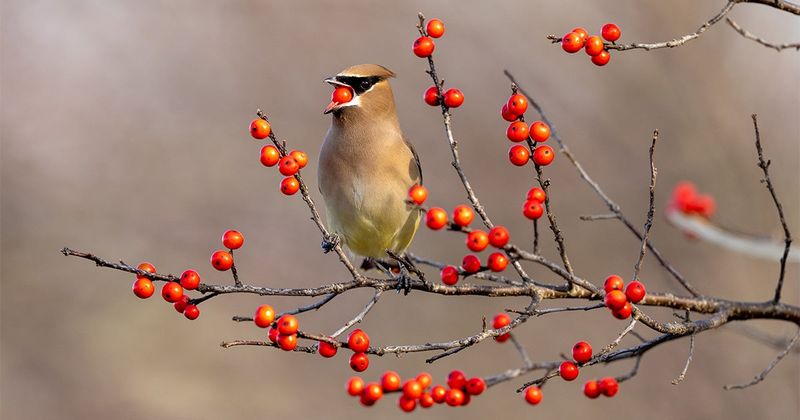
Watching a flock strip a winterberry planting in an afternoon is one of the more memorable things that can happen in a North Carolina yard. It is also a reminder that “feeds birds all winter” is not quite how nature works.
Audubon explains that American robins follow fruit supplies across the landscape rather than staying put, which means a productive berry crop may attract a large flock one week and be completely bare the next. Cedar waxwings behave similarly, arriving in force when food is abundant and moving on once the supply runs out.
Fruit persistence varies with the size of your crop, the density of birds in your area, local weather, and plant health. South Carolina Audubon notes that flocks can strip berry-laden holly plants rapidly and then move to the next available food source.
Some years your berries may last into February; other years they disappear before the new year. Neither outcome reflects a problem with the plant.
The most reliable way to extend the season for birds is to surround your winterberry planting with other native plants that offer food and cover at different times. NC State’s wildlife landscaping guidance recommends a diversity of native plants providing fruits, seeds, nectar, and shelter across all four seasons.
Native viburnums, beautyberry, serviceberry, and native grasses all contribute something different, making your yard a place birds return to rather than a one-time stop.
One safety point belongs here clearly. Winterberry fruit and leaves can cause vomiting, diarrhea, and other illness in people, and University of Minnesota Extension warns that the berries can be poisonous to pets as well.
The fact that birds consume them freely does not make them safe for children or animals. Keep that boundary in mind when placing plants near areas where small children or pets spend time.
Choose a planting that can keep contributing
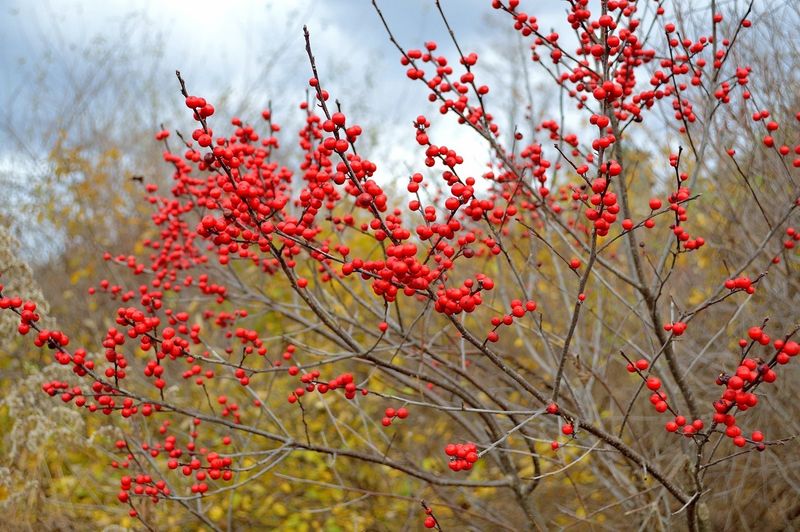
Putting winterberry to work in a North Carolina yard comes down to a few decisions made well at the start. Pick a site with moist, acidic soil, install at least one named male cultivar alongside your females, mulch well, and resist the urge to prune in spring.
NC State’s winterberry profile supports this as a long-term native shrub suited to residential landscapes across the state, even if no source can promise exactly how many winters it will perform or guarantee that cedar waxwings will show up on cue.
Pair the shrubs with other native plants that carry the habitat through spring, summer, and fall, because NC State’s wildlife landscaping guidance is clear that no single plant covers all the needs of a yard’s wildlife community. Winterberry earns its place as a seasonal anchor, not a complete solution.
The birds that show up, including cedar waxwings whose winter movements Audubon tracks across wide ranges, will follow food wherever it leads. Give them a reason to stop at your yard, and some winters they will make the visit worth every bit of planning.