
Why North Carolina Homeowners Should Never Seal Up The Chimney Swifts Nesting In Their Yard
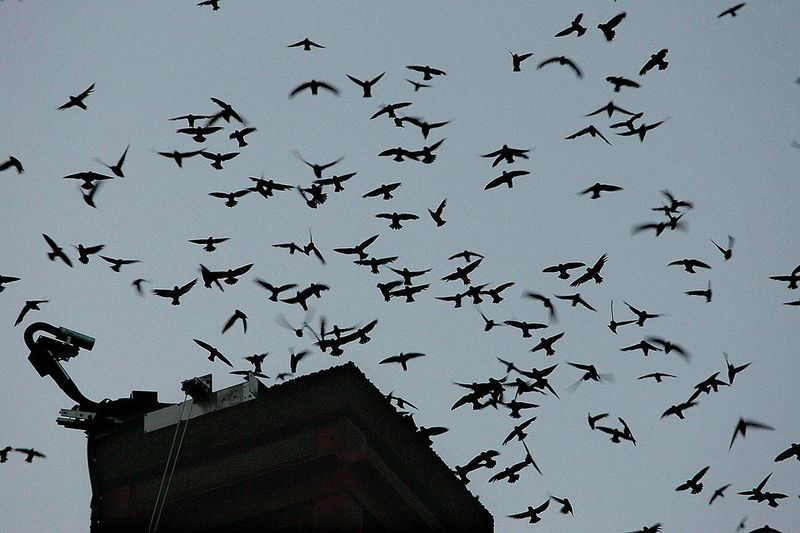
Every summer, North Carolina homeowners look up and spot small, fast-moving birds sweeping through the evening sky above their yards. Many assume those birds are nesting somewhere in the grass or shrubs, but the real story is more surprising and more important for your chimney.
If swifts are using a structure on your property, sealing it up at the wrong time could be both illegal and deadly for the birds inside. Knowing what these birds actually need, and what you should never do while they are present, can make you a better steward of the wildlife sharing your home.
The birds over your yard may be using a chimney
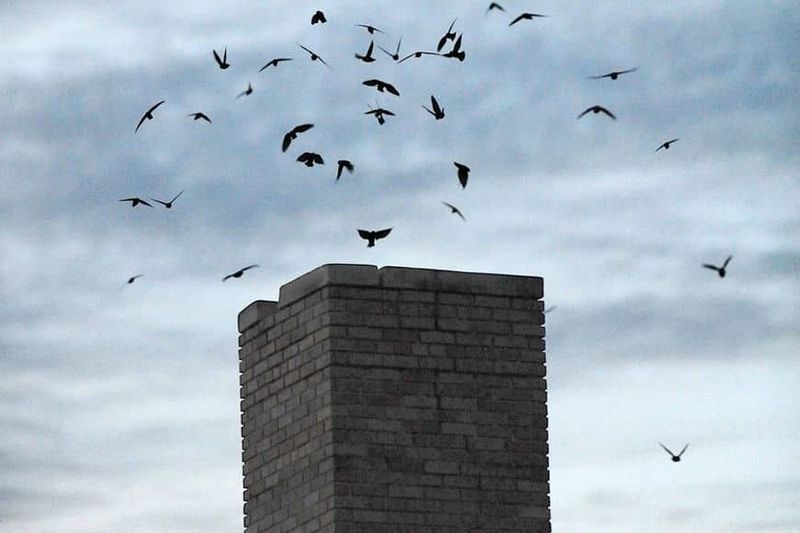
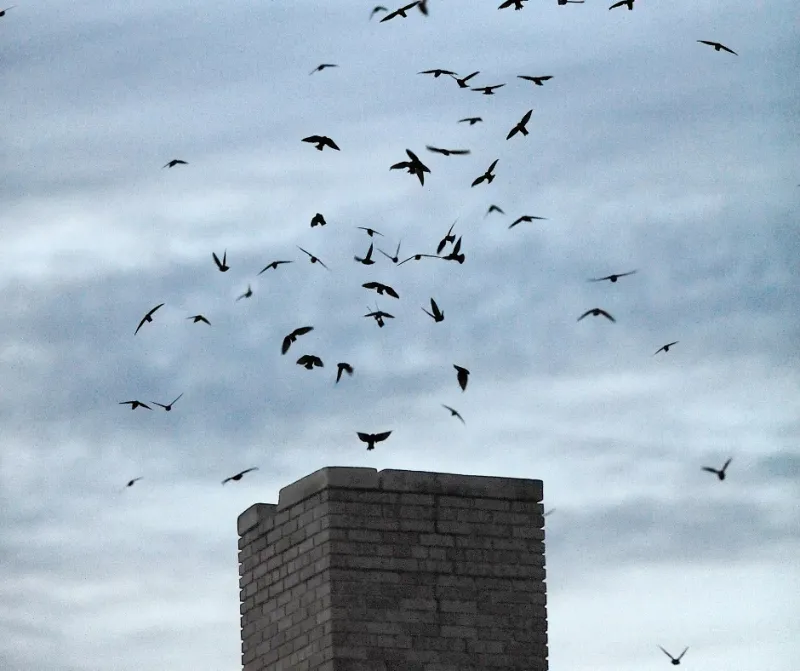
Watching a group of small, cigar-shaped birds cut rapid arcs through the air above a North Carolina backyard is one of the more striking sights of a warm evening. Those birds are almost certainly Chimney Swifts, and they are feeding, not nesting.
Cornell Lab of Ornithology’s Chimney Swift life history describes the species as aerial insectivores that spend nearly all of their waking hours on the wing, chasing flies, beetles, ants, moths, and other flying insects across broad areas of sky.
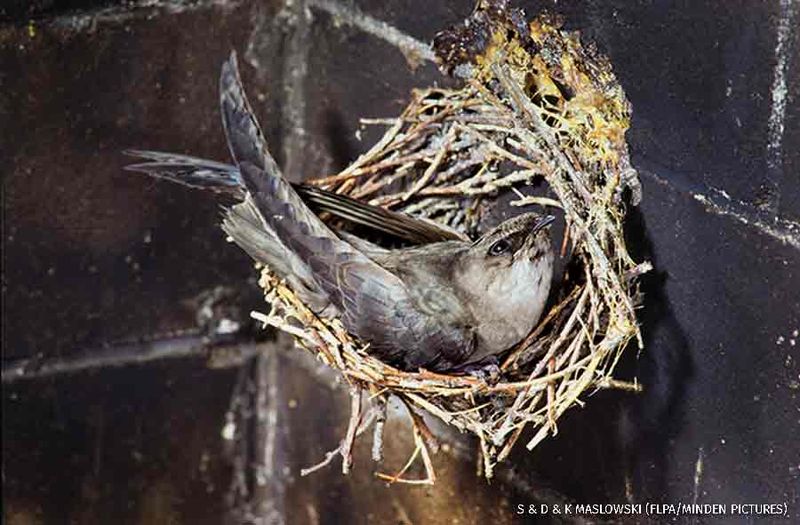
Their actual nest is nothing like a robin’s cup in a shrub. A breeding pair builds a small half-saucer of short twigs cemented directly to the interior wall of an enclosed vertical cavity using the birds’ own sticky saliva.
Suitable sites include brick chimneys, hollow trees, vents, barns, silos, and towers. Open-yard vegetation is not part of their nesting toolkit at all.
Overhead activity does not automatically mean a nest sits on your property. Swifts forage widely, and a pair nesting in a neighbor’s chimney may spend every evening hunting insects above your yard.
U.S. Fish and Wildlife Service guidance on Chimney Swifts confirms that the birds use chimneys and similar enclosed structures rather than open ground for nesting and roosting.
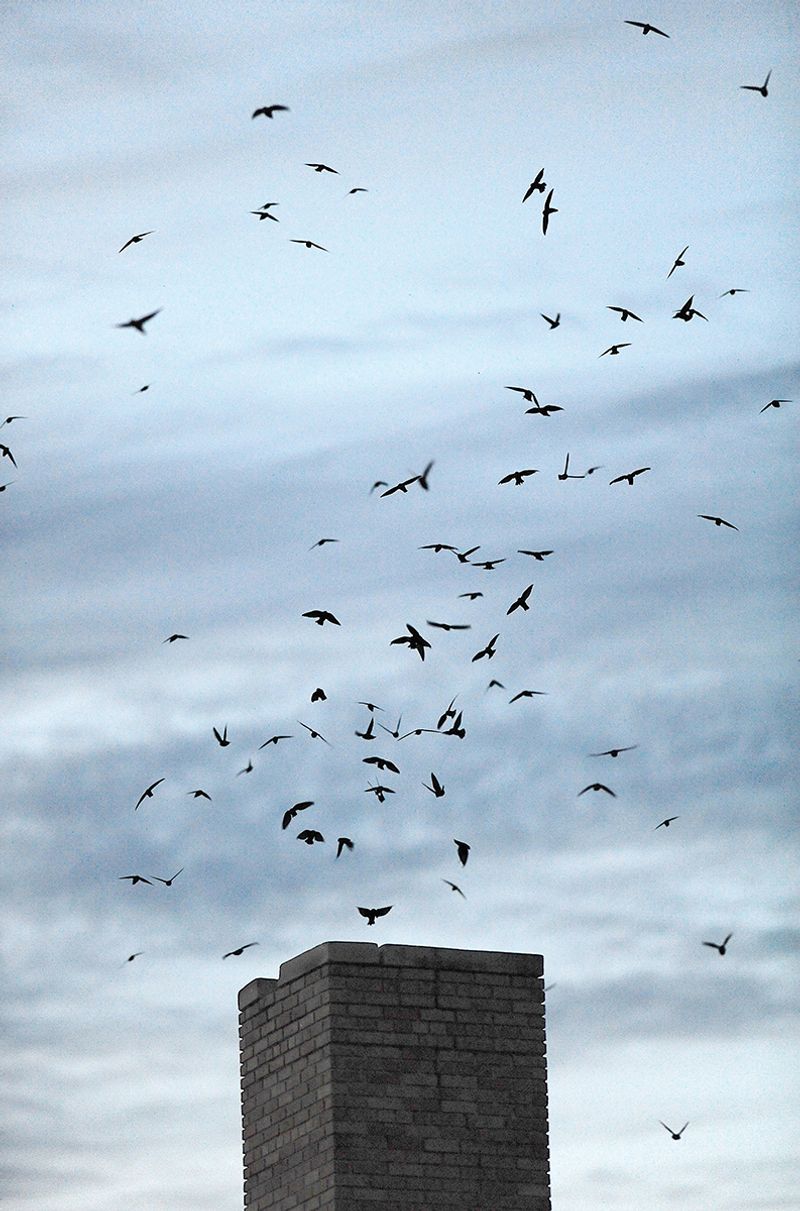
Beyond a breeding pair, a single chimney can attract nonbreeding helper birds during the nesting season, or host large communal roosts of migrating swifts in late summer and fall. That distinction matters because a chimney with dozens of swifts swirling into it at dusk may be serving a migratory roost rather than a single active nest.
Either way, the rule is the same: do not block or disturb an occupied structure while birds are present.
Why sealing an occupied chimney can kill young swifts
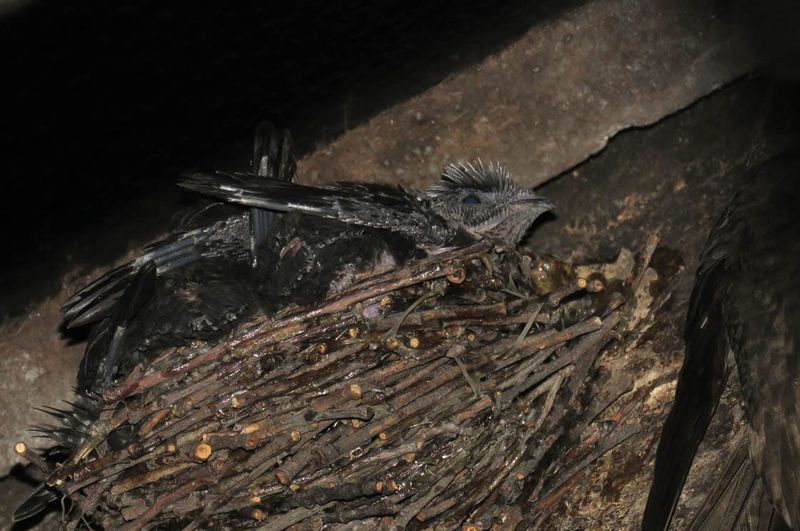
Adult Chimney Swifts regularly leave the chimney to hunt, sometimes for extended periods. When they do, eggs or dependent nestlings remain inside, unable to fly and completely reliant on the adults returning with food and warmth.
Placing a cap, screen, repair patch, or any other obstruction over the chimney opening while adults are away cuts off their return route and leaves the young inside to starve or overheat.
North Carolina Wildlife Resources Commission guidance on Chimney Swifts states plainly that a cap cannot be installed over an active nest because excluding the adults causes the young to die. The same risk applies to lining, cleaning, repairing, or otherwise altering the chimney interior while a nest is present.
A homeowner who never touches the nest itself can still cause nest failure simply by changing access to the structure.
Federal law adds a legal dimension to this practical danger. Chimney Swifts are protected under the Migratory Bird Treaty Act, and the federal list of protected migratory birds includes the species by name.
Harassing, injuring, or killing the birds, their eggs, or their active nests is generally prohibited without applicable authorization.
Fish and Wildlife Service guidance on bird nests draws a useful distinction: active nests containing eggs or dependent young receive the strongest protection, while an inactive nest may in some circumstances be removed without a permit if no take of birds results. Because swift nests are inside enclosed chimneys and occupancy can be very difficult to verify from the outside, the practical guidance for homeowners is straightforward: treat any chimney that swifts have used as occupied until a qualified professional confirms otherwise, and do not block it during the birds’ local season.
Use the birds’ activity, not one calendar date
North Carolina Wildlife Resources Commission guidance identifies May through August as the nesting season for planning purposes, and that window is a useful starting point for scheduling chimney maintenance. NCWRC conservation recommendations advise homeowners to avoid maintenance and improvement work on chimneys during that period because disturbance can cause adults to abandon eggs or nestlings.
The fuller picture extends beyond those four months. Federal migration timing data for Chimney Swifts places Southeast arrival around late March, with southbound departure around mid-October.
Swifts arriving in late March or early April are not yet nesting, but they may be scouting chimneys and beginning to associate with a site. Large communal roosts during late summer and fall migration can fill a chimney with birds well after the breeding season ends.
A quiet evening or a quick look down the flue does not confirm that a chimney is empty. Adults may be actively foraging while dependent young remain inside.
A chimney that appears unoccupied on one inspection may host a nest that becomes active within days, or birds may use two nearby structures alternately. Fish and Wildlife Service nest policy guidance reinforces that occupancy should be confirmed by someone with the knowledge to assess it accurately, not assumed from a brief observation.
Audubon North Carolina’s Chimney Swift fact sheet recommends keeping suitable brick chimneys open from roughly March through October, with professional closure in November and reopening before spring arrival for homeowners who want to maintain seasonal access. Treat that as a planning framework, not a rigid schedule.
Confirmed local activity, not a date on a calendar, is the standard that matters.
What to do while Chimney Swifts are present
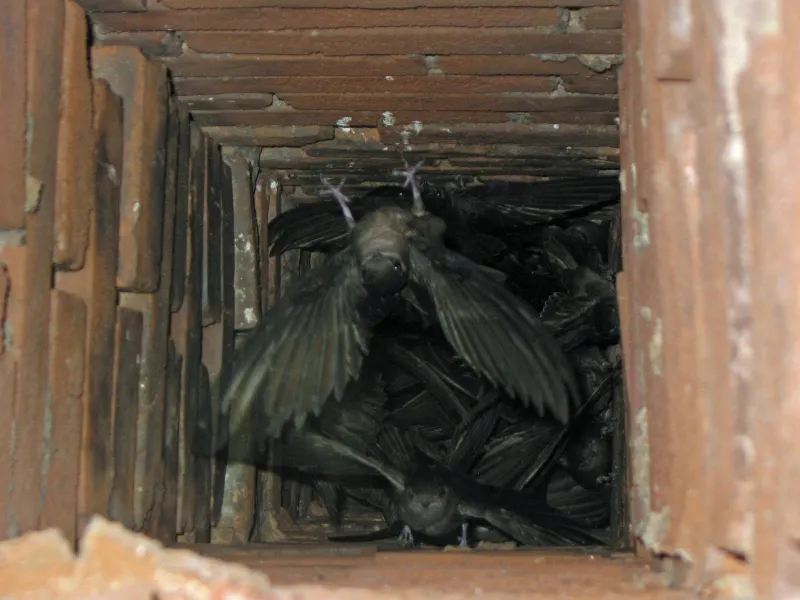
Once you know or strongly suspect that Chimney Swifts are using a chimney on your property, the action list is short and clear. Do not cap, screen, seal, clean, line, repair, or otherwise block the chimney opening or interior while birds are present.
Do not operate the fireplace, wood stove, or any heating appliance connected to that flue while swifts are nesting or roosting there. Fish and Wildlife Service Chimney Swift guidance specifically recommends using the chimney only when swifts are absent and scheduling annual cleaning outside the swift season.
Keeping the fireplace damper closed after the heating season is a sensible habit that reduces the chance of birds or nestlings falling past the damper into the firebox. A closed damper is not a substitute for professional assessment of the chimney’s overall condition, but it does limit unintended indoor access.
If you hear unusual sounds from behind the firebox during swift season, resist the urge to open the damper to investigate.
Occasionally a swift will make it past the damper and into the living space. If that happens, turn off or dim indoor lights, which removes the disorienting contrast, and open an exterior door or window when it is safe to do so.
Cornell Lab’s guidance on birds in chimneys recommends giving the bird a clear, dark exit path rather than chasing or handling it.
Nestlings that fall into the fireplace present a more serious situation. Do not attempt to seal the chimney, remove the nest, or relocate the young birds yourself.
North Carolina Wildlife Resources Commission guidance advises leaving young swifts alone briefly when appropriate and contacting a licensed wildlife rehabilitator if they remain in need of help. A rehabilitator has the training and permits to handle the birds lawfully and give them the best chance of survival.
Protect the birds without ignoring chimney safety

A Chimney Swift nest is genuinely small. It is a compact half-saucer of twigs adhered to the chimney wall, and authoritative wildlife sources consistently describe it as unlikely to obstruct the flue or create a fire hazard on its own.
That reassuring fact does not mean the chimney itself is automatically safe to use. Creosote buildup, cracked flue tiles, deteriorating mortar, improperly installed metal liners, pest intrusion, and other unrelated defects can all create serious risks regardless of whether swifts are present.
Stop using a chimney whenever its safety is in doubt, and arrange a professional inspection rather than improvising exclusion or repair work. Chimney Safety Institute of America homeowner resources explain what qualified chimney inspections cover and how to find a credentialed professional.
A certified chimney sweep can assess creosote levels, structural integrity, and liner condition in a way that a visual check from the roofline cannot.
Metal-lined chimneys present a specific complication for swifts. Fish and Wildlife Service guidance notes that a chimney with an existing metal liner may need to be capped to prevent birds and other wildlife from becoming trapped inside the liner itself, where they cannot cling to the smooth surface or escape.
In that situation, professional closure may be appropriate even during the season, but it should account for occupancy and applicable requirements.
Federal regulations do include a provision, 50 CFR 21.14, that allows certain humane removal of migratory birds, nests, eggs, and nestlings from occupied buildings when birds interfere with normal use or create health or safety risks. This is not a blanket homeowner authorization to clear a chimney whenever it is inconvenient.
The rule has conditions, state requirements still apply, and Fish and Wildlife Service guidance on authorized activities indicates that removal should wait for nestlings to fledge when circumstances allow. When genuine safety concerns arise, involve a qualified chimney professional and contact North Carolina wildlife authorities to understand what applies to your specific situation.
Plan any permanent closure after the birds leave
An unused, deteriorating, or structurally unsuitable chimney may eventually need to be capped or screened, and there is nothing wrong with that goal as long as it is reached responsibly. The sequence matters enormously.
Qualified professionals should confirm that swifts and any other wildlife are absent, that applicable federal and North Carolina requirements are satisfied, and that the timing falls outside the active occupancy window before any closure work begins.
Audubon North Carolina’s approach provides a practical model for homeowners who want to maintain a chimney that swifts use seasonally. The Audubon NC Chimney Swift fact sheet describes having a professional chimney sweep cap the chimney in November and reopen it before spring arrival.
That approach works when continued seasonal access is the goal. For permanent closure, waiting until mid-to-late October and having a professional verify absence before capping is the responsible path.
Dates alone are not enough. Swifts can linger into October in some years, and a chimney that appears quiet on one visit may still host late-migrating birds.
Observed absence, confirmed by someone with the experience to assess it, is the standard. Fish and Wildlife Service guidance also recommends considering an alternative structure nearby when a chimney that swifts have used must be closed permanently.
A nearby swift tower is one option worth knowing about. The North Carolina Wildlife Resources Commission Green Growth Toolbox Handbook includes guidance on habitat structures that support wildlife, including birds that use vertical cavities.
A suitable swift tower is generally rough-sided on the interior, open at the top, wide enough for birds to fly inside, and tall enough above surrounding vegetation. Not every homeowner needs to build one, but if you are closing a chimney that swifts have used for years, offering an alternative structure nearby is a meaningful gesture of stewardship.
The stewardship payoff extends beyond one chimney
Chimney Swifts eat flying insects. Flies, beetles, ants, moths, and true bugs all appear in their diet, and they pursue prey across broad areas of sky rather than hovering over one yard.
They are genuine aerial insectivores, but describing them as a targeted pest-control service for a specific property overstates what the evidence shows. What they do offer is consistent, active insect foraging throughout the warm months they spend in North Carolina.
The species is declining significantly. North American Breeding Bird Survey analysis results covering 1966 through 2023 estimate a cumulative population decline of approximately 74 percent over that period.
Cornell Lab’s Chimney Swift life history summarizes that trend and notes that loss of suitable nesting structures is among the contributing factors. Older brick chimneys, the kind that swifts can actually grip and use, are being capped, lined, or demolished at a rate the species cannot easily absorb.
Every chimney that remains appropriately accessible during the swift season is a small but real contribution to a bird that has lost much of its former habitat. The practical rule for North Carolina homeowners is uncomplicated: observe first, leave active occupancy alone, stop using the chimney while birds are present, and bring in qualified wildlife and chimney professionals whenever safety or timing is uncertain.
A chimney that houses swifts for a few months each year is doing something worth protecting.