
What It Really Means When A Toad Settles Into Your North Carolina Garden Bed
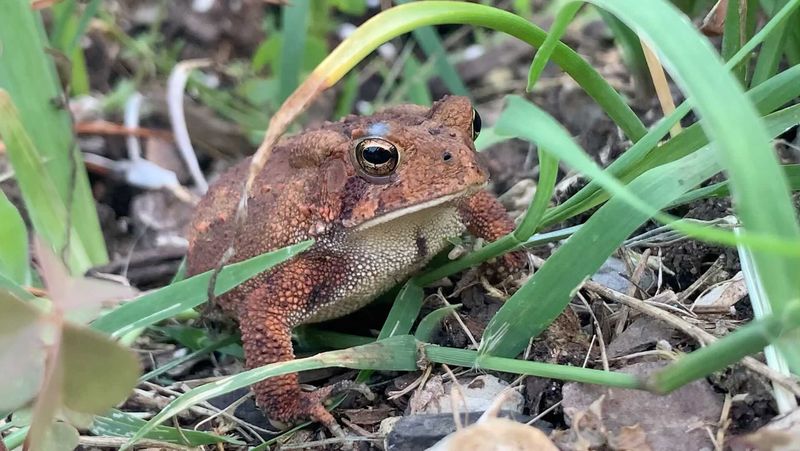
Spotting a toad crouched among your tomato plants or tucked beneath a hosta leaf can stop you in your tracks. Most gardeners assume it means something big about their yard, and in some ways they are right, but the full picture is more nuanced and more interesting than a simple verdict.
Understanding what that sighting actually tells you, and what it does not, helps you respond in a way that is good for both the animal and your garden.
A single sighting reveals usable habitat, not residency
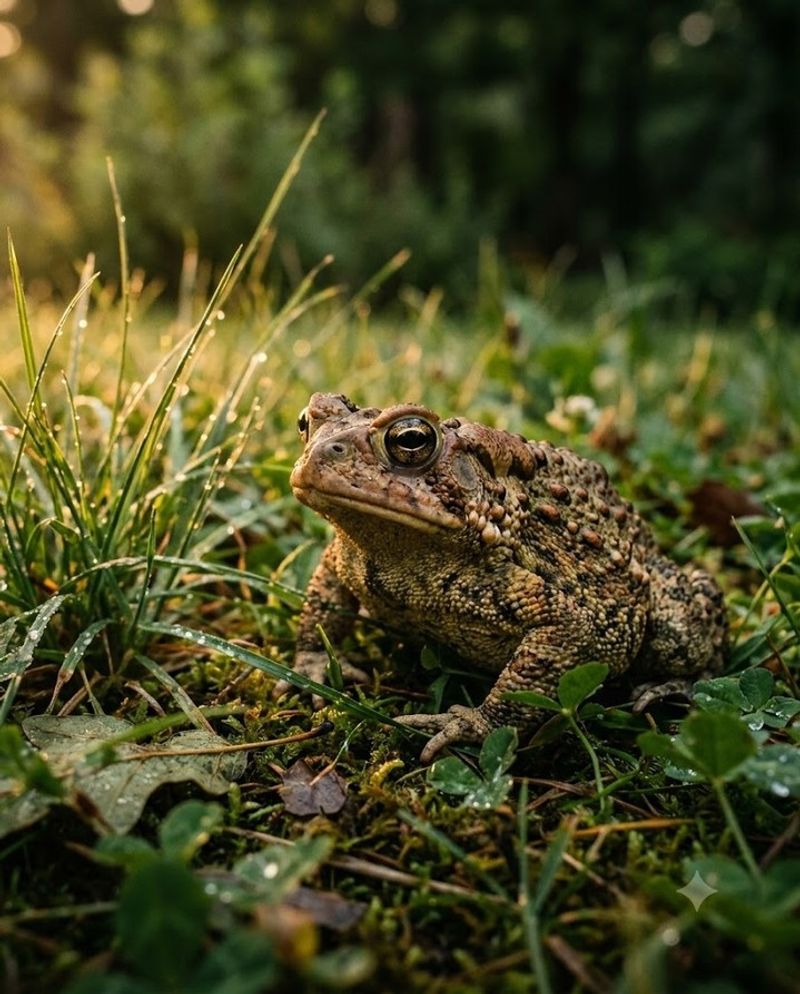
Crouching quietly between the base of a pepper plant and a clump of mulch, a toad can look as though it has claimed that garden bed as its permanent address. The reality is more open-ended.
A toad observed in a garden bed may be foraging for nighttime prey, sheltering from daytime heat, soaking up residual moisture, or simply passing through on its way somewhere else entirely.
Several features can make a garden bed temporarily attractive to an amphibian without making it a long-term home. Moist soil, dense shade, cool leaf litter, and the presence of invertebrates under cover all provide short-term usefulness.
A toad that finds those conditions useful at 2 a.m. on a warm June night may be gone by morning or may return over several nights, but a single observation cannot tell you which scenario is unfolding.
What a lone sighting cannot establish is equally worth knowing. It does not confirm that the toad lives there, that it has adopted your yard as a territory, or that a breeding pond is tucked nearby.
According to NC State Extension guidance on backyard amphibians, several habitat factors together, not prey abundance alone, determine whether an amphibian uses a yard regularly. The NC Wildlife Resources Commission notes that American toads and Fowler’s toads use terrestrial uplands, woodland edges, and garden habitats, but movement through those spaces is common and does not require a fixed home range.
The most honest interpretation of what you saw is this: the bed currently offers something the animal can use. That is worth appreciating, and it is a reasonable starting point for thinking about how to keep the habitat welcoming, without reading more certainty into one nighttime visitor than the evidence supports.
North Carolina has several possible garden visitors
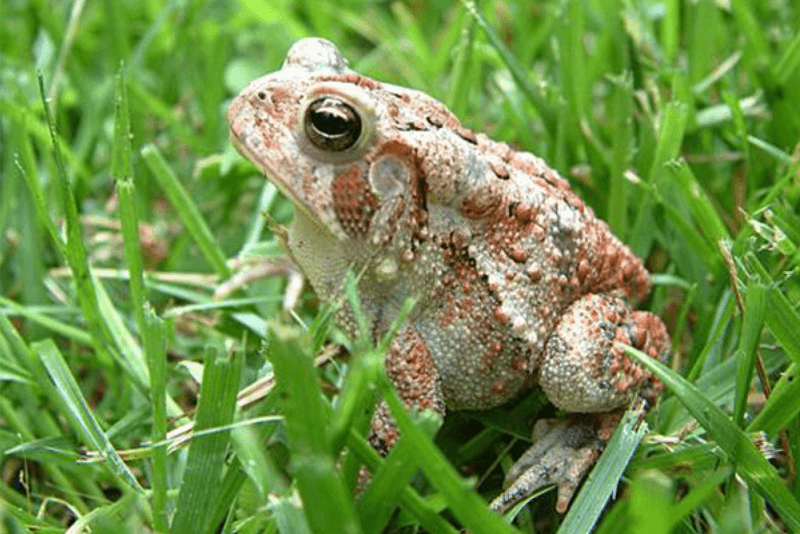
North Carolina is home to four native species in the true toad family: the American toad, Fowler’s toad, southern toad, and oak toad. Each occupies a somewhat different slice of the state’s geography, which means the toad you spotted depends partly on where your yard sits.
The American toad is found statewide but is most strongly associated with the Mountains and Piedmont. It tends to favor cooler, moister habitats and is a familiar sight in mountain-region gardens and shaded Piedmont beds.
The Fowler’s toad is common across much of the Piedmont and Coastal Plain and also occurs in parts of the Mountains, making it the species many NC homeowners are most likely to encounter in a residential garden setting. Southern toads are more typical of the Coastal Plain and Sandhills, while oak toads, the smallest of the four, occupy sandy pine habitats in the southeastern part of the state.
Knowing which species are plausible for your region narrows the field, but a casual look at a toad in a garden bed rarely provides enough detail for confident identification. Markings, cranial crests, parotoid gland shape, and call are the features that separate these species, and most of those require a closer or longer look than a brief encounter allows.
Fowler’s and American toads can look quite similar, especially to a non-specialist.
The practical takeaway is that any of these four native species deserves the same respectful response: leave it where it is, preserve the habitat features it is using, and resist the urge to handle or move it. Species identity matters less for your immediate stewardship decisions than the fact that you are looking at a native amphibian that has found your yard worth visiting.
A toad cannot certify a pesticide-free yard
A common and understandable reaction to finding a toad in the garden is to take it as proof that the yard is clean, chemical-free, and ecologically sound. That interpretation feels good, but it does not hold up under scrutiny.
Toads can and do occur in yards where pesticides have been applied, and their presence cannot measure what chemical residues exist in the soil, water, or food supply.
The reason this matters is that amphibians are genuinely vulnerable to pesticide exposure, and a toad using a bed is not protected simply by being there. Their skin is highly permeable, which means chemicals in soil moisture, puddles, or runoff can pass directly into the animal’s body.
EPA research on pesticide uptake in amphibians confirms that frogs and toads can absorb pesticides through dermal contact and through consuming contaminated prey, not just through direct spraying. A USGS study on terrestrial atrazine exposure in American toads found measurable behavioral and physiological responses even from ground-level contact with treated soil, not spray drift alone.
What the sighting does suggest, more carefully, is that the bed currently offers habitat the toad can use. That is a meaningful starting point, not a clean bill of health.
The useful reframe is this: if a toad is using the space, reducing its chemical exposure from this point forward makes the habitat genuinely safer, not just symbolically so.
Practical steps include limiting herbicide and insecticide applications near the bed, keeping any chemical runoff away from low spots where water collects, and following pesticide label directions carefully when treatment is unavoidable. NC State Extension’s backyard amphibian guidance specifically advises keeping chemicals away from water sources and storm drains.
The goal is not to achieve a certified pesticide-free yard based on one animal sighting, but to make deliberate choices that reduce risk for the wildlife already using the space.
Toads eat many invertebrates, but they do not promise pest control
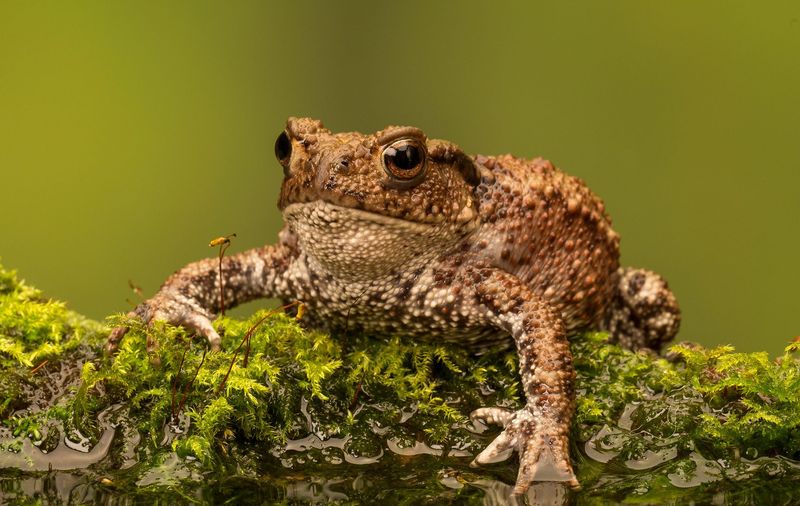
Toads have a well-earned reputation as voracious nighttime hunters, and that reputation is grounded in real feeding behavior. Active mostly after dark or during the low-light hours around dusk and dawn, they sit and wait for invertebrates to move within striking range, then snap them up with a quick, sticky tongue.
The diet is broad: ants, ground beetles, spiders, earthworms, and a wide range of other terrestrial arthropods all turn up in stomach content studies.
A review of American toad natural history, published by the U.S. Forest Service, estimated that an average-sized adult may consume roughly 1.12 grams of invertebrates per day between May and August.
That is a biomass figure, not a count of individual insects, and converting it into a claim about thousands of slugs or beetles requires knowing the size and composition of the prey, which varies considerably by location and season. A toad eating hundreds of small ants in a night is not the same as removing dozens of large slugs.
A 2026 study examining American toad diet on a Pennsylvania vegetable farm found rove beetles, ants, ground beetles, and spiders among the most common prey items. Importantly, the authors noted that many of those prey species are themselves predators or omnivores, meaning the toad’s contribution to reducing crop damage was likely context-dependent, shaped by prey behavior, crop structure, and the time of season.
That study should not be read as a North Carolina garden result or as universal proof of pest suppression.
Toads are generalist predators, not selective pest-removal tools. Their diets include beneficial insects, neutral decomposers, and occasional pest species in roughly whatever proportions those animals are available.
A peer-reviewed analysis of niche partitioning among generalist anurans further supports the picture of broad, opportunistic feeding rather than targeted pest suppression. Fowler’s toads, one of the most common garden visitors in the NC Piedmont and Coastal Plain, eat many insects and small invertebrates but with no documented preference for the particular slugs or beetles that frustrate gardeners most.
Welcoming a toad as a potential contributor to your garden’s ecological balance is entirely reasonable. Expecting it to solve a slug infestation or guarantee measurably lower pest pressure is a different claim, and one the available evidence does not support.
The bed may offer refuge while breeding happens elsewhere
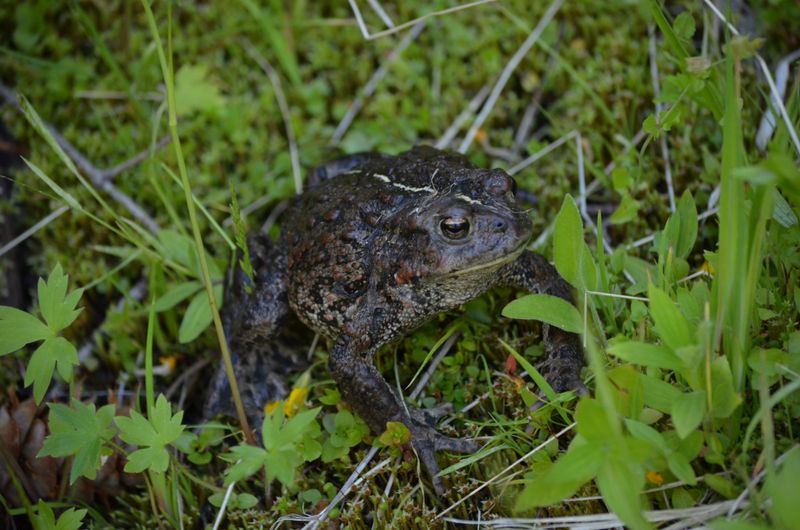
Finding an adult toad in a garden bed can prompt a natural follow-up question: does this mean there is a breeding population nearby? The short answer is that one adult does not establish a breeding site, and the garden bed itself is almost certainly not where reproduction is happening.
Toads breed in water. The American toad uses ponds, pools, flooded fields, and temporary wetlands for egg-laying, and both males and females may travel considerable distances between terrestrial foraging areas and aquatic breeding sites.
An adult toad resting in your garden bed during the day or hunting there at night may have a breeding site across the neighborhood, in a nearby retention pond, or at a wetland edge several blocks away. Its presence in the bed tells you about the terrestrial habitat, not about what water features are in use or how close they are.
Separating these two habitat types matters for setting realistic expectations. NC State Extension’s backyard amphibian resource recommends connecting dry cover with safe access to water as a way to support amphibians, but it frames the garden as a terrestrial refuge, not automatically a breeding area.
A shallow dish of water placed near the bed provides an opportunity for the toad to soak and rehydrate, which amphibians do through their skin, but it does not create breeding habitat.
Breeding success depends on water quality, depth, how long water persists, the presence of aquatic vegetation, the absence of predatory fish, and the specific requirements of the species involved. NC Wildlife’s wetlands and ponds guidance makes clear that supporting amphibian reproduction requires intentional pond design, not just a container of standing water.
Appreciating the garden bed as a foraging and shelter refuge, rather than assuming a full breeding population is operating nearby, keeps expectations grounded in what the observation can actually support.
Protect the features that make the bed usable
Once you know what drew the toad to the bed in the first place, protecting those features becomes a straightforward stewardship task. The core elements are daytime cover, moisture, and reduced chemical exposure, and most of them cost nothing to maintain.
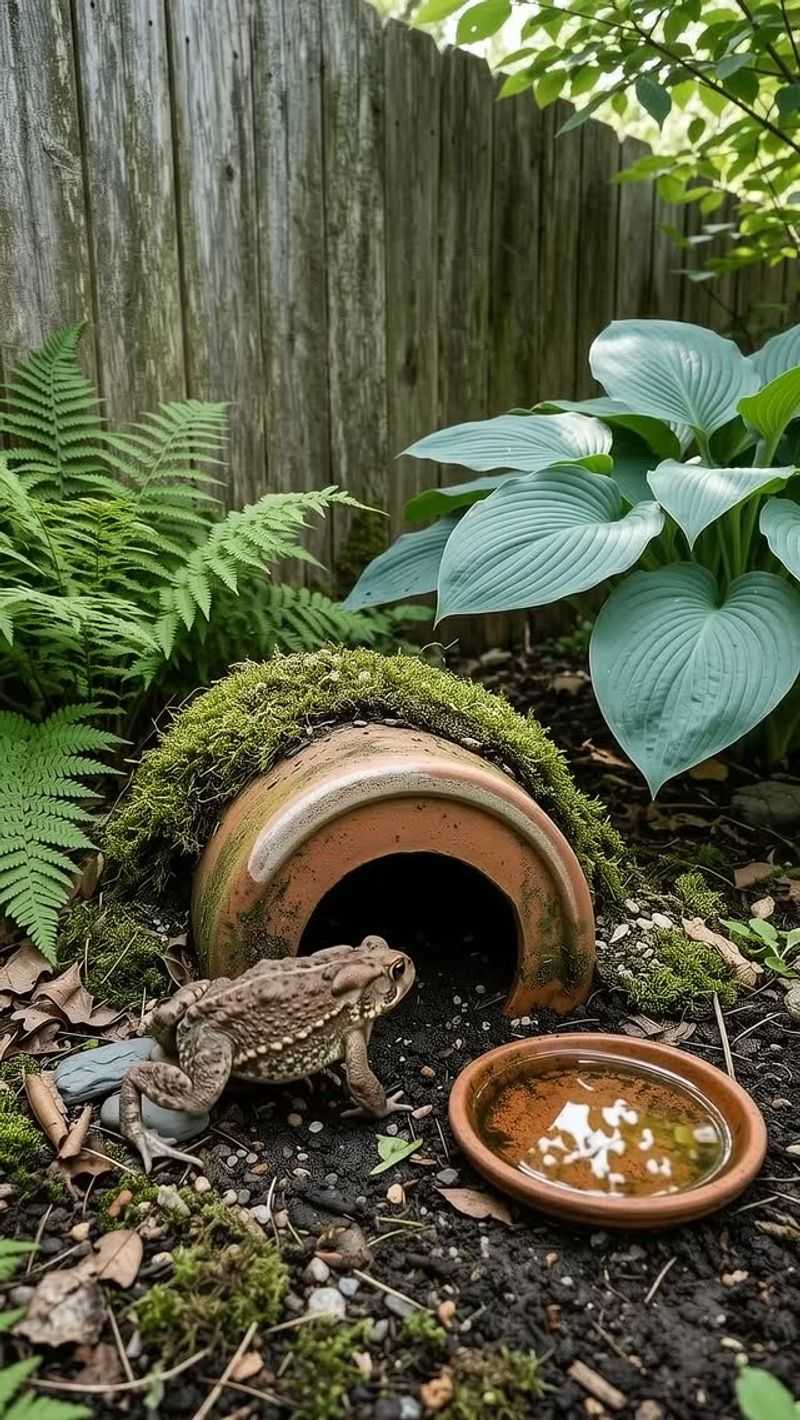
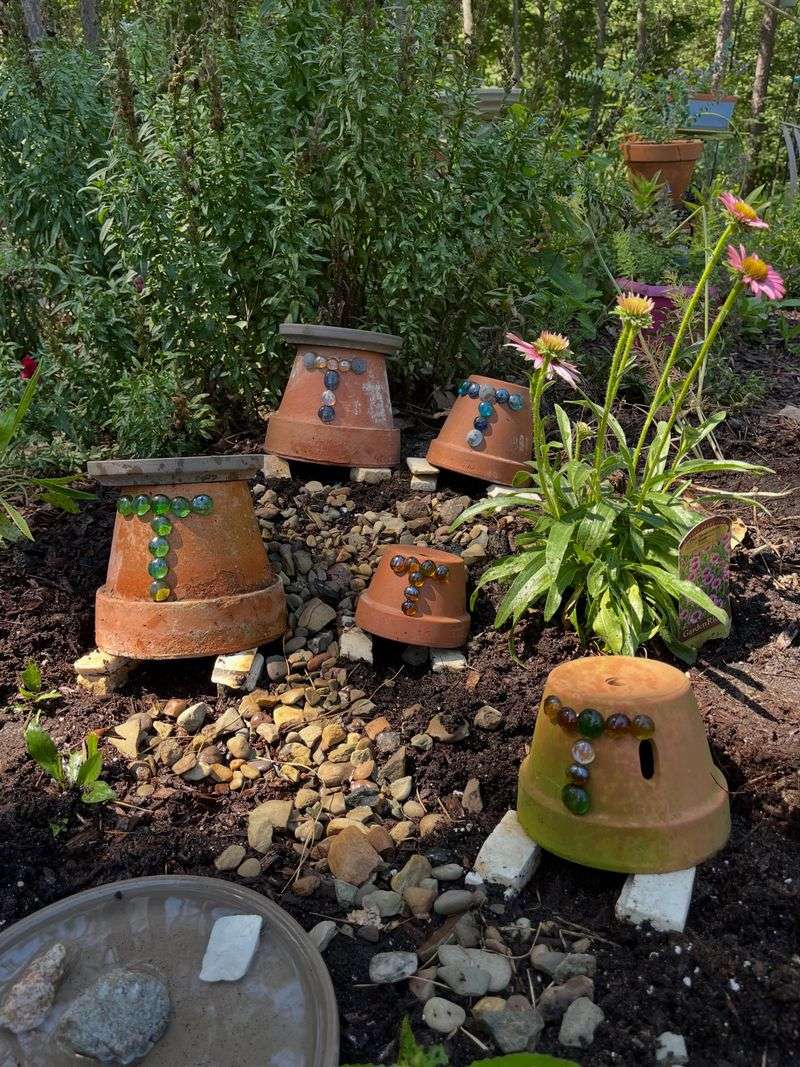
Daytime shelter is the most critical piece. Toads are ectotherms that need to escape heat and desiccation during daylight hours, and they seek out cool, shaded spots: leaf litter, the underside of untreated logs, brush piles, gaps between rocks, dense native plantings, or an upside-down clay pot with a notch cut in the rim for an entrance.
NC State Extension specifically recommends placing amphibian shelters in shady areas and avoiding chemically treated wood, since preservatives can leach into the soil and contact the animal’s permeable skin.
If you want to add a water source, keep it simple and safe. A clean, shallow dish set flush with the ground, or a water feature with broad, gently sloping edges and rocks or branches that give the toad an easy exit route, works well.
Steep-sided containers can trap amphibians that fall in and cannot climb out. Never add fish to any water feature intended to support amphibians, because fish readily consume eggs and tadpoles.
NC Wildlife’s pond and wetland guidance reinforces this point for anyone considering a more permanent water feature.
Chemical management is the third pillar. Limiting herbicide and insecticide applications near the bed reduces the risk that the toad absorbs toxins through its skin or consumes contaminated prey.
Keeping fertilizer and pesticide runoff away from low spots, storm drains, and any standing water protects the broader habitat beyond the bed itself. EPA research on pesticide uptake in amphibians underscores that chemical exposure happens through multiple pathways, not just direct contact.
When treatment is genuinely necessary, following the pesticide label carefully, applying only in targeted areas, and avoiding application near water or during wet weather reduces risk considerably.
None of these steps require a major yard renovation. Leaving a section of leaf litter undisturbed, propping a clay pot in the shadiest corner of the bed, and being thoughtful about what goes on the soil near a known toad spot are proportional, practical responses to a welcome native visitor.
Leave the visitor in place and observe from a distance
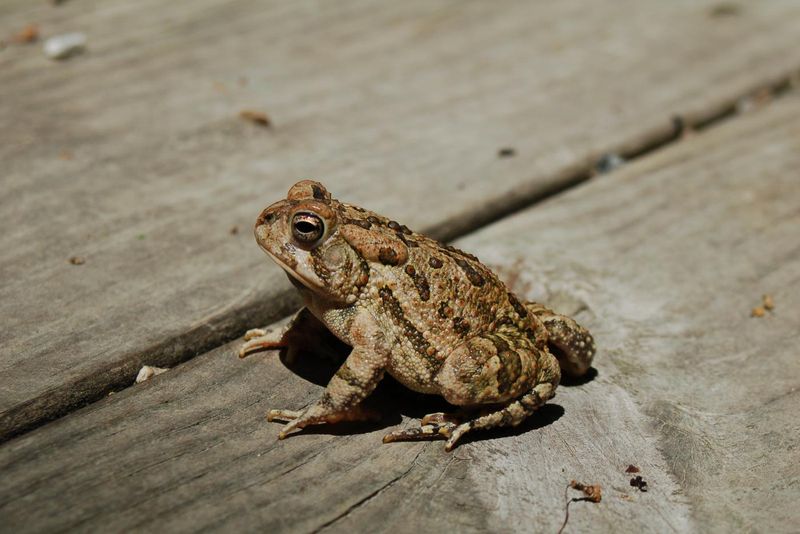
When you come across the toad, the best action is usually no action at all. Resist the urge to pick it up, carry it to a different part of the yard, or relocate it somewhere you think it would prefer.
NC State Extension advises letting amphibians arrive naturally and discourages moving wild animals from one location to another, even with good intentions. A toad that navigated to your garden bed on its own has already assessed the route; moving it disrupts that navigation and may place it in a less suitable or less familiar spot.
Handling is also riskier for the animal than it looks. Residues from hand lotion, sunscreen, soap, or insect repellent can transfer through a toad’s permeable skin and cause harm even without any intent to injure.
Observe from a comfortable distance whenever possible. If the toad is in immediate danger, such as in a path where it could be stepped on or run over, minimize contact time, avoid bare hands if you have any products on them, and guide rather than grip the animal.
Keeping pets away from the habitat is equally important. Fowler’s toads, like other native toads, produce skin secretions that are distasteful or mildly toxic to predators, which can cause a dog or cat to foam at the mouth and back away.
The secretions are not a serious danger to people who avoid touching their face after contact, but they can cause real discomfort for a curious pet that mouths the animal. A simple barrier or redirected attention is all it takes.
Pulled back to the big picture: the toad you saw was using the bed for something it needed at that moment, whether shelter, prey, moisture, or passage through the yard. That observation identifies a potentially useful refuge, not a confirmed resident, an active breeding site, a pesticide-free yard, or a guaranteed pest-control arrangement.
Treating it as a welcome native wildlife visitor, leaving the habitat intact, and watching from a respectful distance is the response that serves both the animal and your garden best. A yard that a toad finds worth visiting is already doing something right.