
What It Really Means When A Green Anole Turns Up On Your North Carolina Porch Plants
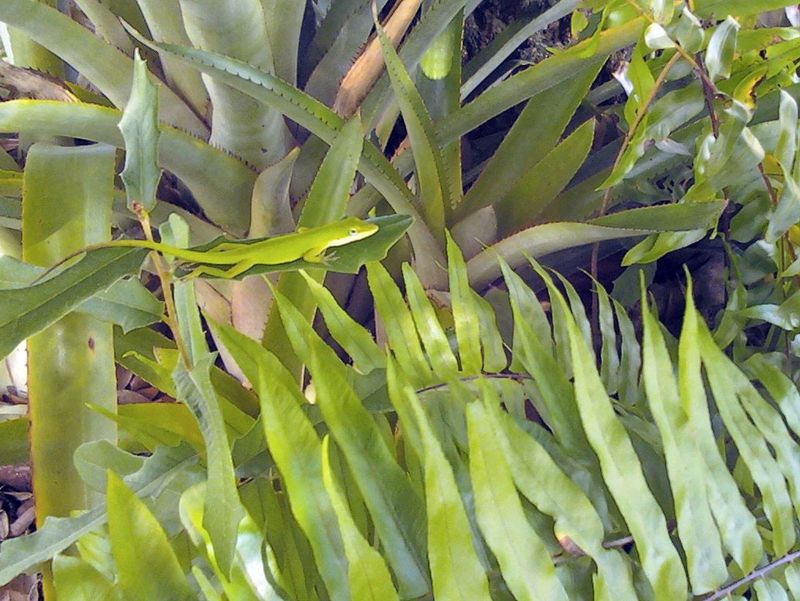
Spotting a small lizard clinging to your porch container can stop you mid-watering-can. Most North Carolina homeowners see that flash of bright green or dull brown and immediately wonder whether the plant is in trouble.
Understanding what that little reptile is actually telling you can save you from unnecessary spraying and help you take better care of both the plant and the wild neighbor that chose your porch.
The lizard on the pot is probably a green anole
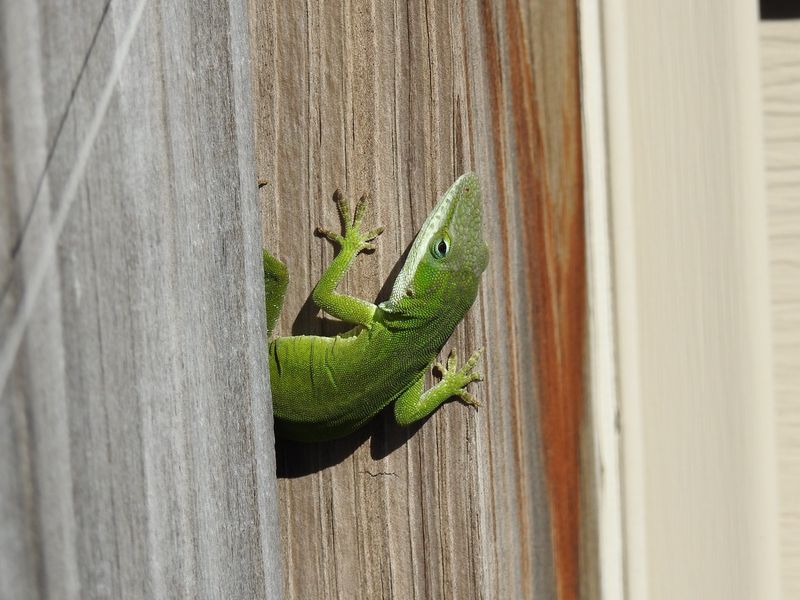
Slender, quick, and surprisingly easy to overlook until it moves, the lizard perched on your container is most likely a green anole. NC Wildlife Resources Commission describes the species as a native, climbing, daytime-active lizard that commonly uses shrubs, gardens, fences, and buildings across the state.
Adults typically measure five to eight inches from nose to tail tip, with a distinctly pointed head, slender body, and adhesive toe pads that let them grip smooth surfaces including glazed pots and painted railings.
Males often display a pink or red throat fan called a dewlap, fanning it outward as a territorial or courtship signal. That flash of color is one of the most reliable field marks you can use when you are trying to figure out what you are looking at from across the porch.
One detail that catches many people off guard: a green anole is not always green. The same individual can shift between vivid green, gray, and various shades of brown depending on conditions.
Seeing a brownish lizard on your pot does not automatically mean it is the nonnative brown anole. Reptiles of North Carolina notes that brown anoles lack the green phase entirely and typically show a more pronounced patterned back.
To tell the two species apart reliably, look at the overall body pattern, head shape, and dewlap coloration rather than relying on a single color observation.
Green anoles are found across North Carolina from the low mountains to the barrier islands, though abundance and habitat use vary considerably by region. They tend to be most associated with warmer, humid, shrubby, wooded, and residential areas, which is exactly what a well-planted porch can resemble from a lizard’s perspective.
What an anole really notices on a porch plant
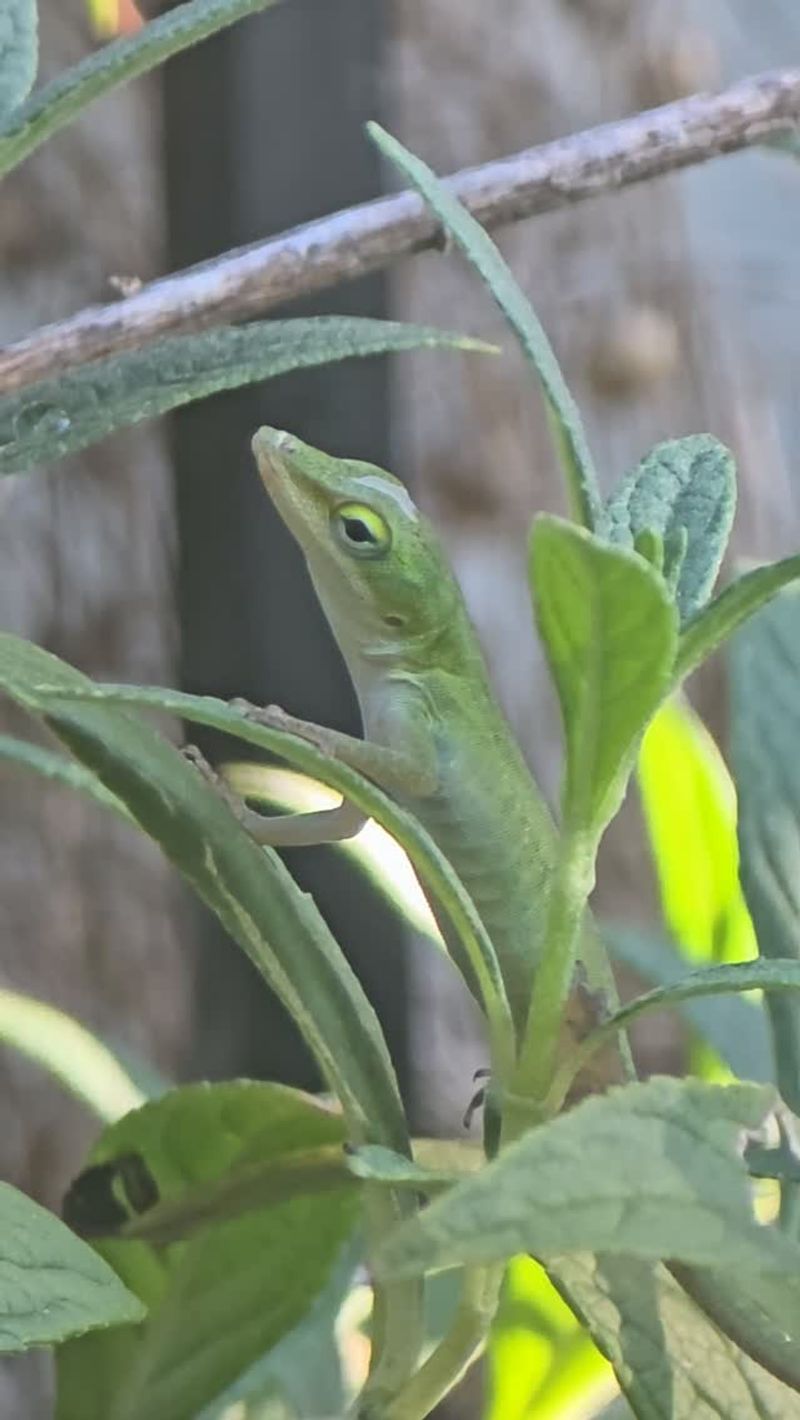
When a green anole settles onto one of your container plants, it has sized up the spot and decided it works. The plant is offering something the lizard needs, and that something is almost certainly a combination of vertical structure it can climb, warmth from sun hitting the pot, cover among the leaves, and enough small moving prey to make hunting worthwhile.
Green anoles are broad, opportunistic predators. NC Wildlife Resources Commission lists their diet as including flies, crickets, moths, butterflies, termites, ants, and beetles, and Reptiles of North Carolina adds spiders and snails to that list.
The prey an anole pursues depends on what is accessible, appropriately sized, and active near the plant at that moment. Some of those arthropods will be harmless fungus gnats or beneficial predatory insects rather than anything damaging your plant.
That breadth matters when you are trying to interpret the sighting. The anole is not scanning your plant for aphids specifically.
It is hunting whatever small arthropod moves within reach. The presence of the lizard tells you that the spot is productive enough to be worth a predator’s time, not that any particular pest is building up inside the foliage.
Think of the sighting as one ecological data point: there is enough habitat and accessible prey activity here to attract a small insect-eating reptile. More anoles on a porch do not automatically mean a healthier plant, and one anole does not prove a damaging infestation is underway.
The plant still needs a direct inspection on its own terms, because the lizard’s appetite is too wide-ranging to serve as a reliable early warning system for any one pest.
Color change does not reveal the menu
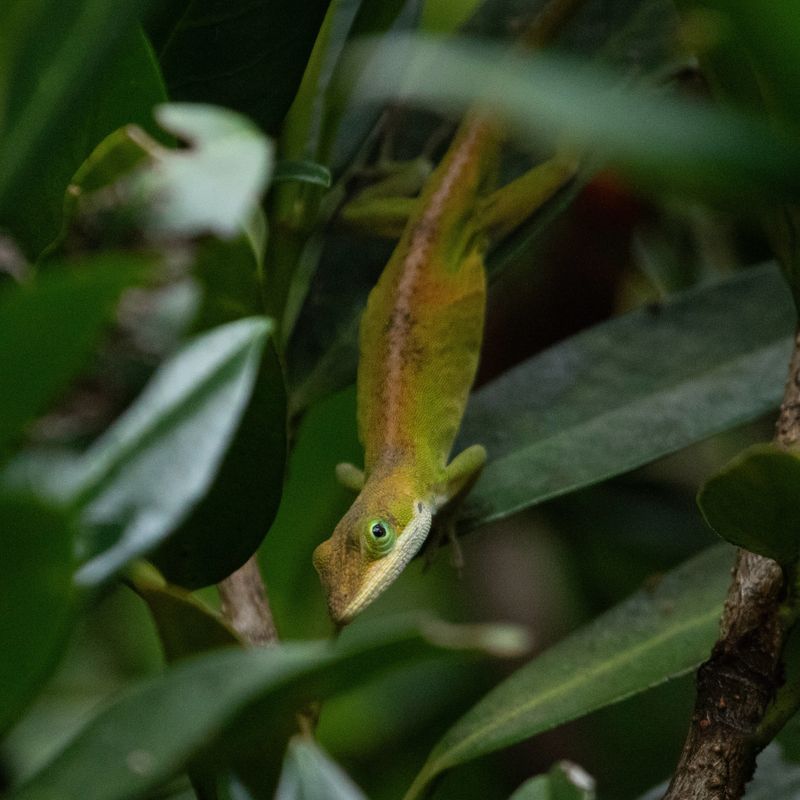
Plenty of people watch a green anole shift from vivid green to dull brown on the same pot and assume the color change is telling them something about the plant, the pests inside it, or what the lizard just ate. That interpretation does not hold up.
The color shift is not a signal about the menu.
Green anoles are sometimes called “American chameleons,” but that nickname misleads more than it informs. UT Biodiversity Center’s backyard wildlife feature is clear that green anoles are not true chameleons and do not change color on demand to match whatever surface they happen to be resting on.
A lizard sitting on a brown terra-cotta pot may turn brown, but that does not mean it is deliberately camouflaging itself to the container.
Documented associations for color change in green anoles include temperature, activity level, stress, and breeding-related social behavior. Recent peer-reviewed research on Anolis carolinensis color change reflects that the precise adaptive function of the shift is still an active area of inquiry, and multiple physiological and social factors appear to be involved.
What is not in that list: a reliable response to the specific arthropods the lizard is hunting at that moment.
Practically speaking, a green anole turning brown on your porch plant is not a distress signal from the plant and is not a sign that a particular pest is present. Reptiles of North Carolina specifically notes that color change in this species does not function as background-matching camouflage the way it does in true chameleons.
Watch the color shift with curiosity if you like, but read your plant separately.
The leaves—not the lizard—show whether pests are damaging the plant
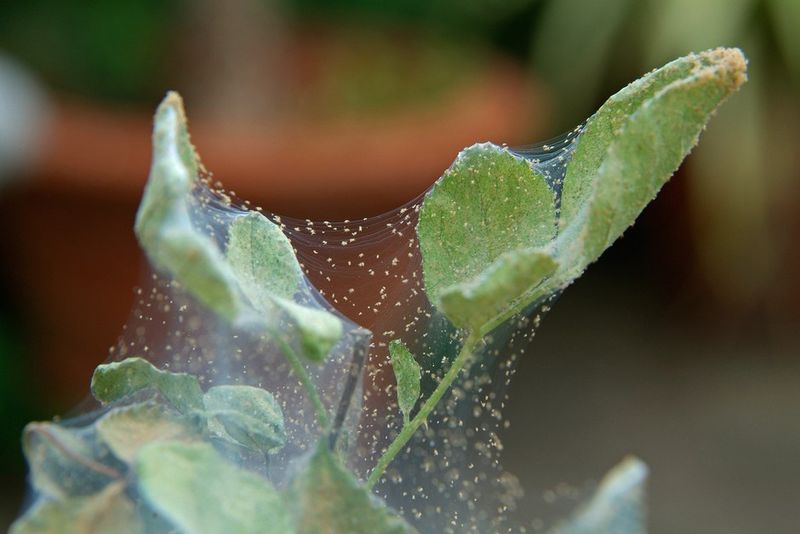
Flipping a leaf over takes ten seconds and tells you far more about your plant’s health than watching where a lizard goes. A proper scouting routine covers the spots pests actually use, and those spots are not always obvious from a standing view.
Start at the leaf undersides, where aphids cluster in soft masses, spider mites leave fine webbing and tiny pale stippling, and whiteflies scatter when disturbed. Move to tender growing tips, which attract soft-bodied insects looking for easy feeding.
Check stems, flowers, pot rims, and saucers as well, since mealybugs, scale, and fungus-gnat larvae often hide in those overlooked corners. University of Minnesota Extension’s guide to managing insects on plants also recommends checking nearby surfaces, because some pests move between containers.
A hand lens with 10x magnification makes a real difference when you are trying to confirm spider mites or identify small crawlers that look like specks of debris without magnification. Sticky yellow traps hung near the plant can catch winged aphids, fungus gnats, whiteflies, and thrips, giving you a sense of what flying pests are active.
Sticky traps are monitoring tools, though, not a standalone solution, so treat what they catch as information rather than control.
Timing matters too. NC State Extension’s Integrated Pest Management handbook recommends checking plants regularly during warm weather and inspecting any plant carefully after moving it outdoors for the season or bringing it home from a nursery.
New arrivals are a common source of introduced pests that spread to established containers.
Finding an insect on a leaf is not the same as finding damaging activity. Many arthropods on porch plants are transient visitors, beneficial predators, or pollinators that cause no harm at all.
The goal of scouting is to identify what is actually there and whether it is causing visible, meaningful damage, not to confirm the presence of any living creature.
A confirmed pest calls for a measured response
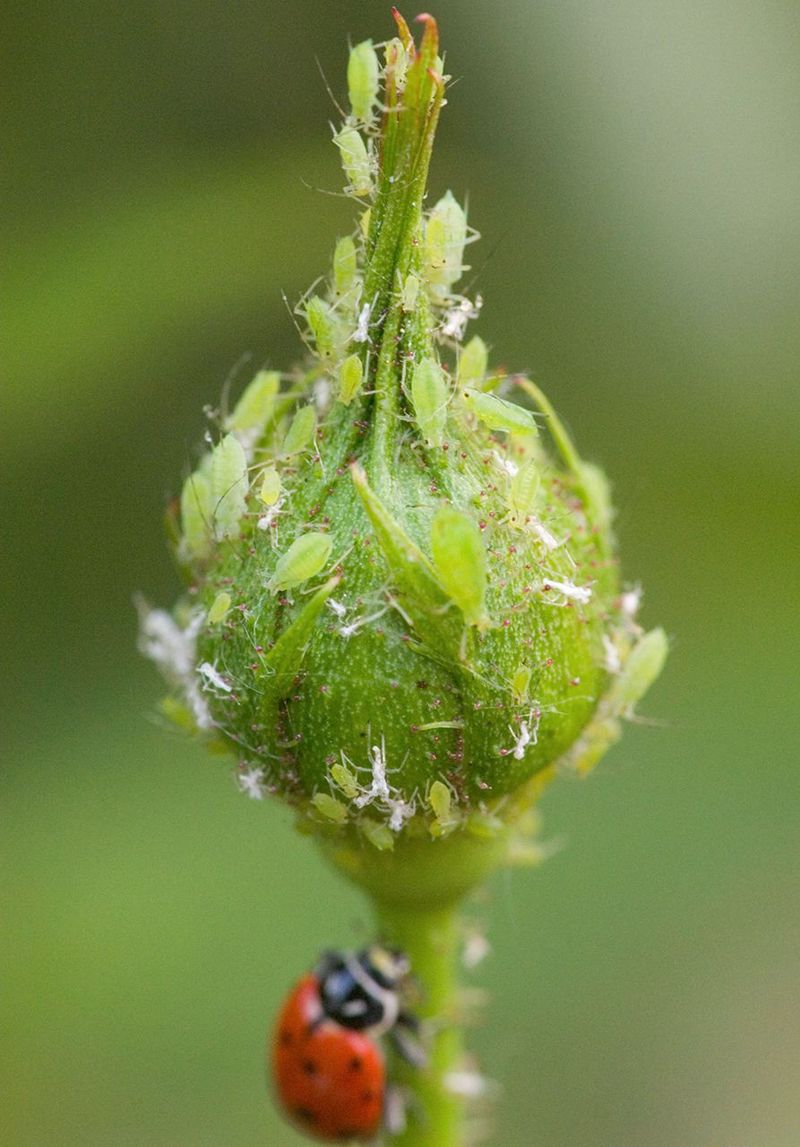
Finding a pest during your inspection is the beginning of a decision, not an automatic trigger for spraying. The first question to answer is whether the activity is actually harming the plant or simply present.
NC State Extension’s IPM handbook is direct on this point: many insects do not cause appreciable damage, and eliminating every insect from a container is neither possible nor desirable. If you find a handful of aphids on a plant that is otherwise growing normally, the practical response is often to keep watching rather than treating immediately.
Action thresholds vary with the plant species, its growth stage, the pest identity, the extent of damage, and your own tolerance for cosmetic imperfection.
When the damage is real and meaningful, start with the least disruptive option. Hand-removing visible insects works well for larger pests like caterpillars or beetles.
For soft-bodied insects such as aphids and spider mites on plants that can tolerate it, a firm stream of water directed at the affected foliage knocks populations down without introducing any chemical. NC State’s herbaceous ornamentals guidance notes that spider mites favor dry conditions, so regular misting can discourage them on plants whose disease and watering needs allow it.
Chemical treatment is an option when mechanical methods are not enough and the pest and damage justify it. Before reaching for any product, identify both the pest and the plant, then confirm the product is labeled for that specific combination and use site.
Apply only to the affected area, follow the label exactly, and treat because an identified pest is causing meaningful damage, not because an anole appeared nearby. University of Minnesota Extension frames chemical control as one tool within a broader management approach rather than a default first step, which lines up with how NC State Extension treats the same question.
No universal insect count requires action for every container plant. The threshold is a judgment call that depends on what you are growing, how much damage is visible, and what the realistic consequences of that damage are for the plant’s health and your enjoyment of it.
Protect the anole while you protect the container
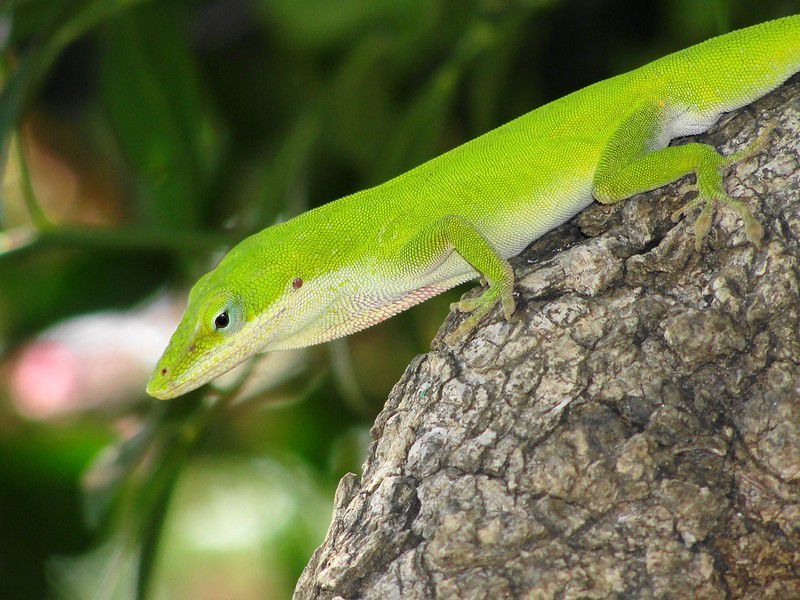
Reaching for a spray bottle the moment you see a lizard near your plants is one of the most common and least necessary reactions a homeowner can have. The anole itself is not the problem, and treating the plant because the lizard is present skips the step that actually matters: identifying whether a pest is causing real damage.
EPA guidance on reducing pesticide impacts on wildlife explains that broad, routine insecticide applications can affect nontarget wildlife, beneficial insects, and pollinators, and that reptiles can be exposed through contaminated prey, spray droplets, and other contact routes. An anole eating a recently treated insect is absorbing whatever that insect carried.
That pathway is easy to overlook when you are focused on the plant.
Targeted mechanical and horticultural controls are always worth trying first. Hand-remove pests when feasible, adjust watering to avoid conditions that favor fungus gnats or spider mites, and avoid overfertilizing with high-nitrogen products that produce the flush of soft new growth that many sucking insects prefer.
NC State Extension’s IPM guidance consistently places cultural and mechanical controls ahead of chemical options in the management sequence.
When a labeled product is genuinely needed, follow every restriction on the label regarding flowering plants and pollinator exposure. Do not assume that applying a pesticide at night is automatically safe for wildlife.
Night treatment may reduce exposure for some daytime pollinators when the label permits it, but it does not make the product safe for reptiles, pets, beneficial nocturnal insects, or other animals that may contact the treated surface after dark. The label and site-specific precautions always govern what is appropriate, regardless of the time of day.
Leave the porch visitor with the right expectation
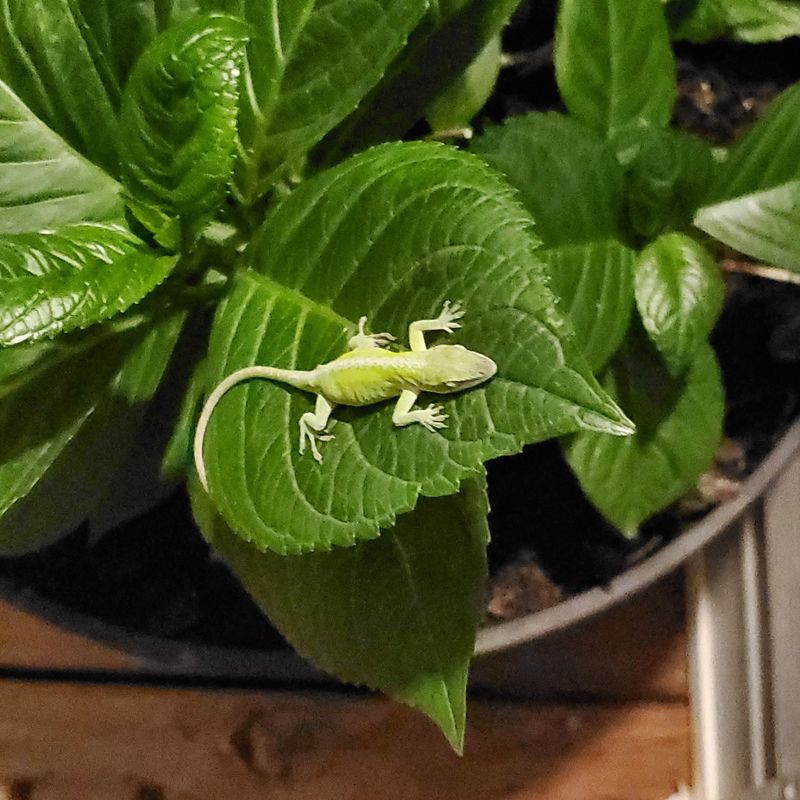
A green anole on your porch plant is a native North Carolina neighbor that has decided your container offers a good combination of warmth, cover, climbing surfaces, and accessible prey. NC Wildlife Resources Commission describes the species as harmless in ordinary backyard encounters, and the right response in most cases is simply to observe it without grabbing, restraining, or relocating it.
Any wild animal may defend itself if handled, so watching from a comfortable distance is both safer and more respectful of the lizard’s autonomy.
What the sighting does not tell you: that your plant has aphids, that a damaging infestation is underway, or that the lizard will solve any pest problem you might discover. Anoles are opportunistic hunters with a wide-ranging diet, and NC State Extension’s IPM approach makes clear that plant-level pest management depends on direct inspection and confirmed damage, not on what a predator nearby might be eating.
The well-supported takeaway is straightforward: the spot supports a small insect-eating predator, and that is worth appreciating. Inspect the container on its own schedule, act only when an identified pest causes real harm, and let the anole go about its business.
A porch that attracts native wildlife and handles pest pressure through targeted, thoughtful care is exactly the kind of yard worth tending.