
The North Carolina HOA Rules About Native Plants You Actually Have The Right To Push Back On
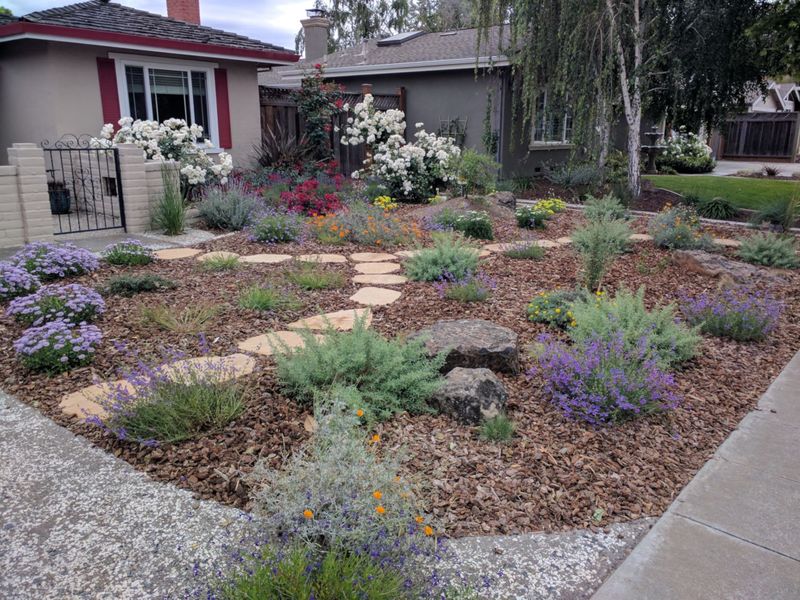
Planting native wildflowers, pollinator beds, or drought-hardy shrubs in your North Carolina yard can feel like a no-brainer for wildlife and water savings, until your HOA sends a violation notice. Many homeowners assume state law automatically protects their right to garden with native plants, but that assumption can lead to ignored notices, mounting fines, and a losing position.
The real picture is more nuanced, and knowing which arguments actually hold up, and which ones do not, is the difference between a garden you keep and one you are forced to remove.
North Carolina law does not automatically override an HOA’s landscaping rules

Many North Carolina homeowners plant native flowers or pollinator beds expecting that state law will shield them from HOA complaints. That expectation is not supported by any enacted statute.
North Carolina has no general law that overrides an HOA’s landscaping restrictions simply because a plant is native, wildlife-friendly, pollinator-supporting, or drought-tolerant.
The authority that governs your planting bed comes from a combination of sources: the recorded declaration, the bylaws, properly authorized rules and regulations adopted by the board, and applicable statutes. The North Carolina Department of Justice advises homeowners that HOAs hold real oversight powers and that no state or federal agency generally reviews HOA decisions, making it essential to understand your own governing documents before a dispute escalates.
Planned communities created on or after January 1, 1999, are generally governed by Chapter 47F of the North Carolina General Statutes, though certain smaller communities with no more than 20 lots may fall outside it. Older communities may rely primarily on their recorded declaration, bylaws, and their own governing instruments rather than Chapter 47F.
The statute that applies to your community shapes which procedural protections you can invoke.
Under N.C. Gen.
Stat. Section 47F-3-102, an HOA may adopt and amend rules and regulations and impose reasonable fines after notice and an opportunity to be heard.
That authority is real and courts have upheld it. A 2026 bill, House Bill 1212, proposed prohibiting HOAs from regulating gardens and certain other features, but the official legislative record identifies it as proposed legislation, not enacted law.
The central test for any challenge is straightforward: identify the exact rule the HOA says you violated, determine whether the board had authority to apply that rule, and then examine whether the board followed its own process correctly. That sequence, not a general claim about native plants, is where a legitimate challenge begins.
Governing documents and valid HOA rules establish the review framework

Before arguing about whether a planting bed is beautiful, ecologically valuable, or full of North Carolina natives, locate the exact language the HOA is relying on. Request the recorded declaration and every recorded amendment, the bylaws, any architectural-review rules, landscape guidelines, enforcement policy, and the specific violation notice you received.
Without those documents in hand, you are arguing in the dark.
Section 47F-3-102 allows an HOA to adopt and amend rules and regulations, but those internal rules must be authorized by and consistent with the declaration and applicable law. A board policy that goes beyond what the declaration permits may be challengeable on that basis alone.
The NC Department of Justice recommends consulting private counsel for disputes because the legal relationship between declarations, bylaws, and board-adopted rules can be complex.
Pay close attention to whether the restriction is a clear ban on particular plants or a requirement to obtain approval for landscaping changes. Those are different things.
A covenant requiring approval gives the HOA a review role, but it does not automatically grant the board unlimited discretion to reject any plan it dislikes. The governing language and any stated standards determine how much judgment the board may exercise, as illustrated by the North Carolina Court of Appeals in Martin II v.
Landfall Council of Associations, Inc., which upheld HOA authority to review landscaping changes where the governing documents authorized that review.
Location on your lot also matters. An HOA’s authority may differ for the front yard, rear yard, and side yard, and may be even more limited or more expansive in areas near easements, stormwater facilities, common areas, or sight-line corridors.
A native bed in a screened rear yard may face a different standard than one visible from the street. Read the governing language for each zone of your property separately, and do not assume that approval in one area covers another.
Genuinely ambiguous language can support a homeowner’s challenge

Sometimes the HOA’s objection does not point to a clear, specific rule. Instead, the board cites a vague phrase such as “neat and well-maintained appearance” or “no unsightly vegetation” without defining what those terms mean for a deliberately planted native bed.
That is where a document-based argument can carry real weight.
North Carolina courts generally resolve genuine ambiguity in private restrictive covenants in favor of the unrestrained use of land. The North Carolina Court of Appeals addressed this principle in C Investments 2, LLC v.
Auger, confirming that restrictive covenants are strictly construed against the party seeking to enforce them when the language is genuinely unclear. Courts also caution, however, that strict construction cannot be used to defeat the plain and obvious purpose of a restriction.
Ambiguity is a legal tool, not a general escape hatch.
A homeowner’s personal belief that a rule sounds vague does not automatically suspend enforcement, cancel a violation notice, or stop fines from accumulating. To use ambiguity as a defense, the language must genuinely support competing reasonable interpretations, and a court or arbitrator, not the homeowner, ultimately decides which interpretation controls.
Continuing to ignore notices while waiting for that ruling can lead to mounting fines or other enforcement action.
Preserve the exact text of the covenant or rule at issue. Write down the HOA’s stated interpretation and your competing reading.
If the dispute turns on what specific language means, that is the point at which private legal advice becomes most valuable. An attorney familiar with North Carolina restrictive covenants can assess whether the ambiguity argument is strong enough to support a formal challenge or whether a negotiated approval is the more practical path forward.
A deliberate maintenance plan makes a native bed easier to defend
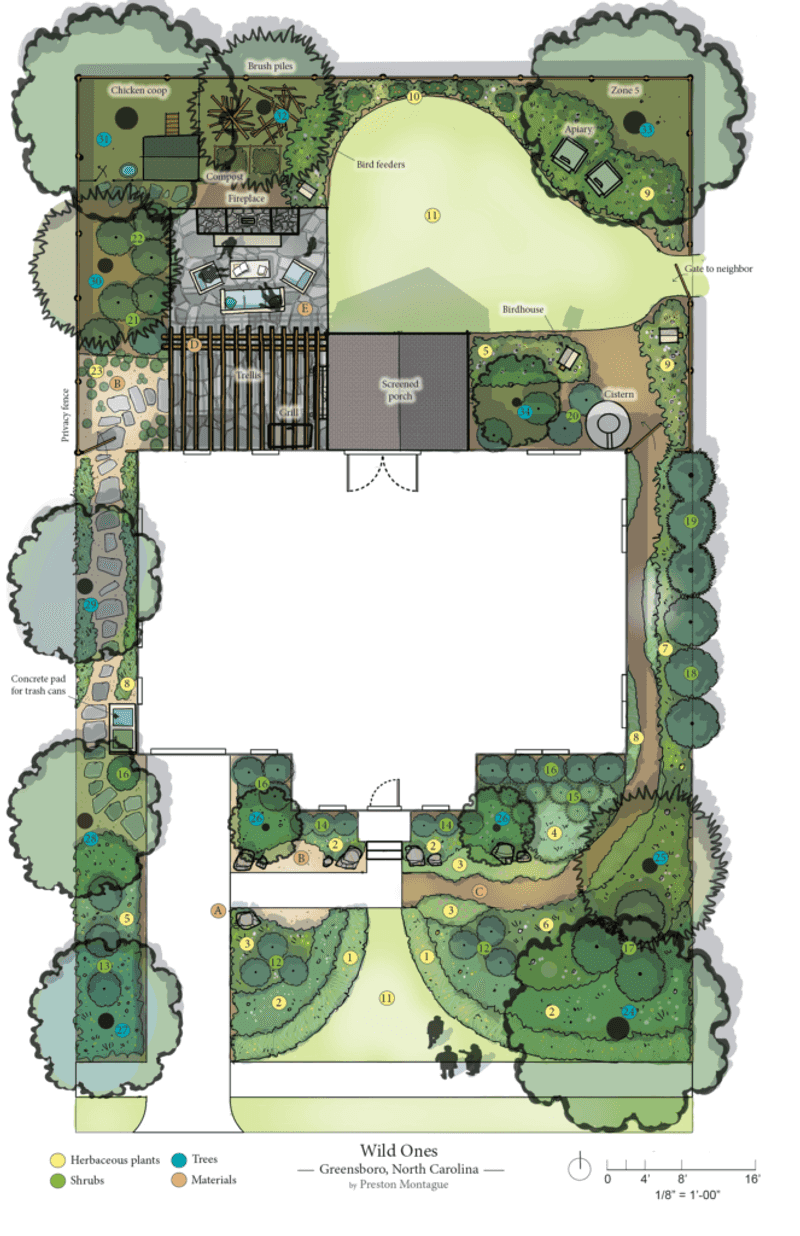
Winning the legal argument is only half the battle. Presenting your native planting bed as a deliberately designed, actively maintained landscape, rather than an overgrown patch left to chance, changes how the HOA board reads your proposal and how any reviewer evaluates your compliance.
Put together a simple approval package. Include a sketch showing bed boundaries, paths or edging, mature plant heights and widths, sight lines to the street and neighboring properties, drainage patterns, and mulch coverage.
Add a maintenance schedule that lists watering, weeding, seasonal pruning, and any invasive-plant monitoring. NC State Extension’s native plants guidance notes that native gardens can be formal, structured, and visually attractive rather than necessarily meadow-like, and that plant selection should match the site’s light, moisture, soil type, and mature size.
Native does not mean maintenance-free, especially in the first one to two years. New plantings typically need regular watering during establishment, and subdivision conditions such as compacted soil, reflected heat from pavement, stormwater runoff, and unusual shade can stress even well-chosen natives.
NC State Extension recommends soil testing where appropriate, correcting compaction, and maintaining roughly 2 to 3 inches of mulch around plants to retain moisture and suppress weeds.
Invasive plant control deserves specific attention. The North Carolina Forest Service urges residents to use native plants and remove exotic invasives, identifying species such as Callery pear, burning bush, mimosa, English ivy, Japanese honeysuckle, kudzu, Chinese wisteria, and Chinese silvergrass as examples that can overtake gardens and harm native ecosystems.
Identify every plant in your bed by name, and remove or control any invasive volunteers before the HOA spots them first. A maintained, well-documented native bed is a far stronger position than an approval request paired with an unmanaged yard.
Inconsistent enforcement may help, but it is a fact-dependent argument

If your HOA has overlooked similar planting beds in comparable properties for months or years, that history can support an argument that the board is applying its standards selectively. Selective or inconsistent enforcement is a legitimate avenue to explore, but it is not an automatic win and should not be treated as one.
The strength of this argument depends entirely on the evidence you can gather. Useful materials include dated photographs of comparable properties showing similar landscaping, copies of prior written approvals the HOA granted for comparable designs, records of written warnings or the absence of them for similar properties, and any documentation showing that the board knew about the comparable landscaping and took no action.
The NC Department of Justice advises homeowners to keep their own records of all HOA communications and to understand their rights before a dispute escalates.
North Carolina courts have addressed HOA authority in landscaping disputes, and outcomes depend on the governing documents, the HOA’s actual conduct, the comparability of the properties involved, and what remedy the homeowner is seeking. The Martin II v.
Landfall Council of Associations case illustrates that courts can uphold HOA landscaping authority where the governing documents support it, which is why the board’s actual enforcement history matters alongside the governing language.
Keep this argument separate from a procedural objection about notice and hearing. They are distinct claims that require different evidence and may produce different outcomes.
Document comparable properties carefully, note the dates you observed them, and be specific about why they are genuinely similar to your situation. Vague claims that “other yards look the same” carry far less weight than a dated, photographic record of specific addresses and planting styles the board previously accepted without action.
Notice and hearing rules matter before an HOA imposes fines

Receiving a violation notice can feel alarming, but it also triggers specific procedural protections that Chapter 47F extends to homeowners in qualifying communities. Understanding those protections helps you respond correctly rather than accidentally waiving your rights.
Under N.C. Gen.
Stat. Section 47F-3-102, an HOA may impose reasonable fines or suspend privileges for violations of the declaration, bylaws, or rules, but only after providing notice and an opportunity to be heard.
When you receive a violation notice, respond in writing promptly. Ask the board to confirm in writing the exact section allegedly violated, whether that rule appears in the recorded declaration or only in an internal guideline, the objective maintenance standard being applied, the appeal or architectural-review procedure available to you, and the deadline and process for requesting a hearing.
These procedural protections apply specifically to the enforcement actions described in the statute, mainly reasonable fines and privilege suspensions for covenant or rule violations. They do not guarantee that every board decision requires an identical hearing process, and a procedural defect does not automatically erase the underlying landscaping restriction.
A board that skips required notice before levying a fine may have acted improperly on the fine itself, but the underlying rule may still be enforceable once the correct process is followed.
The most important thing is to respond rather than ignore the notice. The NC Department of Justice recommends that homeowners consult private counsel when fines, liens, or court action are threatened.
Staying silent while fines accumulate puts you in a weaker position at every stage, including mediation and any eventual legal proceeding. A written response that requests the hearing and identifies your questions preserves your options without conceding the underlying dispute.
The drought statute limits some irrigation demands, not all landscaping rules

There is one narrow area where North Carolina statute does limit an HOA’s authority over your landscaping: irrigation requirements during a qualifying drought. Knowing exactly what this protection covers, and what it does not, prevents homeowners from invoking it too broadly and losing credibility with the board or a mediator.
Stat. Section 47F-3-122 addresses requirements to irrigate landscaping.
It applies when the U.S. Drought Monitor or the state environmental agency has designated the area as experiencing a severe, extreme, or exceptional drought, and when a qualifying water-conservation measure has been imposed by the governor, a state agency, or a local government.
The statute defines landscaping to include lawns, trees, shrubbery, and ornamental or decorative plants.
The statute also contains exceptions that limit when a homeowner can invoke it. If the HOA’s irrigation requirement falls within one of those exceptions, the protection may not apply even during a qualifying drought.
Read the statute’s exception language carefully against your HOA’s specific demand before citing the drought provision as a defense. A blanket claim that any drought declaration excuses all irrigation obligations is not what the statute says.
Equally important: this provision addresses whether you must irrigate. It does not create a general right to replace turf with native beds, override appearance or maintenance standards, bypass approval requirements, defeat setback or drainage rules, or ignore visibility requirements.
A homeowner who uses the drought statute to justify an unapproved landscape overhaul is applying it far beyond its actual scope. Use it precisely, when all statutory conditions are met and no applicable exception applies, and keep it separate from every other argument in your challenge.
Use records, review, mediation, and counsel instead of self-help

When the violation notice arrives and informal conversation with the board goes nowhere, a clear escalation sequence protects your position far better than self-help or silence. Start by putting your questions in writing.
Ask the HOA to identify the exact section allegedly violated, where that rule appears in the governing documents, the objective maintenance standard being applied, the review or appeal procedure, and the hearing deadline. A board that cannot answer those questions in writing has revealed something useful about the strength of its position.
Association records can also support your case. N.C.
Section 47F-3-118 requires that financial and other association records, including meeting records, be reasonably available for examination by lot owners as required by the bylaws and applicable nonprofit-corporation law. Meeting minutes, enforcement logs, and architectural-review decisions for comparable properties can reveal enforcement patterns that support an inconsistency argument.
Access depends on the governing documents and applicable law, so make your request in writing and keep a copy.
If the dispute remains unresolved after the internal review process, voluntary prelitigation mediation is available for qualifying disputes involving Chapter 47F communities or a declaration, bylaws, or rules under N.C. Gen.
Mediation is excluded for disputes solely about failure to pay assessments and associated collection issues, but a landscaping enforcement dispute generally qualifies. Mediation gives both sides a structured opportunity to reach a practical resolution without court costs.
When fines are accumulating, a lien is threatened, or the HOA has indicated it may seek a court injunction, the NC Department of Justice recommends consulting private counsel. An attorney familiar with North Carolina HOA law can assess the governing documents, evaluate your arguments, and advise on whether to pursue mediation, negotiate a design modification, or contest the matter in court.
Self-help, such as simply continuing to maintain a bed the HOA has formally objected to while ignoring the process, tends to worsen the outcome.
The strongest case pairs habitat goals with rule-compliant design

Pulling every thread together, the homeowners who successfully defend native or pollinator planting beds in North Carolina HOA communities share a common approach: they treat the project as a landscaping design challenge rather than a rights claim. That shift in framing changes every conversation with the board.
Match the planting bed to the governing documents and valid HOA rules first. Challenge only a missing or genuinely ambiguous restriction, not one you simply find inconvenient.
Document any potentially inconsistent treatment by the board, but do not assume that evidence alone resolves the dispute. Comply with notice and hearing procedures every time, and use the drought-irrigation statute only when all statutory conditions and exceptions have been carefully checked against your specific situation.
Section 47F-3-102 gives HOAs real authority, and a challenge that ignores that reality tends to fail.
Ecological value alone does not defeat an otherwise valid covenant. A bed full of native coneflowers, native grasses, and pollinator-supporting shrubs is worth protecting, but the path to protecting it runs through the governing documents, not around them.
NC State Extension’s native plants resources can help you select appropriate species, plan for establishment, and build a visually compelling design that meets objective appearance standards.
The next practical steps are concrete: collect the governing documents, respond to the violation notice in writing, prepare a maintained design plan with a site sketch and maintenance schedule, and seek mediation or private legal advice when fines or liens enter the picture. A well-designed native bed and a well-documented legal position are not opposites; together, they give you the strongest ground to stand on.