
Your Clematis Grows Vines But No Flowers – Here’s The Bloom Reset To Try Before Summer Passes
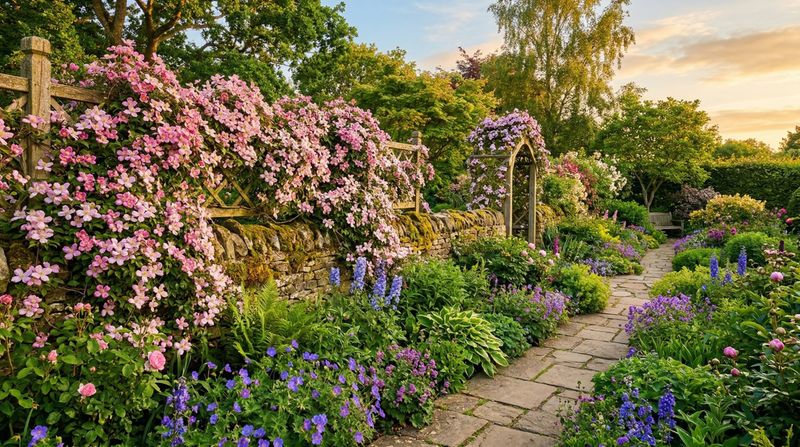
You step outside, look at your clematis, and see nothing but a wall of green leaves climbing happily in every direction. No buds, no blooms, just vine.
Before you grab the pruners and start cutting, know this: the fix depends entirely on which type of clematis you have, and the wrong cut at the wrong time can wipe out your flowers for this season or even next year. Getting the right answer starts with one question – which pruning group does your plant belong to?
The pruning group determines whether a summer reset is safe
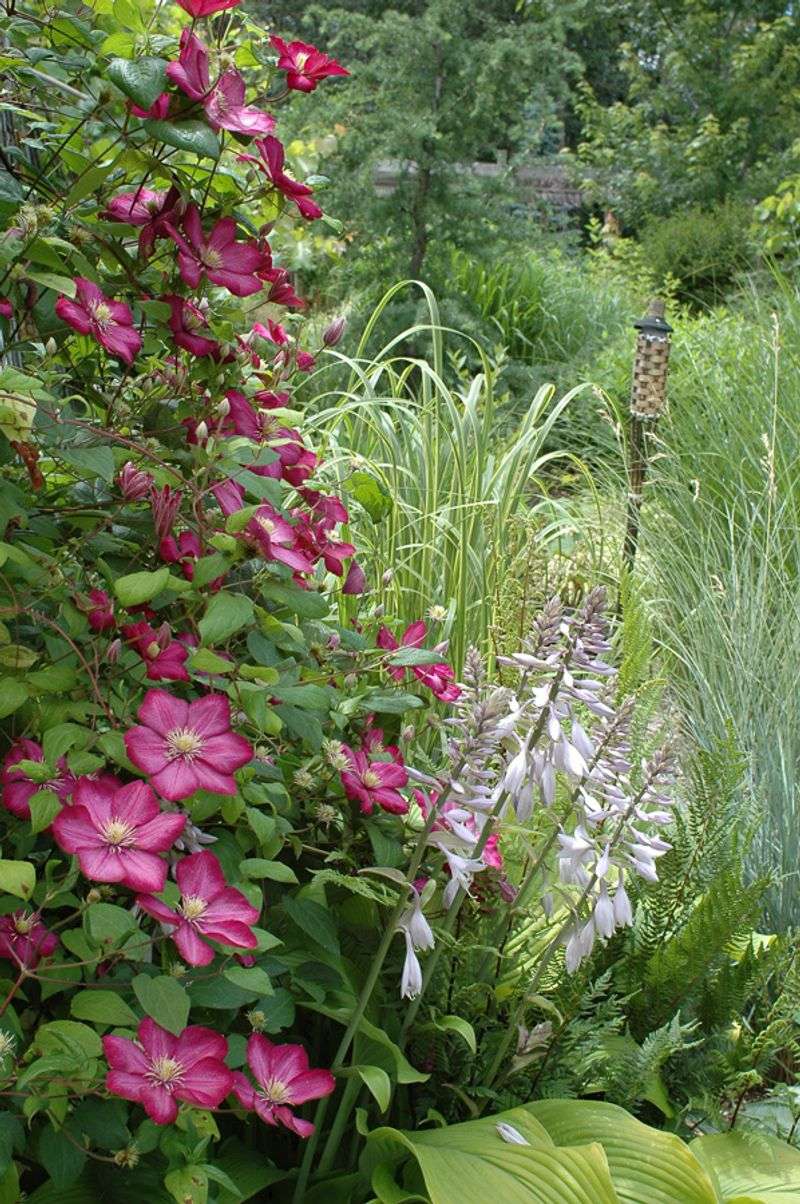
Standing in front of a leafy, flowerless clematis can feel like something has gone wrong. But a vine full of healthy green growth is not always a sign of failure – it may mean the plant has already finished its seasonal display, has not yet reached its normal flowering window, or lost its flower potential because stems were pruned at the wrong time.
Before reaching for the shears, the single most useful thing you can do is figure out which pruning group your plant belongs to.
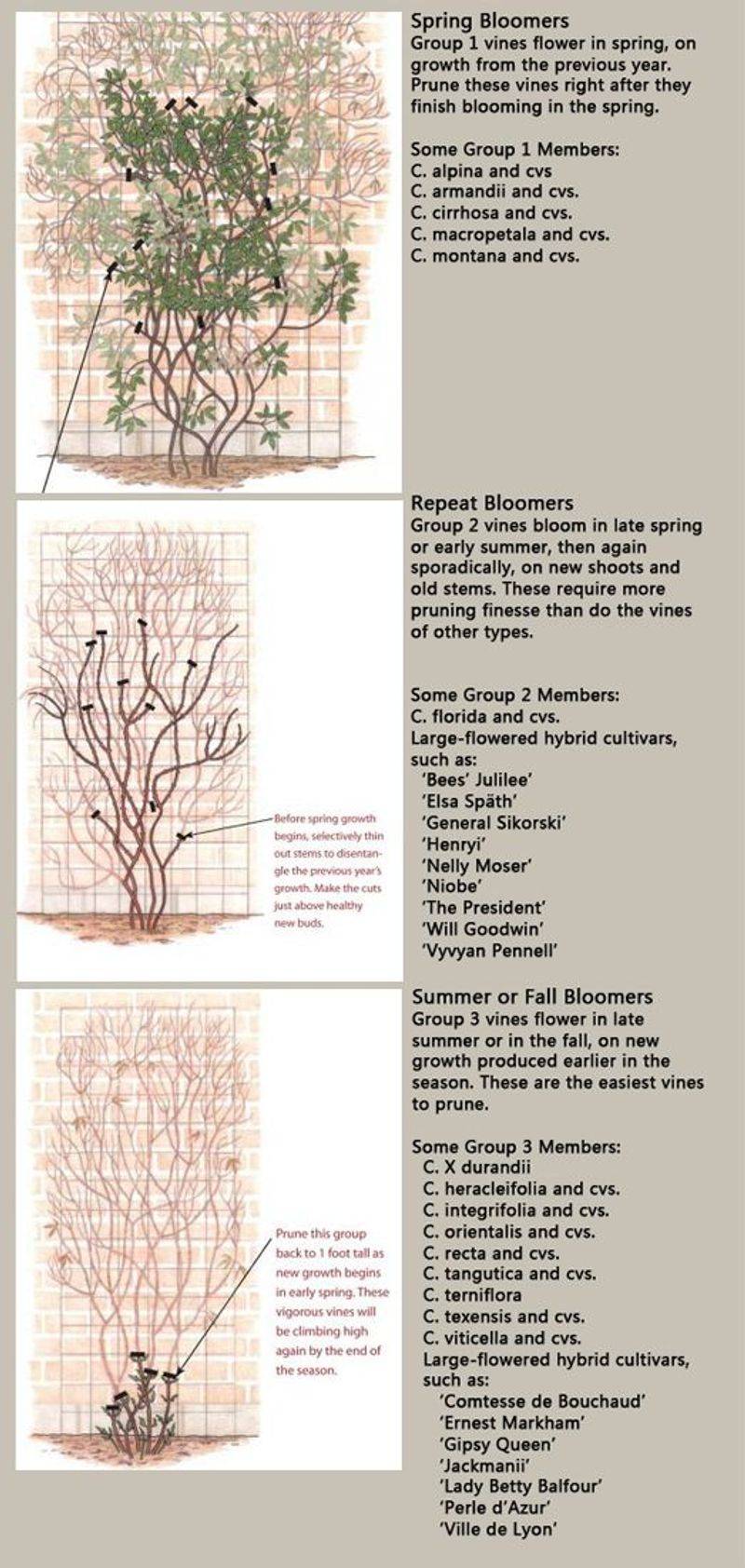
Clematis are divided into three groups based on when and where they produce flowers. RHS pruning guidance describes Group 1 as plants that bloom in winter or spring on stems grown the previous season, Group 2 as plants that flower in early summer on old wood and sometimes again in late summer on new growth, and Group 3 as plants that bloom in mid- to late summer on the current season’s new growth.
Each group needs a different response, and applying a universal hard cut or a generic fertilizer ignores that distinction entirely.
Check the plant label, the cultivar name, or the normal flowering time as your starting point. A plant that typically blooms in spring has almost certainly finished its display by midsummer and will not respond to summer pruning with a new flush of flowers.
A plant that normally blooms in late summer may simply be on schedule, with buds still developing on new growth. The label is the most reliable guide, and RHS growing advice notes that cultivar behavior and local weather can shift timing enough that bloom season alone is only a rough clue, not a firm diagnosis.
Think of the three groups as three separate plants with three different relationships to their wood. Old-wood bloomers need their established stems protected.
Plants that can bloom on both old and new wood offer a narrow window for selective post-bloom pruning. New-wood bloomers need their hard cutback done in late winter, not mid-season.
Getting that distinction right is more important than any fertilizer or technique that follows.
Group 1 needs restraint after its spring display
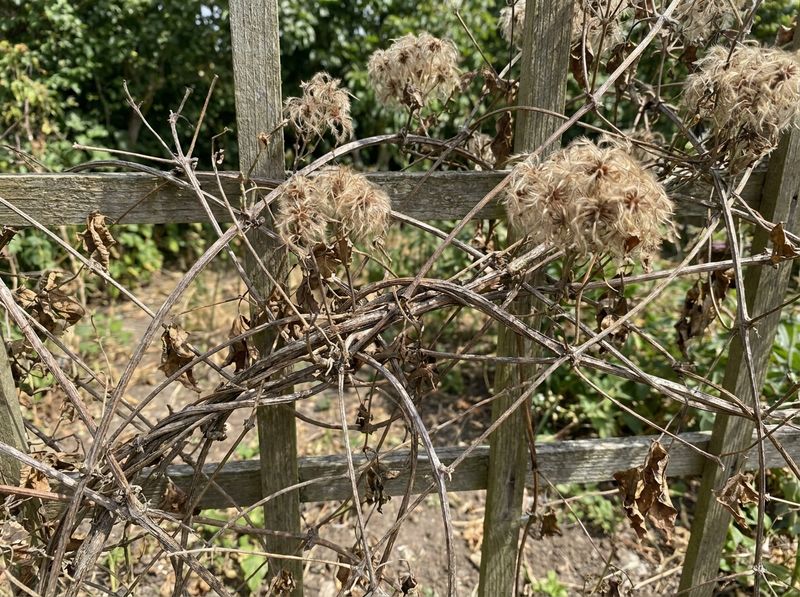
Spring-flowering clematis – the Group 1 plants – set their flower buds on stems produced during the previous growing season. By the time summer arrives, many of them have already put on their full show.
A healthy green vine with no flowers in July or August is not a broken plant; it is a plant that has simply done what it was designed to do and moved on to building the stems that will carry next year’s blooms.
RHS pruning guidance is clear that Group 1 plants need the least intervention of the three groups. The appropriate action during summer is to remove dead, damaged, or weak growth and leave the healthy stems alone.
Those stems are the platform for next spring’s flower buds, and cutting them now removes what the plant has been building all season.
The only time a more substantial cut makes sense for a Group 1 plant is immediately after flowering, when the plant still has the full growing season ahead to produce replacement wood. University of Illinois Extension guidance specifies that for Group 1 plants, the action is to remove only dead wood, reinforcing the case for a light touch rather than a hard reset.
If your Group 1 clematis is mid-summer and flowerless, the most honest answer is that it has probably already finished its season. Check the stems carefully for dead or weak sections, remove those cleanly, and let the rest of the plant grow undisturbed.
Expecting a second flush of flowers from a healthy Group 1 vine in summer is not realistic – protecting what it has built is the better investment for next spring.
Group 2 allows a cautious chance at later flowers
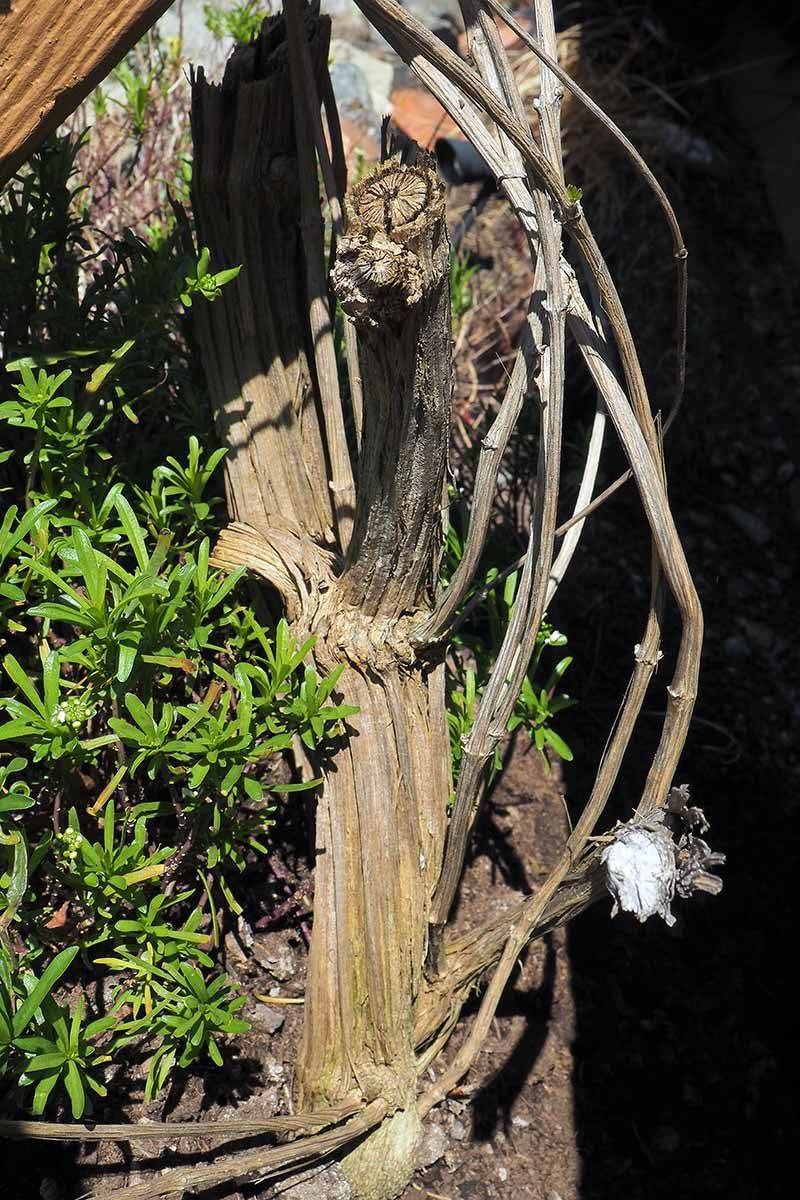
Group 2 clematis offer the most realistic opportunity for a same-season intervention, but the word “cautious” matters here. These plants bloom in early summer on old wood and can produce a second, lighter flush later in the season on new growth that develops after the first flowers finish.
That second flush is possible, not guaranteed, and the way you prune determines whether it happens at all.
According to RHS beginner pruning guidance, once the first flowers have finished, you can remove spent blooms and optionally shorten selected stems lightly to a strong pair of buds or an appropriate healthy side shoot. The key word in that instruction is “selected.” You are not cutting the whole plant back – you are choosing a portion of the stems and trimming those, while leaving substantial unpruned growth intact to maintain the plant’s framework and preserve whatever flowering potential remains on stems you have not touched.
RHS pruning guidance reinforces that heavy pruning on a Group 2 plant risks losing blooms rather than gaining them. A hard cutback removes the very stems that might carry late-season flowers, and it can also stress a plant that is already directing energy into new growth.
Light, targeted, selective work is the approach – not a wholesale renovation.
If your Group 2 clematis has finished its first flush and you can still see strong pairs of buds along some stems, trim those selected stems back to a healthy bud and leave the rest. Water well, keep the roots cool, and wait.
Some plants will push new growth and produce flowers in late summer or early fall. Others will not rebloom significantly before the season closes.
That variability is normal, and managing your expectations around it is part of working honestly with this plant.
Group 3’s dependable reset belongs in late winter
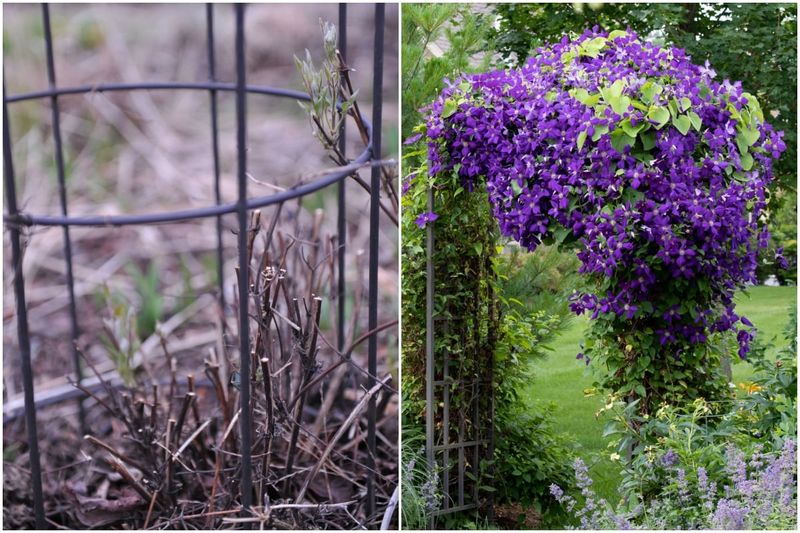
Group 3 clematis are the ones most likely to tempt a frustrated gardener into a damaging summer cut. They flower on current-season growth, they can produce lush, leafy vines through early summer with no blooms in sight, and the instinct is to cut them hard in hopes of triggering a flower response.
That instinct leads to the wrong result at the wrong time.
Many Group 3 clematis are cut back in late winter or early spring to a low pair of strong, healthy buds – often roughly 20 to 30 cm above the ground – and that timing is what allows the plant to push vigorous new growth that carries flowers through summer. RHS pruning guidance describes this late-winter or early-spring cutback as the standard approach for Group 3 plants, and Missouri Botanical Garden pruning guidance echoes the importance of following the cultivar’s specific instructions rather than treating that height as a fixed rule for every plant.
Cutting an already-leafy summer vine hard does not replicate that late-winter reset. The plant has already invested energy in the stems it has produced.
A summer hard cut may delay flowering further, reduce the vigor of new growth, or simply produce more vegetative stems that run out of season before they can flower. There is no reliable way to force a Group 3 plant through its normal flowering cycle by cutting it mid-season.
The practical plan for a Group 3 plant right now is to support what it has, not punish it for being leafy. Make sure the stems are tied in securely so they are not damaged by wind.
Maintain appropriate light and moisture at the root zone. Then mark your calendar for late winter or early spring and follow through with the proper cutback at the right time.
That is the reset that actually works for this group.
Light and root moisture support flowering growth
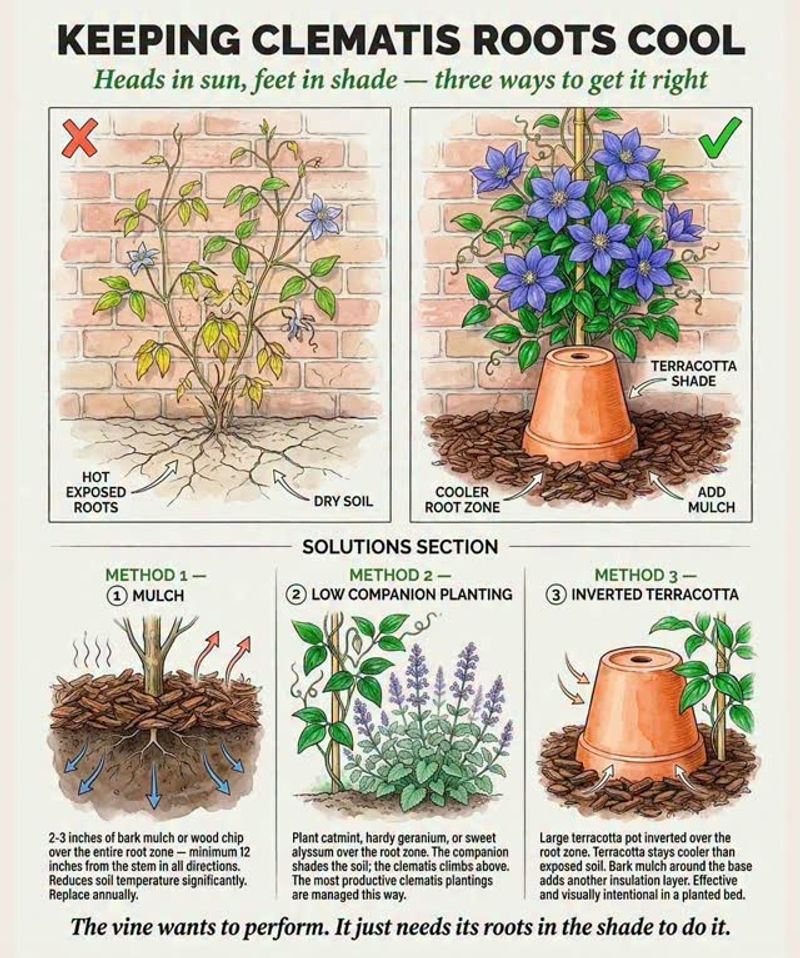
Once you have identified your plant’s pruning group and made the appropriate pruning decision, the next layer of support comes from the growing conditions around the plant. Clematis are often described with the phrase “cool roots, sunny tops,” and that shorthand points to a real set of needs that affect how well the plant develops flowering growth.
Oregon State University Extension guidance on growing clematis recommends providing roughly six hours of sunlight where feasible. Flowering generally suffers in deep shade, and a vine that spends most of the day in the shadow of a fence or structure may produce plenty of leaf growth while struggling to develop buds.
If your plant is not getting adequate light, that alone can explain a flowerless summer vine, and no amount of pruning or fertilizer will fully compensate for it.
At the same time, hot, dry soil at the root zone stresses the plant and can weaken growth. Keeping the base cool and moist – without waterlogging it – is a practical goal.
A layer of mulch around the base helps moderate soil temperature and retain moisture, but keep it away from direct contact with the stems to avoid encouraging rot. Low-growing plants around the base serve a similar purpose and can look attractive without competing aggressively for resources.
Water deeply during prolonged dry periods rather than relying on frequent, shallow sprinkling. RHS growing guidance notes that newly planted clematis need closer monitoring in dry weather, while established plants generally need supplemental water mainly during extended heat or in very free-draining conditions.
Waterlogged soil is equally harmful and can damage roots over time, so good drainage matters as much as consistent moisture. RHS clematis FAQs reinforce that these site adjustments are supportive improvements, not instant bloom cures – but getting them right creates the conditions where pruning decisions can actually pay off.
Fertilizer supports a plan but cannot switch on blooms
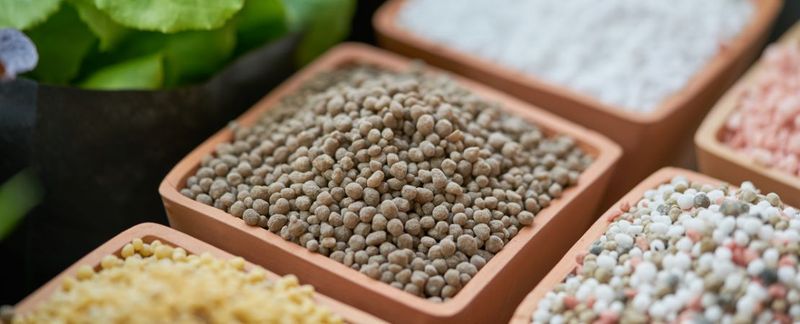
Reaching for a fertilizer when a plant refuses to flower feels productive, but feeding a clematis without addressing pruning group, light, and moisture first is working in the wrong order. Established clematis growing in fertile, well-amended garden soil may need little or no regular supplemental feeding at all, and the recommendations that do exist vary considerably depending on soil type, climate, and whether the plant is in a container or in the ground.
RHS growing guidance treats fertilizer as secondary to site conditions, not as a primary bloom trigger. Illinois Extension planting and care guidance warns against overfertilizing, noting that excess nutrition can push lush, soft vegetative growth at the expense of flowers – which is the opposite of the result you want.
High-nitrogen lawn fertilizer is a particular problem because nitrogen strongly promotes leafy growth, and using it on a flowerless vine can make the situation worse.
If you decide that feeding is appropriate for your plant, timing matters. University of Illinois Extension clematis guidance advises feeding Groups 1 and 2 after the first bloom and Group 3 after spring pruning – not while the plant is in bud or actively flowering.
Oregon State University Extension suggests a rose- or tomato-type fertilizer for established plants as one option, while the RHS notes that in-ground plants in fertile soil may not need it at all. Follow the product label and any local soil-test recommendations rather than applying a product speculatively.
Phosphorus- or potassium-heavy products are sometimes suggested as bloom boosters, but no fertilizer reliably forces flowers on a clematis that has a pruning, light, or moisture problem. Correct those first.
If conditions are already good and the plant is a reasonable candidate for feeding, a balanced product applied at the right time in the season can be a sensible addition – not a shortcut.
Young vines and sudden dieback require separate checks
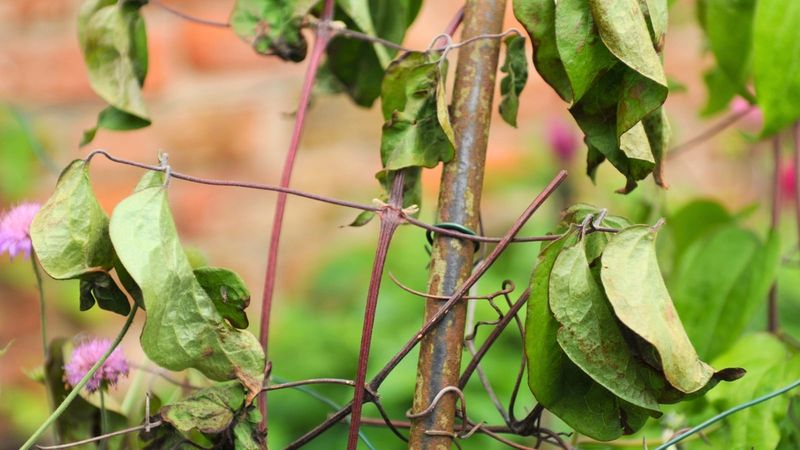
Not every flowerless clematis has a pruning or feeding problem. Two situations call for a completely different response: a plant that is simply young and still getting established, and a plant that is showing signs of disease or environmental damage.
Lumping either of these into the standard diagnostic can lead to the wrong action at the wrong time.
A newly planted clematis may spend its entire first growing season building roots and developing strong basal stems rather than producing a significant flower display. Missouri Botanical Garden pruning guidance notes that first-year pruning is often aimed at encouraging several strong basal stems rather than maximizing immediate flowers.
A well-developed, multi-stemmed plant generally flowers more reliably than a young or weakly established one. If your vine went in the ground this spring or last fall, patience is the correct response – not aggressive intervention.
For a mature, leafy vine that simply has no flowers, pruning group and growing conditions are the first checks, but they are not always the complete answer. Cultivar maturity, seasonal weather, bud damage from a late frost, container limitations, and periods of excessive vegetative growth can all affect flowering without pointing to a single obvious cause.
RHS clematis FAQs and RHS growing guidance both treat nonflowering as a multi-factor issue rather than a single problem with a single fix.
Sudden wilting, blackened stems, or rapid dieback change the picture entirely. These warning signs suggest a health problem rather than a cultural one, and the response is different.
RHS guidance on clematis wilt recommends cutting affected growth back to clean, healthy tissue, removing the material from the garden, and disinfecting your tools afterward. Keep in mind that wilting can also result from drought, waterlogging, physical injury to stems, pest activity, or root disease – so a sudden collapse is not automatically wilt, and treating it as such without checking other possible causes can send you in the wrong direction.
Match the reset to the plant and the calendar
Pulling the right response together starts with a single identification step: find out which pruning group your clematis belongs to, using the plant label, the cultivar name, or its normal flowering time. Everything that follows depends on that answer.
RHS pruning guidance makes clear that group-specific timing is the foundation – not a universal cut or a product applied in hope.
For Group 1, preserve healthy old wood and remove only dead or damaged growth. For Group 2, if the first flush has finished, try optional light pruning on selected stems back to a strong pair of buds, retain substantial unpruned growth, and understand that rebloom is possible rather than assured.
For many Group 3 plants, the reliable reset is a late-winter or early-spring cutback to a low pair of strong, healthy buds – roughly 20 to 30 cm above the ground for many cultivars – not a summer hack on a leafy vine.
Before reaching for fertilizer, correct any light or moisture problems first. Treat a healthy, leafy, flowerless vine very differently from one showing sudden wilting or blackened stems, which signals a health issue that needs its own response.
This sequence – group identification, appropriate pruning, site conditions, conditional feeding – protects existing and future buds. For some Group 2 plants, it gives a genuine shot at flowers before summer closes.
For the rest, it sets the plant up to perform exactly as it should, right on schedule, when its season actually arrives.