
What It Really Means When A Hawk Starts Perching Over Your North Carolina Yard
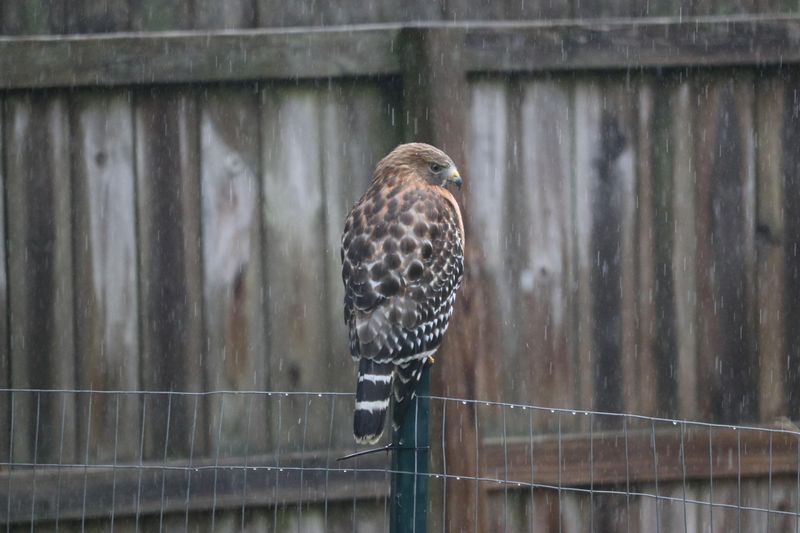
Spotting a hawk perched on your fence post or roosting in the oak tree at the edge of your yard can feel like a big moment, especially if it keeps happening. Before you start worrying about your feeders, your garden beds, or your backyard chickens, it helps to know what that bird is actually telling you.
The short answer is less dramatic than you might expect, and the practical steps are simpler too.
A Perch Offers a Clue, Not a Diagnosis
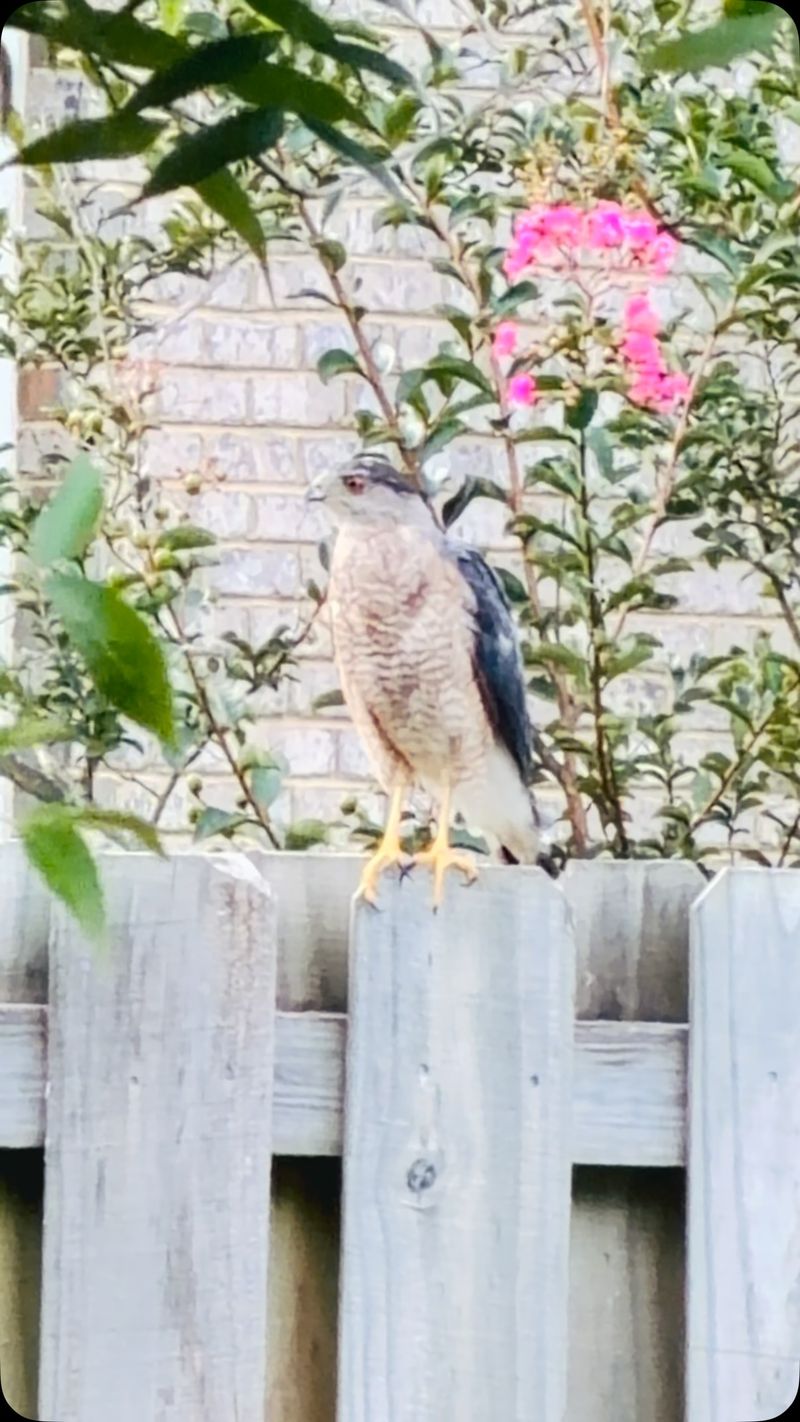
Repeated hawk visits almost always mean one thing first: the property offers a useful vantage point. A high perch gives a hawk a wide sightline over open lawn, garden edges, shrub borders, and neighboring lots.
From there, the bird can watch for movement below, rest after a flight, survey what it considers part of its territory, or simply wait near a habitat edge where prey tends to appear. A perch alone does not tell you whether the hawk is actively hunting, resting, or just passing through on a longer route.
The distinction matters because homeowners often jump straight to a rodent diagnosis. Cornell Lab’s Red-shouldered Hawk life history describes a species that hunts small mammals, amphibians, reptiles, and crayfish from wooded suburban perches, not one focused exclusively on garden mice.
Cooper’s Hawk life history notes that this species is strongly associated with leafy neighborhoods and bird feeders, where its primary prey is other birds rather than rodents. A Red-tailed Hawk perched over an open lawn is more likely watching for mammals, but even that connection is a probability, not a certainty.
Raptors also use territories far larger than a single residential lot. The hawk you see on your fence may have already worked a woodland edge two streets over, hunted along a pond, or passed through three other yards before landing in yours.
Project FeederWatch research on urban hawk establishment found that prey availability across a metropolitan landscape helped explain where hawks persisted, but that finding applies to neighborhoods and territories, not to individual yards viewed in isolation.
The most honest interpretation you can draw from repeated perching is this: the hawk has found a location that may be worth returning to. What it is actually finding there, whether songbirds at a feeder, rodents in a brushy border, frogs near a rain garden, or simply a reliable roost, depends on the species, the habitat around your specific lot, and the clues you gather on the ground.
Identify the Hawk Before You Infer Its Prey
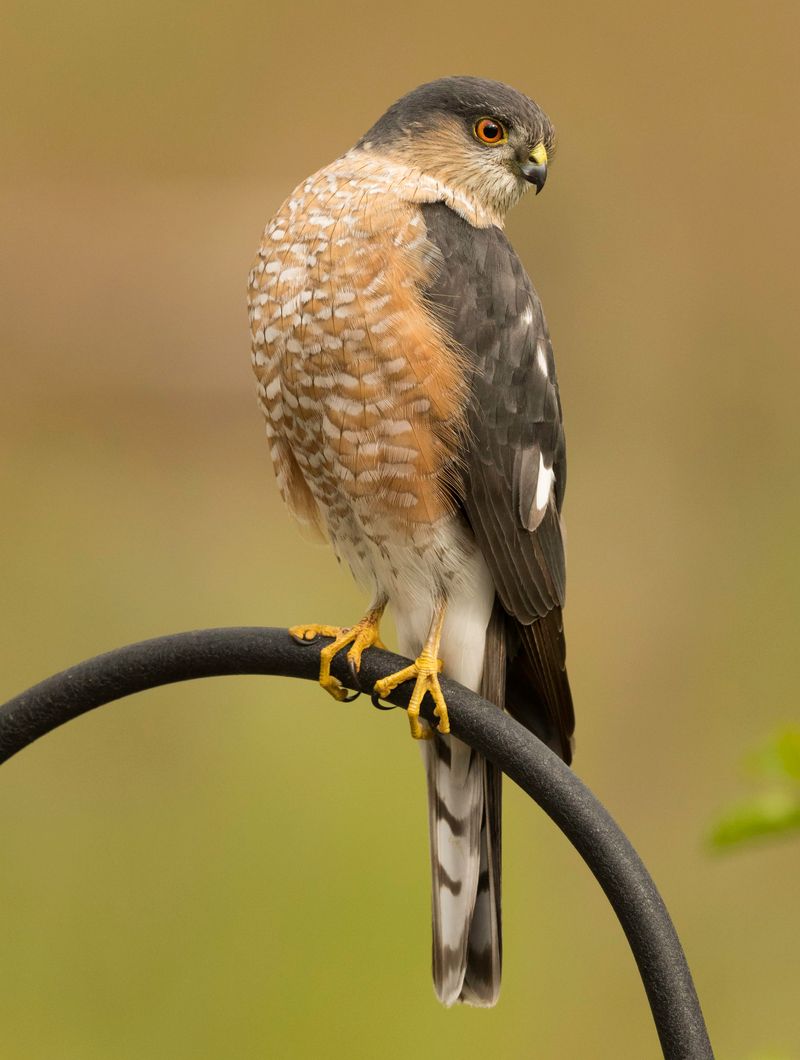
Getting the species right before drawing any conclusions about prey is one of the most practical steps a homeowner can take. Four hawks show up regularly in North Carolina residential yards: Cooper’s Hawk, Sharp-shinned Hawk, Red-shouldered Hawk, and Red-tailed Hawk.
Each hunts differently, and assuming the wrong one can send you chasing a problem that does not exist.
Cooper’s and Sharp-shinned Hawks are both accipiters, a group built for speed and agility in tight spaces. Both carry long tails and fly with quick, snappy wingbeats followed by short glides.
The key difference in shape is the wing. Cornell Lab’s Cooper’s Hawk identification guide describes broader, more rounded wings compared to the shorter, more compact wings of the Sharp-shinned Hawk.
Cooper’s Hawks also tend to be noticeably larger, roughly crow-sized, while Sharp-shinned Hawks are closer to a jay in size. That said, Project FeederWatch’s identification guide for these two species is direct about the challenge: a small female Cooper’s and a large male Sharp-shinned can overlap in size, and a quick glance or a blurry photo rarely settles the question.
If you cannot confirm the species, it is better to say “accipiter” and move on than to force a conclusion.
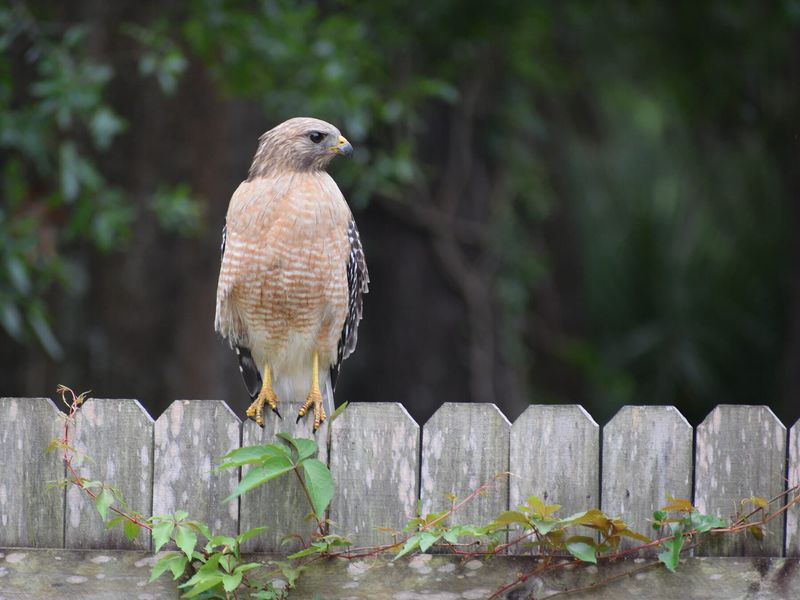
Red-shouldered Hawks look quite different. Their identification page highlights strongly barred wings and tail, a reddish wash across the breast, and a preference for wooded areas near water, which matches much of the Piedmont and coastal lowlands of North Carolina.
If your yard backs up to a creek, a pond, or a wooded buffer, a Red-shouldered Hawk is a reasonable candidate.
Red-tailed Hawks look broader and stockier in flight, with relatively short tails and wide, rounded wings built for soaring rather than threading through vegetation. Cornell’s Red-tailed Hawk identification guide notes the rusty-red upper tail that adults show, though juveniles lack this mark entirely.
Juveniles of all four species can look substantially different from adults, which is another reason to hold identification lightly when the view is brief or the light is poor. The Sharp-shinned Hawk overview also notes that immature birds carry streaked brown plumage rather than the cleaner adult pattern, adding another layer of difficulty for quick yard identifications.
Use Feeder and Habitat Clues Carefully
Rather than treating one hawk as a yard-wide diagnosis, spend a few minutes reading what your specific property actually offers. Walk the lot and note what is concentrated where.
A well-stocked feeder drawing juncos, sparrows, and doves to an open platform creates a very different situation than a brushy garden border with tunneled soil and chewed plant stems at the base.
Project FeederWatch’s prey-selection research found that ground-foraging birds, including juncos, finches, sparrows, doves, and starlings, appeared frequently among observed hawk prey at feeders, while quick grab-and-go species such as chickadees and nuthatches were taken less often. If you have a busy platform feeder with birds spending long stretches on the ground below it, an accipiter has a reason to return.
That is a feeder management question, not a rodent question.
Habitat edges tell a different story. Red-shouldered Hawks are linked to wooded suburban settings near water, where they take frogs, lizards, snakes, and small mammals from low perches.
If your yard borders a drainage swale, a rain garden, or a wooded buffer, that species may simply be working the edge it always uses, with your fence post as a convenient stopping point. Red-tailed Hawks are more commonly associated with open lawn, field edges, and roadsides where voles and other mammals move through short grass.
One sighting, or even several, cannot measure how many songbirds or rodents your property holds. The FeederWatch metropolitan landscape study connected hawk presence to prey availability across entire neighborhoods, not to conditions inside individual lots.
A hawk may be responding to prey anywhere within its broader territory, which can include multiple yards, a nearby park, a roadside ditch, or a wooded lot several blocks away. Look for actual evidence in your yard before drawing conclusions: runways in the lawn, chewed plant bases, or seed spillage on the ground are more reliable clues than the hawk’s presence alone.
Pause Feeders Without Removing the Whole Yard
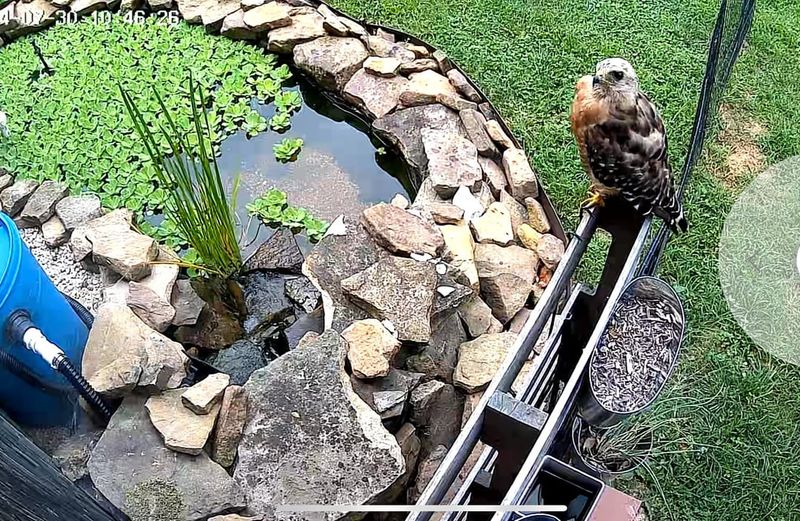
When a hawk returns repeatedly and you watch it actively hunting near a feeder, the most direct response is a temporary feeder break. Penn State Extension’s guidance on hawks near feeders recommends taking feeders down or leaving them empty for several days to reduce the concentration of prey birds in one spot.
If the hunting continues after feeders go back up, extending the pause by a couple of weeks is a reasonable next step.
Alongside the feeder break, clean up spilled seed on the ground. Loose seed below a platform feeder draws ground-foraging sparrows, doves, and juncos, exactly the birds that Cooper’s Hawks and Sharp-shinned Hawks tend to target.
Switching to a feeder with a tray that catches seed, or moving to a tube feeder that limits spillage, can reduce how long birds linger in the open below the feeder.
The stewardship distinction worth keeping in mind: a feeder pause is a temporary, reversible response, not a verdict that feeding songbirds is wrong. Audubon’s backyard guidance points out that suitable trees or dense shrubs within roughly 15 to 20 feet of a feeder give smaller birds a quick escape route when a hawk arrives.
Stripping shrubs or removing all nearby vegetation to “clear the sight lines” for the hawk actually removes the cover songbirds need to survive an attack.
Dense plantings near a feeder are a feature, not a flaw. FeederWatch prey-selection data suggests that birds with quick flight paths to cover are taken less often than those lingering in the open.
So the practical sequence is: pause the feeder, clean the ground below it, maintain dense escape shrubs nearby, and restart feeding once the hawk has shifted its attention elsewhere. Songbirds will return quickly, and the feeder can go back to doing what it was doing before.
Manage Confirmed Rodent Damage Separately
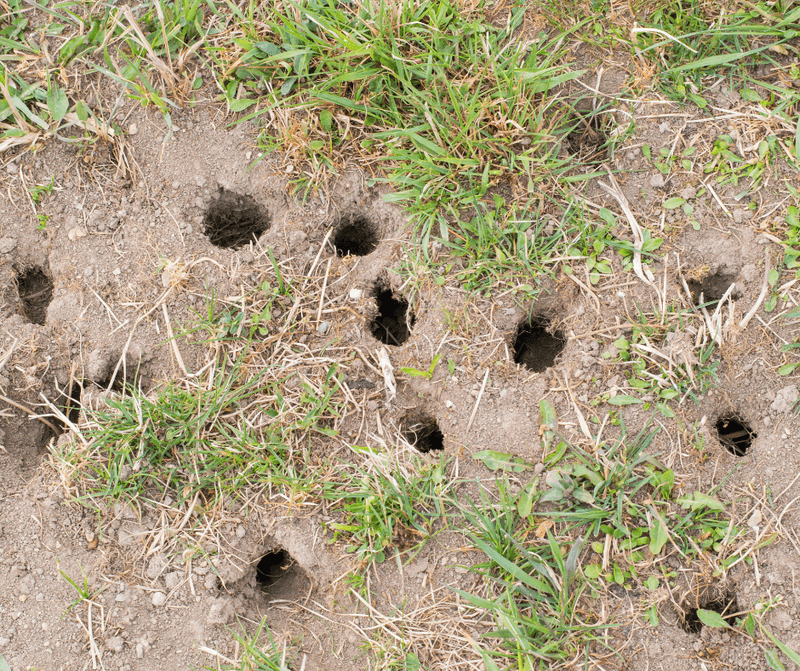
A hawk perching over your yard does not confirm a rodent problem, and a rodent problem does not confirm itself through the hawk’s presence. If you suspect mice or voles are damaging your garden beds, look for physical evidence: surface runways in the lawn, small holes at the base of plants, gnawed roots or bulbs, or droppings near the soil line.
Those signs are the actual reason to act, not the bird on your fence post.
Penn State Extension’s vole management guidance is clear that predators, including raptors, may help keep vole numbers low when populations are already reduced, but they generally cannot suppress a rapidly reproducing or established vole population on their own. Voles can produce multiple litters per year, and a single hawk hunting across several properties cannot keep pace with that reproduction rate.
Counting on the hawk to solve a genuine garden-bed infestation is likely to leave the plants unprotected.
For documented damage, start with habitat modification. Reducing dense, weedy grass or heavy mulch immediately around vulnerable beds removes the cover voles need to move safely.
Hardware cloth cylinders around the base of young trees or shrubs can protect bark from gnawing. Properly placed snap traps along active runways, checked and reset regularly, are an effective and targeted control method that does not carry the risks of poison.
Rodent poison should not be part of this response. EPA’s rodent control pesticide safety review identifies secondary exposure of birds, mammals, and reptiles that consume poisoned animals as a documented wildlife concern.
USGS research on anticoagulant rodenticide exposure in free-flying hawks has documented toxicological effects in raptors that ate poisoned prey. The hawk perching over your yard could be one of those predators.
Snap traps, habitat modification, and plant barriers address the actual damage without putting the raptor at risk.
Protect Poultry and Avoid Direct Intervention
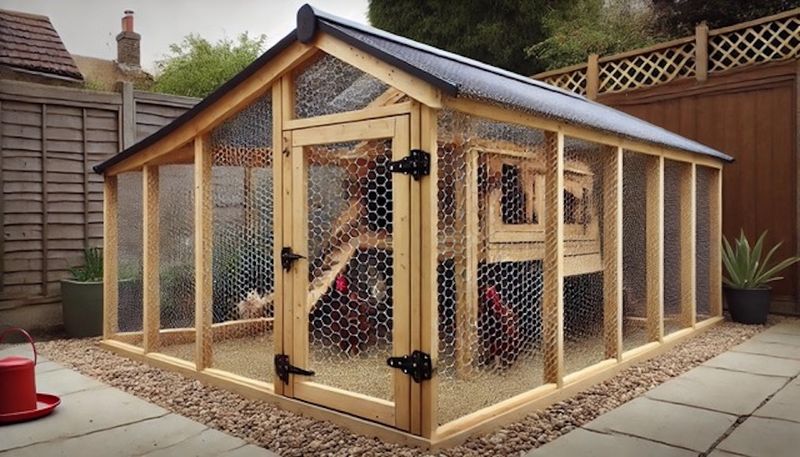
Backyard chickens, ducks, quail, and other caged birds present a different level of risk than songbirds at a feeder. A hawk that discovers an exposed outdoor run has found a reliable prey source, and it will return.
The response here is structural, not behavioral: cover outdoor runs with hardware cloth or heavy-gauge welded wire, and add netting or a solid roof panel over any open-top areas. Penn State Extension’s small-scale poultry housing guidance recommends suitable mesh enclosures specifically for protecting birds from aerial predators.
Waiting for the hawk to lose interest is not a reliable protection strategy when domestic birds are exposed.
For everyone else watching a hawk from the window, the right move is to observe from a distance and leave the bird alone. Do not attempt to feed it, bait it toward or away from an area, capture it, or try to relocate it.
These actions are both ineffective and potentially unlawful. U.S.
Fish and Wildlife Service depredation FAQ guidance explains that many migratory birds, including their active nests and eggs, receive federal protection under the Migratory Bird Treaty Act. The rules around exceptions, permits, and specific situations are more complicated than a general summary can cover, and they vary by species and circumstance.
If you have a genuine wildlife conflict, a question about a nest, or a bird that appears injured, the appropriate step is to contact your state wildlife agency or a properly permitted wildlife rehabilitator rather than trying to handle the situation yourself. USFWS guidance on the humane capture and handling of migratory birds makes clear that these activities require proper permits and training.
North Carolina homeowners with a specific conflict question can start by reaching out to the North Carolina Wildlife Resources Commission or a licensed wildlife professional who can assess the situation accurately.
Let the Evidence Set the Next Step
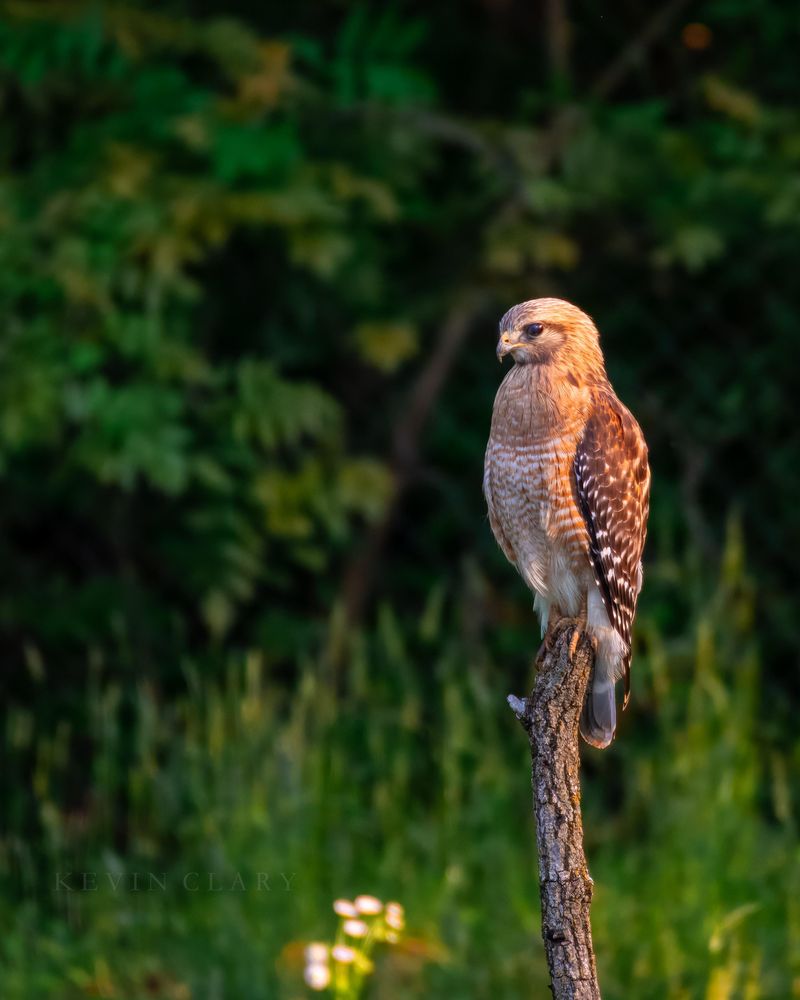
Putting it all together is simpler than the hawk’s dramatic appearance might suggest. A repeatedly perching hawk most reliably means it has found a useful vantage point and a nearby prey opportunity somewhere in the surrounding area.
That is the honest baseline, and every next step should flow from evidence gathered in your specific yard rather than from assumptions about what the bird must be doing.
Start with a cautious identification, because Cooper’s Hawk hunting at a feeder calls for a different response than a Red-shouldered Hawk working a wet woodland edge. Check feeder activity and ground spillage.
If the hawk is hunting birds there repeatedly, follow the temporary feeder pause guidance and maintain dense nearby shrubs for escape cover. If you have actual signs of rodent damage in beds, address those with habitat modification and snap traps, following vole management recommendations rather than relying on the raptor or reaching for rodenticides that carry documented secondary risks to predators.
Cover any exposed poultry runs with appropriate mesh.
Beyond those targeted responses, the hawk gets to stay. Native raptors are a working part of North Carolina’s food web, moving through residential neighborhoods, woodland edges, and stream corridors the same way they always have.
Knowing what the perch actually signals, and what it does not, is what lets you respond usefully rather than reactively. A yard that reads the evidence correctly is a yard that protects the birds it values while leaving room for the ones that were never a problem to begin with.