
What It Really Means When Skinks Start Basking On Your North Carolina Patio This Summer
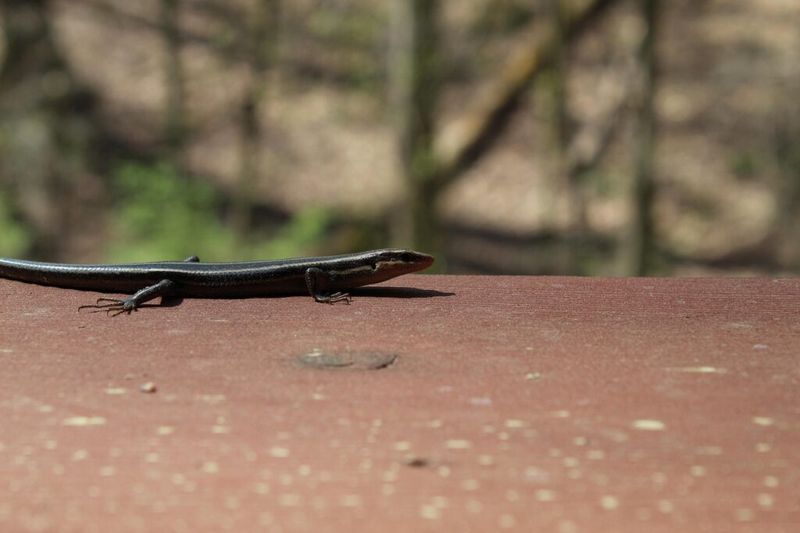
Spot a small lizard stretched out on your patio this summer and your first instinct might be to wonder what it is trying to tell you about your yard. That glossy, striped creature is almost certainly one of North Carolina’s five-lined-type skinks, and its appearance on warm concrete or stone is more common than most homeowners realize.
Understanding what the sighting actually means, and what it cannot tell you, helps you respond as a thoughtful steward of your own corner of NC.
A basking skink is using the patio, not diagnosing the yard
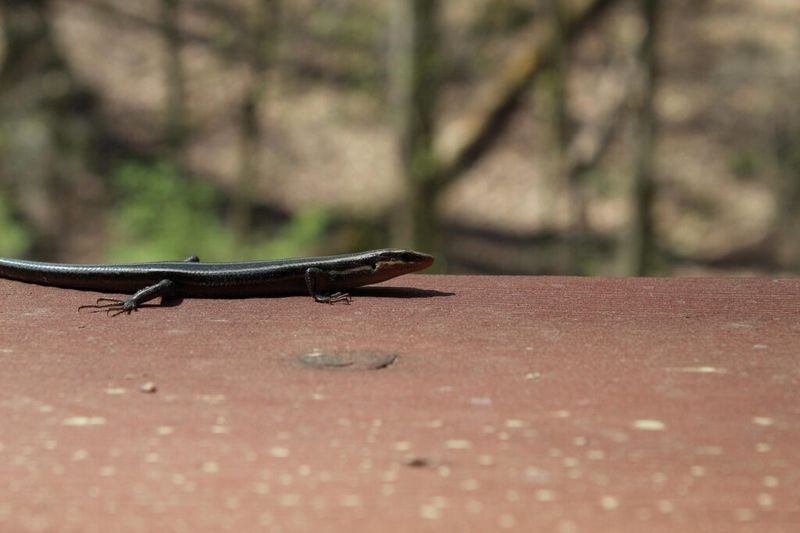
Catching a skink stretched out on your patio on a warm morning tells you one thing with certainty: the animal chose that spot and used it. Beyond that direct observation, most broader conclusions require a lot more caution than people typically apply to a quick glance through the back door.
Skinks are ectothermic reptiles, meaning they cannot generate body heat internally the way mammals do. They rely entirely on their surroundings to reach a functional body temperature, and a sun-warmed patio surface can serve that purpose efficiently.
NPS guidance on reptile life history explains that ectotherms regulate temperature behaviorally, moving between warmer and cooler spots as conditions shift. The patio is not a sign of distress or an unusual event; it is a reptile doing what reptiles do.
What the sighting cannot do is diagnose your yard. One visible animal on a warm surface does not prove that your property has high-quality habitat, a surge in insect populations, or any particular pest problem.
The sighting is consistent with suitable warmth being available and may suggest that cover or prey exists somewhere nearby, but a single observation cannot confirm those features are present on your specific lot.
Think of it the way you would a bird perching on your fence rail. The bird used the fence; that is confirmed.
Whether the yard is teeming with seeds, free of predators, or perfectly landscaped is a separate question that one perch cannot answer. NC State Extension’s backyard reptile guide frames reptile sightings similarly, noting that a range of habitat features, not a single observation, shapes where these animals live and move.
Keeping that distinction clear is the starting point for everything else this article covers.
Why a patio can become a useful basking surface
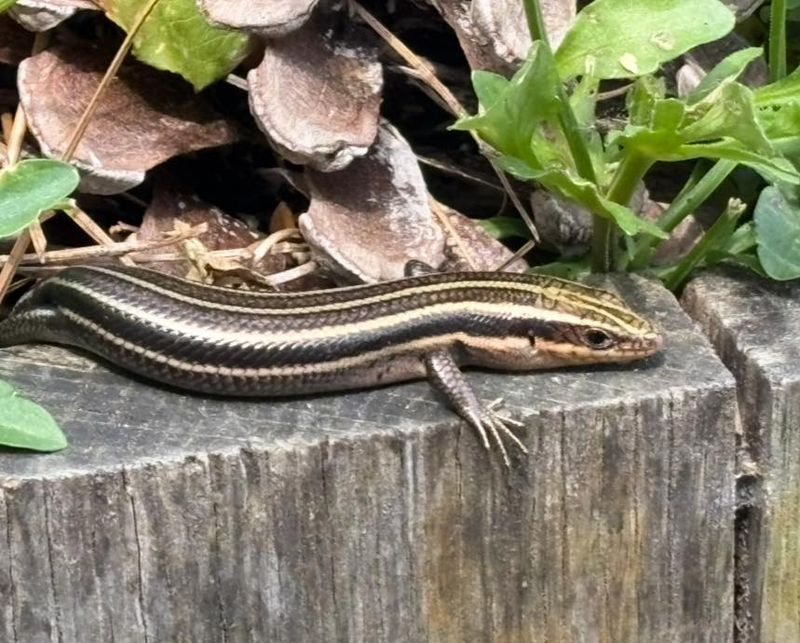
Reptiles face a daily thermal puzzle. Without internal heat production, a skink that wakes up too cool cannot digest food, move quickly, or respond well to threats.
Solving that puzzle means finding the right surface at the right time, and a residential patio often fits the bill surprisingly well.
Concrete, brick, flagstone, and composite decking all absorb solar radiation and radiate it back as warmth. An open patio with southern or eastern exposure can reach temperatures that a nearby shaded lawn or leaf-covered garden bed simply cannot match, especially in the early morning hours when a skink is trying to get its body temperature up quickly.
NPS reptile distribution research describes how ectotherms shuttle between microhabitats to maintain a preferred body temperature, which is exactly the behavior a basking patio skink is performing.
Proximity to escape cover also matters. A patio bordered by a retaining wall, a potted plant, a gap under the deck, or a nearby rock pile gives a skink a retreat route.
Without somewhere to bolt when a predator appears, an open surface is a liability rather than an asset. Research on skink sightings under artificial retreats, published as a microhabitat study in New Zealand lizard populations, found that microhabitat structure, including nearby shelter, shaped where lizards were detected, offering general evidence that cover access influences basking-site choice.
Changes in temperature, sun exposure, or available basking surfaces may make skinks more visible on a patio without any change in the local skink population. A cleared shrub border, a freshly mowed lawn edge, or a run of sunny days after a cool stretch can all shift where animals appear.
That does not mean a new skink moved in or that insects suddenly multiplied; it may simply mean the patio became the most convenient warm spot at that moment.
What the sighting may suggest about nearby habitat
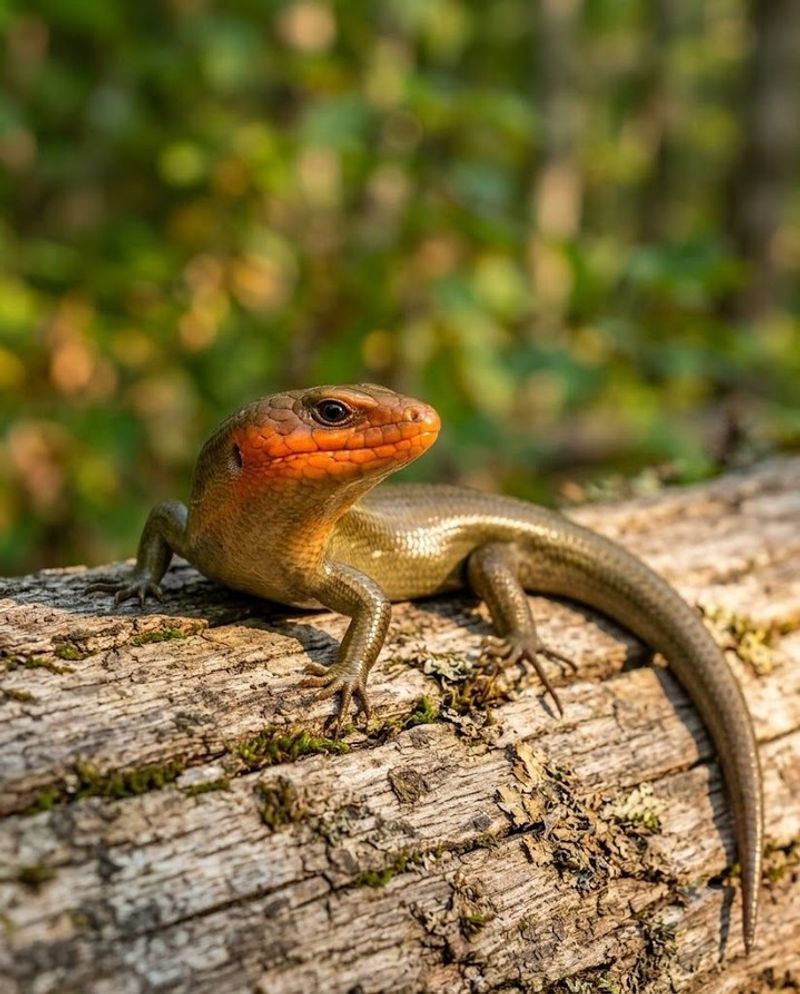
A patio sighting opens a small window onto the surrounding landscape, but the view through that window is narrower than many homeowners assume. Reading it carefully means separating what the animal’s presence confirms from what it only hints at.
North Carolina’s five-lined-type skinks use a range of habitat features: woodlot edges, rock piles, log stacks, brush, old boards, and structures like retaining walls or foundation gaps. NC State Extension’s backyard reptile resource notes that reptiles in residential settings benefit from a combination of open basking areas and nearby cover, and that features like rock and brush piles can support a variety of species.
A patio skink is consistent with at least some of those features existing somewhere on or near the property.
The key qualifier is “somewhere nearby.” Skinks move across property lines, through gaps in fences, and along landscape edges. The animal you see basking may be using your patio as one stop on a larger daily circuit that includes a neighbor’s brush pile or a wooded lot down the street.
Spotting it on your concrete does not confirm that your yard alone supplies warmth, shelter, and prey in sufficient quantity.
General research on lizard habitat use, including the microhabitat study on skink sightings, suggests that thermal sites, shelter access, and travel routes all shape where animals are detected. A separate analysis of animal abundance, cited as research disentangling prey availability, thermal habitat, and microhabitat structure, found that multiple factors interact to influence where reptiles occur, not prey alone.
Both studies offer general supporting evidence rather than direct findings about North Carolina residential patios.
The honest habitat conclusion from one sighting is modest: the animal found a usable warm spot here or nearby. That is meaningfully different from concluding that the yard has healthy insect populations or that the local ecosystem is thriving.
Holding that distinction keeps expectations grounded and observations useful.
Recognize North Carolina’s five-lined-type skinks without handling them
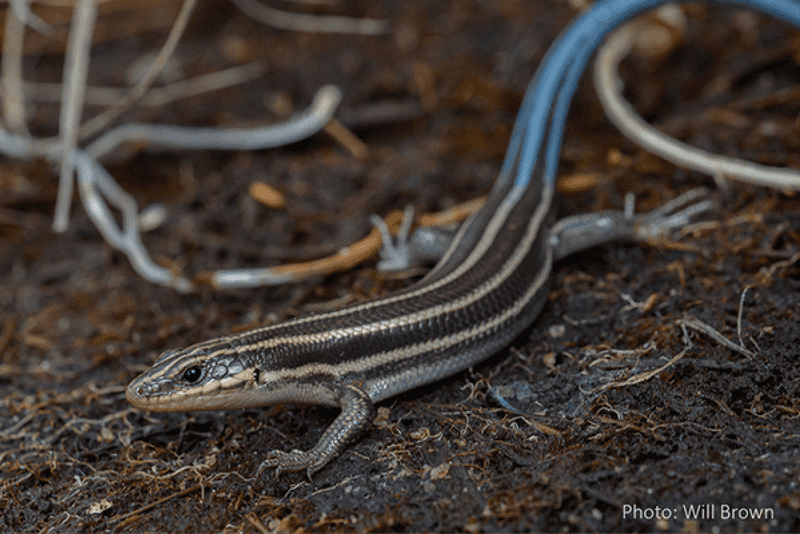
Three closely related species share territory across North Carolina and are easy to confuse: the five-lined skink (Plestiodon fasciatus), the southeastern five-lined skink (P. inexpectatus), and the broadhead skink (P. laticeps). Sorting them out in a quick backyard glance is harder than most field guides suggest.
Juveniles of all three commonly display five pale stripes running the length of the body and a vivid blue tail that can seem almost electric in bright sunlight. NC Wildlife’s five-lined skink profile confirms this shared juvenile pattern and notes that adult coloration varies considerably, with older males often losing the stripes and developing a reddish-orange head.
Reliable identification between species, particularly between the five-lined and southeastern five-lined, may require a close look at scale counts or head shape that is simply not possible from a respectful observation distance.
One persistent rural myth in North Carolina holds that these lizards are venomous “scorpions” capable of delivering a dangerous bite or sting. NC Wildlife’s southeastern five-lined skink page addresses this directly, stating the belief is false.
These animals are nonvenomous and are generally not dangerous when left alone on the patio.
That said, a skink that feels cornered or is picked up may bite, and the larger broadhead skink, whose jaw muscles are noticeably more developed, can deliver a pinch that gets your attention. NC Parks’ reptile species data documents the broadhead as North Carolina’s largest skink, with males reaching over a foot in length.
The right response to any of these animals on your patio is to watch from a comfortable distance and let it go about its business. Catching, feeding, relocating, trapping, or attempting to train a wild skink does more harm than good and is unnecessary for the animal’s wellbeing or yours.
Skinks eat arthropods without becoming a pest-control service
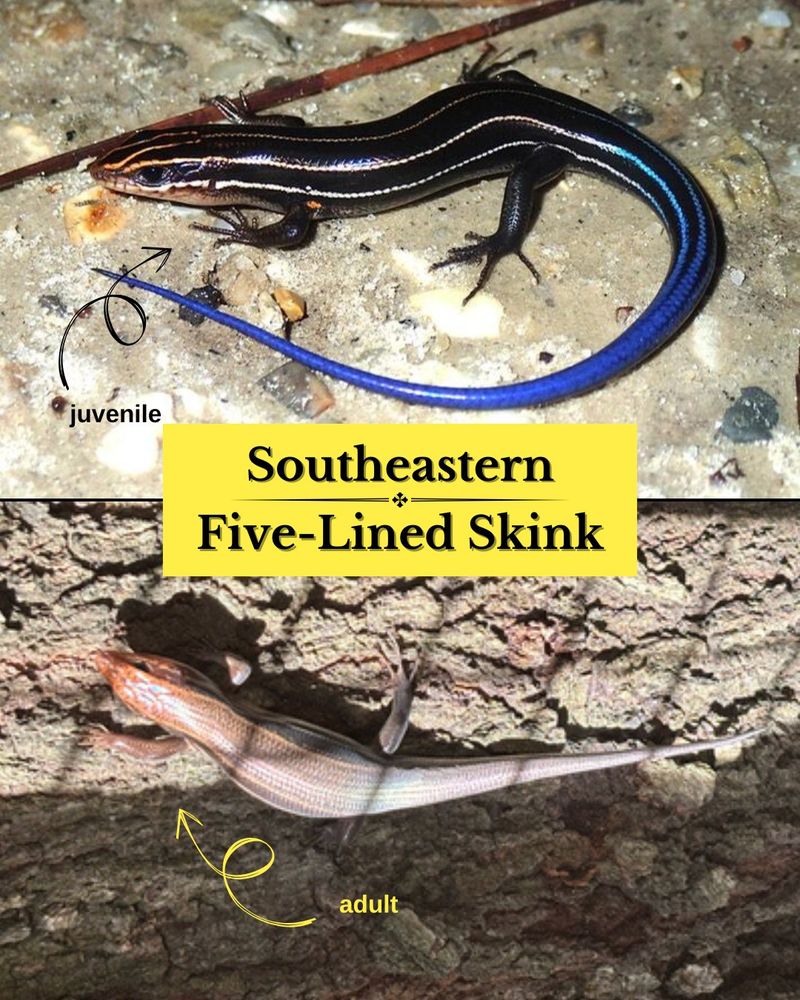
Skinks are active hunters with a broad appetite for animal prey. Insects, spiders, and other arthropods make up the core of their diet, which means they participate in the ordinary food web of a backyard the same way a garden spider or a Carolina wren does.
NC Wildlife’s southeastern five-lined skink profile confirms that this species feeds on insects, spiders, and other arthropods. That dietary breadth is ecologically real, but it does not translate into reliable, targeted pest control at a residential scale.
Skinks do not seek out mosquito larvae in standing water, drill into wood to find termites, or selectively remove the arthropods a homeowner most wants gone. They eat what they encounter, which can include organisms a homeowner considers a pest, a neutral presence, or even a beneficial insect.
The tick question deserves its own honest answer. Some online sources describe skinks as a natural tick-control ally, and the relationship between skinks and ticks is genuinely interesting, but the reality is more complicated than that framing suggests.
Research published as an analysis of why Lyme disease is rare in the southern US found that lizards in the southeastern United States, including skinks, are relatively poor reservoir hosts for Lyme disease bacteria compared to small mammals. Immature ticks that feed on lizards may be less likely to acquire the pathogen, which can affect how the bacterium circulates in the local tick population.
A second line of research, described in a study on reptile host associations of Ixodes scapularis in Florida, documents that skinks do serve as hosts for immature blacklegged ticks in the Southeast. That relationship concerns pathogen ecology, not tick abundance.
A skink on your patio does not lower the number of ticks in your yard or reduce your personal risk of a tick bite. Treating it as a tick-control asset would give you false confidence and distract from the direct prevention steps that actually help.
Protect useful habitat and limit unnecessary pesticide exposure
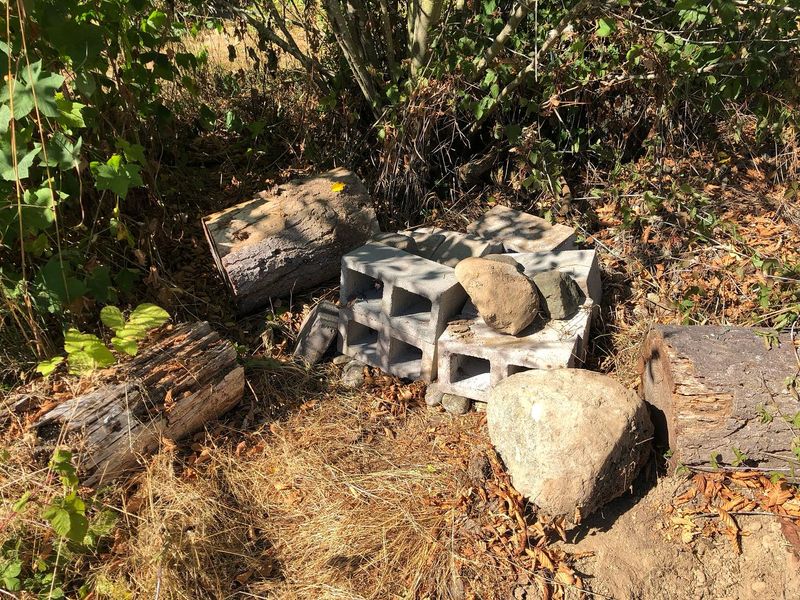
The most useful thing most homeowners can do after seeing a skink on the patio is relatively simple: leave the area alone and resist the urge to tidy away the features that make the yard usable for reptiles.
Rock piles, stacked firewood, brush piles, old boards, and dense plantings near the patio edge all serve as cover for skinks and other backyard wildlife. NC State Extension’s reptile and amphibian backyard guide specifically recommends retaining or creating features like rock and log piles to support reptile populations on residential properties.
Preserving these features costs nothing and does not require relocating or handling any animal.
Pesticide use is a more consequential choice than many homeowners realize. NC Wildlife’s five-lined skink species page states plainly that pesticides may take a heavy toll on five-lined skinks.
The harm can come through direct contact with treated surfaces or, indirectly, through the loss of the prey the skink depends on. A yard treated broadly for insects can remove the food supply that makes the habitat viable in the first place.
EPA guidance on reducing pesticide impacts on wildlife offers a practical framework: use pesticides only when a pest problem actually requires treatment, target only the area that needs it rather than the full yard, keep products away from water features and drainage paths, and follow the product label precisely. These are not suggestions to abandon pest management entirely; they are a framework for keeping chemical use proportionate to the actual problem.
Habitat protection is not a promise that skinks will eliminate pests or that the yard will become ecologically perfect. It is simply a wildlife-friendly choice that keeps a useful animal’s options open while reducing unnecessary harm to the broader community of insects, spiders, and other creatures that a healthy residential yard supports.
Address tick concerns with direct prevention measures

Tick concerns are legitimate for North Carolina homeowners, and they deserve a direct response grounded in prevention, not in assumptions about what a lizard sighting signals.
CDC tick prevention guidance identifies several practical landscape steps that can reduce the number of ticks in areas where people spend time. Removing or managing leaf litter near play areas, patios, and garden beds reduces the moist, shaded microhabitat that ticks favor.
Mowing tall grass and clearing brush around the home’s perimeter removes the vegetation where ticks wait to attach to passing hosts. A three-foot barrier of wood chips or gravel between a wooded edge and a lawn or patio can reduce tick movement into high-use areas, though how useful this measure is depends on the specific layout of the property.
Performing a thorough tick check after any time outdoors remains one of the most consistently useful personal protection habits, regardless of what landscaping steps have been taken. Showering within two hours of coming inside, checking the full body including hair, behind the knees, and around the waist, and inspecting gear and pets all reduce the chance that an attached tick goes unnoticed long enough to transmit a pathogen.
CDC also states clearly that homeowners should not rely on yard spraying alone to reduce infection risk. Spraying can reduce tick numbers in treated areas, but it does not eliminate exposure, and as covered in the pesticide section, broad-spectrum outdoor insecticide use carries real costs for non-target wildlife.
Research on the regional ecology of Lyme disease, including the analysis of why Lyme is rare in the southern US, highlights that tick species composition, host availability, and local ecology all shape actual risk, which varies across North Carolina’s different regions. No single measure functions as a universal guarantee for every property in the state.
Use observation to learn the patio’s pattern, not to count pests
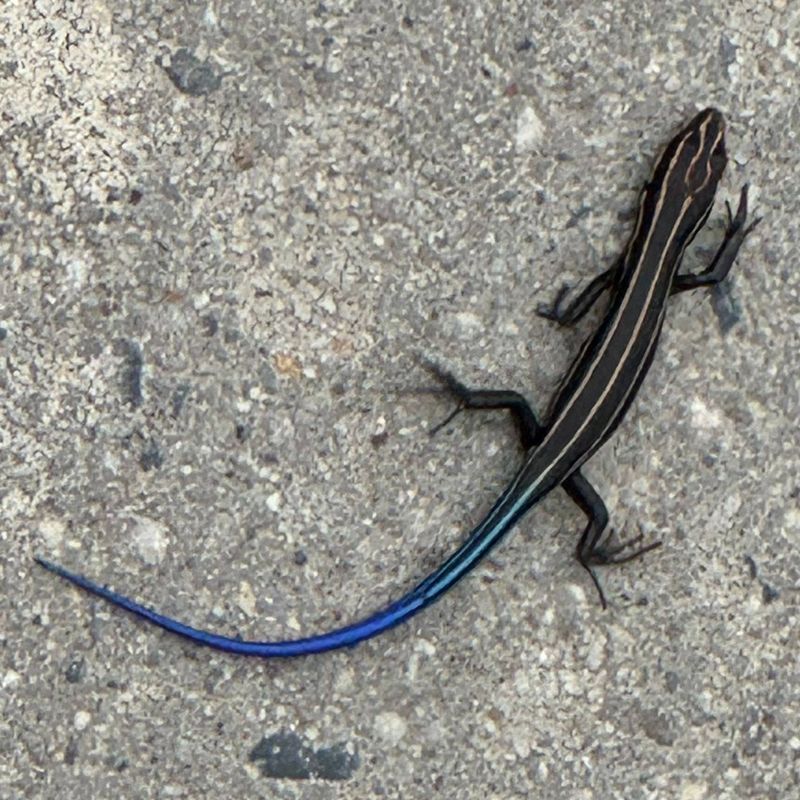
Rather than trying to decode a single skink sighting as a message about pest levels or habitat health, the most grounded approach is to build a simple record over time. A few notes taken consistently across a season can reveal patterns that one observation never could.
Each time you notice a skink on the patio, jot down the date, time of day, approximate air temperature, cloud cover, how many animals you can see, whether they appear to be adults or blue-tailed juveniles, and what nearby features, such as a specific rock, a potted plant, or a gap under the deck, seem to be associated with the sighting. NC State Extension’s backyard reptile guide encourages homeowners to pay attention to which habitat features on their property support reptile activity, and simple notes like these make that attention concrete.
Over several weeks, patterns may emerge. You might find that sightings cluster on sunny mornings after cool nights, or that the same corner of the patio near a particular rock is used repeatedly.
Research such as the microhabitat study on skink sightings beneath artificial retreats suggests that specific microhabitat features, not just general yard conditions, shape where skinks are detected, which is exactly what careful notes can help you see on your own property.
Keep in mind that patio sightings are biased toward animals using open, visible surfaces. A skink resting beneath a log or foraging in dense leaf litter is invisible to a casual glance, so your notes cannot function as a population count, an insect census, or a habitat-health score.
What they can do is help you understand how one corner of your yard is being used, point you toward specific habitat features worth protecting, and remind you that any actual pest or tick concerns are best handled with targeted, direct responses rather than broad conclusions drawn from a lizard in the sun.