
If Your Geraniums Overwinter Indoors, Here Are 13 Moves That Keep Them Alive Until Spring
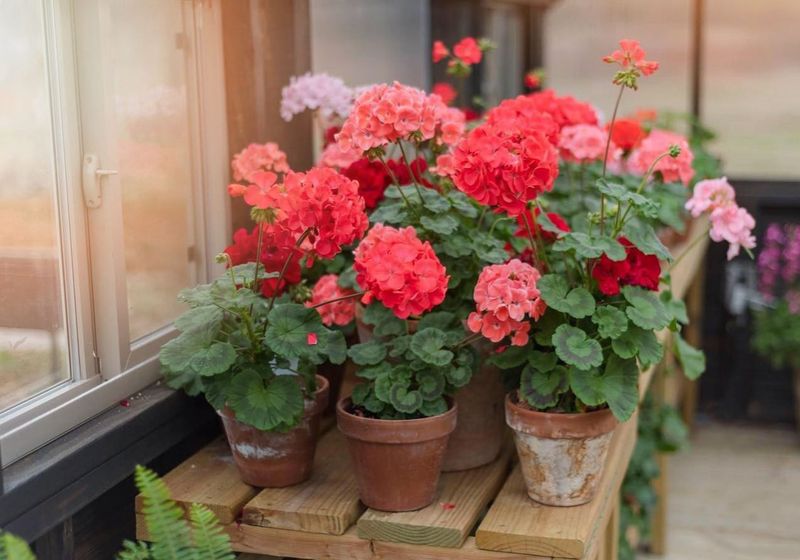
Geraniums hate the cold, and one hard frost can turn your favorite bloomers into mush overnight. The good news is that saving them for next year is easier than you might think, whether you keep them growing on a windowsill or tuck them away to sleep through winter.
These 13 simple moves walk you through every step, from the day you bring them inside to the morning you set them back out in spring. Follow along and your geraniums should reward you with another season of color.
1. Bring Them Indoors Before the First Frost
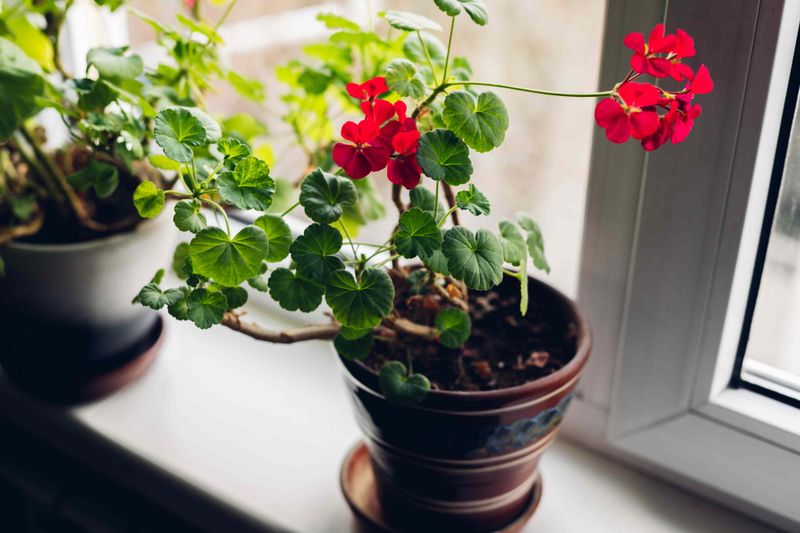
A single cold night is all it takes to end your geranium’s life, because these plants have zero tolerance for frost. Once temperatures dip toward freezing, the cells in the leaves and stems freeze, burst, and collapse into a sad, blackened mess.
Keep an eye on your local forecast during fall and act well before that first hard frost is predicted. Most gardeners move their pots inside once nights start dropping into the low 40s, giving the plant a comfortable buffer.
If your geraniums are planted in the ground rather than pots, dig them up carefully with a good clump of roots. Getting them inside early also gives the plant time to adjust to indoor life before it has to face the darker, drier days of winter.
2. Inspect for Pests and Diseases
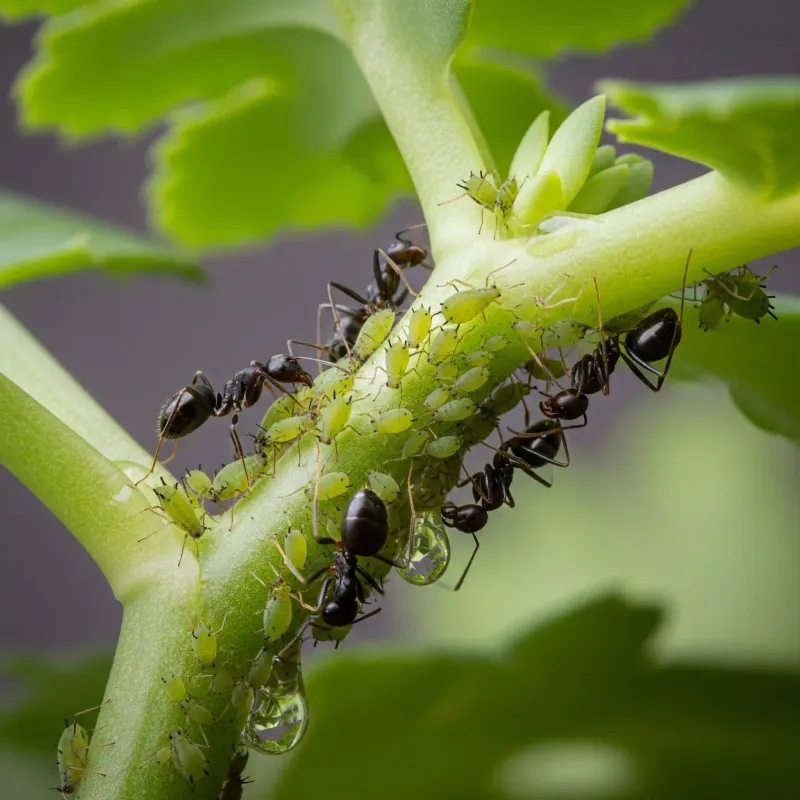
Nothing spreads through a windowsill full of houseplants faster than a hitchhiking bug you didn’t notice. Before your geraniums cross the threshold, give them a careful head-to-toe check.
Turn leaves over and look for aphids, whiteflies, spider mites, and any sticky residue or webbing. Peek at the stems and soil surface too, since pests love to hide in the shadows.
Spot a plant that’s badly infested or showing signs of disease like mushy stems or blotchy, rotting leaves? It’s kinder to your other plants to toss that one rather than risk an indoor outbreak.
A quick rinse with the hose or a gentle wipe of insecticidal soap can clean up minor problems before they move indoors with you.
3. Prune Back by One-Third to One-Half
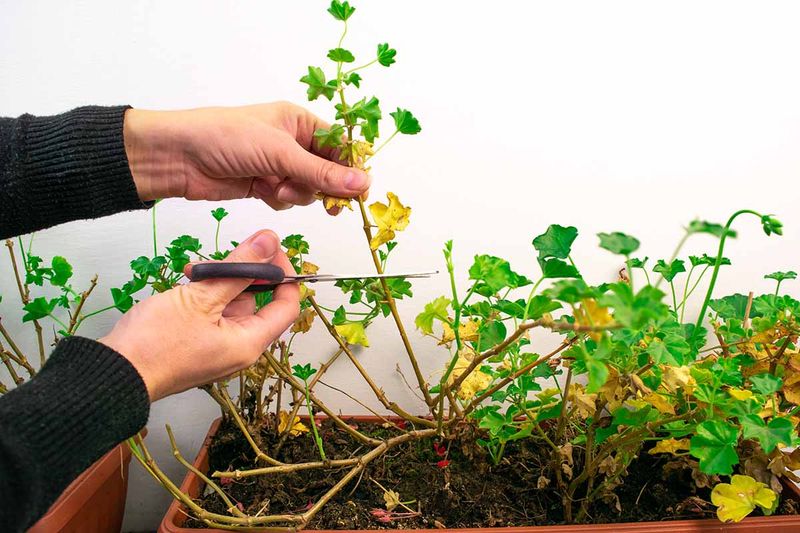
Snipping away a big chunk of your plant feels harsh, but geraniums genuinely appreciate the haircut. Cutting them back by one-third to one-half removes tired, leafy growth that the plant can’t easily support through a dim winter.
With less foliage to feed, the plant can pour its energy into strong roots instead. That trade-off pays off in spring, when your geranium bounces back fuller and bushier than a straggly, uncut plant ever would.
Use clean, sharp scissors or pruners and cut just above a leaf node. Whether you plan to grow them as houseplants or store them dormant, this trim sets them up for a healthier comeback.
4. Choose Your Overwintering Method
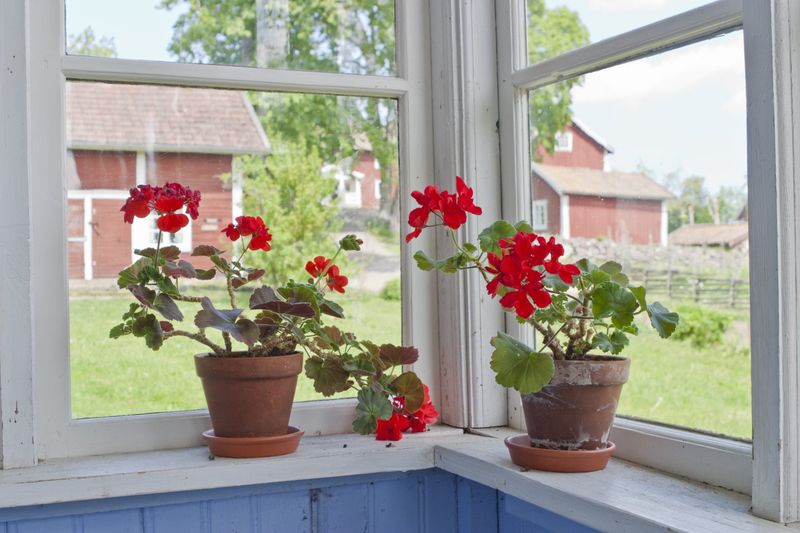
Here’s where you get to pick your own adventure. There are three solid ways to carry geraniums through winter, and the right one depends on your space, your light, and how much fuss you enjoy.
You can keep them as living houseplants on a bright windowsill, store them as bare-root plants in a cool dark spot where they go dormant, or take cuttings to grow brand-new plants. Each method has its own quirks and rewards.
Short on window space? Dormant storage is your friend.
Love watching things grow all winter? Go the houseplant route.
Want more geraniums for free? Try cuttings.
The next several moves break down exactly how to succeed with each approach.
5. For Houseplants: Provide Bright Light
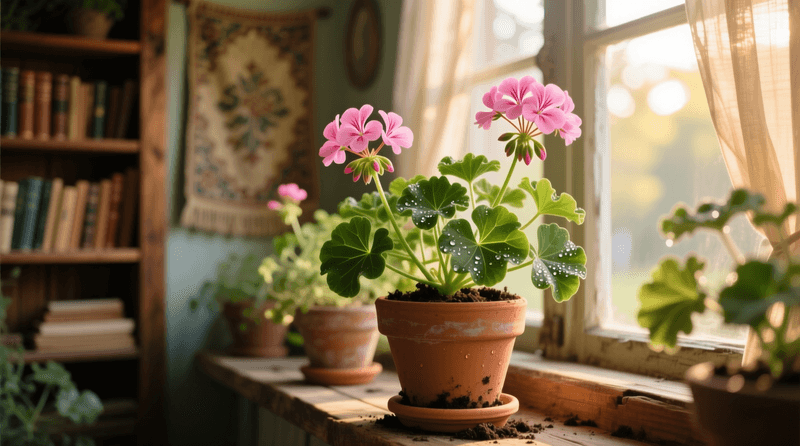
Light is the make-or-break factor for a geranium living indoors through winter. These sun-lovers want as much brightness as you can give them, so a south or west-facing window is prime real estate.
Set the pot right up against the glass where the light is strongest. Without enough sun, the plant stretches, pales, and generally sulks its way toward spring.
Windows just not cutting it? Supplemental light works wonders.
A 40-watt cool fluorescent bulb placed about 12 inches above the plant, running roughly 16 hours a day, keeps a geranium happy even in the gloomiest corner of the house. A simple timer takes the guesswork out of it.
6. For Houseplants: Maintain Cooler Temperatures
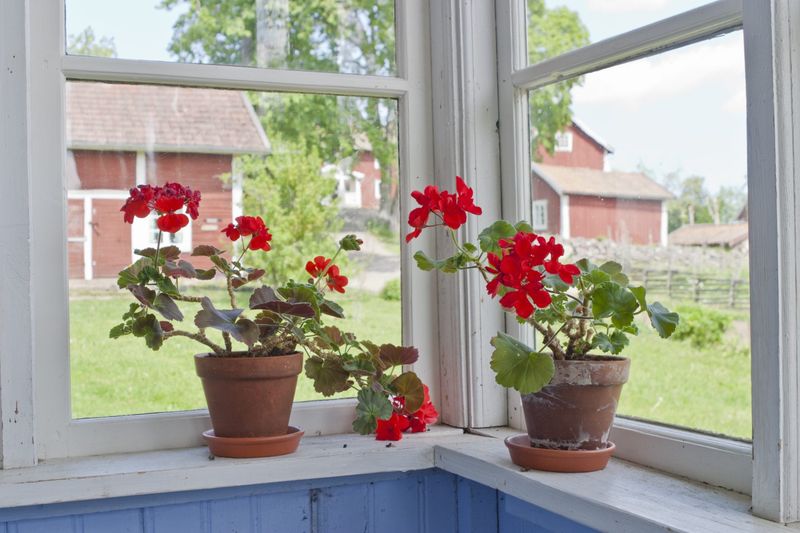
It surprises a lot of people, but geraniums actually prefer to be a little chilly indoors. Toasty, dry heat makes them leggy and weak, while cooler air keeps them compact and content.
Aim for daytime temperatures around 60 to 65 degrees Fahrenheit, with nights dipping a touch lower to about 55. A slightly cool spare room or an enclosed porch that stays above freezing often works better than the warmest room in the house.
Keep your plants away from heat vents, radiators, and fireplaces, which blast hot dry air that geraniums can’t stand. Finding that cool, bright pocket in your home is half the battle won.
7. For Houseplants: Water Sparingly
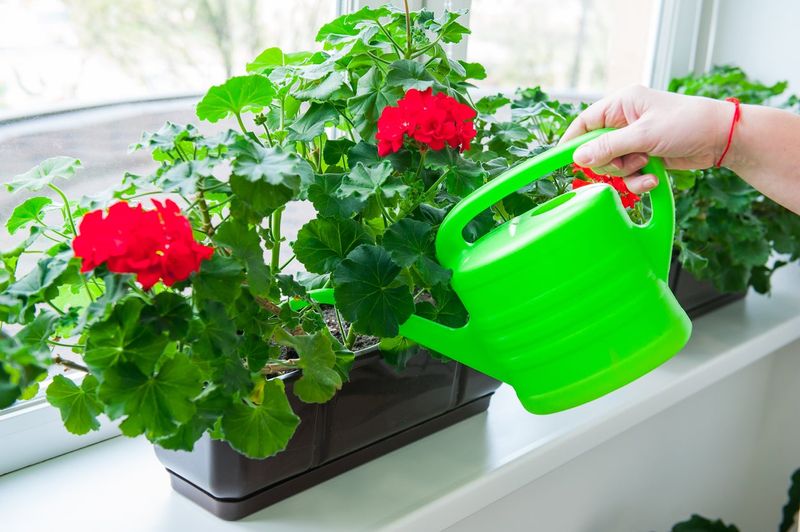
Overwatering kills more indoor geraniums in winter than any pest ever could. Because the plant is barely growing and the days are short, it simply doesn’t drink much.
Wait until the top of the soil feels dry to the touch before you reach for the watering can. In the depths of winter that might mean watering only once a week, or in some cool spots as little as once a month.
Soggy soil invites root rot, which quietly rots the plant from the bottom up. When in doubt, hold off a day or two longer.
A slightly thirsty geranium recovers easily, while a drowned one usually doesn’t.
8. For Houseplants: Pinch Back Leggy Growth
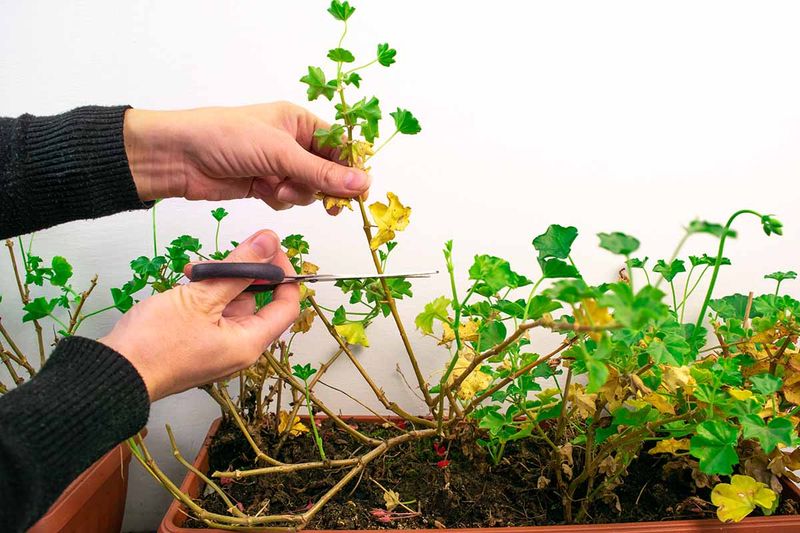
Ever notice your winter geranium reaching and stretching like it’s trying to escape? That tall, spindly look is the plant hunting for more light, and it makes for a floppy, awkward shape.
The fix is wonderfully simple: pinch. Using your fingers or clean scissors, nip off the growing tips just above a leaf node.
This tells the plant to branch out sideways instead of shooting straight up.
Do it every few weeks through the winter and you’ll steadily coax a bushier, sturdier plant. By spring, all that pinching adds up to more stems, which means more flowers when the warm weather returns.
9. For Dormant Storage: Prepare Bare-Root Plants
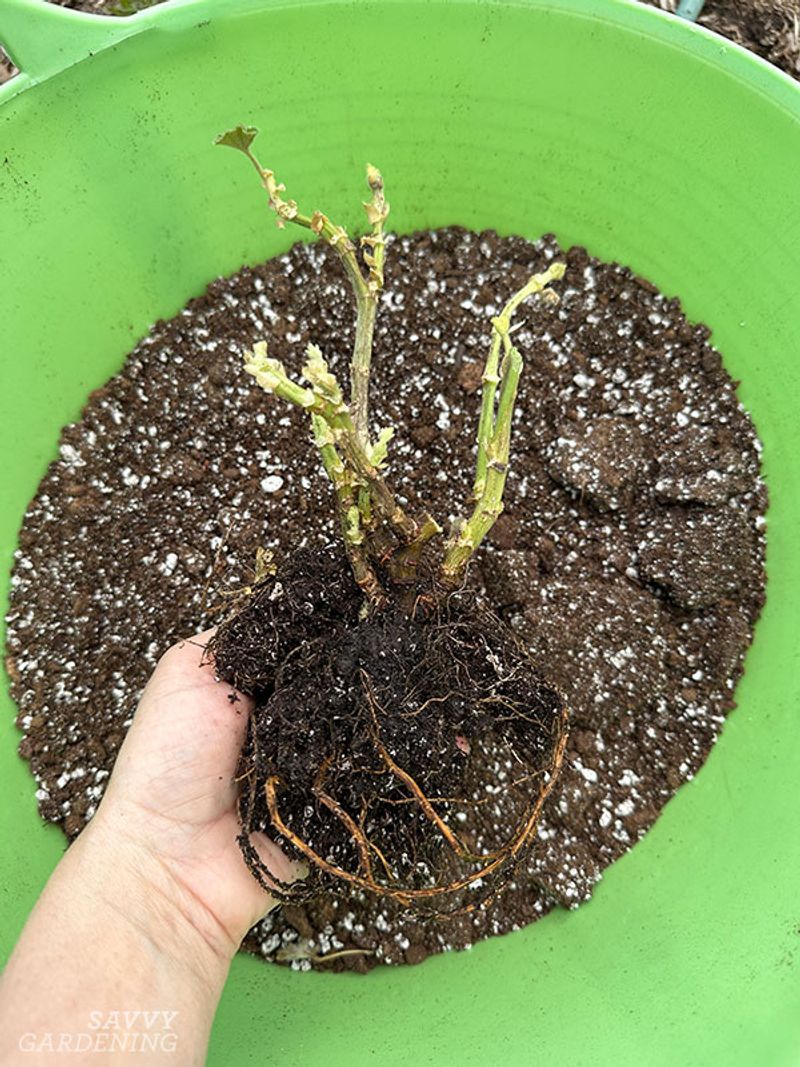
Going the dormant route feels a little strange the first time, since you’re basically putting a living plant to sleep. Start by digging up the entire geranium before frost hits, roots and all.
Gently shake and brush away most of the soil clinging to the roots. You don’t need them spotless, just mostly bare so they store cleanly.
Many gardeners like to let the plant air dry for about 24 hours in a shady, sheltered spot. That short rest removes excess moisture and helps prevent rot once the plant is tucked away for its long winter nap.
10. For Dormant Storage: Store in a Cool, Dry, Dark Place
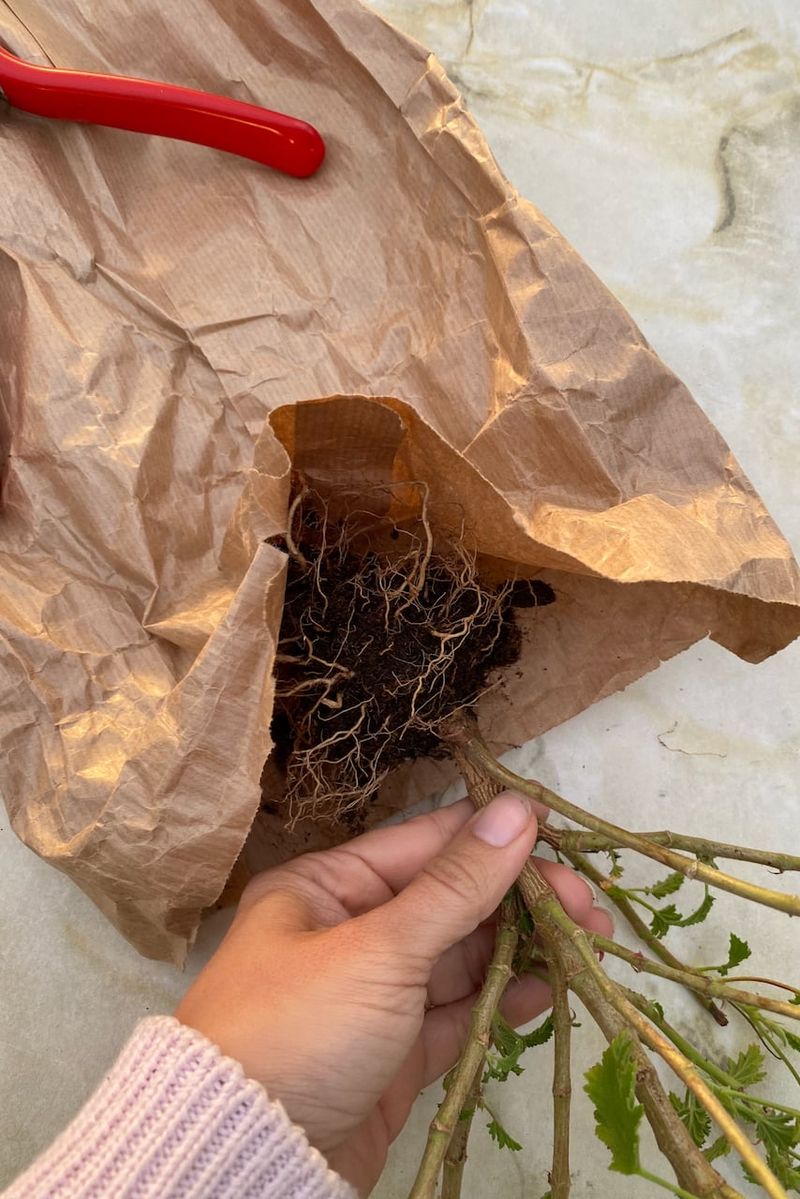
Once your bare-root plants have dried, they need the right hideaway to sleep through winter. Cool, dry, and dark is the winning combination, with temperatures ideally between 40 and 55 degrees Fahrenheit.
An unheated basement, an attached garage, or a spare closet in a cool room all fit the bill. Tuck the plants into open paper bags, or hang them upside down from a rafter or hook.
Leaving the bags open matters, because trapped moisture leads to mold and mush. Check on your sleeping geraniums now and then, and don’t panic when they look shriveled.
That papery, dried-out appearance is exactly what a dormant plant is supposed to look like.
11. For Dormant Storage: Occasional Root Hydration
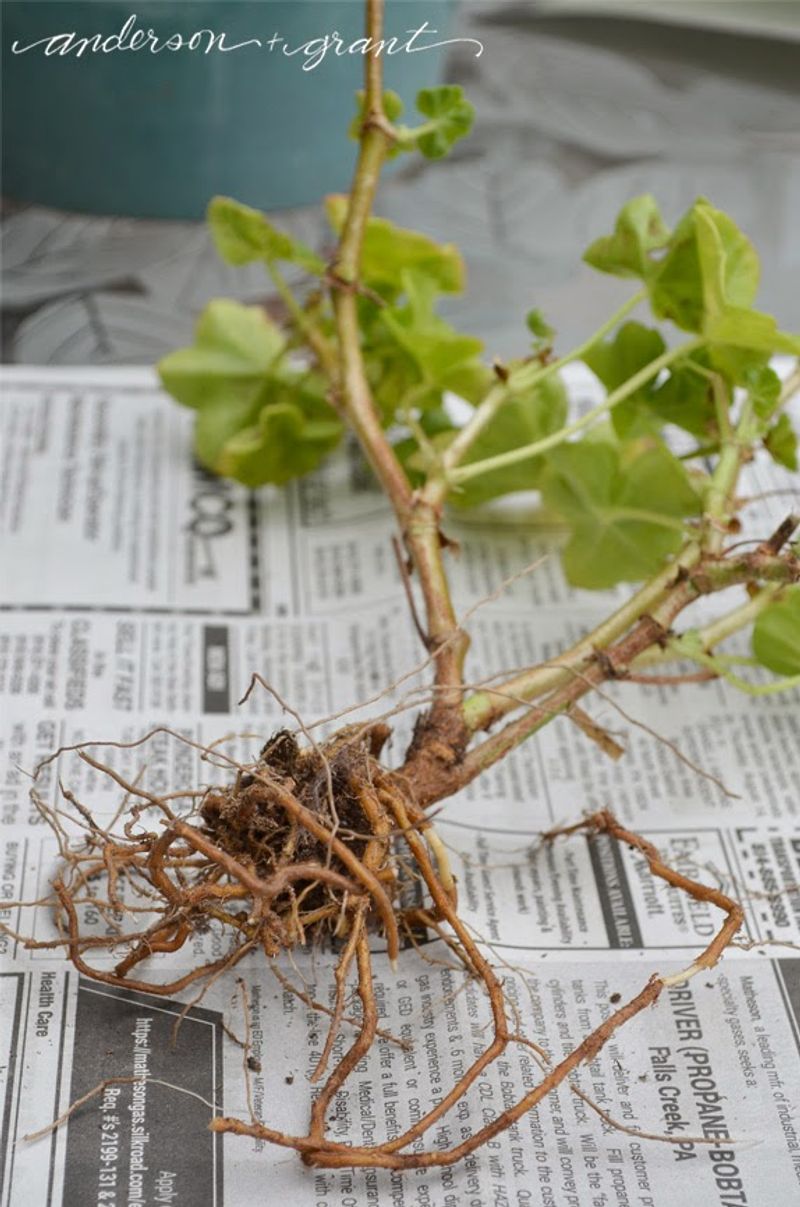
Dormant doesn’t have to mean bone dry all winter long. Some gardeners swear by giving those resting roots an occasional drink to keep them from crisping up completely.
The trick is to soak the roots in water for one to two hours, just two or three times over the whole winter. Think of it as an occasional sip rather than a real watering.
After each soak, let the roots dry off again before returning the plant to its bag or hook. This optional step is a nice insurance policy if your storage spot runs on the dry side, though plenty of geraniums make it through with no soaking at all.
12. For Cuttings: Propagate New Plants
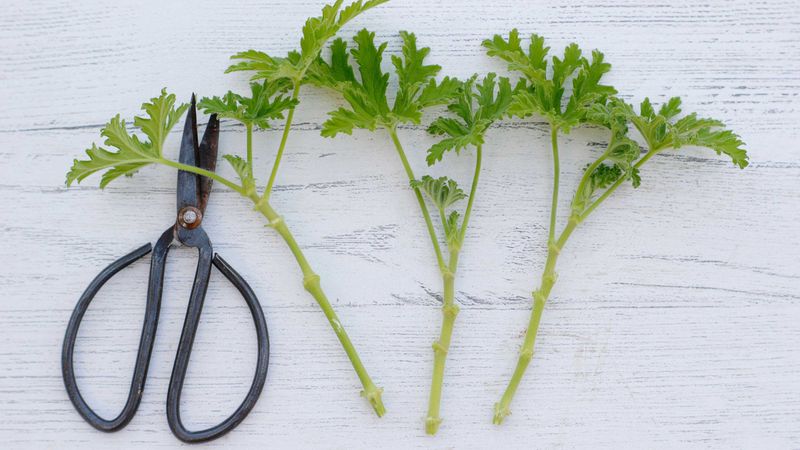
Want a whole new batch of geraniums without spending a dime? Cuttings turn one favorite plant into several, and it’s oddly satisfying to watch them take root.
Snip 3 to 4-inch pieces from healthy stem tips using a sharp, clean knife. Strip off the lower leaves, then dip the cut end in rooting hormone to give it a head start.
Plant each cutting in a moist, well-draining medium such as peat moss, sand, perlite, or a bagged rooting mix. Keep them in a bright spot and be patient, because roots usually form in about 6 to 8 weeks.
Once they’re rooted, move each little plant into its own pot to keep growing until spring.
13. Revive in Spring
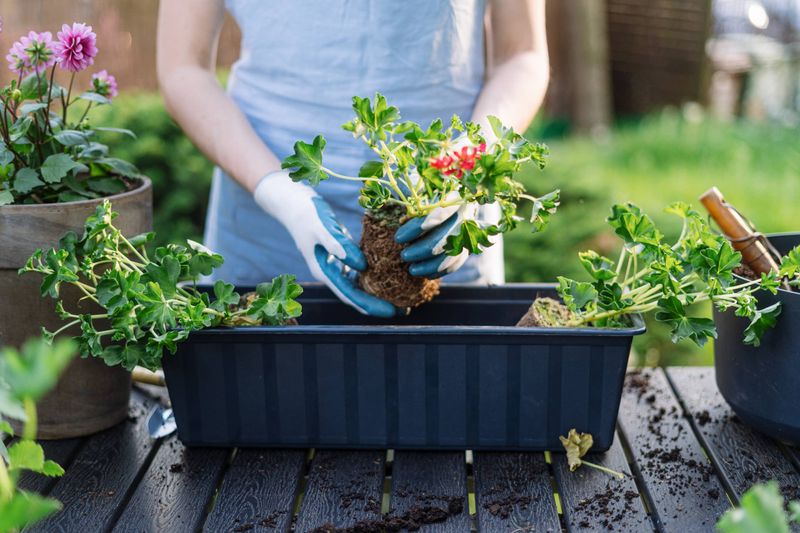
After months of waiting, spring is when your patience finally pays off. Around March or April, pull your dormant plants out of storage and give them a good once-over.
Trim away any dead or withered material, cutting back to firm, green tissue that shows the plant is still alive. Pot them up in fresh soil, water them thoroughly, and set them in a bright window.
Don’t be alarmed if nothing happens right away, since new growth can take several weeks to appear. Once the danger of frost has fully passed, harden them off by moving them outdoors a little more each day.
Before long, your rescued geraniums will be blooming again, proof that a little winter effort goes a long way.