
What It Really Means When You Spot A Fox Trotting Through Your North Carolina Yard At Dusk
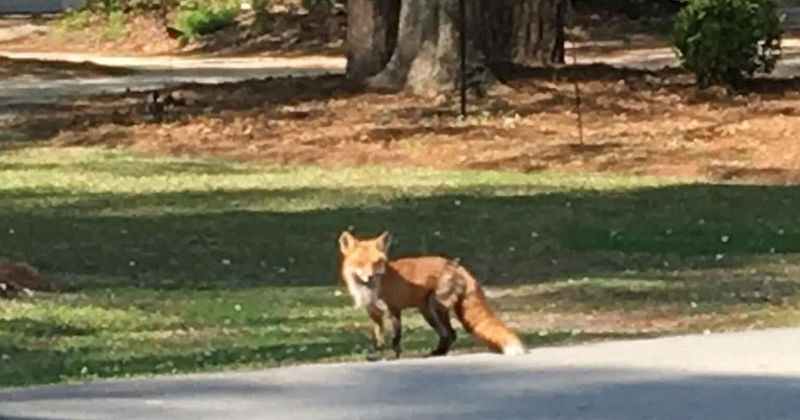
Catching a glimpse of a fox slipping through your yard as the sun drops below the tree line is one of those moments that stops you in your tracks. For North Carolina homeowners, it raises an immediate question: what does that animal being here actually mean?
The short answer is less alarming than most people expect, but more informative than a quick glance suggests. Understanding what draws a fox to your property can help you make smarter decisions about your yard, your pets, and your peace of mind.
A Dusk Fox Usually Signals Usable Habitat, Not Trouble
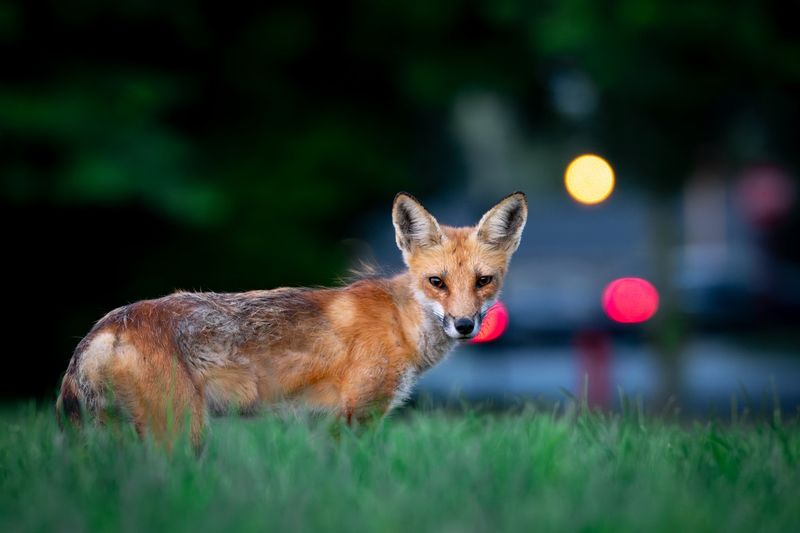
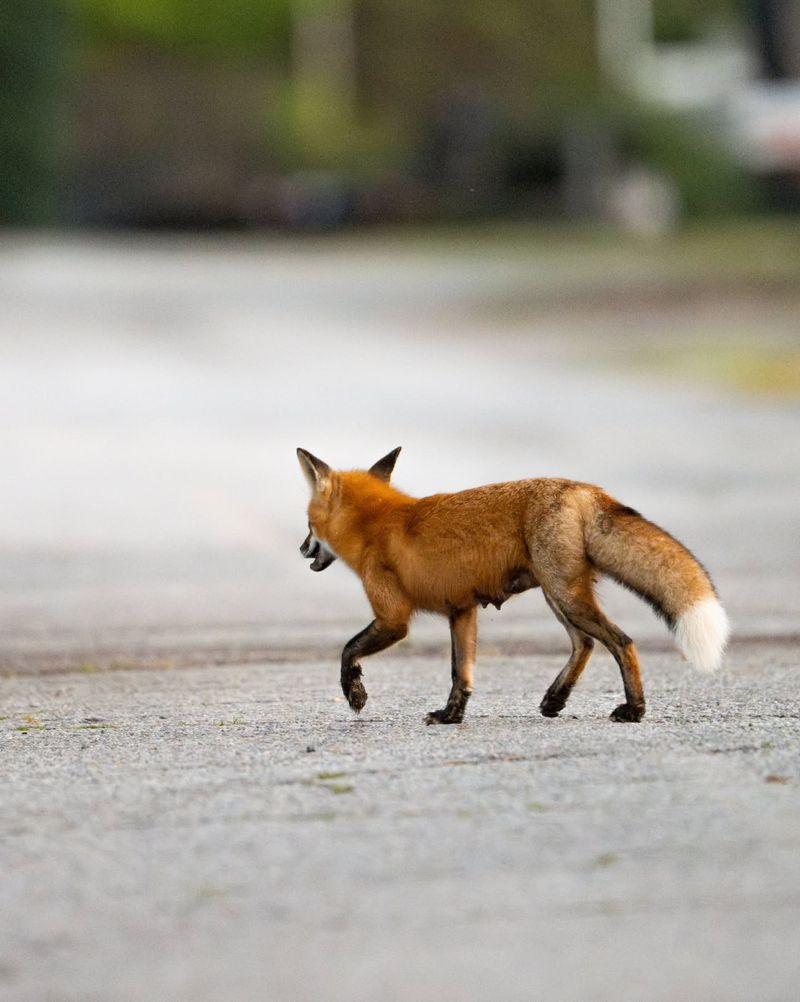
Watching a fox move through your yard around sunset is genuinely startling the first time it happens, but the animal’s calm behavior is itself a meaningful data point. A fox trotting steadily, pausing to sniff the ground, and then moving on is doing exactly what a healthy wild fox does.
Dusk is a perfectly ordinary time to see one, and the NC Wildlife Resources Commission notes that red foxes are primarily nocturnal but also active during daylight hours, particularly when prey is available or during the spring and summer months when adults are raising young.
North Carolina is home to both red and gray foxes, and either species could pass through a residential yard in the Piedmont, Coastal Plain, or Blue Ridge. Without a close, confirmed look at the animal, you cannot reliably identify which species you saw, and that matters because the two animals use habitat somewhat differently.
What you can say with confidence after one sighting is narrower than most people assume: the fox found your property usable. That is the full extent of what a single observation confirms.
A calm fox moving through your yard does not diagnose a rodent infestation, certify that your yard is an especially healthy ecosystem, or prove that your property sits inside an established wildlife corridor. Corridor use would require repeated observations over time and broader knowledge of the surrounding landscape.
NC Wildlife specifically states that daytime sightings are not, by themselves, a valid reason to remove a fox, and the same logic applies to a dusk sighting of a calm animal. The appropriate first response is to watch from a safe distance and think about what resources your yard might be offering, not to call for removal or assume the worst.
Food, Cover, or Travel Routes Can Bring Foxes Through Residential Yards
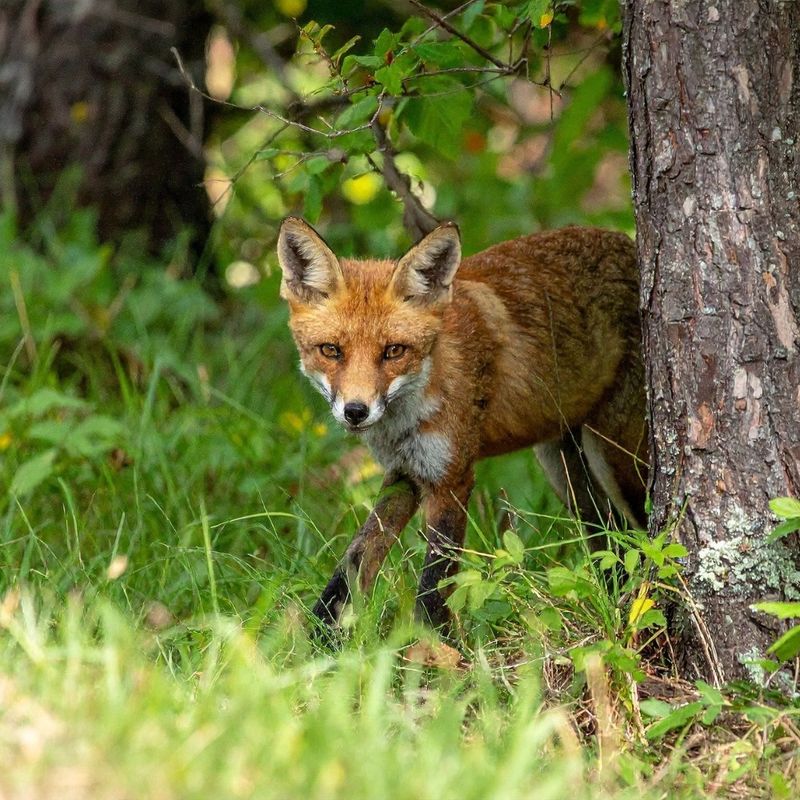
Plenty of ordinary yard features can make a residential property worth a fox’s time, and food is only one of them. Red foxes are generalist feeders whose diet includes mice, meadow voles, rabbits, insects, birds, eggs, fruit, berries, carrion, and garbage, meaning that a single yard could offer several of those resources at once without looking anything like a wildlife refuge.
Fallen apples or pears near an ornamental tree, spilled birdseed beneath a feeder, an unsecured trash bin, or a bowl of pet food left on the porch can each draw a fox just as reliably as a field full of mice.
Cover matters as much as food. Crawl spaces beneath homes, gaps under sheds or decks, dense shrub borders, brush piles, and overgrown fence lines all give a fox somewhere to rest, hide, or raise young.
Gray foxes are especially associated with wooded or brushy habitat and can even climb trees, so a yard with mature shrubs and a wooded edge is particularly suited to them. Red foxes, by contrast, are highly adapted to human-altered landscapes and commonly hunt habitat edges, making suburban yards with mixed open lawn and planted borders a comfortable fit.
A third possibility is that the fox was simply passing through. A Raleigh-based residential yard study found that urban yard resources attracted both small mammals and some predators, suggesting that connected patches of suitable habitat can support fox movement across a neighborhood.
One sighting cannot tell you whether the animal was hunting, investigating a potential den site, scavenging something it smelled from the street, or simply cutting through your yard on its way to somewhere else. Keeping that uncertainty in mind helps you respond proportionally rather than treating a single pass-through as evidence of a permanent resident.
The Rodent Connection Is Real but Indirect
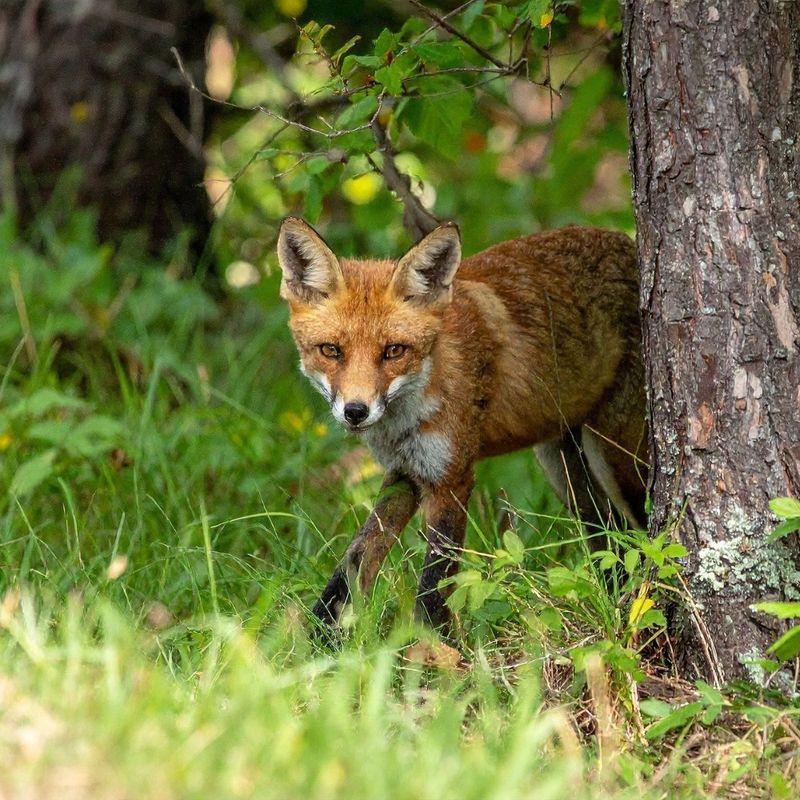
Mice, meadow voles, and rabbits genuinely do make up a significant portion of the red fox’s natural diet in North Carolina. If you see a fox hunting along the edge of your lawn or garden, it may well be tracking rodent activity beneath the grass.
NC Wildlife confirms that these small mammals are core prey for red foxes in the state, and watching a fox pounce into tall grass is a reasonable sign that something small and fast lives there.
The relationship between foxes and rodent populations is more complicated than a simple cause-and-effect, though. The Raleigh residential yard study found that yard resources could attract rodents and predators alike, but the researchers cautioned that predator-prey dynamics in residential settings require more focused study before drawing firm conclusions.
A fox hunting your yard does not confirm that your rodent numbers are unusually high, and it does not mean rodent numbers are about to drop sharply.
Some research does support the idea that fox activity can influence rodent behavior and occurrence. One field study found that long-term red fox presence reduced rodent occurrence and that predator scent cues alone reduced rodent activity by more than 50 percent.
That is a meaningful finding, but it was not conducted in North Carolina residential yards, and it does not translate into a reliable promise that one fox visiting your property will clear out your mice or make your yard tick-safe. Fox predation on rodents varies with prey availability, season, competing predators, and how much supplemental food the area offers to both animals.
The practical takeaway is this: foxes and rodents can share a residential landscape, sometimes because the same yard features attract both. Fruit, garbage, pet food, and birdseed draw rodents, and rodents can draw foxes.
Addressing those food sources serves double duty, reducing what draws both animals without requiring you to prove which one showed up first.
A Fox Does Not Grade the Whole Ecosystem

A fox moving through your yard can feel like a sign that everything is working as it should, and there is a kernel of truth in that reaction. Foxes do tend to use areas that offer prey, cover, and connected habitat.
But their presence cannot assess the health of your soil, the diversity of your native plants, the abundance of pollinators, or the condition of the bird community in your yard. The Raleigh residential yard study found that backyard resource use by wildlife is complex and does not map neatly onto simple measures of ecological condition.
A fox drawn by garbage or pet food tells you something different about your yard than a fox drawn by a thriving population of meadow voles, even though the sighting looks identical from the back porch.
USGS research on backyard biodiversity shows that residential yards can support a surprisingly wide range of species, but the mix of wildlife present depends heavily on specific yard features, surrounding land use, and management choices, not on any single animal’s appearance. A yard with dense native shrubs, a brush pile, and a water source may attract wrens, box turtles, fireflies, and native bees alongside the occasional fox.
A yard with a leaky trash bin and an outdoor pet food bowl may attract the same fox for entirely different reasons.
NC State Extension notes that managing a yard for wildlife involves deliberate tradeoffs: features that benefit birds and insects, such as brush piles, dense shrubs, fallen logs, and compost, can also create cover or food for rodents and foxes. A well-managed yard is not a wildlife-free space, nor is it one where every animal presence gets treated as automatically positive.
The goal is a balanced yard where habitat value is preserved and specific conflict risks are addressed, not a yard measured by whether a fox happened to pass through.
Remove Attractants Without Stripping Away Habitat

After a fox sighting, the most useful thing you can do is walk your property with fresh eyes and look for the specific resources that may have drawn the animal in. Start with the obvious ones: pet food left outside after meals, unsecured garbage cans, fallen fruit beneath trees, and birdseed that has accumulated on the ground beneath a feeder.
Bring pet bowls inside after each feeding. Use a trash bin with a locking or weighted lid.
Rake up fallen fruit regularly during the growing season. If you use a ground-level bird feeder, consider switching to a tube or platform feeder mounted high enough that seed falls onto a tray rather than the ground.
NC Wildlife’s guidance on feeding wildlife responsibly also recommends cleaning up spilled seed and avoiding offerings that attract rodents, because reducing rodent food can reduce fox interest at the same time.
None of this requires removing every native shrub, log pile, or brush border from your yard. North Carolina public health guidance on rabies control also emphasizes securing food and eliminating attractants as a primary prevention strategy, which aligns with wildlife management advice.
The goal is targeted sanitation, not a bare yard. Dense plantings that support birds and native pollinators can stay.
The difference is between habitat that benefits the yard’s broader ecology and food sources that create unnecessary conflict with wildlife that is better observed from a distance than encouraged to linger.
Protect Pets and Treat Dens as a Timing Issue
Repeated fox activity near your home raises practical questions about pets and potential den sites, and both deserve a calm, specific response. NC Wildlife’s coexistence guidance advises keeping cats indoors or under direct supervision, keeping dogs away from areas where a fox may have denned, and using predator-resistant enclosures for chickens, ducks, and rabbits.
Hardware cloth rather than standard chicken wire, fully enclosed runs with a secure roof, and latched doors are the practical standard for poultry protection.
If you suspect a fox has taken up residence beneath a shed, porch, deck, or crawl space, resist the urge to seal the opening immediately. NC Wildlife’s spring guidance specifically warns that sealing a den entrance before confirming it is vacant can trap animals inside, and that the period from February through April is particularly sensitive because foxes are raising young kits.
A sealed den with kits inside creates a more serious problem than the den itself. Watch the entrance at dawn and dusk for several days to assess whether the space is actively in use before deciding on next steps.
When a fox is genuinely causing property damage or posing a repeated safety concern, the legal path in North Carolina runs through a licensed Wildlife Damage Control Agent, not a personal trapping and relocation effort. NC Wildlife makes clear that residents may not relocate foxes themselves because relocation can spread disease and the animal may not survive the move.
Nonlethal deterrence, exclusion, and professional guidance are the appropriate tools. Hazing a fox that has become too comfortable near people, by making loud noises or waving your arms, is a reasonable first step to reinforce natural wariness before escalating to professional intervention.
Normal Fox Behavior Has Clear Limits
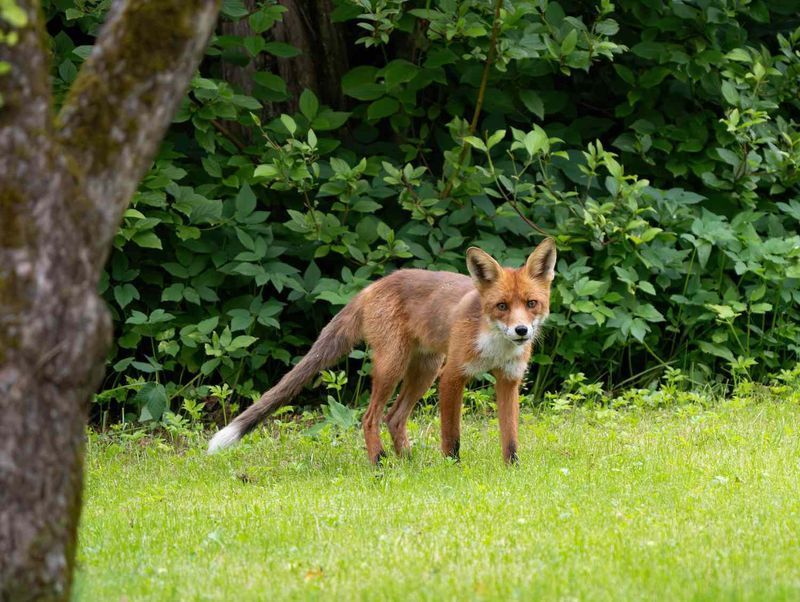
Most fox sightings, including ones that happen in broad daylight, do not require any response beyond observation. NC Wildlife notes that daytime activity is normal for foxes and is not, by itself, a sign of disease or a reason to remove the animal.
Normal behavior includes steady walking, hunting along a fence or garden edge, pausing to investigate a scent, and retreating when a person approaches. An animal that moves away from you when you step outside is behaving exactly as it should.
NC Wildlife’s spring encounter guidance describes the behaviors that do warrant concern: unprovoked aggression toward people or pets, stumbling or falling, marked disorientation, circling without apparent purpose, or foaming at the mouth. A fox that approaches you without hesitation and shows no wariness of people is also worth noting, particularly if the behavior is combined with other abnormalities.
If you observe those signs, keep people and pets away and contact your local animal control or the NC Wildlife Helpline.
Patchy or thin fur in late winter or early spring can look alarming but often reflects seasonal shedding rather than mange or another disease. Do not attempt to handle, medicate, or trap the animal yourself based on coat appearance alone.
If the fur loss is severe and the animal also appears lethargic or disoriented, that combination is a stronger reason to seek professional assessment.
Rabies risk comes from contact, not proximity. Being in the same yard as a fox, even a fox that lingers near the house, is not a rabies exposure.
North Carolina public health guidance defines exposure as a bite, scratch, or contact between the animal’s saliva and broken skin or mucous membranes. If that kind of contact occurs with a person or an unvaccinated pet, contact your local health department or physician promptly.
CDC guidance on rabies prevention reinforces that post-exposure evaluation should happen quickly, but a fox simply crossing your yard does not trigger that response.
Read the Sighting as a Prompt to Observe
A fox trotting through your yard at dusk is worth paying attention to, but it is not worth losing sleep over. What the sighting confirms is limited: the animal found your property usable, at least on that evening.
It may have been hunting, passing through, investigating cover, or drawn by a scent you never noticed. NC Wildlife’s red fox profile and coexistence guidance both frame a calm sighting as a reason to observe and manage attractants, not as a crisis.
The proportional response is straightforward. Watch from a distance for a few days to see whether the animal returns and what it seems to be doing.
Remove the specific food sources identified in the previous sections. Keep pets protected with supervision or secure enclosures.
Leave habitat features that benefit birds, insects, and other valued wildlife intact where they are not creating a direct conflict. If you observe abnormal behavior, a possible den in an occupied structure, or any contact between the fox and a person or pet, reach out to a qualified resource.
The NC Wildlife Helpline connects North Carolina residents with staff who can answer questions about specific situations, including den timing, exposure concerns, and when a Wildlife Damage Control Agent is the right next step. One fox crossing your yard at dusk is a reminder that the landscape around your home is still alive and moving after dark.
That is worth noticing, and worth managing thoughtfully.