
What It Really Means When A Ruby-Throated Hummingbird Keeps Hovering At Your North Carolina Window
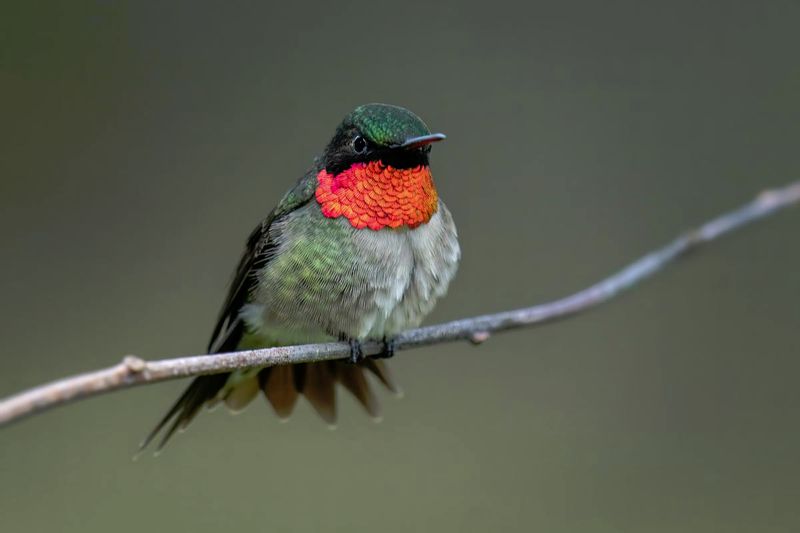
Spotting a ruby-throated hummingbird working the same window again and again is one of the more startling things a North Carolina homeowner can witness in the yard. The bird zips in, hovers, pecks at the glass, retreats, and comes right back – sometimes for days.
Understanding what is actually driving that behavior can help you protect the bird and make your yard a genuinely better place for it to spend the season.
The Window Is Usually the First Clue
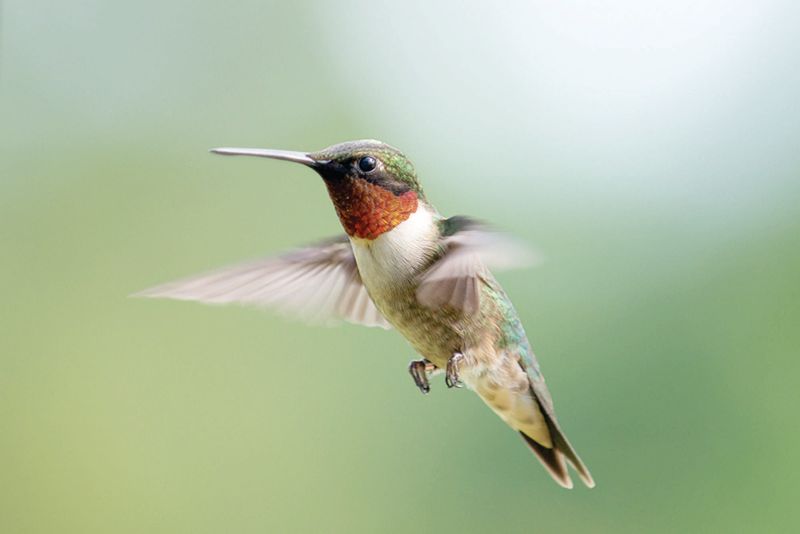
Glass has a way of fooling birds that no other surface quite matches. When a ruby-throated hummingbird keeps returning to the same window, pecking at it or darting back and forth in front of it, the pane itself is almost always the starting point for figuring out why.
Cornell Lab of Ornithology’s window-collision guidance describes this pattern as “reflection aggression,” meaning the bird reads its own image in the glass as a rival occupying its territory.
Spring is the clearest season for this behavior because territorial instincts run highest when hummingbirds are establishing feeding and breeding ranges. A bird that would ignore a neutral surface will sometimes spend remarkable energy attacking a mirror-like window during those weeks.
That said, the behavior can appear in summer or fall too, so spring alone is not a requirement.
The reflection does not look like a barrier to the bird. From outside, a window lit by morning or afternoon sun can show a near-perfect image of the surrounding yard, and the hummingbird reads that image as another small bird holding its ground.
The response is the same one it would direct at any real intruder: hover, charge, peck, repeat.
Knowing this shapes the order of actions worth taking. The window’s exterior reflection is the immediate problem to solve, and reducing or eliminating it comes before moving feeders, planting flowers, or trying any other yard change.
Once the glass stops acting as a mirror, the bird loses its trigger, and the yard improvements you make afterward will actually be used the way you intend.
What Does Hovering Actually Tell You?
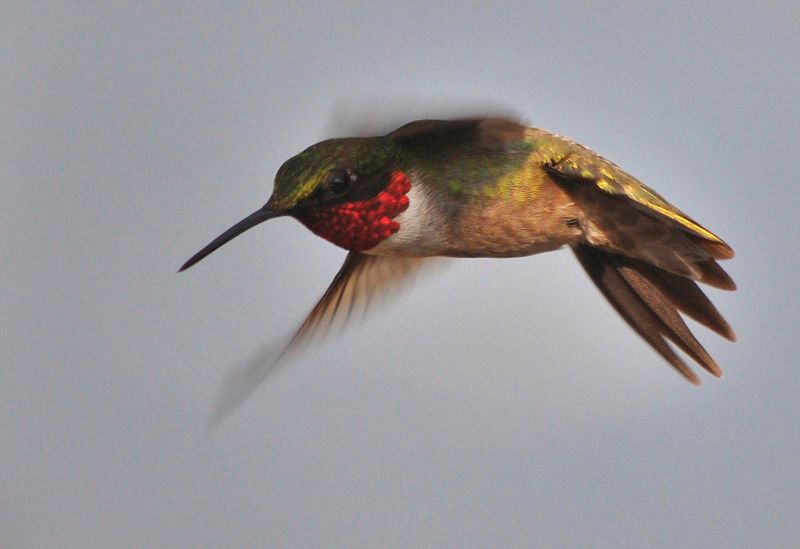
Watching a hummingbird work a window is fascinating, but the behavior is easier to misread than most people expect. A bird hovering parallel to the glass, drifting slowly along its surface, is doing something meaningfully different from one that charges in repeatedly, pecks hard, and retreats only to charge again.
The second pattern – repeated pecking or fighting at the same pane – is the clearest sign of reflection aggression. The first could mean almost anything.
Possible reasons a hummingbird might hover near a window without attacking it include investigating a reflection of nearby flowers or a feeder, tracking an insect that landed on the glass, reacting to movement it spotted inside the house, or simply checking an area it has learned to associate with food sources. Audubon’s reporting on window attacks makes clear that reflection aggression is not limited exclusively to male birds – females and juveniles may visit windows and feeders too, so the flash of a ruby throat is not necessary for the behavior to occur.
Hovering alone cannot confirm that the bird is hungry, requesting a feeder, courting, or responding to one specific plant visible through the glass. Those interpretations feel intuitive, but the evidence does not support reading that level of detail from window behavior.
What you can say with confidence is that a bird repeatedly pecking or fighting the same pane is most likely responding to a reflection, and that is the hypothesis worth acting on first.
Sex is also not reliably determined from a distance or from behavior at the glass. Both sexes defend resources, and a bird you cannot get a clear look at could be a female, a juvenile male, or an adult male.
Treating the window rather than waiting to confirm which bird is visiting is the practical move regardless.
Reduce the Reflection Before You Move Anything Else
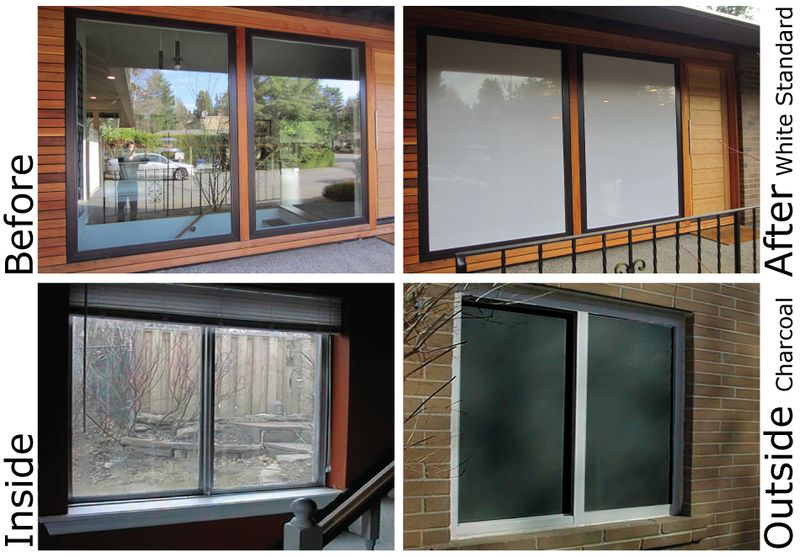
The most important thing to understand about treating a window for reflection aggression is that the fix belongs on the outside of the glass, not the inside. A curtain pulled shut or a decal stuck to the interior surface may not change what the bird sees when it approaches from the yard.
The reflection it is fighting is formed by exterior light bouncing off the outer face of the pane, so that outer face is where the treatment needs to go.
The most straightforward options are also the least expensive. An exterior insect screen mounted over the targeted window breaks up the reflective surface immediately and requires no special product.
Rubbing a bar of soap across the outside of the glass, applying a temporary opaque covering such as kraft paper or fabric, or drawing on the exterior with washable paint or window markers will all reduce the mirror effect that triggers territorial attacks. Cornell Lab’s window-safety guidance specifically identifies exterior treatments as the priority for stopping reflection aggression, distinguishing them from interior-only approaches.
Adjacent windows sometimes matter too. If two or three panes sit close together and each one reflects part of the yard, the bird may shift from one to the next as you treat them.
Work across the connected reflections rather than stopping after the first pane shows improvement.
Closely spaced exterior cords, appropriately patterned exterior films, and similar products that make glass visible are primarily collision-prevention tools. Cornell Bird Academy’s glass-collision program explains that pattern spacing matters for small birds – marks placed too far apart leave gaps a hummingbird can try to fly through.
Whether those products also stop reflection aggression specifically is a separate question; the evidence for them is strongest on the collision-prevention side.
Moving a feeder to a different spot in the yard does not solve either problem. The window remains reflective, and the glass remains a potential collision hazard regardless of where the feeder sits.
Treat the glass directly, and handle the feeder placement as its own separate decision.
Build the Yard Around More Than Sugar Water
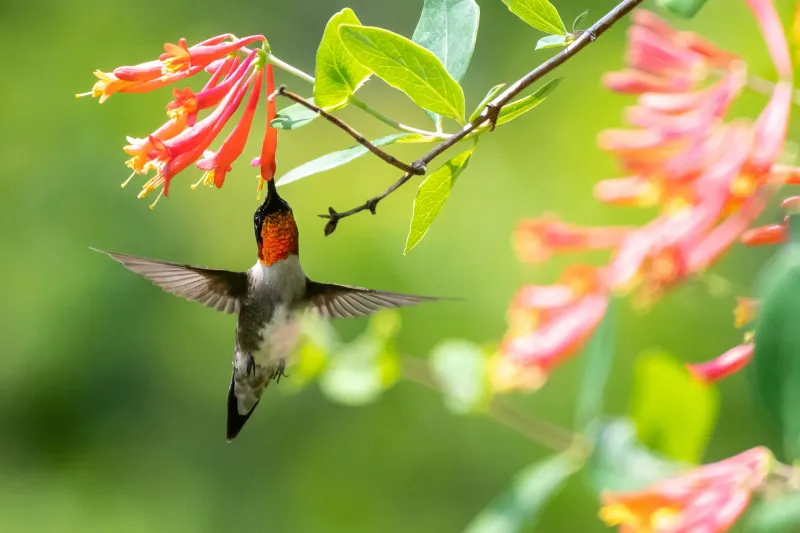
Ruby-throated hummingbirds are the only hummingbird species that breeds in North Carolina, and they show up in yards from the mountains to the coast. NC State Extension’s backyard bird habitat guide notes that the species feeds on both nectar and small insects, which means a yard built entirely around a sugar-water feeder is missing half the picture.
Insects – gnats, aphids, small spiders – supply protein that nectar cannot, and diverse native vegetation is what supports those insects.
The most useful planting strategy is a succession of blooms rather than one or two species flowering at the same time. NC State Extension recommends bee balm, jewelweed, crossvine, Carolina jessamine, trumpet vine, cardinal flower, and coral honeysuckle as hummingbird-friendly choices that spread flowering across the warmer months.
NC State’s hummingbirds and butterflies publication identifies cardinal flower (Lobelia cardinalis) as a summer bloomer well suited to moisture-retentive or damp spots in the yard – a rain garden edge, a low corner that stays wet after storms, or a spot near a downspout.
Coral honeysuckle needs a word of clarification because the name causes real confusion at garden centers. The plant worth growing is Lonicera sempervirens, a North Carolina native that is vigorous but manageable when given a trellis or arbor to climb.
NC Cooperative Extension’s Lee County list of top hummingbird plants names it explicitly and distinguishes it from the invasive Asian honeysuckles – Japanese honeysuckle in particular – that spread aggressively through NC woodlands and roadsides. Buying by scientific name at a reputable native plant nursery is the safest way to get the right plant.
Trumpet vine can become very vigorous and may need a strong structure and periodic cutting back, so it suits a fence line or a robust arbor better than a small border. Light and moisture should guide every planting choice: what thrives in a moist Piedmont yard may struggle on a dry mountain slope, and what works in the Coastal Plain’s sandy soil may need amendment elsewhere.
Matching plants to your actual site conditions is what turns a garden into functioning habitat.
A Feeder Helps Only When You Maintain It
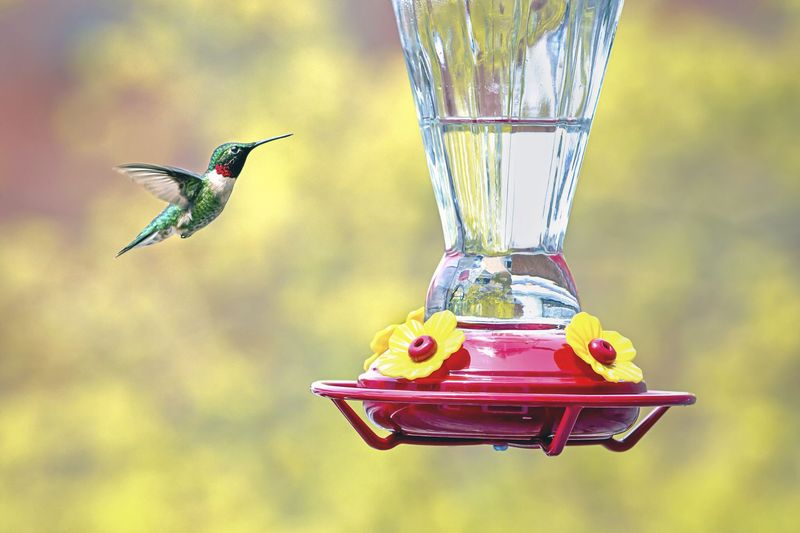
A supplemental feeder can be a genuinely useful addition to a hummingbird-friendly yard, but the word “supplemental” carries real weight. Native plants and the insects they support do things a feeder cannot, so the feeder works best as one piece of a broader habitat rather than the centerpiece of it.
The recipe is straightforward: four parts plain water to one part ordinary white table sugar, stirred or boiled until the sugar dissolves completely. NC State Extension recommends boiling the solution before use.
Honey is not a safe substitute – it ferments quickly and can cause a fatal fungal infection in hummingbirds. Red food coloring is unnecessary; the feeder’s red parts are enough to attract birds, and there is no reason to add dye to the nectar.
Nectar spoils faster than most people expect. Cornell Lab’s hummingbird feeding guidance advises changing the solution every two to three days under normal conditions and daily during very hot weather.
Cloudy or milky nectar should be dumped immediately rather than topped off. The feeder itself needs thorough cleaning each time you refill it – a brush that reaches every corner of the reservoir and ports, rinsed well, with no soap residue left behind.
Territorial conflict around feeders is common because ruby-throated hummingbirds defend feeding sites aggressively. One large feeder in a visible spot can become a single resource one bird monopolizes.
Hanging several smaller feeders in different parts of the yard – ideally out of sight of each other – tends to let more birds feed without constant chasing.
Feeder placement matters for a different reason too: cats. A feeder hung low or near dense shrubs a cat can hide behind puts every bird that visits at risk.
Keep feeders high enough and in the open enough that a visiting hummingbird has clear sightlines and room to escape. The feeder’s location is its own decision, separate from whatever window treatment you put in place.
Seasonal Visits Do Not Mean You Should Intervene
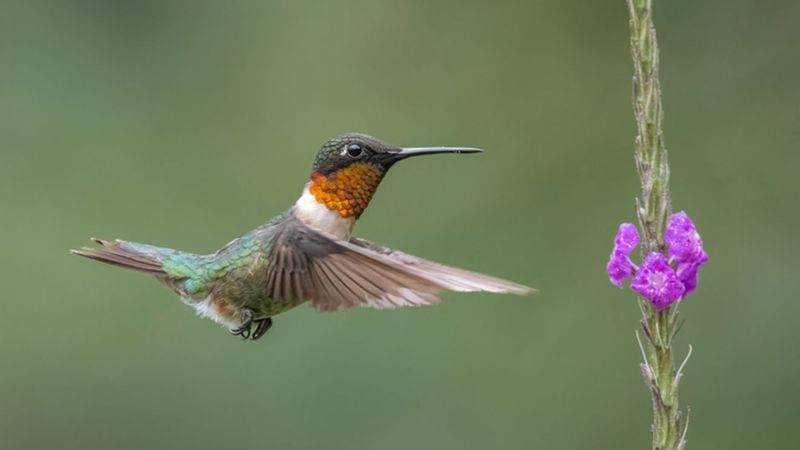
Reflection aggression shows up most clearly in spring because that is when territorial behavior peaks, but the same response can appear in summer or fall. A bird working your window in August or September is not behaving strangely – it may simply be defending a late-season feeding area.
Ruling out reflection aggression just because the calendar says it is past spring is a mistake worth avoiding.
Fall also brings a common misunderstanding about feeders and migration. Leaving a feeder up through September and October does not hold a hummingbird back from its natural departure.
NC State Extension describes ruby-throated hummingbirds as generally returning to North Carolina in late March and departing by mid-October, but those are broad patterns with real variation by individual bird and location. The timing is driven by day length and internal cues, not by whether a feeder happens to be full.
Most window encounters do not require any response from the homeowner beyond treating the glass. A hummingbird hovering near a window, perching briefly on a nearby stem, or investigating a reflection is not in distress.
NC Wildlife’s general guidance is to leave wild animals alone unless they are clearly injured, and a bird that is actively flying and maneuvering does not need to be captured or handled.
A collision is a different situation entirely. When a hummingbird strikes the glass at speed and lands stunned on the ground or a ledge below the window, the risk of internal injury is real even if the bird eventually flies away.
The International Wildlife Rehabilitation Council’s guidance on window strikes is clear: do not offer the bird food or water, and do not attempt to care for it yourself. Instead, contact a North Carolina licensed wildlife rehabilitator, who is legally authorized to provide care for live wild animals and can advise you on what to do while you wait for help.
Use the Encounter as a Safer Yard Checklist
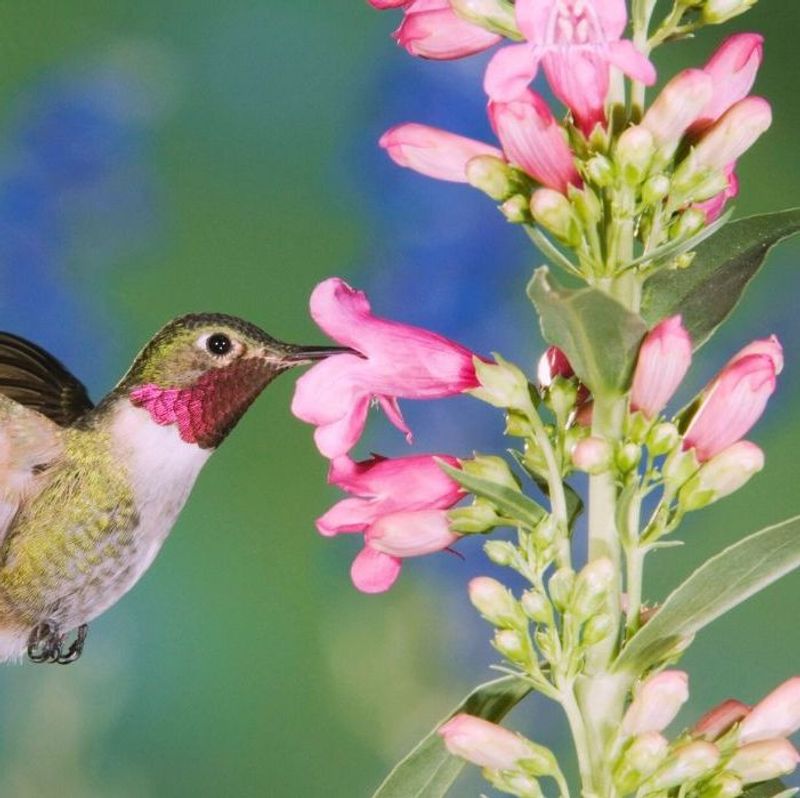
A hummingbird at your window is not delivering a precise shopping list. It is not pointing at one missing plant or asking you to hang a feeder in a specific spot.
What the encounter does offer is a useful prompt to work through a short, practical sequence that makes your yard genuinely safer and more supportive for the species.
Start by watching the pattern without assigning a motive you cannot confirm. Repeated pecking or charging at the same pane points toward reflection aggression; treat the exterior of that window first, using a screen, opaque covering, soap, or another material that reduces or removes the relevant reflection.
Then address collision risk separately by making the glass visible to any bird approaching at speed – exterior treatments that break up the pane’s appearance at appropriate spacing are the right tool for that job. Cornell Lab’s window guidance covers both problems and explains why they call for different responses.
Once the glass is handled, turn to the yard itself. A succession of site-appropriate native plants – matched to your light, moisture, and NC region – gives the bird nectar across the season and supports the insects it also needs.
NC State Extension’s backyard bird habitat guidance frames this as building habitat, not just adding decorations. A feeder, cleaned on schedule and filled with plain sugar water, can supplement that habitat when maintained properly.
The hummingbird working your window is not a problem to solve so much as a small, fast argument with its own reflection – and the yard you build in response to it will outlast the argument by years.