
If Your Hydrangeas Wilt No Matter How Often You Water, Here Are 16 Watering Truths That Fix It
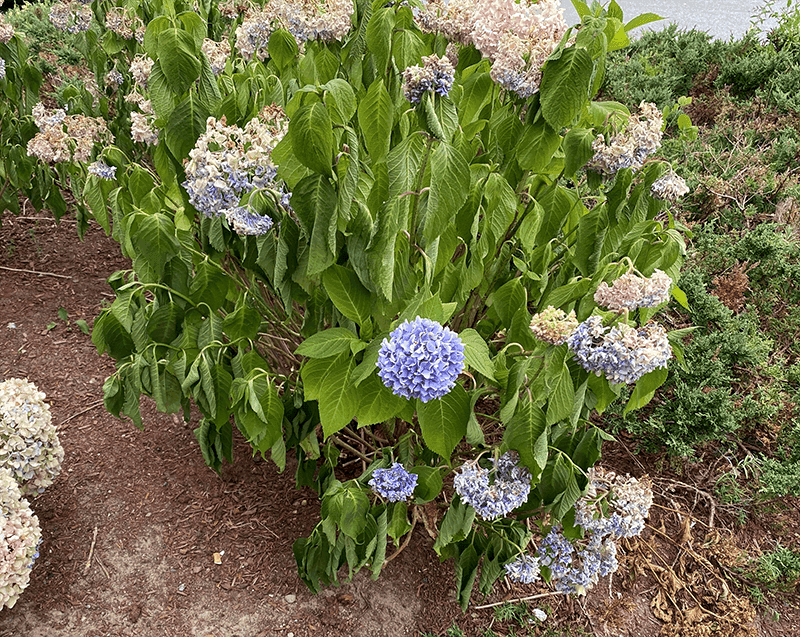
Nothing feels worse than watering your hydrangeas over and over, only to watch them flop by afternoon. The truth is, wilting is not always about how much water you give.
Sometimes it comes down to when, where, and how you water, plus a few soil and shade tricks most gardeners never learn. Here are 16 simple watering truths that can bring your droopy hydrangeas back to life.
1. Deep Watering Beats Daily Sprinkles
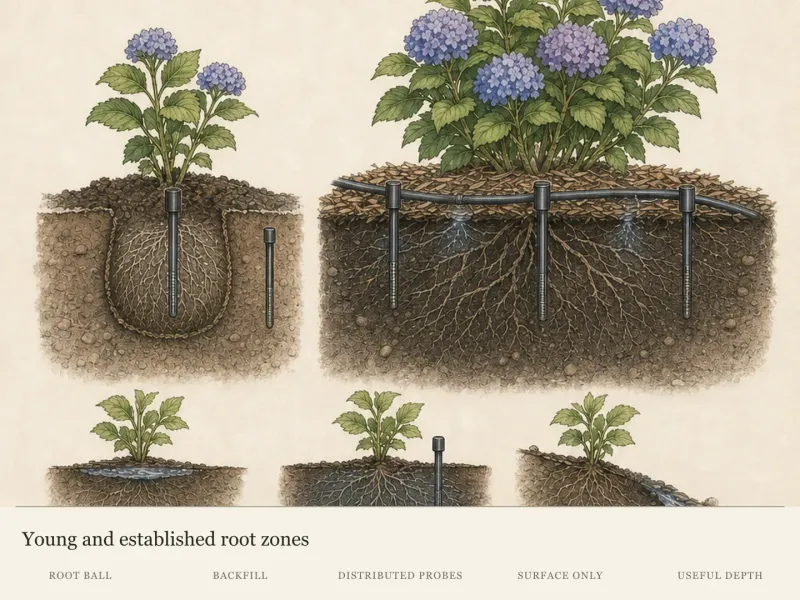
Picture your hydrangea’s roots as thirsty straws that sit close to the surface. Those shallow roots paired with big, thirsty leaves mean the plant loses moisture fast, especially when the weather turns warm.
A quick daily splash only wets the top inch of soil, so the deeper roots never get a real drink. Instead, water slowly and deeply right at the base until the ground is soaked several inches down.
Aim for about 1 to 2 inches of water each week, and adjust when it gets hotter. A few deep soaks always beat a dozen shallow sprinkles.
2. Early Morning Is the Golden Hour
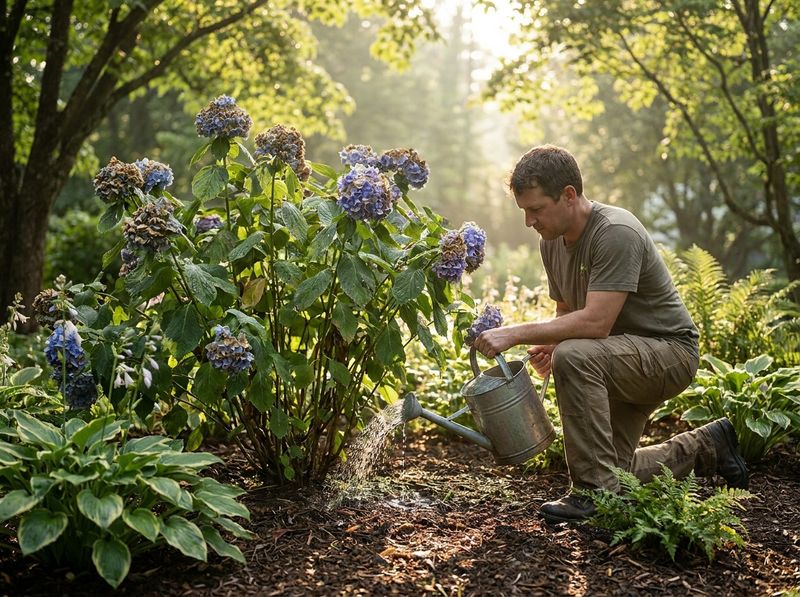
Timing matters more than most folks realize. Watering first thing in the morning lets moisture sink deep into the soil before the sun climbs high and steals it back through evaporation.
A morning drink also gives your hydrangea a full tank before it faces the heat of the day. As a bonus, the leaves dry quickly, which helps keep fungal troubles away.
Evening watering can work in a pinch, but the middle of a blazing afternoon is the worst time of all. Set a reminder and water while your coffee brews.
3. Check the Soil Before You Reach for the Hose
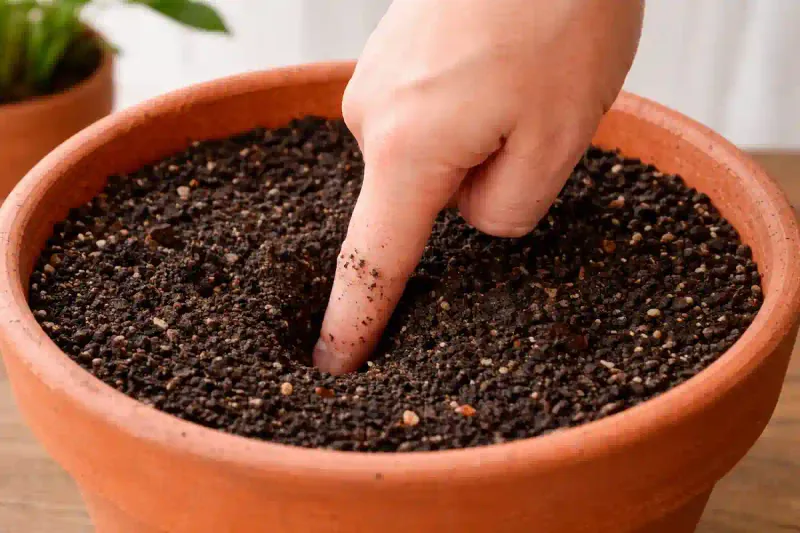
Here is a habit that saves plants: never water on autopilot. Push your finger 2 to 3 inches into the soil near the base first, and let it tell you what to do.
If it comes out dry, go ahead and give a deep soak. If it still feels damp, put the hose down and wait a day.
Want to be extra sure? Slide a clean wooden chopstick about 4 inches deep.
If it comes out bone dry, your hydrangea is ready for a drink.
4. Mulch Keeps Roots Cool and Moist
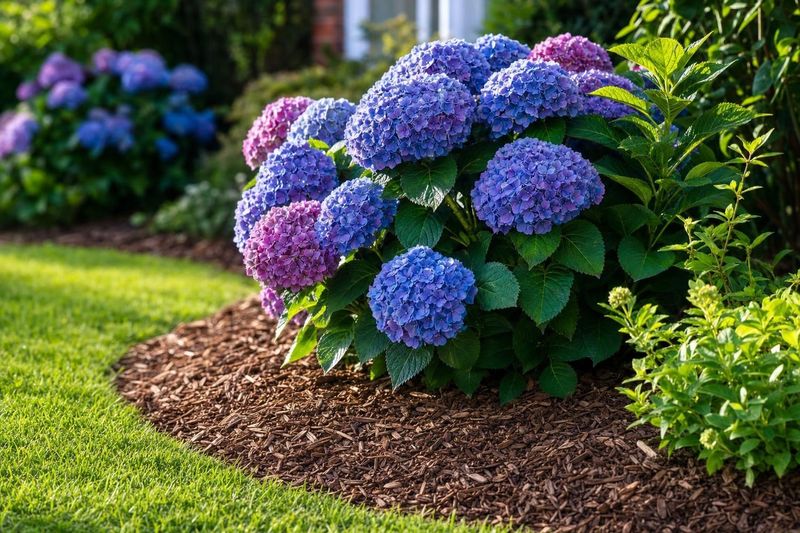
Think of mulch as a cozy blanket that also holds a glass of water for your plant. A 2 to 3-inch layer of bark chips, straw, leaf mold, or compost slows evaporation and keeps the shallow roots from baking.
The soil stays cooler and moisture stays steadier, which means less flopping on hot days. Just leave a 3 to 6-inch gap between the mulch and the stems so nothing sits wet and rots.
Refresh the layer each spring, and you will water less often while your hydrangea stays happier.
5. Afternoon Shade Stops the Midday Flop
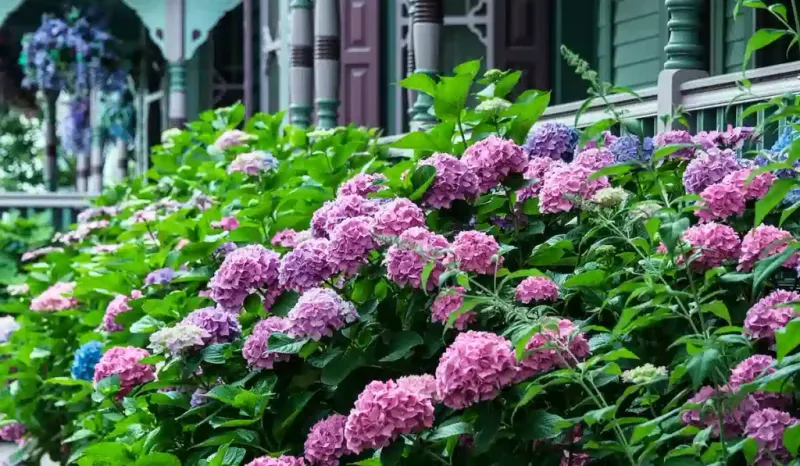
Bigleaf hydrangeas are drama queens in the afternoon sun. Intense rays pull water out of those wide leaves faster than the roots can replace it, and the whole plant sags as a defense.
Giving them a break from the harshest afternoon light makes a huge difference. Move potted ones to a shadier spot, or rig up some temporary shade cloth for the ones in the ground.
Morning sun with afternoon shade is the sweet spot for most varieties. Less scorching sun means far less midday drooping.
6. Heat Wilt and Real Thirst Are Not the Same
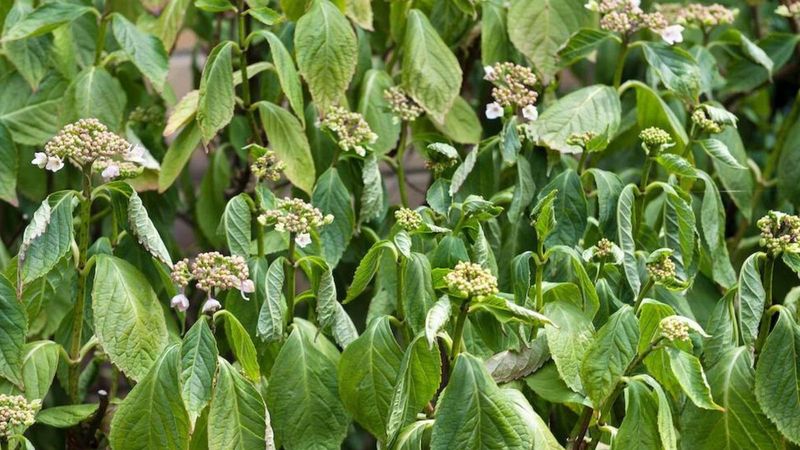
Do not panic every time your hydrangea slumps in the afternoon. Many plants wilt during the hottest hours even when they have plenty of water, simply because they cannot keep up with the heat.
Here is the easy test: check again in the evening or after the sun drops. If the leaves perk right back up, your plant was just riding out the heat and does not need more water.
But if it stays wilted once things cool down, that is your signal the roots are genuinely dry.
7. Learn to Read Overwatering vs Underwatering
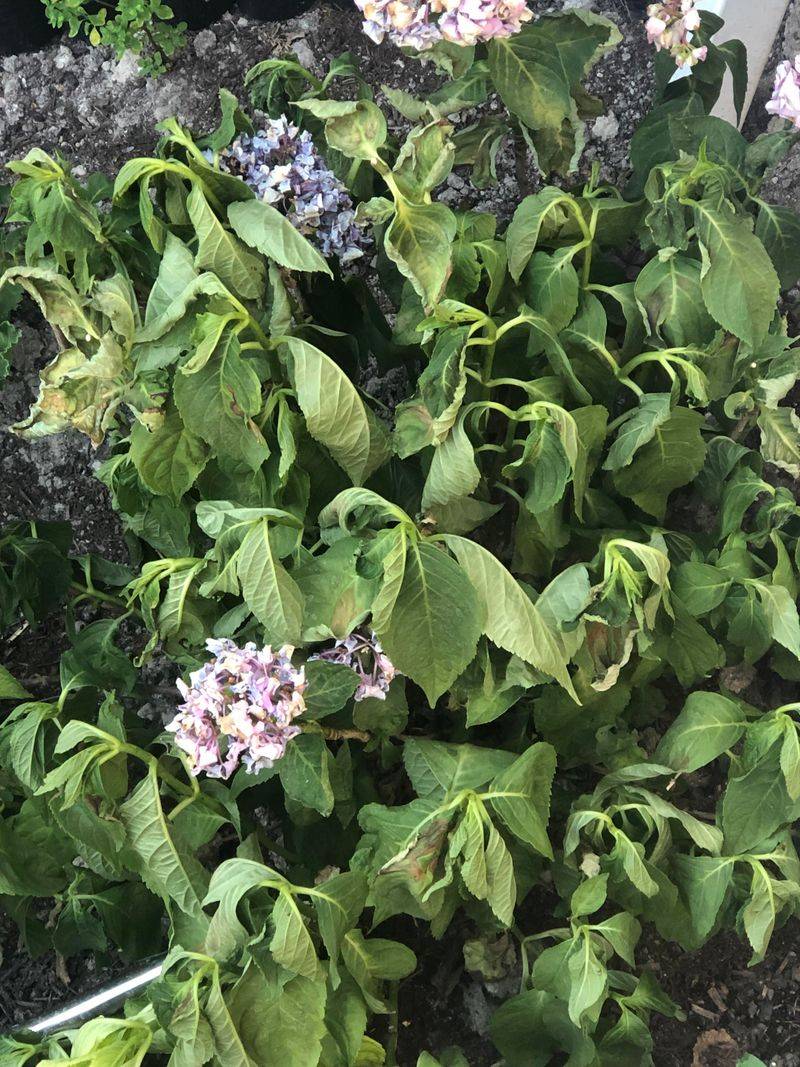
Confusingly, both too much and too little water cause wilting, so you have to read the clues. A thirsty hydrangea shows crispy brown leaf edges, crunchy leaves, dusty dry soil, and firm stems that still stay wilted after dark.
An overwatered one tells a different story. Look for leaves yellowing from the bottom up, limp or mushy stems, downward-curving tips, mold near the base, and soggy, sour-smelling soil.
Once you spot which pattern matches your plant, you will finally know whether to water more or back off.
8. Fix Drainage Before You Blame Yourself
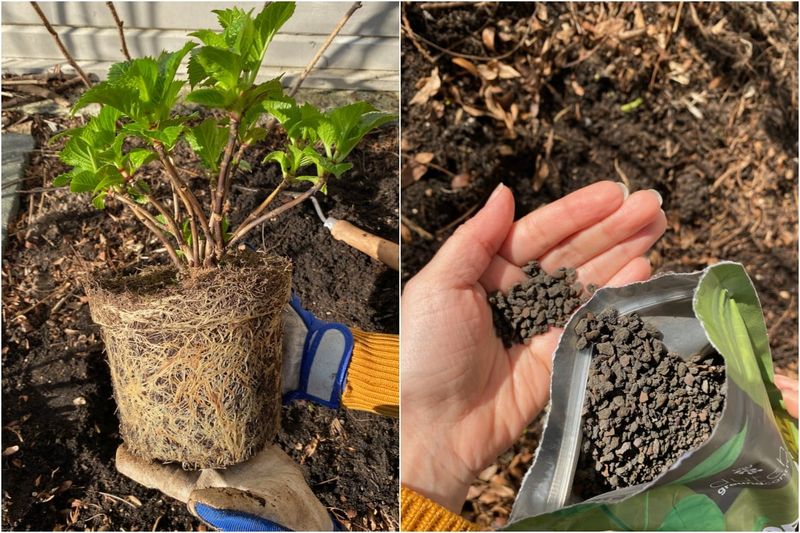
Soggy roots cannot drink, no matter how much you water. Hydrangeas love steady moisture, but they hate sitting in waterlogged mud that suffocates the roots and invites rot.
If your soil drains poorly, work in plenty of organic matter like compost to loosen the structure and let excess water escape. Good drainage and steady moisture can absolutely live together.
For anything in a pot, make sure the container has real drainage holes. A pot without holes is a slow drowning trap for hydrangea roots.
9. Water at the Drip Edge, Not the Center
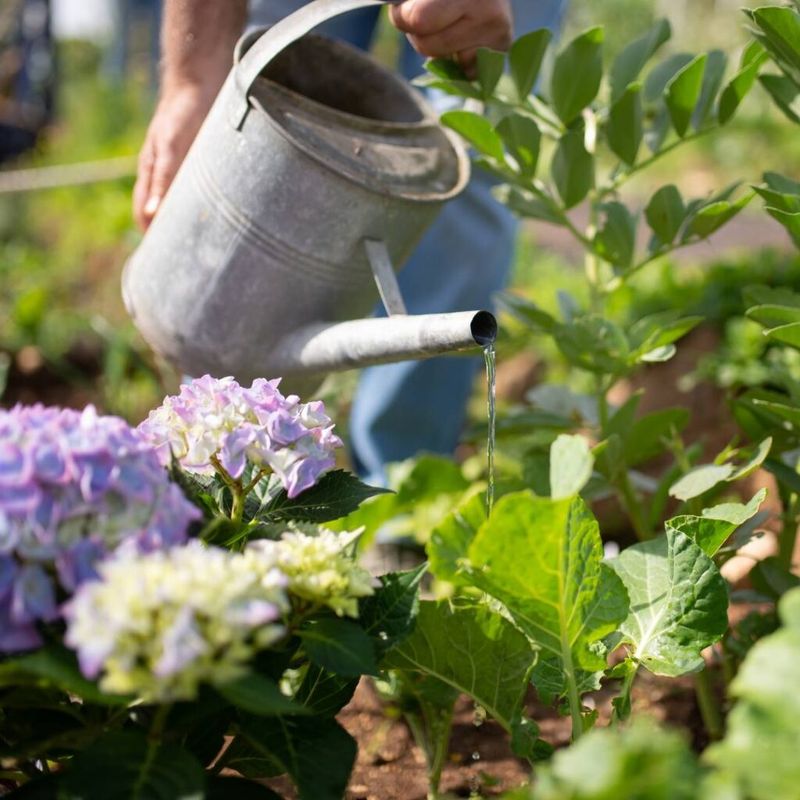
Roots do not just huddle under the crown, they stretch out wide beneath the plant. That is why dumping all the water right in the middle often misses the roots that need it most.
Aim for the drip edge, the ring of soil under the outermost branches. Watering there delivers moisture straight to those far-reaching roots.
It also stops the dry soil around the plant from wicking moisture away before the roots can grab it. A small change in aim, a big change in results.
10. Skip the Overhead Shower
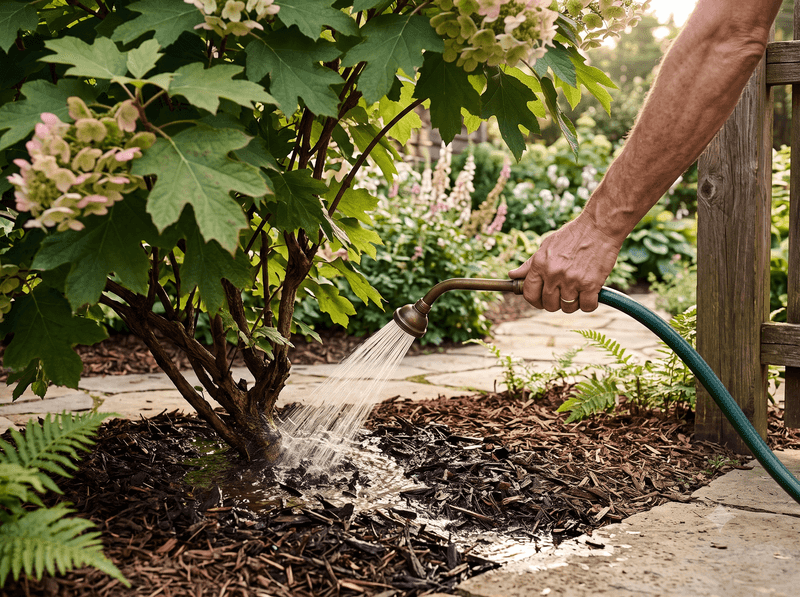
Spraying the leaves from above feels satisfying, but it can backfire. Wet foliage, especially in humid weather, becomes a welcome mat for fungal diseases that leave spots and damage.
Keep the water where it counts by aiming at the soil, not the canopy. A soaker hose laid along the base does this beautifully and hands-free.
If you use a regular hose, tilt the nozzle down and water low and slow. Dry leaves and wet roots are exactly what you want.
11. Potted Hydrangeas Need More Attention
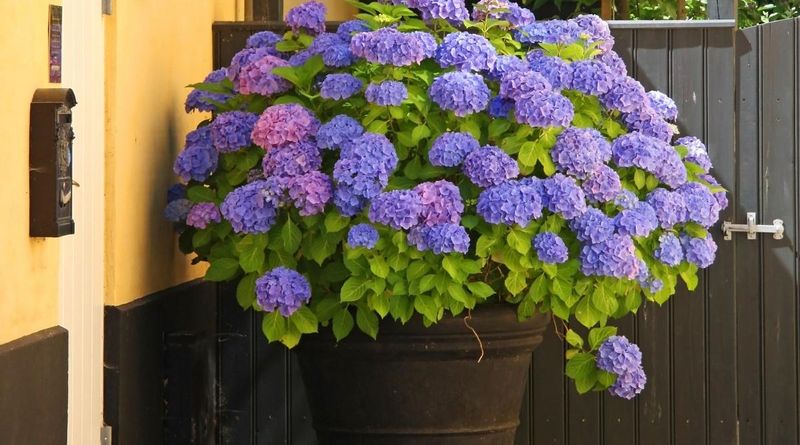
Container hydrangeas dry out shockingly fast. Pots heat up quickly, hold far less soil, and lose moisture from all sides, so the schedule that works in the ground will not cut it here.
During warm stretches, potted plants often need water every single day. In a real heatwave, you might have to water morning and evening to keep them from crisping.
Check the soil often with your finger and let the plant guide you. A pot that dried out yesterday will likely be thirsty again today.
12. Sandy Soil Drinks and Runs
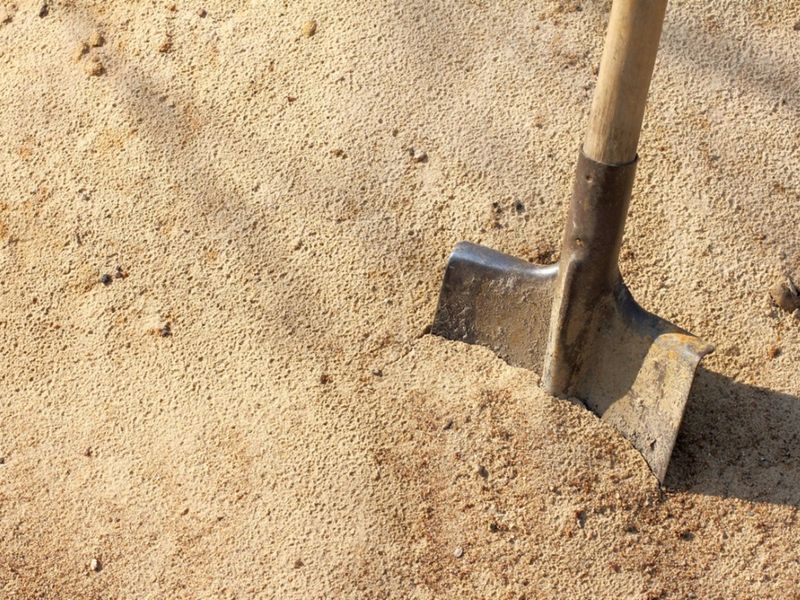
Sandy soil is a bit of a leaky bucket. Water races straight through it, so even generous watering can leave your hydrangea gasping within hours.
The fix is to give that soil something to hold onto. Mixing compost or other organic matter into the planting hole helps the ground grip moisture instead of letting it drain away.
Over time, richer soil means your hydrangea can actually use the water you give. Amend once, and you will chase fewer wilting spells all season.
13. Watch Out for Thirsty Neighbors
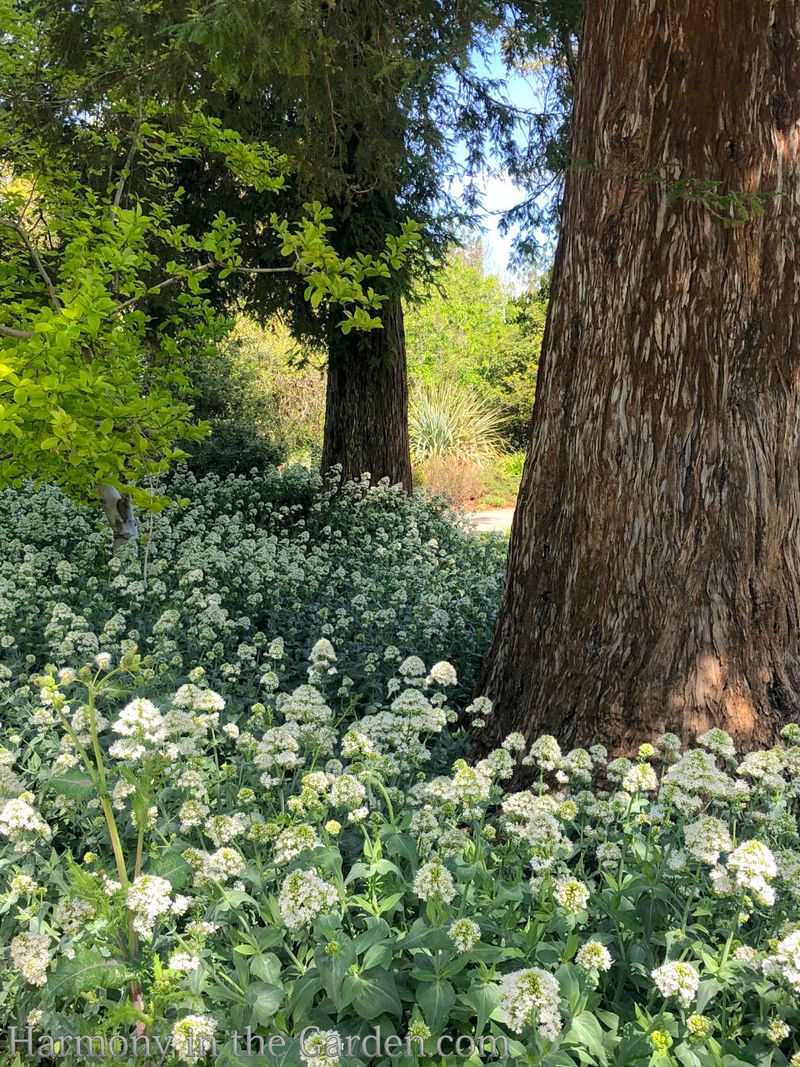
Trees play dirty when it comes to water. A hydrangea planted near a big tree is competing against a giant with a huge, aggressive root system that gulps up moisture first.
Even with regular watering, your hydrangea can end up shortchanged and wilting. The answer is to water it deeply and generously so there is enough to go around.
Sometimes the plant is not doing anything wrong at all, it just has a greedy neighbor stealing its drink.
14. New Plants Wilt From Transplant Shock
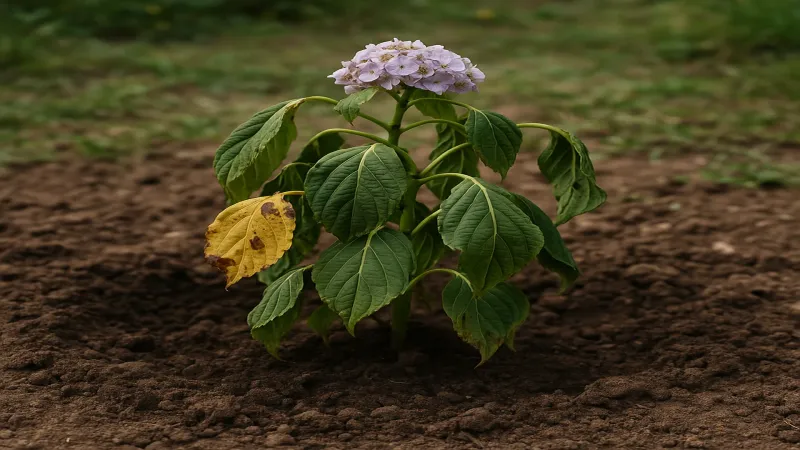
A newly planted hydrangea is basically settling into a new home, and the move is stressful. Transplant shock makes fresh plantings droop while their roots learn to draw water from unfamiliar soil.
The trick during this touchy period is steady, consistent moisture so the roots never dry out. A little temporary shade can also take the pressure off while it adjusts.
Be patient and keep conditions calm. Once the roots settle in, the wilting usually fades on its own.
15. A Cramped Pot Chokes the Roots
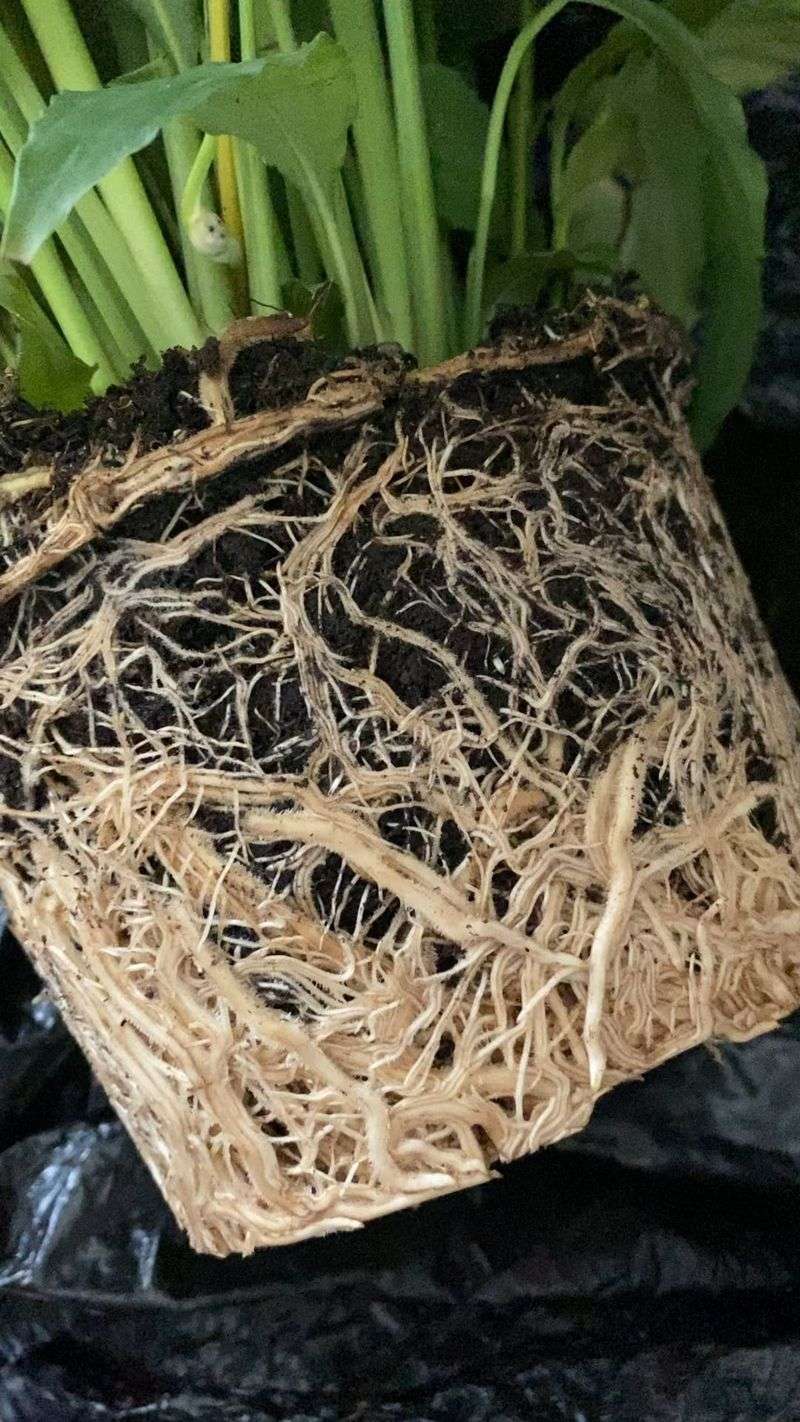
If your potted hydrangea keeps wilting no matter what, peek at the roots. A container that is too small leaves the roots crammed and tangled, unable to take up enough water or nutrients.
A root-bound plant is stressed by design, and no watering schedule will fully fix it. Moving it into a roomier pot gives those roots space to spread and breathe.
With more room to grow, your hydrangea can finally drink its fill and stop throwing daily tantrums.
16. Keep Watering Until the Ground Freezes
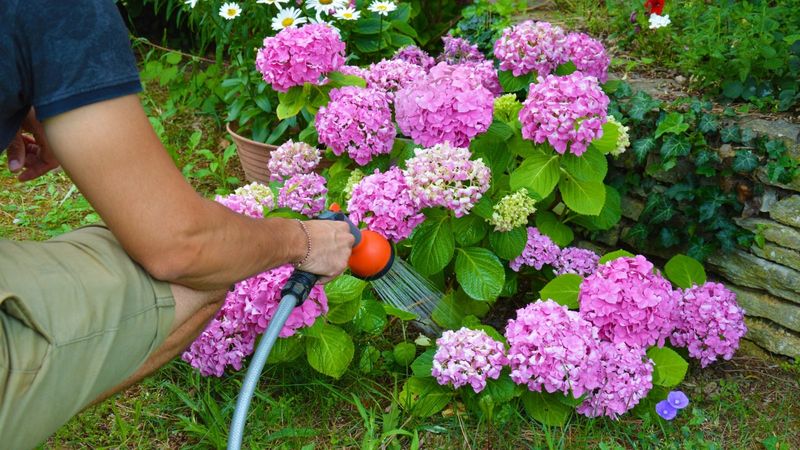
Watering season does not end when the flowers fade. All the way through fall and into early winter, hydrangeas still need deep, consistent drinks until the ground freezes solid.
Dry winter winds are sneaky and can pull moisture right out of a plant even in the cold. Sending your hydrangea into winter well-hydrated helps it survive the harsh months ahead.
So resist the urge to stop early. A few more autumn soakings can mean a stronger comeback next spring.