
If Your Lawn Keeps Fading To Brown Every Summer, Here Are 13 Habits Quietly Doing The Damage
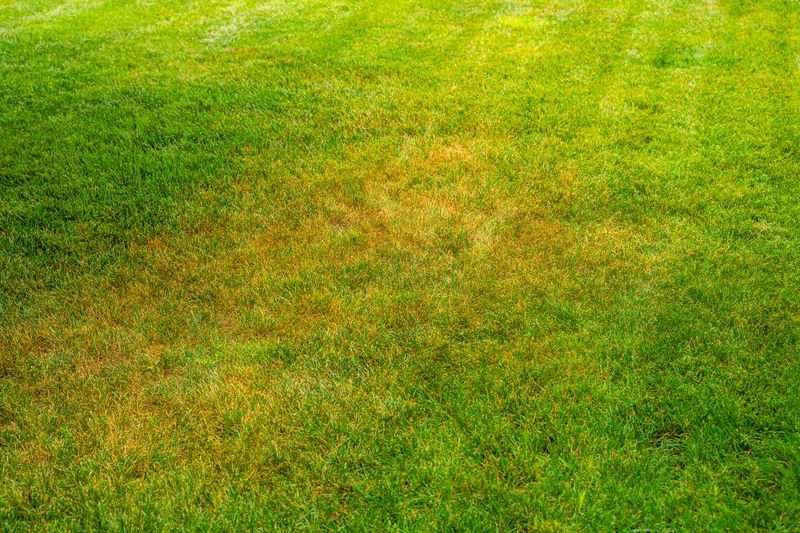
Watching your green lawn turn crispy and brown every summer feels like a mystery you can never solve. The truth is, most brown lawns are not victims of bad luck.
They are quietly suffering from small everyday habits that add up fast. Here are 13 things you might be doing without realizing it, plus the easy fixes to keep your grass green through the heat.
1. Watering Too Frequently and Lightly
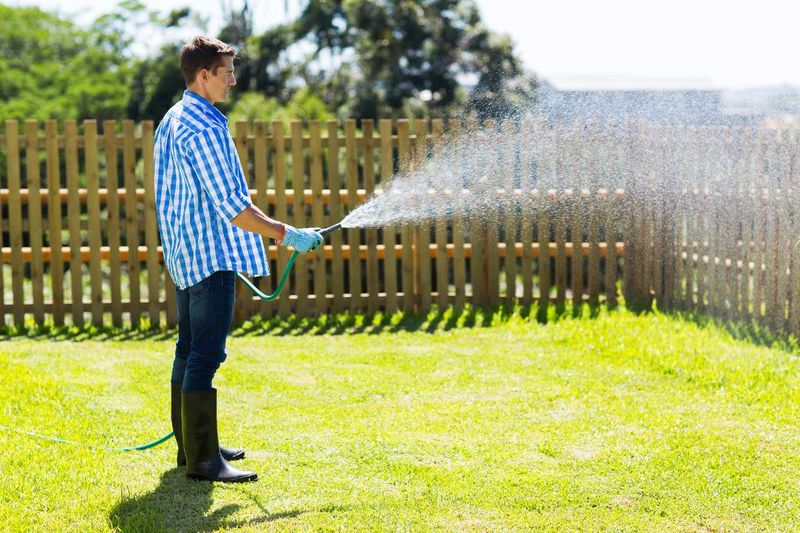
Here is a sneaky one that feels responsible but backfires. When you give your grass a quick splash every single day, the water only wets the top layer of soil.
Roots are lazy in the best way possible. They only grow toward water, so if moisture never sinks deep, the roots stay near the surface where the sun bakes them.
The fix is simple. Water less often but soak it longer, so moisture travels deep and the roots chase it down.
Deep roots equal grass that can shrug off a heat wave without going crispy.
2. Watering at the Wrong Time of Day
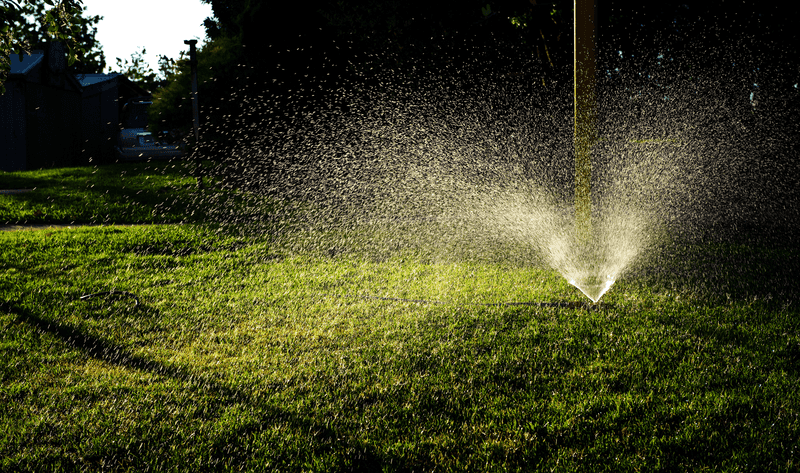
Timing matters more than most people think. If you water at noon, a big chunk of it evaporates before it ever reaches the roots, basically wasting your money and effort.
Watering at night has the opposite problem. The blades stay damp for hours in the dark, and that soggy overnight sit-time is a welcome mat for fungus.
Aim for early morning, somewhere between 5 and 9 a.m. The grass drinks deeply, dries off during the day, and stays healthy.
Your lawn basically wants breakfast, not a midnight snack.
3. Not Watering Deeply Enough
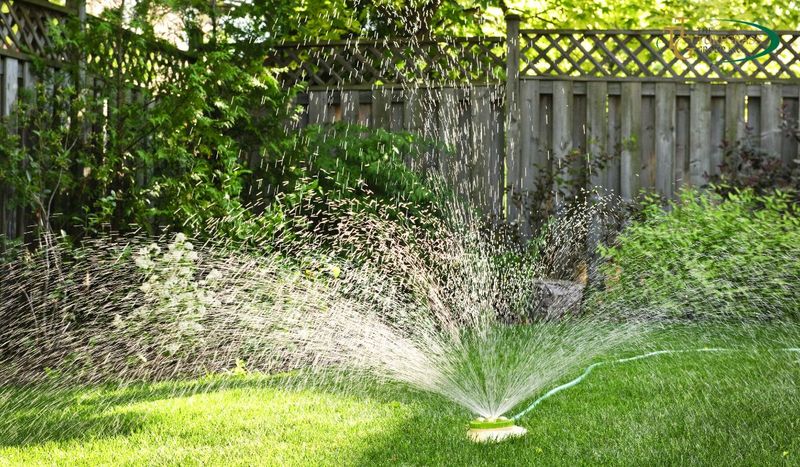
Shallow watering and deep watering are two totally different games. A gentle sprinkle might make the surface look happy, but underneath the soil is bone dry.
Grass needs about 1 to 1.5 inches of water each week to really thrive. Spread that across two or three good soakings instead of daily dribbles.
Try the tuna can trick. Set an empty can on the lawn while the sprinkler runs and stop when it fills to about an inch.
That tells you exactly how long your grass needs to drink.
4. Cutting Your Grass Too Short
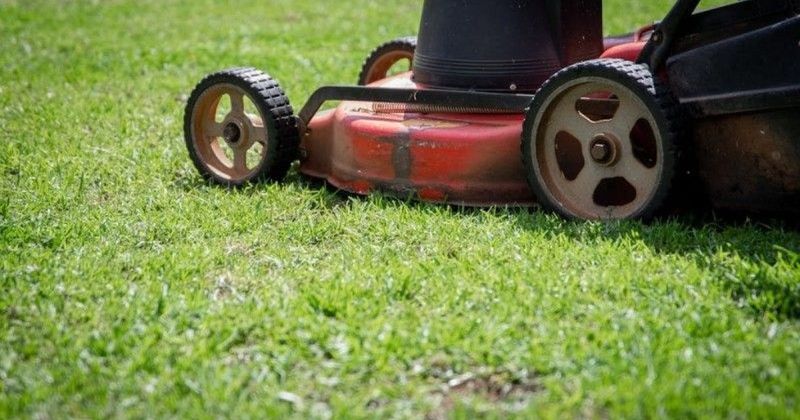
Scalping your lawn to buy yourself extra days between mowings sounds like a win, but it is a trap. Chopping the grass super short leaves bare soil exposed to the blazing sun.
That bare soil dries out fast and heats up, stressing the roots below. Short blades also have less surface to soak up sunlight, so the grass can barely feed itself.
Keep your summer mowing height around 2.5 to 4 inches, depending on your grass type. Taller blades shade the soil, hold moisture, and keep everything cooler underneath.
5. Removing Too Much Grass Blade at Once
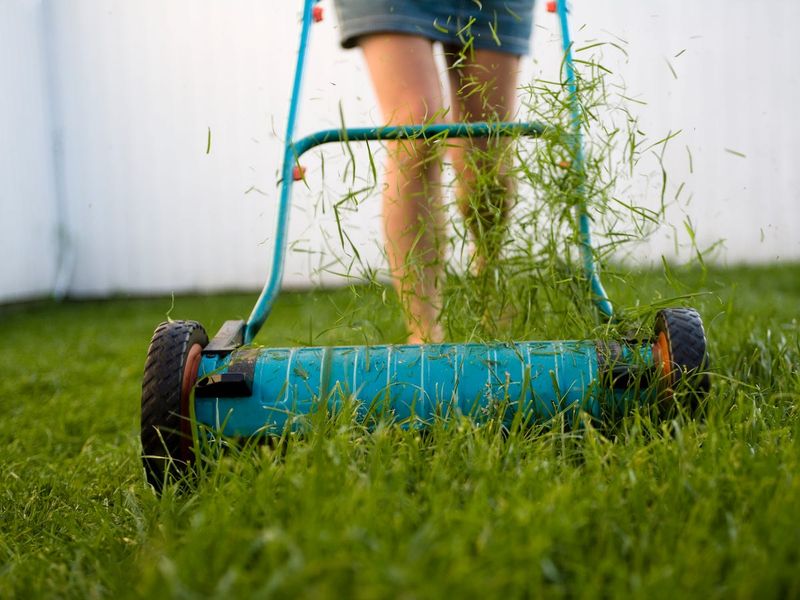
We have all let the lawn get shaggy and then hacked it down in one aggressive pass. That single dramatic haircut shocks the grass hard.
The golden rule is to never cut more than one-third of the blade length in a single mow. Go beyond that and the grass panics, browning at the tips and weakening its roots.
If your lawn got away from you, trim it in stages over a few days instead of all at once. Slow and steady keeps the green looking full and avoids that stressed-out brown look.
6. Using Dull Mower Blades
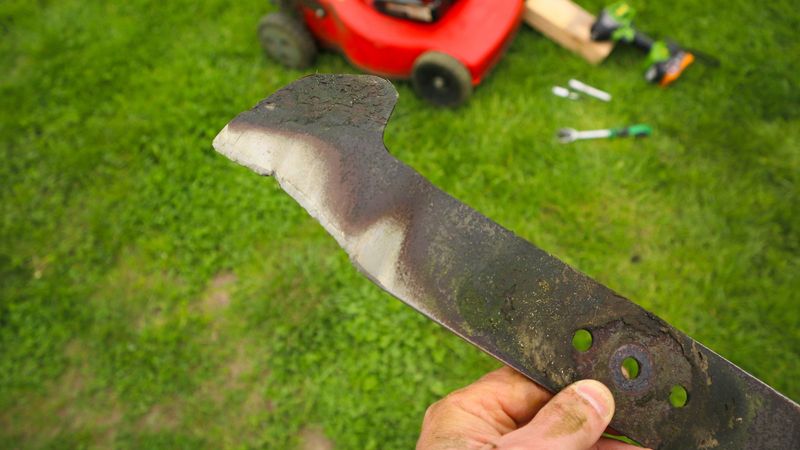
Ever notice a grayish, ragged tint to your lawn a day or two after mowing? Your mower blade might be the guilty party.
A dull blade tears and shreds the grass instead of slicing it cleanly. Those ripped ends dry out and turn brown, and the open wounds invite disease right in.
Sharpen your mower blade at least once or twice per season. A clean cut heals fast and keeps your lawn looking crisp and green instead of frayed and dull.
7. Over-Fertilizing Your Lawn
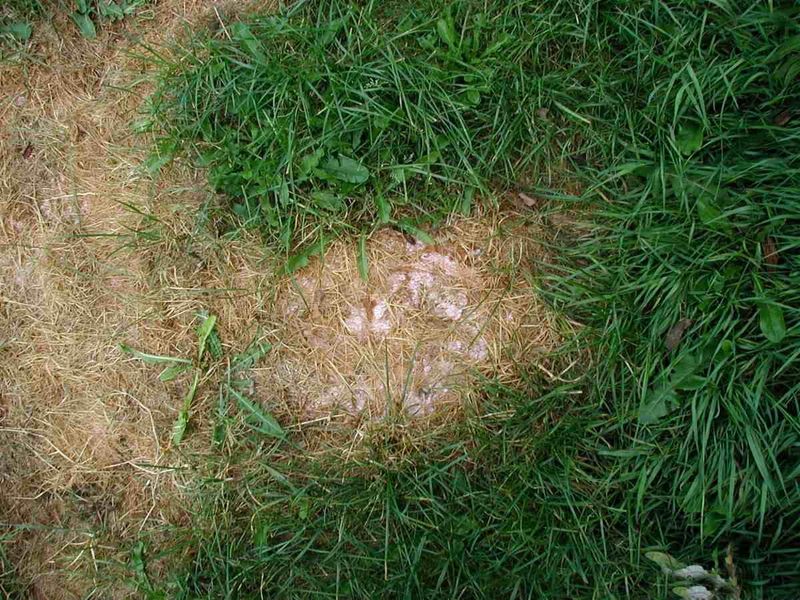
More fertilizer does not mean more green. That is one of the biggest myths in lawn care.
Pile on too much and you get fertilizer burn, where the salts actually pull moisture out of the grass. The result looks scorched, with brown streaks right where you spread the most.
Follow the label directions carefully and go lighter than you think you need. Too much also harms the tiny helpful microbes in your soil and makes the lawn more likely to catch pests and disease.
8. Fertilizing Cool-Season Grasses in Summer
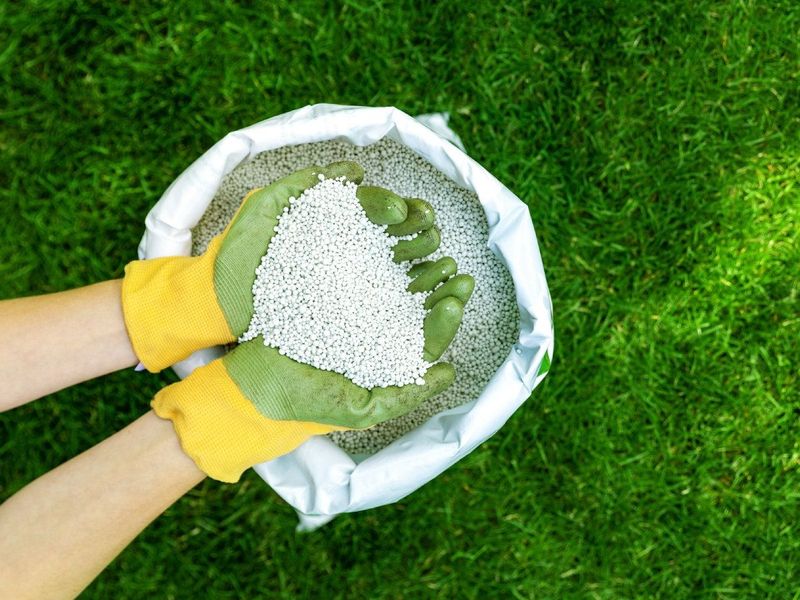
If you grow cool-season grasses like fescue, ryegrass, or Kentucky bluegrass, summer is the wrong time to feed them heavy nitrogen. These grasses naturally slow down when it gets hot.
Pushing them with fertilizer during high heat forces growth they cannot support, which stresses them out and can literally burn the lawn.
Save the big nitrogen feedings for spring and fall when these grasses are actually growing. If your lawn genuinely needs a boost mid-summer, reach for a low-nitrogen, slow-release formula instead.
9. Allowing Heavy Foot Traffic on the Lawn
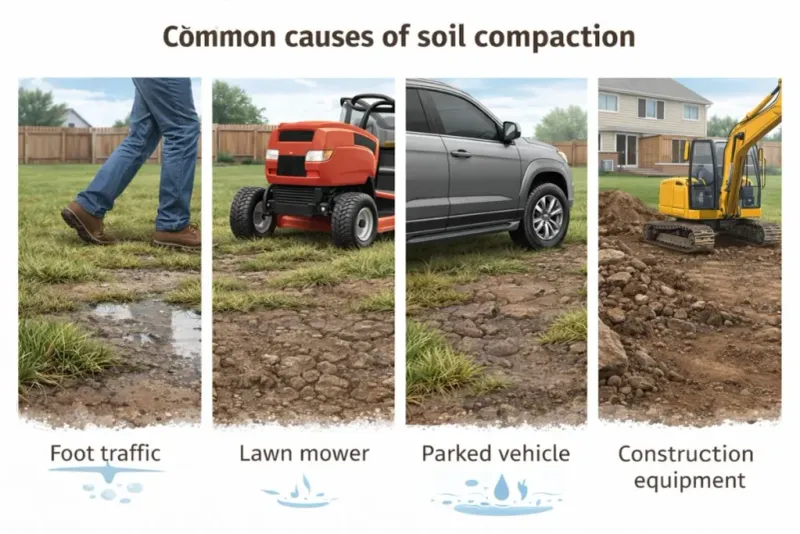
Summer means backyard barbecues, kids playing, and endless trips across the same patch of grass. All that foot traffic quietly presses the soil into a hard, packed layer.
Compacted soil squeezes out the air pockets that roots depend on. Water and nutrients struggle to soak in, so those well-worn paths are usually the first spots to brown out.
Try spreading traffic around instead of always walking the same route, and add a stepping-stone path where people cross most. Aerating once a year also loosens things up and lets your lawn breathe again.
10. Ignoring Thatch Buildup
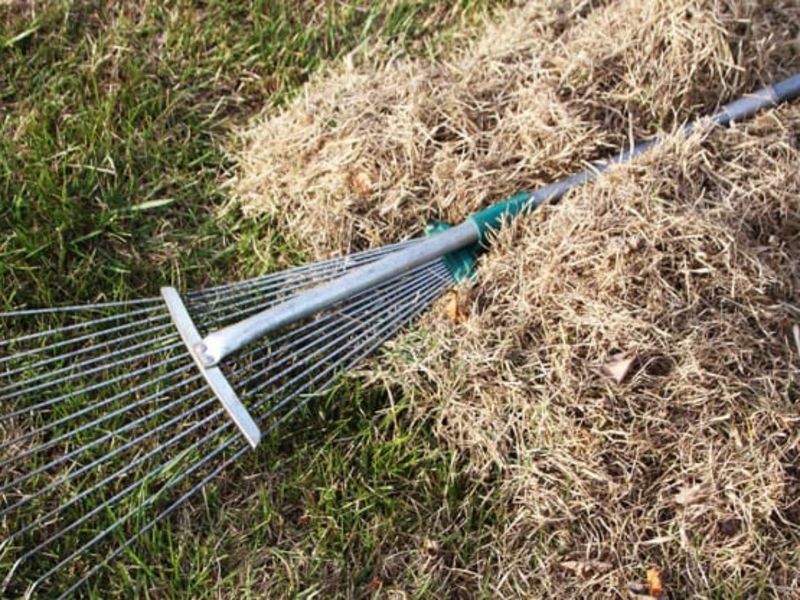
Between the green blades and the soil sits a layer of dead stems and roots called thatch. A thin layer is normal and even helpful, but too much becomes a problem.
When thatch gets thicker than half an inch, it blocks water, air, and nutrients from reaching the soil. Roots may even start growing up into the thatch itself, where they dry out fast in heat.
Rake it out or use a dethatching tool to keep the layer thin. As a bonus, cutting back on overwatering and over-fertilizing helps stop thatch from piling up in the first place.
11. Neglecting Lawn Pests
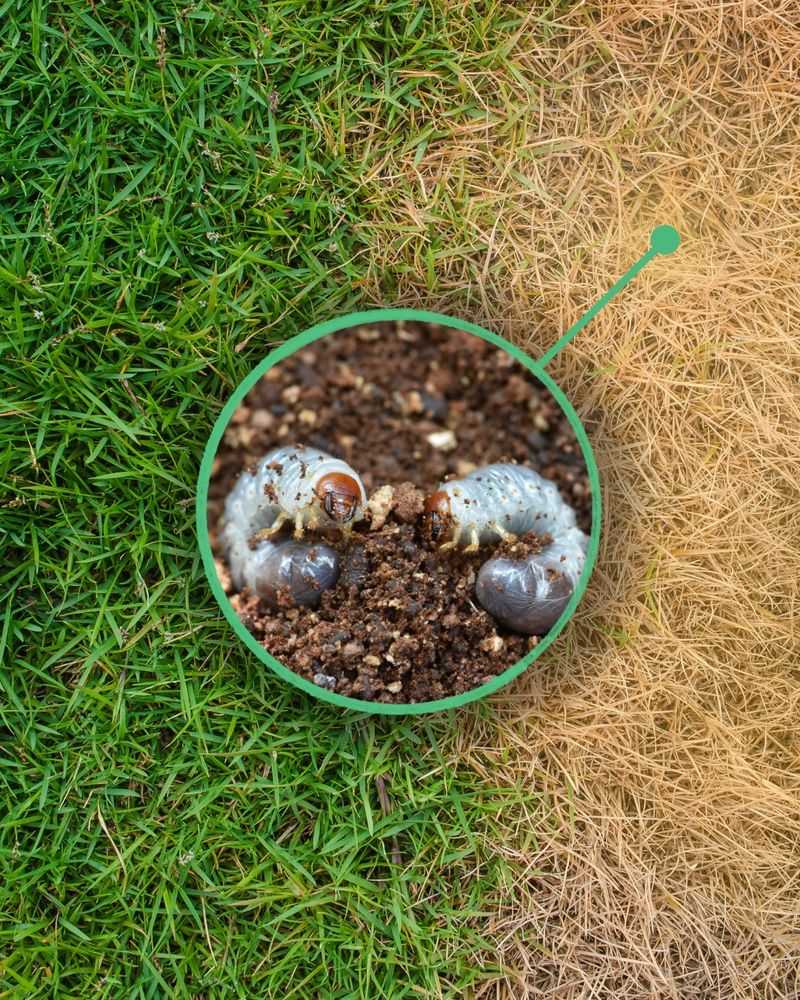
Sometimes the browning is not about water or mowing at all. It is a bug problem hiding right under your feet.
Warm weather brings out white grubs, chinch bugs, and sod webworms, and they love munching on roots and blades. Their feeding creates brown patches, thinning turf, and wilting that no amount of watering will fix.
Here is a quick test. If a brown patch peels back like loose carpet, grubs may have chewed the roots underneath.
Catching an infestation early can save you from losing whole sections of lawn.
12. Overlooking Lawn Diseases
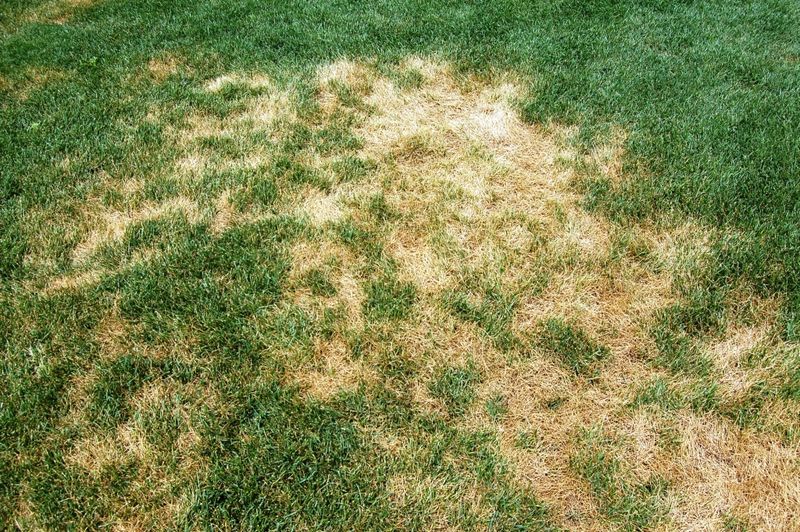
Heat plus humidity is a recipe fungus absolutely loves. Summer is prime season for lawn diseases like Brown Patch, Dollar Spot, Large Patch, and Summer Patch.
These show up as circular or oddly shaped brown spots, thinning grass, or discolored blades that spread over time. Overwatering and evening watering only make them worse by keeping the grass damp.
Improving airflow, watering in the morning, and mowing with a sharp blade all help slow disease down. If patches keep spreading, a targeted fungus treatment can help stop the damage before it takes over.
13. Mowing or Fertilizing a Dormant Lawn
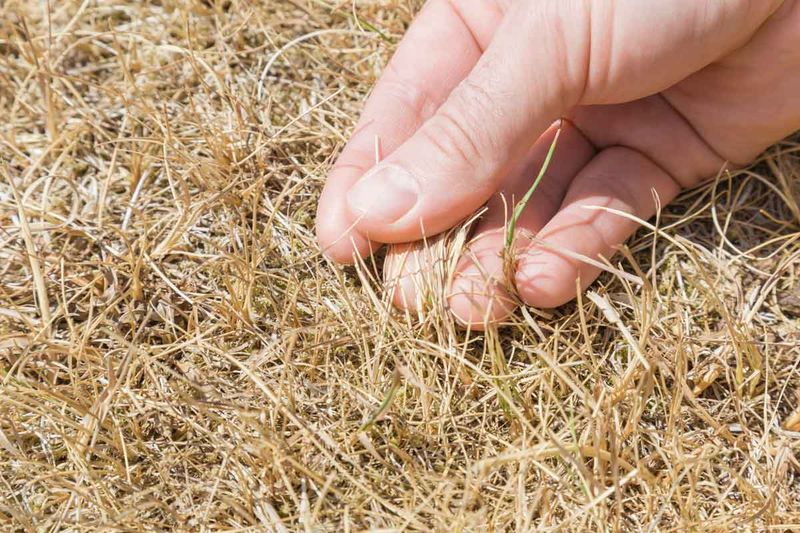
Not all brown grass is dead grass, and this is the mix-up that trips up a lot of homeowners. During long hot, dry stretches, many cool-season lawns go dormant on purpose.
Dormancy is basically the grass playing dead to conserve energy and water until conditions improve. Mowing or fertilizing it during this rest period only piles more stress on plants that are already hunkered down.
Leave a dormant lawn alone and let it ride out the heat. When cooler temperatures and rain return, it usually greens right back up, proving it was never dead in the first place.