
If Your Petunias Sprawl Leggy And Bloom-Poor Late In The Season, Here Are 13 Pinching Moves That Refill Them
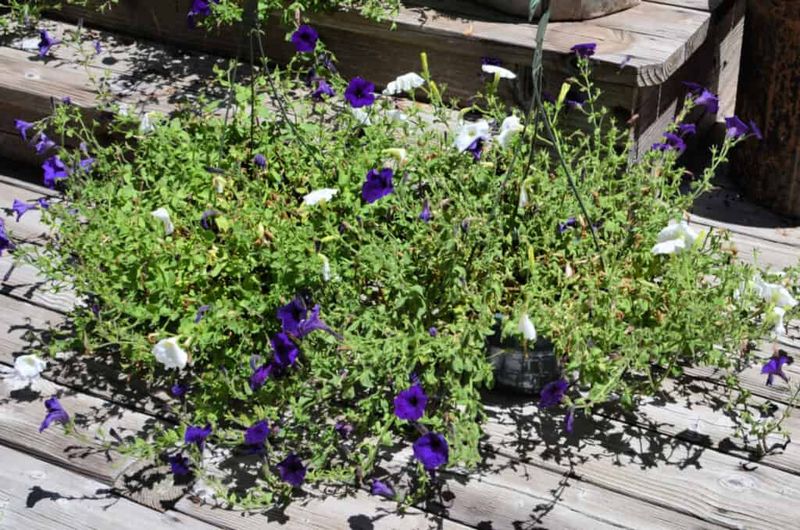
Petunias start the summer looking full and cheerful, then somewhere around midsummer they turn into a tangle of long, bare stems with a few sad blooms hanging off the tips. The good news is your plants are not dying, they just need a haircut.
Pinching tells a petunia to stop stretching and start branching, which packs it with fresh flowers again. Here are 13 simple pinching moves that can refill a tired petunia and keep it blooming into fall.
1. Start Early for Prevention
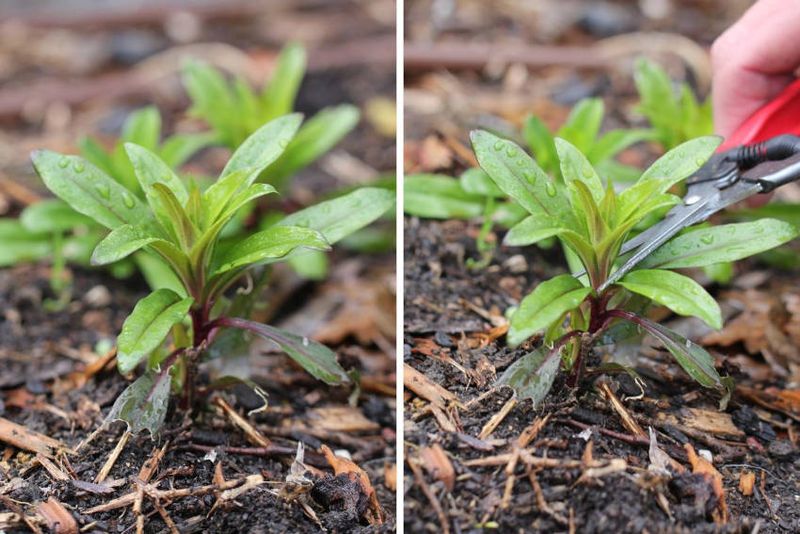
The best time to fix a leggy petunia is before it ever gets leggy. When your young plants have grown four to six true leaves, go ahead and nip out that top bit of growth.
Doing this early feels almost mean, like you are punishing a healthy plant. But that first pinch wakes up the side buds and tells the petunia to grow wide instead of tall.
A plant that branches from the start builds a thick, sturdy base. That base is exactly what keeps it from flopping into bare, stretched-out stems later in the season.
2. Regular Maintenance Pinching

Think of pinching like brushing your teeth for your petunias, a small habit that pays off big. Every 10 to 14 days, walk over with clean fingers and take off a little growth here and there.
Hanging baskets tend to sprawl faster, so a pinch about every 10 days keeps that cascade thick and even. Upright containers can usually wait the full 12 to 14 days between touch-ups.
Staying on this rhythm means you never have to face a giant, overgrown mess. Little cuts spread over the summer keep the blooms coming without ever shocking the plant.
3. Identify the Node
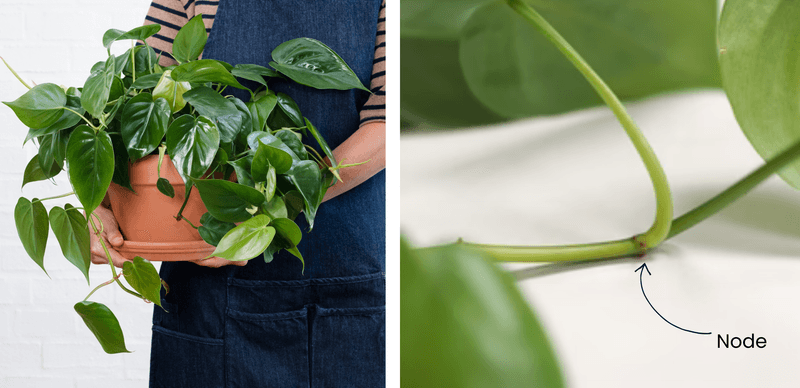
Before you snip a single stem, learn to spot the node. It is that slightly swollen ring on the stem where leaves or little side shoots poke out.
Nodes matter because that is where all the new growth comes from. Cut just above one and the plant sends out fresh branches right at that spot.
Chop randomly in the middle of a bare stem and you leave a stub that just sits there doing nothing. Aim above a node every time and your pinch actually turns into new blooms.
4. Remove Growing Tips
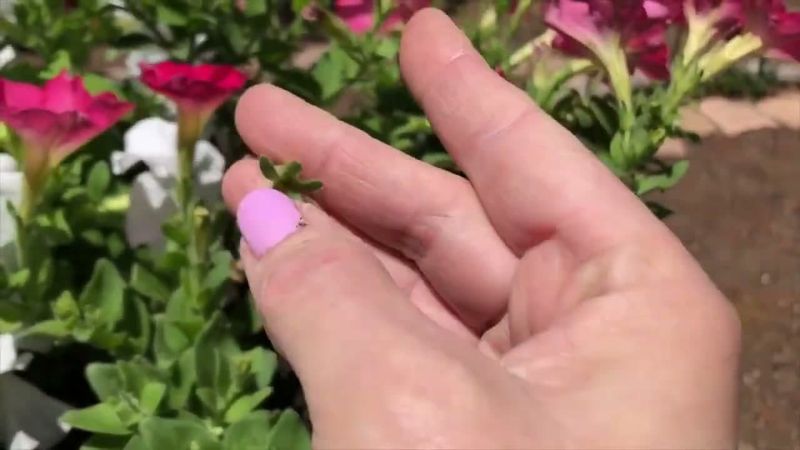
Here is the gentlest move on the list, and it works like magic. Just pinch off the top half inch to one inch of a stem, taking the tip bud and the newest baby leaves with it.
Petunias, like a lot of plants, pour their energy into that very top growing point. Remove it and the plant suddenly has to spread that energy sideways to the buds below.
Those side buds wake up and turn into new branches, and every new branch is a chance for more flowers. It is a tiny snip with a surprisingly large reward.
5. Target Healthy Nodes for Branching
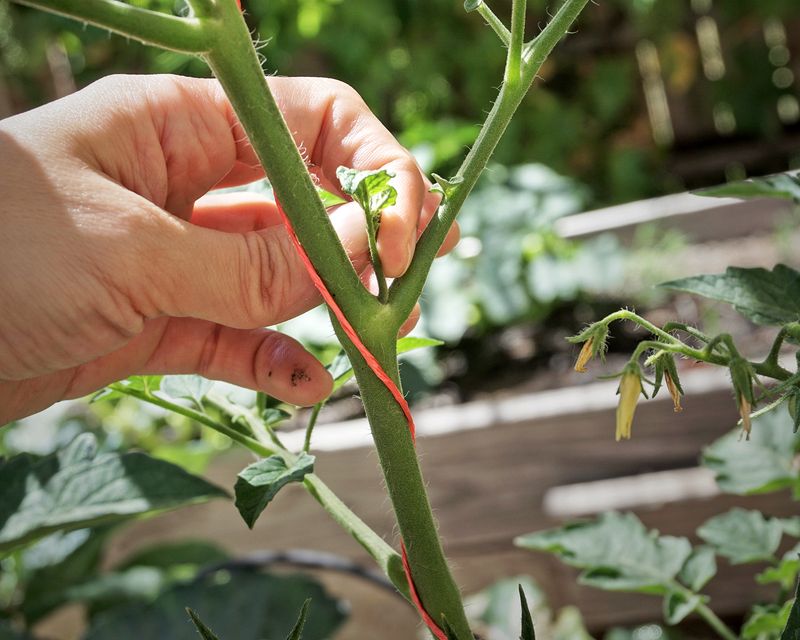
Not every node gives you the same payback. For the fullest results, hunt for spots where two healthy leaves grow opposite each other on the stem.
When you pinch right above a pair like that, you often get two new shoots instead of one. That doubles your branching from a single cut.
Choosing strong, leafy nodes over weak or bare ones also means the new growth has plenty of leaf power to fuel itself. Picky pinching here really does give you a bushier plant.
6. Address Leggy Stems with a Trim
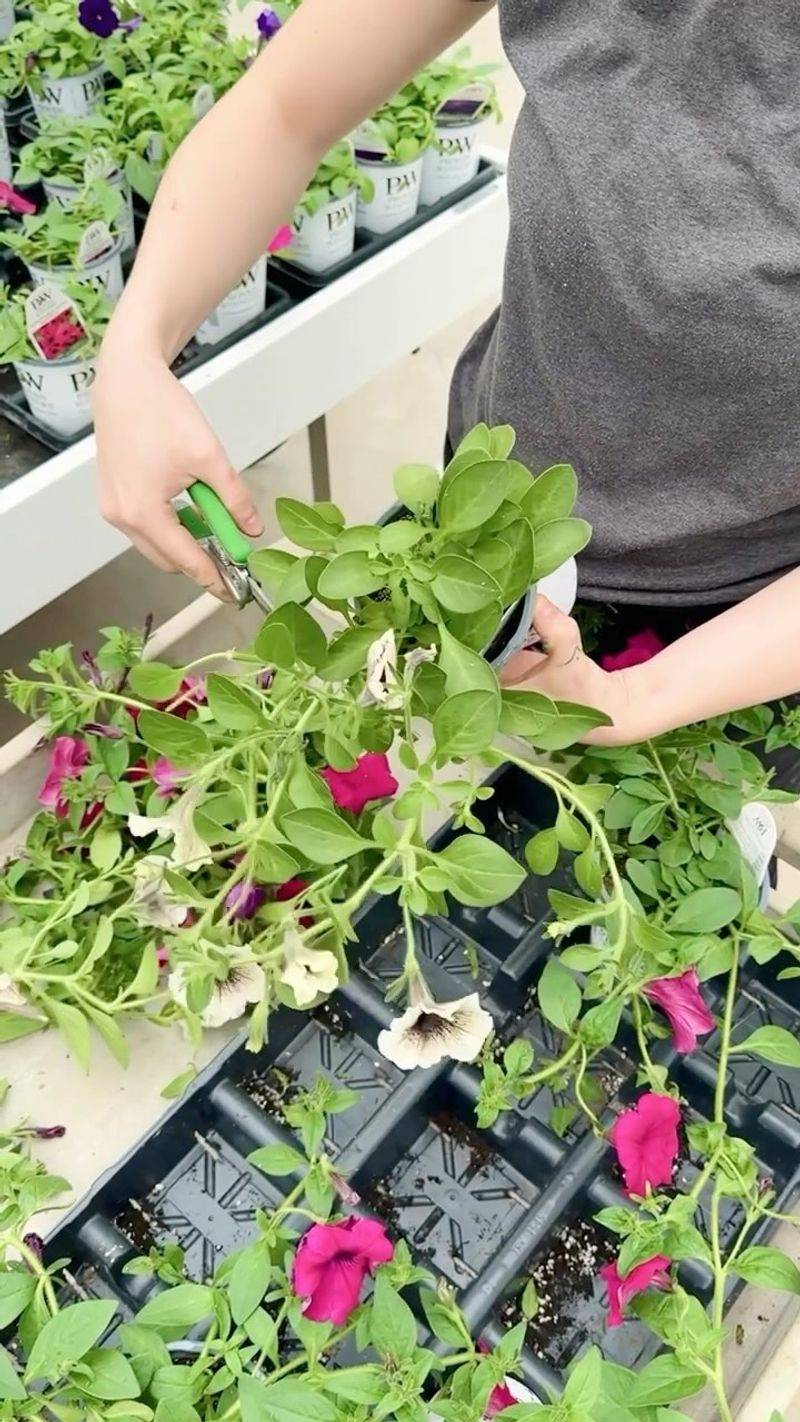
Once you see those long, naked stems with flowers only at the very ends, it is time for a real trim. A safe rule of thumb is to cut back about one-third of a stem’s length.
Zero in on the straggliest, most sprawling pieces first, the ones ruining the shape. Trimming those brings the whole plant back into a tidier mound.
Cutting a third feels like a lot when you are holding the scissors, but petunias bounce back fast. Within a couple of weeks those trimmed stems push out fresh, flower-covered growth.
7. Consider a Harder Cutback for Extremely Leggy Plants
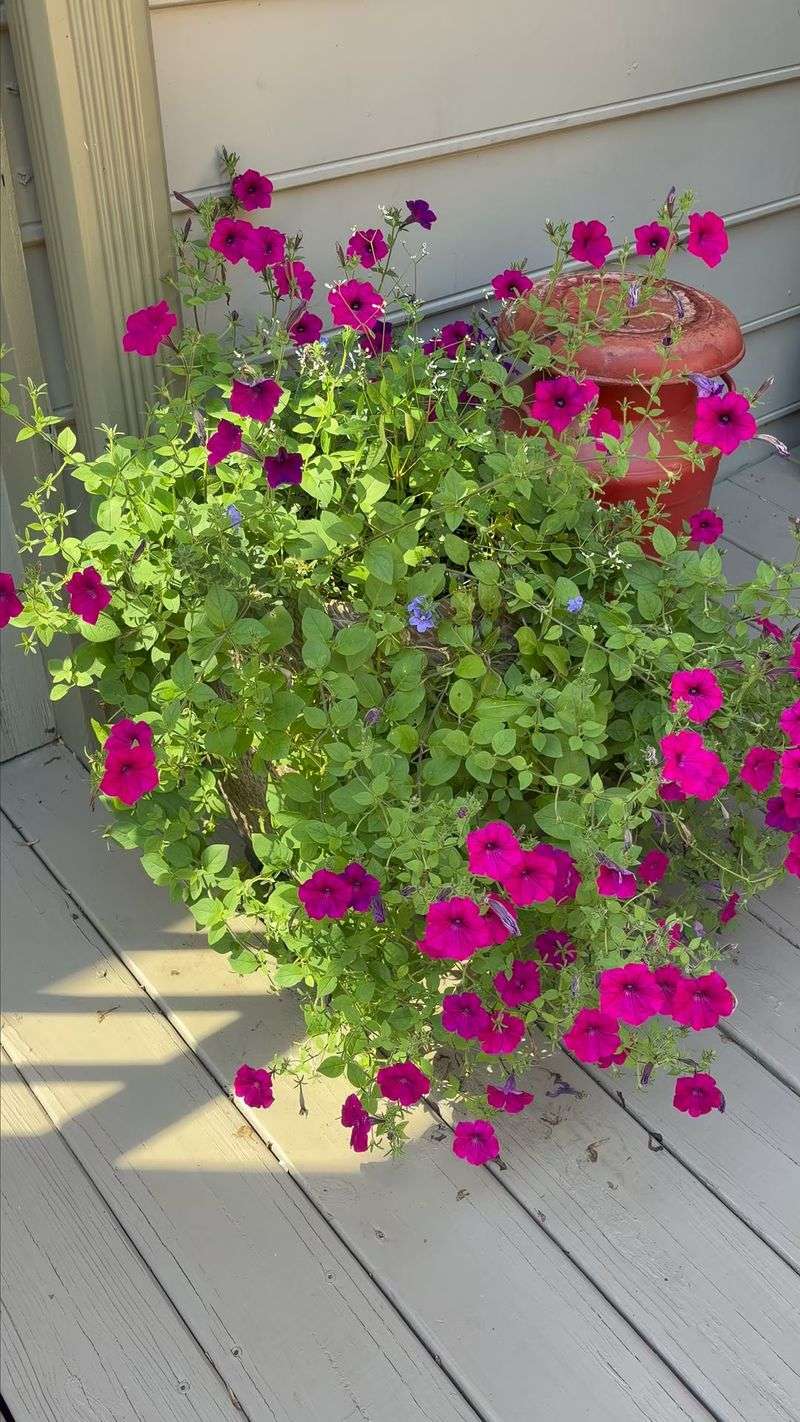
Sometimes a petunia is so far gone that a light trim just will not cut it, pun intended. When the plant is mostly bare rope with a few flowers, be brave and cut branches back by up to two-thirds.
It looks brutal, almost like you killed the thing. But petunias are tough customers and recover with real vigor after a hard chop.
Most plants treated this way start re-blooming in about three weeks, coming back fuller than before. A drastic cut now buys you a whole second season of color.
8. Stagger Your Pruning
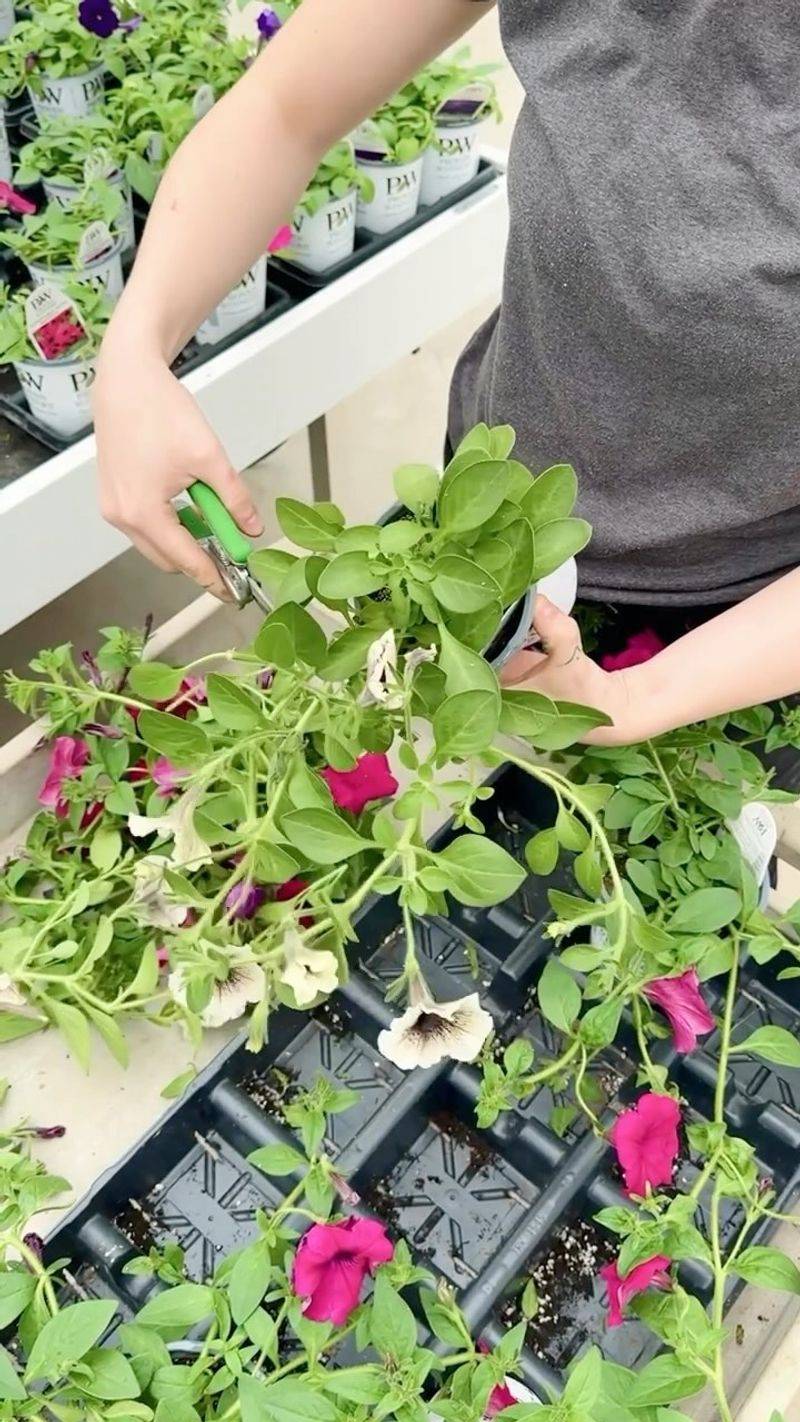
Cannot stomach the idea of hacking your whole plant back at once? You do not have to.
Prune a few of the longest stems one week, then come back and do the rest the next week.
Spreading the job out keeps part of the plant in bloom while the other part regrows. Your pot never goes completely flowerless during the recovery.
This trick is perfect for gardeners who like a constant show and hate empty stretches. It also feels less risky, since you always have healthy stems as backup.
9. Deadhead Spent Blooms Completely
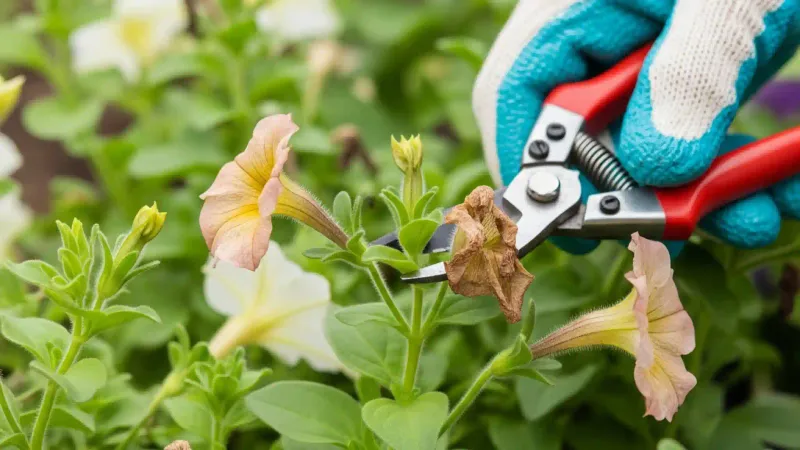
Pulling off dead flowers seems obvious, but most folks do it wrong. Snapping away just the wilted petals leaves the little seed pod behind, and that pod is the real problem.
Take the whole faded bloom off, seed pod and all, right where it meets the stem. That single detail makes a huge difference.
When the plant cannot make seeds, it stops wasting energy on them and pours that effort into new flowers instead. Thorough deadheading keeps a petunia blooming instead of quietly shutting down.
10. Use Clean, Sharp Tools
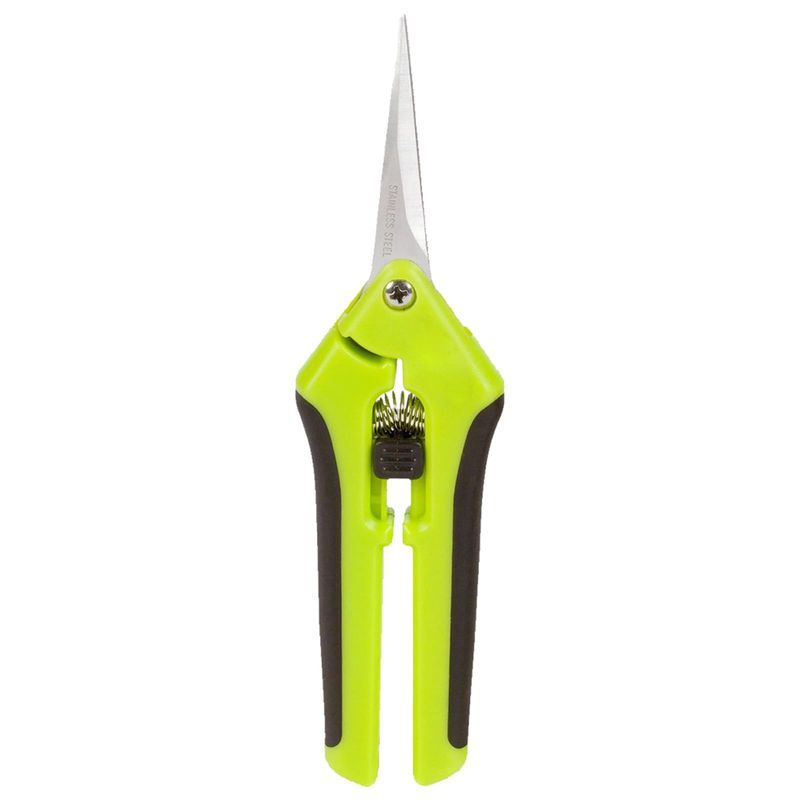
Your fingernails work fine for tiny tips, no shame in that. But for anything thicker, clean and sharp scissors or micro-tip pruners give you a cleaner cut.
A ragged tear from dull tools crushes the stem and leaves an open wound. Bruised tissue like that invites rot and disease into your plant.
Wiping your blades down before you start also stops you from spreading trouble between plants. A neat cut heals faster and keeps your petunias healthier all season.
11. Prioritize Watering Before Pruning
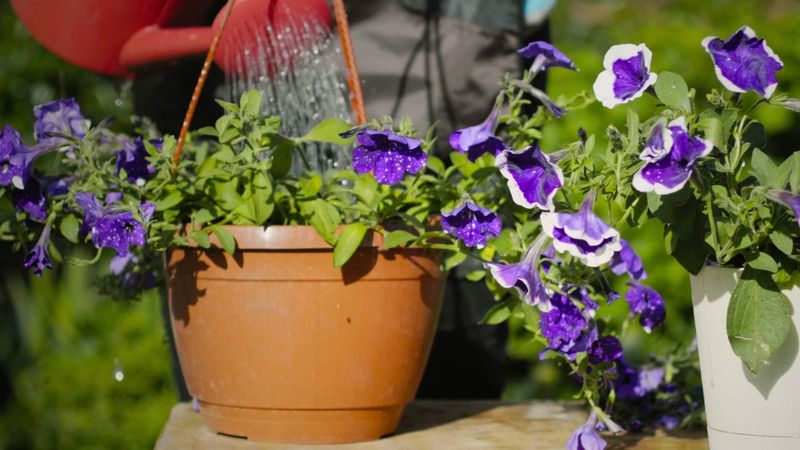
Planning a big cutback? Give your petunia a good drink a few hours beforehand.
A well-hydrated plant handles the stress of heavy pruning far better than a thirsty one.
Cutting into a wilted, dry plant is like asking someone to run a race on an empty stomach. It just does not have the reserves to bounce back quickly.
Water first, let it soak in, then reach for the shears. That little bit of prep smooths the whole recovery and gets new growth going sooner.
12. Maintain Consistent Post-Pruning Care
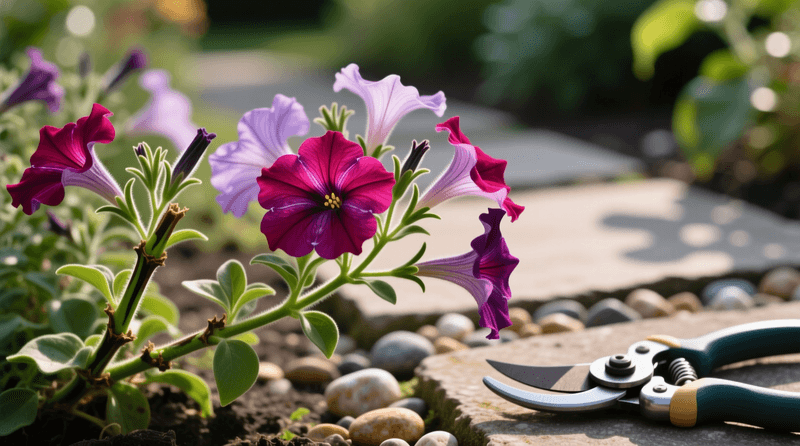
The pinch is only half the story, what you do afterward seals the deal. Once you have cut back, keep the moisture steady and stick to your regular feeding schedule.
All that fresh growth you just triggered needs fuel and water to actually turn into flowers. Let the soil dry out now and you undo your own hard work.
A balanced feed and even watering help the plant refill quickly and bloom heavily. Consistency after the cut is what separates a so-so recovery from a spectacular one.
13. Adjust for Container Type
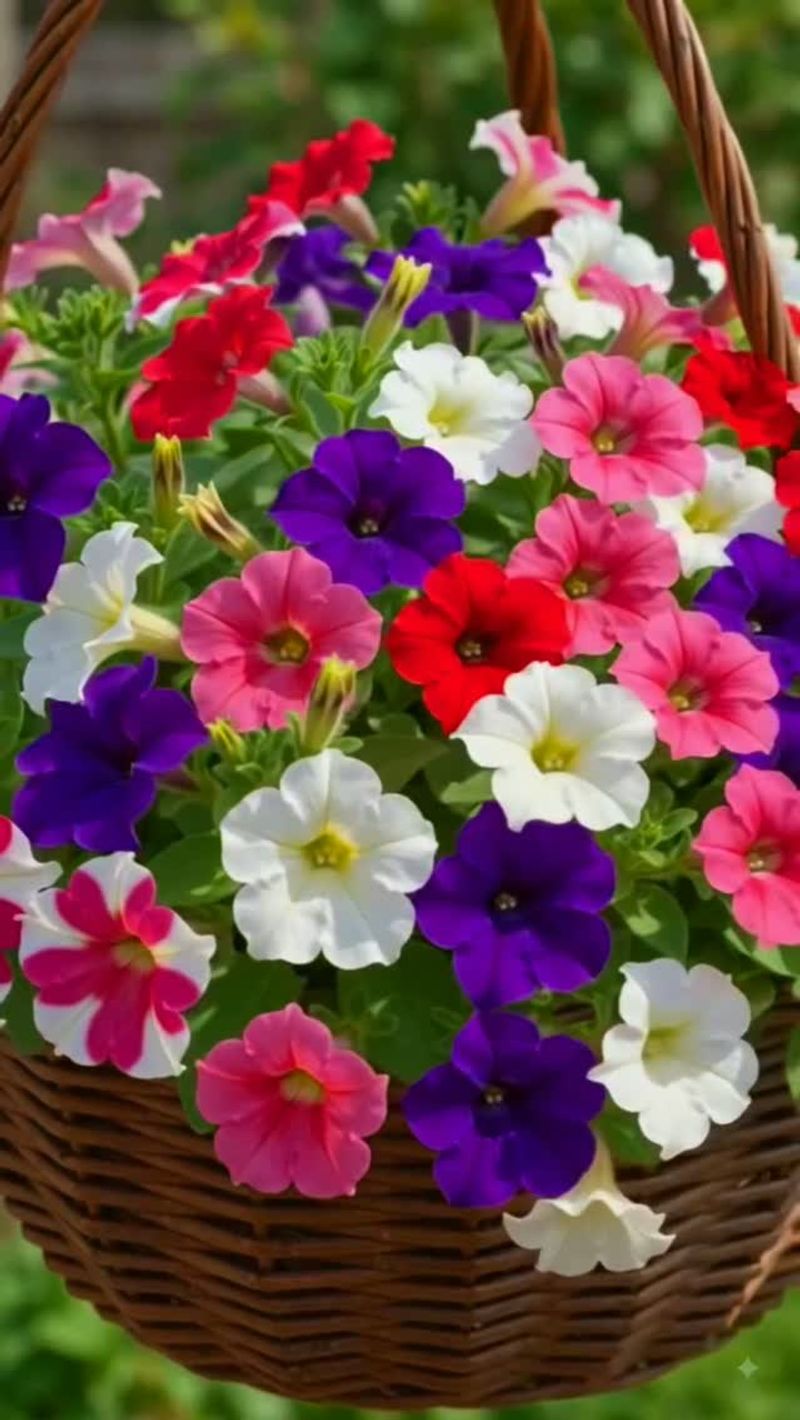
Not all petunias grow the same way, so your pinching should shift with the pot. Hanging baskets naturally trail downward and go thin and bald on top over time.
Because of that, baskets do best with earlier and more frequent pinching to keep the crown full and the cascade thick. Skip it and you end up with long strings and a bare middle.
Upright containers hold their shape better, so they can be pinched a little less often. Matching your routine to the container type is the finishing touch that keeps every petunia looking its best into fall.