
What It Really Means When The Anoles Quietly Abandon Your North Carolina Garden Beds
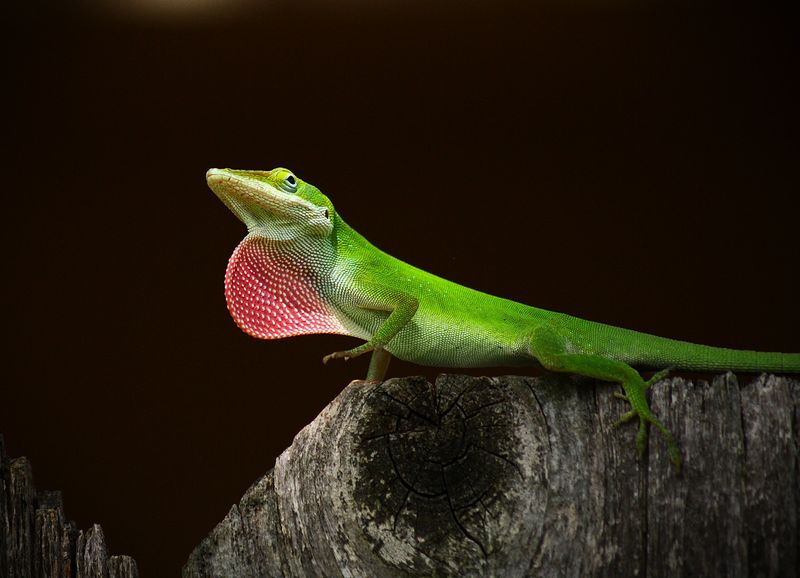
Spotting a green anole perched on a fence post or flashing its pink dewlap from a shrub is one of those small pleasures that reminds North Carolina homeowners their yard is alive. So when those lizards seem to vanish from a garden bed, it is easy to assume something has gone wrong.
The truth is more nuanced, and understanding it can save you from overreacting or making changes that hurt the wildlife you are trying to protect.
A Quiet Bed Does Not Prove the Anoles Are Gone
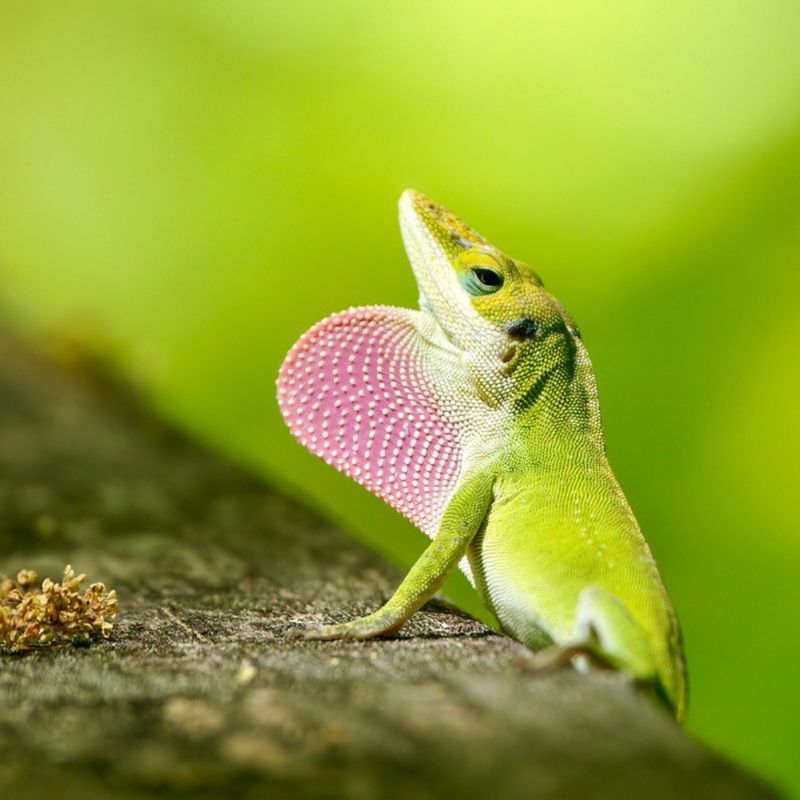
Noticing fewer green anoles around a garden bed is an observation worth taking seriously, but it is not, by itself, evidence that the animals have left your property or that your yard’s ecology has broken down. Green anoles are primarily climbing lizards.
According to the North Carolina Biodiversity Project’s species account, they use trees, shrubs, vines, fences, walls, and other elevated perches as their primary habitat. A garden bed is just one small slice of the usable yard.
Before drawing any conclusions, walk the wider property. Check the fence line, porch posts, tree trunks, the undersides of broad leaves on nearby shrubs, and any woody vines climbing a wall or arbor.
Females and juveniles are especially easy to miss because they tend to stay lower and move less conspicuously than the males that bob and flash their dewlaps. If any of those spots show activity, the bed going quiet likely reflects a shift in where the animals are spending their time, not a disappearance from the yard.
The NC Wildlife Resources Commission’s green anole profile notes that the species is documented across North Carolina, with stronger presence in the Coastal Plain and southern Piedmont. A single bed falling quiet could reflect a local change in perch preference, cover, or prey access rather than a population crash or any kind of ecological signal.
A sudden, sustained change in sightings across the whole property is a reason to investigate what shifted in the yard. A quiet bed alone cannot diagnose ecological imbalance, identify a cause, or confirm that the animals have gone.
Start With Weather, Timing, and Visibility
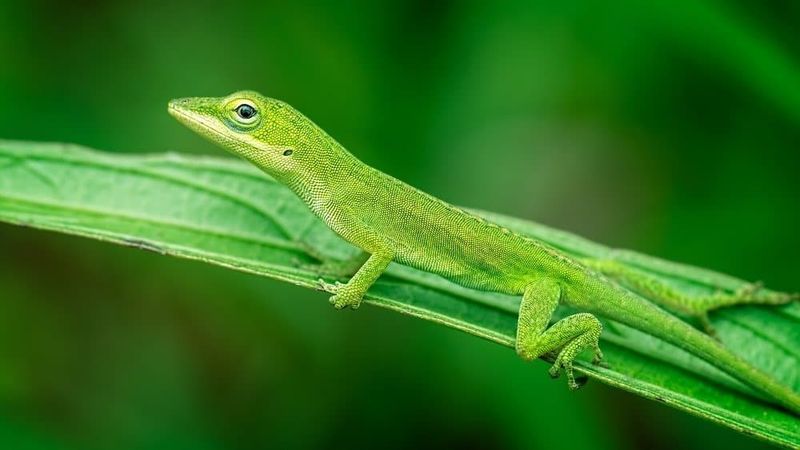
Weather and time of day are the first practical clues to check when anole sightings drop off. Green anoles are diurnal, meaning they are active during daylight hours, and they depend heavily on external heat to stay alert and mobile.
Cold stretches push them into cover and slow them down considerably. A field observation report from Anole Annals on winter activity in North Carolina green anoles documents that the lizards can still appear on sunny winter days, even in the cooler parts of the state, but that cold or cloudy conditions suppress their activity significantly.
Ask yourself whether your recent observations happened during a cold snap, an overcast week, or the shorter, cooler days of autumn or early winter. Then compare those observations to what you saw during a warm, sunny afternoon at a similar time of year.
That comparison is more meaningful than a raw count across different seasons or weather conditions. Anoles seen basking on a warm January afternoon in coastal Brunswick County and anoles seen in the same yard during a cold, gray week in January are not measuring the same thing.
Regional differences matter here. The Coastal Plain, Piedmont, and mountain regions of North Carolina experience meaningfully different winter temperatures, elevation effects, and frost timing.
A pattern that signals a seasonal lull in Asheville may look quite different from the same pattern in Wilmington. No single statewide sighting schedule captures all three regions, so resist applying a uniform rule about when anoles should or should not be visible.
If your yard’s warm, sunny periods are producing far fewer sightings than they did in previous years at the same season, that pattern is worth tracking, but even then, weather and observation location should be ruled out before drawing stronger conclusions.
Check Whether the Bed Still Offers Climbing Habitat
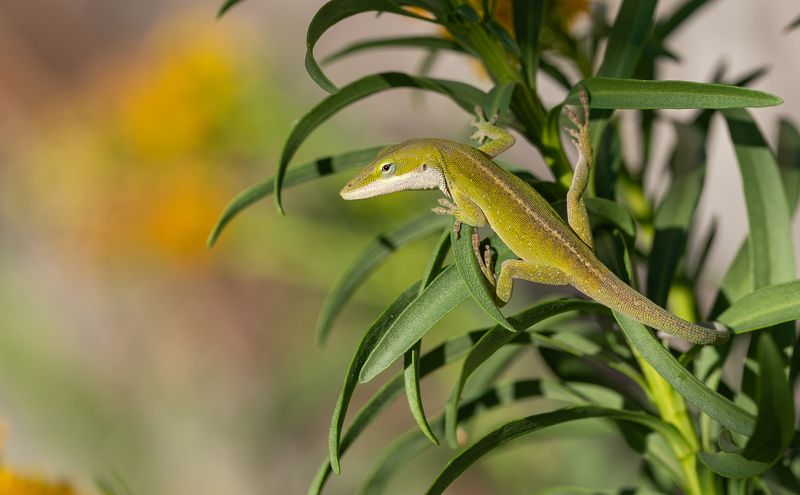
Garden beds that once hosted regular anole activity can become less appealing without any obvious dramatic event. The key factor is structure.
The North Carolina Biodiversity Project’s reptile account links green anole presence to shrubby, semi-wooded habitats with access to vertical climbing surfaces, shade, and cover. When those elements disappear from a bed, the bed stops functioning as useful anole habitat even if the surrounding yard remains suitable.
Think back over the past one to two growing seasons. Did any shrubs come out?
Was a vine cut back heavily, or did a small tree get removed? Aggressive late-season pruning, new hardscaping like pavers or gravel, a fresh layer of thick plastic weed barrier, or heavy mulching that buried woody debris can each reduce the structural complexity that anoles use for cover, shade, egg-laying, and access to prey.
These are changes worth recording as observations and potential hypotheses to investigate, not automatic explanations, because the relationship between a specific yard change and reduced anole sightings still requires more evidence than timing alone.
Irrigation changes are also worth noting. Moist soil and shaded areas support the small arthropods anoles eat, and a shift to less frequent watering or full sun exposure can alter the microhabitat of a bed in ways that may reduce prey or make the space less comfortable.
If recent work removed cover, climbing surfaces, or shade from the bed, the most practical response is to restore layered vegetation over time. Shrubs, woody vines, small trees, and patches of leaf litter or suitable decaying wood all provide structure anoles use.
No particular ornamental plant is guaranteed to bring sightings back, but restoring structural complexity gives the habitat a better chance of supporting them again.
Treat Prey, Pesticides, and Disturbance as Separate Clues
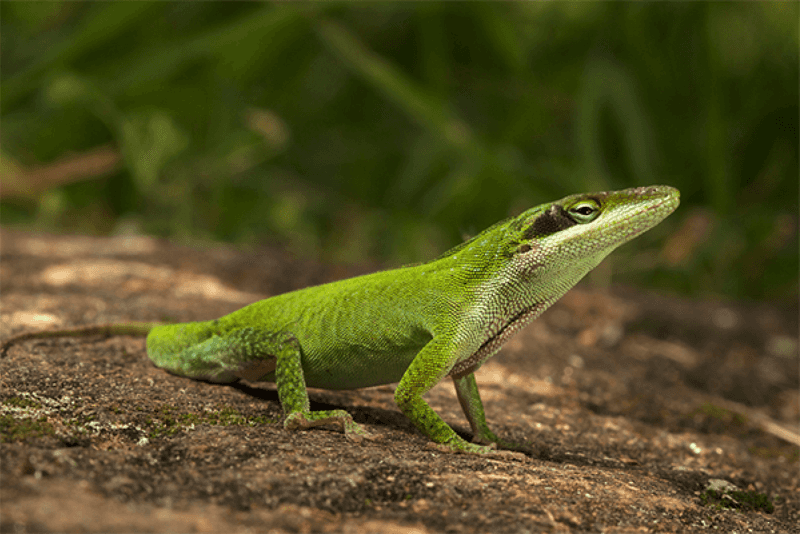
Green anoles eat insects, spiders, and other small arthropods, including flies, beetles, moths, crickets, and ants. A yard with fewer of those prey items may be less attractive to anoles, but insect counts alone are not a reliable population meter.
A study on habitat structure and prey abundance involving two anole ecomorphs in secondary karst forests in northern Puerto Rico found that the relationships between vegetation structure, prey abundance, and anole occupancy were species-specific and context-dependent. That study examined Anolis cristatellus and Anolis krugi, not green anoles, and it was conducted in a Puerto Rican forest habitat, so its findings cannot be applied directly to North Carolina yards.
What it does demonstrate is that counting insects is not a simple way to predict anole numbers, even within the same genus.
Pesticides deserve careful attention as a separate line of inquiry. EPA guidance on reducing pesticide impacts on wildlife identifies direct contact, contaminated prey, spray drift, runoff, and contaminated water as documented exposure routes for non-target wildlife, including reptiles.
If a broad-spectrum insecticide was applied to or near the bed around the time sightings dropped, that timing is worth documenting. However, a timing coincidence is not the same as a confirmed cause.
Look for corroborating evidence such as dead or visibly ill lizards, treatment records, or visible changes in the arthropod community before drawing conclusions.
The Animal Diversity Web account for Anolis carolinensis notes that outdoor cats and birds are documented predators of green anoles. Repeated disturbance from foot traffic, mowing, construction noise, or frequent activity near a bed may also shift where anoles choose to rest and hunt, though that relationship in residential yards is less firmly established and is better treated as a hypothesis to observe than a demonstrated cause.
Record what changed and when, and look for patterns before assuming any single factor explains the change in sightings.
Confirm Which Lizard You Are Seeing
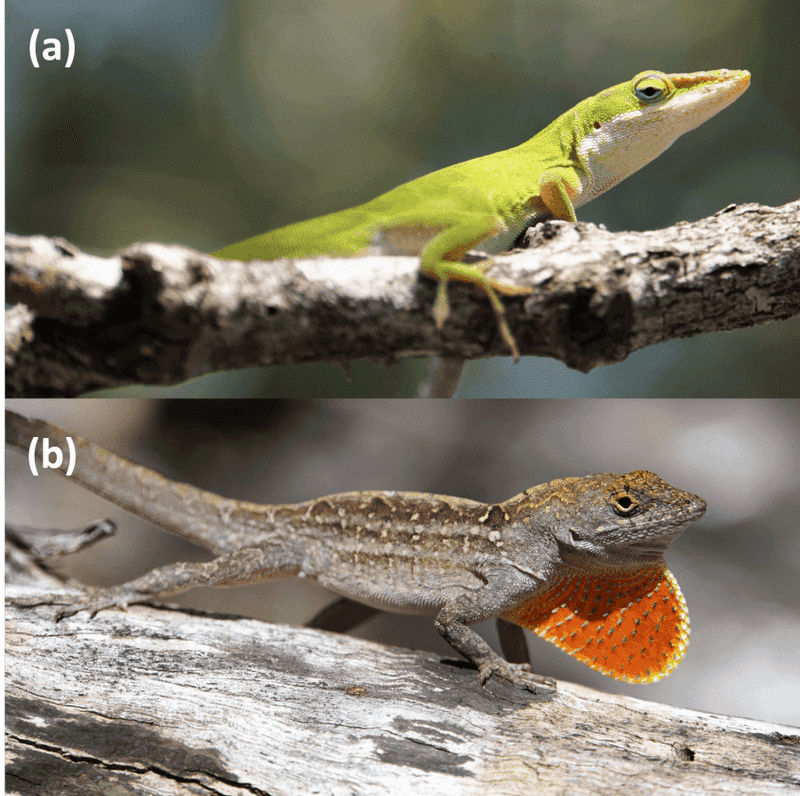
One of the most overlooked reasons for a perceived drop in anole sightings is simply a change in which lizard is using the yard, or a change in which one is easiest to spot. North Carolina has several native lizard species that share garden habitat with green anoles, including fence lizards and multiple skink species.
A homeowner who learned to recognize the green anole’s slender body and color-changing ability may walk past a broad-headed skink or an eastern fence lizard without connecting it to the lizard they expected to see.
Brown anoles are a different complication. They are an introduced species, and the 2025 North Carolina Wildlife Action Plan notes that brown anoles have been documented in the state but are not widespread, with no confirmed breeding activity detected in the wild at the time of that report.
Competition between brown anoles and green anoles has been documented in Florida and other parts of the Southeast, but that dynamic should not be assumed to explain a change in sightings in most North Carolina yards. Brown anoles have not taken over the state.
What can happen is that a yard’s visible lizard community shifts, and a homeowner notices fewer green anoles while seeing more of another species, or simply fewer lizards overall. The North Carolina Biodiversity Project’s reptile records document green anoles as native and present across the state, but regional abundance varies.
Before concluding that sightings have declined, confirm that the lizards you are comparing across time are actually the same species. Field guides, photographs, and local naturalist groups can help with identification if you are uncertain.
Run a Careful Yard-Wide Investigation

Turning a quiet garden bed into useful information means widening the search and recording what you find. Start by listing every significant change made to the yard over the past one to two years: shrub removal or heavy pruning, new hardscaping, tree work, irrigation adjustments, outdoor lighting additions, lawn treatments, insect-control applications, construction activity, and the arrival or increased presence of outdoor cats.
Write down approximate dates if you can recall them. That record becomes the context for any pattern you observe.
Next, make a point of checking the whole property during comparable conditions, specifically warm, sunny daytime periods when anoles are most likely to be active. Field documentation of winter anole activity in North Carolina confirms that a single cold week, a cloudy stretch, or a mowing event can produce an apparent disappearance without any population change.
Look at fences, porch posts, tree trunks, vines, and the upper surfaces of broad leaves on shrubs, not just the ground level of the bed. The NC Biodiversity Project’s species account emphasizes that green anoles are primarily arboreal, so the bed is unlikely to be their primary location even when the population is healthy.
If you find dead or visibly ill lizards, photograph them and document any pesticide applications made in the past several weeks, including product name, application date, and treated area. EPA’s overview of common causes of pesticide incidents explains that a causal determination requires more than timing alone.
When pesticide use is part of the yard routine, EPA’s wildlife-protection guidance recommends using integrated pest-management steps first, treating only the affected area, following the product label precisely, and preventing spray or rinse water from entering storm drains or waterways. Targeted, label-compliant treatment is meaningfully different from broad preventive applications, and that difference matters for non-target wildlife including lizards.
Choose Habitat Care Over Quick Fixes

The most proportionate response to fewer anole sightings is to look at what the yard offers rather than reach for a product or a shortcut. Retaining shrubs, woody vines, small trees, and patches of leaf litter keeps the structural complexity that green anoles use for cover, climbing, shade, and reproduction.
Removing every vine, branch pile, or layer of leaf litter in the name of tidiness can quietly make a yard less livable for lizards without any obvious single event to point to, as the NC Biodiversity Project’s habitat notes make clear.
Avoid applying broad-spectrum pesticides as a precaution or a way to “reset” the yard. Never apply flea, tick, or other pet products to wild lizards.
The NC Wildlife Resources Commission is clear that green anoles are native wildlife, not pets, and treating them with products formulated for domestic animals can cause serious harm. Do not capture anoles, buy them from a pet supplier, or attempt to relocate them to restore a yard population.
North Carolina’s restricted-species permit rules specifically prohibit releasing brown anoles, and relocating any wild lizard risks spreading pathogens and disrupting the animals you are trying to help.
Anoles eat small arthropods and may reduce some pest insects in the areas they hunt, but North Carolina tick research does not establish green anoles as reliable tick-control animals, and experimental work on Borrelia burgdorferi and green anoles does not support treating them as Lyme-disease protection. A quiet garden bed is best read as an invitation to observe carefully, note what changed in the yard, and respond with habitat care rather than alarm.