
If Crabgrass Keeps Creeping Into Your Lawn, Here’s The One Thing You Already Own That Stops It
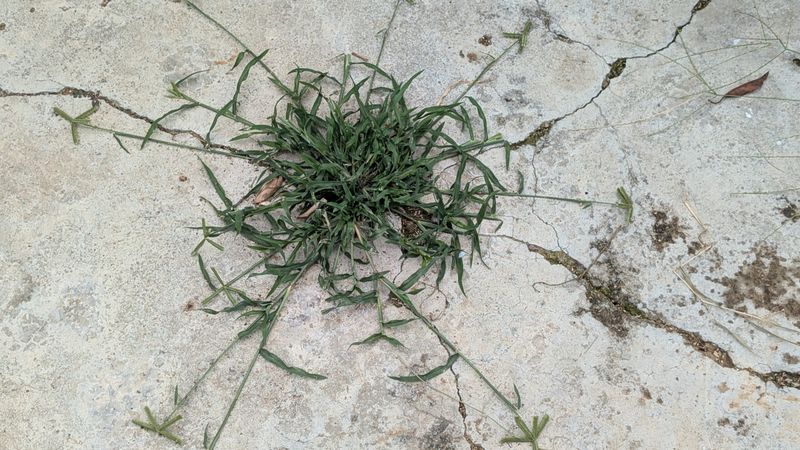
Crabgrass has a talent for showing up exactly where you don’t want it, spreading fast and crowding out the grass you’ve worked hard to grow. A lot of people have heard that boiling water from the kettle on your stove can knock it out without a trip to the garden center, and that’s partly true – but only in specific situations.
Before you carry a pot of hot water outside, it helps to know what boiling water actually does, where it belongs, and what to do instead when crabgrass is woven into your lawn. Getting that straight will save your grass and your time.
Identify the problem before you reach for the kettle
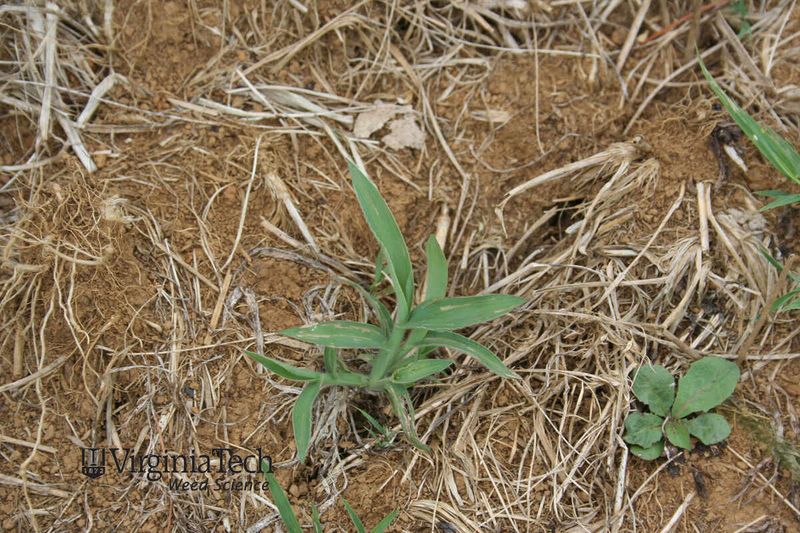
Not every spreading grassy weed poking through your lawn is crabgrass, and treating the wrong plant with the wrong method wastes effort. Two species show up most often in home lawns: smooth crabgrass, which has narrower leaves and a low-growing habit, and large or hairy crabgrass, which is coarser and can grow taller.
Penn State Extension’s guide to smooth and large crabgrass describes both species and notes that they share a distinctive finger-like seedhead that fans out from a central point, which is one of the easiest ways to confirm what you’re looking at.
Goosegrass, foxtail, and other summer annual grasses can look remarkably similar to crabgrass, especially when plants are young. Goosegrass tends to have a flattened, silvery stem at its base and a slightly different leaf arrangement.
If you’re uncertain, your local cooperative extension office can usually help with identification from a photo or a sample before you commit to any removal method.
Knowing the life cycle is what turns identification into urgency. Crabgrass is a summer annual, meaning it sprouts from seed each spring or early summer when soil temperatures warm up, grows aggressively through the warmer months, and then produces seed from midsummer into early fall before frost kills it.
Rutgers cooperative extension’s crabgrass fact sheet explains that each plant can generate a large number of seeds before it dies, so the plants you see right now are actively building next year’s problem. That’s the practical reason to act while plants are young and before seedheads form, not because one plant will immediately ruin your lawn.
What boiling water can—and cannot—do
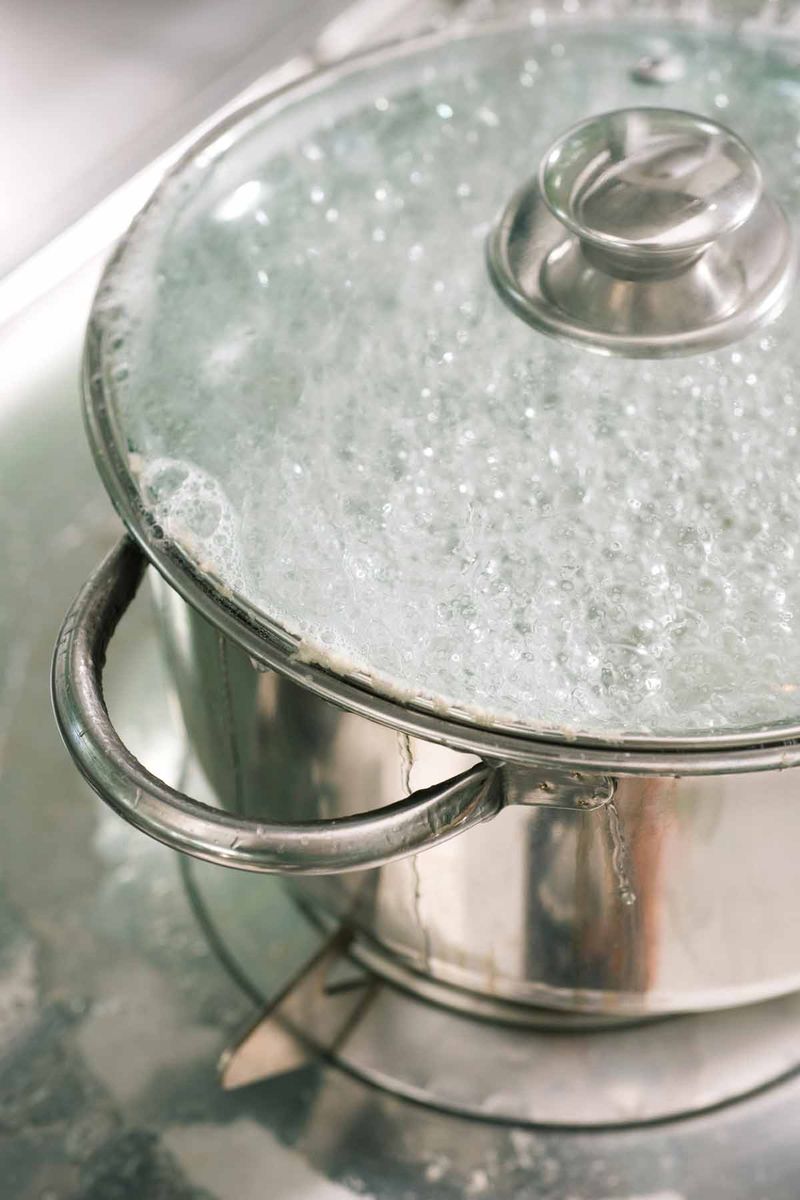
Boiling water works as a contact treatment. When it hits a plant, the heat damages cell walls and tissue at the point of contact, and young, newly emerged annual weeds are the most vulnerable to that kind of sudden heat shock.
A small crabgrass seedling with just a few leaves and shallow roots can be killed outright by a careful pour of boiling water directly onto the plant.
The limits kick in fast, though. Iowa State University Extension’s guidance on boiling water weed control explains that the treatment does not reliably penetrate deep enough to kill roots or underground plant parts.
An established crabgrass plant with a developed root system may lose its top growth and then push back up within a week or two. That means one treatment is often not enough, and Iowa State recommends checking for regrowth and planning a possible retreatment seven to ten days later.
Boiling water also does not prevent future crabgrass from germinating. Seeds already sitting in the soil are largely unaffected by a surface pour, so killing one visible plant today does nothing to stop the next wave from sprouting.
Think of boiling water as a way to remove a specific plant you can see right now, not as a lawn-wide or season-long solution. For a young, isolated plant in the right location, it can work reasonably well.
For an older, larger plant or for any situation where crabgrass is mixed into healthy turf, the method has real limitations that matter before you put the kettle on.
Keep boiling water off the living lawn
The most important line to draw is between an isolated weed and crabgrass that has grown up through your desirable lawn grass. Heat cannot tell crabgrass from Kentucky bluegrass, tall fescue, or any other turf.
Pour boiling water onto a plant rooted inside your lawn and you will scorch or kill the surrounding grass just as surely as the weed. Iowa State Extension specifically warns that boiling water damages desirable plants it contacts, and Oregon State University Extension echoes that caution in its crabgrass guidance, noting the risk to nearby turf.
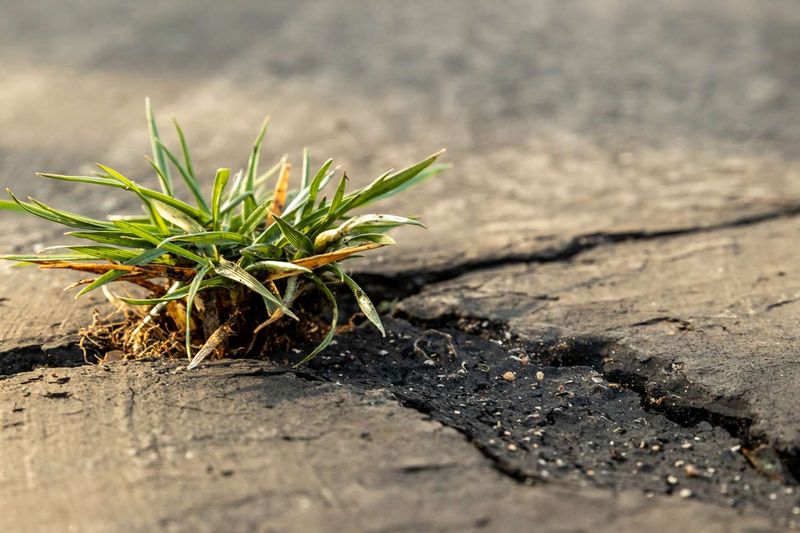
Where boiling water does make sense is in locations where there is no desirable grass close enough to be hit by the water or by steam and splash. A crabgrass plant growing in a sidewalk crack, along a fence line, in a gravel path, on a bare dirt edge, or in an isolated bare patch well away from the lawn edge are all reasonable targets.
Even then, consider what is nearby: ornamental plants, vegetable garden borders, and ground covers can all be damaged if water runs or splashes toward their roots.
A narrow-spouted kettle gives you more control than a large open pot, which tends to slosh and spread the hot water beyond your intended target. If the plant you want to treat is within a foot or two of lawn grass or other plants you care about, step back and use physical removal instead.
The headline method genuinely helps in the right setting, but crabgrass woven into healthy turf is not that setting.
Pull crabgrass from healthy turf while the soil is moist
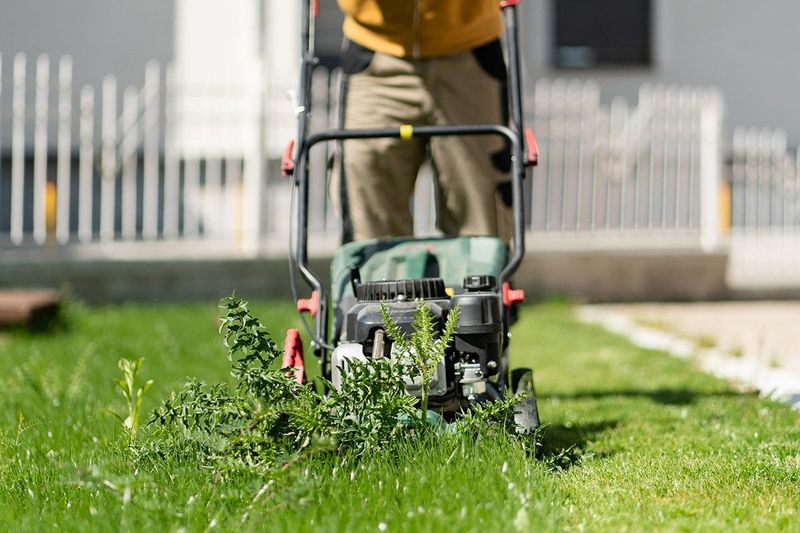
For crabgrass growing inside your lawn, hand-pulling or digging is the better no-purchase option. The method is straightforward but timing matters: work when the soil is moist, either after rain or after watering, so the roots release more easily.
Dry, hard soil causes roots to snap off below the surface, leaving behind a stub that can resprout.
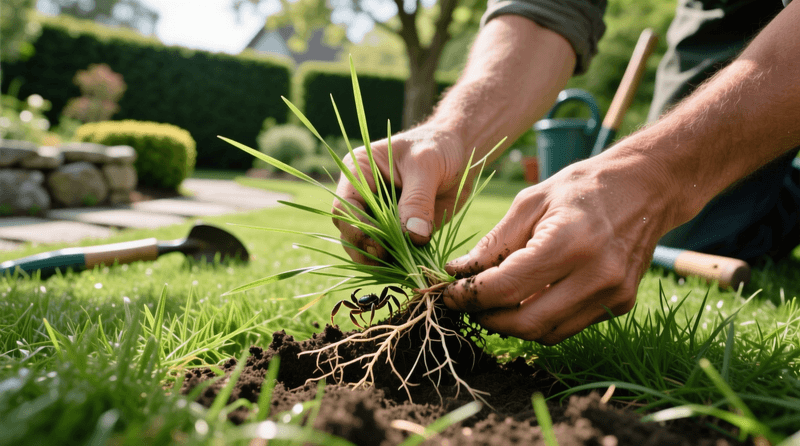
University of Maryland Extension’s crabgrass resource recommends pulling or digging carefully and trying to remove the roots while disturbing as little of the surrounding soil and turf as possible. Crabgrass plants spread from a central crown with roots that can run outward, so grip the plant low and close to the soil rather than grabbing the stems up high.
A hand weeder or a narrow trowel helps get under the root crown without ripping up a large patch of turf around it.
Physical removal protects your mixed lawn grass in a way that boiling water cannot. You are targeting only the weed plant and leaving the surrounding turf in place, which means the desirable grass can close back over the disturbed spot rather than leaving a scorched gap that new weeds can colonize.
After pulling, press the surrounding turf back down firmly and water the area lightly if the soil looks disturbed.
One thing pulling cannot do is stop new crabgrass from germinating. Seeds already in the soil, sometimes called the seed bank, are not affected by removing the visible plant above ground.
Pulling a crabgrass plant today removes that plant and its potential future seeds, but it does not neutralize seeds deposited in previous seasons. That’s why physical removal works best as part of a broader approach rather than a one-and-done fix.
Treat the kettle as a burn hazard
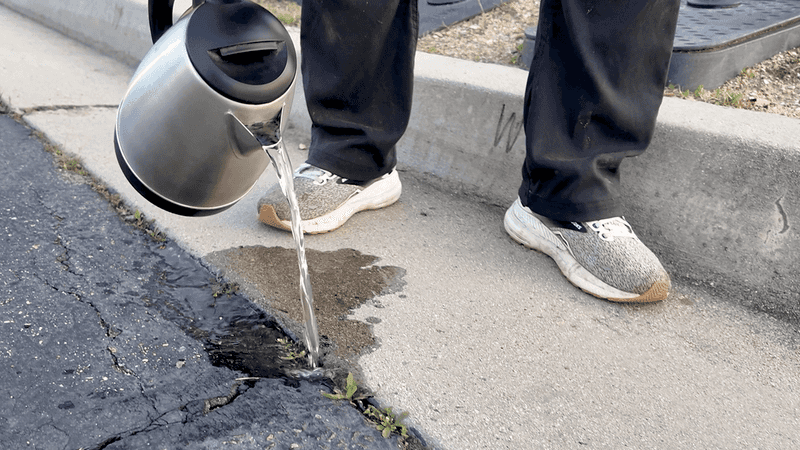
Boiling water is hot enough to cause serious burns to skin in seconds. Before you carry it outside, make sure children and pets are well away from the area, and wear closed-toe shoes rather than sandals.
A full pot is heavy and awkward; a kettle with a handle and a narrow spout is easier to control and reduces the chance of spilling on yourself or on plants you want to keep.
Pour slowly and directly onto the target plant rather than splashing from a height. Steam rising from the pour can still carry heat toward nearby plants and toward your face and hands, so keep your distance and work deliberately.
Iowa State Extension’s boiling water guidance advises targeting young plants and planning a follow-up check for regrowth, which is a practical reminder that one careful application is often the starting point rather than the finish.
You might also come across suggestions to add vinegar, salt, or dish soap to make a stronger homemade weed killer. Skip those additions for lawn use.
Washington State University Extension explains that salt and vinegar are both nonselective and can injure turf, surrounding plants, and soil health. Salt in particular can persist in soil and cause lasting damage.
UConn Extension’s review of homemade pesticide issues notes that dish detergents are not formulated as plant-safe herbicides and may damage plants and beneficial soil organisms. Boiling water on its own, used carefully in the right location, is the defensible household option.
Strengthen the turf that crabgrass exploits
Crabgrass is an opportunist. Thin turf, bare patches, compacted soil, and stressed grass create exactly the open conditions it needs to get started.
Removing visible plants deals with what’s already there, but improving the lawn itself is what makes it harder for new plants to establish.
Mowing height is one of the most accessible adjustments most homeowners can make. Taller grass shades the soil surface and reduces the light that crabgrass seeds need to germinate.
University of Illinois Extension’s guide to managing crabgrass in lawns identifies scalping and low mowing as conditions that favor crabgrass establishment. The right mowing height varies by grass species and region, so check with your local extension office if you’re unsure what height suits your turf, but for many cool-season lawns, three inches or above is a common recommendation.
Watering habits matter too. UC IPM’s crabgrass management page points to frequent, shallow irrigation as a condition that favors crabgrass over deeper-rooted desirable grasses.
Watering deeply and less often encourages turf roots to grow downward and become more competitive.
Bare areas are the most direct invitation. University of Maryland Extension recommends repairing thin and bare spots to reduce open soil where crabgrass can germinate freely.
Depending on the size of the problem area, that repair may mean overseeding, adding a soil amendment, or addressing compaction with aeration. Some of those fixes do require purchased materials, so the maintenance plan is not always store-free.
The realistic goal here is stronger, denser turf that competes better, not a guaranteed crabgrass-free lawn.
Remove seed sources now and plan prevention early
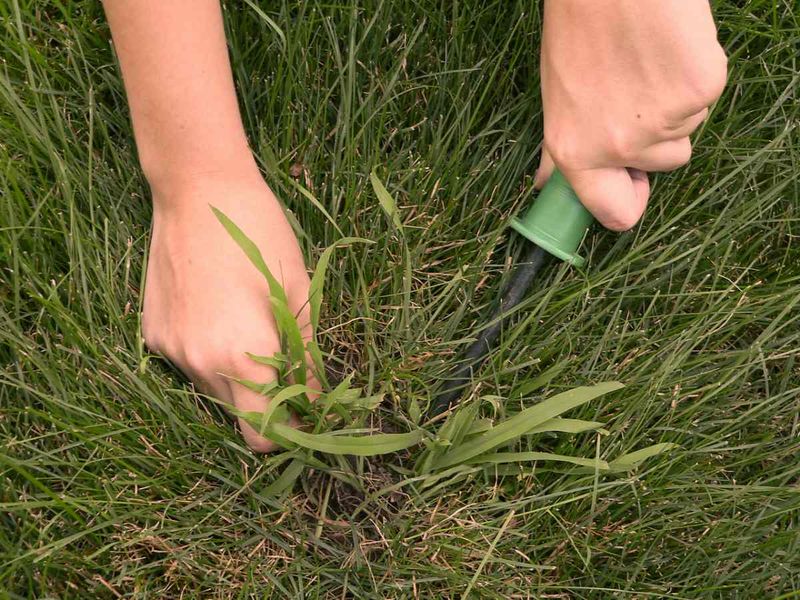
The sequence that actually moves the needle on crabgrass starts with what you can do today. Confirm you’re looking at crabgrass rather than goosegrass or foxtail, then pull or dig plants from lawn turf while the soil is moist, removing as much root as possible.
Reserve boiling water for isolated plants in cracks, bare soil, or non-turf edges where desirable grass won’t be hit.
Timing removal before seedheads fully mature is the most consequential thing you can do right now. Iowa State Extension’s annual weed management guidance emphasizes that removing plants before they set seed is the single most effective way to reduce future pressure, because a mature crabgrass plant can produce thousands of seeds that drop into the soil and wait for next season.
Plants that have already formed seedheads should still be removed, carefully and without shaking the seedhead, to limit further spread.
For the season ahead, early planning matters more than any midsummer scramble. Dense turf going into fall and winter gives you a head start.
If you want chemical backup, a properly labeled preemergence product applied before soil temperatures trigger germination in spring is the tool extension programs point to, and that does require a store visit. Purdue Extension notes that complete crabgrass elimination is unrealistic in many home-lawn situations.
Suppression, reduced seed production, and a thicker lawn are the achievable targets, and that’s a worthwhile outcome.