
Tree-of-Heaven: The Invasive North Carolina Host Concentrating Spotted Lanternfly in Backyards This Fall
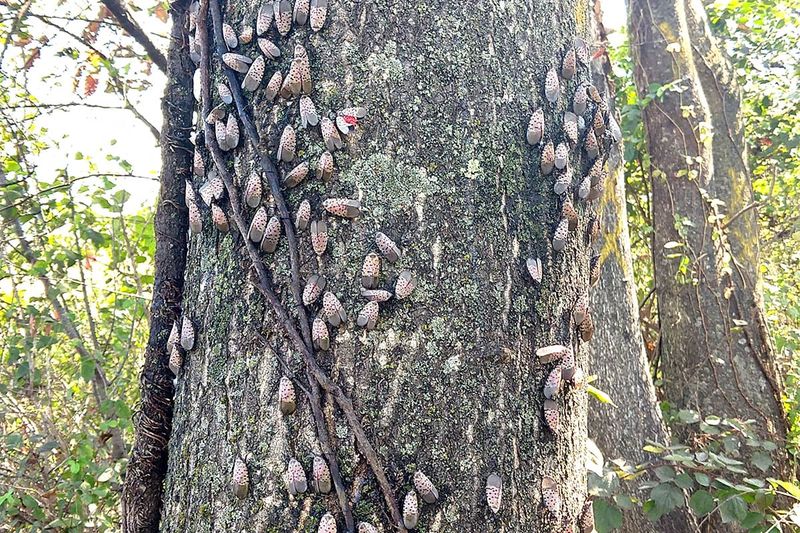
A weedy, fast-growing tree may already be standing in your backyard, and right now it could be drawing spotted lanternflies closer than you realize. That tree is tree-of-heaven, an invasive species widespread across North Carolina that happens to be the spotted lanternfly’s preferred feeding host, especially during fall.
Knowing how to identify it, what signs to look for, and how to respond can help you protect your yard without overreacting or making the situation worse.
The Tree in the Yard May Be Tree-of-Heaven
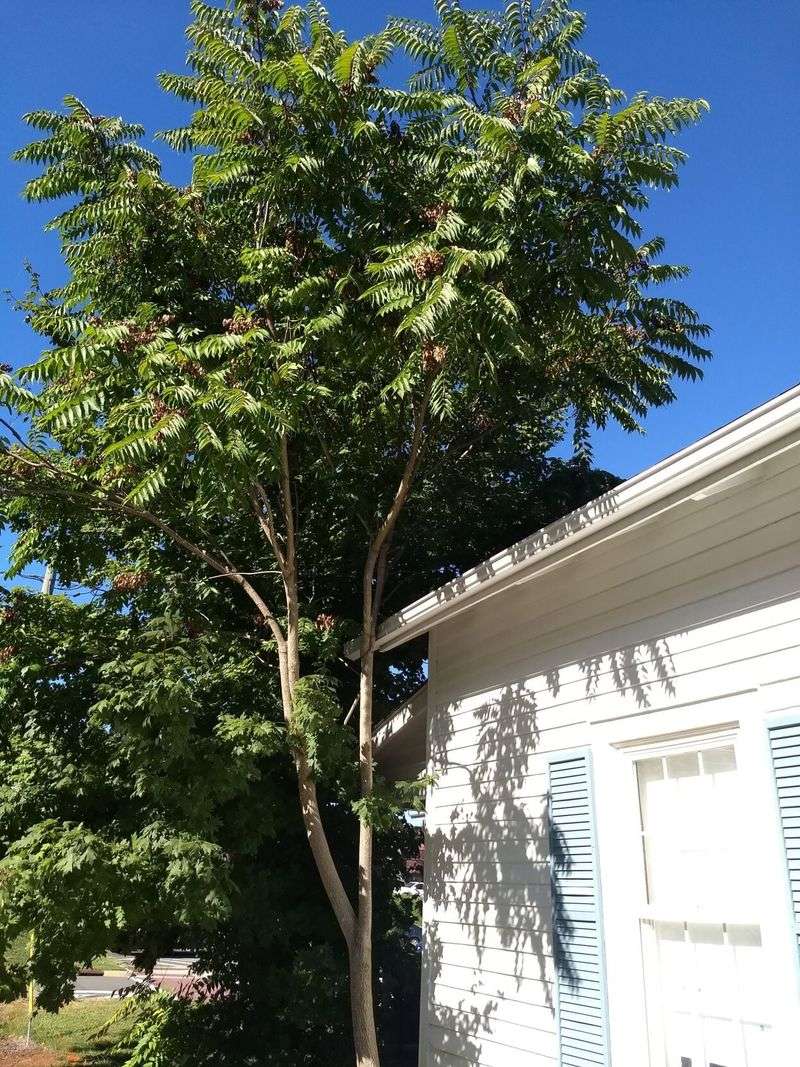
Plenty of North Carolina homeowners have a tree-of-heaven growing somewhere on their property without ever knowing it. Ailanthus altissima is an invasive species that arrived from China centuries ago and has since spread into roadsides, fence lines, woodland edges, and residential yards across the state.
Because it grows fast and blends in with native vegetation, it often escapes notice until it is already well established.
Learning to recognize it is the first practical step. NC State Extension’s tree-of-heaven profile describes the leaves as very large compound structures, typically 2 to 4 feet in total length, made up of 10 to 40 leaflets arranged along a central stalk.
The leaflets themselves are mostly smooth along the edges, which is one of the key distinguishing features. Near the base of each leaflet, look for one or two small glandular teeth, tiny notched bumps that can feel slightly waxy to the touch.
The smell test is often the quickest confirmation. Crush a leaf or a small twig and take a sniff.
Tree-of-heaven has a distinctive odor that most people describe as rancid or burnt peanut butter, sometimes compared to a strong, unpleasant nutty smell. That scent alone can separate it from look-alikes in a matter of seconds.
Two native species that homeowners sometimes confuse with tree-of-heaven are black walnut and sumac. Both also have large compound leaves, but their leaflets tend to show much more obvious serration along the edges, with visible teeth running the full length of the leaflet rather than just at the base.
If the leaf margins look clearly toothed all the way around, the tree is more likely a native species worth keeping.
Confirm the identification before taking any action. Treating or removing the wrong tree wastes effort and may harm a beneficial native plant.
Tree-of-heaven is a legitimate monitoring target because of its relationship with spotted lanternfly, but that relationship begins with knowing you actually have it.
Why Lanternflies Prefer This Invasive Host
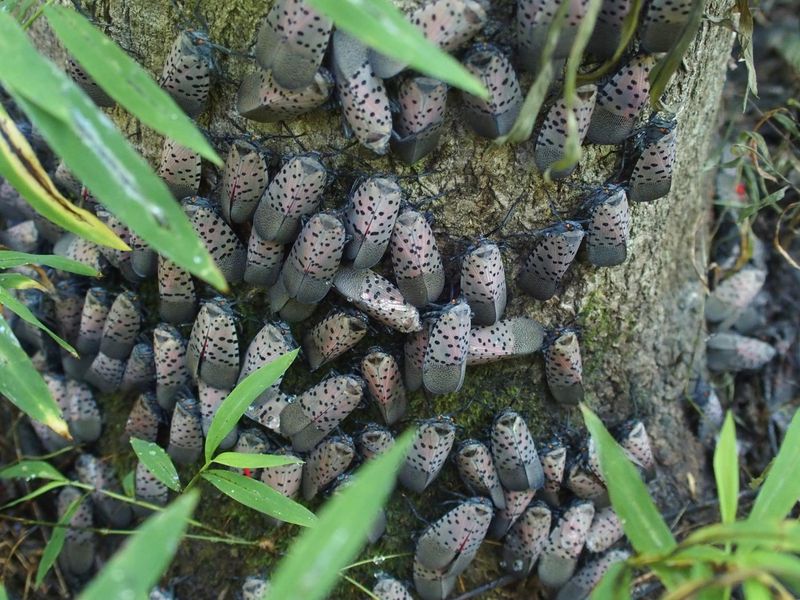
Spotted lanternfly does not restrict itself to a single plant, but tree-of-heaven holds a special place in its feeding preferences. Research and field observations consistently show that late-stage nymphs and adults seek out tree-of-heaven above most other available hosts, particularly as summer transitions into fall.
That preference means a tree-of-heaven in or near your yard may act as a gathering point, concentrating visible lanternfly activity in one spot rather than spreading it thinly across the landscape.
Understanding why helps set realistic expectations. The North Carolina Department of Agriculture and Consumer Services notes that spotted lanternfly feeds on a wide range of plants, with NC State reporting more than 100 host species.
That list includes grapes, apples, stone fruits, maples, walnuts, willows, roses, and other hardwoods. The insect does not need tree-of-heaven to complete its life cycle; it simply gravitates toward it when the option is available.
For homeowners, that distinction matters. Spotting lanternflies on a tree-of-heaven does not mean the tree caused the infestation or that removing it will end one.
Penn State Extension’s guidance for landscape professionals explains that removing tree-of-heaven may reduce food availability and the sticky honeydew residue the insects produce, but lanternflies can and will move to other plants on the property or arrive from neighboring areas.
Fall is when this preference becomes most visible. Adults are active from roughly July through December, and they tend to aggregate on tree-of-heaven trunks and branches in large numbers as temperatures cool.
Treating the tree as a monitoring station, a place to check regularly for activity, is a practical use of the host relationship without overstating what the tree itself is responsible for.
Inspect the Tree, Trunk, and Nearby Hard Surfaces
Fall scouting around a tree-of-heaven does not require special equipment, just a consistent routine and an eye for a few specific signs. NCDA&CS lists adult spotted lanternflies as active from July through December and egg masses as present from September through May, though NC State publishes slightly different windows, noting egg masses from October through June.
Either way, fall is a prime time to check both for living insects and for the egg masses they leave behind.
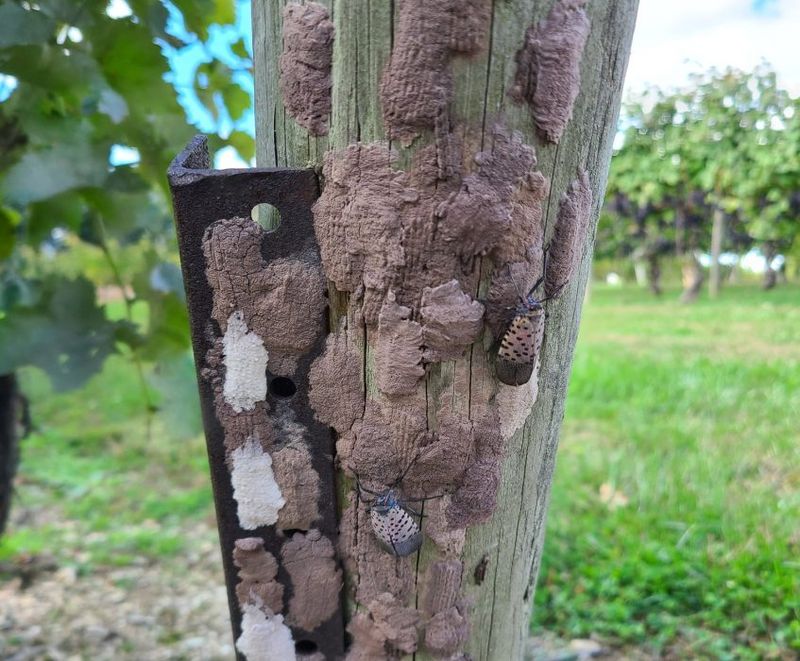
Egg masses are easy to overlook because they blend in with bark, stone, and concrete. Each mass is roughly 1 inch long and contains about 35 eggs.
Fresh masses have a shiny, putty-like gray coating; older ones develop a cracked, dried-mud appearance as the waxy covering hardens and splits. They can appear almost anywhere on a tree trunk, but they also show up on surfaces you might not think to check.
Look beyond the tree itself. Egg masses and adult insects have been found on brick walls, stone foundations, wooden fences, grills, outdoor furniture, firewood stacks, parked vehicles, and garden equipment left near infested trees.
A thorough inspection means walking the perimeter of the tree and then checking any hard, flat surface within a reasonable distance.
Secondary signs can point you toward activity even before you spot an insect or egg mass. Honeydew, the sticky liquid that lanternflies excrete while feeding, can coat leaves and surfaces below the feeding site.
That residue attracts ants and yellowjackets, so an unusual concentration of either insect near a tree-of-heaven is worth investigating. Black sooty mold, a fungus that grows on honeydew deposits, may also appear on surfaces beneath a heavily infested tree.
When you find something that looks like it could be a lanternfly or an egg mass, photograph it before disturbing it. NCDA&CS publishes a look-alike guide specifically because North Carolina has many insects that can be mistaken for spotted lanternfly at a glance.
A clear photograph is far more useful than a quick impression.
Confirm the Insect Before You Report or Treat
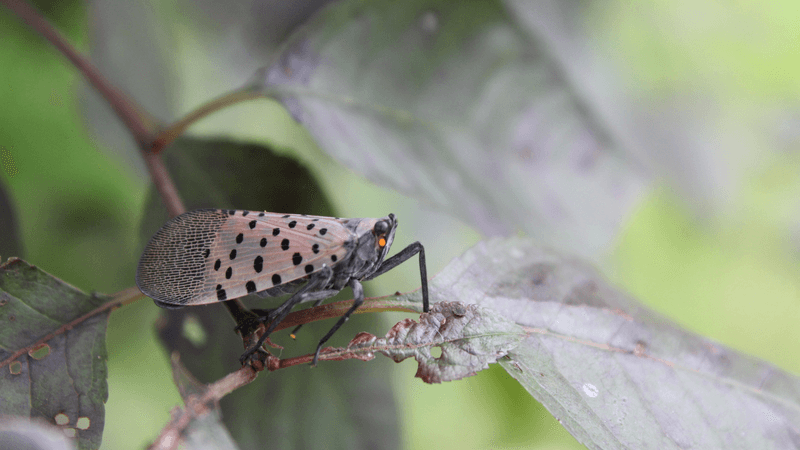
Spotted lanternfly is visually striking, but several native North Carolina insects share enough surface-level similarities to cause confusion. The moth-like wing pattern, red coloring on hind wings, and black-and-white spots can all appear in unrelated species.
Treating or killing every unfamiliar insect you see in the yard is not a productive response and could harm beneficial or native species that play important roles in the local ecosystem.
Before reporting or treating anything, get a good photograph. NCDA&CS asks anyone who suspects a new spotted lanternfly sighting to submit a clear image along with the date, location, approximate number of insects, a size reference when possible, and contact information.
That information helps the agency confirm the identification and track where the pest may be moving.
The reporting pathway depends on where you live. If you are outside the areas where spotted lanternfly is already established, a suspected new sighting should go directly to NCDA&CS.
As of the most recent agency updates, established populations are centered in the western Guilford and eastern Forsyth County area, with additional populations found in Rockingham and Caldwell counties in spring 2025. Residents in or near those established zones are directed to contact their county Cooperative Extension office or a licensed pest professional for a site-specific management plan rather than filing a general report.
North Carolina is not uniformly infested, and assuming otherwise can lead to unnecessary alarm or treatment. Check the live NCDA&CS spotted lanternfly map for current distribution before drawing conclusions about your yard.
The map is updated as new information comes in and reflects actual confirmed sightings rather than projected range.
Using the NCDA&CS look-alike identification guide alongside your photograph can help you rule out common native insects before you contact anyone. Accurate reporting is more useful to the state than a high volume of unconfirmed submissions, and it protects native species that might otherwise be misidentified and harmed.
People and Infested Items Help Move Lanternflies

Adults can fly and walk on their own, but the documented pathway responsible for spotted lanternfly reaching new regions is human-assisted movement. Egg masses and live insects hitchhike on objects that people carry, haul, or drive through infested areas, and they often do it without anyone noticing.
USDA APHIS identifies vehicles, trailers, firewood, grills, outdoor furniture, bicycles, and children’s toys as common pathways for unintentional transport. Egg masses are small and camouflaged, and they adhere to almost any surface.
A mass laid on a wheel well, a trailer frame, a stack of firewood, or a folding chair can survive transport across hundreds of miles and hatch in a location where the pest was not previously present.
For North Carolina homeowners who travel, the precaution is straightforward. Before leaving an infested area, inspect the vehicle, any attached trailer, and all items being loaded.
Pay particular attention to flat, rough, or textured surfaces where egg masses can blend in. NC State suggests washing a vehicle before driving back into North Carolina as an added measure, especially after extended stays in states where spotted lanternfly is already widespread.
One tree-of-heaven in a yard does not mean the property is generating or exporting an infestation. The presence of the tree creates a potential gathering point for insects that are already in the area, but the tree itself does not transport insects anywhere.
The spread risk tied to a residential property is far more likely to come from a vehicle that sat near an infested tree or firewood that was brought in from another region than from the tree standing in the backyard.
Checking outdoor items routinely during fall, when adults are most active, takes only a few minutes and meaningfully reduces the chance of accidentally moving the pest to a new location.
Manage Tree-of-Heaven With a Site-Specific Plan
Controlling tree-of-heaven is a worthwhile goal independent of spotted lanternfly. NC State Extension’s tree-of-heaven publication describes the species as a prolific seed producer with aggressive root sprouting, capable of forming dense stands that crowd out native plants in disturbed areas, roadsides, and residential landscapes.
Getting rid of it correctly, however, requires more planning than simply cutting it down.
Felling a tree-of-heaven without treating the stump and root system often makes the problem worse. Cutting stimulates the plant to send up vigorous sprouts from the stump and from lateral roots that may extend well beyond the tree’s canopy.
NC State’s weed-science guidance on tree-of-heaven control specifically cautions against cut-stem treatments because of this sprouting response and notes that established infestations may require several years of consistent management before the plant stops regenerating.
Herbicide-based approaches are generally more effective for mature trees. Foliar treatment works on young seedlings and small trees.
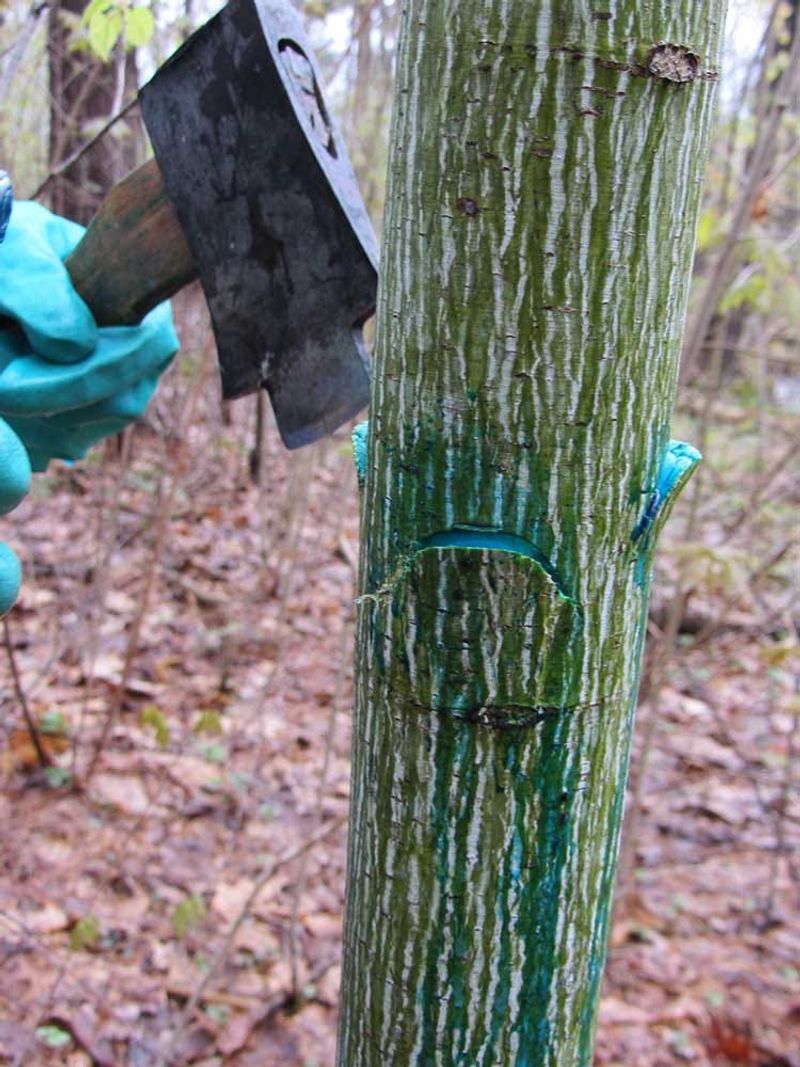
Basal-bark application, where a diluted herbicide is painted or sprayed around the lower trunk without cutting, can work on stems up to about 6 inches in diameter. Hack-and-squirt, or frill-and-spray, involves making downward cuts through the bark around the trunk and applying herbicide directly into the cuts; this method limits chemical contact with surrounding soil and plants.
All of these approaches require using a product registered for the site and following the label exactly.
Do not improvise. Penn State Extension warns explicitly against homemade mixtures involving vinegar, dish soap, salt, boric acid, oils, garlic, or peppers for spotted lanternfly or related plant control.
These substances have not been validated for effectiveness, may injure nearby plants, and can be illegal to apply in ways not consistent with a registered pesticide label. Similarly, planting milkweed, lavender, mint, or other species as repellents has no solid supporting data for spotted lanternfly management.
For a large or well-established tree-of-heaven, or for a yard with multiple stems, consult your local NC State Cooperative Extension office, the NC Forest Service, or a licensed arborist or pesticide applicator. A professional can assess the specific situation, recommend the right method, and help you avoid the regrowth cycle that makes casual removal counterproductive.
Protect the Yard Without Expecting One Tree to Solve It
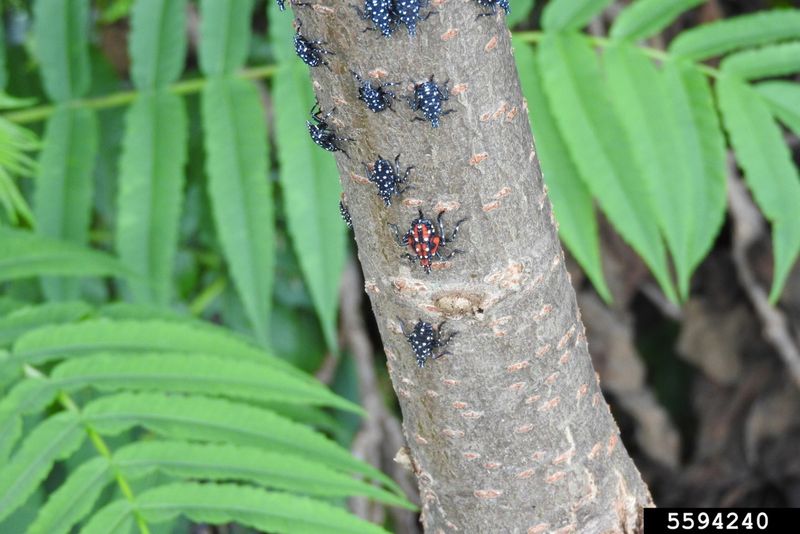
A practical approach to spotted lanternfly in a North Carolina backyard comes down to a short checklist applied consistently across the right seasons. Identify any tree-of-heaven on the property using leaf shape, leaflet texture, and the crushed-leaf smell test.
Monitor the trunk, branches, and nearby hard surfaces for adults from July through December and for egg masses from fall into spring. Photograph anything that looks unusual and compare it against NCDA&CS look-alike resources before drawing conclusions.
Inspect vehicles, trailers, and outdoor gear after visiting areas where spotted lanternfly is established, and check items like firewood, grills, and furniture that may have sat near infested trees. Report suspected new sightings to NCDA&CS with a clear photograph, date, location, and insect count, or contact your county Extension office if you are in or near a known population area.
If you decide to remove tree-of-heaven, do it with a site-specific plan and realistic expectations. Penn State Extension notes that removing the tree may reduce honeydew buildup and eliminate one preferred host, but spotted lanternfly feeds on more than 100 plant species and can arrive from neighboring properties or nearby areas.
The tree’s removal is a genuine improvement for the yard’s native plant community, but it is not a guarantee that lanternflies will disappear.
Caring for a North Carolina yard well means staying informed and acting on what you actually find. A single invasive tree is worth managing for its own sake, and knowing it is a monitoring target makes it even more useful to check regularly.