
The Early Signs Of Spotted Lanternfly North Carolina Homeowners Spot In The Yard Before The Bug Itself
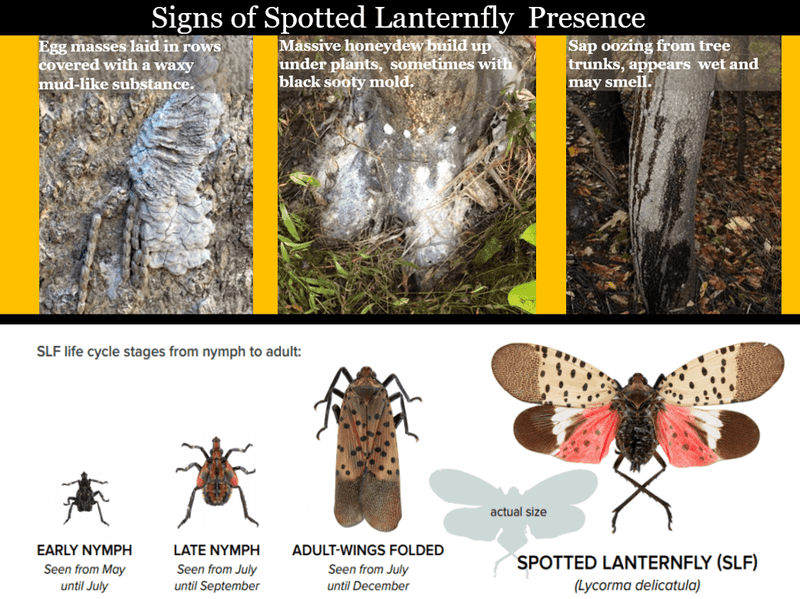
Spotted lanternfly is an invasive pest that has been spreading across North Carolina, and catching it early can make a real difference for your yard and your neighbors’ yards too. Most people expect to spot the bug first, but there is actually one clue you might find months before you ever see an insect: the egg mass.
Knowing what to look for, where to look, and how to respond without overreacting puts you in a much stronger position as a homeowner and a steward of your little patch of North Carolina.
Egg masses are the primary before-the-bug clue
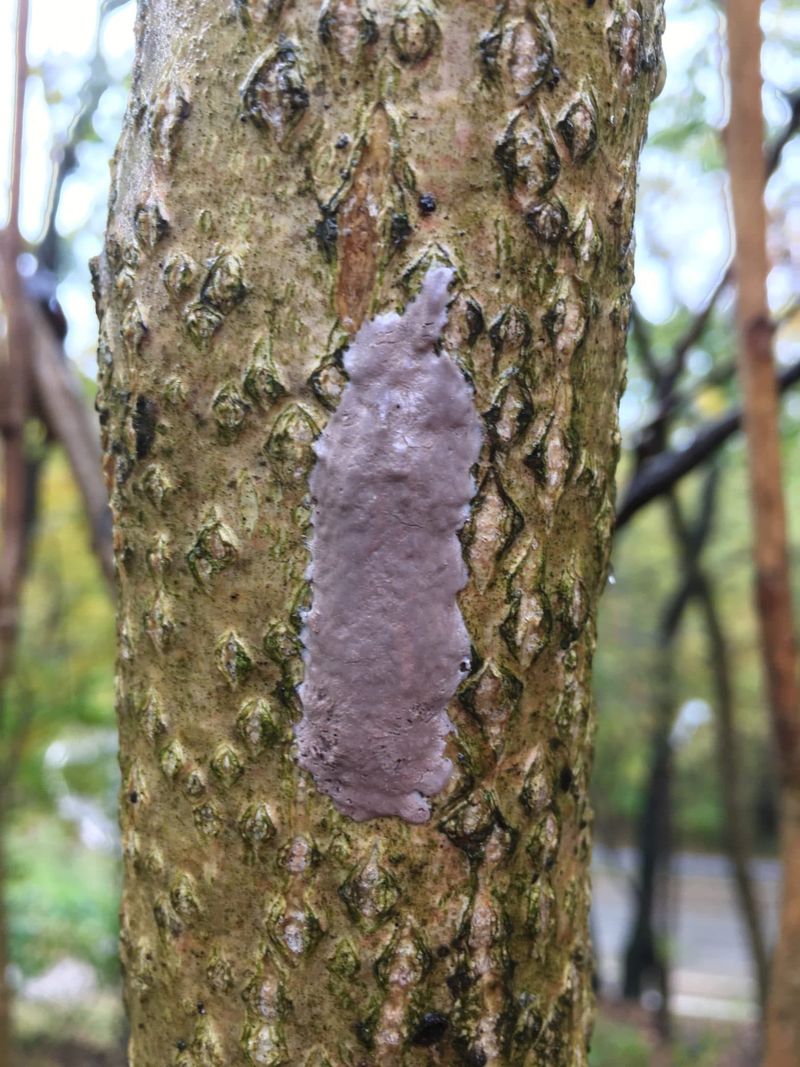
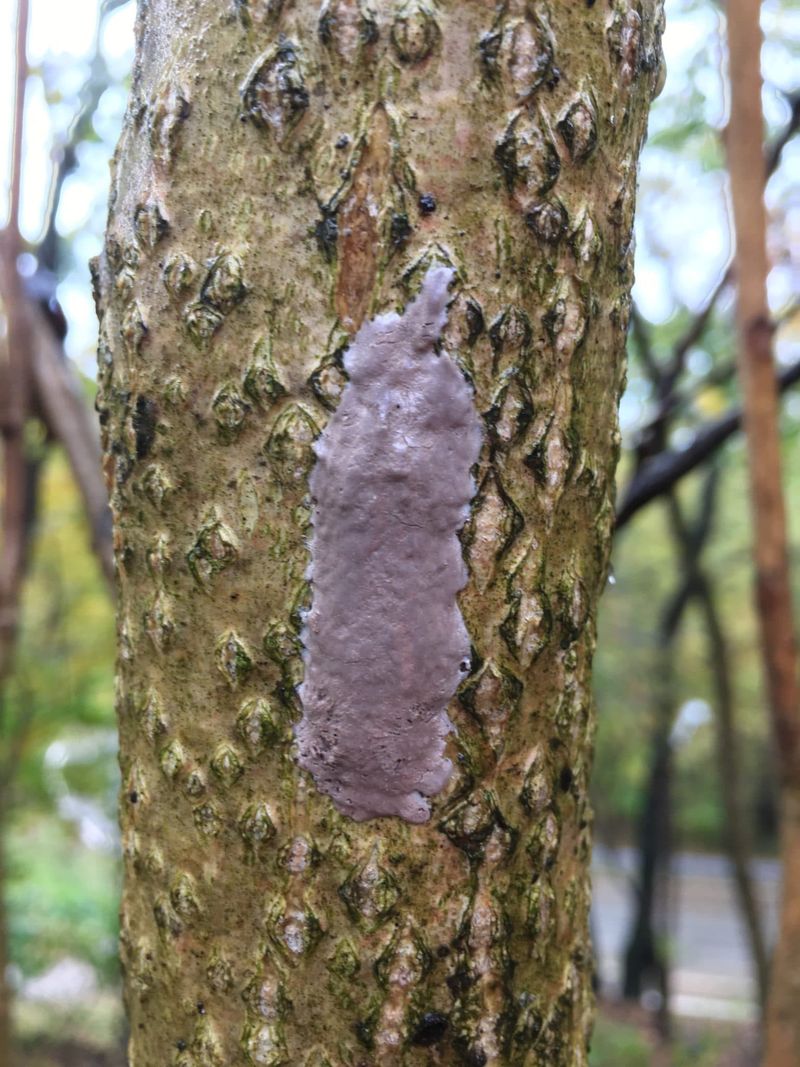
Gray, mud-like egg masses give North Carolina homeowners their best realistic chance of finding spotted lanternfly evidence before they ever see the insect itself. According to USDA APHIS guidance on spotted lanternfly, a fresh egg mass is roughly 1 inch long, contains approximately 30 to 50 eggs, and is covered with a gray, putty-like coating that resembles dried mud or mortar.
As the mass ages through winter and into spring, that covering cracks and breaks apart, sometimes revealing neat rows of brown, seed-like eggs underneath.
Egg masses can remain visible from roughly September through May, which means they are present during the months when no living insect is active in your yard. That overwintering window is exactly what makes them the strongest “before the bug” clue.
A homeowner who inspects tree trunks and outdoor surfaces in November, January, or March has a legitimate chance of finding egg masses well before the first nymphs hatch in spring.
One important qualification: finding an egg mass does not automatically mean a breeding population has taken hold in your yard. As NC State Extension’s spotted lanternfly resource explains, egg masses can arrive on vehicles, firewood, outdoor furniture, and other movable objects, meaning the mass may represent a transported introduction rather than a confirmed local infestation.
Treat a find as a credible lead worth documenting and reporting, not as proof that your yard is overrun. The other signs discussed in this article, including sap oozing, honeydew, and sooty mold, generally appear alongside or after active feeding rather than before the insect arrives, so they belong in a different category of clue.
Inspect hard surfaces as well as trees
Many homeowners assume that spotted lanternfly evidence will only show up on tree bark, but the inspection needs to go much further than that. USDA APHIS guidance and NCDA&CS outreach materials both emphasize that egg masses can be laid on a wide range of smooth and semi-smooth surfaces: tree trunks, large branches, fences, decks, brick walls, stones, outdoor furniture, grills, lawn equipment, vehicles, firewood stacks, and any other stored objects left outside.
The reason hard surfaces matter so much is that spotted lanternfly egg masses hitchhike. A mass attached to a piece of firewood bought from another county, a lawn chair hauled home from a camping trip, or a vehicle parked near an infested area can carry eggs into a yard where no lanternfly has ever fed.
A homeowner who only checks tree trunks may walk right past an egg mass sitting on the underside of a patio table or on the flat face of a cinder block.
A practical inspection route starts with tree trunks from ground level up to about eye height, paying extra attention to rough-barked trees and any tree-of-heaven on the property. From there, move systematically to fences and deck posts, then to stored items along the fence line or garage wall: firewood, wheelbarrows, planters, folding chairs, and similar objects.
Run a gloved hand along smooth undersides where a mass might be tucked out of view. The goal is a careful look, not an aggressive scrape.
A gray patch that does not match the egg mass description should be left alone until you can compare it to a reliable reference image. Scraping an uncertain mark before confirming what it is removes evidence that could help with identification.
Use the season to interpret what you find
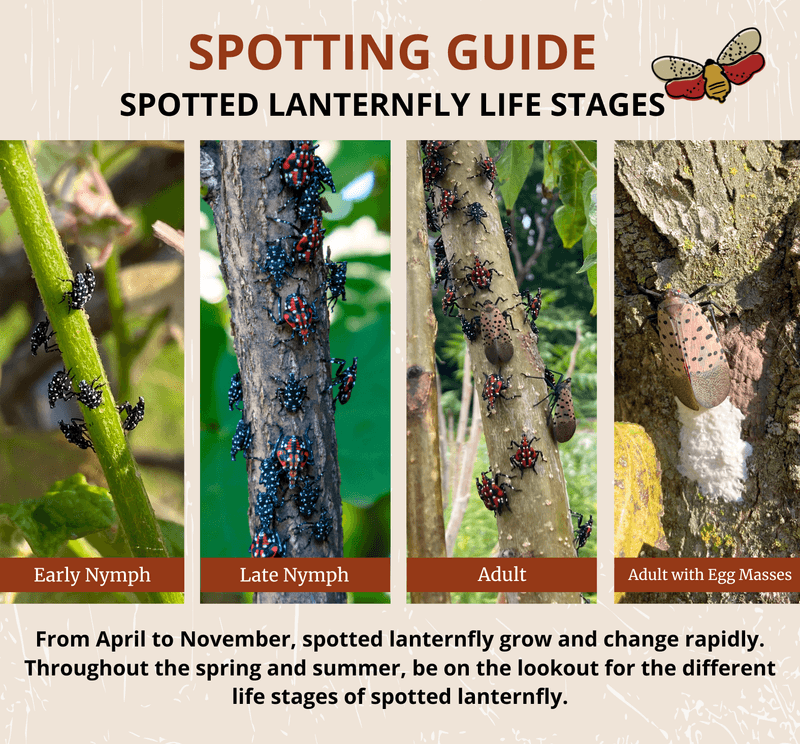
Knowing roughly where spotted lanternfly is in its life cycle helps you interpret whatever you find during a yard check. NCDA&CS describes the general North Carolina seasonal pattern this way: early nymphs emerge in spring, older and larger nymphs appear later in spring and into early summer, adults become active from summer through fall, and egg masses are present from fall through the following spring.
Exact timing shifts with local weather and elevation, so treat this as a general guide rather than a fixed schedule.
For practical inspections, the season tells you what to prioritize. A check done in winter, say December through February, is almost entirely an egg mass search.
The insect is not present in any life stage you can observe, so tree trunks, fence posts, and stored outdoor objects are the right focus. A check in late spring or early summer shifts toward looking for small, dark nymphs with white spots on smooth-barked trees and shrubs.
By midsummer, adults may be visible, and feeding symptoms such as oozing sap and sticky residue become more likely clues alongside the insects themselves.
Fall is a transitional window. Adults are still active early in the season and are mating and laying eggs, which means a fall check may turn up both insects and fresh egg masses.
That overlap makes fall a particularly useful inspection period because you have two types of evidence to look for at once. A homeowner who finds a gray mud-like patch in October on a fence post is finding it at almost exactly the time it was laid, which is about as close to a real-time alert as this pest offers outside of seeing the insect directly.
Sap and honeydew usually signal active feeding
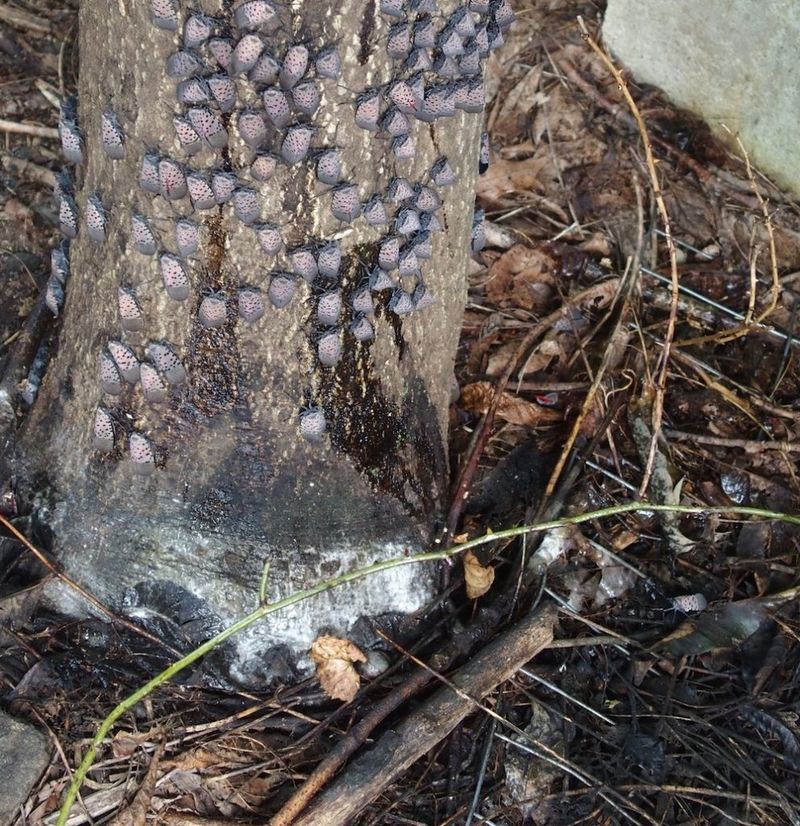
When spotted lanternfly feeds heavily on a tree or shrub, the plant can develop dark, wet, or oozing wounds at the feeding sites. That oozing happens because the insects pierce the bark and phloem repeatedly, and the plant responds with sap flow.
NC State Extension notes that this kind of feeding stress can cause wilting, dieback, and greater vulnerability to other problems, though spotted lanternfly is not suspected to cause widespread tree mortality in North Carolina under most circumstances. Grapevines and some heavily infested plants can experience more serious damage than established trees typically do.
Alongside the oozing wounds, feeding insects excrete honeydew, a sticky, sugary liquid that drips from the plant and lands on whatever is below. According to Virginia Cooperative Extension’s spotted lanternfly factsheet, honeydew can accumulate on the ground, on nearby structures, on vehicles, and on other plants beneath an infested tree.
It attracts ants, wasps, bees, and flies in sometimes striking numbers, and that unusual concentration of insects around a tree can be one of the first things a homeowner notices.
The critical limitation is that these symptoms generally appear alongside active feeding, not before the insect has arrived. A tree that is already oozing and drawing insects almost certainly has lanternflies on it or very recently did.
That makes sap and honeydew signs of a current or recent infestation rather than an early warning.
Equally important, Penn State Extension’s management guide supplement and USDA APHIS guidance both caution that similar oozing can occur with bacterial wetwood, slime flux, physical wounds, and other tree disorders that have nothing to do with spotted lanternfly. A sour or fermented odor sometimes accompanies spotted lanternfly honeydew, but that same smell can come from slime flux.
Oozing sap should prompt a closer look at the tree and the surrounding area, not an immediate treatment decision.
Sooty mold adds context but does not identify the pest
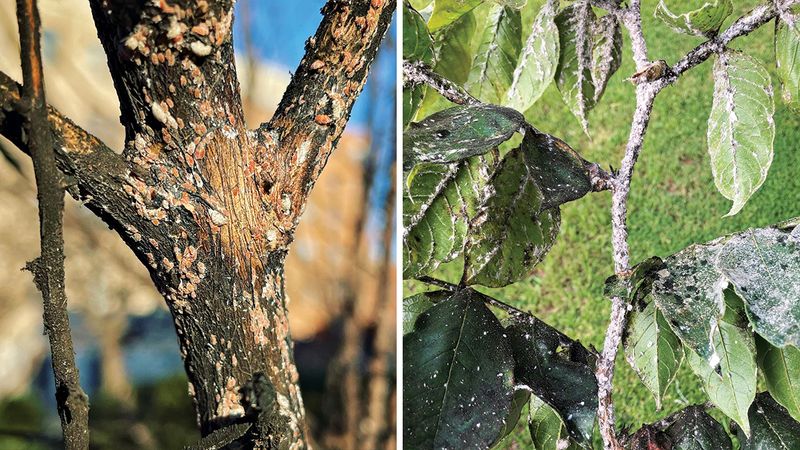
Black sooty mold is one of the more visually striking things a homeowner might notice near a spotted lanternfly infestation, but it needs to be read carefully. The mold grows on surfaces coated with honeydew, the sugary excretion that feeding insects leave behind.
When enough honeydew accumulates on leaves, stems, the ground, a deck surface, or even a parked car, a black fungal layer can develop on top of it. USDA APHIS guidance identifies sooty mold as one of the visible consequences of spotted lanternfly activity.
The practical problem is that sooty mold is not unique to spotted lanternfly. Aphids, scale insects, whiteflies, and other sap-feeding insects also produce honeydew, and any of them can trigger the same black mold on the same kinds of surfaces.
Penn State Extension’s management supplement makes this point plainly: sooty mold indicates a honeydew source somewhere above it, but it does not tell you which insect produced that honeydew. A homeowner who sees black mold on a deck chair or a shrub has a reason to look more carefully at the plant above it, but the mold by itself is not a diagnosis.
Where sooty mold becomes genuinely useful is when it appears alongside other clues. Mold on a surface directly beneath a tree-of-heaven that also has sticky residue on its bark, combined with unusual insect activity and a gray mass on a nearby fence post, adds up to a picture worth reporting.
Virginia Cooperative Extension describes this kind of combined evidence as the more reliable trigger for concern. Treat sooty mold as one piece of a puzzle rather than the answer to it.
Check tree-of-heaven without rushing to remove it
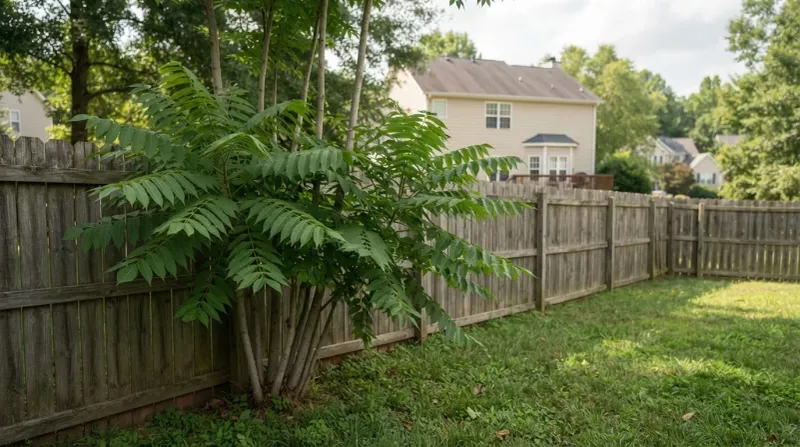
Tree-of-heaven is a well-documented preferred host for spotted lanternfly, which makes it a logical place to focus during any yard inspection. The tree tends to be found along fence lines, roadsides, and disturbed ground, and its smooth gray bark and compound leaves make it recognizable once you know what you are looking at.
Monitoring a tree-of-heaven on your property for egg masses, oozing sap, and unusual insect activity is a reasonable part of a spotted lanternfly watch.
That said, NC State Extension and Penn State Extension’s management guide both note that spotted lanternfly can feed and reproduce on a wide range of other host plants, including grapes, hops, apples, and various native trees. The absence of tree-of-heaven in a yard does not mean spotted lanternfly cannot establish there, and the presence of tree-of-heaven does not prove an infestation exists.
Before taking any action on a suspected tree-of-heaven, confirm the identification carefully. NC State Extension’s tree-of-heaven identification guide points out that the tree is frequently confused with native sumac and black walnut, both of which have compound leaves that look similar at a glance.
One useful distinction is the leaflet margin: tree-of-heaven leaflets have smooth edges, while native look-alikes such as sumac commonly have toothed or serrated leaflet edges. A gland or notch near the base of each leaflet is another feature specific to tree-of-heaven.
Rushing to cut down a tree based on a quick resemblance is counterproductive for two reasons. First, you may be removing a native plant by mistake.
Second, cutting tree-of-heaven without treating the stump often triggers vigorous resprouting from the root system, which can make the problem worse rather than better. If you have confirmed the tree’s identity and want to remove it, consult NC State Extension or a licensed arborist for proper technique, which typically involves herbicide application to the cut stump or a basal bark treatment.
Document, report, and manage a credible find
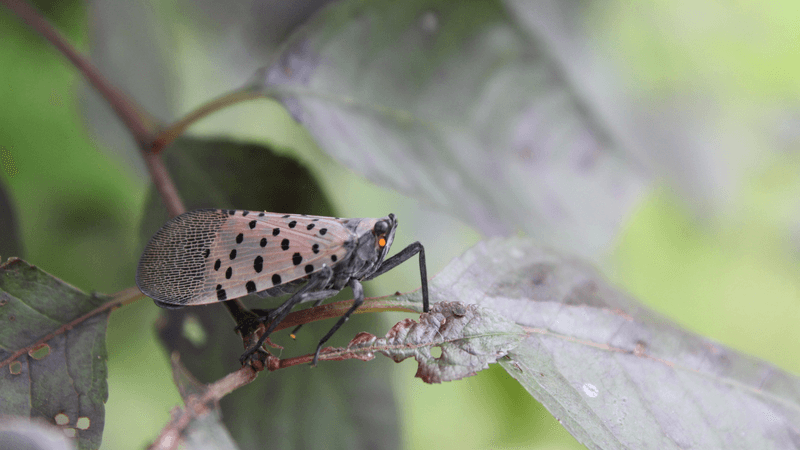
A careful response to a suspected spotted lanternfly find starts with a photograph, not a scrape. Place a coin, a ruler, or another common object next to the egg mass or insect before you take the picture so that the size is clear in the image.
Record the exact location, including the address or a GPS point if possible, and note the date. Then submit that information through the NCDA&CS spotted lanternfly reporting page, which accepts photos and contact details from homeowners across the state.
Reporting matters most if you are outside a known established area. As of a February 10, 2026 NCDA&CS press release, established populations had been confirmed in Forsyth, Guilford, Rockingham, Caldwell, Caswell, Davidson, and Rowan counties.
That list reflects the situation as of that date and may have changed since. If your county is not on the current confirmed list, a find is especially important to report promptly so that officials can investigate.
For egg masses you have confidently identified, USDA APHIS guidance recommends smashing and scraping the mass into a sealed plastic bag that contains hand sanitizer or rubbing alcohol, then placing the sealed bag in the trash. Photograph the mass first.
Do not scrape every gray patch you find on the assumption it is an egg mass; misidentification wastes effort and removes evidence that could help confirm a find.
Homeowners in counties with established populations can contact their county Cooperative Extension office for property-specific guidance or work with a licensed pest-control professional. When it comes to pesticide use, NC State Extension’s integrated pest management resource and EPA pesticide label guidance both make clear that product labels govern legal use, application sites, and rates.
Broad yard spraying based on an unconfirmed sign is not appropriate and can harm bees, butterflies, and other beneficial insects that North Carolina yards depend on. The most effective response to a credible spotted lanternfly find is a documented report, not a chemical reaction – and a yard that stays ecologically intact is better positioned to recover from any pest pressure over time.