
Most Flowers Chase The Sun But North Carolina Moonflowers Actually Open After Dark
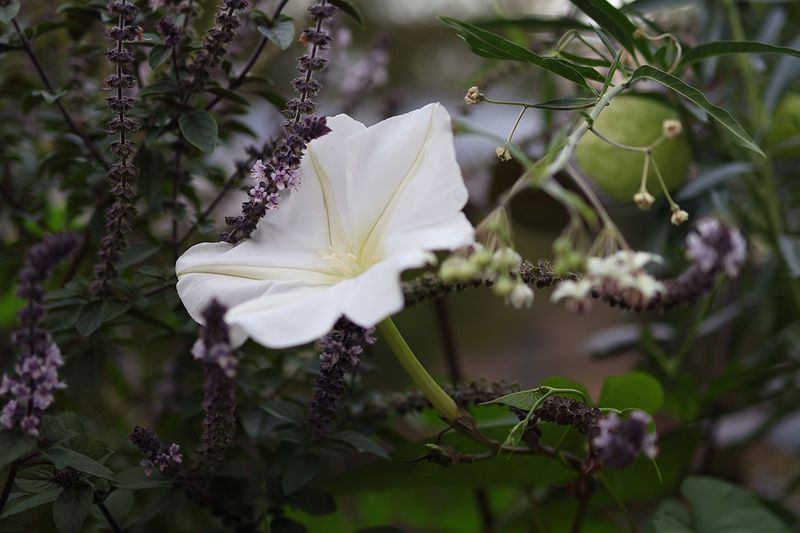
Picture stepping onto your porch at dusk and watching a flower slowly unfurl right before your eyes, releasing a sweet, clean fragrance into the warm evening air. That is exactly what the moonflower vine, known scientifically as Ipomoea alba, can bring to a North Carolina yard.
While most of your garden winds down at sunset, this remarkable vine is just getting started. Growing it takes some planning, but the payoff of those glowing white blooms on a summer night is hard to match.
Meet the true moonflower behind the evening display
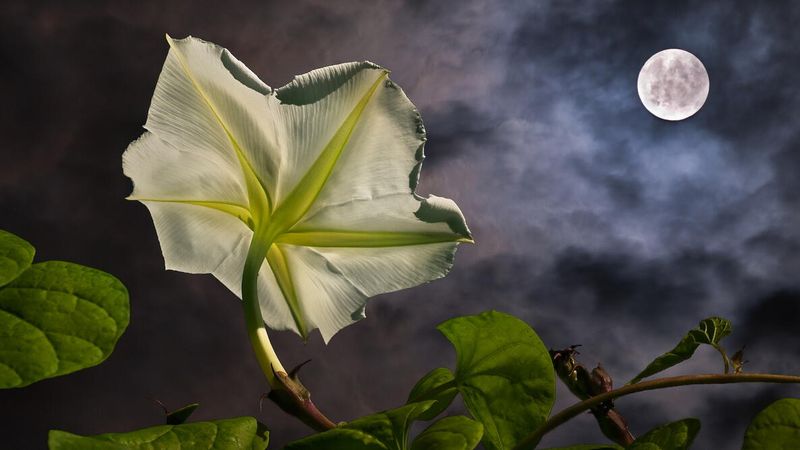
Ipomoea alba is the plant behind the name “moonflower,” and knowing its scientific name matters before you buy a single seed packet. As described by NC State Extension’s plant profile for Ipomoea alba, this vigorous twining vine is a tender perennial that North Carolina gardeners treat as a warm-season annual.
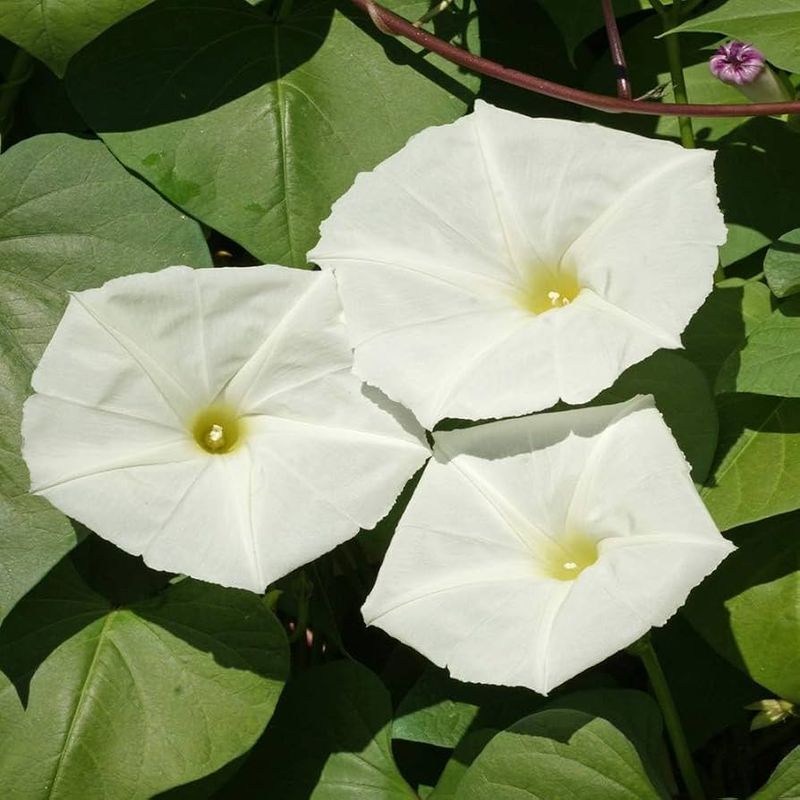
Its flowers are six-inch, white, fragrant trumpets that create an unmistakable visual and sensory experience in any yard.
The timing of those blooms is what sets this plant apart. Flowers commonly begin opening in the late afternoon or around dusk, remain open through the night, and close again near dawn.
The opening itself can happen quickly enough to watch, making the vine a natural conversation piece on a porch or patio after sunset.
Imagine training this vine up a simple arbor beside your back door. By mid-summer into fall, each evening brings a fresh flush of blooms that practically glow against the dark.
The large white petals catch even faint moonlight or porch-light and the fragrance carries surprisingly far, turning an ordinary backyard into something that feels genuinely special after the sun goes down.
The vine climbs by twining its stems around whatever support you provide, so it works beautifully on a fence post, trellis rail, or pergola column. University of Florida IFAS notes that moonflower pairs well with morning glory on the same structure, since one takes the day shift and the other takes the night.
That combination alone is worth the effort of setting up a sturdy support, which the next sections will cover in detail.
The moonflower does not escape the sun
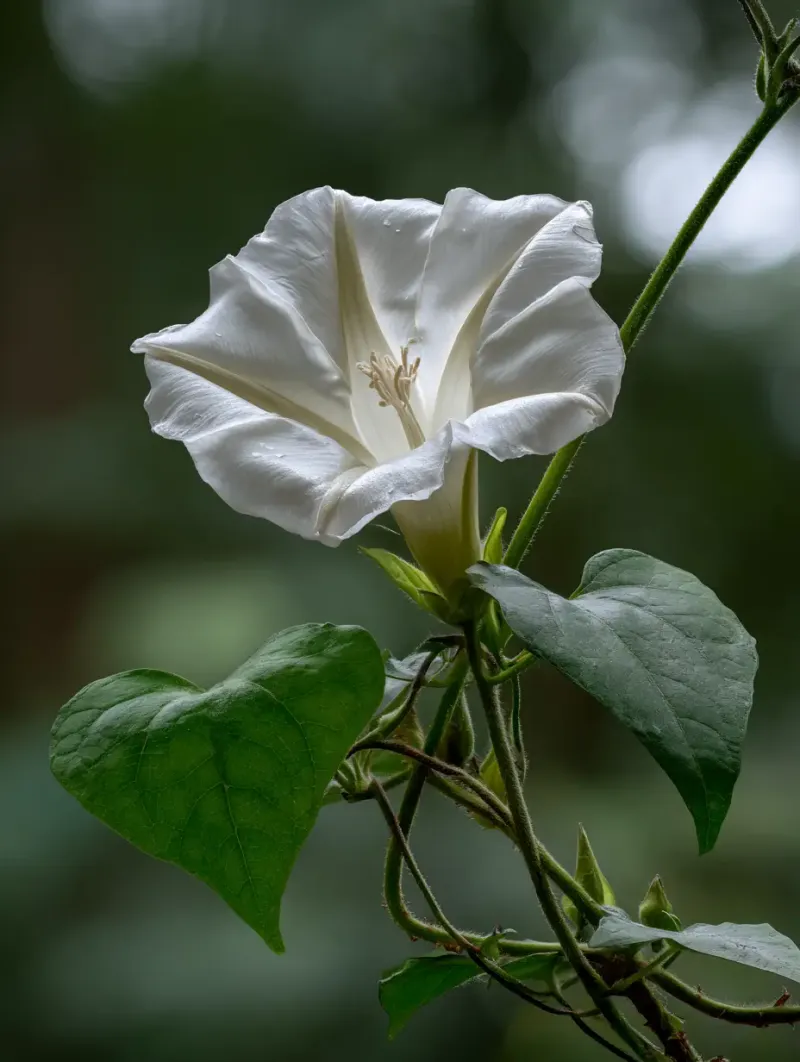
The headline that brought you here plays on a vivid contrast, and it is worth being honest about what that contrast really means. “Most flowers chase the sun” is a poetic hook, not a botanical fact, and “moonflower runs from the sun” is a metaphor, not a description of how the plant actually behaves. Ipomoea alba needs full sun during the day to grow vigorously and produce its night-blooming flowers.
Without generous daytime light, the vine sulks and blooms poorly.
The sun-chasing image in the headline draws loosely on heliotropism, which is the ability of some plant structures to track the sun’s movement across the sky. Clemson Cooperative Extension explains that young sunflowers are a well-known example, with their growing tips following the sun from east to west during the day.
That movement is a real and documented phenomenon, but it applies to specific growth stages in specific species, not to flowering plants in general.
Flower opening and closure across the plant kingdom involves a different set of processes. A review published in the Journal of Experimental Botany describes how internal circadian rhythms, light levels, and temperature changes all play roles in regulating when flowers open and close, though the precise combination of triggers varies by species.
For Ipomoea alba specifically, the sources reviewed here do not pin down a single definitive mechanism, so it is accurate to say the flowers open toward evening and stay open overnight rather than to claim a proven cause.
The practical upshot for North Carolina gardeners is straightforward. Plant your moonflower vine where it receives at least six hours of direct sun each day, give it the warmth it needs to build strong stems and healthy foliage, and the evening flower display will follow naturally.
The sun is not the vine’s enemy; it is the engine that powers those luminous white blooms.
Build a sunny place for the vine to climb
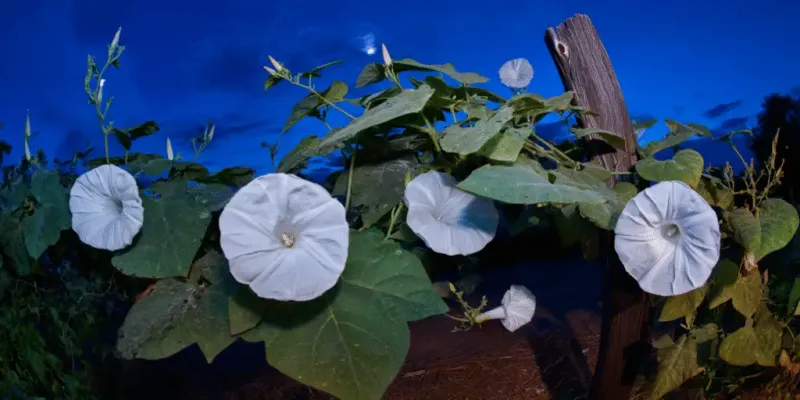
Choosing the right spot and the right support are the two decisions that determine whether your moonflower vine thrives or struggles. NC State Extension’s profile for Ipomoea alba recommends full sun, good drainage, and consistently moist soil, and it notes a potential height of roughly 15 feet.
That combination of height and twining habit means a flimsy tomato cage or a lightweight pot trellis will not hold up through a North Carolina summer.
A sturdy fence, a well-anchored garden arbor, or a solid trellis attached to a wall or pergola post gives the vine what it needs to climb without pulling the support down as it gains weight. Cedar or pressure-treated lumber, metal pipe, or heavy-gauge wire panels all work well.
Space your support at least 12 to 18 inches away from a wall or fence so air can circulate around the foliage, which helps reduce humidity-related disease pressure during the humid months typical of the Piedmont and coastal regions.
Soil preparation matters as much as the support structure. Work in a few inches of compost before planting to improve both drainage and moisture retention, since Ipomoea alba wants its roots consistently moist but never waterlogged.
Raised beds or gently sloped planting areas drain better than low spots that collect water after heavy summer rains.
One thing that surprises first-time growers is how slowly the vine may start out. Early growth can seem almost stalled while the plant establishes its root system.
Then, once summer heat arrives in earnest, the vine typically accelerates and can cover a significant stretch of trellis in a matter of weeks. Resist the urge to over-fertilize during the slow phase, because too much nitrogen early on tends to push leafy growth at the expense of flowers.
A balanced, slow-release fertilizer worked into the soil at planting is usually enough to carry the vine through its productive season.
Use local frost information to set the planting date
Timing is everything with a frost-sensitive vine, and North Carolina’s geography makes a single statewide planting date impossible to use reliably. Ipomoea alba is a tender perennial that North Carolina gardeners grow as a warm-season annual, which means a late frost can wipe out transplants overnight.
Starting seeds at the right time indoors, then moving plants outside only after frost danger has genuinely passed, is the surest way to a productive growing season.
NC State Extension recommends sowing seeds indoors four to six weeks before your expected last spring frost date. The seeds have a hard coat, so either soak them overnight in warm water or nick the seed coat gently with a nail file before planting.
Both methods improve germination speed and consistency, and skipping this step often leads to patchy, slow sprouting that delays the whole season.
Regional timing across North Carolina varies considerably. An N.C.
Cooperative Extension guide for coastal and inland areas suggests approximately April 1 near the coast and April 15 for inland locations as general last-frost benchmarks. Mountain counties follow a very different calendar.
The Ashe County planting guide lists a conservative average last spring frost of May 15 and a first fall frost of October 1, which gives mountain gardeners a noticeably shorter window to work with. A vine that produces abundantly in Wilmington may barely get going before frost returns in a high-elevation yard.
Rather than relying on any single published date, check the NC State Climate Office Freeze Date Explorer for your specific county and current seasonal conditions. That tool reflects real historical freeze data at a local level and is far more accurate than a generalized regional estimate.
Mountain gardeners in particular should plan for a shorter productive season and may want to start seeds a week or two earlier indoors to make the most of the available warm months.
Put the flowers where evening matters
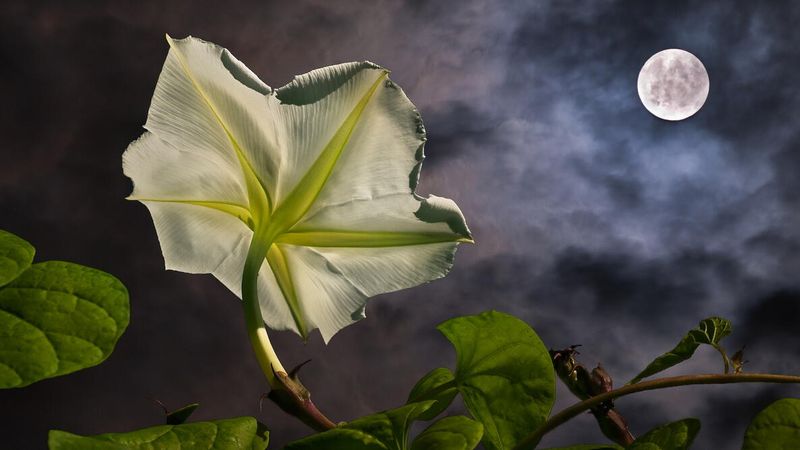
Placement is the detail that turns a well-grown vine into a genuine evening experience. Ipomoea alba’s flowers open toward dusk and stay open through the night, so a vine tucked along a back fence where no one walks after dark delivers far less enjoyment than one trained along a porch rail, over a garden gate, or up a post beside a seating area.
Put the plant where household members will actually be in the evening, and the fragrance and visual impact will reward that decision every night from mid-summer into fall.
The large white blooms stand out after dark in a way that colored flowers simply cannot match. White petals reflect available light, whether that comes from a porch fixture, a string of outdoor lights, or a bright moon.
Even on overcast nights, the flowers remain visible and the sweet fragrance carries through the air around a seating area. That combination of sight and scent makes the vine a natural anchor for an outdoor living space.
Wildlife observation is one of the quieter rewards of growing Ipomoea alba near a porch or patio. Arizona State University’s Ask A Biologist resource notes that night-blooming flowers with white petals and strong fragrance are well suited to pollination by night-flying insects, and University of Florida IFAS confirms that moonflower is associated with sphinx moths, also called hawk moths, which are large, fast-flying insects that hover at flowers much like hummingbirds do.
Spotting one of these moths working the blooms on a summer night is a genuinely striking sight.
That said, no vine guarantees a particular visitor. Sphinx moths may appear regularly, occasionally, or not at all depending on local populations and seasonal conditions.
Frame the placement as creating the right conditions for an encounter, not as a promise that a specific moth species or any bat, firefly, or other named animal will show up on schedule.
Check the scientific name before you handle the plant
“Moonflower” is an appealing common name, but it attaches to more than one plant, and that ambiguity carries real safety consequences. Before you buy seeds, accept a cutting from a neighbor, or handle any plant sold under the moonflower label, confirm that you are working with Ipomoea alba by its scientific name.
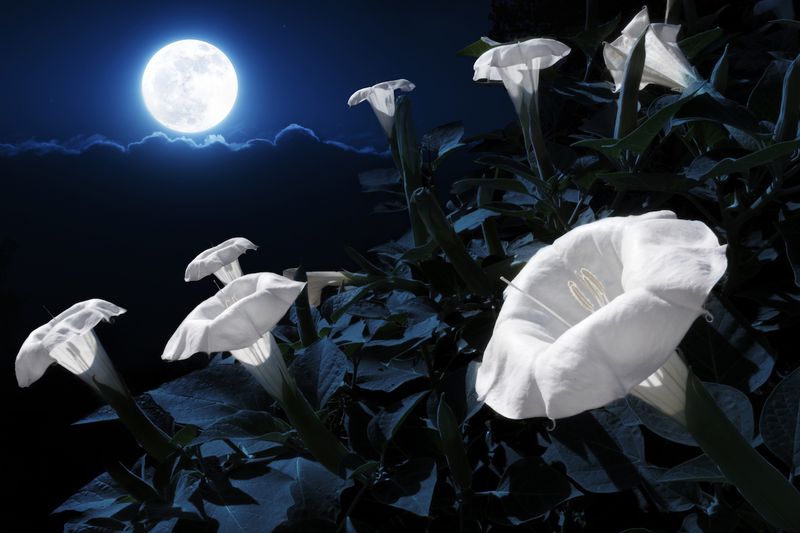
The same common name is sometimes applied to Datura stramonium, a plant that NC State Extension classifies as highly poisonous and that most gardeners know by its other common name, jimsonweed.
The two plants look nothing alike once you know what to look for. NC State’s profile for Datura stramonium describes an upright, weedy plant with large toothed or lobed leaves and distinctive spiny seed capsules.
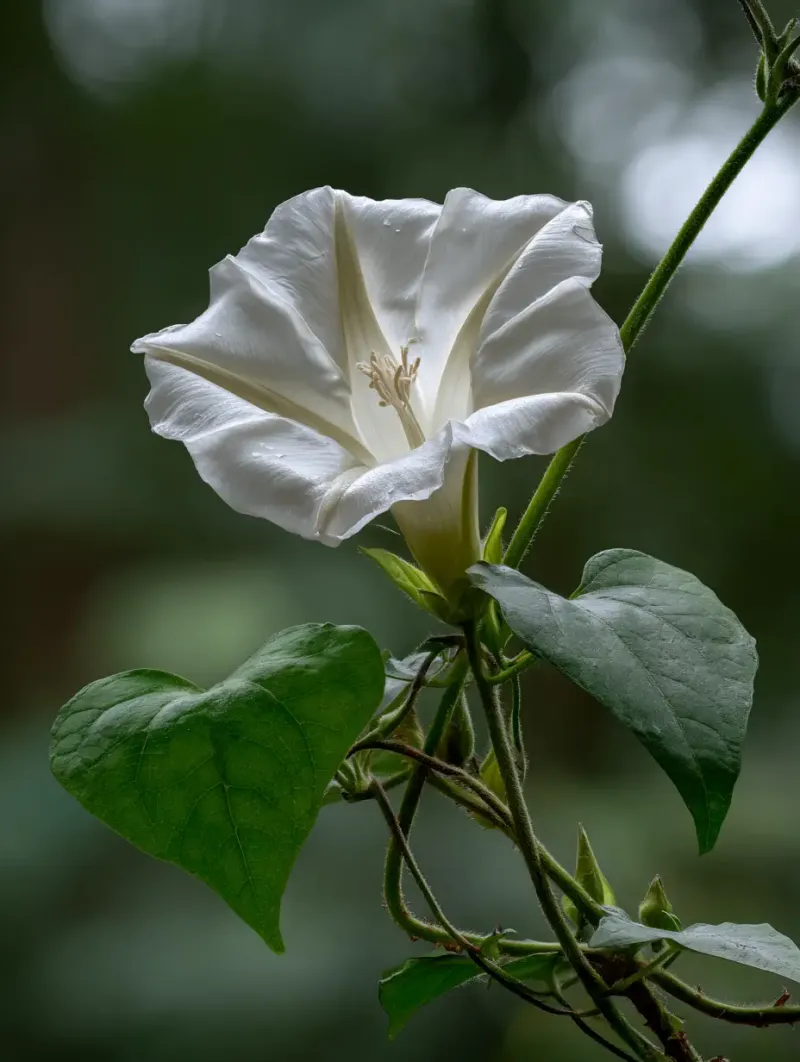
Ipomoea alba, by contrast, is a twining vine with smooth, heart-shaped leaves and no spiny pods. If the plant in front of you is standing upright like a shrub and has spiky round seed capsules, stop and do not handle it further.
Even with correctly identified Ipomoea alba, seed safety deserves attention. NC State Extension notes that the seeds contain indole alkaloids, and that large amounts may cause vomiting or hallucinations.
The ASPCA lists morning glory species, including close relatives of Ipomoea alba, as toxic to dogs, cats, and horses, with the seeds posing the greatest risk. Keep seed packets, harvested seed pods, and any saved seeds in a labeled container stored well out of reach of children and pets.
If a person may have swallowed seeds or any part of the plant, Poison Control’s guidance on morning glory ingestion is a helpful starting point, and you can reach the national Poison Control helpline at 1-800-222-1222 for immediate assistance. For pets, contact your veterinarian or an animal poison-control service right away.
Acting quickly and having the plant’s scientific name ready will help whoever you reach give you the most accurate guidance.
Grow the evening effect with realistic expectations
A successful moonflower season comes down to a few decisions made in the right order. Start with correctly identified Ipomoea alba from a reputable seed source, verify the scientific name on the packet, and give the vine a sunny spot with a sturdy support it can climb through the season.
Check your county’s current frost dates before you sow a single seed indoors, and do not move transplants outside until frost danger has genuinely passed for your region.
Place the vine where your household actually spends time after sunset, whether that is a porch, a patio corner, or an arbor over a walkway. The fragrance and the glowing white blooms are most rewarding when they are within arm’s reach of the people who planted them.
Store all seeds, pods, and seed packets securely away from children and pets, since the seeds contain compounds that can cause harmful symptoms and should never be treated as harmless.
Wildlife may visit, sphinx moths in particular, but no vine comes with a guaranteed guest list. The daytime sun is not the moonflower’s rival; it is the energy source that makes every evening bloom possible.
Think of the headline’s sun-and-moon contrast for what it is: a poetic way of saying that the best show in your garden this summer might just happen after you turn off the porch light and let your eyes adjust to the dark.