
What It Really Means When An Opossum Starts Prowling Your North Carolina Yard After Dark
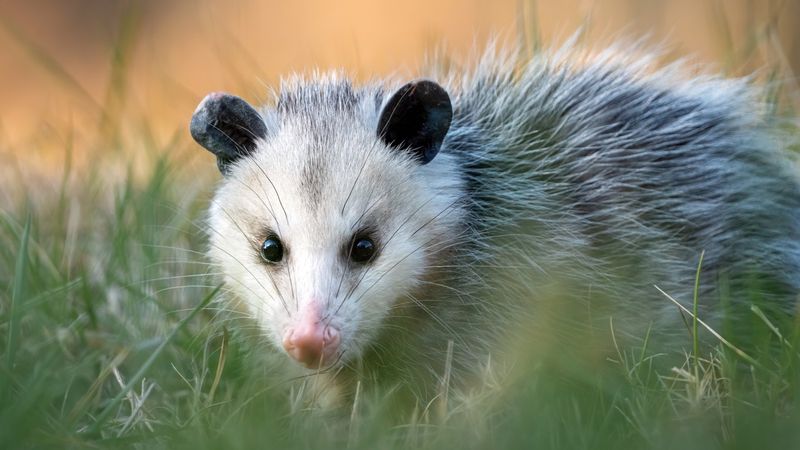
Spotting a pale, pointy-faced animal shuffling across your yard at midnight can be startling, but that visitor is almost certainly a Virginia opossum doing exactly what it does every night across North Carolina. Understanding why it showed up, and what it is actually after, turns a strange encounter into a useful lesson about your yard’s place in the local ecosystem.
The good news is that a nighttime opossum is rarely a sign of trouble, and knowing how to respond helps both you and the animal.
Meet North Carolina’s After-Dark Native
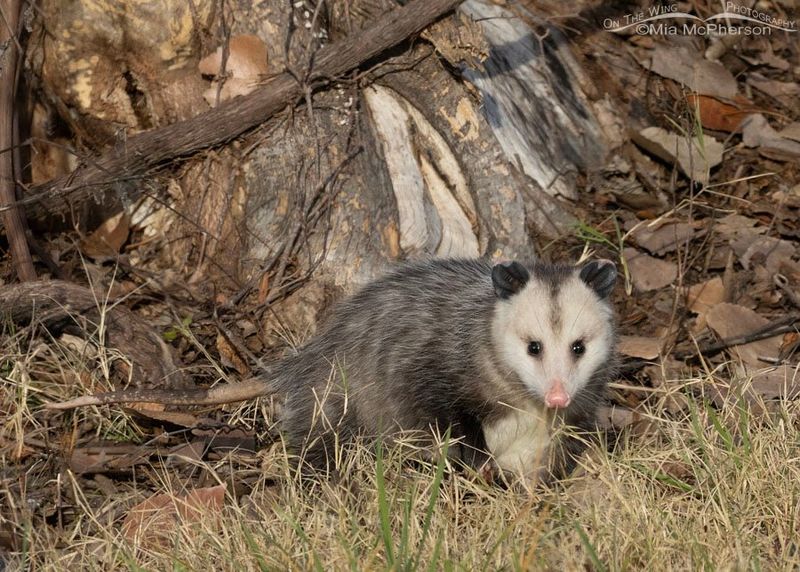
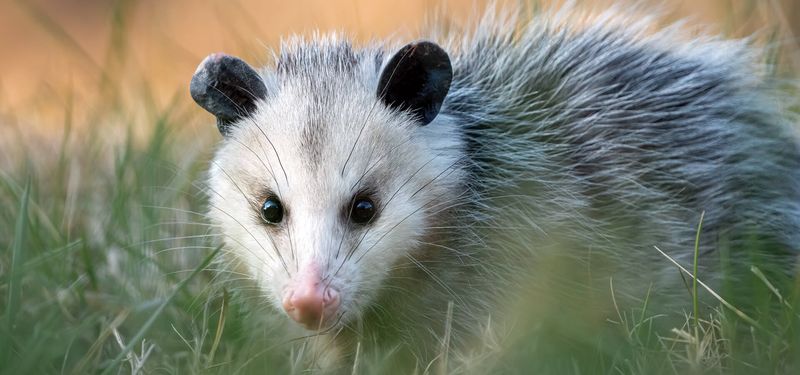
Across every county in North Carolina, from the Blue Ridge foothills to the Outer Banks, one animal has been quietly prowling after dark since long before suburbs existed. That animal is the Virginia opossum, Didelphis virginiana, and it holds a distinction no other mammal in the state can claim: North Carolina Parks confirms it is the only marsupial native to North Carolina, carrying its young in a pouch the way kangaroos do in Australia.
Adults typically weigh between four and fourteen pounds, sport coarse grey-and-white fur, a naked prehensile tail, and a narrow face full of fifty teeth.
Seeing one in your yard after dark is not a warning signal. Opossums are essentially nocturnal animals, and residential neighborhoods, especially those near wooded edges, streams, or green corridors, fall squarely within their normal range.
The North Carolina Wildlife Resources Commission (NCWRC) notes that opossums are active year-round and commonly forage in suburban yards, moving through whatever habitat offers food, shelter, or a usable path.
What the sighting does not tell you is equally important. A Virginia opossum crossing your lawn has not detected a tick infestation, diagnosed unhealthy soil, or arrived because your yard has a specific pest problem.
It is a widespread, adaptable native following available opportunities in its territory. Treating the visit as ordinary, which it is, puts you in a much better position to respond calmly and make smart decisions about coexistence.
What Is Drawing It Through Your Yard?
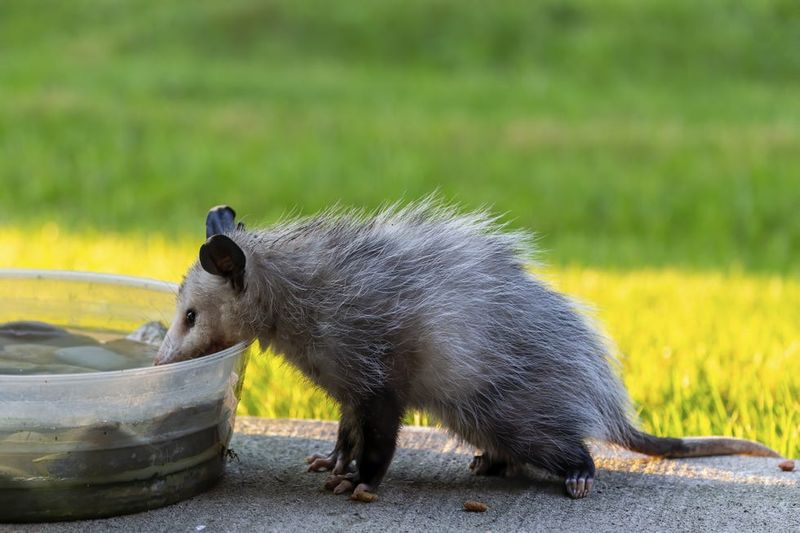
Opossums are opportunists, and a yard that offers food, water, shelter, or a convenient travel corridor is simply a yard they will use. Research on Virginia opossum activity near human development shows that these animals readily adjust their movement patterns to take advantage of resources in suburban and semi-rural areas.
That means your yard does not have to be unusual in any way to attract a visitor; it just needs to sit along a workable route.
Food is the most common pull. Unsecured garbage cans, outdoor pet food bowls left overnight, compost piles, chicken feed stored in flimsy containers, and fallen fruit beneath a pear or apple tree can all draw an opossum in for a closer look.
Water sources, including birdbaths, decorative ponds, and leaky outdoor spigots, add to the appeal, particularly during dry stretches in the Piedmont or the Coastal Plain.
Cover matters just as much. Brush piles, dense shrubs, gaps beneath decks or sheds, and spaces under low porches give the animal a place to rest during the day or shelter from predators at night.
Wooded edges and stream corridors, common features across North Carolina’s landscape, act as natural travel lanes that funnel opossums from one neighborhood to the next.
Walking your yard with a flashlight after reading this is a practical first step. Look for open or tipped garbage containers, pet food left outside after dark, gaps in your fence line or foundation, and any ripe or rotting fruit on the ground.
The NCWRC notes that removing access to attractants is often enough to encourage a regular visitor to move on within a few days. None of these features mean your yard is in poor shape; they simply mean you have some easy adjustments to make.
Its Cleanup Crew Reputation Has Some Truth
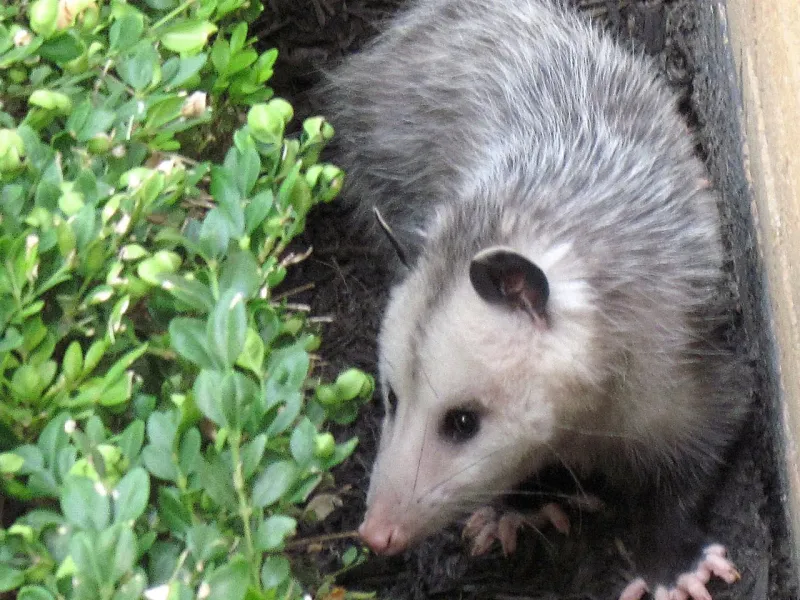
Opossums have earned a genuine, if sometimes overstated, reputation as nature’s cleanup crew. As broad opportunistic foragers, they consume a wide variety of food sources wherever they roam.
The NCWRC lists cockroaches, beetles, worms, snails, slugs, small snakes, moles, shrews, mice, rats, fruit, vegetation, carrion, and human-associated food waste among the things an opossum may eat depending on what is available in its territory.
That wide-ranging diet can make a Virginia opossum a useful, low-maintenance presence in a yard. An animal that picks off slugs damaging your hostas, consumes beetles in the leaf litter, or cleans up fallen fruit before it ferments and draws flies is performing a quiet ecological service.
The Association of Fish and Wildlife Agencies’ opossum best management practices describe the species as an opportunistic omnivore whose scavenging behavior can benefit local ecosystems.
The important caveat is that none of this is guaranteed or directed. An opossum does not arrive in your yard to solve a specific problem, and its foraging habits shift based on season, what happens to be accessible, and individual preference.
One night it may clean up fallen persimmons; another night it may be more interested in your compost bin.
Think of its role the way you would think of a generalist native species doing what it evolved to do, rather than a pest-control service you can rely on or direct. Welcoming that broad foraging role without expecting measurable suppression of any particular pest is the most accurate and realistic way to appreciate what the opossum actually contributes to a North Carolina yard.
The Tick Story Is More Complicated Than the Meme
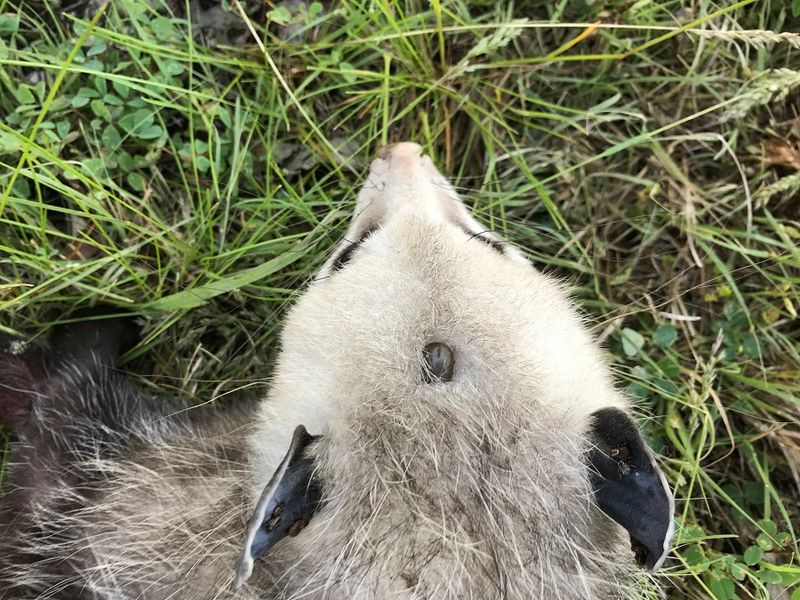
Few wildlife claims have spread as fast and as uncritically as the idea that a single opossum eats 5,000 or 5,500 ticks. That number gets shared across social media posts, backyard wildlife guides, and even some news articles, and it has convinced many North Carolina homeowners that a visiting opossum is a living tick-control service.
The actual science is more complicated, and more honest.
The origin of the tick story is a 2009 laboratory study in which researchers placed larval blacklegged ticks on opossums and several other host animals to see how many ticks successfully fed. That study found that opossums, along with some other hosts, killed a high percentage of larval ticks attempting to attach, apparently through grooming.
The researchers estimated, based on those lab conditions, that an opossum might kill thousands of ticks over a season. What the study did not establish is that wild opossums actively seek out and consume ticks in residential yards at that scale.
A 2021 study that examined stomach contents from 32 wild Virginia opossums in central Illinois found no ticks or tick parts in any sample. The researchers also reviewed 23 earlier opossum diet studies and found no reported ticks in any of them.
Their conclusion was that ticks are not a preferred diet item for wild opossums. The study was conducted in Illinois rather than North Carolina, and local tick species and habitat can vary, but its findings directly challenge the idea of the opossum as a reliable tick vacuum.
Broader scientific literature treats the opossum’s effect on tick abundance and human disease risk as unresolved or limited, and Penn State Extension concludes that opossums are not a proven tick-control strategy. Ticks dying during attempted feeding in a lab is a real finding; it is simply a different finding from one opossum clearing thousands of ticks from your Piedmont backyard.
Knowing that distinction protects you from skipping the tick-prevention steps that actually work.
Let the Visitor Pass—Then Remove the Invitation
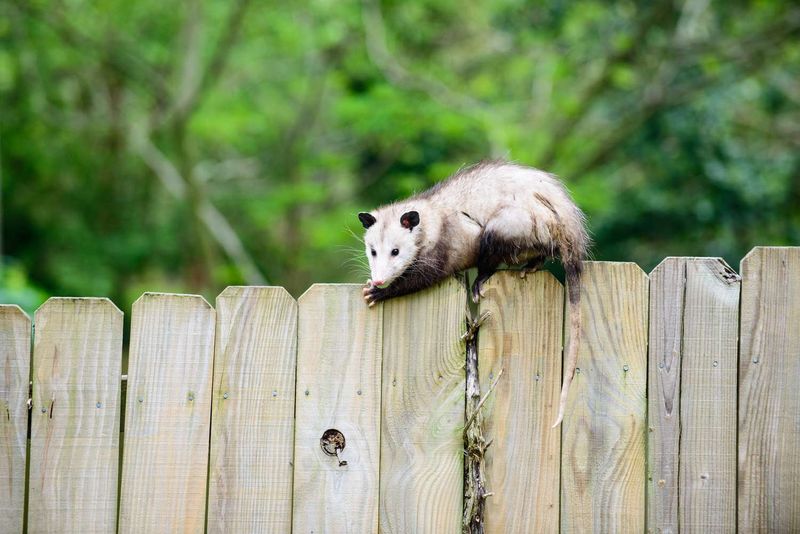
Watching an opossum shuffle across your yard is a perfectly reasonable thing to do from a safe distance. The animal is not dangerous to observe, and it will typically move on without any intervention.
What comes next, though, is where your choices make a real difference.
The single most effective thing you can do is remove what drew the animal in. Bring pet food bowls inside before dark, and do not leave them outside overnight.
Store chicken feed in hard plastic or metal containers with tight-fitting lids rather than in bags or open bins. The NCWRC advises that removing access to garbage and food often causes a regular opossum visitor to move on within a few days.
Pick up fallen fruit from beneath trees, and turn compost piles in a covered bin rather than an open heap.
Do not attempt to feed or bait an opossum, even if the goal is to observe it more closely. The NCWRC warns that intentionally feeding wildlife can spread disease, increase the number of animals visiting your property, create conflicts, and cause animals to lose their wariness around people.
An opossum that associates your yard with reliable food becomes harder to discourage and may attract raccoons, rats, and other wildlife alongside it.
If you keep chickens, opossums are a real concern. They occasionally enter chicken houses, eat eggs, kill young chicks, and may attack roosting adult birds.
A well-built predator-resistant coop with a secure hardware-cloth run, latching doors, and no gaps larger than half an inch will protect your flock more reliably than any other measure.
For a persistent conflict that exclusion and sanitation have not resolved, skip improvised trapping or relocation. North Carolina’s licensed wildlife-control agents can assess the situation, identify the access point, and resolve it legally and effectively.
Build Tick Protection That Does Not Depend on Wildlife
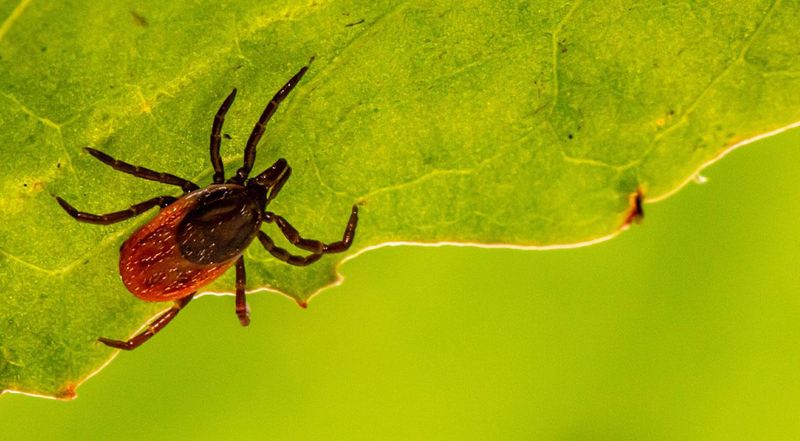
Whether or not an opossum visits your yard, your tick-prevention work stays the same. Relying on any wildlife species to manage tick exposure in a residential yard is not a sound strategy, and a nighttime opossum sighting is not a reason to skip the steps that actually lower your risk.
CDC guidance on tick prevention recommends removing leaf litter regularly, mowing your lawn on a consistent schedule, and clearing tall grass and brush near the house where ticks prefer to wait for a passing host. Where your lawn meets a wooded edge or shrub line, placing a three-foot-wide barrier of wood chips or gravel can reduce tick movement into the yard.
These steps matter across the Piedmont, the Coastal Plain, and the mountains, where blacklegged ticks, lone star ticks, and American dog ticks are all present.
Personal checks are non-negotiable after time outdoors, including time spent in your own backyard. Check your body from head to toe, paying close attention to the scalp, behind the ears, under the arms, around the waist, and behind the knees.
Shower within two hours of coming inside, and tumble dry clothing on high heat for ten minutes to kill any ticks that hitched a ride.
CDC’s Lyme disease prevention page recommends using EPA-registered insect repellents containing DEET, picaridin, IR3535, or oil of lemon eucalyptus on exposed skin, and treating clothing and gear with permethrin for additional protection. Pesticide treatments applied to the yard by a licensed applicator can reduce ticks in treated areas, but the CDC is clear that pesticides alone are not sufficient and should complement, not replace, landscaping and personal prevention habits.
Know When an Opossum Needs Professional Help
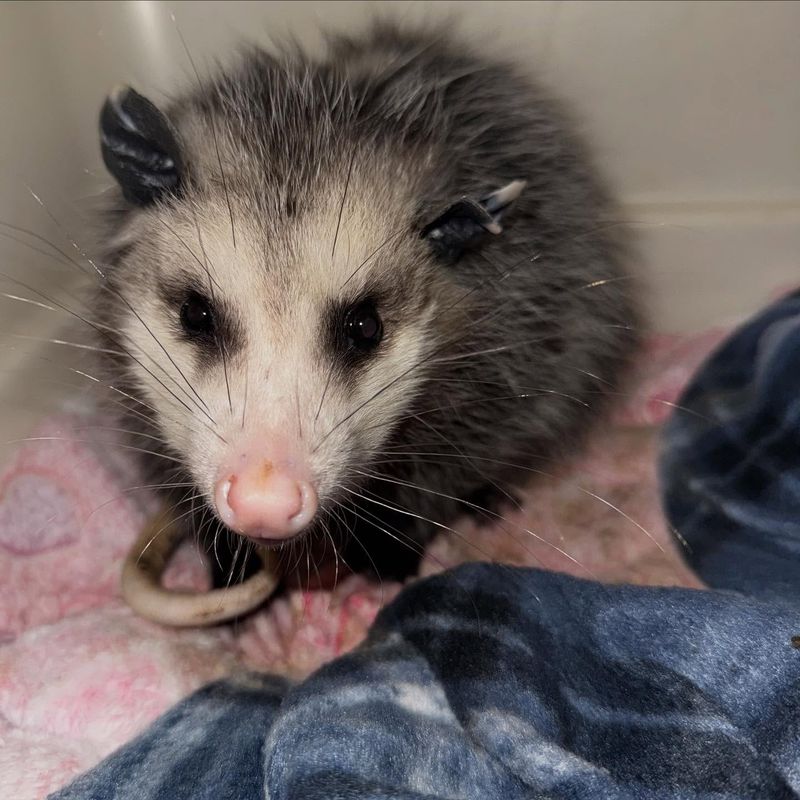
Most opossum encounters in a North Carolina yard are routine and require nothing more than observation from a respectful distance. Knowing the difference between normal behavior and a situation that needs outside help protects both you and the animal.
Daytime activity alone is not a reliable indicator of illness. The NCWRC notes that hissing, drooling, waddling, and even playing dead are normal defensive behaviors, not signs of disease.
An opossum that is moving slowly or acting sluggish on a cold night may simply be responding to temperature. What should prompt a call for help is a combination of more specific signs: an animal walking in tight circles, remaining exposed in the open for an extended period without retreating, showing an obvious injury such as a visible wound or a dragging limb, or appearing severely disoriented regardless of the time of day.
Juvenile opossums require special attention. If you find a lone young opossum smaller than approximately seven inches from nose to rump, not counting the tail, it is likely too young to survive on its own.
Live young discovered in the pouch of a dead female also need immediate care. In those situations, NCWRC’s injured and orphaned wildlife guidance directs you to contact a licensed small-mammal rehabilitator.
North Carolina law allows temporary possession of an injured or orphaned wild animal only if it is transferred to a licensed veterinarian or licensed wildlife rehabilitator within 24 hours.
On the topic of rabies: opossums are considered highly resistant to the disease, but no wild mammal should be handled without protection. If a person is bitten or scratched, wash the wound thoroughly with soap and water for at least 15 minutes and contact a healthcare provider promptly.
CDC rabies prevention guidance calls for a professional rabies-risk assessment after any direct contact with a wild mammal. Keep pets current on rabies vaccinations and separate them from any wildlife encounter.
For a persistent conflict beyond what exclusion can solve, the NCWRC wildlife problem FAQ explains why relocation is often ineffective and may be illegal, and points homeowners toward licensed wildlife-control professionals instead.
A Nighttime Opossum Is a Neighbor, Not a Diagnosis
Putting it plainly: a Virginia opossum moving through your North Carolina yard after dark is almost always doing what it has done for thousands of years, using whatever food, water, cover, or travel route your yard happens to offer. Its presence is not a yard audit, a tick alert, or a sign that something has gone wrong.
It is a native animal doing native-animal things in a landscape that has expanded around it.
Appreciating its broad foraging role, the beetles, slugs, carrion, and food scraps it cleans up along the way, is reasonable and accurate. Expecting it to solve your tick problem is not.
The NCWRC and the available research both support a simpler conclusion: the opossum is a useful generalist, not a targeted pest-control service.
Your practical response stays the same regardless of how you feel about opossums. Remove food attractants, secure your poultry, manage tick habitat through CDC-backed landscaping and personal checks, and contact a qualified professional if the animal is injured or the conflict continues.
A yard that takes care of its own business, rather than outsourcing it to a marsupial, is a yard that stays genuinely healthy for people, pets, and the native wildlife passing through it.