
The Invasive Shrub Quietly Taking Over North Carolina Backyards That You Should Pull Before Fall Ends
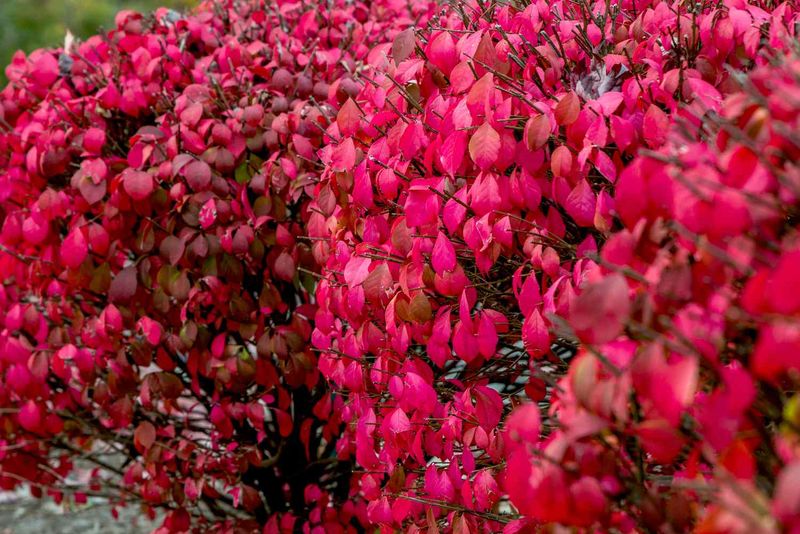
A shrub with fiery red fall color has been showing up in North Carolina yards, woodland edges, and forest margins for years, and many homeowners have no idea it can escape their landscaping and crowd out native plants nearby. That shrub is burning bush, also called winged euonymus or winged spindle tree, and fall is one of the best times to spot it and act.
Knowing how to identify it correctly, remove it safely, and replace it with something that actually supports local wildlife makes a real difference for your yard and the natural areas around it.
The red shrub in question is burning bush
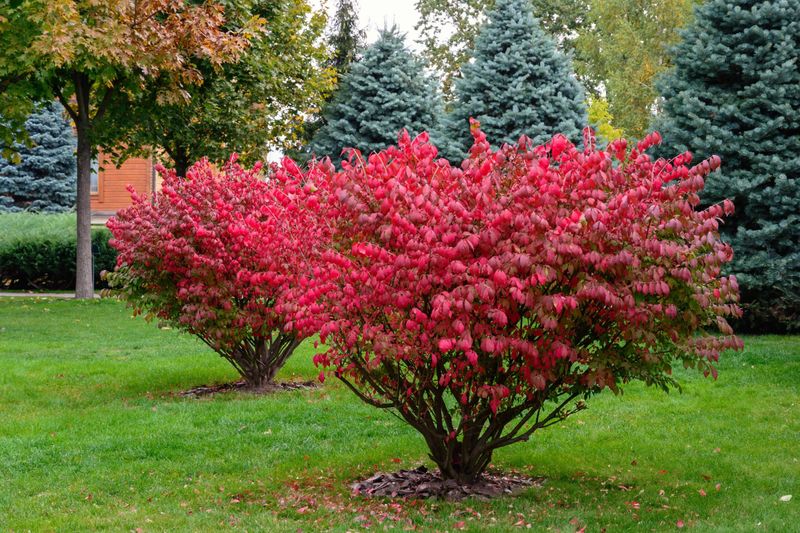
Burning bush goes by three names you might encounter on a nursery tag: burning bush, winged euonymus, and winged spindle tree. All three refer to the same plant, Euonymus alatus, a dense, multi-stemmed deciduous shrub that can reach roughly 15 to 20 feet tall and wide when fully mature, though cultivated forms sold at garden centers are often more compact.
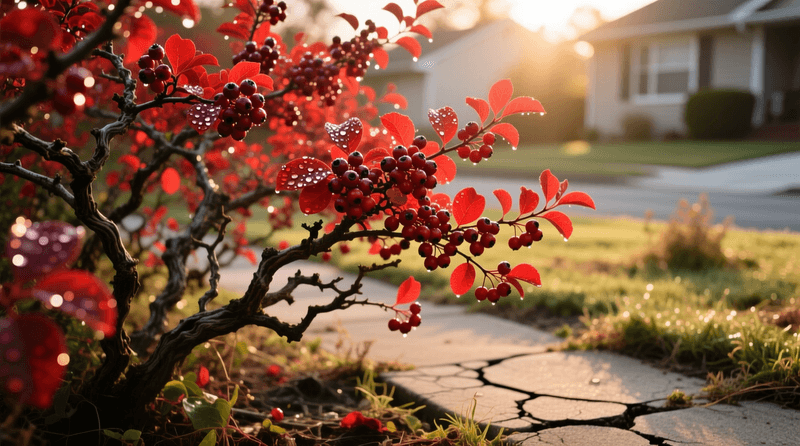
The fall display is genuinely striking. Leaves turn a brilliant, uniform red, and small capsules split open to reveal orange-red seeds tucked inside.
That color show is exactly what made burning bush a popular landscaping choice for decades. Red fall color is not enough to confirm the species, though, and acting on color alone can lead to a costly mistake.
The feature that actually clinches the identification is the corky ridge, or wing, running lengthwise along young stems. Run your fingers along a young branch and you will feel the raised, flat-edged ridges.
NC State Extension’s plant profile for winged euonymus lists these corky stem wings as the plant’s strongest distinguishing field mark. Leaves are opposite, simple, and generally 1 to 3 inches long.
Before pulling anything, check for a look-alike. Native eastern wahoo (Euonymus atropurpureus) grows in parts of North Carolina and also produces red fall foliage and red fruit.
Eastern wahoo lacks the prominent corky stem wings and has hairy lower leaf surfaces, among other distinguishing traits. NC Extension’s eastern wahoo profile can help you compare the two side by side.
If you cannot confirm the corky wings on the stems, pause and get a second opinion from your local extension office before removing the plant.
How burning bush escapes a landscaped yard
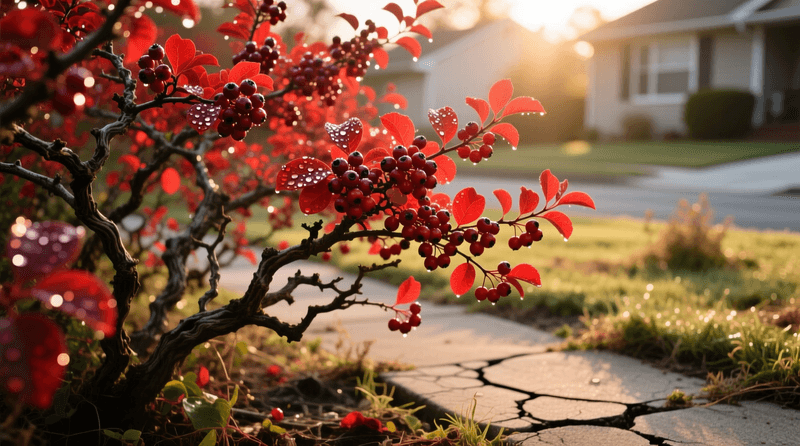
A burning bush sitting in a tidy landscape bed looks contained, but the plant has several routes out of the yard. The most direct is its fruit.
Birds and deer consume the small red capsules readily, and the seeds pass through their digestive systems intact before being deposited at a distance. A single mature shrub can produce a substantial number of seeds in a season, and once a bird carries them to a woodland edge or disturbed area, the seeds can germinate and establish without any help from the homeowner.
Spread does not stop at seed dispersal. Stem cuttings that fall to the ground during pruning can root under the right conditions, and established plants produce root suckers that extend the colony gradually.
NC Extension’s winged spindle tree profile notes that dense growth from escaped plants can outcompete native vegetation in the habitats where it establishes.
The concern is most documented along woodland edges, forest understories, and disturbed natural areas rather than inside well-maintained yards. The North Carolina Invasive Plant Council currently lists burning bush as a rank-2 invasive in the Mountains and Piedmont regions.
The Coastal Plain is not included in that listing, so the documented regional concern is not uniform across the entire state.
That distinction matters for how you frame the problem. A burning bush in your yard is not automatically destroying the ecosystem around it, but if you live near a wooded edge in the Mountains or Piedmont, the risk that fruit-eating wildlife will carry seeds into natural areas is real and worth taking seriously.
Removing or managing the plant reduces the number of seeds that can leave your property each season.
Fall is a useful window, not a last chance
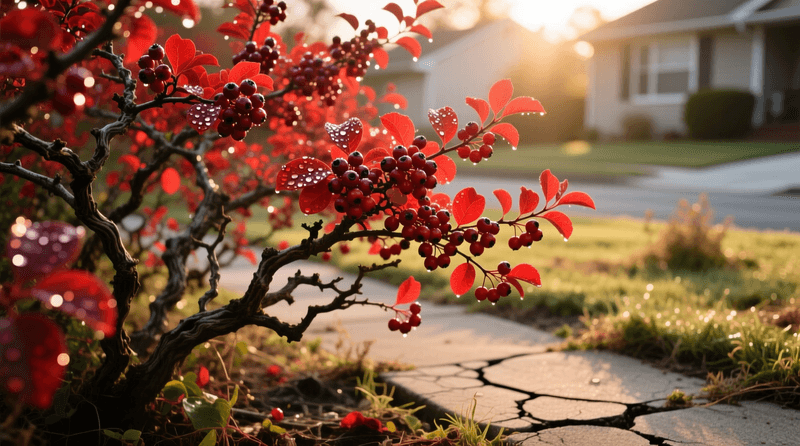
Autumn makes burning bush easier to find than at any other time of year. While native shrubs and trees shift through a range of yellow, orange, and brown, burning bush turns a uniform, almost neon red that stands out sharply along fence lines, woodland edges, and forgotten corners of the yard.
The fruit is also visible and may still be attached to the plant, giving you a clear picture of how much seed-bearing material is present.
Removing the plant before fruit fully matures and disperses can reduce the number of seeds that leave your property. NC Extension’s control guidance recommends treating or removing plants to prevent further seed production and spread, which is part of why fall gets attention as a removal window.
If fruit is already present when you remove the shrub, the seeds are viable and must be contained rather than left on the ground.
There is no hard biological deadline at the end of fall, though. A burning bush you find in December or January is still worth removing.
After leaf drop, the corky stem wings remain visible on bare branches, and the plant can still be correctly identified and pulled or treated. USDA Forest Service guidance on invasive plant management in the southern forest supports dormant-season control as a practical option for many woody invasives.
Use fall as a prompt to walk your property with fresh eyes. Check around the base of established shrubs for seedlings, scan fence lines where birds perch and deposit seeds, and look at the edges where your yard meets any natural areas.
You may find plants you never noticed before.
Pull young plants with their entire root system
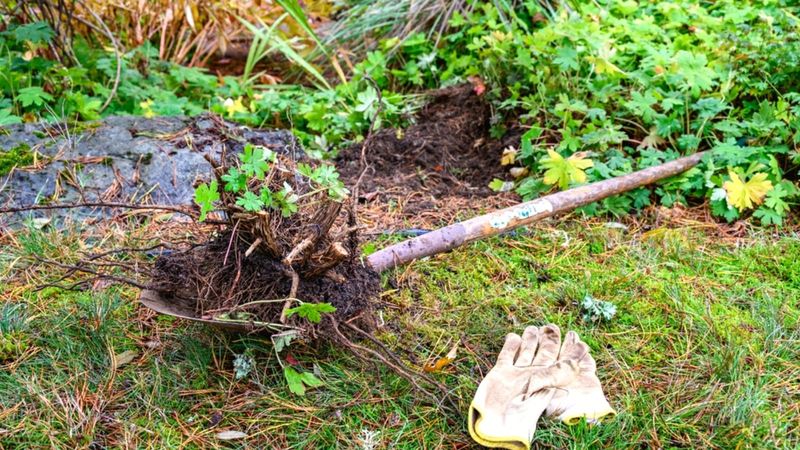
Young seedlings and small plants are the easiest burning bush to manage, and getting them out now prevents a much harder job later. The key is removing the complete root system, not just snapping the stem at the surface.
A broken stem left in the ground with an intact root crown can regrow, sometimes sending up multiple new shoots.
Hand-pulling works well when the soil is moist, which makes roots release more cleanly. Grip the plant as low as possible, close to the soil line, and pull steadily rather than jerking.
Wet soil after rain is ideal. NC Extension recommends a hoe or root-wrenching tool for plants that are too large to hand-pull cleanly, giving you the leverage to lift the root crown without leaving pieces behind.
For seedlings that have grown past the hand-pull stage but are not yet mature shrubs, a narrow digging tool or a root wrench lets you loosen the soil around the root ball before lifting. Slide the tool several inches from the stem to avoid cutting roots you need to remove.
USDA Forest Service invasive plant guidance warns that remaining roots or root crowns are a common reason for regrowth after seemingly successful removal.
After pulling, shake loose soil back into the hole to reduce disturbance to the surrounding area, then fill and tamp the spot. Return to the same area two to four weeks later and again the following spring.
Seeds already in the soil can germinate after the parent plant is gone, and a single follow-up visit can catch a new flush of seedlings before they establish. Mark the spot so you remember to check it.
Plan for resprouting when removing a mature shrub
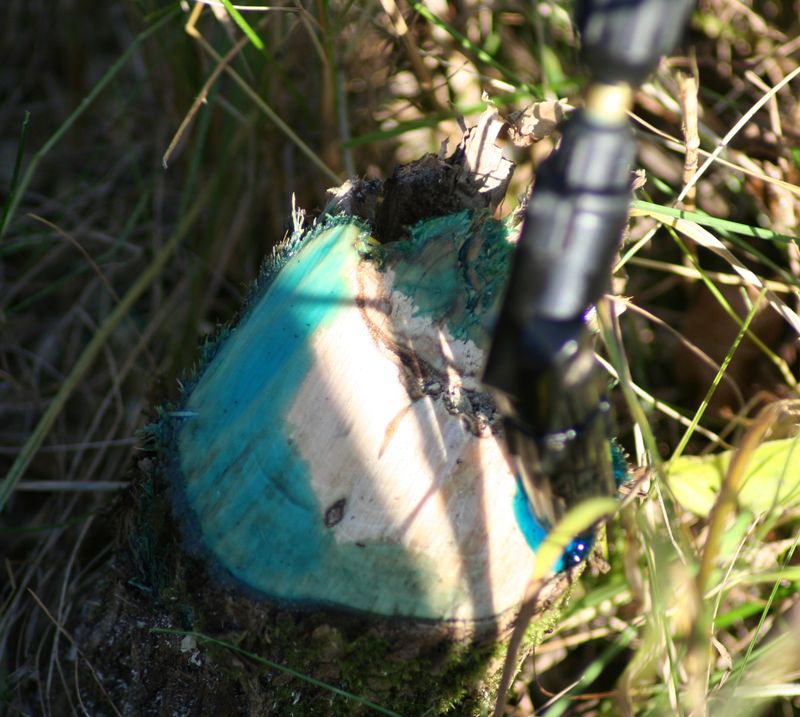
Mature burning bush shrubs require a different approach than seedlings. A large, established plant has a substantial root system with stored energy, and cutting the stems to the ground often triggers vigorous resprouting from the base.
Many homeowners cut a burning bush back in the fall and are surprised to find a cluster of new shoots emerging the following spring, sometimes thicker than before.
Repeated cutting can eventually exhaust the root system, but it takes persistence across multiple growing seasons. A more reliable option for a single removal effort is a cut-stump treatment, which pairs physical cutting with a targeted herbicide application.
The method works by disrupting the plant’s ability to move nutrients from the cut surface before the root system can respond. USDA Forest Service guidance on invasive plants in the southern forest identifies cut-stump treatment as an appropriate technique for woody invasive shrubs that resprout after cutting.
The process involves cutting the stem close to ground level and immediately applying the herbicide to the cut surface and cambium layer, which is the thin ring of tissue just inside the bark. Timing matters: the application should follow the cut within minutes to be most effective.
The EPA pesticide product label is the governing document for any herbicide you use, specifying the permitted concentration, application method, weather restrictions, and required personal protective equipment. Never improvise a mixture or exceed label rates.
Avoid foliar spraying around desirable native plants. Herbicide drift and, with some products, root uptake through shared soil can injure non-target vegetation even when you are careful.
Keep children and pets away from treated areas for the time period the label specifies, and contact your county’s NC Cooperative Extension office if you have questions about which products are appropriate for your site and situation. A professional applicator is a reasonable option for large or difficult plants.
Contain fruit and dispose of the material lawfully
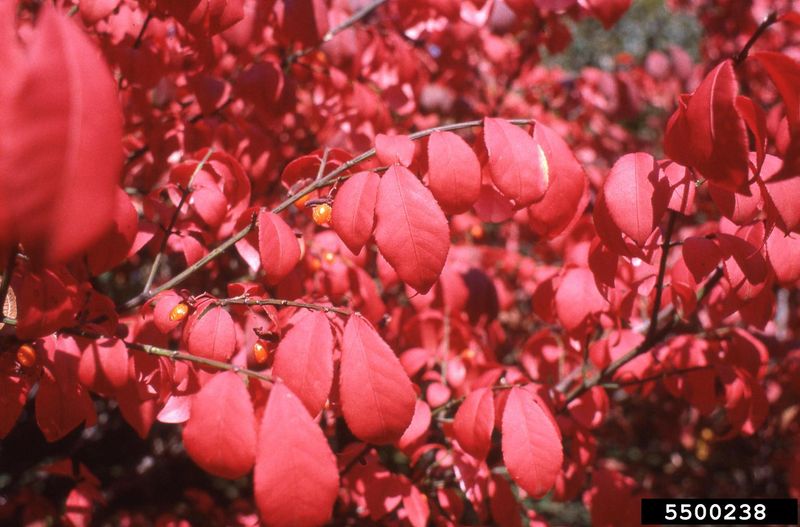
Fruit on a burning bush you are removing is not a reason to wait, but it does change how you handle the material. Seeds inside mature capsules remain viable even after the branch is cut, so leaving fruit-bearing stems on the ground or tossing them loosely into a brush pile creates a new dispersal point right where you were trying to eliminate one.
Bag removed branches and fruit in heavy plastic bags before moving them across the yard. USDA Forest Service invasive plant management guidance recommends disposing of fruit-bearing material in a dumpster or through an approved disposal method rather than leaving it on-site.
Check with your municipality about whether bagged invasive plant material can go in regular yard waste or trash pickup, since rules vary by county.
Burning removed shrubs is not a casual fallback option in North Carolina. The NC Forest Service’s open burning permit system governs when and where residential burning is allowed, and burn bans, county-level restrictions, and weather conditions can all prohibit a fire on any given day.
Dry or windy fall conditions make open burning particularly risky, and the Forest Service recommends considering alternatives before burning.
One safety note on handling: NC Extension describes burning bush as having low-severity poisonous characteristics related to ingestion, not ordinary skin contact. You do not need to treat the plant as hazardous to touch, but no one should eat any part of it, and children should not handle or mouth the fruit.
Wearing gloves while working is a reasonable practice for any yard project involving unfamiliar plant material.
Choose a replacement that fits the site
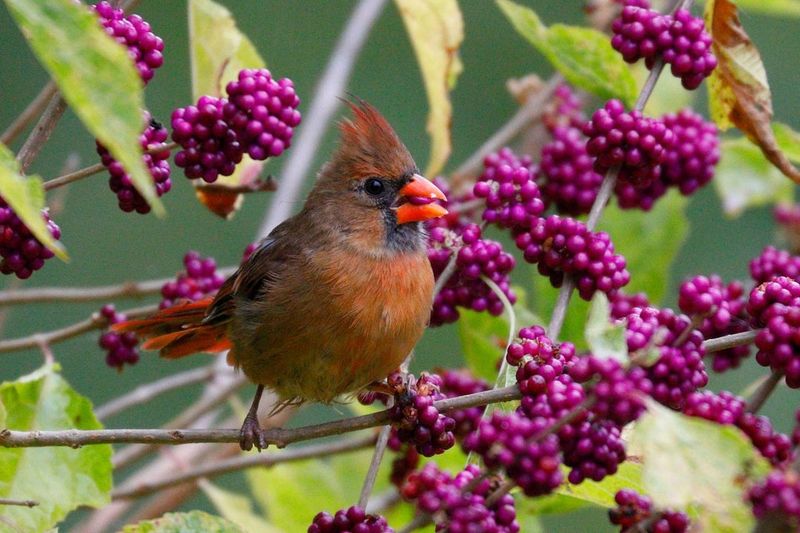
Bare soil left after removing a shrub is an open invitation for the next weed or invasive to move in. Planting a replacement promptly closes that gap and gives the site a better long-term trajectory.
The goal is matching the plant to your specific conditions rather than picking a favorite and hoping it works.
Start with your site’s basics: sun exposure, soil moisture, and region within North Carolina. A rain-collecting low spot in the Piedmont calls for different plants than a dry, sunny slope in the mountains.
The North Carolina Wildlife Federation’s native shrub guide lists pollinator- and wildlife-friendly options with habitat notes that help narrow the choices for your yard.
Several natives work well in spots where burning bush was growing. Spicebush (Lindera benzoin) tolerates shade and moist soil and supports specialist insects.
Red chokeberry (Aronia arbutifolia) handles wet or dry conditions and produces persistent red fruit that birds use through winter. Native viburnums, including arrowwood viburnum, provide dense cover and fruit clusters across a range of light conditions.
Beautyberry (Callicarpa americanaIlex verticillata) thrives in part shade and produces vivid purple fruit in fall. Winterberry holly () needs moisture and offers some of the most striking winter fruit for birds.
Wax myrtle (Morella cerifera) is a fast-growing evergreen option well suited to the Coastal Plain and parts of the Piedmont.
NC Extension’s guide to managing edges for wildlife and their resource on managing backyards for birds both offer regionally grounded guidance on shrub selection for habitat value. A native replacement does not instantly restore a complex ecosystem, but it does give native insects, birds, and other wildlife something they can actually use.
Keep monitoring after the first removal
Removing a burning bush is a starting point, not a finish line. Seeds already in the soil can germinate the following spring, and any root fragments left behind may send up new shoots.
NC Extension’s guidance on burning bush notes that monitoring for regrowth and new seedlings is a necessary part of long-term control.
Mark the removal site and check it at least twice in the first year: once in spring when seedlings are most likely to emerge, and again in late summer. Pull any new seedlings while they are small and the root system is still shallow.
For a mature shrub that was cut and treated, look for resprouts from the base and treat them promptly rather than letting them re-establish. USDA Forest Service invasive plant guidance emphasizes follow-up visits as essential to preventing reinvasion after initial removal.
Also scan the area around where the plant stood. Birds that perched in or near the shrub may have deposited seeds in the surrounding soil over several seasons.
A five-foot radius check around the original plant can catch seedlings before they become the next problem. Once your replacement native is established and the site is covered, regrowth becomes easier to spot and manage.
Choosing a site-appropriate native from the NC Wildlife Federation’s shrub list gives the replacement the best chance of filling in quickly and outcompeting stragglers. The real payoff is a yard that stops sending seeds into your neighbors’ woods every autumn.