
If Your Geraniums Bloom Small And Sparse, Here Are 18 Feeding Moves That Make Them Bigger And Bolder
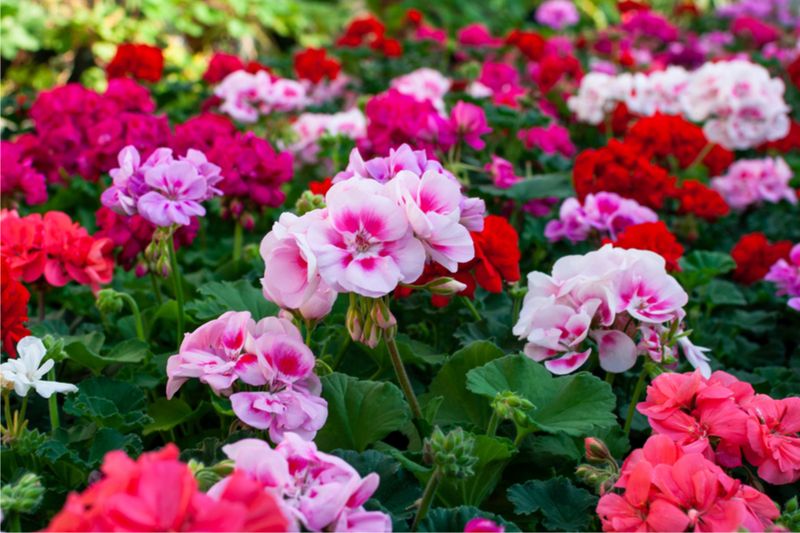
Geraniums are supposed to explode with color, but sometimes you get a plant that just gives you a few tiny, disappointing flowers. Most of the time, the problem is not the plant at all.
It is what you are feeding it, when you feed it, and how. These 18 simple feeding moves will help your geraniums push out bigger, bolder, and way more plentiful blooms all season long.
1. Choose a fertilizer high in potassium
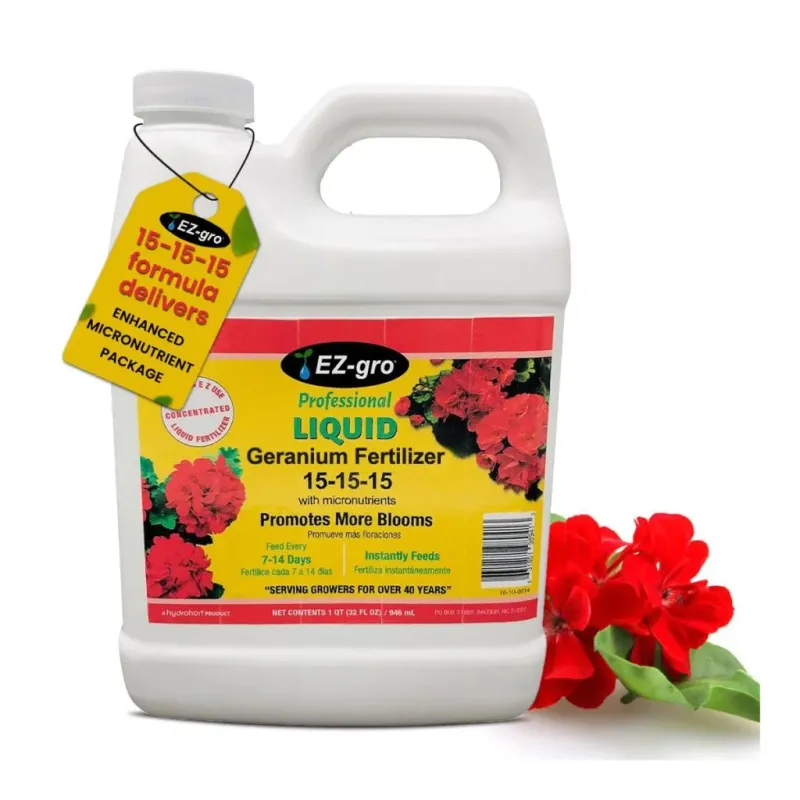
Potassium is the quiet workhorse behind every showy geranium bloom. It helps the plant pull water up through its stems and turn sunlight into the sugars that fuel flower production.
When you check a fertilizer label, look at the third number in the NPK ratio. If that number is high, you are giving your geraniums exactly the boost they need to swap skinny blooms for fat, colorful clusters.
Think of potassium as the ingredient that helps your plant actually use everything else you feed it. Without enough of it, geraniums can look green and healthy but stubbornly refuse to flower well.
2. Prioritize phosphorus for flower development
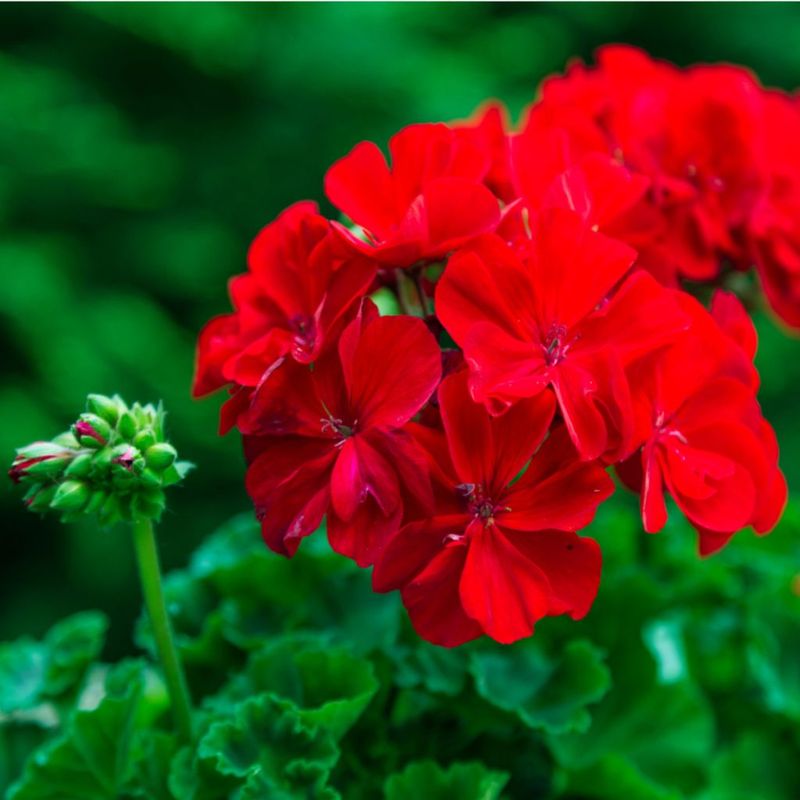
If potassium powers the blooms, phosphorus builds them. This nutrient drives cell development and the formation of flower buds, which means more phosphorus can lead directly to more blossoms.
A geranium starved of phosphorus tends to stall out with just a handful of flowers. Feeding it a formula with solid phosphorus content encourages the plant to set bud after bud instead of coasting on leaves alone.
Watch for that middle number on your fertilizer bag. When it is generous, your geranium has the raw material it needs to keep cranking out new flowers.
3. Avoid excessive nitrogen, especially for blooming
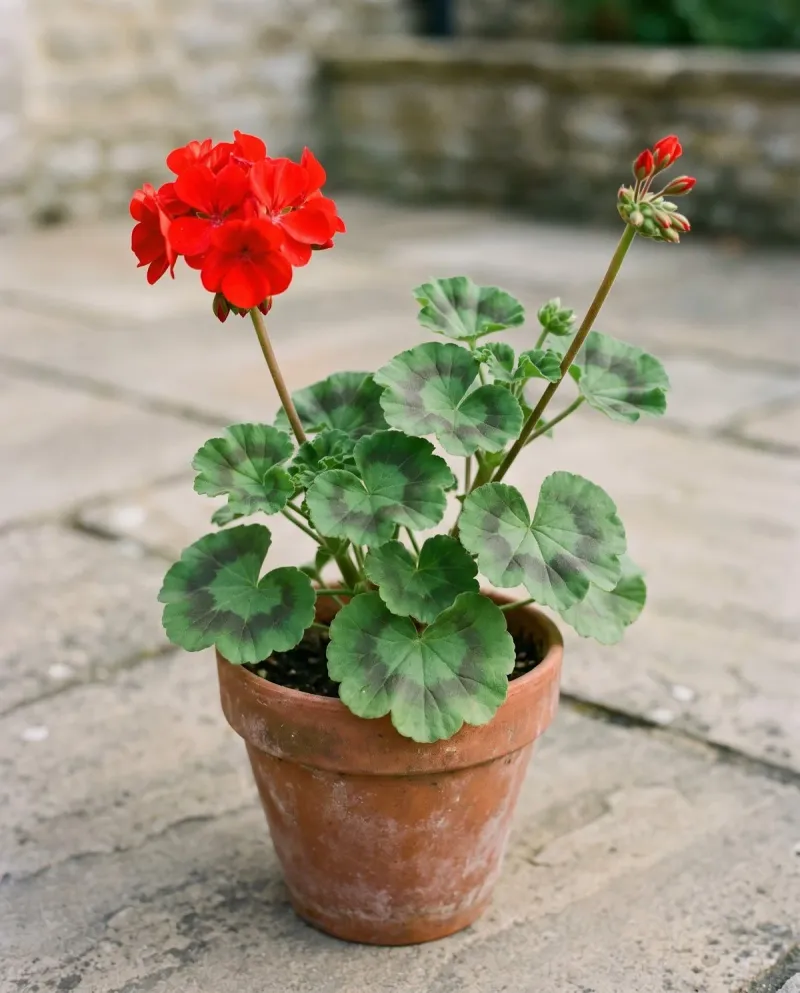
Here is a mistake that trips up a lot of well-meaning gardeners. Nitrogen makes leaves grow lush and green, so it feels like progress, but too much of it tells your geranium to build foliage instead of flowers.
You end up with a big, bushy plant and barely any color. The plant is not sick, it is just following the signal you accidentally sent.
Ease up on high-nitrogen feeds during blooming season. Let phosphorus and potassium take the lead, and those leaves will finally start making room for flowers.
4. Start with a balanced fertilizer in spring
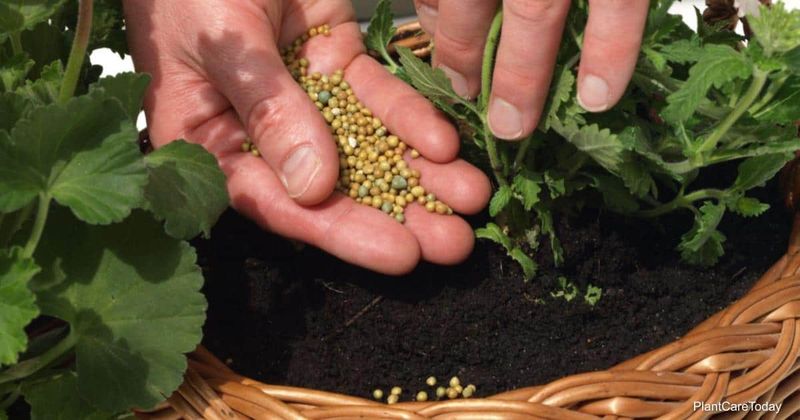
Spring is not the time to force blooms, it is the time to build a strong plant. Young annual geraniums do best with a gentle start, and a balanced liquid fertilizer around a 4-6-8 NPK ratio gives them well-rounded support.
A balanced feed helps roots, stems, and early leaves develop together. That sturdy foundation is what lets the plant carry heavy flower heads later without flopping over.
Get the base right in spring and every feeding move after this one works better. Rush straight to bloom boosters on a weak plant and you will be disappointed.
5. Switch to a bloom-boosting formula when buds appear
The moment you spot those first tiny buds, it is time to change gears. Switching to a fertilizer with higher phosphorus tells your geranium to keep the flowers coming instead of pausing.
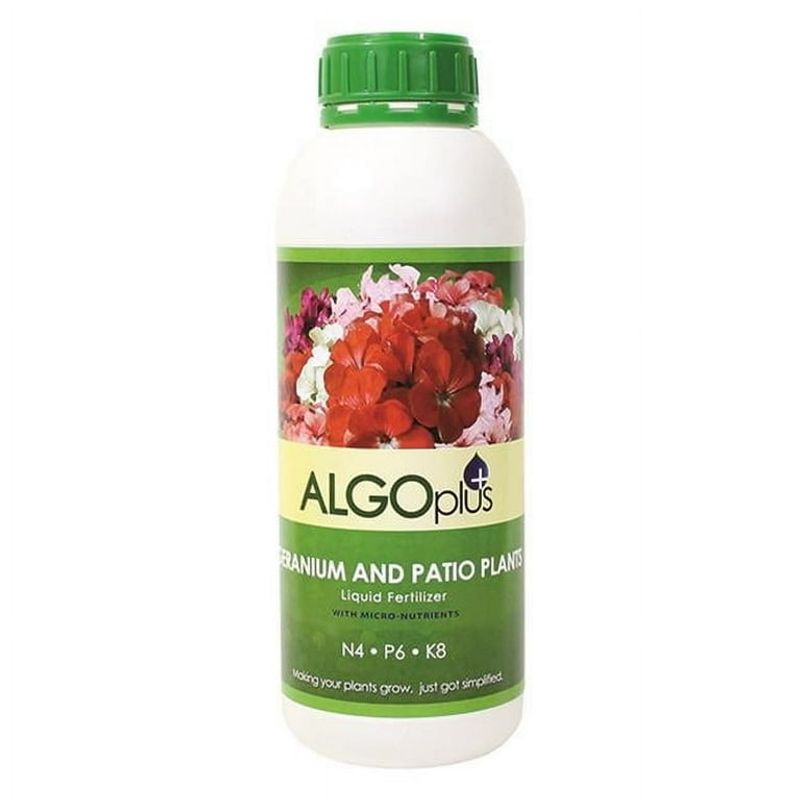
Specialty blends made for these plants, like ALGOplus Geranium and Patio Plants Liquid Fertilizer with a 4-6-8 ratio, are formulated to support continuous flowering right when it matters most.
Timing is the trick here. Make the switch too early and you waste it on a plant that is not ready.
Make it right as buds form and you unlock a steady parade of blooms.
6. Apply liquid fertilizers at half the recommended strength
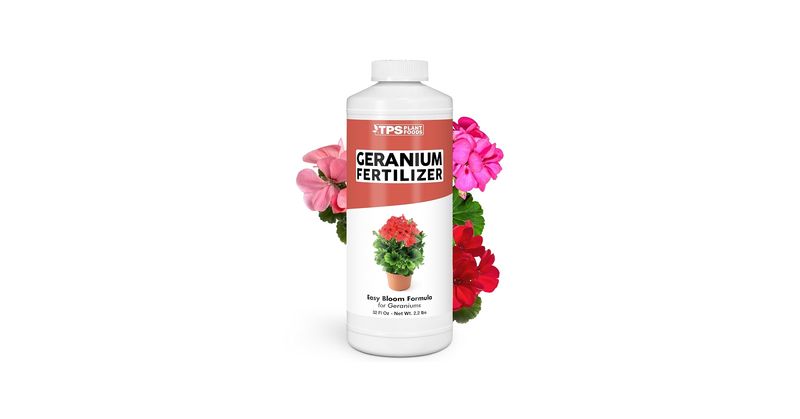
More is not better when it comes to feeding, and this move proves it. Cutting your liquid fertilizer to half the recommended strength protects your geraniums from a rough case of overfeeding.
Too much fertilizer at full dose can burn roots and leave you with yellowing, crispy leaves instead of blooms. A weaker, gentler mix keeps the plant fed without the shock.
You can always feed a little more often at half strength. Your geraniums will thank you with steady growth rather than a burnt, sulking response.
7. Fertilize annual geraniums regularly during the growing season
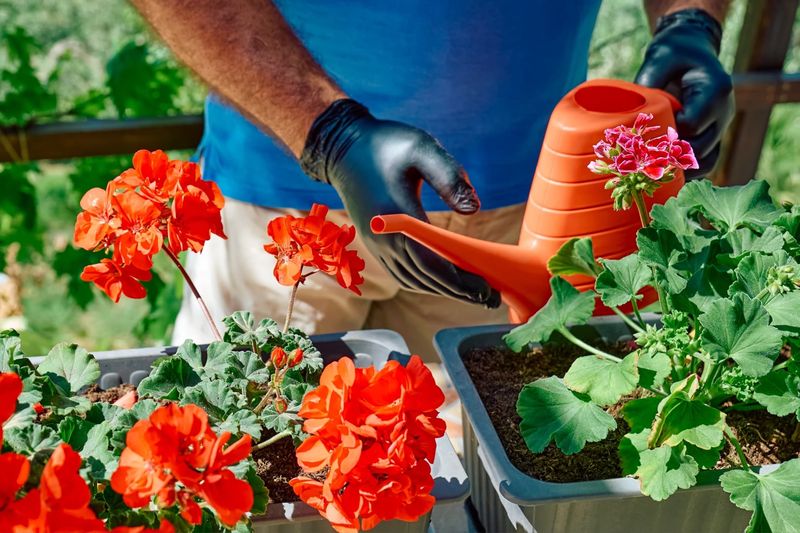
Container geraniums are hungry plants. Gardeners call them heavy feeders for a reason, and they burn through nutrients faster than plants in the ground.
Feeding every one to two weeks during the growing season keeps them stocked up and blooming. Skip too many feedings and the flowers shrink and slow right down.
Set yourself a simple reminder so it becomes routine. Consistent feeding is often the single difference between a pot that fizzles and one that stays loaded with color all summer.
8. Water thoroughly before applying liquid fertilizer
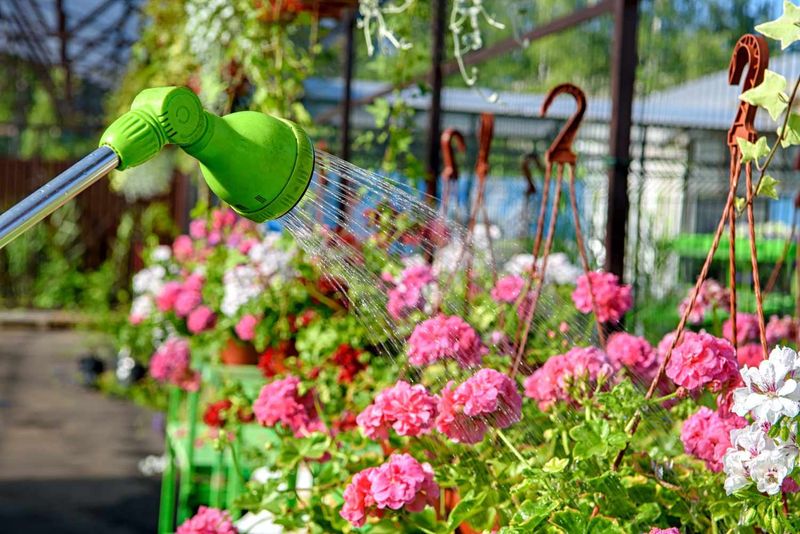
Pouring fertilizer onto bone-dry soil is asking for trouble. Dry roots soak up concentrated nutrients too quickly, and that can scorch them.
Give your geraniums a good drink of plain water first, then follow with your fertilizer. The moist soil spreads the nutrients out gently and keeps the roots safe.
It is a tiny extra step that takes seconds. That small habit can be the reason your plant stays lush instead of ending up with brown, burned edges.
9. Ensure ample watering when using liquid fertilizers
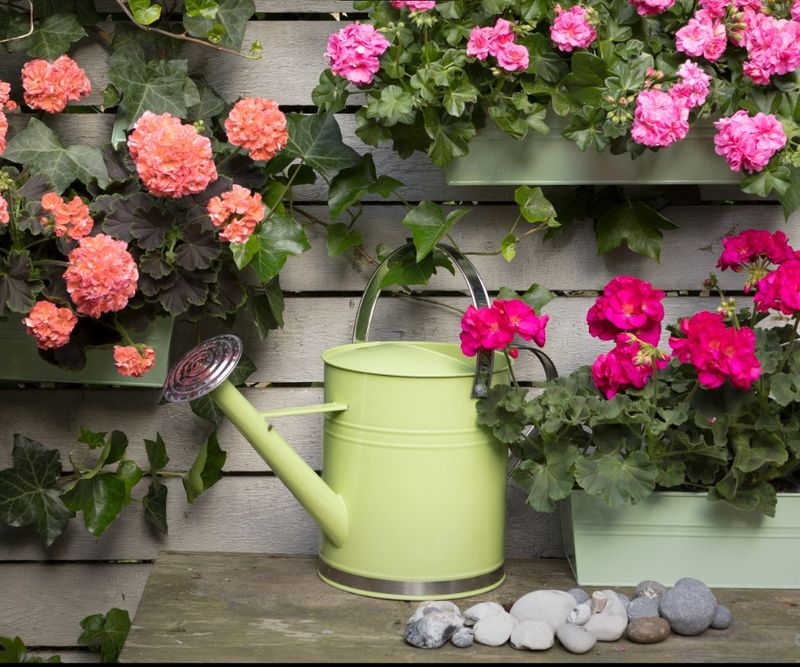
Fertilizer leaves behind salts, and in pots those salts can quietly pile up. Over time that buildup damages roots and stalls the very blooms you are trying to grow.
Watering generously, so some drains out the bottom, flushes those excess salts away. Think of it as rinsing the soil clean between meals.
Potted geraniums are especially prone to this problem because there is nowhere for the salts to go. A good soak keeps their root zone fresh and blooming strong.
10. Incorporate slow-release granular fertilizer at planting
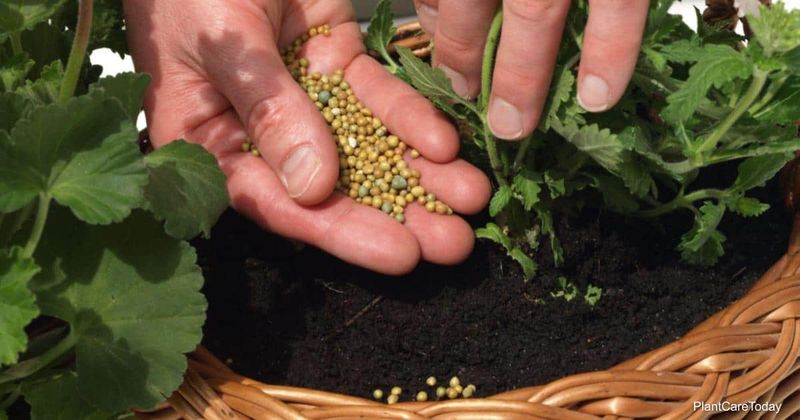
Some of the best feeding happens before your geranium ever blooms. Mixing slow-release granular fertilizer into the soil at planting time sets up a steady drip of nutrients for weeks or months.
These granules release their food gradually, so your plant gets a reliable background supply even between your liquid feedings. It works for both annual and perennial geraniums.
Consider it your insurance policy against forgetful weeks. Even if life gets busy and you miss a feeding, the granules keep quietly working underground.
11. Topdress with high-quality organic compost
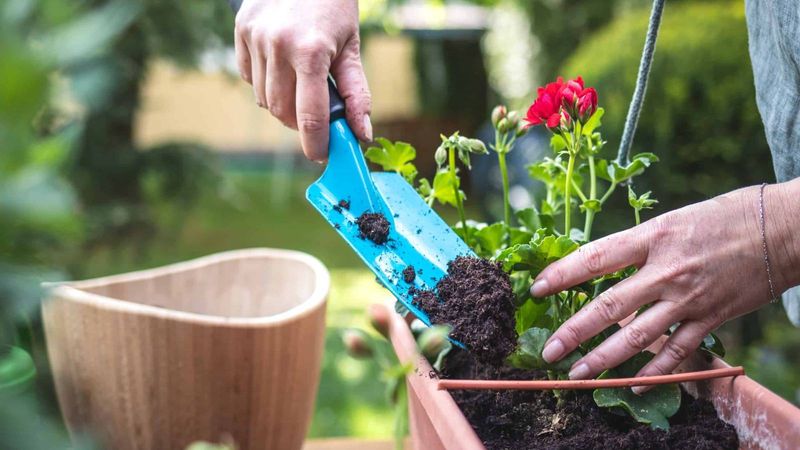
Compost is like a slow, steady buffet for your geraniums. Spreading a layer of quality organic compost over the soil surface feeds the plant gently as it breaks down.
Beyond nutrients, compost improves how well the soil holds water, which means fewer dry spells stressing your blooms. Healthier soil almost always means healthier flowers.
It is one of the most forgiving moves on this list. You really cannot overdo a modest topdressing, and your geraniums soak up the benefits over time.
12. Use banana peels or banana peel tea
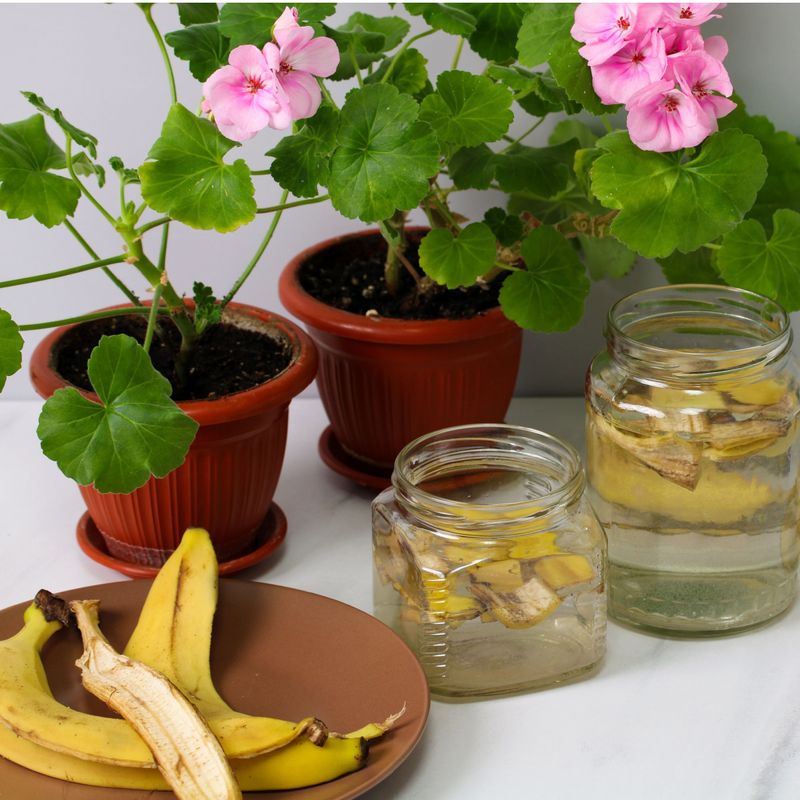
Do not toss that banana peel, your geraniums might love it. Banana peels are packed with potassium, the same nutrient that fuels big, bold blooms.
You can chop peels into the soil or soak them in water for a day or two to make a simple peel tea, then pour that around the base of your plants.
It is a nearly free supplement that turns kitchen scraps into flower food. For a plant that craves potassium, this humble peel is a surprisingly handy boost.
13. Add crushed eggshells to the soil
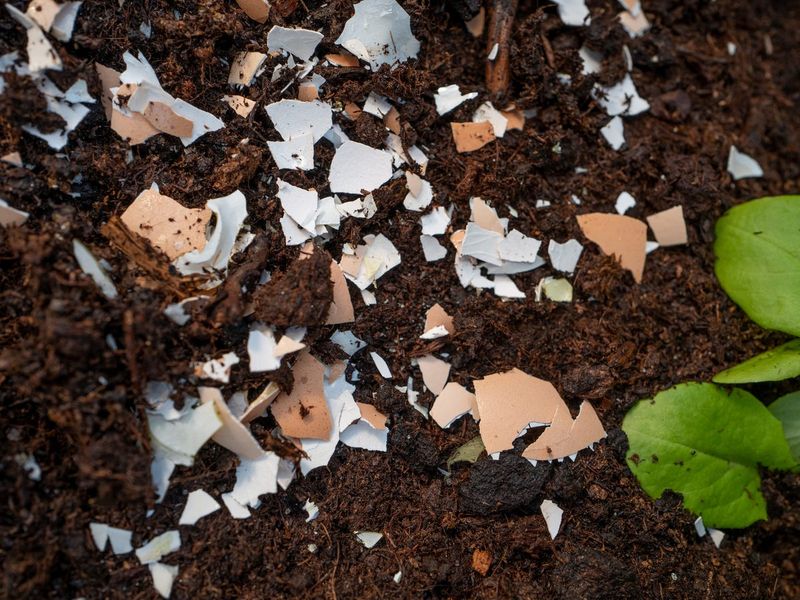
Big flower heads need strong stems and cell walls to hold them up, and calcium is what makes that happen. Crushed eggshells are an easy, natural way to add calcium to your geranium’s soil.
As the shells slowly break down, they release calcium that strengthens the plant from the inside out. Sturdier tissue means your geranium can support those magnificent bloom clusters without struggling.
Rinse and crush your shells before adding them so they blend in easily. It is a tidy way to give leftover breakfast a second life in the garden.
14. Integrate coffee grounds into the soil
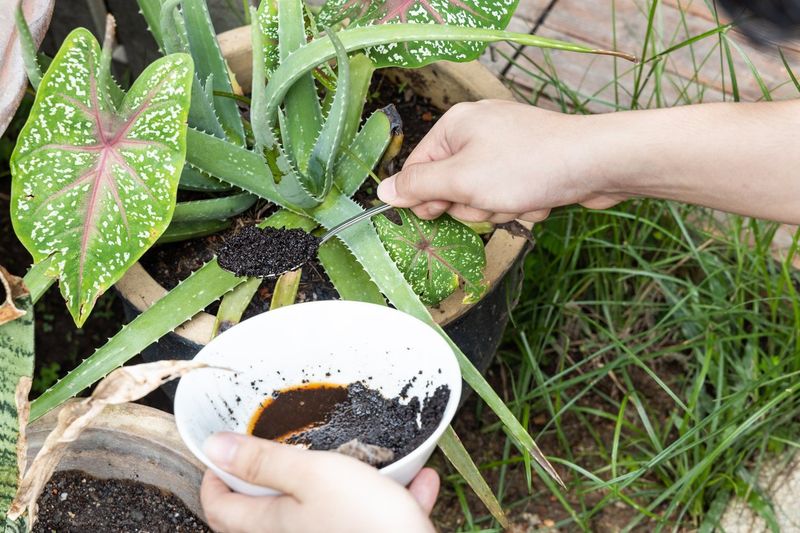
Your morning coffee habit can double as plant care. Used coffee grounds carry nitrogen, phosphorus, potassium, and a handful of other minerals your geraniums can use.
They do something else clever too, they attract earthworms, and those worms tunnel through the soil to improve its structure. Looser, richer soil helps roots breathe and feed better.
Use grounds in moderation and mix them in rather than piling them on top. A light hand keeps the soil balanced while still delivering that gentle nutrient bump.
15. Water with cooled potato water
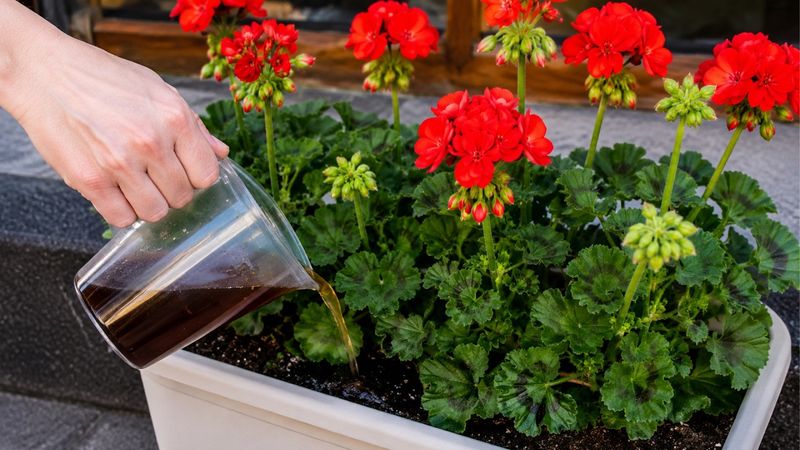
Next time you boil potatoes, save that water instead of dumping it. As the potatoes cook, they release vitamins and minerals into the water that plants can put to good use.
Let it cool completely first, and skip it entirely if you added salt during cooking. Once it is at room temperature, pour it around the base of your geraniums like a mild homemade tonic.
It is a resourceful little trick that costs you nothing extra. Your geraniums get a gentle nutrient sip, and you waste less in the kitchen.
16. Apply a rice flour solution for silicon, iron, and phosphorus
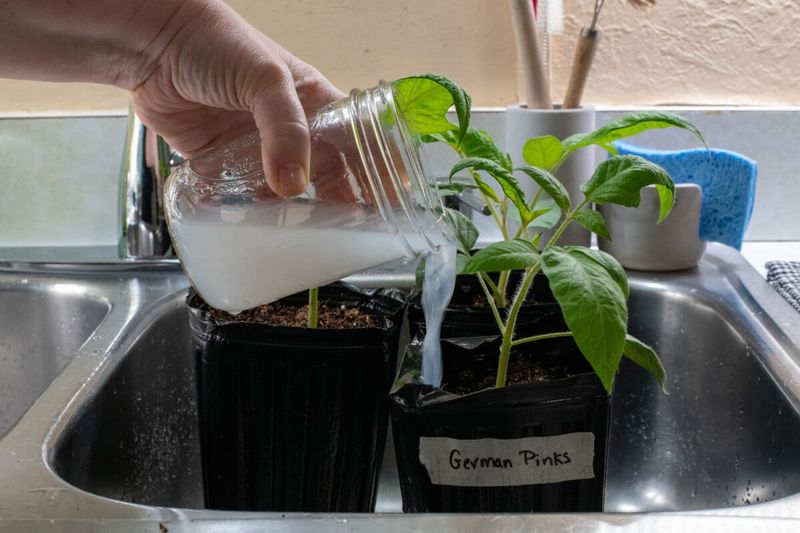
Here is a lesser-known homemade feed worth trying. A simple solution made from rice flour delivers silicon, iron, and phosphorus, a trio that supports richer color and more blooming.
Silicon helps toughen up plant tissue, iron keeps leaves deep green, and phosphorus pushes those flowers along. Together they can help your geranium blooms look more intense and vibrant.
Mix a small amount of rice flour into water and use it as an occasional treat rather than an everyday feed. Think of it as a specialty supplement in your geranium routine.
17. Utilize a yeast solution to boost immunity and nutrients
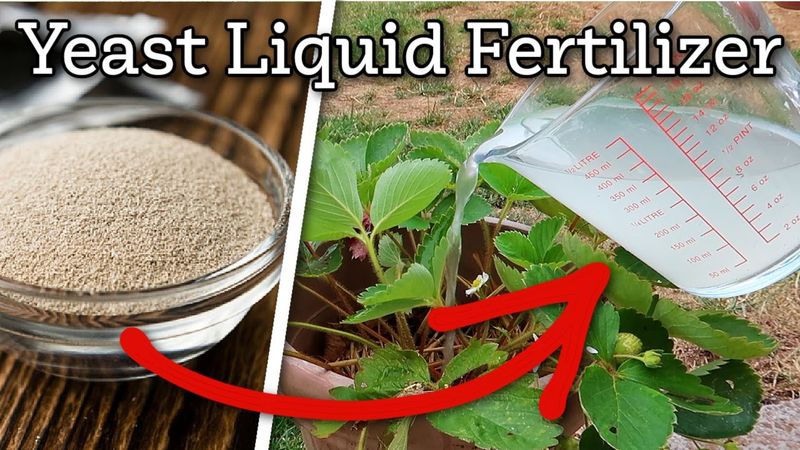
Baking yeast is not just for bread. Dissolved in water and used as a soil drench, yeast supplies potassium, phosphorus, and magnesium while feeding the helpful microorganisms living in your soil.
Those tiny soil helpers break down nutrients into forms your geranium can actually absorb. A livelier soil community often translates into a stronger, better-defended plant.
Use a weak yeast solution now and then, not constantly, to avoid overdoing it. Applied occasionally, it can give both your soil and your blooms a healthy lift.
18. Mix wood ash into the soil for minerals and antifungal properties
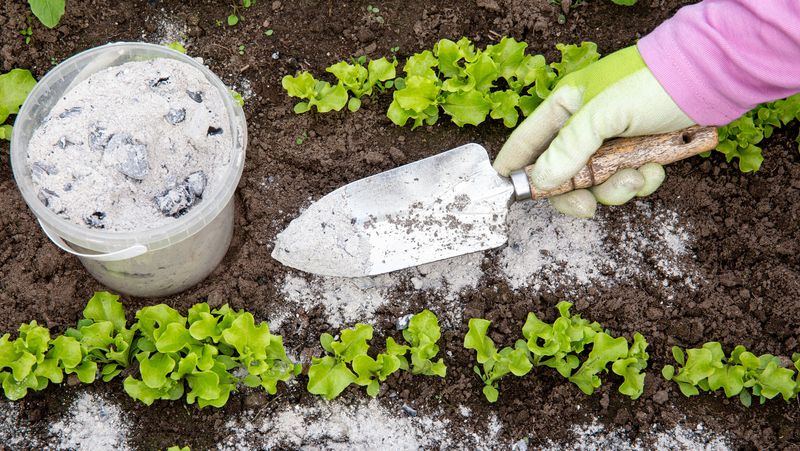
Leftover ash from a clean wood fire has real value in the garden. It adds minerals to the soil, improves its structure, and its antifungal qualities may help protect geraniums from certain fungal problems.
Wood ash also nudges soil toward being less acidic, so use it sparingly and only where a small lift makes sense. A light dusting mixed in is plenty.
Make sure it is pure wood ash with no charcoal briquettes or treated wood involved. Done right, this old-fashioned move rounds out your feeding lineup with minerals and a bit of protection.
Put several of these moves together and your once-sparse geraniums can transform into full, bold, flower-packed plants you will be proud to show off.