
If Your Geraniums Push More Leaves Than Flowers, Here’s The One Simple Adjustment That Doubles The Blooms
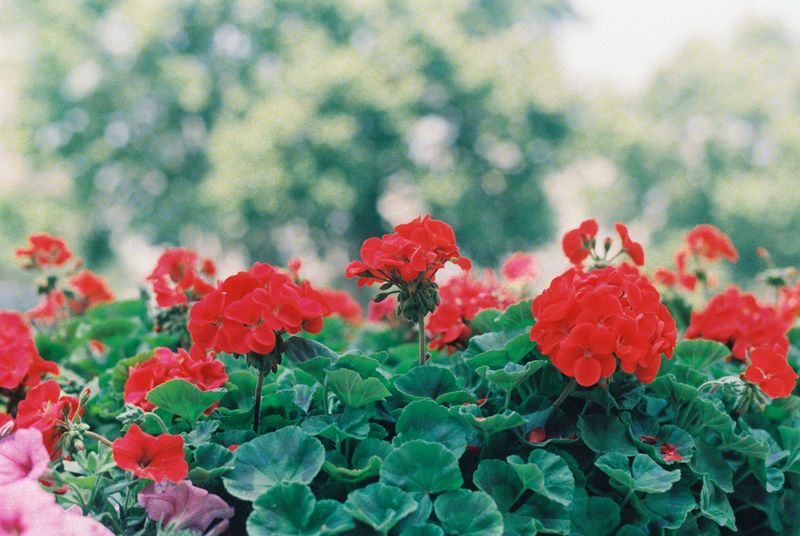
Few things are more frustrating than a geranium that looks full and healthy but refuses to put out flowers. The good news is that a lush, green plant is not a sick plant, and the fix is often simpler than you think.
Most of the time, the answer starts with what you have been putting into the pot rather than what you have been leaving out. Understanding why your geranium is pushing leaves instead of blooms can save you money, effort, and a whole season of missed color.
Replace the Bloom-Doubling Promise With a Safer Diagnosis
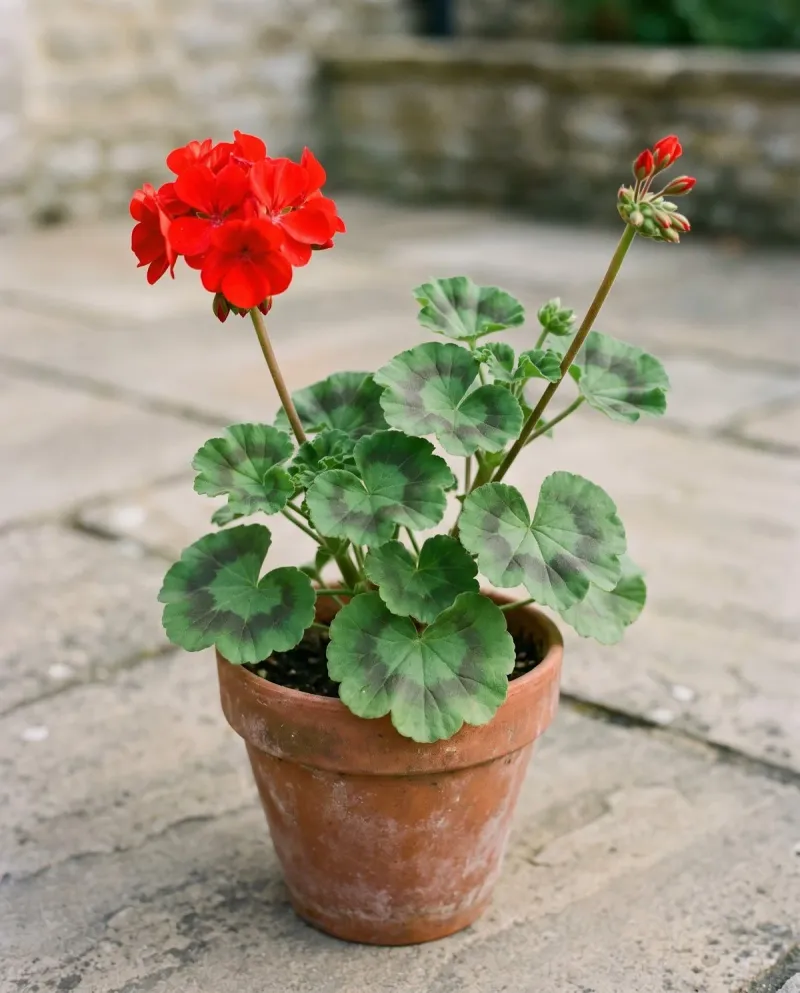
Before reaching for a new fertilizer or moving your pot to a sunnier spot, it helps to pump the brakes on one popular idea: no reliable gardening research supports the claim that a single adjustment will double your geranium’s flowers. That promise sounds satisfying, but the honest version of this story is more useful.
What the evidence does support is that excess feeding, especially with nitrogen-heavy products, can tip a geranium toward leafy growth at the expense of blooms.
The plants most gardeners call “geraniums” are almost always PelargoniumGeranium, a genus that includes zonal geraniums, ivy-leaved types, regal or Martha Washington varieties, and scented-leaved forms. These are not the same as hardy perennial species, and their care, flowering triggers, and fertilizer needs differ enough that advice written for one group may not apply to another.
University of Minnesota Extension’s geranium guide makes this distinction clear and notes that overfertilization can reduce blooming in common pelargoniums.
Lush foliage on its own is a clue, not a verdict. Several conditions can produce a vigorous, green plant that flowers poorly, including too little direct sun, the wrong cultivar for your conditions, temperature stress, overwatering, drainage problems, and root issues.
California’s fertilization guidelines for annual crops reinforce that excessive nitrogen generally favors vegetative growth, but that does not mean every leafy plant is overfed. The safest starting point is to treat “leafy but flowerless” as a symptom that calls for a short checklist, not a single dramatic fix.
Pause Extra Feeding When the Geranium Is Already Lush
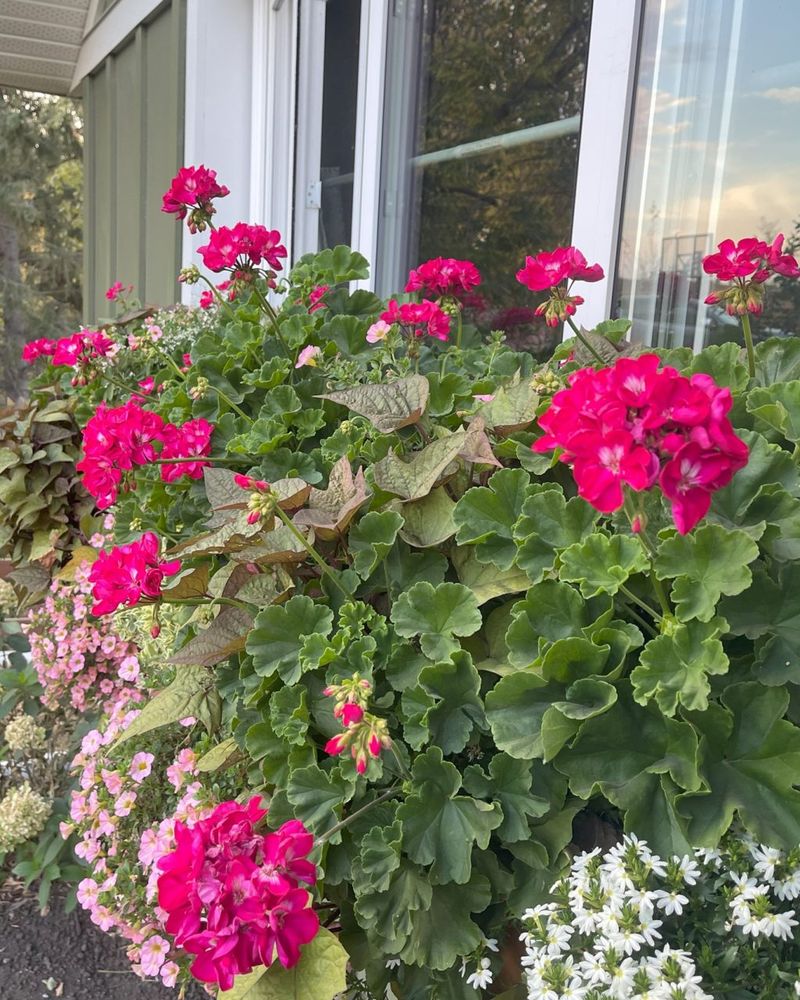
When a geranium looks robust and deeply green but produces almost no flower clusters, the most evidence-supported first move is to stop unnecessary or nitrogen-heavy feeding rather than adding something new. Nitrogen is the nutrient most closely linked to leafy, vegetative growth.
When it is present in excess, the plant has little reason to shift energy toward reproduction, and flowers are a reproductive investment.
Minnesota Extension warns specifically that geraniums can grow well but bloom poorly when overfertilized, and recommends modest, half-strength feeding rather than aggressive applications. If you have been feeding your plant every week, combining a slow-release granular fertilizer already in the potting mix with a liquid product on top, or using a product with a high first number on the label (that first number is the nitrogen percentage), then stepping back is a reasonable and low-risk first action.
Take a moment to read the label on whatever you have been using. Check how often you have applied it and whether the potting mix you started with already contained fertilizer.
Many bagged mixes include a starter charge that feeds the plant for the first several weeks, meaning early supplemental feeding may have added more nitrogen than the plant needed. General fertilization guidance for annual crops confirms that excess nitrogen diverts energy toward foliage.
One tempting shortcut is switching to a high-phosphorus “bloom booster” product, but that move is not as straightforward as it sounds. Research published through the National Association of County Agricultural Agents found that additional phosphorus had no effect on bloom number, bloom quality, or vegetative quality in trials where phosphorus was already adequate.
Save your money and skip the booster unless a soil test shows phosphorus is genuinely low.
Avoid Turning Fertilizer Restraint Into Nutrient Starvation
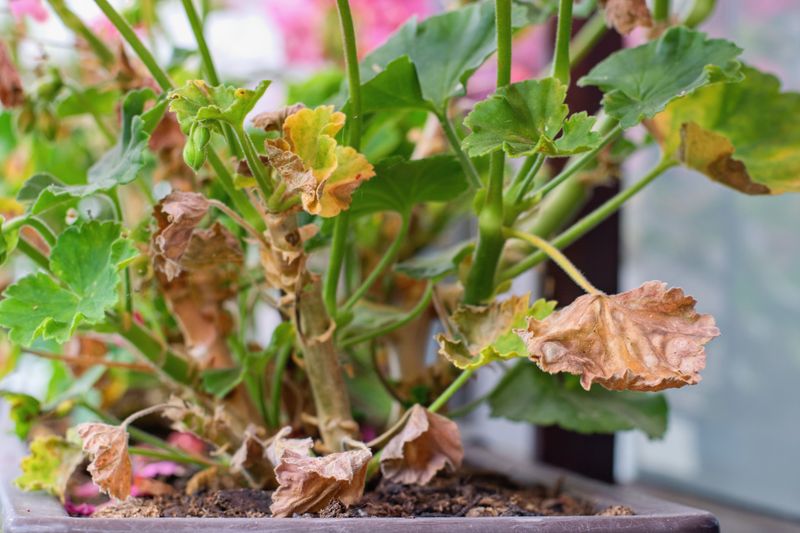
Pulling back on fertilizer is a reasonable starting point for a lush, over-fed geranium, but there is a real risk in going too far. A plant that is genuinely short on nitrogen does not look lush and green.
It looks pale, yellowed, and smaller than it should. Nitrogen deficiency is a different problem from nitrogen excess, and treating one as the other will only make things worse.
USDA Agricultural Research Service studies on geranium nutrition found that withholding nitrogen made plants smaller and more compact, and that growth did not fully recover after prolonged deprivation. A companion USDA summary on nitrogen deficiency recovery in geraniums reinforces that the damage from extended nutrient starvation is not quickly reversed.
The goal is not to starve the plant into flowering. The goal is to stop unnecessary overfeeding so the plant can redirect energy on its own.
Container geraniums are in a tricky position. Pots lose nutrients more quickly than garden beds because water flushes through the drainage holes, carrying soluble nutrients with it.
At the same time, repeated feeding without adequate flushing can allow fertilizer salts to build up in the mix, which creates its own root problems. Both situations call for a balanced, moderate approach rather than either extreme.
A practical middle ground: use a balanced, water-soluble fertilizer at dilute rates according to the product label, and feed only when the plant is actively growing and showing no signs of excess. Minnesota Extension recommends half-strength feeding roughly every three weeks during active growth, while Iowa State Extension suggests dilute container feeding every two to four weeks.
These ranges reflect differences in product, plant size, potting mix, and season, so the label and your plant’s actual appearance are better guides than any fixed schedule.
Check Direct Sun Before Blaming the Fertilizer
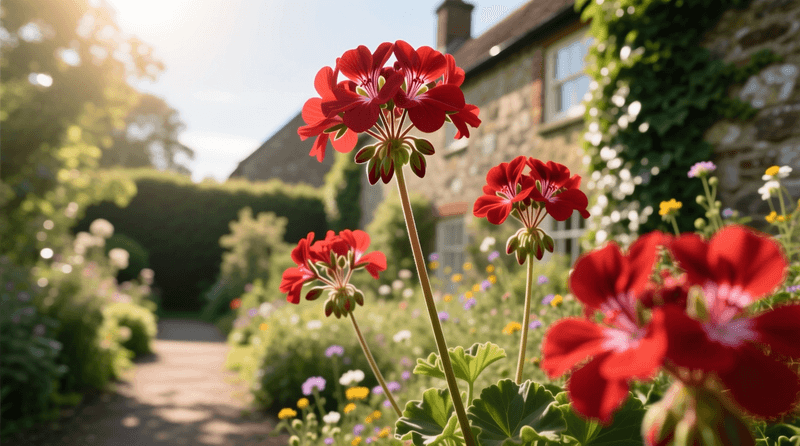
Even if you have already paused extra feeding, a geranium sitting in too little direct light will continue to struggle. Sunlight is not interchangeable with brightness.
A plant near a window that receives reflected or filtered light all day is not getting the same energy input as one in direct outdoor sun for several hours. Before concluding that fertilizer was the whole problem, count the actual hours of unobstructed direct sun your plant receives.
Extension recommendations vary slightly by source. Iowa State Extension notes that flowering is reduced below six hours of direct sun, while Minnesota Extension recommends full sun and specifies that less light means fewer flowers, with eight hours cited for best outdoor performance.
Clemson Extension puts the minimum for good flowering at four hours. A reasonable practical target for common bedding and ivy geraniums is several hours of direct sun daily, with roughly six or more hours generally giving better results where temperatures allow.
Low light does more than reduce flower count. It also stretches stems and produces the kind of leggy, soft growth that can look lush but carries few buds.
If your plant has long internodes between leaves and a generally floppy shape, light may be the more pressing issue than fertilizer. Iowa State’s annual geranium guide connects both reduced flowering and weak growth to inadequate sun exposure.
Moving a plant from deep shade into intense midday sun all at once can cause leaf scorch, especially during hot weather. If a significant location change is needed, transition the plant gradually over several days, starting with morning sun and working up to longer exposure.
Small adjustments in pot placement can make a meaningful difference without stressing the plant.
Match the Fix to the Geranium Type and Temperature
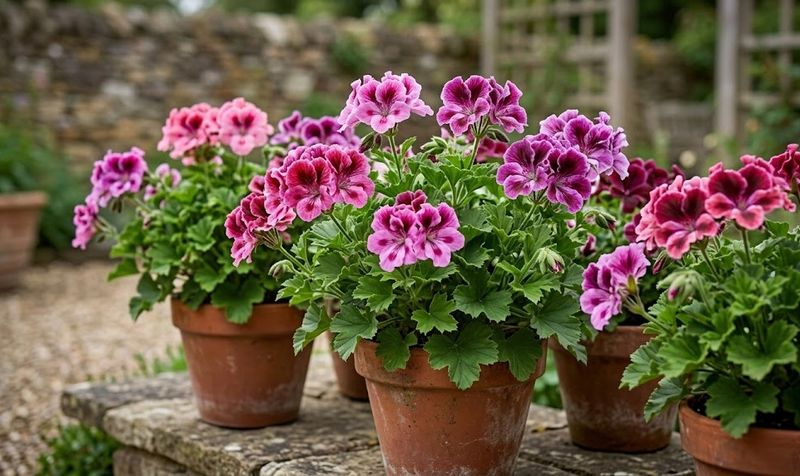
Adjusting fertilizer and improving light can help a common zonal or ivy geranium, but those same steps will not solve every flowerless geranium situation. The genus Pelargonium includes types with very different flowering triggers, and treating them all the same way leads to frustration.
Regal geraniums, sometimes called Martha Washington geraniums, are a significant exception. Iowa State Extension explains that Pelargonium x domesticum requires cool nights, roughly 50 to 60 degrees Fahrenheit, to initiate flower formation.
During warm summer nights, these plants may produce little to no bloom regardless of how carefully you manage fertilizer or sunlight. If you have a Martha Washington type and your nights stay warm through summer, no amount of feeding adjustment will correct that temperature limitation.
The fix for that plant is seasonal patience and cooler conditions in spring or fall.
Heat stress affects common zonal types as well, though differently. UMass Extension notes that high temperatures cause heat stress in geraniums, and outdoor plants may naturally flower less during periods of intense summer heat even when growing conditions are otherwise appropriate.
A temporary slowdown in blooming during a heat wave is not necessarily a sign that something is wrong with your care routine.
Scented-leaved pelargoniums present a different situation entirely. University of Florida IFAS notes that scented-leaved types are grown primarily for their aromatic foliage rather than for showy flower clusters.
If you have one of these, abundant blooms may simply not be what the plant was bred to produce. Knowing which type of pelargonium you are working with is the foundation for choosing the right response, because a fix that works well for a zonal geranium in a sunny container may do nothing for a regal type struggling through a hot August night.
Use Deadheading and Pinching as Supporting Techniques
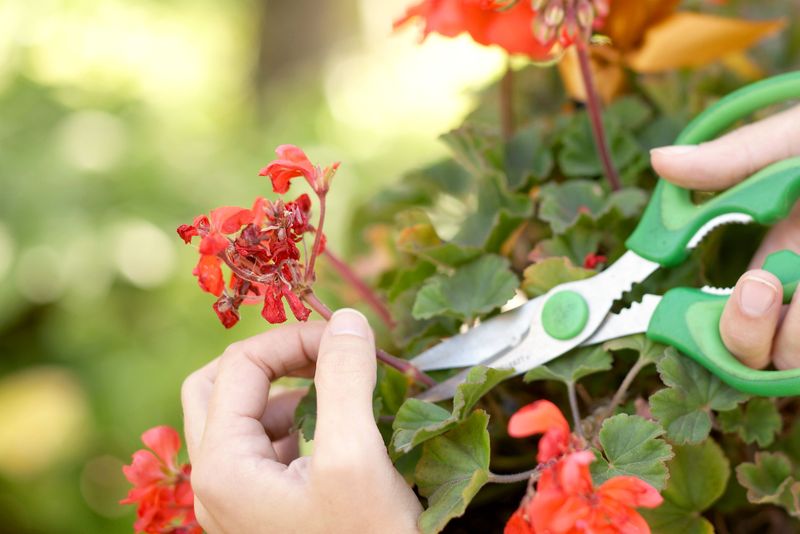
Once you have addressed light, feeding, and temperature, two simple hands-on techniques can help your geranium keep producing color through the season. These are maintenance moves, not emergency rescues, and they work best when the plant’s basic conditions are already reasonable.
Deadheading means removing spent flower clusters before they set seed. For pelargoniums, the right technique is to take the entire flower stalk near its attachment point to the main stem, either with your fingers or with clean snips.
Leaving just the base of the stalk behind is not enough. The Royal Horticultural Society’s deadheading guide explains that removing the whole stem prevents the plant from directing energy into seed production.
South Dakota State Extension confirms that regular deadheading can extend the flowering season for many annuals and tender perennials.
That said, deadheading cannot force a plant to produce buds when the underlying conditions are wrong. If your geranium has no buds forming because of low light, heat stress, or a cultivar that needs cool nights, removing old flowers will tidy the plant but will not solve the flowering problem.
Iowa State Extension and Minnesota Extension both recommend deadheading as a way to maintain or renew flowering, framing it as an ongoing practice rather than a one-time cure.
Pinching is a different technique with a different purpose. Pinching the growing tips of young stems in spring or early summer encourages the plant to branch, producing a fuller shape that can support more flower sites over the season.
The RHS pelargonium growing guide describes this as a branching and shaping practice done early in the season. Pinching a mature plant that currently has no buds will not produce an immediate flush of flowers, and cutting back hard into older stems risks removing developing growth and temporarily reducing what little bloom is present.
Protect Roots With Careful Watering and Drainage
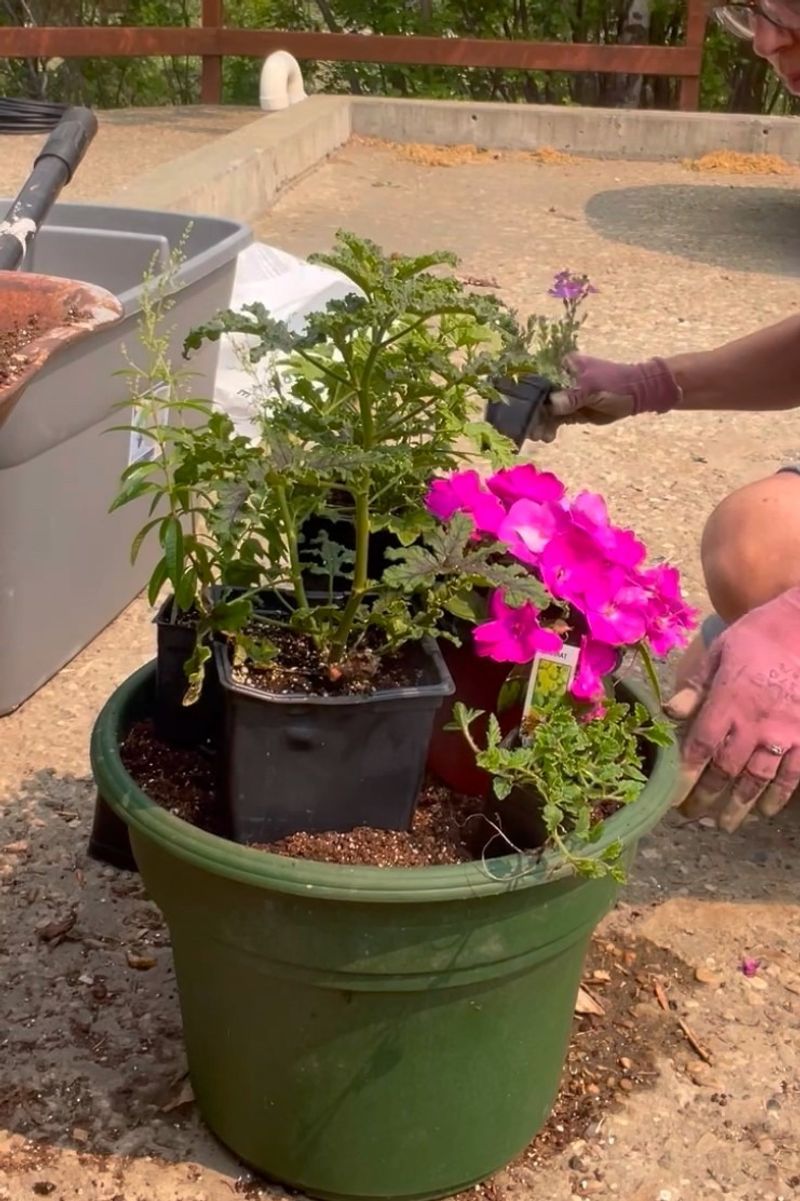
Watering is one of those areas where well-meaning care can quietly undermine everything else you are doing right. Geraniums are more forgiving of dry spells than most gardeners expect, and they respond poorly to soil that stays wet for extended periods.
The practical rule is straightforward: water when the surface of the container’s soil feels dry to the touch, and make sure the pot has working drainage holes so excess water can escape freely.
Minnesota Extension’s geranium guidance emphasizes drainage and notes that geraniums tolerate somewhat dry conditions better than constantly wet soil. University of Illinois Extension similarly flags overwatering and wet foliage as contributors to disease problems that can compromise plant health from the roots up.
How often you actually water will depend on factors specific to your setup. A small clay pot in full afternoon sun dries out much faster than a large plastic container in partial shade.
Hot, windy days pull moisture from the mix quickly, while cool, cloudy stretches slow things down considerably. Rather than following a fixed schedule, check the soil before you water and let the plant’s actual moisture level guide you.
Daily watering as a strategy to stimulate blooms is not supported by evidence and carries real risk. Keeping roots in consistently wet conditions can lead to root rot, which shuts down nutrient uptake and weakens the plant far more than a brief dry spell would.
If your pot lacks drainage holes, that problem needs to be solved before adjusting anything else, because no fertilizer schedule or light improvement will help a plant sitting in stagnant water.
Follow a Low-Risk Flowering Checklist
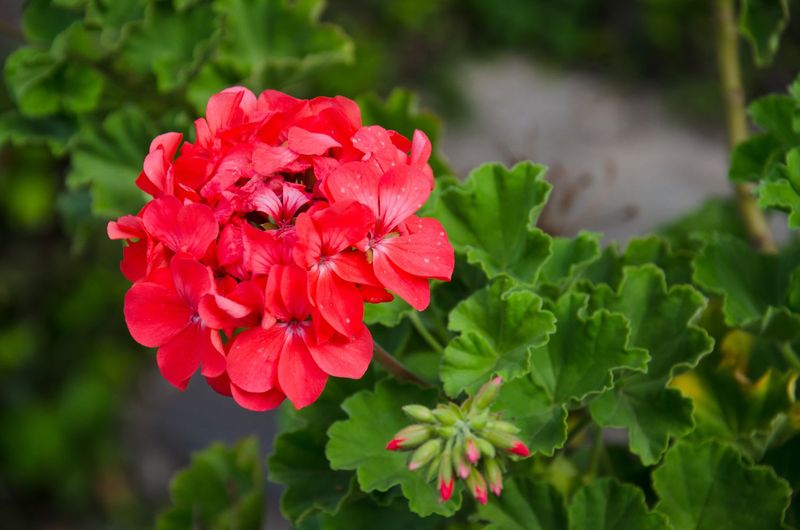
Working through a short, ordered checklist is the most reliable way to move from guessing to actually improving conditions for your geranium. Start by identifying what type of pelargonium you have.
Common zonal and ivy geraniums respond to the adjustments described throughout this article. Regal or Martha Washington types may simply need cooler nights, and Iowa State Extension confirms that temperature management, not fertilizer changes, is the key factor for that group.
Next, count the actual hours of direct sun the plant receives and compare that to the six-or-more-hour target for common bedding types. Then review your recent fertilizer use: if you have been feeding frequently or with a nitrogen-heavy product, pause unnecessary applications.
Check that the pot has drainage holes and that you are watering only when the soil surface is dry. Finally, remove any faded flower stalks cleanly at their base.
Minnesota Extension and Iowa State Extension both support this sequence as a practical framework for improving geranium care.
Two situations call for a different response. If the plant shows yellowing leaves, pale color, or stunted growth, those are signs of possible nutrient deficiency, not excess, and continued fertilizer avoidance will make things worse.
Reassess with a soil test or resume cautious, dilute feeding. If you have a regal type exposed to warm nights, focus on seasonal timing rather than nutrition.
USDA geranium nutrition research reinforces that prolonged deprivation carries its own costs.
Correcting excess feeding and improving light can meaningfully shift conditions in favor of flowering, but how much the plant responds depends on its cultivar, temperature, and overall care. A healthier growing environment gives the plant a better chance, and that is a more honest and useful goal than any promised number.