
American Basswood: North Carolina’s Native Shade Tree That Delivers a Late-Spring Nectar Pulse and Anchors a Full-Season Pollinator Planting
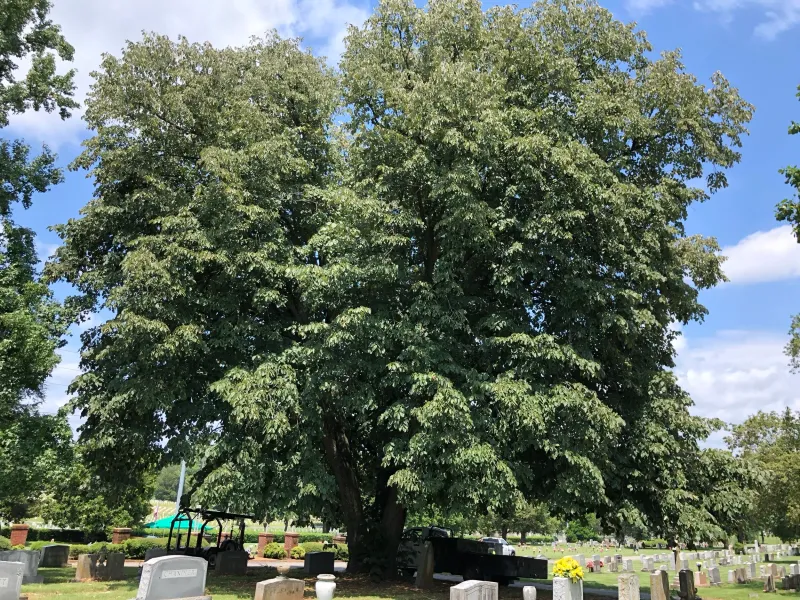
A large native tree growing quietly in North Carolina forests produces fragrant flower clusters so rich in nectar that beekeepers have prized it for generations, yet many homeowners never consider planting one. That tree is American basswood, also called American linden or bee tree, and it earns its place in any spacious yard through documented wildlife value, native status across the state, and deep shade.
One basswood cannot feed pollinators from March through November on its own, but paired with the right supporting cast of native plants, it anchors a season-long habitat that your yard likely does not have right now.
Why American basswood merits a place on the North Carolina tree list
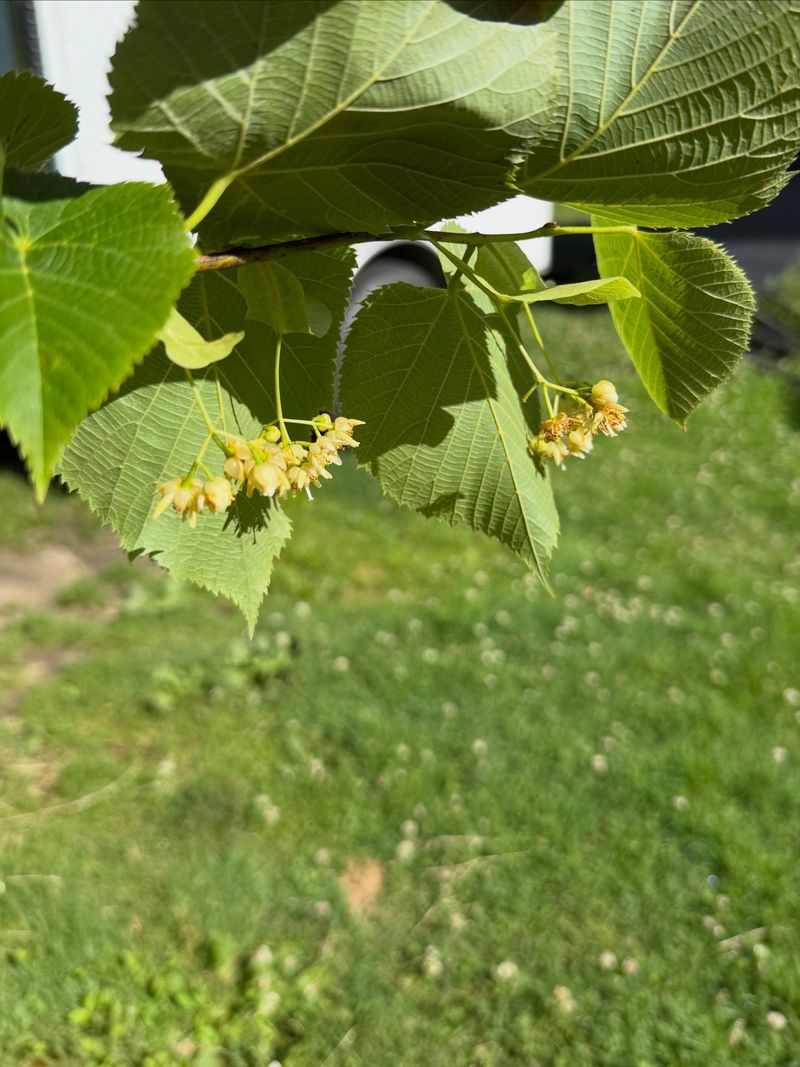
American basswood, known botanically as Tilia americana and sometimes called American linden or bee tree, is a large native shade tree with a documented place across North Carolina’s Coastal Plain, Piedmont, and mountain regions. NC State Extension’s Plant Toolbox lists the species as native throughout the state, describes its pale-yellow flower clusters as fragrant and highly attractive to bees and other pollinating insects, and notes its associations with butterflies, lightning bugs, birds, and squirrels.
The numbers behind its mature size deserve attention before any purchase decision. Basswood typically reaches 60 to 80 feet tall and spreads 30 to 60 feet wide at maturity.
That profile puts it firmly in the canopy-tree category, not the ornamental or understory tier, and it means the choice to plant one reshapes a yard’s structure for decades.
What makes the species worth considering is a combination of attributes that are harder to find together in a single native tree. Its flowers supply abundant nectar to multiple insect groups during a concentrated late-spring-to-summer period.
Its canopy provides deep shade, which itself has habitat value for understory plants and ground-level wildlife. NC State’s bee-tree profile reinforces that the species supports a broader range of yard wildlife than pollinators alone, pointing to birds and squirrels as additional beneficiaries of its seeds and structure.
None of that means basswood is the right tree for every North Carolina property. Its mature dimensions, soil preferences, and sensitivity to compaction and heat make site selection the first and most important step.
But for a homeowner with a spacious yard, adequate soil volume, and a genuine interest in native habitat, American basswood offers a well-documented combination of shade, native status, and insect value that few other single trees can match in this state.
Basswood offers a seasonal nectar pulse, not a year-round buffet
Plenty of trees get described as pollinator magnets, but American basswood earns that label with specificity. The U.S.
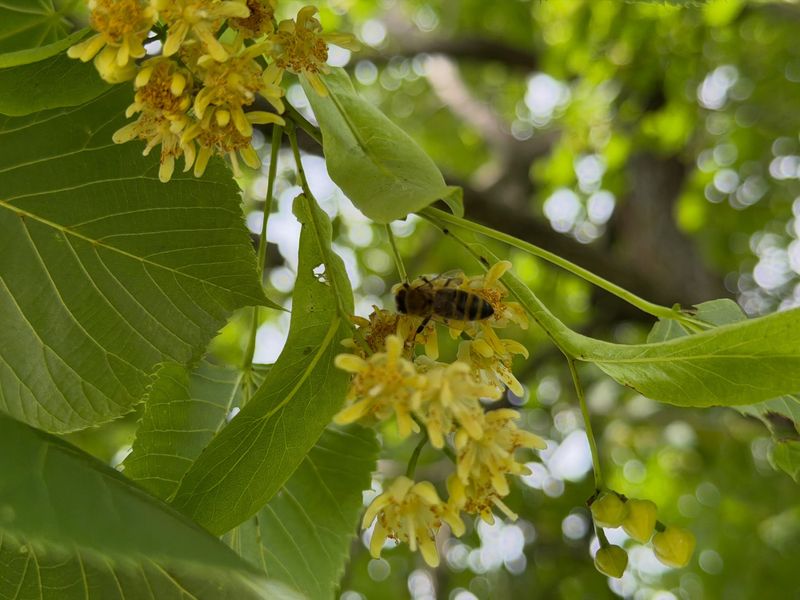
Forest Service’s Silvics of North America account for American basswood reports that the flowers produce abundant nectar and that bees and flies are the most common daytime visitors, while moths take over as important nighttime visitors. That cross-shift visitation, covering both day-flying and night-flying insects, distinguishes basswood from trees whose bloom serves only one guild of pollinators.
The timing of that bloom, though, needs to be stated precisely. NC State gives American basswood a broad May-to-July flowering window, while the Forest Service describes the flowering event itself as approximately two weeks long.
Those two figures are not in conflict, but they are also not the same thing. The May-to-July range reflects when basswood flowering may occur across different sites, elevations, and years in North Carolina.
The two-week figure describes how long any individual tree actually blooms. NC State’s lime-tree profile confirms this broader seasonal window without suggesting that any single tree flowers continuously across it.
That distinction matters because it shapes realistic expectations. A homeowner who plants one basswood should expect a concentrated, high-value nectar event during late spring or early summer, not an unbroken supply of flowers from May through July, and certainly not a season that runs from spring through fall.
Weather, tree age, health, and local conditions can all shift the exact timing and intensity of bloom from one year to the next.
Characterizing basswood’s contribution honestly makes it more useful, not less. A reliable late-spring-to-summer nectar pulse is genuinely valuable, especially in yards where that period currently offers pollinators very little.
The tree fills a documented gap. The goal of building on that gap with complementary native plants is where the fuller habitat story begins.
One flowering tree cannot provide complete pollinator habitat
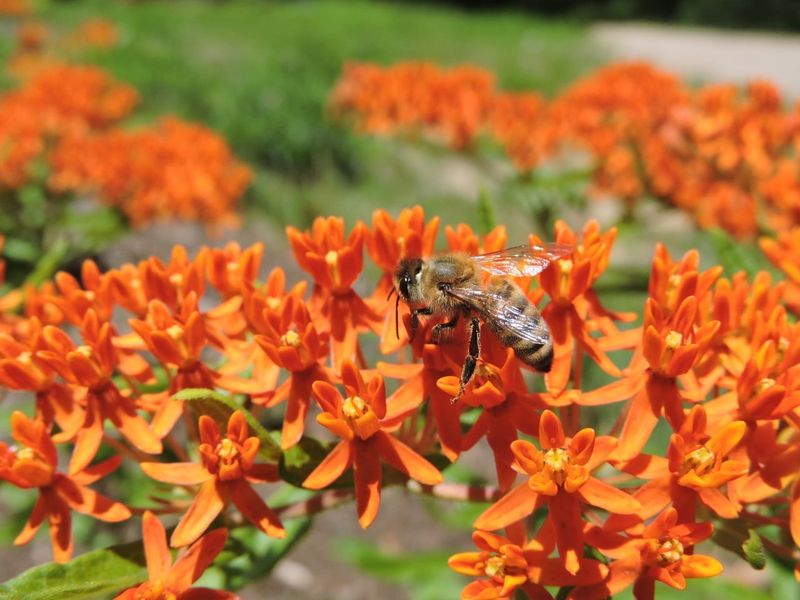
Nectar from a flowering tree is a meaningful resource, but it covers only part of what pollinators actually need to complete their life cycles. Adult butterflies and bees use nectar and pollen for energy and reproduction, but butterfly caterpillars depend on specific native larval host plants, and many of those plants are not trees at all.
NC State’s Butterflies in Your Backyard guide explains that many caterpillars are highly host-specific, meaning a yard without the right native herbaceous plants or shrubs may attract adult butterflies without giving them anywhere to lay eggs or feed young.
Native bees add another layer of complexity. Beyond nectar and pollen, they require nesting sites, which range from bare ground patches for ground-nesting species to hollow stems for cavity nesters.
A single tree canopy, however large and however attractive its flowers, cannot supply that full suite of needs on its own. NC State’s landscaping-for-wildlife guidance warns directly that dominance by one plant species creates a narrower habitat base than a varied native planting, and that wildlife-friendly yards depend on structural and botanical diversity across multiple layers.
Basswood’s documented value is real. Its flowers genuinely attract bees, flies, and moths during a concentrated bloom period, and its canopy provides structure that other species use.
But treating one tree as a complete pollinator solution misreads what the evidence actually shows.
NC State’s Extension Gardener Handbook chapter on native plants recommends selecting multiple native species that bloom across spring, summer, and fall, precisely because different pollinator species are active at different times and have different forage and nesting requirements. Basswood works best as an anchor in that broader planting, not as a standalone answer.
The sections that follow show what a fuller native planting around that anchor can look like.
Check the site before choosing a basswood
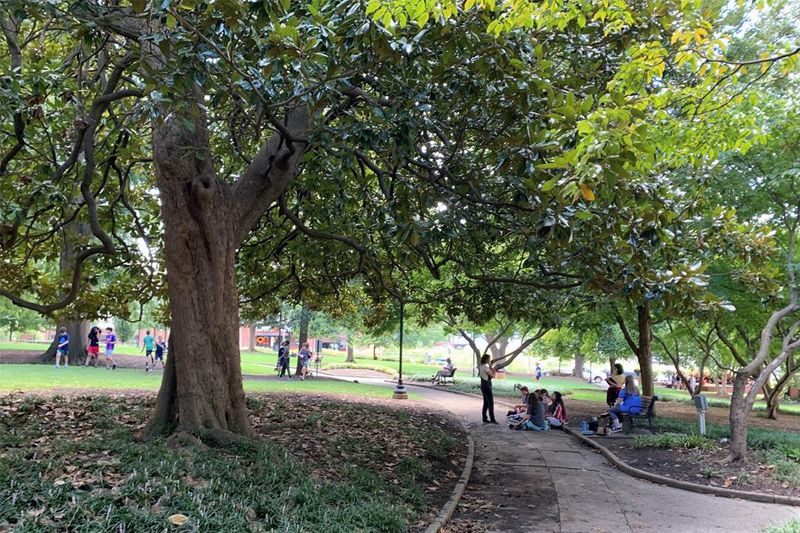
Before considering any other attribute of American basswood, a homeowner needs to answer one straightforward question: does the yard have the space and soil conditions this tree actually requires? At 60 to 80 feet tall and 30 to 60 feet wide at maturity, basswood occupies a footprint that eliminates a large share of residential lots from consideration before any other factor comes into play.
NC State Extension’s basswood profile describes the species as preferring fertile, moist, well-drained soil and full sun to partial shade. That same source notes it can tolerate clay soils and some dry, rocky conditions, and that established trees develop reasonable drought tolerance.
Those are genuine flexibilities that expand the range of suitable sites, but they do not eliminate the need for adequate soil volume.
The harder limits involve heat and compaction. NC State specifically flags basswood’s sensitivity to both, and notes that it does not perform well under urban conditions.
A yard with large paved surfaces, compacted subsoil from past construction, or limited unpaved area around the root zone is a poor candidate. NC State’s bee-tree entry reinforces this, describing the species as better suited to conditions outside heavily developed settings.
The North Carolina Forest Service’s urban street-tree suggestions reflect these same constraints in a practical context, helping illustrate which trees tolerate the compaction and heat loads common in developed landscapes and which do not. Basswood’s absence from the most heat- and compaction-tolerant categories reinforces why site evaluation matters.
Locations beneath utility lines, narrow planting strips between a sidewalk and street, and sites where soil has been graded or heavily disturbed are all poor fits. A spacious open yard with reasonable topsoil depth, good drainage, and room to let the canopy develop without conflicting with structures is the realistic target.
Getting that assessment right protects the homeowner’s investment and protects the pollinators who depend on a healthy, long-lived tree.
Pair the canopy with plants that carry the season forward
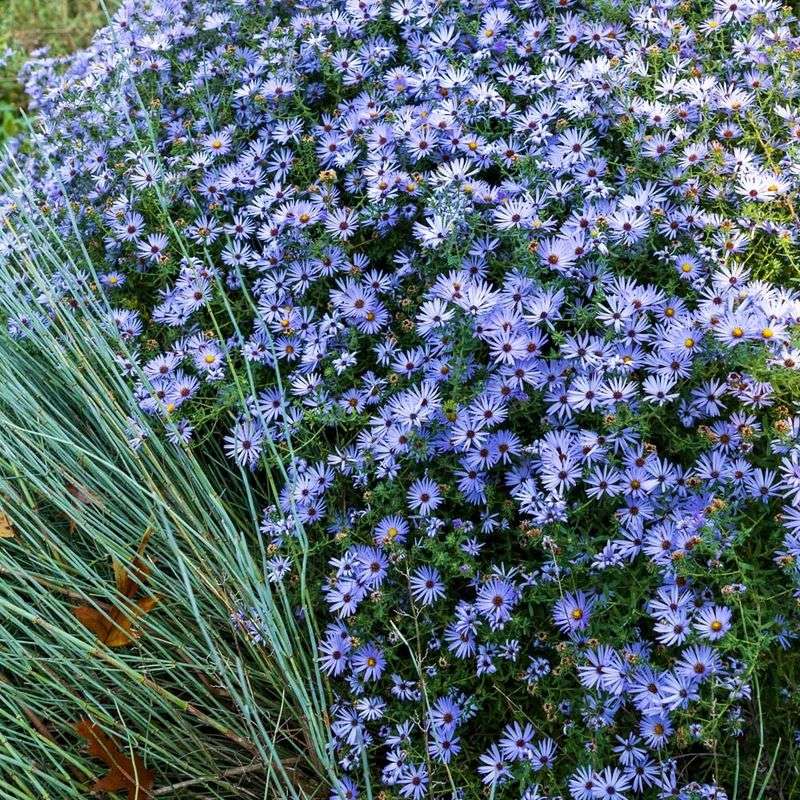
A basswood anchors the late-spring-to-summer nectar window, but building a genuinely longer pollinator season means choosing additional native plants that flower before it, after it, and in the gaps between. NC State’s native plants handbook chapter recommends selecting species that provide overlapping bloom across all three growing-season segments rather than concentrating resources in one period.
Downy serviceberry is a useful early-season anchor. Native throughout North Carolina and typically reaching 15 to 25 feet, it blooms from roughly March through May, produces fruit that birds rely on, and serves as a larval host plant for several native butterfly species.
Its smaller size makes it a small-tree or large-shrub addition, not a canopy substitute, but that understory role suits it well beneath or beside a larger basswood planting.
Sourwood extends the flowering sequence into June and July with fragrant white flower clusters that attract pollinators reliably. It usually reaches 20 to 30 feet, making it an understory or specimen tree rather than a full canopy competitor.
Sourwood prefers acidic, moist, well-drained soil and does not tolerate pollution or heavy urban conditions, so it shares some of basswood’s site-selection requirements.
Black gum contributes small spring flowers that provide nectar for bees, then shifts its ecological role to fruit production from approximately August through October. Those late-summer and fall fruits feed birds and mammals, which is a genuine wildlife benefit, but fruit is not a substitute for flowers when it comes to fall pollinator forage.
For that, native goldenrods, asters, cardinal flower, and Joe-Pye weed fill the late-season gap with documented flowering that keeps bees and butterflies active through fall.
Where space and deep, moist soil allow, tulip poplar adds another large canopy option with mid-spring-to-early-summer nectar for bees, butterflies, and hummingbirds. At 80 to 120 feet at maturity, it is even larger than basswood and equally sensitive to heat and compaction, so it belongs only on sites with genuinely deep, moist, uncompacted soil.
NC State’s butterfly guidance frames the underlying logic clearly: because different butterfly and bee species are active at different times, a yard that flowers only during one window leaves most of the season empty for most of the insects you want to support.
Plant the tree for long-term habitat value
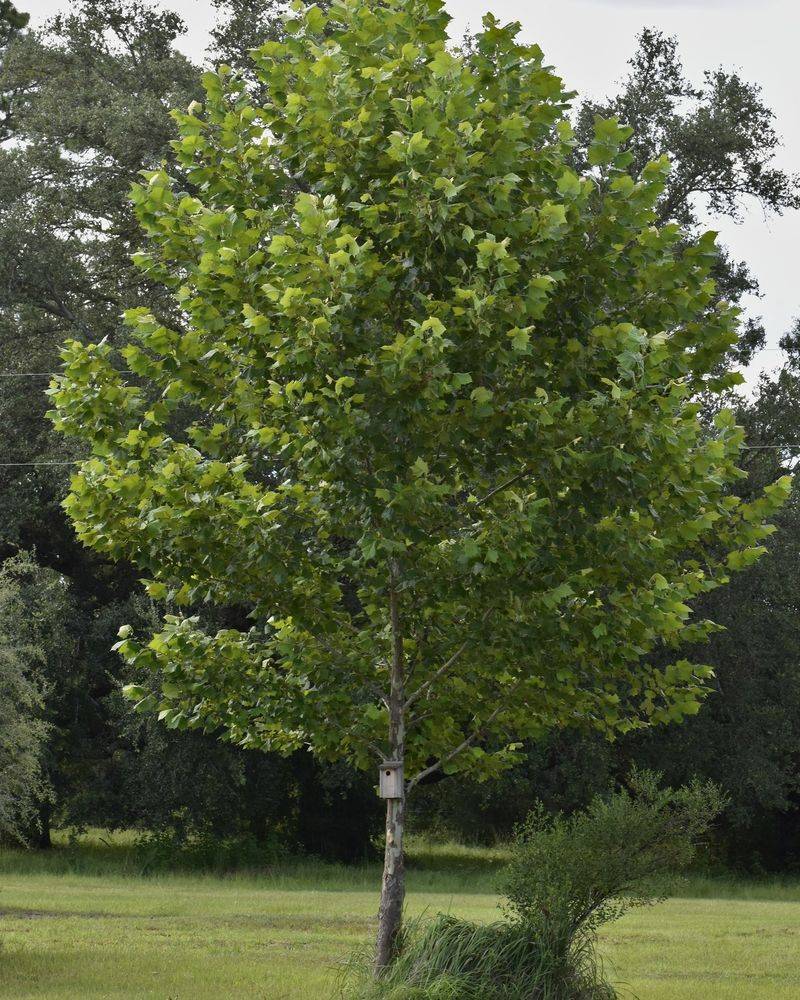
Good establishment practices determine whether a basswood thrives for decades or struggles from the start. NC Cooperative Extension’s fall-planting guidance explains why fall is often the preferred window for trees and shrubs in North Carolina: cooler air temperatures and typically higher soil moisture reduce transplant stress and lower the watering demand on a newly installed tree.
For a species with known heat sensitivity, getting roots established before summer arrives is a practical advantage worth planning around.
Digging the hole correctly is more important than any amendment or fertilizer added after the fact. NC Extension recommends a hole two to three times wider than the root ball but no deeper than the root flare, which is the point where the trunk begins to flare outward at the base.
That flare must remain visible above the soil surface after planting. Burying it, even slightly, creates conditions that promote rot and disease over time.
The NC Extension Gardener Handbook’s woody ornamentals chapter reinforces proper mulch placement as a critical follow-up step. A two- to three-inch layer of organic mulch over the root zone helps retain moisture and moderate soil temperature, but that mulch must be kept several inches away from the trunk.
Piling mulch against the bark, sometimes called a mulch volcano, traps moisture against the wood and invites decay and pest problems.
Consistent watering through the first growing season is non-negotiable for any newly planted tree, and basswood is no exception. Deep, infrequent watering that wets the full root zone is more effective than frequent shallow irrigation.
No planting technique compensates for a fundamentally unsuitable site, so these steps matter most when the site assessment described in the previous section has already confirmed a good match between the tree’s requirements and the yard’s actual conditions.
Manage pests without exposing foraging insects
American basswood’s pest and disease profile is relatively manageable for a tree of its size. NC State Extension lists no serious insect or disease problems overall, though it notes that aphids, borers, Japanese beetles, lace bugs, caterpillars, scale, and spider mites may appear, with mite pressure more likely under hot and dry conditions.
Occasional diseases include Verticillium wilt, powdery mildew, leaf spots, and cankers, none of which are unusual for a large deciduous tree in the Southeast.
The practical response to that list is monitoring, not preemptive treatment. Cosmetic leaf damage, a few aphids on new growth, or the presence of caterpillars on foliage does not justify routine spraying of a tree whose flowers are actively attracting bees and other pollinators.
Those caterpillars may belong to native moth species that are themselves part of the ecological community the planting is meant to support.
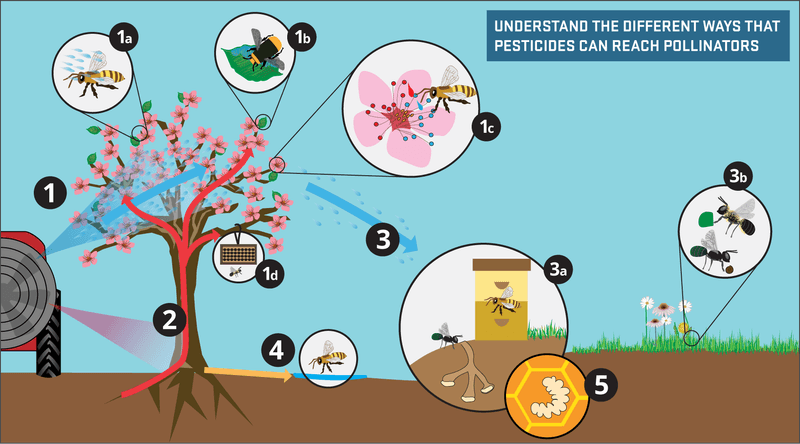
The North Carolina Department of Agriculture’s pollinator-protection guidance for homeowners advises integrated pest management as the framework for any response, strict adherence to pesticide labels, and avoiding applications while bees and other pollinators are actively foraging. Xerces Society guidance on insect management for flowering trees reinforces that systemic insecticides applied to flowering trees can harm foraging insects even when the application appears to target a separate pest.
Protecting the flowers and maintaining plant diversity in the surrounding landscape will do more for the habitat goal than eliminating every visible insect on the canopy. A healthy, structurally diverse native planting with good soil conditions is the most effective long-term pest-management strategy available to a residential gardener.
Use basswood as an anchor, not the whole pollinator plan
American basswood earns genuine consideration for any spacious, suitable North Carolina yard. NC State Extension documents it as a native species across the state, confirms its fragrant flowers attract bees and other pollinating insects, and describes a broad May-to-July window in which that flowering may occur.
The Forest Service places the flowering event itself at approximately two weeks, which means the tree delivers a concentrated, high-value nectar pulse rather than a continuous season-long bloom.
That distinction shapes the right way to use it. A basswood planted on a suitable site gives a yard a large native canopy and a documented late-spring-to-early-summer resource for bees, flies, and moths.
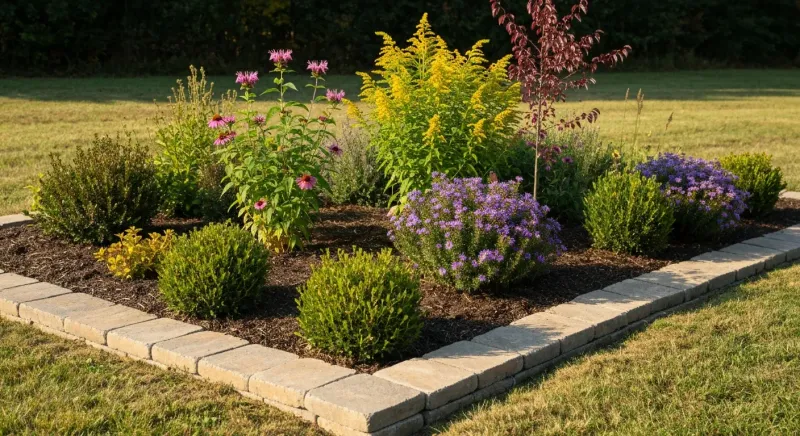
What it does not give is a spring-to-fall pollinator season on its own. The missing seasons require native flowering trees, shrubs, and perennials with overlapping bloom periods, plus host plants for caterpillars and the structural diversity that nesting insects need.
NC State’s native plants guidance and its butterfly habitat recommendations both point toward the same principle: a yard that supports pollinators well across a full growing season is built from many species working together, not from one tree working alone. Basswood is a strong anchor for that kind of planting in the right yard.
The goal is to give it good company.