
Why More North Carolina Homeowners Are Putting Up Owl Houses To Handle Yard Pests Naturally
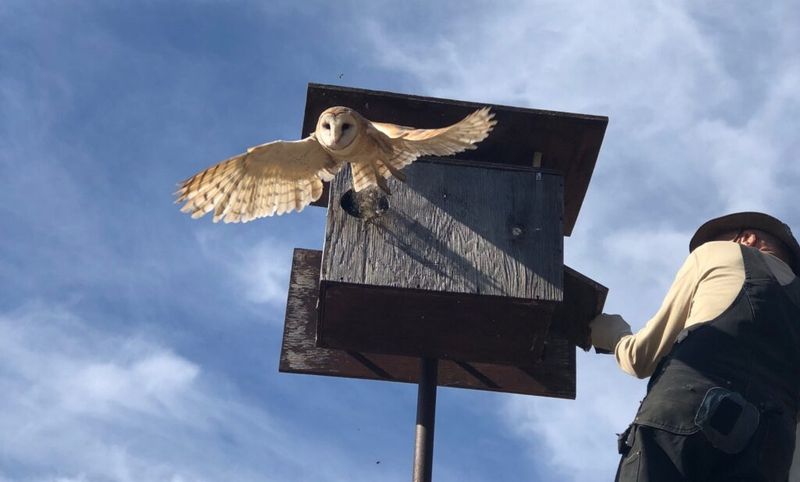
Somewhere between frustration with mice in the garage and a wish to do something good for local wildlife, a lot of North Carolina homeowners have landed on the idea of putting up an owl box. The appeal makes sense: owls hunt at night, eat rodents, and ask nothing in return.
Before you nail a box to your pine tree, though, it helps to know what a nest box can realistically offer and what it cannot promise.
What an owl box can—and cannot—do for a North Carolina yard
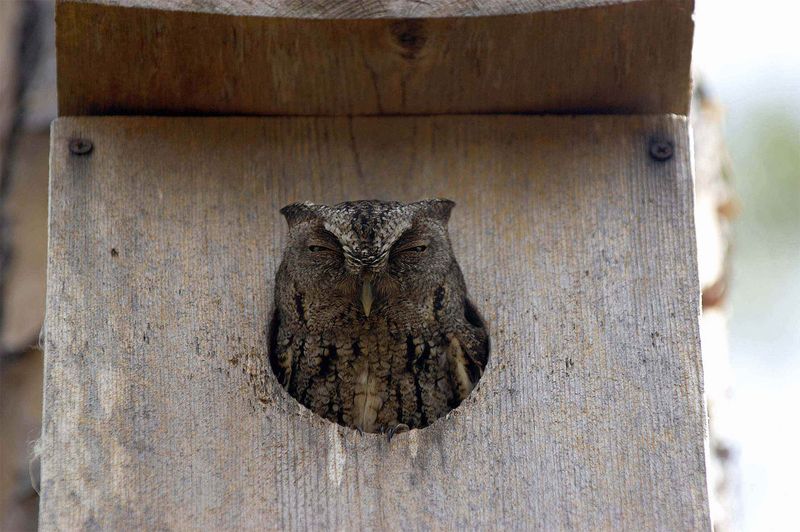
Conservation groups and wildlife agencies in North Carolina have long encouraged nest boxes as a way to support cavity-nesting birds, including owls. What the available sources do not show is a verified statewide trend of more homeowners installing owl houses.
The NC Wildlife Resources Commission documents nest-box conservation and monitoring work, but no statewide homeowner installation data were located, so that claim stays a question rather than a fact.
What a box can do is provide supplemental nesting or roosting habitat, and under the right conditions, it may add some predation pressure on local rodent or insect populations. A 2024 economic analysis found that barn-owl boxes were most comparable to trapping when rodent densities were low, while trapping outperformed nest boxes at moderate and high densities.
That finding comes from an agricultural context, and it should not be read as a guarantee of what a box will accomplish in a quarter-acre subdivision yard.
A 2025 vineyard study reported meaningful reductions in rodent abundance linked to owl hunting pressure, but vineyards and suburban lots differ in size, landscape structure, and prey density. Research on barn owls exerting top-down effects on rodent pests is encouraging context, not a residential promise.
The honest framing is this: a properly designed box may give a native owl a place to nest or roost, and an owl that moves in may contribute to local predation. Occupancy is not guaranteed, pest outcomes depend heavily on habitat and prey availability, and a box does not replace exclusion, sanitation, habitat modification, targeted trapping, or professional pest control when those are needed.
NC Wildlife is clear that owls are not drawn to an area simply because a box appears.
Choose the owl that matches your property
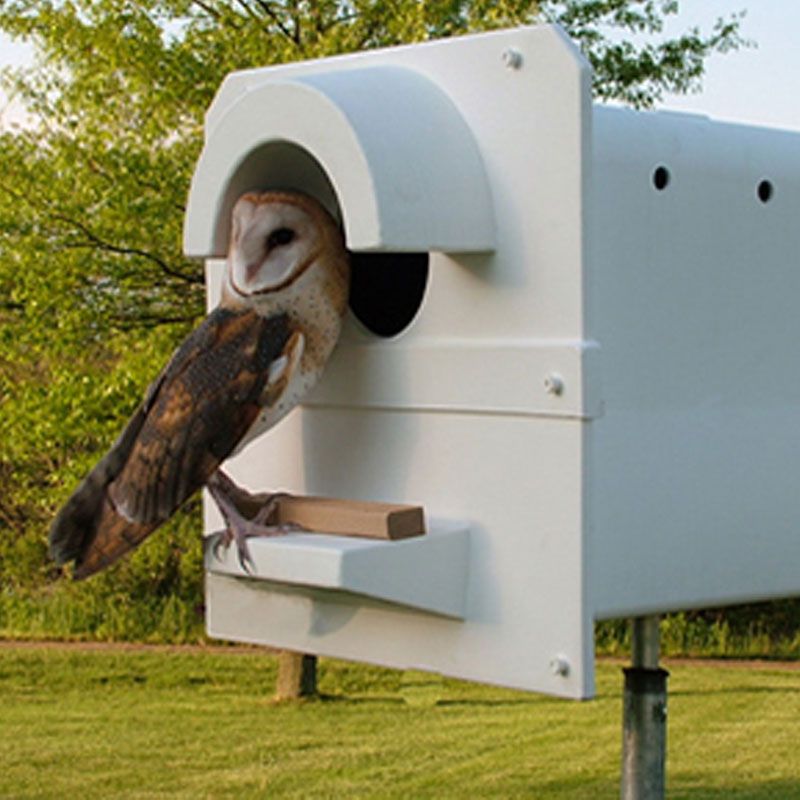
Species selection is the first real decision, and getting it wrong means building a box that sits empty or attracts the wrong tenants. Two owls come up most often in North Carolina nest-box conversations: the Eastern Screech-Owl and the Barn Owl, and they are not interchangeable.
Eastern Screech-Owls use forests, farmland, suburbs, and city parks, and they readily accept nest boxes in wooded residential settings. If your yard has mature trees, some open understory, and enough cover to support small animals, a screech-owl box is a reasonable fit for most of North Carolina’s Piedmont neighborhoods, river-bottom suburbs, and mountain-edge communities.
These birds are compact, adaptable, and genuinely comfortable close to people.
Barn Owls are a different story. NC Wildlife associates Barn Owls mainly with open country: fields, marshes, farms, and semi-open areas where they can hunt small rodents across large stretches of ground.
A tightly landscaped subdivision lot, even a generous one, usually cannot provide the open hunting range a Barn Owl needs. The agency specifically notes that Barn Owls are most likely to use a box on properties where they are already present and active.
If you have seen a Barn Owl on your property or live near large open fields, a Barn Owl box may be worth considering with a species-specific plan. NC State Extension’s woodland nest-box guide treats the two species separately, with different dimensions, entrance sizes, and habitat notes for each.
Choose the box for the owl your land can actually support, not for the owl you would most like to attract.
Assess habitat before buying or building a box
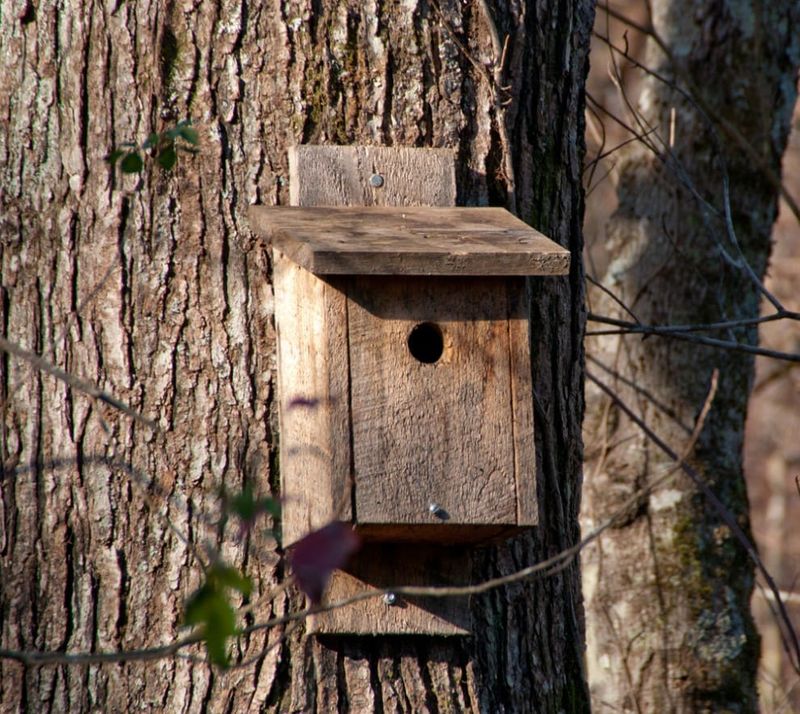
A nest box cannot conjure the habitat an owl needs. Before spending money or weekend hours on a build, walk your property with a few practical questions in mind.
Start by asking whether you have seen or heard an owl on or near your land. Screech-Owls give a descending whinny or a long tremolo call, often just after dark.
If you have heard one in your neighborhood, your yard may already sit inside a territory. Look next at your tree cover: mature oaks, hickories, pines, or other large trees with open space beneath them suit screech-owls well.
Eastern Screech-Owls need cavities or boxes for nesting but hunt in the surrounding open understory, so a yard with nothing but dense shrubs from fence to fence offers less opportunity than one with some clear hunting lanes.
Also check for natural cavities. A hollow limb or a woodpecker hole in a dead snag can already serve as nest or roost habitat.
NC State Extension describes dead trees and snags as important habitat for cavity-nesting wildlife and treats nest boxes as substitutes where natural cavities are unavailable. If a sound dead tree poses no safety risk to structures or people, leaving it standing does more for cavity-nesting wildlife than any box you can buy.
For Barn Owls, the habitat screen is stricter. NC Wildlife cautions that Barn Owls are not attracted simply because a nest box is installed and focuses its conservation interest on properties where Barn Owls are already present.
If your yard is surrounded by close-set homes and maintained lawns with no adjacent open hunting ground, a Barn Owl box is unlikely to produce results regardless of how well it is built.
Build or buy a box for one target species
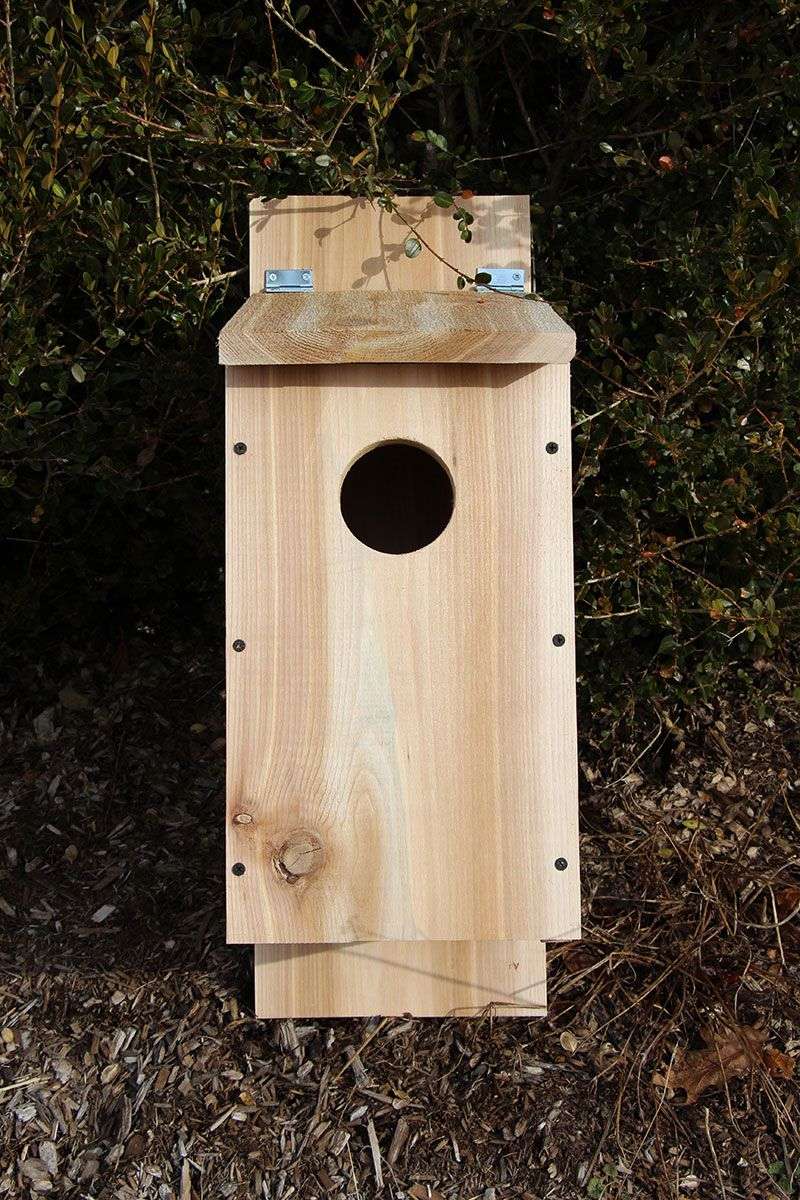
Once you know which owl your property can support, the box design follows from that choice. There is no universal owl house.
A screech-owl box and a Barn Owl box differ in entrance size, floor area, mounting height, and interior depth, and mixing those measurements produces a box that fits neither species well.
For an Eastern Screech-Owl, NC State Extension’s urban habitat guide describes a box with an 8-by-8-inch floor, a 3-inch entrance hole, and a mounting height of roughly 10 to 30 feet. Use sturdy, untreated lumber at least three-quarters of an inch thick.
Drill several small drainage holes in the floor and cut ventilation slots near the top of the side panels so the interior does not trap summer heat. Do not add a perch below the entrance hole.
NC State Extension notes that perches can favor aggressive nonnative birds such as House Sparrows and European Starlings, which can displace native cavity nesters before an owl ever investigates.
Audubon’s screech-owl nest-box plan also calls for a 3-inch entrance and recommends placing a few inches of dry leaves or untreated wood chips inside, since screech-owls do not build their own nest material. The plan suggests installing the box about 10 feet high with the entrance facing east or south, though that orientation advice needs a local qualifier covered in the next section.
Barn Owl boxes use substantially different dimensions. NC State Extension’s nest-box guide lists a Barn Owl entrance of approximately 3.75 by 4.5 inches and a floor of roughly 11 by 22.75 inches, with a mounting height between 8 and 25 feet.
Other authoritative plans vary somewhat, so use a single species-specific source from start to finish rather than blending measurements from different guides. Picking one well-sourced plan and building it accurately beats improvising a hybrid design that serves no owl particularly well.
Place the box for shade, stability, and predator protection
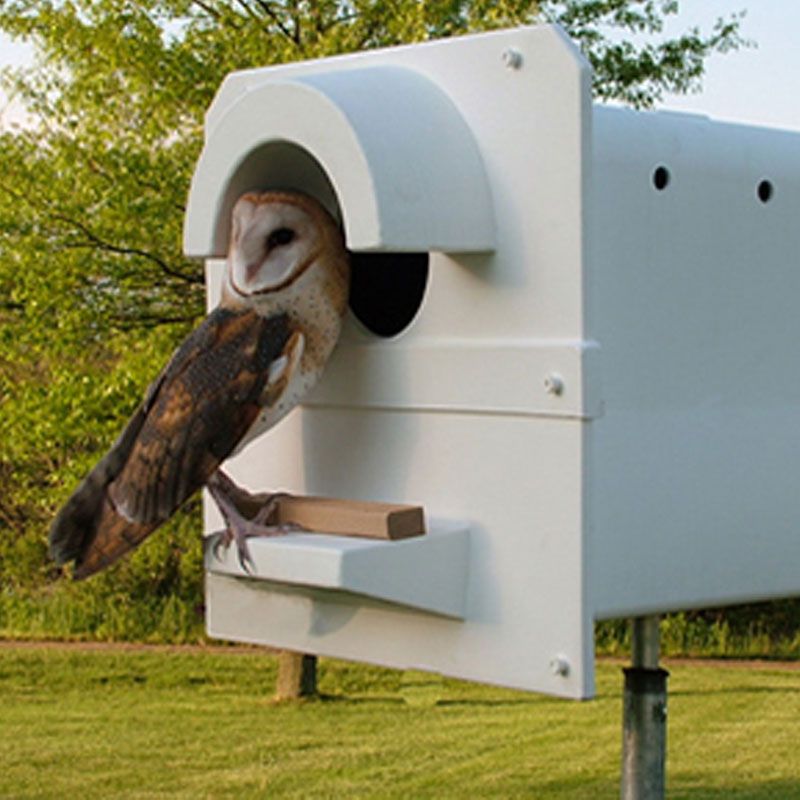
A well-built box in a bad location is still a bad box. Placement determines whether an owl finds it usable, whether nestlings survive a July heat wave, and whether a raccoon or rat snake cleans out the nest before fledging.
Shade is not optional in North Carolina summers. Box interiors can reach lethal temperatures when exposed to direct afternoon sun, particularly in the Piedmont and Coastal Plain from June through August.
Research on the importance of nest-box placement for Barn Owls found that sun exposure and orientation significantly affect occupancy and breeding success, with direct heat exposure increasing stress on nestlings. Choose a spot with morning light and afternoon shade, or use the canopy of a mature tree to buffer afternoon heat.
Ventilation slots in the box design help, but shade is the primary protection.
Audubon’s screech-owl plan suggests an east- or south-facing entrance to catch morning warmth in early spring. That guidance is reasonable on a shaded site, but on an exposed southern exposure in a North Carolina summer, it can become a problem.
Treat orientation as a starting point and adjust based on your specific site conditions, the surrounding tree canopy, and how much afternoon sun the location receives.
Predator protection is equally important. Utah State University Extension guidance recommends mounting boxes on smooth metal poles with predator baffles, keeping the box well away from branches, fences, or structures that raccoons, rat snakes, or cats could use to reach the entrance.
A baffle below the box is more reliable than trusting that predators will not find a wooden post climbable. If the box is mounted on a tree trunk rather than a pole, a sheet-metal wrap below the box can reduce snake access, though no method is completely foolproof.
Structural stability matters for years of use. The mounting hardware should hold the box firmly against wind without wobbling.
Check that drainage holes face down, that the lid or side panel opens cleanly for future inspection, and that the entrance diameter matches the target species exactly. An entrance that is too large on a Barn Owl box, for example, can allow Great Horned Owls to reach in and take nestlings.
Keep pest control integrated and realistic
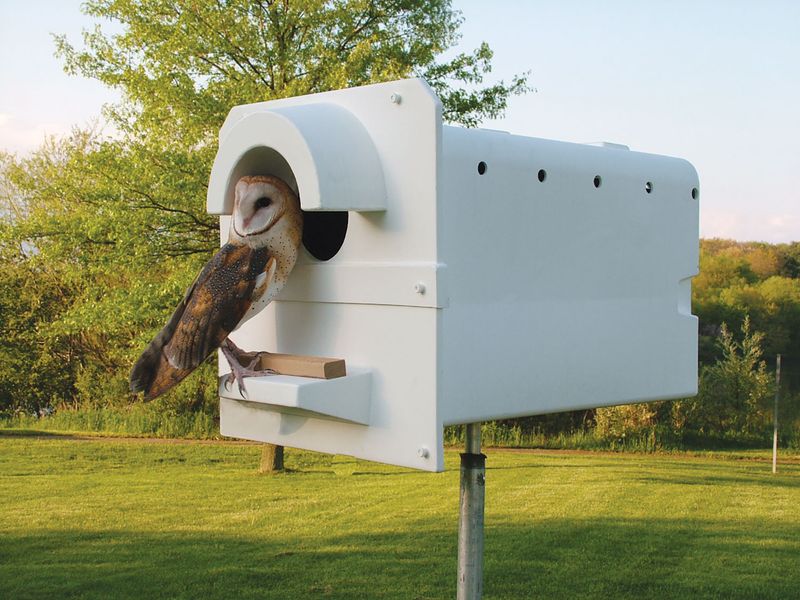
An owl that moves into your box may hunt mice, voles, large insects, or small reptiles in your yard. That is genuinely useful, and it is also genuinely unpredictable.
The owl may use the box mainly for roosting during the day and hunt well outside your property at night. It may not occupy the box at all in the first season or two.
And even a resident pair will not erase a rodent problem that has adequate food, shelter, and breeding habitat in your yard or your neighbors’ yards.
A 2024 cost-effectiveness analysis of barn-owl boxes versus lethal trapping found that boxes performed comparably to trapping only when rodent densities were already low. At moderate and high densities, trapping was more effective.
That finding reinforces the practical advice: if you have a serious rodent problem, address it with exclusion, sanitation, and targeted trapping first, then maintain a box as a supplemental habitat feature.
Agricultural research offers useful context without proving suburban equivalence. A 2025 study at six Napa Valley vineyards reported 38 to 52 percent lower rodent abundance across the observed range of owl hunting pressure.
Vineyards differ from residential lots in size, landscape structure, prey density, and the number of owls using the area. A single box in a suburban yard operates under very different conditions, and extrapolating vineyard results to a home garden overstates what the science actually shows.
Eastern Screech-Owls have a broad diet that can include rodents, large insects, amphibians, reptiles, small birds, and bats. A box may attract a bird that eats some of the animals troubling your yard, but it may also attract one that targets frogs or small songbirds.
Owls do not sort prey by human preference.
No reviewed source established a meaningful tick-control effect from owl boxes. Skip that claim entirely.
Utah State Extension frames wildlife nest boxes as one component of integrated pest management on farmland, not as a standalone solution, and that framing translates well to residential settings. Exclusion, sanitation, habitat modification, targeted trapping, and professional help for persistent infestations remain the core toolkit.
An owl box adds one more layer, not a replacement for any of them.
Protect occupied boxes and handle maintenance safely
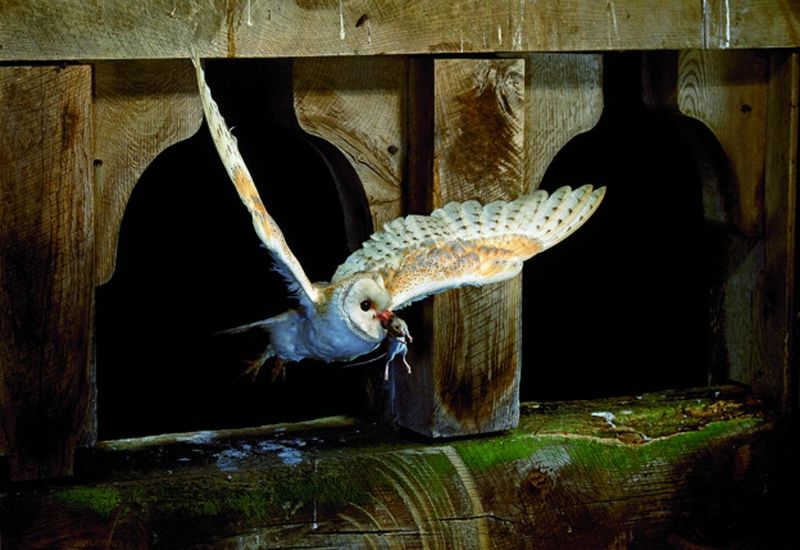
An owl box is not a set-and-forget project. Responsible ownership means knowing when to act, when to stay away, and how to handle what accumulates inside over time.
When a box is occupied, leave it alone. Utah State Extension warns that disturbance during nesting can cause nest abandonment, which means lost eggs or nestlings.
Do not open the box, peer inside with a flashlight, closely photograph the entrance, or tap the exterior to see if anything is home. If you spot an owlet on the ground below the box, contact a licensed wildlife rehabilitator rather than handling the bird yourself.
Young owls sometimes leave the box before they can fly well and may be fine, but a rehabilitator can assess the situation safely.
Cleaning and repairs belong in the off-season, when the box is clearly unoccupied and when local species-specific guidance permits it. Accumulated pellets, droppings, prey remains, and old nesting material are normal but require careful handling.
CDC guidance on reducing histoplasmosis risk warns that disturbing accumulations of bird droppings can aerosolize Histoplasma spores, which cause a serious fungal lung infection. Avoid dry sweeping or blowing out debris.
Wear gloves and a properly fitted respirator, dampen material before removal, and bag it securely. Large accumulations should be handled by a professional familiar with wildlife-related cleanup.
Rodenticide has no place near an owl box. Cornell Lab’s reporting on raptors and rat poison documents how owls and other predatory birds are exposed to rodenticides through the prey they eat.
Secondary poisoning can kill or sicken the same birds a nest box is meant to support. Use exclusion, sanitation, and targeted snap or live traps instead.
North Carolina and federal law protect birds of prey. NC Wildlife states that it is illegal under federal and state law to injure, harass, kill, possess, or remove a bird-of-prey nest.
Active nests receive the strongest protection. Before removing, altering, or relocating any nest or bird, contact NC Wildlife or the appropriate wildlife authority to understand what is and is not permitted in your specific situation.
U.S. Fish and Wildlife Service guidance on bird nests explains the federal framework, which applies alongside state rules.
For an injured owl, NC Wildlife’s injured and orphaned wildlife page connects you with licensed rehabilitators equipped to help.
Measure success as habitat stewardship, not a pest-free yard
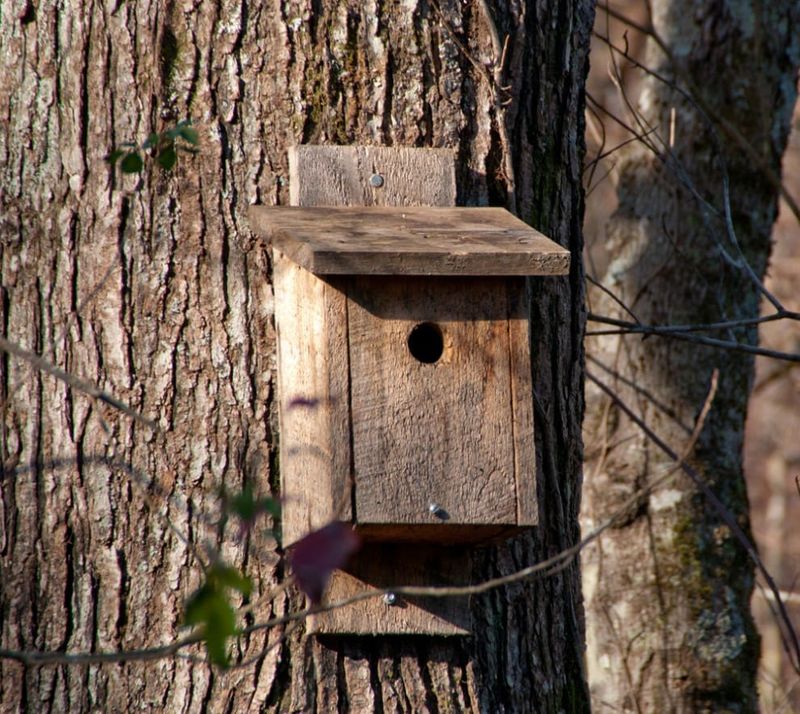
Reframe the finish line before you pound the first nail. A box that sits unoccupied for a full season is not a failure if it was correctly built, safely placed, and matched to the habitat your property can offer.
You have added a resource to the local landscape, and that has value even when no owl moves in right away.
NC State Extension’s wildlife and forest stewardship guidance treats nest boxes as habitat additions within a broader stewardship approach, not as isolated pest-control devices. That framing keeps expectations grounded: retain safe snags and natural cavities, avoid poison, maintain other pest controls, and let the box play its supplemental role without asking it to carry the whole load.
If an owl does take up residence, you will have a front-row seat to a functioning piece of the local food web. NC Wildlife’s Barn Owl page and NC State Extension’s urban habitat guide both point toward the same conclusion: supporting native cavity-nesting wildlife improves the ecological health of the yard as a whole, not just one pest problem.
Choose the species your habitat can support, build or buy a box that fits that species, install it safely with shade and predator protection, skip the poison, and keep your other pest controls in place. A native owl that finds your box has gained a secure place to raise young.
That outcome stands on its own, whether or not your mouse count drops noticeably the following fall.