
When Tomato Plants Go Leafy But Set Few Fruits, Selective Pruning May Help – Here Is What To Check First
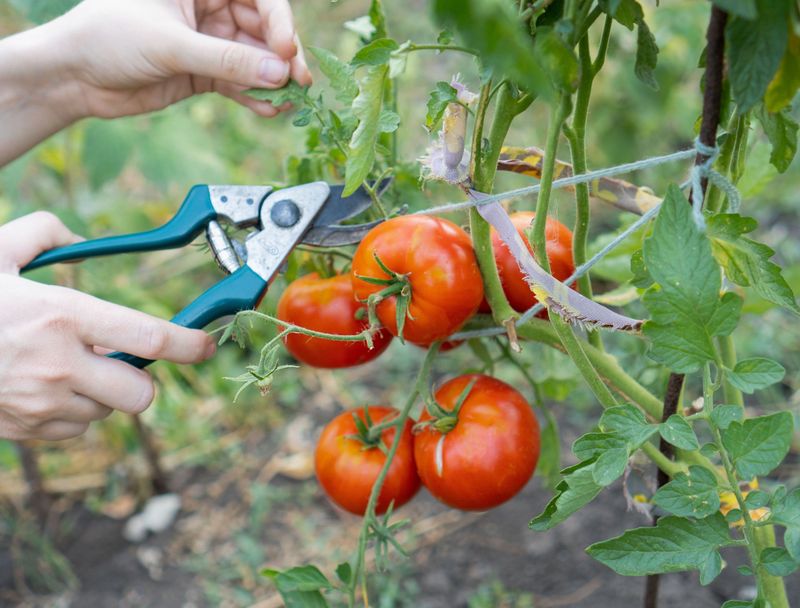
You walk out to your garden, and your tomato plant looks incredible – thick, lush, and green from top to bottom. But when you scan for fruit, there is almost nothing there.
Before you reach for the pruners, it helps to understand why that leafy growth is happening and whether cutting anything will actually change your harvest.
A leafy tomato plant may be healthy, not wasteful
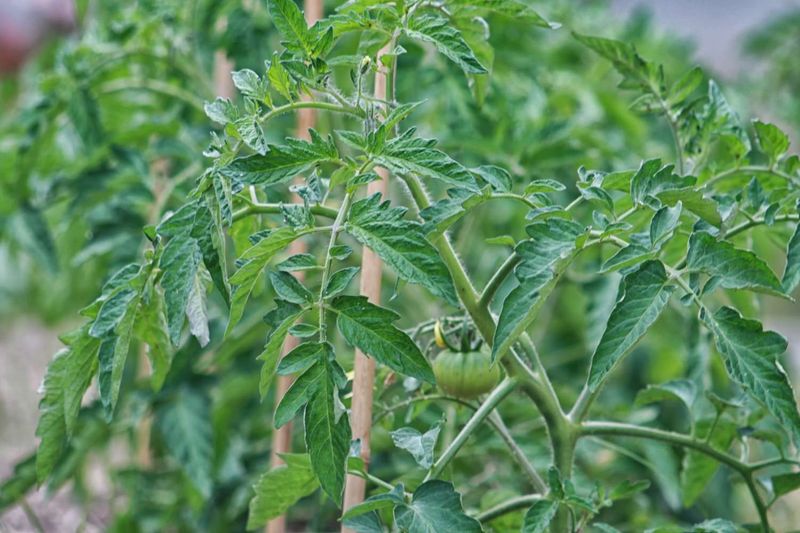
Thick, green foliage on a tomato plant is not a warning sign on its own. Leaves are the engine of the whole operation, converting sunlight into the sugars that fill every tomato you eventually pick.
Wisconsin Extension’s tomato pruning guidance points out that healthy foliage is essential for fruit development and that stripping it away can do more harm than good.
Early in the season, tomato plants put a lot of energy into building stems and leaves before shifting toward reproduction. A plant that looks all leaves in June may simply be doing exactly what tomato plants do at that stage.
That is normal growth, not a malfunction worth correcting with scissors.
Before deciding anything, take a few minutes to look closely at what is actually happening. Are flowers forming?
If yes, are they dropping off before a tiny green tomato appears in their place? Is the canopy so packed that stems are tangled, airflow feels blocked, or you can barely reach in to check for ripe fruit?
Those observations matter more than the overall leafy appearance. Oregon State Extension’s tomato growing guide reinforces that selective pruning is a training tool for specific situations, not a routine response to vigorous growth.
If flowers are forming and holding, if you can move around the plant comfortably, and if there is no disease pressure building in the canopy, the honest answer may be that your plant is doing fine and needs no intervention at all.
The leafy symptom alone does not justify a cut. Establishing what is actually going wrong, or confirming that nothing is, is the right first move.
Fruit set fails for reasons pruning cannot fix
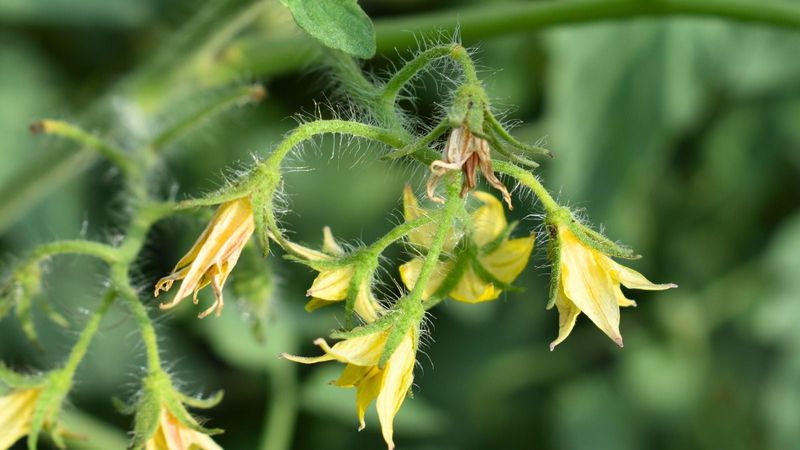
When flowers brown and fall without setting fruit, the plant is telling you something about its environment, not its leaf count. Pruning the canopy will not repair the underlying stress causing those flowers to abort.
Temperature is one of the most common culprits. Iowa State University Extension explains that fruit set is commonly disrupted when daytime temperatures climb above roughly 85 degrees Fahrenheit or when nights drop below about 55 degrees.
At those extremes, pollen viability drops and flowers abort before pollination can be completed. Exact thresholds vary by cultivar, so treat those numbers as a useful range rather than a hard rule.
Pollen release is another piece of the puzzle. Tomatoes are largely self-pollinating, but the flower needs to move for pollen to shake free and land on the stigma.
In still, humid conditions with no wind and no bee activity, that movement may not happen reliably. University of Alaska Fairbanks Cooperative Extension notes that gently tapping flower clusters can assist pollen release when natural movement is limited – a simple, no-cost step that pruning cannot replicate.
Watering habits also play a bigger role than most gardeners expect. Drought stress and inconsistent soil moisture can trigger blossom drop, and the fix is steady, deep irrigation paired with mulch to hold moisture between waterings.
Letting the soil swing from bone dry to waterlogged stresses the plant at exactly the moment it needs stability to commit to fruit.
Excess nitrogen is worth checking too. Mississippi State University Extension notes that too much nitrogen can push dark green, vigorous leafy growth while reducing flowering and fruit set.
If you have been fertilizing heavily, that lush appearance may be a symptom of excess nitrogen rather than a sign that the plant needs pruning.
Work through temperature, water, pollination, and nutrition before reaching any conclusion about the canopy. Removing foliage will not cool a heat-stressed plant, rehydrate dry soil, move pollen, or correct a nutrient imbalance.
The variety decides whether suckers are worth removing
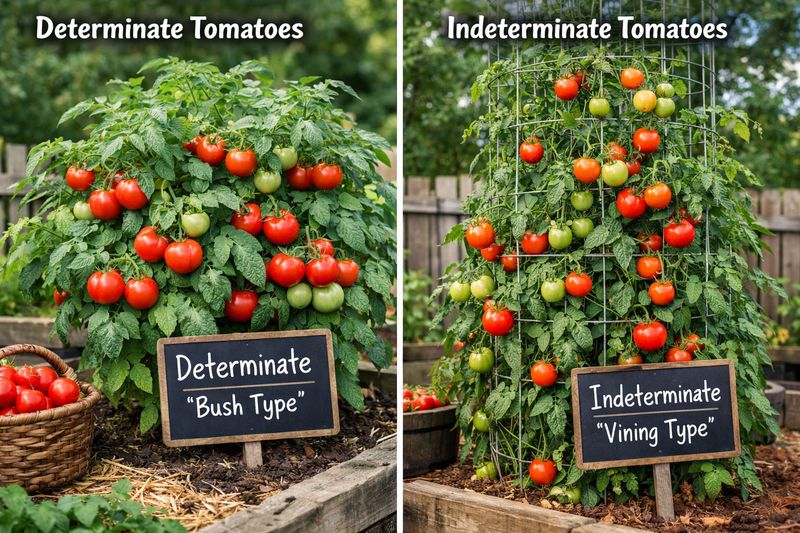
Not every tomato plant is a candidate for sucker removal, and applying the same pruning approach to every variety is one of the most common mistakes home gardeners make. Growth habit is the deciding factor, and you need to identify it before touching a single shoot.
Determinate tomatoes are bred to grow to a set size, then concentrate their energy into producing a relatively compact crop over a shorter window. Once that flush of fruit is done, the plant winds down.
Wisconsin Horticulture Extension is clear that removing suckers from determinate plants can directly cut into the crop because those suckers often carry the fruit-producing growth the plant was always going to rely on. Many popular paste and canning varieties fall into this category.
Indeterminate tomatoes keep growing, branching, and flowering until cold weather stops them. They are the ones that can genuinely benefit from selective training because, left completely unchecked, they may become tangled and difficult to manage.
Illinois Extension’s pruning guidance recommends limiting sucker removal to indeterminate varieties specifically, while leaving determinate plants alone except for removing growth that touches the soil.
Checking the seed packet, plant tag, or catalog listing is the fastest way to confirm which type you have. The word “determinate” or “indeterminate” is usually printed there.
If you no longer have the label, a quick search with the cultivar name will usually settle it.
The safe starting rule is straightforward: on a determinate plant, leave the suckers in place and focus instead on support and consistent watering. Oregon State Extension’s growing guide reinforces that selective training is appropriate for indeterminate plants that have become overcrowded, not as a blanket practice applied to every tomato in the garden.
Selective sucker removal opens an indeterminate plant without stripping it
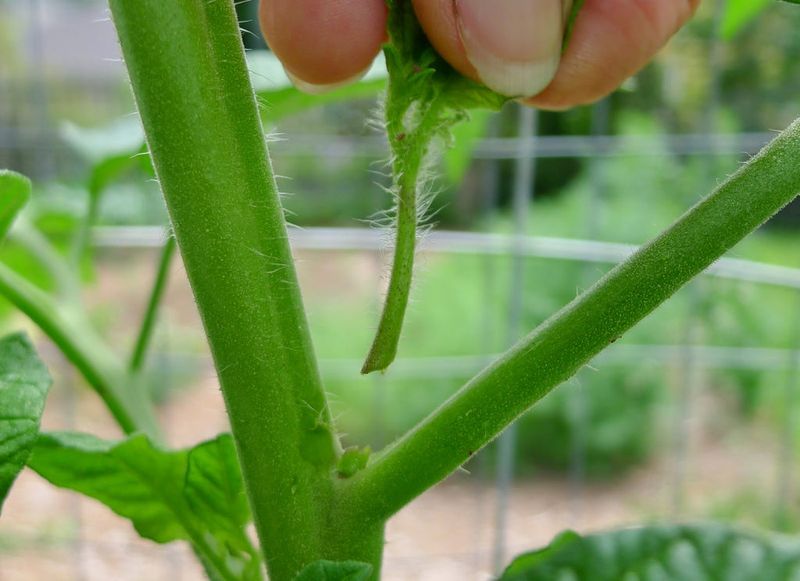
Once you have confirmed your plant is indeterminate and the canopy genuinely needs some organization, the pruning method matters as much as the decision to prune at all. The goal is controlled structure and improved airflow, not a bare stem.
Suckers grow in the angle between a leaf stem and the main stem – that V-shaped junction is where new shoots emerge and, if left alone, develop into full branches. On a plant that has been growing freely for several weeks, you may find suckers at every leaf junction up the stem.
Oregon State Extension describes one common training approach: keep the main stem and retain the sucker that grows immediately below the lowest flower cluster, then remove other unwanted suckers as they appear. That retained sucker becomes a productive second stem rather than a source of tangled growth.
Caged plants often work better with two or even three stems rather than a strict single-stem system. The cage itself provides support for the extra growth, so the priority shifts from rigid stem count to keeping the interior of the plant open enough for air to move through and for you to see and reach developing fruit.
Adjust the approach to match how your plant is supported.
Wisconsin Horticulture guidance on growing tomatoes recommends removing suckers when they are small – roughly 4 inches or shorter, or before they reach pencil thickness. Small shoots snap off cleanly with fingers or a quick snip, leave a minimal wound, and put much less stress on the plant than cutting back a thick branch that has been growing for weeks.
Illinois Extension frames the practical benefits honestly: opening the canopy can improve air movement around leaves, make it easier to spot and harvest fruit, simplify tying and trellising, and support better canopy management. Those are real, worthwhile outcomes.
What selective sucker removal does not reliably do is guarantee a larger total harvest, so keep expectations grounded in the specific improvements it can actually deliver.
Small, clean cuts are safer than a major midseason overhaul
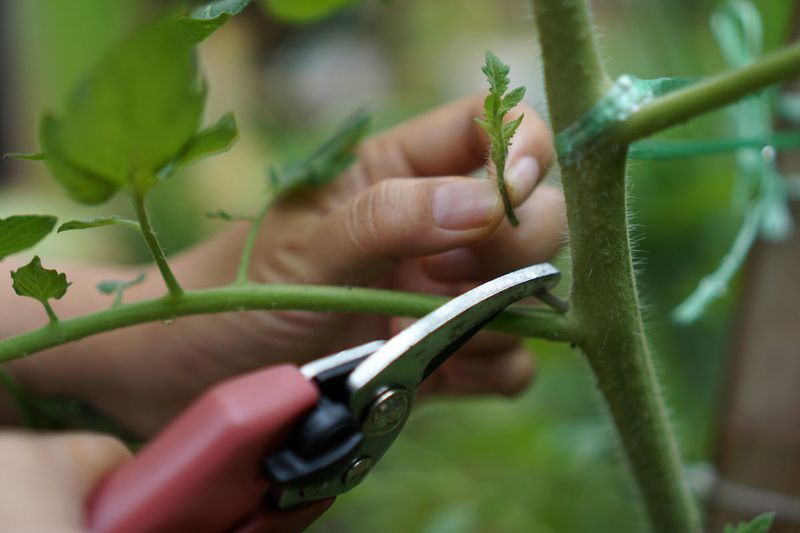
Pruning a tomato plant is most effective when it becomes a light, ongoing habit rather than a single dramatic session halfway through summer. Waiting until a plant is completely overgrown and then removing large amounts of growth at once stresses the plant, creates bigger wounds, and removes foliage the plant was counting on.
A better approach is to start after the plant is established and the first flower cluster is clearly visible, then check back every week or two and remove any new unwanted suckers while they are still small. There is no single calendar date that works for every garden across the country.
Wisconsin Horticulture Extension notes that late June or early July may work as a regional starting point in Wisconsin, but your own climate, cultivar, and planting date are better guides than any fixed date on a national calendar.
Tool sanitation deserves attention, especially if any plants nearby have shown disease symptoms. University of Minnesota Extension’s guidance on tomato viruses explains that some pathogens spread through hands, clothing, and tools during pruning and tying.
Washing hands and wiping blades with a diluted bleach solution or rubbing alcohol between plants is a straightforward precaution that takes seconds and can prevent a problem from moving through the whole garden. Sanitation does not treat an existing disease, but it reduces the chance of spreading one.
Timing at the end of the season also matters. Wisconsin Extension recommends stopping pruning one to two weeks before the expected harvest period so the plant has time to rebuild enough canopy to protect developing fruit from direct sun exposure.
Adapt that window to your own region and the pace of your season, but the principle holds: late-season pruning can leave fruit exposed at exactly the wrong moment.
More sunlight on fruit is not the same as a bigger harvest
Opening up an indeterminate tomato plant can make it easier to manage and, under the right conditions, may lead to somewhat earlier or larger fruit on the stems that remain. Those are genuine potential benefits worth knowing about.
What pruning reliably does not do is convert a leafy plant into one that produces a dramatically greater total weight or number of tomatoes.
Research on this point is more mixed than popular gardening advice tends to acknowledge. A field study on indeterminate tomato response to plant density and stem pruning found that results varied considerably depending on variety, spacing, and pruning intensity, with some trials showing no yield advantage from pruning and others showing higher yields from unpruned plants.
Findings from staked or greenhouse commercial systems should not be applied without adjustment to a backyard cage-grown tomato in a different climate.
Illinois Extension’s practical overview of tomato pruning draws a useful distinction: pruning may concentrate resources and produce larger individual fruit, but removing fruit-bearing shoots reduces the number of tomatoes the plant can set. Whether that tradeoff works in your favor depends on whether you prioritize total count, total weight, fruit size, or earliness.
Stripping healthy leaves to let more sun reach the fruit creates its own problem. Leaves supply photosynthates that fill developing tomatoes, and they provide shade that keeps fruit surface temperatures from spiking.
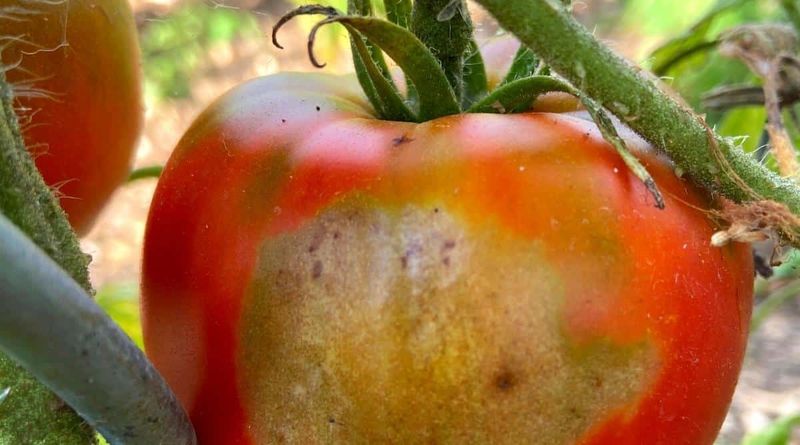
Penn State Extension’s guidance on tomato cracking and Wisconsin Extension’s pruning recommendations both warn that inadequate leaf cover can lead to sunscald – white or tan leathery patches on the fruit – along with cracking and other quality problems. Fruit exposed to intense afternoon sun without the buffer of surrounding foliage is vulnerable, particularly during heat waves.
Pruning is a tradeoff, not an upgrade. Going in with a clear idea of what specific improvement you are after – better airflow, easier access, possibly earlier fruit – helps you make a proportionate cut rather than an overcorrection that costs more than it gains.
After pruning, watch the flowers and the growing conditions
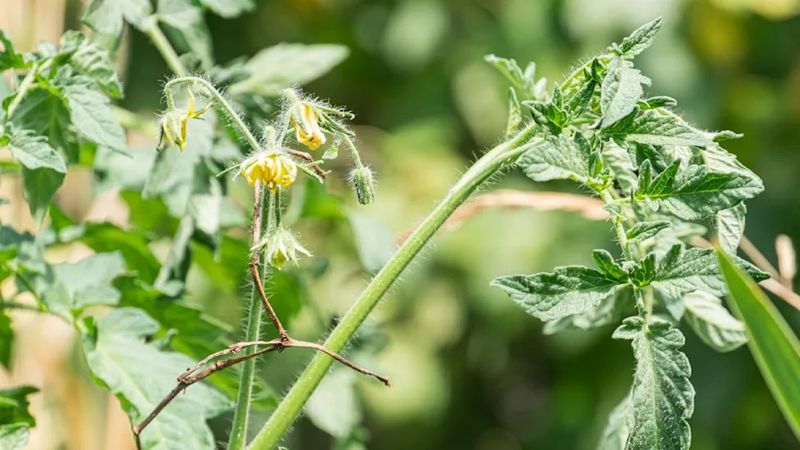
Pruning is not a set-and-forget step. The week or two after removing suckers is actually one of the best times to learn whether the plant’s fruit-set problem was structural or environmental, because you can observe what happens next under more controlled conditions.
Check the flower clusters regularly. If new flowers are forming and small green tomatoes are appearing in their place, the plant is setting fruit normally and the pruning may have helped with airflow or access without being the decisive factor.
If flowers continue to brown and drop, the problem almost certainly lies in the growing environment rather than the canopy.
Pay close attention to temperature patterns during flowering. Iowa State University Extension notes that blossom drop commonly tracks with heat events or cool nights, so comparing the timing of flower loss with your local forecast can quickly confirm or rule out temperature as the driver.
If a heat wave coincides with flower drop, the fix is patience and shade cloth, not another pruning session.
Soil moisture deserves a daily check during warm weather. Uneven watering remains one of the most correctable causes of poor fruit set and fruit-quality problems.
Mulching around the base of the plant and switching to deep, consistent irrigation – rather than frequent shallow watering – stabilizes the root zone and gives the plant the steady supply it needs during flowering and fruit fill.
If the foliage looks exceptionally dark green and lush even after pruning, consider whether recent fertilizer applications may have pushed excess nitrogen into the plant. Mississippi State University Extension connects excess nitrogen to reduced fruit set alongside vigorous vegetative growth.
Rather than guessing at a correction, a soil test from your local extension service gives you actual numbers to work from before adding or withholding any fertilizer.
The best pruning fix is the one your tomato actually needs
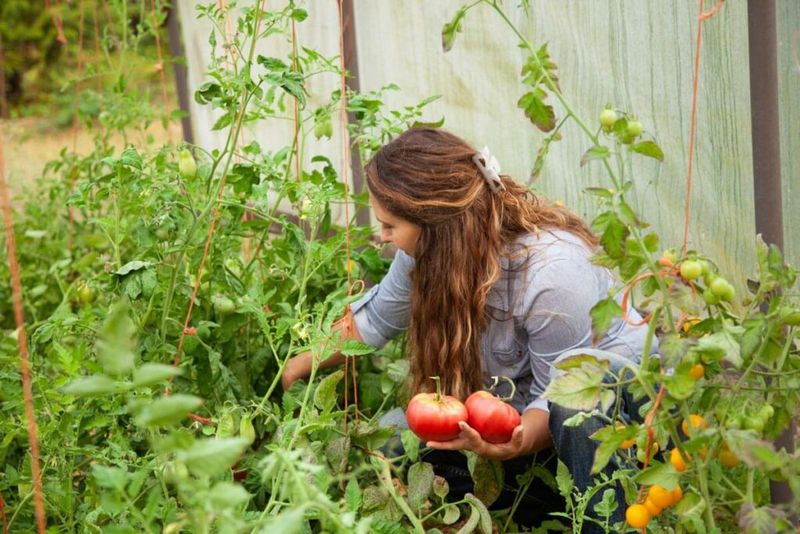
Pulling all of this together comes down to a short decision sequence rather than a blanket rule. Start with the variety.
If the plant is determinate, leave its productive suckers in place and focus your energy on consistent watering, appropriate nutrition, and good support. If flowers are dropping on any plant, work through temperature, moisture, pollination, and nitrogen before concluding that the canopy is the problem.
For an indeterminate tomato that has genuinely become overcrowded and hard to manage, selective removal of small suckers can improve airflow, simplify trellising, and in some cases nudge fruit toward being larger or earlier. Oregon State Extension and Illinois Extension both frame those as conditional benefits rather than guaranteed outcomes, and both caution that removing fruit-bearing growth can reduce total tomato count.
Defining what success looks like for your garden makes the tradeoff clearer. A more manageable plant that produces somewhat larger or earlier fruit may be exactly what you were after, even if the total number of tomatoes stays the same or dips slightly.
That is a legitimate outcome worth choosing on purpose. The best pruning decision is an honest one, not an optimistic one.