
Why Your North Carolina Crape Myrtle Keeps Sending Up Suckers No Matter How Often You Cut Them
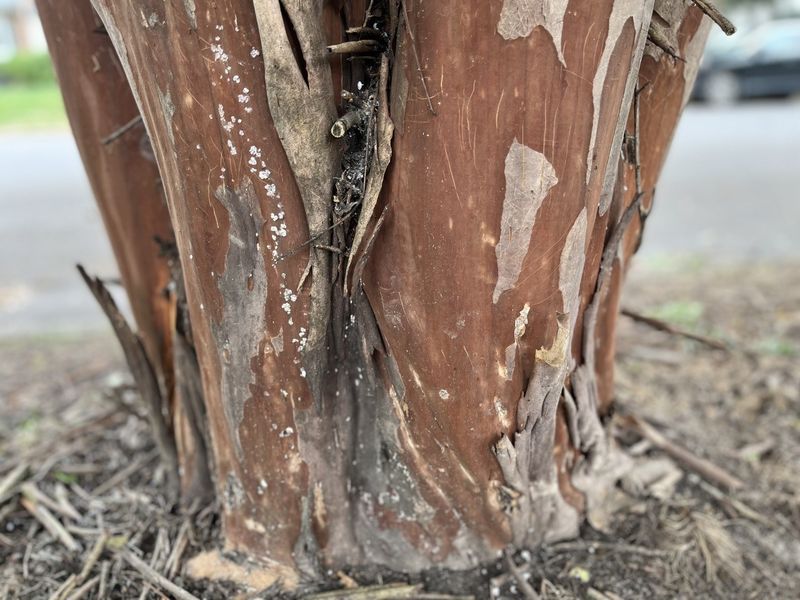
Every spring, you head outside with pruners in hand, cut those unwanted shoots off the base of your crape myrtle, and feel good about the job. Then summer arrives and the shoots are back, sometimes thicker than before.
Understanding why they return is less about pruning harder and more about what the plant is doing underground and at its base. Once you know how to read those shoots, you can manage them in a way that actually protects the tree.
Recurring shoots are not proof that pruning failed
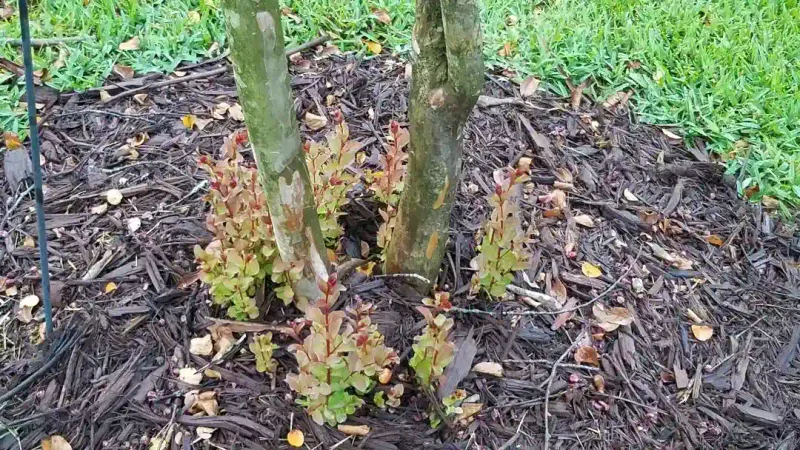
Crape myrtles are vigorous plants, and many homeowners assume that if a shoot keeps returning after cutting, the pruning technique must be wrong. That assumption skips a more basic explanation: crape myrtles commonly produce basal shoots as part of their normal growth habit, especially when they are maintained in tree form with one or a few main trunks.
The shoots are not evidence that something went wrong with the pruner.
A basal shoot is simply a new stem that emerges at or near the base of the plant. A true root sucker originates from a root below ground, while other shoots may arise from the root collar, a buried section of the lower stem, or dormant buds sitting at the plant’s base.
NC State Extension’s pruning guidance describes a sucker as a shoot arising from or below ground level, which means not every basal shoot technically qualifies as a root sucker. Knowing that distinction matters because it changes where you look and what you do.
Cutting a shoot removes what you can see, but it does not necessarily remove the bud or tissue that generated it. Regrowth is common, and that is not a failure.
Where pruning does complicate the picture is when it is repeated and severe. Mississippi State Extension notes that heavy cutting can stimulate extra vigorous growth, so a plant that is routinely topped or cut back hard may push out more unwanted shoots than one managed with lighter, selective pruning.
Reframing the problem helps. Recurring shoots on a crape myrtle are usually a plant-form management issue, not a sign of disease or a pruning mistake.
The right response is diagnosis first, then targeted removal, not simply cutting harder or more often.
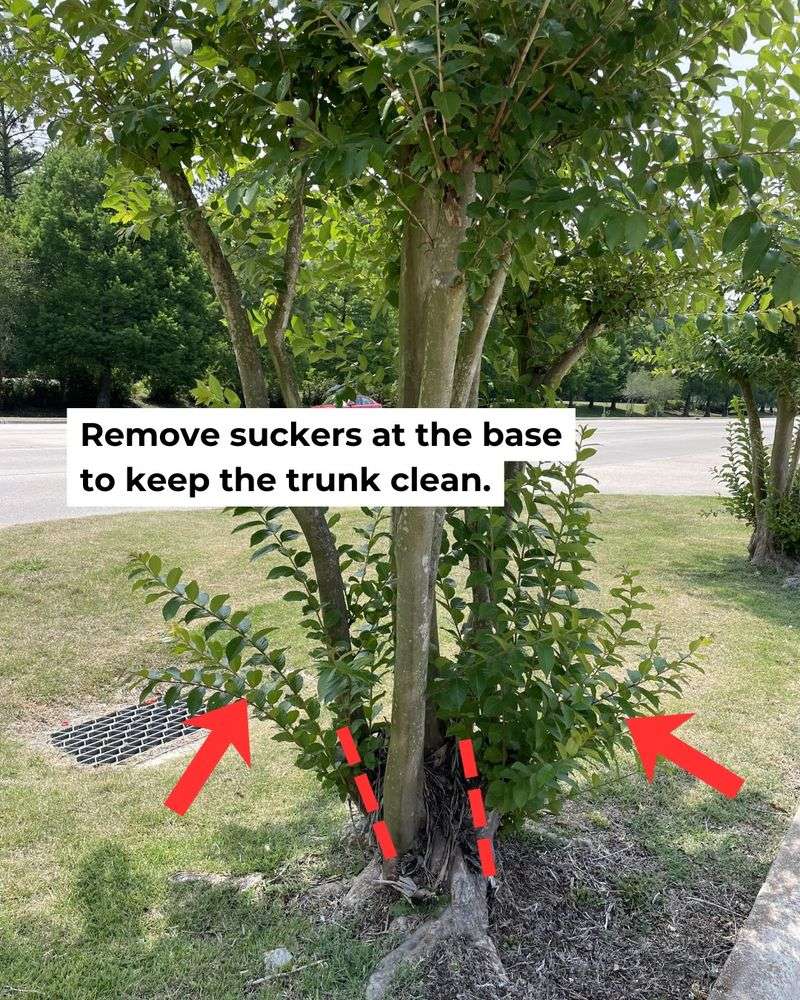
Inspect exactly where each shoot emerges
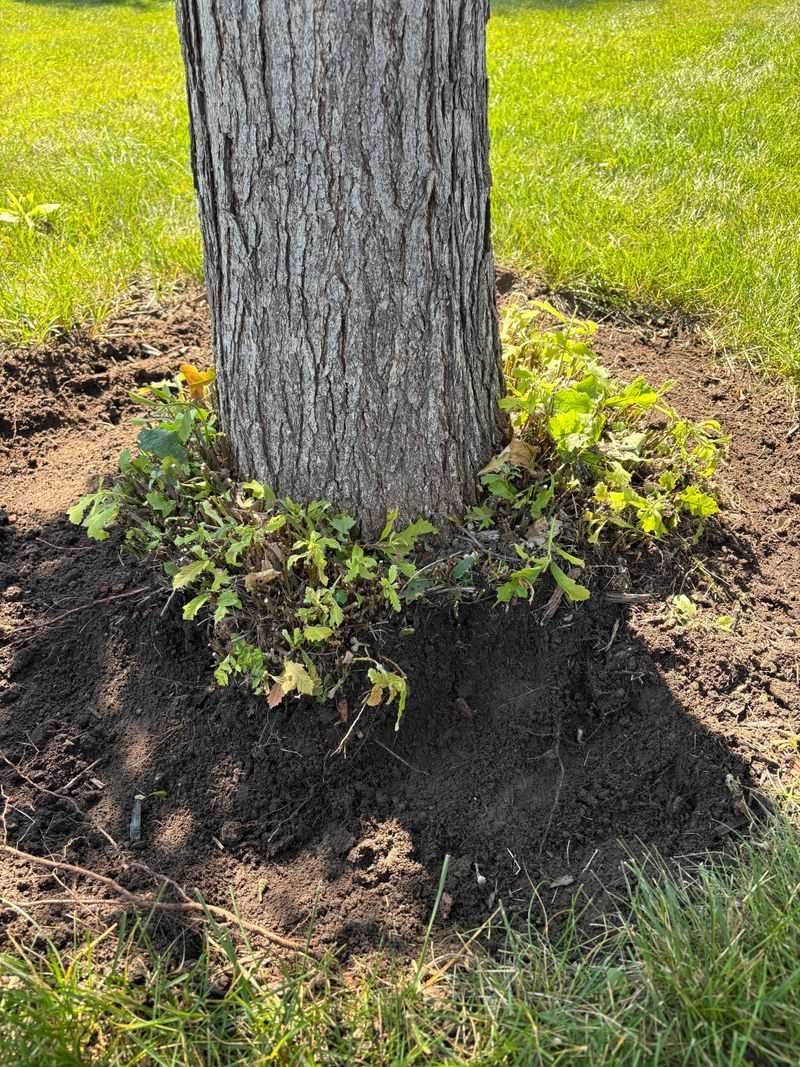
Before removing any shoot, spend two minutes looking at where it actually starts. Scrape back a small amount of mulch or surface debris around the base of the plant, just enough to see the root flare clearly.
You are not digging a trench; you are uncovering the junction between the trunk and the soil so you can see where each stem originates.
A shoot that traces back to a root running away from the plant is the closest thing to a classic root sucker. A shoot that emerges right at the root collar or from a buried section of the lower trunk is better described as a basal sprout or stump sprout, and its connection to the plant is more direct.
Mississippi State Extension’s crape myrtle guidance recommends removing basal shoots periodically to preserve the desired structure, but that recommendation assumes you have already confirmed which stems do not belong.
Several sturdy stems emerging from the same root flare can mean one of two things. Either the plant was originally grown or sold as a multi-stemmed shrub and those stems are all intentional main trunks, or the plant was meant to be a tree and those extra stems are unwanted growth.
Published landscape management research suggests that three to five main stems is a commonly recommended arrangement for multi-trunk crape myrtles. If your plant naturally has that structure, removing all the new stems would damage the intended form, not improve it.
Shoots appearing several feet away from the trunk deserve a second look before you assume they belong to your crape myrtle. They could be seedlings from dropped seed, a different plant entirely, or a true root sucker.
Checking the leaf shape and tracing the stem toward the soil will usually tell you what you are dealing with. Identify the form you want before cutting anything.
The source may remain after the visible shoot is gone
Cutting a shoot at ground level feels like a complete fix, but the plant tissue that produced that shoot may still be present and capable of sending up another one. Depending on where the shoot originated, the cut removes the visible stem while leaving behind a dormant bud, a section of root, or a portion of the root collar that can generate new growth when conditions are right.
This is not a flaw unique to crape myrtles. University of Georgia Extension’s ornamental pruning guide explains that many woody plants retain the capacity to resprout from root or basal tissue, and that cutting alone does not eliminate that capacity.
The shoot you remove this spring may return from the same spot by midsummer, not because you cut it wrong, but because the underlying tissue is still viable.
Repeated cutting at the same points can add to the problem over time. Each cut leaves a small stub or wound, and the plant’s natural response to wounding is to push new growth.
Severe pruning practices, including topping the main canopy, can intensify this effect across the whole plant. Extension specialists have noted that crape myrtles can sucker as part of normal growth even without any pruning history, so recurrence is not proof that cutting caused the original shoots to appear.
Topping deserves particular attention here. When the main trunk is cut back to a flat stub, the plant responds by pushing out clusters of fast-growing shoots from just below the cut.
Those shoots are weakly attached and decay-prone, and they often include vigorous basal growth as the plant compensates for lost canopy. Managing those secondary shoots then becomes a second problem layered on top of the first.
The practical takeaway is that cutting manages visible growth rather than eliminating the plant’s biological ability to resprout. Accepting that reality helps you plan a smarter long-term approach instead of repeating the same cut every season.
Remove unwanted shoots while they are young
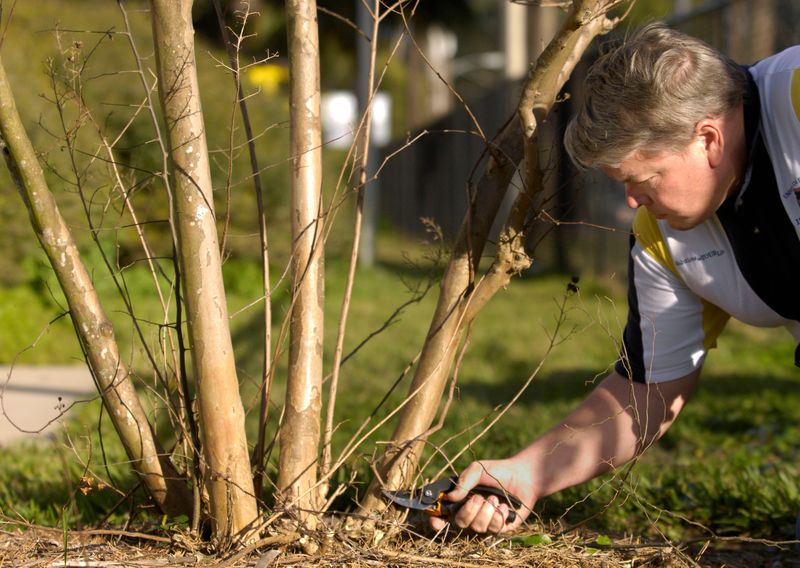
Young shoots are easier to remove cleanly, create smaller wounds, and are less likely to leave behind a significant stub that could resprout. Once a basal shoot has had a full season to develop, it starts to form its own root system and becomes substantially harder to remove without leaving something behind.
Catching them early is the single most practical thing you can do to reduce the workload each year.
When you are ready to cut, use clean, sharp bypass pruners. Trace the shoot back to its point of origin, whether that is a root, the root collar, or a buried section of stem, and make one clean cut right at that junction.
University of Georgia Extension’s pruning guidance advises cutting at the point of origin without leaving a stub, because a stub left behind is simply another surface from which the plant can resprout.
For very young, succulent shoots that have not yet hardened, some general tree-pruning guidance suggests that gently pulling or twisting the shoot out at its base can remove it along with the bud that produced it, reducing the immediate chance of regrowth. Penn State Extension’s landscape tree pruning resource notes this technique for young growth, but it works only when the shoot can be separated cleanly without tearing the trunk bark or a major structural root.
When in doubt, cut rather than pull.
Preserve any stem that belongs to the intended structure of the plant. If you are maintaining a three-trunk crape myrtle, removing a fourth stem is appropriate, but removing all new growth without checking which stems are part of the design can damage the plant’s form.
Mississippi State Extension specifically recommends removing only those shoots that fall outside the desired structure.
Skip the wound sealant. UF/IFAS Extension advises that wound paint is unnecessary and that the plant’s natural wound-sealing process handles small, clean cuts without any product applied to the surface.
Protect the root flare instead of chasing roots
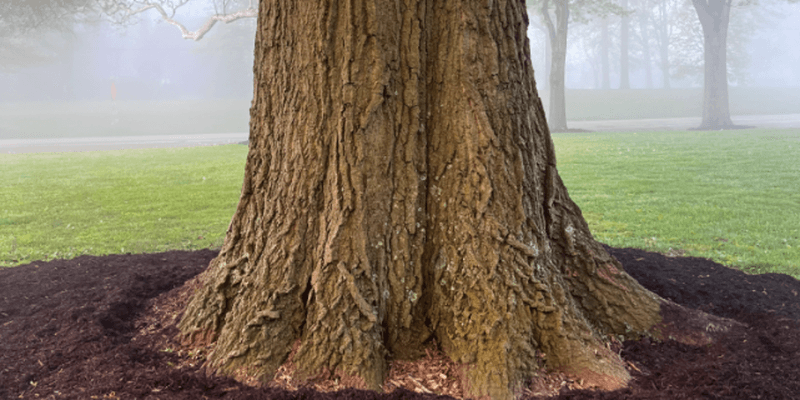
One of the most common sources of repeated stress at the base of a crape myrtle is not something underground. It is the lawn mower or string trimmer passing too close to the trunk every week.
Repeated nicks and scrapes to the bark at the root flare wound the cambium layer, interrupt the flow of water and nutrients, and create entry points for decay. Mississippi State Extension’s guide to abiotic disorders in woody landscape plants identifies mechanical injury from mowing equipment as a documented stressor that can contribute to decline and unwanted sprouting over time.
A simple ring of mulch around the base of the plant keeps equipment at a safe distance. Use two to three inches of organic mulch, extend it out to the drip line if possible, and keep it pulled back several inches from the trunk itself.
NC State Extension’s diagnostic tables flag mulch piled against the bark as a separate stressor, so a mulch volcano is not the solution. The goal is a buffer between the equipment and the root flare, not a mound of material smothering the trunk.
Digging around the base to find and sever a root that appears to be feeding a sucker is a tempting shortcut, but it carries real risks. University of Georgia Extension’s guidance on tree roots explains that major roots provide anchorage, water uptake, and nutrient transport.
Severing a structural root can destabilize the tree, reduce its ability to take up water during dry spells, and create wounds that invite decay into the root system. Root pruning is not a standard homeowner fix for a healthy crape myrtle producing basal shoots.
Protecting what is already there, keeping equipment away and mulch properly placed, is a more reliable long-term strategy than chasing individual roots with a shovel.
Use selective pruning and choose a suitable form
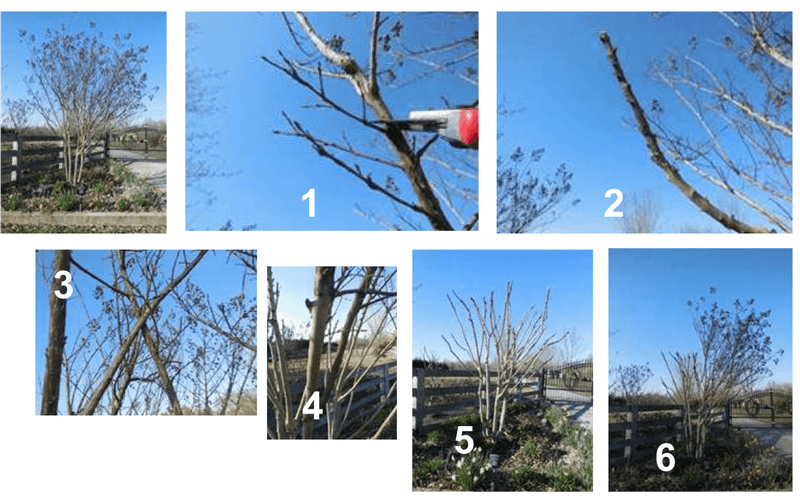
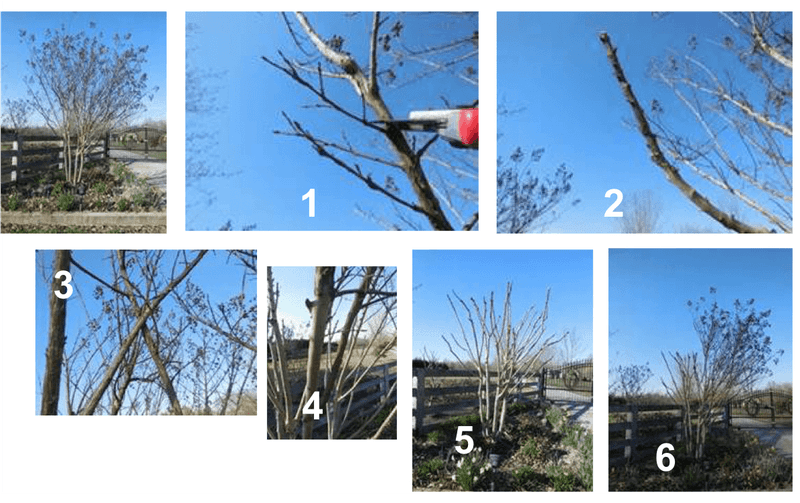
Managing basal shoots effectively is easier when the rest of the plant is being pruned correctly. Selective pruning means removing specific branches that cross, rub, grow inward, or show damage, while leaving the rest of the canopy intact.
Each cut should be made at the branch’s point of origin, preserving the branch collar so the plant can seal the wound properly. NC State Extension’s general pruning guidance outlines this approach and identifies the branch collar as the zone the cut should never damage.
For summer-flowering crape myrtles, structural pruning is best done in late winter or early spring before new growth begins. The NC State Extension Gardener Handbook’s woody ornamentals chapter places structural work in that late-dormant window.
Small unwanted basal shoots, however, can be removed whenever you notice them because the wounds are minor and the plant handles them without seasonal restriction.
Topping, which means cutting the main stems back to flat stubs, is not a substitute for selective pruning and should not be used to encourage bloom. Crape myrtles do flower on new growth, but topping produces clusters of weakly attached shoots, creates large decay-prone wounds, and permanently degrades the tree’s natural structure.
Mississippi State Extension’s crape myrtle pruning guidance is explicit that topping is unnecessary and harmful to the plant’s long-term form.
Plant fit is the issue that underlies the most persistent pruning problems. If a crape myrtle requires heavy cutting every year just to keep it from overgrowing a space, the pruning is not solving the problem.
NC State Extension’s pre-pruning guide notes that crape myrtle cultivars range from roughly three to four feet at maturity to more than twenty-five feet, a range wide enough that a wrong-size selection can make every season a battle. LSU AgCenter’s crape myrtle guidance reinforces that choosing the right cultivar size for the space eliminates the need for repeated heavy pruning.
When the plant’s mature size is not compatible with the location, replacing it with a smaller cultivar is a more honest long-term solution than annual topping.
Avoid herbicide shortcuts and conditional chemical advice
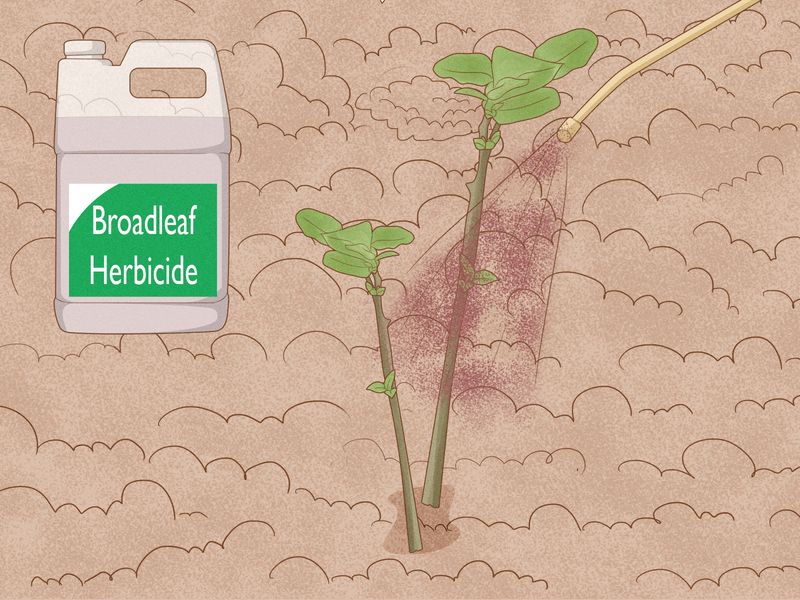
After cutting the same shoots for the third or fourth time, it is natural to wonder whether a chemical solution would just end the problem. The honest answer is that the most commonly considered options carry significant risks when the parent crape myrtle is meant to stay alive, and homeowners should understand those risks before reaching for anything in a spray bottle.
Systemic herbicides such as glyphosate and triclopyr work by moving through plant tissue after absorption. When a basal shoot is still connected to the parent tree through its root or root collar, a systemic product absorbed by that shoot can travel into the desirable crape myrtle and injure or kill it.
Extension specialists have addressed this risk directly, noting that applying a systemic herbicide to a connected shoot is not safe when the parent plant is meant to survive. Soil-applied products add another layer of concern because tree roots can absorb them from the surrounding soil, affecting the whole plant even when the product was applied at a distance.
Some extension and industry materials discuss plant growth regulators, including naphthalene acetic acid (NAA), as options for reducing resprouting after pruning. These are narrowly conditional tools.
EPA registration documents for NAA-based products make clear that registered use depends on the specific product formulation, the ornamental site, application timing, and label directions. A product registered for one use cannot automatically be assumed safe or legal for a homeowner’s crape myrtle in a residential yard.
University of Georgia Extension’s crape myrtle guidance treats chemical options as secondary to correct pruning technique rather than as a standard homeowner recommendation.
North Carolina rules for pesticide use are straightforward in principle but require attention. Homeowners may generally apply legally acquired general-use pesticides on their own property as long as they follow the product label exactly.
The NC Department of Agriculture explains that restricted-use pesticides may require appropriate credentials, and commercial pesticide applications for compensation require licensing. When a chemical option seems necessary and the situation is unclear, a certified arborist or NC Cooperative Extension agent is a better starting point than a product chosen from a shelf.
Manage the plant you actually have
A practical path through recurring basal shoots starts at the base of the plant, not at the hardware store. Uncover the root flare just enough to see where each shoot originates, then decide whether the plant is meant to be a single-trunk tree, a multi-stem arrangement, or something in between.
University of Georgia Extension’s ornamental pruning guidance emphasizes identifying the desired form before any removal begins, because a stem that looks like an unwanted sucker may actually be one of the plant’s intended main trunks.
Once the form is clear, remove only the shoots that fall outside it, and do that while they are still young and small. Protect the root flare with a proper mulch ring, keep mowing equipment away from the bark, and avoid the temptation to top the canopy as a way to manage size.
NC State Extension advises that when a crape myrtle needs heavy pruning every year just to fit its space, the real solution is a smaller cultivar, not a harder cut. NC State’s pruning guidance supports selective removal as the standard approach for maintaining healthy woody plants.
Recurring shoots on a well-managed crape myrtle are usually a normal part of caring for a vigorous plant, not a sign that something is broken. A crape myrtle that fits its space, gets selective pruning rather than repeated topping, and has its root flare protected will still push an occasional basal shoot, but it will also stay structurally sound and bloom reliably for decades.