
If Hummingbirds Keep Ignoring Your Feeder, Here’s The One Sweet Flower That Lures Them Right In
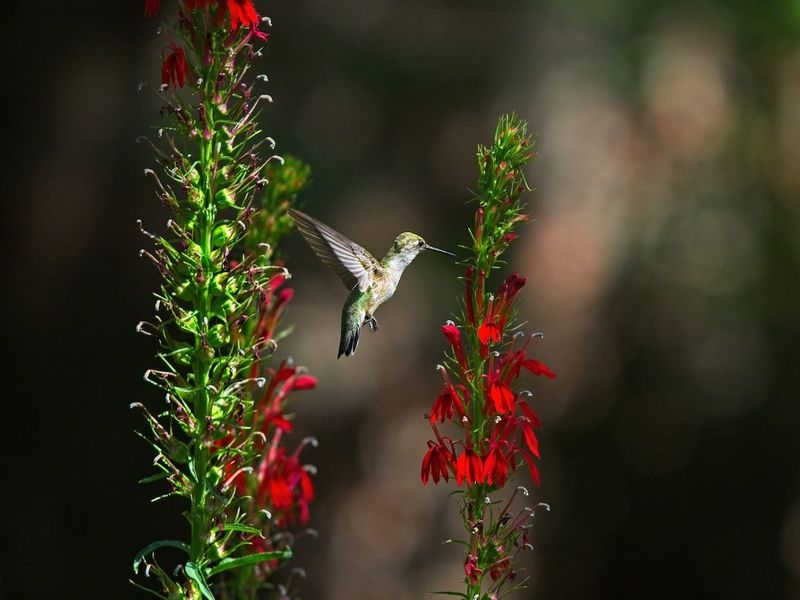
You filled the feeder, hung it in a sunny spot, and waited. Days pass, and the only visitors are flies.
Planting cardinal flower nearby may help hummingbirds notice your feeding area, and understanding why birds sometimes ignore feeders can make the difference between an empty perch and a steady stream of tiny wings.
Cardinal flower may help an ignored feeder stand out
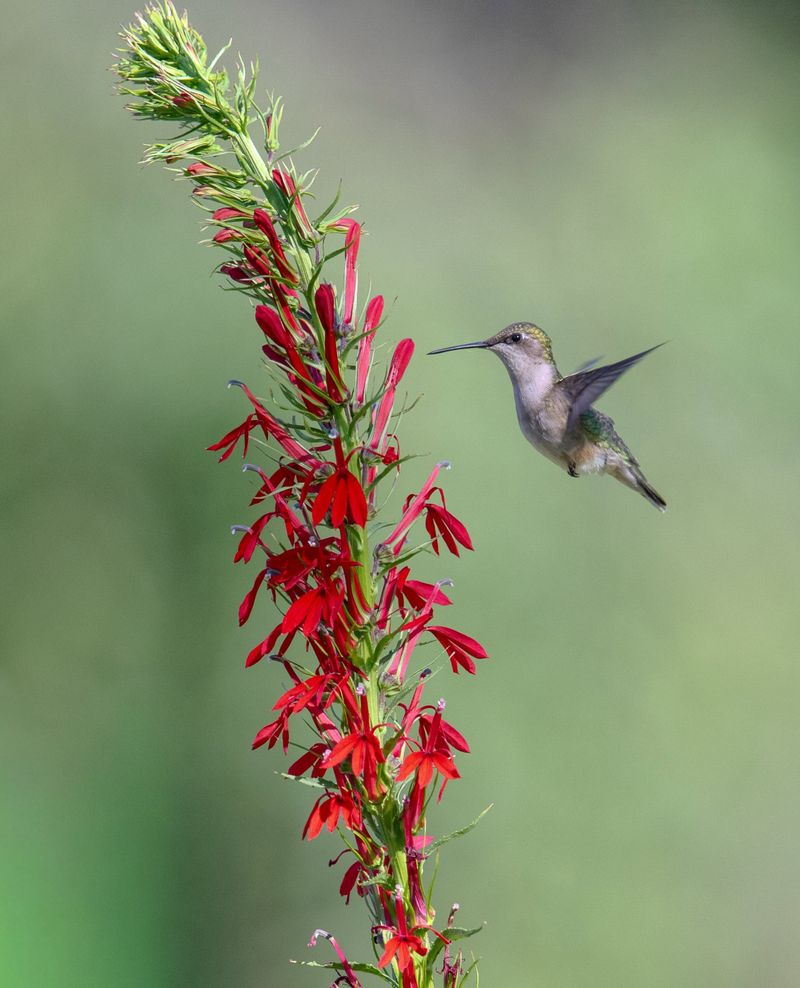
Cardinal flower, known botanically as Lobelia cardinalis, is a native perennial that produces tall spikes of vivid red, tubular blooms. Multiple government and university sources identify it as a reliable hummingbird nectar plant, and the USDA NRCS plant guide for Lobelia cardinalis notes its strong association with hummingbird pollination.
Placing it near your feeder may help visiting birds notice or investigate the feeding area as part of a single food source zone.
That said, no single flower reliably guarantees feeder use, and cardinal flower is not the only plant that can help. Bee balm, salvias, penstemons, coral honeysuckle, and trumpet creeper all appear on reputable hummingbird plant lists.
Cardinal flower earns a prominent spot in this article because its characteristics are well-documented and widely recognized, not because it outperforms every alternative in every yard.
Think of it as a complement to your feeder rather than a replacement for good feeder care. The plant provides natural nectar and a visual cue that may draw birds into the area; the feeder provides a consistent, supplemental food source between bloom cycles.
Together, they can make your yard more noticeable to hummingbirds, though placement, moisture, sanitation, regional fit, and a fair amount of patience all factor into the outcome.
Its flower shape and color may complement the feeder
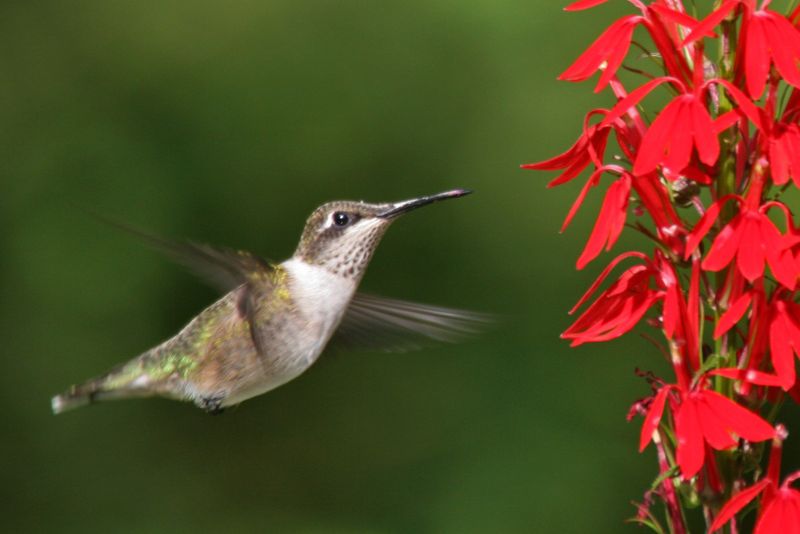
Cardinal flower’s narrow, tubular shape physically suits hummingbird feeding. A bird’s long bill can reach nectar that bees and most other insects cannot easily access, which means the flower directs much of its reward toward hummingbirds.
Audubon’s hummingbird garden guidance recommends planting red or orange tubular flowers near feeders specifically because they may help birds discover the feeding spot.
Red is a useful visual starting point, but color alone does not fully explain why a hummingbird investigates one plant over another. Research published in PMC on hummingbird color preference suggests that color preferences can shift based on experience and context, meaning a bird’s history with rewarding flowers matters alongside the color of the bloom.
Nectar quality, flower location, and learned associations all play a role.
A field study in the journal Condor found that hummingbirds adjusted their foraging based on the abundance and reward of available flowers, not on color alone. Cardinal flower offers a genuine nectar reward, which may reinforce a bird’s interest in the area.
Still, the flower is a cue and an invitation, not a guarantee that your feeder will suddenly see heavy traffic.
Place cardinal flower near the feeder without blocking access
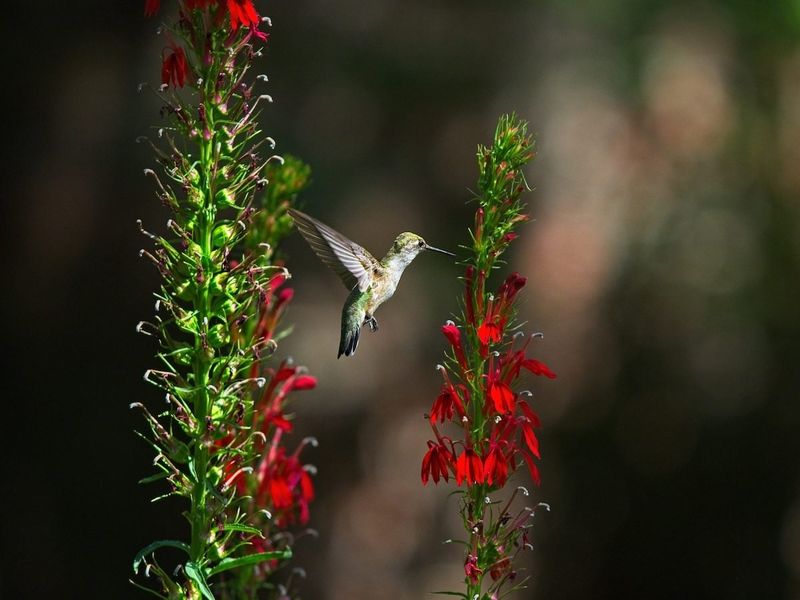
Positioning matters as much as the plant itself. Audubon’s hummingbird feeding FAQ advises placing flowers close enough to the feeder that a bird can encounter both as part of the same feeding stop, rather than treating them as separate destinations.
A good rule of thumb is to keep the plant within a few feet of the feeder without letting its stems or leaves drape across the port openings or hover ports.
Cardinal flower commonly reaches roughly 2 to 4 feet tall, according to University of Maryland Extension and University of Wisconsin Extension. At that height, it can sit attractively beside a feeder hung at eye level without overshadowing it.
If your feeder hangs from a shepherd’s hook or bracket, planting cardinal flower in a container or garden bed 18 to 36 inches to one side keeps the bloom visible while leaving the feeder’s flight path open.
Flowering typically runs from midsummer into early fall, but that window is approximate and shifts by region and microclimate. Penn State Extension’s rain garden plant profile for cardinal flower notes that bloom time can vary, so check with your local cooperative extension office or native plant society for a more accurate schedule in your area.
Relying solely on a general nationwide window may leave you expecting blooms that are still weeks away or already past.
Give the plant the moisture its roots require
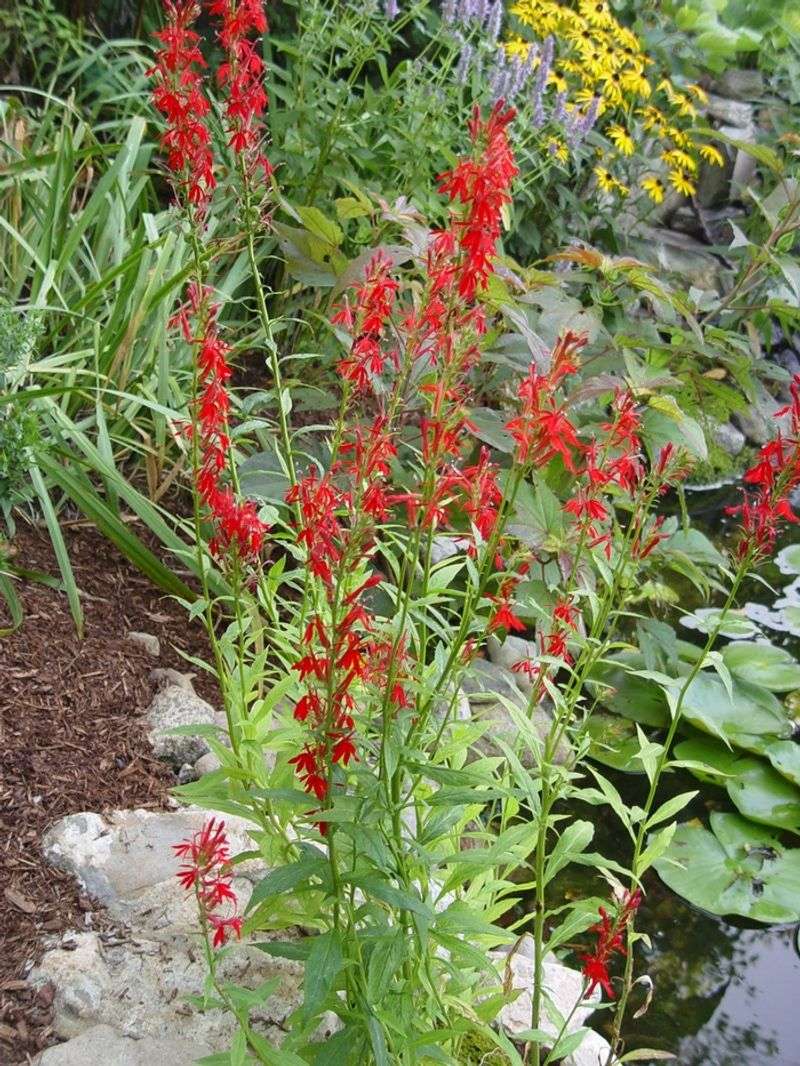
Cardinal flower has a firm preference for rich, reliably moist to wet soil. University of Maryland Extension describes it as a plant that thrives along stream banks, pond edges, and rain gardens where soil moisture stays consistent.
Planting it in a dry, sandy, or exposed bed and hoping for the best is likely to disappoint; the plant will struggle or fail before it ever produces a bloom.
Full sun is possible when the soil stays consistently wet, but partial shade helps the plant cope in hotter climates. NC State Extension’s plant profile confirms that cardinal flower tolerates partial shade well, which can be a practical advantage for gardeners in the South or other regions with intense summer heat.
If your only sunny spot dries out quickly, consider adding compost and mulching heavily to retain soil moisture, or look for a spot that stays naturally damp after rain.
Geographically, cardinal flower is most at home in eastern and central parts of the United States, where it grows natively along waterways. A USDA Forest Service guide to attracting hummingbirds lists many regionally appropriate plants, and western gardeners in particular should check local native-plant lists before committing to cardinal flower.
Cornell Lab’s overview of U.S. hummingbird diversity notes that the West hosts many more hummingbird species than the East, most of which have co-evolved with different native plants.
One more thing worth knowing: individual cardinal flower plants can be short-lived perennials. They may reseed or spread through offsets under suitable conditions, but a single planting is not a permanent fixture.
Plan to encourage self-seeding by leaving spent flower stalks in place at the end of the season, or propagate new plants from divisions to maintain your patch over time.
Treating cardinal flower as a drought-tolerant, plant-anywhere solution will lead to frustration. Match it to a genuinely moist site, account for your regional climate, and it can reward you with tall, brilliant red spikes that give hummingbirds a compelling reason to linger near your feeder.
Maintain fresh nectar while cardinal flower establishes
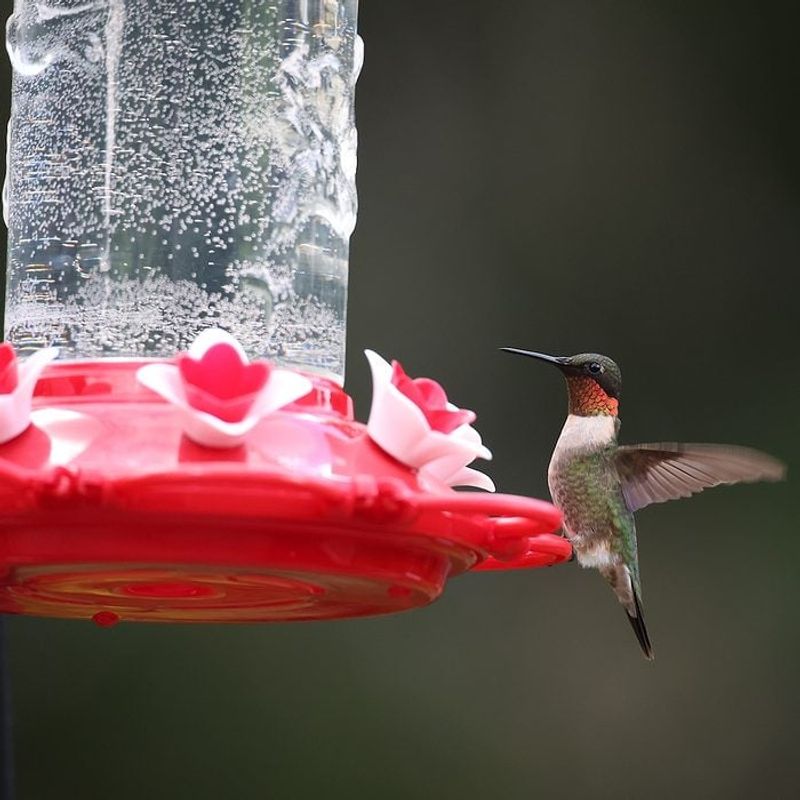
Planting cardinal flower does not reduce the feeder’s workload – if anything, the weeks while the plant establishes are exactly when a reliable feeder matters most. Audubon’s hummingbird feeding FAQ specifies the standard nectar ratio: 1 part refined white sugar dissolved in 4 parts water.
That ratio is the one consistent recommendation across Audubon, Cornell Lab, the National Park Service, and university extension services, and it should not be adjusted.
Skip red food dye entirely. The dye is unnecessary because most feeders already have red parts, and the National Park Service’s hummingbird page cautions against additives in nectar.
Honey, molasses, brown sugar, and artificial sweeteners are also off the list; honey ferments quickly and can cause a fatal fungal infection in hummingbirds, while other substitutes either lack the right caloric profile or introduce unknown risks.
Freshness is non-negotiable. Cornell Lab’s feeding guidance and UF/IFAS Extension’s hummingbird feeder page both advise replacing nectar every few days in moderate weather, and more frequently when temperatures climb.
In a heat wave, nectar can ferment or grow mold within a day or two. A clean, freshly filled feeder is a safe supplemental food source; a neglected one can harm the birds you are trying to help.
Cleaning means more than a quick rinse. Scrub all surfaces with a bottle brush and hot water, and check for black mold in the ports and reservoir.
Penn State Extension’s hummingbird guide recommends a dilute bleach rinse followed by thorough rinsing as an occasional deep-clean option.
One more guardrail: avoid pesticides anywhere near the planting or feeder. Audubon’s hummingbird garden advice specifically flags pesticide exposure as a concern because hummingbirds eat insects as well as nectar.
Insecticides can reach birds directly through contaminated flowers or indirectly through prey insects, so keep the entire feeding area chemical-free.
Natural flowers and seasonal behavior can change feeder use
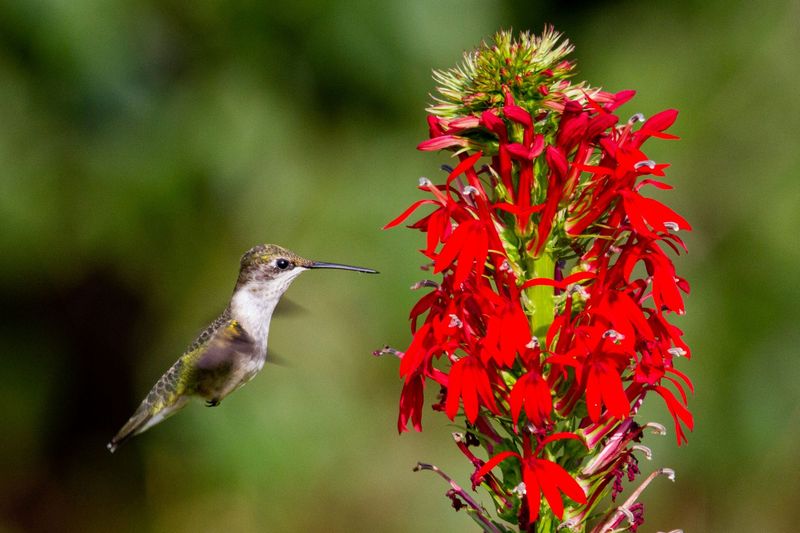
Even a well-placed cardinal flower and a spotless, freshly filled feeder can sit quiet for stretches of time, and that is not necessarily a sign that something went wrong. A field study published in The Condor found that feeder use in southern Arizona dropped as the abundance of preferred natural flowers increased.
When wild or garden blooms are plentiful, hummingbirds often prioritize them over artificial feeders, which is a reasonable choice from the bird’s perspective.
Seasonal changes in behavior add another layer. During breeding season, hummingbirds ramp up their insect hunting to fuel egg production and chick growth, so nectar visits may be shorter or less frequent.
An Ask Extension response on hummingbird behavior notes that feeding patterns shift across the season, and Cornell Lab’s Rufous Hummingbird life history page describes how migration timing dramatically affects where and when birds appear in different parts of the country.
Regional species differences matter too. The National Park Service’s hummingbird overview points out that the United States hosts more than a dozen hummingbird species with different ranges, migration routes, and habitat preferences.
A feeder that goes untouched in one zip code might be a local hotspot just a few counties away.
Territorial behavior is a separate issue that can make a busy feeder look empty. A single dominant bird may chase away every competitor, giving the impression that no hummingbirds are visiting when in fact one bird is monopolizing the area.
Audubon’s article on hummingbird aggression explains that this behavior is normal and intense. The practical fix, supported by Cornell Lab’s feeding guide and Penn State Extension, is to add a second feeder in a visually separate location so the dominant bird cannot guard both at once.
Discovery itself takes time. Audubon’s garden design guidance advises patience, noting that birds may take weeks to find a new feeding area.
An empty feeder in week two is not evidence that cardinal flower failed; it may simply mean the local birds have not swung by yet.
Treat cardinal flower as an invitation, not a guarantee
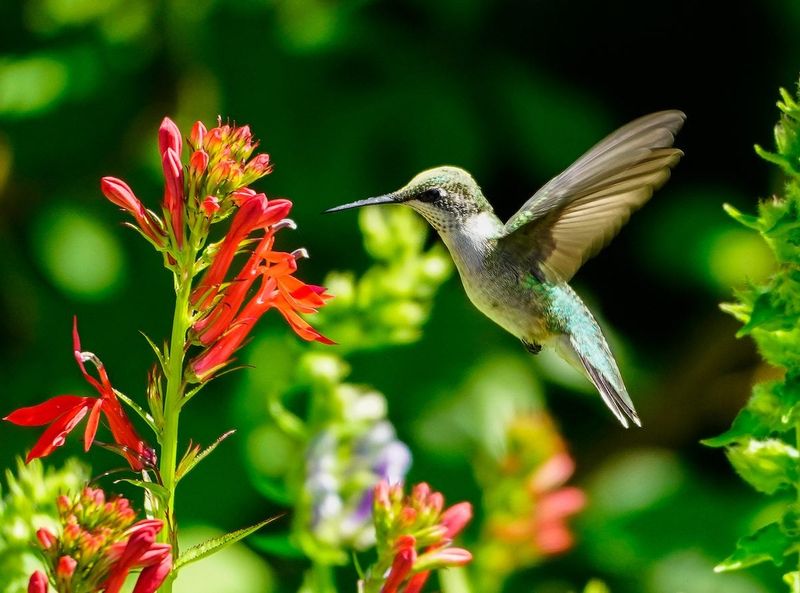
A practical checklist keeps the effort focused. First, choose a planting site with reliably moist, rich soil; University of Maryland Extension is clear that cardinal flower is not suited to dry or exposed beds.
Second, position the plant within a few feet of the feeder without obstructing the ports or the bird’s approach path, following Audubon’s advice to create a single combined feeding zone.
Third, keep the feeder clean and filled with fresh 1:4 white sugar-to-water nectar, replacing it more often in hot weather. Fourth, skip pesticides around the entire area.
Fifth, give the setup time; Cornell Lab’s feeding guidance and Audubon’s garden design page both emphasize that discovery can take weeks, and seasonal or territorial factors may extend that window further.
Cardinal flower can genuinely improve a feeding area’s habitat and visibility, but it works best as one part of an attentive, patient approach. The yard that earns hummingbird loyalty tends to be the one that keeps showing up, season after season, with fresh food and a welcoming place to land.