
The Most Underrated North Carolina Native Sedge That Thrives In The Soggy Strip By Your Downspout
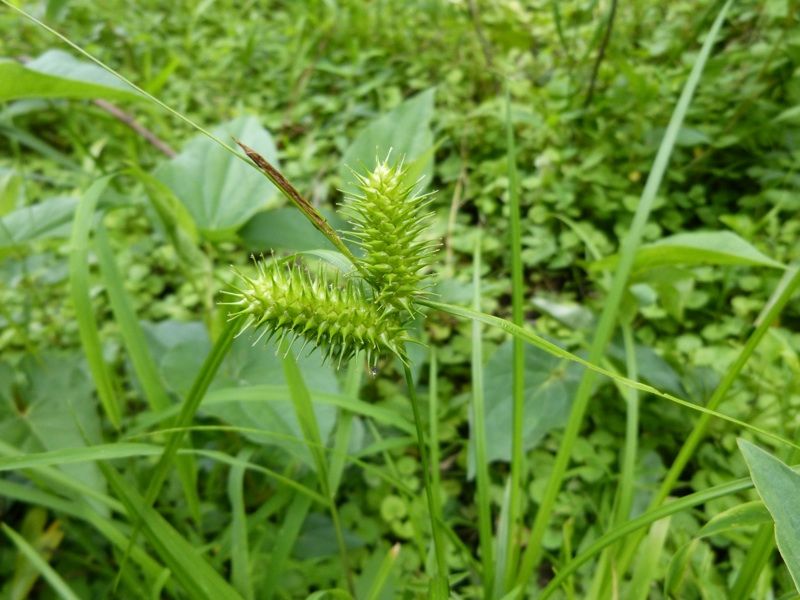
That muddy strip beside your downspout is one of the most ignored spots in a North Carolina yard, and most homeowners either fight it with gravel or give up on it entirely. Sallow sedge, Carex lurida, is a statewide native that treats persistent moisture as its preferred growing condition rather than a problem to overcome.
Planting it in a properly designed wet area can transform that soggy corner into a productive, wildlife-friendly space without the constant losing battle against standing water. Getting there requires a clear-eyed look at your drainage situation before a single plant goes in the ground.
Sallow sedge makes recurring moisture a planting opportunity

Recurring moisture near a downspout frustrates most homeowners because conventional lawn grass and typical foundation plantings simply cannot handle wet feet. Sallow sedge, Carex lurida, flips that frustration around.
North Carolina’s vascular plants database records it as common to very common across the state, appearing in swamps, floodplains, marshes, roadside ditches, and other persistently wet habitats in the Coastal Plain, Piedmont, and mountains alike.
That statewide footprint matters for a homeowner choosing a plant. A species already present in wet habitats across all three major NC regions is not being forced into unfamiliar conditions when it is placed in a moist downspout planting area.
NC State Extension’s plant profile describes it as a low-maintenance perennial that needs abundant moisture, tolerates full sun to partial shade, can grow in shallow standing water, and is an ideal candidate for a rain garden. Those qualities line up directly with what a properly managed downspout area provides.
Calling sallow sedge “the most underrated” native for this situation is an editorial judgment, not a scientific ranking. Other NC natives, including hop sedge, gray’s sedge, and tussock sedge, also perform well in wet sites, and one of those may suit a particular yard better depending on hydrology and location.
The claim here is simply that Carex lurida is broadly suited, widely available, and consistently overlooked by homeowners who assume a soggy strip is a problem with no good plant answer.
One qualification matters from the start: this sedge can occupy and stabilize a properly designed wet planting area, but it cannot repair faulty grading, a leaking gutter, foundation seepage, or drainage infrastructure that is undersized for the runoff the site receives. Those issues require mechanical fixes, not a plant.
Sallow sedge belongs inside a drainage solution, and the sections that follow explain how to build one before the first plant goes in.
Learn to identify Carex lurida before you plant it
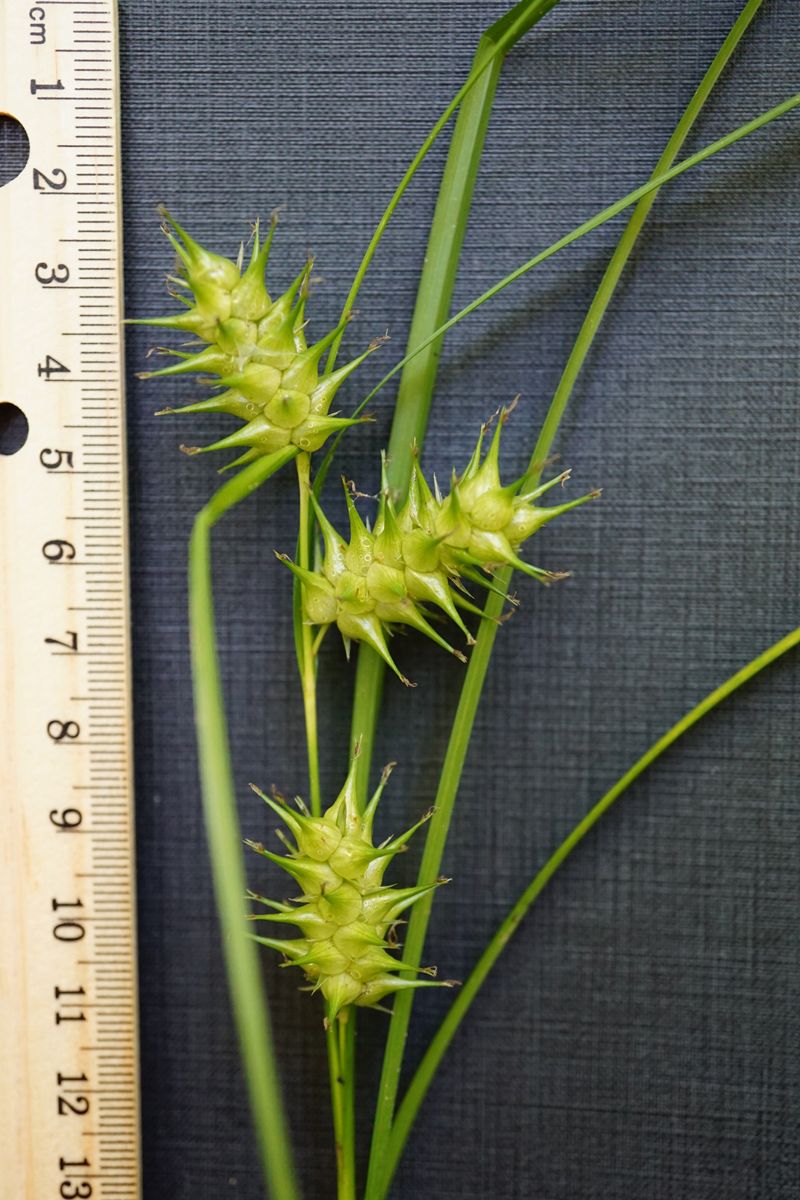
Buying the right sedge starts with knowing what to look for on the nursery bench and in the ground. Sallow sedge is a grass-like perennial with bright green foliage that forms a loose, arching clump.
Its stems are solid and triangular in cross-section, which is one of the most reliable ways to tell sedges apart from true grasses.
NC State’s Extension Gardener Handbook notes that the triangular stem is a useful field distinction between sedges and grasses, captured in the old saying “sedges have edges.”
The seedheads of Carex lurida are its most distinctive feature at maturity: prominent, shiny, and ranging from yellow-green to brown as they ripen. NC State’s common wetland plants guide confirms this appearance and notes that species-level identification within the genus can be difficult.
Mature fruits are often needed to distinguish sallow sedge confidently from similar species such as hop sedge, Carex lupulina, which also tolerates wet conditions and looks nearly identical in younger growth stages.
The name itself can cause confusion. The correct common name is sallow sedge. “Shallow sedge” appears on many websites and plant lists, but North Carolina’s flora database identifies “sallow sedge” as the preferred name and flags “shallow sedge” as incorrect.
Using the full botanical name, Carex lurida, on any nursery order or online search eliminates that ambiguity entirely.
One more caution: Carex is a large genus that includes both native and non-native species as well as cultivated varieties. The NC State plant toolbox genus page for Carex lists dozens of entries, and not all of them are NC natives.
Always verify the full botanical name on the label before purchasing, and buy from a nursery that can confirm the plant is nursery-propagated rather than collected from a natural wetland.
Determine whether the downspout area can support a rain garden
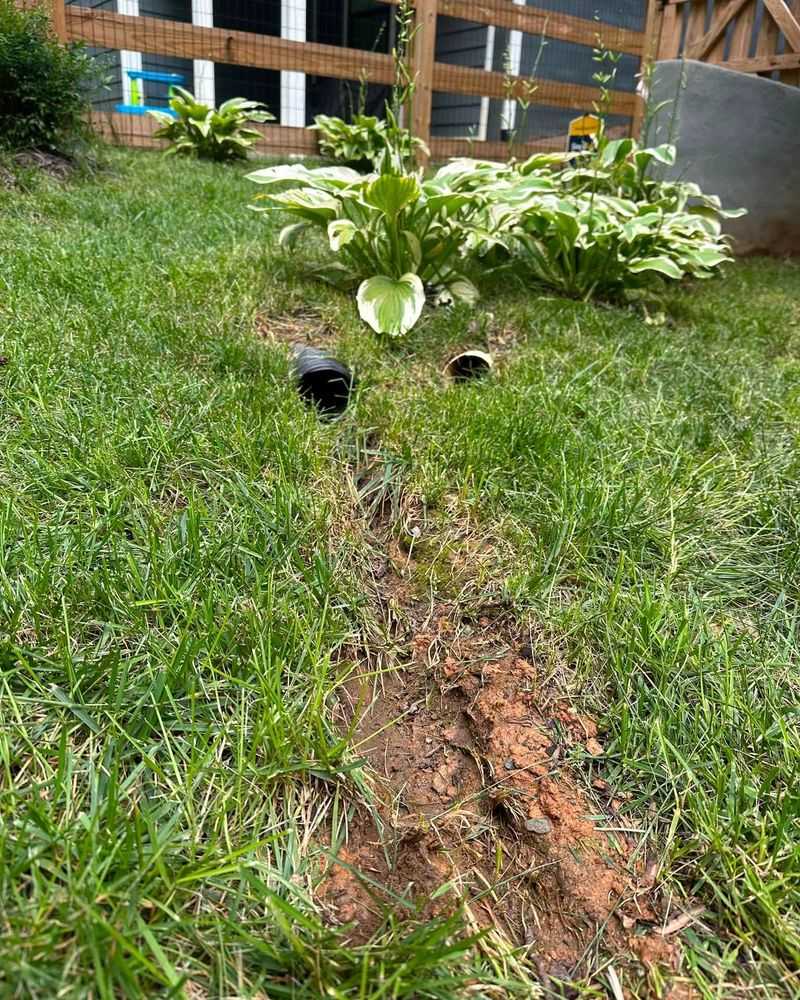
Not every soggy spot beside a downspout is the same, and treating them as interchangeable is the most common mistake homeowners make before planting. A strip that stays damp for a day after a heavy storm behaves very differently from one that holds water for a week, and both differ from a low area fed by a seep, a seasonally high water table, or runoff redirected too close to the house foundation.
Each condition calls for a different response, and only some of them are suitable for a rain garden.
Start by watching the site during and after a normal rain event. Note where water enters the area, how it moves across the surface, and how long it takes to disappear into the soil.
NC Water Resources Research Institute rainscaping guidance emphasizes that rain gardens work by capturing runoff and allowing it to infiltrate, which means the soil must actually drain between storms. If it does not, the basin design, soil composition, or overflow routing needs adjustment before any planting makes sense.
A simple infiltration check helps here: dig a small hole about a foot deep, fill it with water, and time how long it takes to drain. Compacted clay that holds water for days after ordinary storms indicates a site that may need soil amendment, a larger basin footprint, or an underdrain before it can function as a rain garden.
NC State Extension’s rain garden plant list guidance is explicit that rain gardens experience alternating wet and dry cycles and that plant selection must reflect what the site actually does, not what a homeowner hopes it will do.
Runoff discharging directly against the house is a separate problem that a plant cannot fix. UGA Extension’s rain garden overview reinforces that water standing near a foundation warrants a grading or drainage correction first.
If water lingers for several days after typical storms, the honest answer may be a larger basin, amended soil, a properly designed overflow channel, or professional drainage work rather than a wet-tolerant plant placed in an unresolved problem area.
Redirect and disperse roof runoff before planting
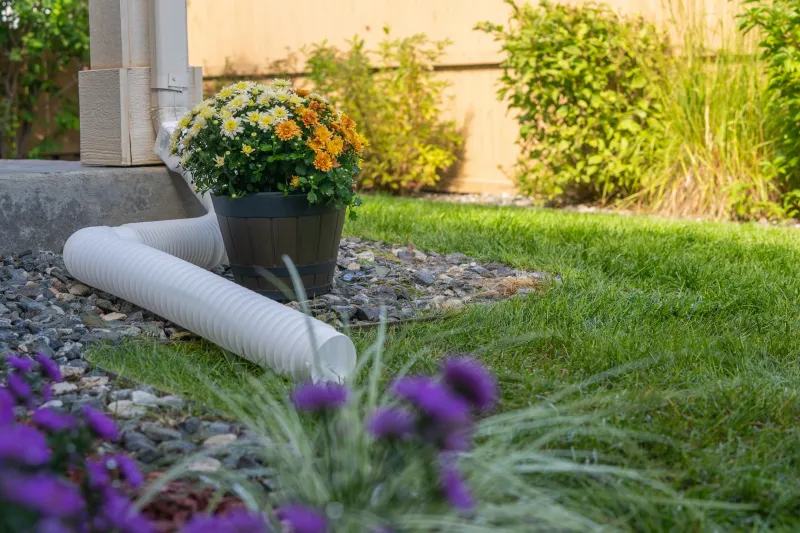
Roof runoff exits a downspout as a concentrated stream, and releasing that stream directly against the house or into unprotected soil creates erosion, foundation risk, and waterlogged conditions that even a wet-tolerant sedge cannot fully absorb. Redirecting and dispersing the flow before it reaches the planting area is the step that makes everything else work.
A simple downspout extension or elbow fitting moves the discharge point away from the house, and a splash block or layer of river stone at the outlet breaks the force of the water before it contacts bare soil.
From that outlet point, the goal is to spread water across the basin rather than concentrate it in one spot. A shallow swale graded to guide flow toward the planting area accomplishes this without requiring heavy equipment.
NC Water Resources Research Institute rainscaping guidance describes this dispersal approach as central to effective rainscaping: slow the water, spread it out, and let the soil do the infiltration work.
Setback from the foundation is not optional. NC DEQ rain-barrel and rain-garden guidance recommends locating an infiltration area at least 10 feet from the foundation.
That distance keeps intentionally directed water from saturating the soil immediately beside basement walls or crawl spaces, which can cause the exact seepage problems homeowners are trying to avoid. Closer placement trades a surface drainage fix for a potential structural one.
Garden size should reflect the amount of roof area draining to that downspout. The NC DEQ Rain Garden Guide provides sizing guidance based on impervious surface area, and a basin sized for the actual runoff load will drain between storms rather than stay permanently wet.
Every basin also needs a planned overflow route, typically a low spot or a stabilized channel that carries excess water away during large storms without eroding the garden’s edges or directing flow toward the house. Getting these elements in place before purchasing plants is the difference between a functional rain garden and a muddy experiment.
Give the sedge room to form a substantial clump
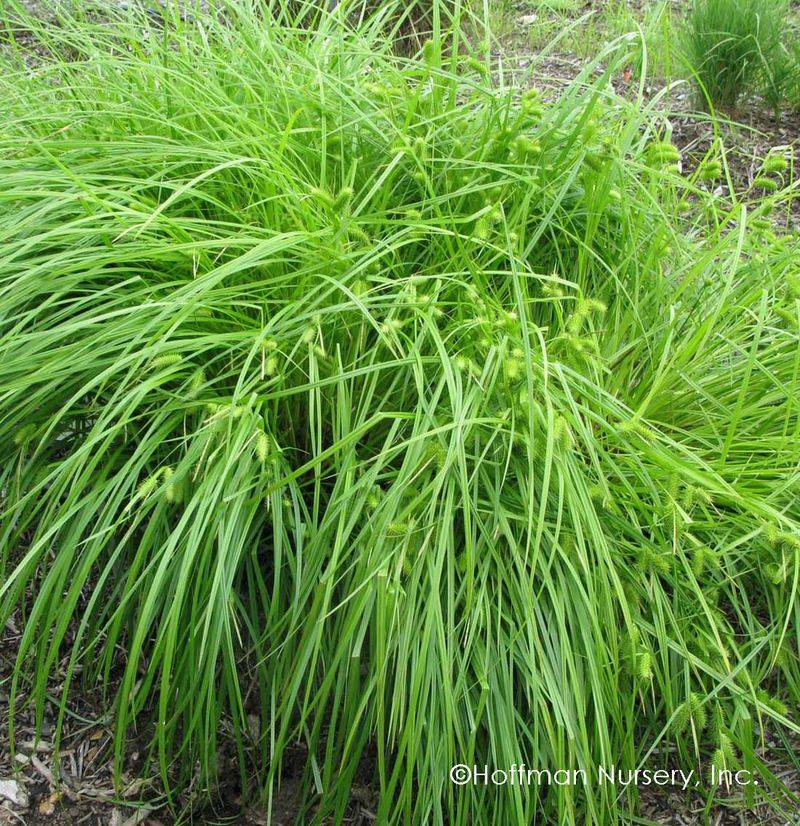
Sallow sedge is not a delicate edging plant tucked along a border. NC State Extension’s plant profile describes Carex lurida as reaching roughly 1 to 3 feet tall and wide at maturity, which means a single established clump commands visible space in the garden.
Plan for that footprint from the start rather than crowding it against other plants and then moving it later. Used as a bold clump or a mass of several plants, it reads as an intentional design choice rather than an afterthought.
Position the planting in the part of the rain garden basin that stays moist longest, typically the center or the lower zone closest to the inlet. NC State’s wetland plants guide confirms that sallow sedge performs best in sunny to partly shaded sites with abundant moisture, so a spot that receives at least a few hours of direct sun daily and never fully dries out between storms suits it well.
Avoid planting it in the uppermost, driest zone of the basin where it will compete against plants adapted to drier conditions.
Timing matters for establishment. Spring and early fall are generally the best planting windows across North Carolina, giving roots time to settle in before summer heat or winter cold arrives.
Water the root zone consistently through the first growing season, particularly during dry stretches, and keep mulch a few inches away from the crown to prevent rot. Brunswick County’s rain garden guidance notes that even moisture-loving natives need attentive watering while they establish.
Performance will vary across NC’s regions. Coastal Plain sandy soils drain faster than Piedmont clay, and mountain seepage sites may behave differently from a standard residential rain garden.
NC Water Resources Research Institute guidance encourages matching plant selection to observed site behavior rather than assuming a single prescription works everywhere. Always buy nursery-propagated plants with a confirmed species label rather than digging specimens from a roadside ditch or natural wetland, which is both ecologically harmful and often illegal on protected land.
Maintain the planting and monitor its water behavior
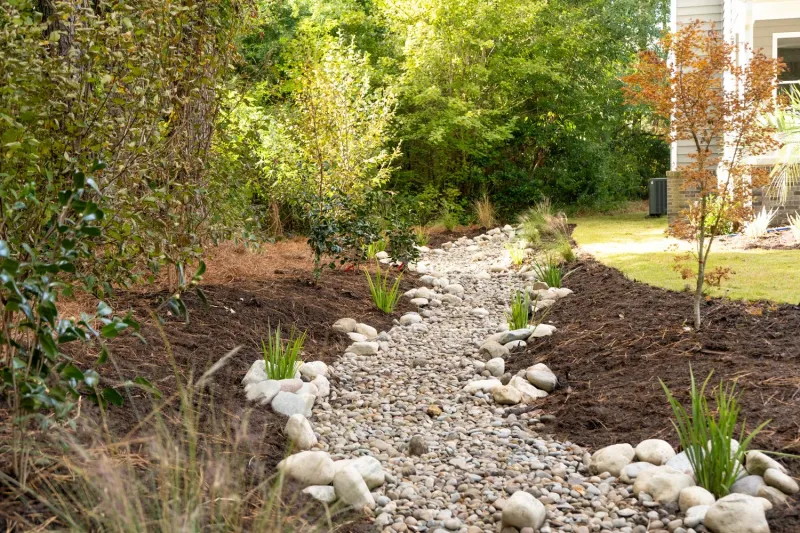
A rain garden with sallow sedge does not run itself, and expecting it to is the fastest way to end up with a weedy, eroding, or poorly draining mess. Weeding is the most consistent maintenance task, especially during the first two years when bare soil between young plants invites opportunistic species.
Pull weeds by hand near the sedge’s root zone rather than reaching for a herbicide, since broadcast chemical use in a wet wildlife planting risks harming the plants and the small animals the garden is meant to support.
Mulch breaks down faster in a wet area than in a dry border, so plan to refresh it annually. Keep the layer about 2 to 3 inches deep and pull it back from the base of each sedge clump to avoid crown rot.
Brunswick County’s rain garden resources recommend regular mulch maintenance as a core part of keeping the garden functional and attractive through the seasons.
NC State Extension notes that native and deep-rooted plants generally need less fertilizer because they are adapted to local climate, soil, and water conditions. That adaptation does not eliminate the need for establishment watering or seasonal inspection.
After each significant storm, walk the basin and check the inlet for erosion, the basin floor for persistent ponding, and the overflow channel for blockages or scour. NC Water Resources Research Institute guidance is clear that rain gardens require periodic inspection and correction, not a one-time installation.
Persistent ponding that lasts more than 48 to 72 hours after a normal storm is a signal that something in the design or soil is not performing as planned. Address it by checking whether the inlet is clogged, whether the basin has compacted over time, or whether the overflow route needs clearing.
Adding more plants is not the answer to a drainage shortfall; fixing the underlying condition is.
Manage mosquito concerns through drainage, not promises
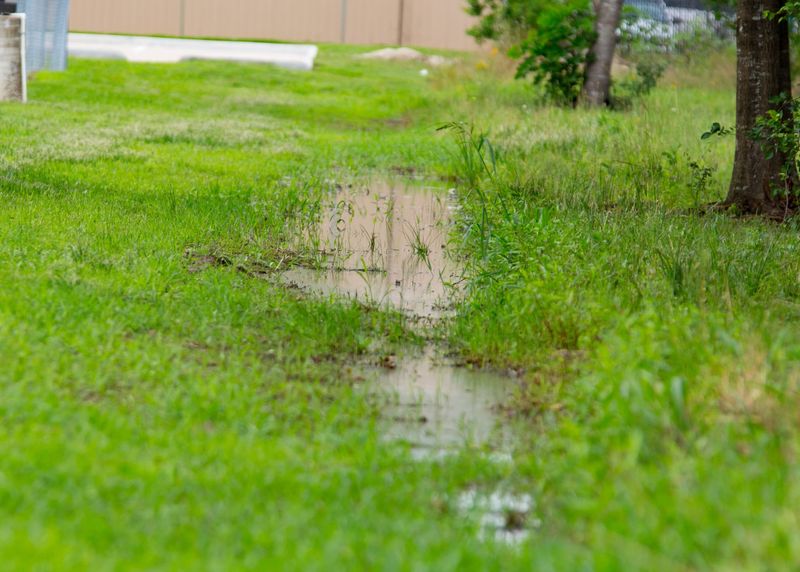
Mosquito concerns come up quickly whenever someone mentions creating a wet planting area in a residential yard, and the concern is reasonable. The important distinction is between a rain garden that drains properly between storms and a basin that holds water indefinitely.
EPA guidance on stormwater structures and West Nile virus explains that many mosquito species require approximately 7 to 10 days of calm, standing water to complete aquatic development. A rain garden designed to drain within 24 to 72 hours after a storm does not provide that window.
That does not make every wet yard automatically safe. The real mosquito risks in most NC yards are not the rain garden itself but the overlooked containers and structures nearby.
Clogged gutters, corrugated drainage pipes with trapped water, plant saucers, birdbaths, buckets, and poorly draining low spots in the lawn all hold water far longer than a functioning rain garden basin. Fixing those sources matters more than avoiding a native planting.
NC rainscaping guidance reinforces that a well-maintained rain garden with proper overflow and inlet management should not become a standing-water problem. If the basin is ponding for extended periods, the drainage design needs correction, not a pesticide application.
Spraying insecticides broadly around a wet wildlife planting area harms the beneficial insects, pollinators, and butterfly larvae the garden is meant to support.
The straightforward approach is to keep the gutters clear so roof runoff actually reaches the downspout cleanly, confirm the basin drains on schedule, and eliminate any separate containers or low spots in the yard that hold still water for more than a few days. That combination addresses mosquito risk at its actual sources rather than treating the native planting as the problem.
Let sallow sedge support wildlife without exaggerated claims
Sallow sedge provides genuine wildlife value, and it holds up well under honest scrutiny. NC State Extension’s profile for Carex lurida documents that birds and small mammals consume its achenes, the small dry fruits that develop in those distinctive seedheads, and that the dense clumps provide cover.
The plant also serves as a larval host for certain satyr butterflies, a group of native butterflies whose caterpillars depend on sedges and grasses to complete their life cycle. Those are real, documented contributions to a yard’s ecology.
Some claims that circulate online go further than the evidence supports. Sallow sedge will not specifically reduce tick populations, attract bats, protect box turtles, increase firefly numbers, or draw goldfinches to the yard.
Those outcomes involve habitat conditions, food sources, and ecological relationships that extend well beyond what a single plant species can deliver. Presenting any of them as a predictable result of planting Carex lurida sets up an expectation the plant cannot meet.
Other NC native wet-site sedges deserve mention here because sallow sedge is a strong statewide candidate, not the only answer. Hop sedge, Carex lupulina, tolerates frequent standing water and is recommended for wet sites, water gardens, and rain gardens.
Gray’s sedge, Carex grayi, suits moist soils and occasional flooding, though its range in NC does not extend to the mountains. Tussock sedge, Carex stricta, is associated with bogs, wet meadows, and floodplain habitats but has a more limited and uneven distribution within the state.
Choosing among them based on the actual hydrologic conditions of the site, rather than on marketing language or wildlife promises, leads to a planting that performs well for years and supports local ecology in ways that are real rather than speculative.
Solve the water movement first, then plant the sedge
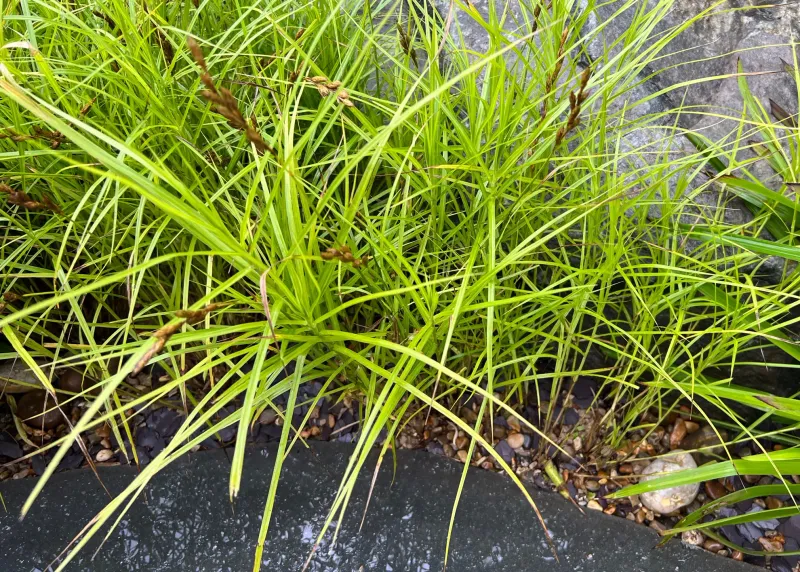
Before a single plant goes in the ground, confirm that the water problem is actually a planting opportunity. Watch where runoff flows during a real storm, measure roughly how far the wet area sits from the house, and run a simple infiltration test to see whether the soil drains between events.
If the wet strip sits closer than 10 feet to the foundation, or if water lingers for more than a few days after ordinary rain, fix the grading, extend the downspout, or address soil compaction before treating the space as a rain garden candidate.
Once the drainage setup is sound, sallow sedge, Carex lurida, earns its place as a strong statewide native for a site that stays moist or periodically floods rather than remaining permanently submerged. Its statewide occurrence across NC’s Coastal Plain, Piedmont, and mountains reflects habitat preferences that match exactly what a properly managed downspout planting area provides.
NC rainscaping guidance and NC DEQ rain-garden resources both support a design-first approach: size the basin for the roof area draining to it, protect the inlet, plan the overflow, and then select plants that match the conditions the design creates.
Buy nursery-propagated plants with a confirmed Carex lurida label, give each clump enough room to reach its mature spread, and check the basin after storms through the first full year. Sound water management is what makes the sedge a solution rather than a gamble.