
Plant This One Native And North Carolina Hummingbirds Will Claim Your Yard Every Summer
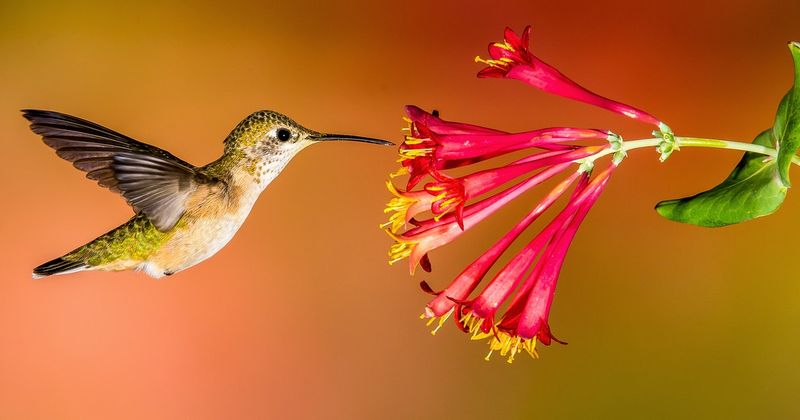
Every summer, Ruby-throated Hummingbirds pass through North Carolina yards searching for reliable nectar, and most yards give them little reason to slow down. One native vine changes that equation by turning a plain fence or trellis into a vivid feeding station that hummingbirds can spot from the air.
The plant is coral honeysuckle, and knowing how to grow it well is the first step toward making your yard a place they actually want to visit.
The native vine behind the hummingbird appeal is coral honeysuckle
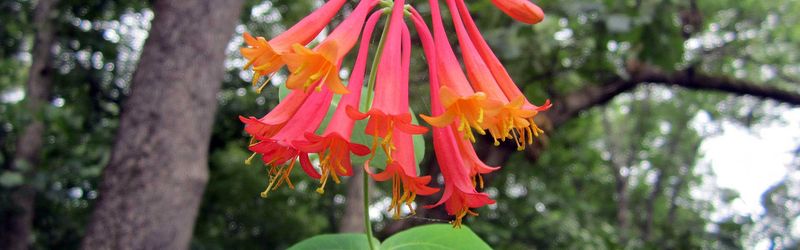
Coral honeysuckle, known botanically as Lonicera sempervirens, is the native vine most consistently recommended for attracting hummingbirds to North Carolina yards. Gardeners also know it by the names trumpet honeysuckle and woodbine, and all three names point to the same well-behaved, perennial twining vine that has grown wild across this state long before anyone planted a garden.
According to the NC State Extension Gardener Plant Toolbox, Lonicera sempervirens is native to the eastern United States and grows throughout North Carolina’s Coastal Plain, Piedmont, and Mountain regions. Its red-to-coral tubular flowers are a documented nectar source for Ruby-throated Hummingbirds, which makes it one of the most practical native plantings a North Carolina homeowner can add to a residential yard.
Adding coral honeysuckle gives hummingbirds a reason to pause, feed, and potentially return to your property. What it cannot do is promise exclusive or guaranteed occupation of your yard every single summer.
Visits also depend on migration timing, nearby food sources, shelter, weather, and the overall quality of habitat in your neighborhood.
One more reason the scientific name matters from the start: the common name “honeysuckle” gets attached to a long list of plants, some of which are harmful to North Carolina’s native ecosystem. Searching for Lonicera sempervirens specifically, rather than honeysuckle in general, protects both your purchase decision and your yard’s ecological integrity from the very beginning.
Its tubular flowers create a conspicuous nectar stop
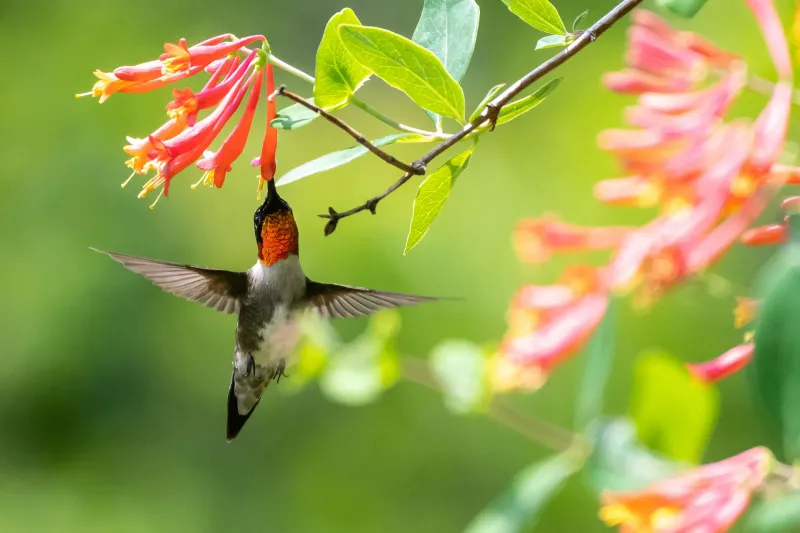
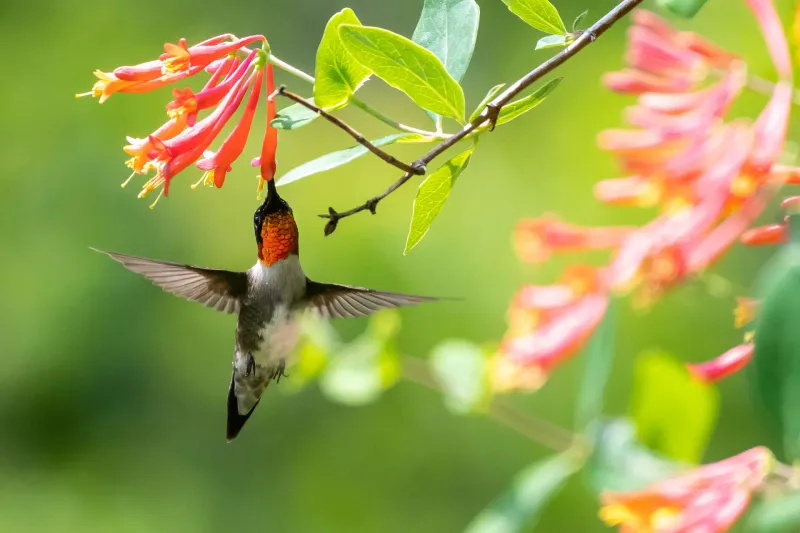
What makes coral honeysuckle so effective in a hummingbird garden is the shape of its flowers. The blooms are long and tubular, typically appearing in shades of coral-red, orange-red, or red with yellow tones at the tips, and that narrow opening is perfectly sized for a hummingbird’s bill.
Bees and butterflies can visit the flowers too, but hummingbirds are the primary pollinators the plant has evolved alongside.
Draped over a trellis, arbor, fence post, or pergola, the vine becomes a vertical nectar station that hummingbirds can see from a distance. The Audubon Society’s trumpet honeysuckle profile highlights this vine’s value as a reliable food source for visiting hummingbirds, and the visual contrast of red flowers against green foliage makes the vine easy for birds to locate.
The Ruby-throated Hummingbird is the species you are most likely to see feeding at coral honeysuckle in a North Carolina yard during summer. It is the only hummingbird that regularly breeds in the state, though Cornell Lab of Ornithology’s Ruby-throated Hummingbird guide notes that other western species occasionally appear during migration or in winter months.
Bloom timing is worth understanding before you plant. Coral honeysuckle generally flowers in spring and can rebloom later in the season, but the exact window varies depending on cultivar, elevation, local climate, and the weather in any given year.
The NC State Extension bird-habitat guide gives a flowering window of roughly April through July, while other North Carolina sources describe occasional flowering into fall. Expecting a long, variable bloom season rather than continuous summer-long color will keep your expectations grounded and your gardening decisions realistic.
Buy Lonicera sempervirens, not just any honeysuckle
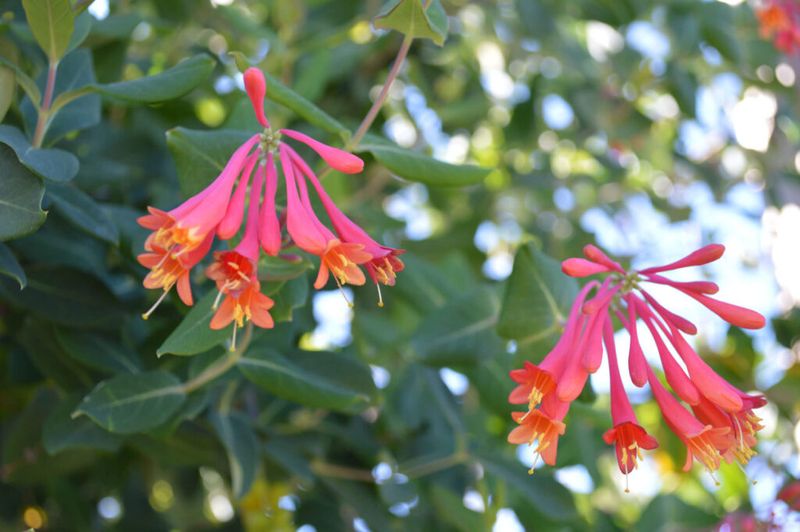
Walk into almost any garden center and ask for honeysuckle, and the staff may hand you a plant that belongs nowhere near a North Carolina yard. The common name covers dozens of species, and some of the most widely sold ones are genuinely harmful to native ecosystems.
Checking the scientific name on the plant tag before you buy is the single most effective way to avoid this mistake.
Japanese honeysuckle (Lonicera japonica) is the species most likely to be confused with coral honeysuckle at retail, and it appears on the NC Native Plant Society’s invasive plant list. It spreads aggressively, smothers native vegetation, and disrupts the local plant communities that birds and other wildlife depend on.
Its fragrant white and yellow flowers look nothing like coral honeysuckle’s red trumpets, but an unlabeled cutting or a plant sold simply as “honeysuckle” could be either one.
Amur honeysuckle (Lonicera maackii) presents a similar problem. The NC State Plant Toolbox entry for Amur honeysuckle describes it as aggressive, weedy, and unsuitable for intentional planting.
It is a shrub rather than a vine, so the growth habit differs from coral honeysuckle, but a buyer who relies only on the common name could still end up with it.
The tag you want reads Lonicera sempervirens. Reputable native plant nurseries in North Carolina typically carry it, and the NC State Extension Gardener Plant Toolbox confirms its native status and suitability for home landscapes.
When in doubt, buy from a nursery that specializes in native plants and can confirm the species in writing on the label.
Give the vigorous vine room and a safe support
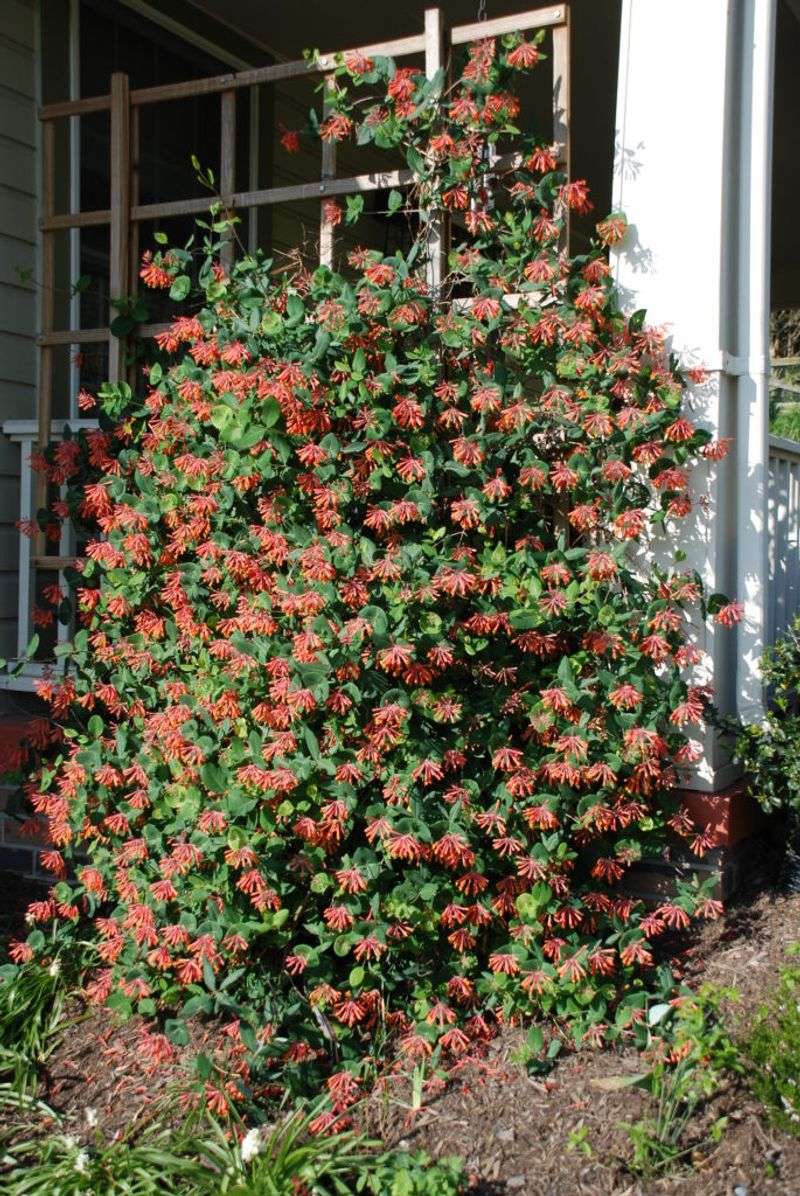
Coral honeysuckle is not a small plant at maturity. The NC State Extension Gardener Plant Toolbox lists typical dimensions of approximately 10 to 20 feet tall and 3 to 6 feet wide, and NC Sea Grant’s coastal landscaping guide describes plants reaching roughly 15 to 20 feet.
Those numbers mean that a trellis rated for a small annual vine will not hold up over time.
Plan for a sturdy support from the beginning. A heavy-gauge metal trellis, a well-anchored wooden arbor, a solid fence panel, or a pergola post all work well.
The key is installing the support before the vine becomes large enough to be difficult to handle, because trying to retrofit a structure around an established plant risks damaging stems and disrupting flowering. Without something solid to climb, coral honeysuckle will sprawl horizontally and can drape over and shade out nearby shrubs, which is an outcome worth preventing in a carefully planted native garden.
Location relative to the house matters for a reason that goes beyond aesthetics. The NC State Plant Toolbox assigns coral honeysuckle a high flammability rating, which means it should not be trained directly against the exterior of a home or placed within the defensible space immediately surrounding the structure.
The Lee County Extension hummingbird plant guide recommends this vine for residential gardens, and it works beautifully in them, but positioning it on a freestanding structure set away from the house is the responsible approach for North Carolina homeowners who want both beauty and fire safety.
Think of placement as a two-part decision: choose a support that can handle the vine’s mature weight and spread, then site that support far enough from the house that the flammability rating is not a concern. A freestanding arbor in a garden bed, a fence along a property line, or a pergola over a patio all give the vine room to perform while keeping it at a safe distance from the structure.
Use sun, water, and post-bloom pruning to support flowers
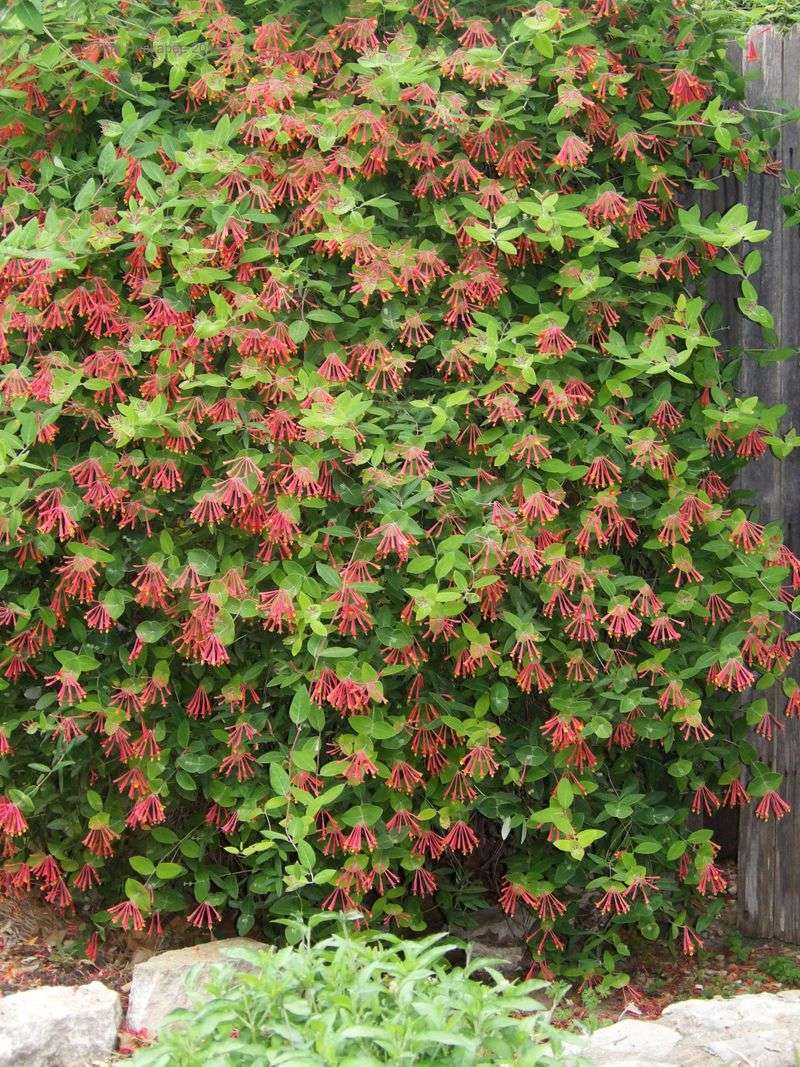
Flower production on coral honeysuckle is directly tied to sunlight. Full sun, meaning six or more hours of direct light daily, produces the heaviest bloom and the most nectar-rich flowers.
The vine tolerates partial shade, but gardeners who site it under a tree canopy or on a north-facing fence often notice noticeably fewer flowers. If your yard has limited sunny spots, this vine deserves one of them.
Soil requirements are straightforward. The Sampson County Extension gardening guide recommends medium-moisture, well-drained soil for coral honeysuckle.
Newly planted vines should be watered when they begin to show signs of wilting rather than on a rigid daily schedule, and a layer of mulch around the root zone helps moderate soil moisture and reduce the frequency of supplemental watering during hot North Carolina summers.
Pruning timing is one of the more consequential decisions you will make with this vine. The NC State Plant Toolbox advises pruning after flowering rather than before the spring bloom, because cutting back the vine before it flowers removes the season’s primary display.
Pruning too early is one of the most common reasons gardeners end up with a healthy, leafy vine and very few flowers.
A Central North Carolina Extension recommendation, detailed in the Lee County hummingbird plant guide, suggests that cutting back the vine after its first flush of flowers may encourage a later round of blooming. Treating post-bloom pruning as a management tool rather than an annual chore gives you more control over the plant’s size and shape while potentially extending the season’s nectar availability.
Fertilizer is the final piece of the care puzzle, and less is generally better here. High-nitrogen fertilizers push the vine toward lush foliage at the expense of flowers, which is the opposite of what a hummingbird garden needs.
Soil-test-based fertilization, rather than routine heavy feeding, gives the plant what it actually needs without steering it away from blooming. Your local NC State Extension office can help with a soil test if you have not had one done recently.
Build the wider habitat that brings hummingbirds back
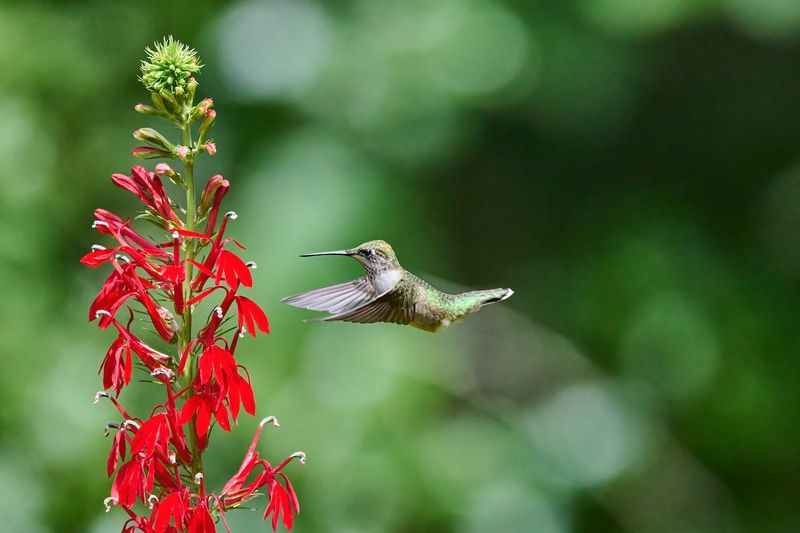
Coral honeysuckle is a strong starting point, but hummingbirds need more than one nectar plant to make a yard worth returning to. They also eat insects, which supply the protein that fuels migration and chick development.
Trees, dense shrubs, and sheltered vegetation provide perches where hummingbirds rest between feeding bouts, and they use fine plant fibers and spider silk to build their tiny, lichen-covered nests in the canopy.
The NC State Extension bird-habitat publication recommends pairing coral honeysuckle with other native nectar plants that bloom at different times to create a yard that offers food across a longer season. Crossvine (Bignonia capreolata) flowers in early spring before hummingbirds have many other options.
Carolina jessamine (Gelsemium sempervirensAesculus paviaMonardaLobelia cardinalis) provides late-winter and early-spring color. Red buckeye () blooms in mid-spring, and bee balm ( species) and cardinal flower () carry the season into summer and early fall.
The NC State Extension hummingbirds-and-butterflies guide reinforces this layered approach, noting that a yard with staggered bloom times and diverse plant structure is more consistently useful to hummingbirds than a yard built around a single species. The National Park Service’s pollinator habitat guidance similarly emphasizes planting variety as the foundation of productive wildlife habitat.
Repeat visitation is a real possibility in a productive yard. Audubon’s hummingbird garden guide reports that hummingbirds who discover a reliable food source tend to return to that location in later years.
That tendency toward site fidelity is encouraging, but it is shaped by migration success, winter survival, weather, predator pressure, and the overall habitat conditions they find when they arrive. A diverse, well-maintained native yard improves the odds without controlling the outcome.
Use feeders only as a clean, carefully placed supplement
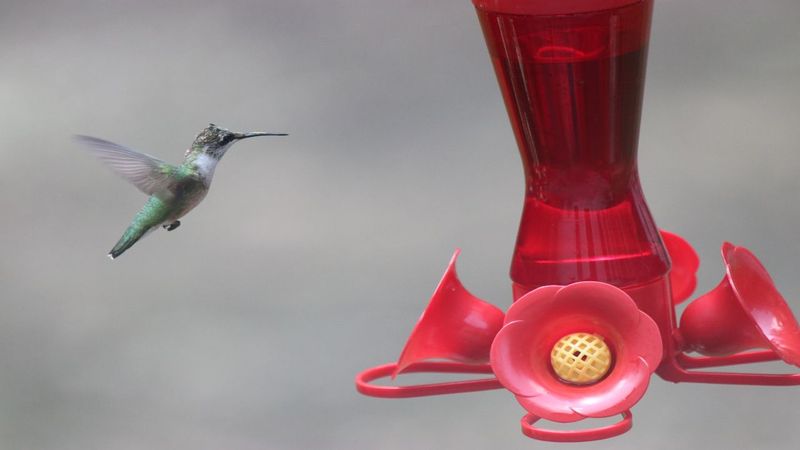
A feeder can complement a native planting, but it works best as a supplement rather than a centerpiece. Hummingbirds that find both natural nectar and a reliable feeder in the same yard have more resources to draw from, especially during migration when energy demands are high.
The feeder does not replace the habitat value of living plants, insects, and shelter.
The recipe endorsed by the National Park Service’s hummingbird guidance is simple: four parts water to one part plain white granulated sugar, dissolved by stirring or gentle heating and then cooled before filling the feeder. That ratio is the one to use every time.
Honey ferments quickly and can cause fatal fungal infections in hummingbirds. Red food dye, brown sugar, fruit juice, and other additives add nothing beneficial and introduce unnecessary risk, so they belong out of the mix entirely.
Cleaning is non-negotiable. Spoiled sugar water clouds, ferments, and grows mold that can harm the birds you are trying to help.
In warm North Carolina summers, feeders should be emptied, rinsed, and refilled every two to three days. A bottle brush helps reach the inside of the reservoir, and the feeding ports should be scrubbed clean each time.
Feeder placement affects both bird safety and how well the feeder gets used. Cornell Lab of Ornithology’s Ruby-throated Hummingbird resource notes that feeders placed either very close to a window, within about 3 feet, or far enough away, beyond roughly 30 feet, reduce the risk of dangerous window strikes by limiting the speed at which a bird can travel before contact.
Placing a feeder in the midrange, between 3 and 30 feet from glass, is where collisions are most likely. Keep feeders in spots where cats cannot ambush feeding birds, and choose a location visible from inside the house so you can monitor cleanliness and activity easily.
Plant for a better chance of repeat visits, not a guarantee
Putting this all together is simpler than it might sound. Start by confirming the plant tag reads Lonicera sempervirens before you leave the nursery.
Choose a sunny location away from the home’s exterior walls and outside the defensible space around the structure, then install a sturdy support before the vine goes in the ground. Water the new plant when it begins to wilt rather than on a fixed schedule, apply mulch around the root zone, and prune only after the spring bloom has finished.
From there, build outward. Add native plants that flower at different times so the yard offers nectar across a longer window, and let some areas of the yard stay a little wilder with shrubs and trees that provide perches and nesting cover.
A supplemental feeder, kept clean and filled with a plain four-parts-water-to-one-part-sugar solution, can bridge gaps in natural nectar availability.
The NC State Plant Toolbox and the NC State bird-habitat guide both support coral honeysuckle as a genuinely useful native plant for North Carolina yards. Audubon’s research on hummingbird site fidelity suggests that productive properties do receive repeat visits.
What no single plant can do is override migration, weather, or the many other factors that shape where hummingbirds go each year.
Grow the habitat well, and you give them every reason to choose your yard when the season turns warm again.