
If Your Clematis Blooms Small Or Faded, Here Is Exactly How To Check Conditions And Feed It Wisely For Better Future Flowers
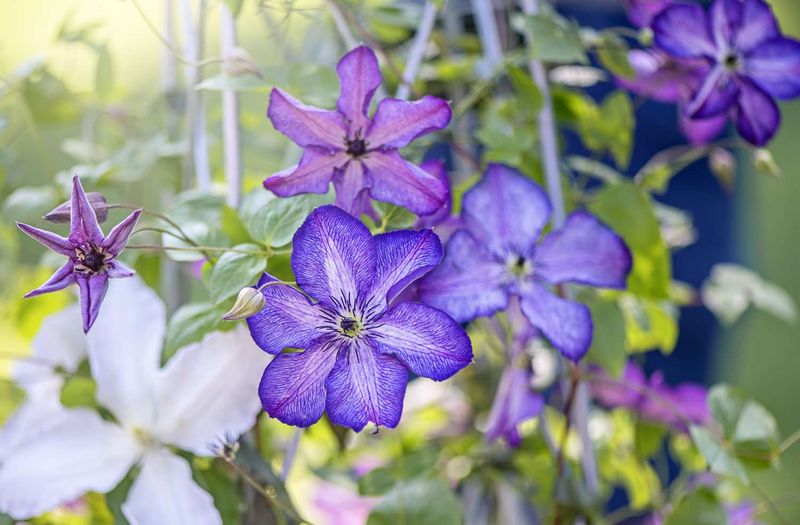
Clematis is one of the most rewarding vines in a backyard garden, but small or washed-out flowers can make you wonder what went wrong. Before reaching for a fertilizer bag, it helps to know that weak blooms have several possible causes, and feeding is only one of them.
Working through a short checklist first can save you time, money, and the risk of making things worse.
Small and faded flowers need separate diagnoses
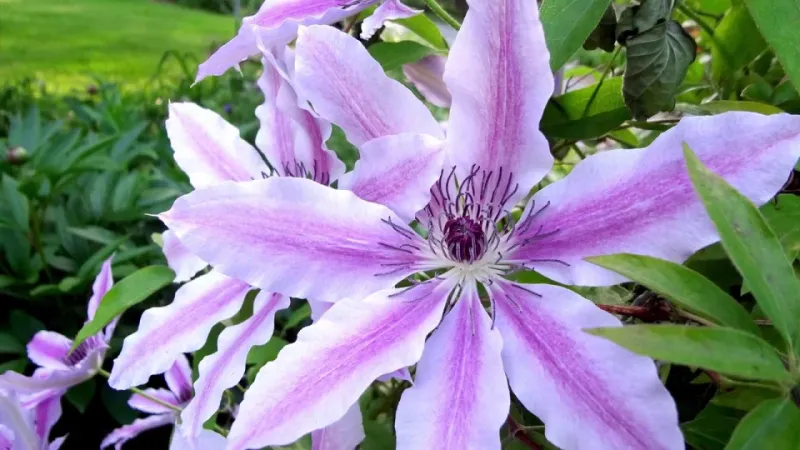
Reaching for fertilizer the moment clematis flowers look off is a very common reaction, but the two symptoms in that impulse – small blooms and faded color – actually point in different directions. Sorting them out before taking any action is the most useful first step a gardener can take.
Flower size on clematis is largely a genetic trait. University of Vermont Extension notes that species clematis and early-flowering varieties naturally produce much smaller flowers than large-flowered hybrids, so a bloom that looks underwhelming may simply be doing exactly what its genetics allow.
Young plants also take time: most clematis need two or three years to become fully established before they flower heavily, and pushing fertilizer on an immature plant will not speed that process in any meaningful way.
Faded color tells a different story. Clemson Extension specifically notes that red, blue, and bicolored large-flowered hybrids can fade noticeably in excessive sun and heat, and K-State Research and Extension similarly reports that intense summer sun can wash out flower color.
Neither situation is a sign of hunger for nitrogen or phosphorus.
A helpful diagnostic habit is to compare what you see against the plant tag or a reliable cultivar description. If the flowers match the expected mature size and the plant looks otherwise healthy – good leaf color, steady new growth, no sparse or yellowing stems – nutrient deficiency is unlikely to be the culprit.
Iowa State University Extension points out that lush foliage combined with few or small flowers can actually signal too much nitrogen rather than too little. Fertilizer becomes a reasonable option only after other explanations have been checked and ruled out.
Check light, moisture, and heat before feeding
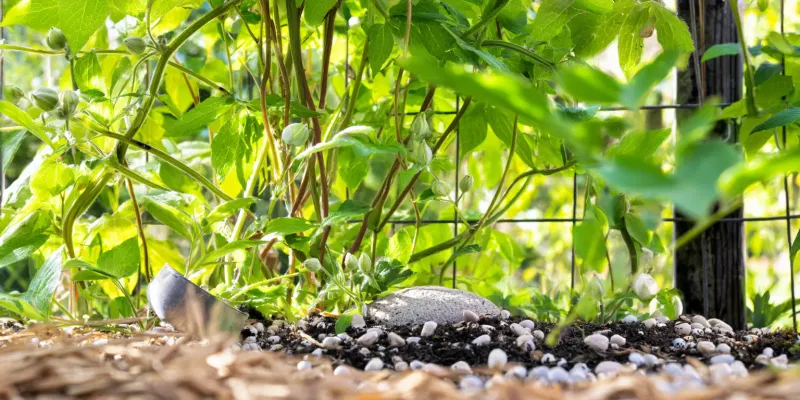
Good growing conditions do more for clematis flowering than any fertilizer program, and the most common reasons for disappointing blooms trace back to light, water, and temperature rather than soil nutrients. Checking these factors before adding any product to the soil is both faster and safer than guessing at a deficiency.
Clematis performs best when its stems and leaves receive plenty of sun while the root zone stays cool and consistently moist. A practical target is roughly six hours of direct sunlight per day for strong flowering.
UC IPM guidance confirms that clematis thrives with a sunny top and a shaded, cool root zone, which is why mulching around the base – without piling material against the stems or crown – or planting low-growing companions nearby can make a real difference in summer performance.
Moisture matters just as much as light. Iowa State University Extension recommends about one inch of water per week, counting rainfall, during dry periods, and Clemson Extension advises deep weekly watering during dry seasons specifically.
Uneven moisture – alternating drought and saturation – stresses the plant and can reduce flower size and longevity even when the soil is otherwise fertile.
Excessive heat compounds both problems. When temperatures climb sharply during bloom time, flowers open quickly, fade fast, and drop early regardless of how well the plant has been fed.
A clematis planted against a south- or west-facing wall that absorbs and radiates heat will often show washed-out color in midsummer no matter how carefully it has been fertilized. Correcting the site or adding shade cloth during peak heat is a more direct fix than adjusting the feeding schedule.
Address light and moisture first, then reassess whether the plant actually needs supplemental nutrients.
Use soil testing alongside the whole-plant check
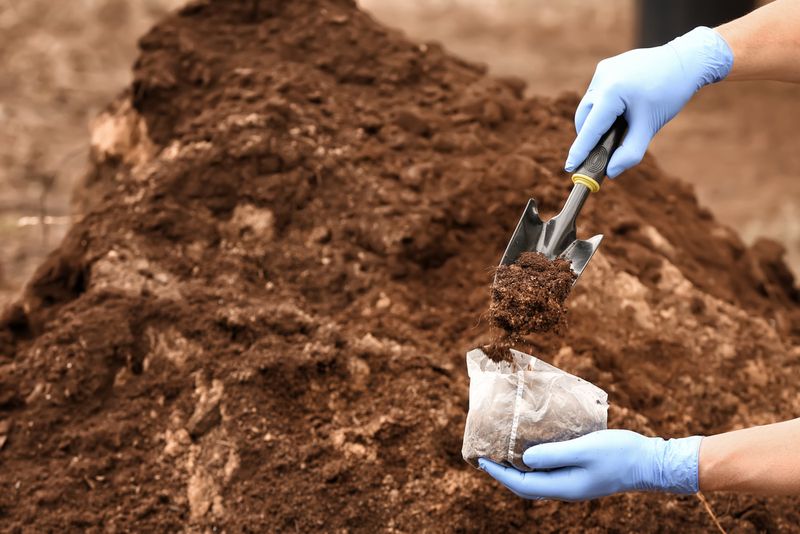
A soil test is one of the most reliable tools for deciding whether fertilizer is genuinely warranted, but it works best as part of a broader assessment rather than as a stand-alone answer. The test tells you what nutrients are present and whether pH is in a useful range; it does not tell you why the plant flowered poorly or whether feeding will improve next season’s blooms.
RHS guidance makes the point plainly: clematis grown in fertile ground generally do not need regular fertilizer, and an annual top-dressing of well-rotted organic matter in spring may be all that is needed. If your clematis has grown in the same bed for several years without added fertilizer and the soil was reasonably rich at planting, deficiency is a less likely explanation for weak flowering than light, water, pruning, or cultivar traits.
Testing becomes more worthwhile when poor growth has persisted across multiple seasons, when you have applied fertilizer repeatedly without clear benefit, or when the plant shows genuine signs of stress such as yellowing leaves or stunted stems. University of Maryland Extension recommends a soil test as the foundation for any fertilizer decision, noting that adding nutrients without knowing the baseline can create imbalances that harm rather than help.
One specific caution worth keeping in mind: lush, vigorous foliage paired with few flowers is not a sign of deficiency. Clemson Extension and Iowa State Extension both warn that excess nitrogen favors leafy growth over blooms.
High-phosphorus bloom boosters are also not a universal solution; University of Minnesota Extension advises adding phosphorus only when a soil test confirms a deficiency, because excess phosphorus can contribute to nutrient pollution without improving plant performance. Let the test results, combined with an honest look at site conditions, guide what you add.
Match feeding timing to growth and pruning group
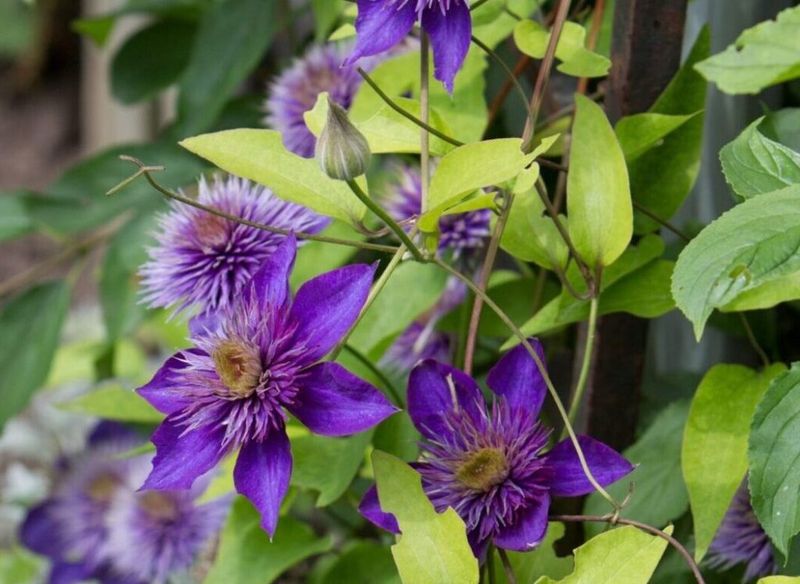
Timing fertilizer applications for clematis is genuinely more complicated than most gardening articles admit, because reputable sources give meaningfully different schedules. Understanding why those schedules differ – and what they have in common – is more useful than memorizing any single calendar date.
RHS guidance holds that established clematis in fertile soil may need nothing beyond an annual spring application of well-rotted organic matter. At the other end of the spectrum, North Carolina State Extension recommends a low-nitrogen, slow-release fertilizer every four to six weeks during the growing season, while UMass Extension suggests a general-purpose balanced fertilizer in April, June, and August.
Oregon State Extension recommends feeding established plants three times per year while still warning against overfertilizing. These differences exist because soil fertility, climate, plant age, fertilizer formulation, and growing situation all affect how much supplemental nutrition a plant needs.
No single national schedule fits every garden.
Pruning group is an equally important timing factor. Illinois Extension explains the three groups clearly: Group 1 blooms on old wood and is generally pruned after flowering; Group 2 blooms on both old and new wood and receives lighter pruning; Group 3 blooms on current-season growth and can be cut back hard in late winter or early spring.
Illinois Extension’s clematis factsheet advises feeding Groups 1 and 2 after their first bloom and Group 3 after spring pruning, while specifically cautioning against fertilizing during bud formation or flowering as a quick attempt to enlarge existing buds or flowers. That caution is well-grounded: fertilizer applied while flowers are already forming cannot substantially change their size.
The practical takeaway is to follow the extension guidance relevant to your region and the product label for your chosen fertilizer, matched to your plant’s pruning group. Feeding during active vegetative growth gives the plant the best chance to use nutrients productively.
Applying fertilizer as a last-minute fix when buds are already showing is unlikely to deliver the result you want.
Choose a conservative fertilizer and apply it safely
When a soil test and a thorough site check confirm that feeding is appropriate, the next decision is which product to use and how to apply it without causing harm. The good news is that conservative choices carry the least risk and still support healthy growth.
A balanced or relatively low-nitrogen, slow-release granular fertilizer is a reasonable starting point for most established in-ground clematis. Slow-release formulations deliver nutrients gradually, which reduces the risk of the salt injury and rapid soft growth that fast-release products can cause.
University of Maryland Extension recommends following the product label for rate and timing rather than applying more in hopes of faster results, a point that applies directly to clematis.
Clemson Extension and Illinois Extension both advise keeping fertilizer granules away from the crown and stems, watering the application in thoroughly, and not repeating applications simply because flowers remain smaller than hoped. Direct contact between granules and the crown or stems can cause localized salt injury, which creates a new problem rather than solving the original one.
A few firm rules apply in every situation. Do not feed a drought-stressed plant: the root system cannot safely process nutrients when soil moisture is critically low, and the concentrated salts in fertilizer can burn already-stressed roots.
Avoid applying granular or liquid fertilizer immediately before heavy rain, which can wash the product into nearby waterways before the plant can absorb it. EPA guidance on nutrient pollution explains why fertilizer runoff is worth preventing.
If the plant continues to produce abundant foliage but few flowers after a season of appropriate feeding, reassess light, pruning, and moisture rather than increasing the fertilizer rate.
Adjust expectations for containers, cultivars, and young plants
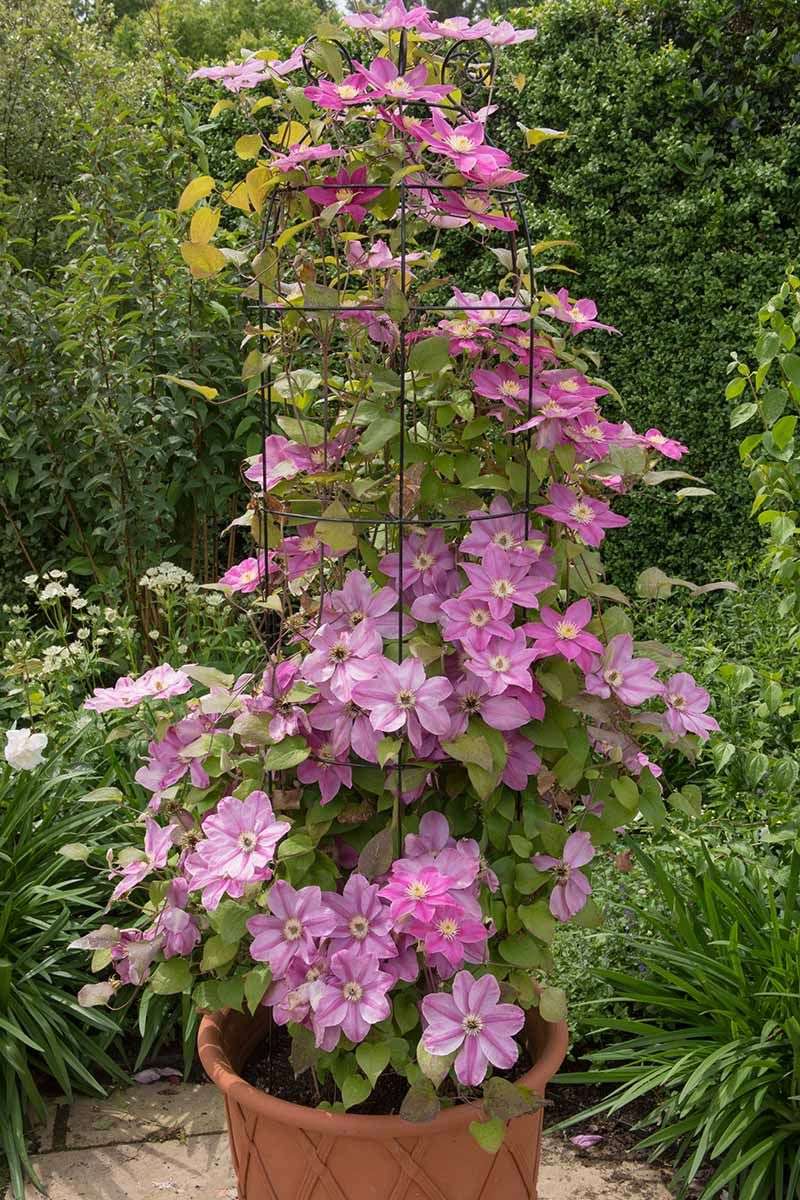
Container-grown clematis and young plants in the ground operate under different rules than established vines, and recognizing those differences prevents both underfeeding and overfeeding.
A clematis in a pot faces real constraints that in-ground plants do not. The restricted root volume limits how much nutrition the plant can store, and frequent watering flushes soluble nutrients out of the mix more quickly than rainfall moves them through garden soil.
RHS guidance specifically notes that container clematis can benefit from regular feeding through spring and summer, whereas established plants in fertile ground may need little or none. Even so, label rates still apply: more fertilizer does not compensate for a pot that is too small, soil mix that has broken down, or watering that is too infrequent.
Cultivar selection shapes expectations in a way that no amount of feeding can override. K-State Extension and Iowa State Extension both note that clematis species and cultivars vary enormously in flower size, color, and bloom habit.
A sweet autumn clematis or a viticella type will always produce smaller flowers than a large-flowered Jackmanii hybrid, and that difference is genetic rather than nutritional. Comparing your plant’s flowers against the expected mature description for that specific cultivar is the most honest way to judge whether something is actually wrong.
Young plants need time more than they need fertilizer. University of Vermont Extension notes that clematis typically takes two to three years to establish a strong root system and begin flowering heavily.
Pushing extra nutrients on a plant in its first or second year will not accelerate that timeline and may encourage leafy growth at the expense of the root development the plant needs most. Patience, consistent moisture, and appropriate pruning for the group will do more for a young clematis than an aggressive feeding program.
Recognize flowers and plants fertilizer cannot cure
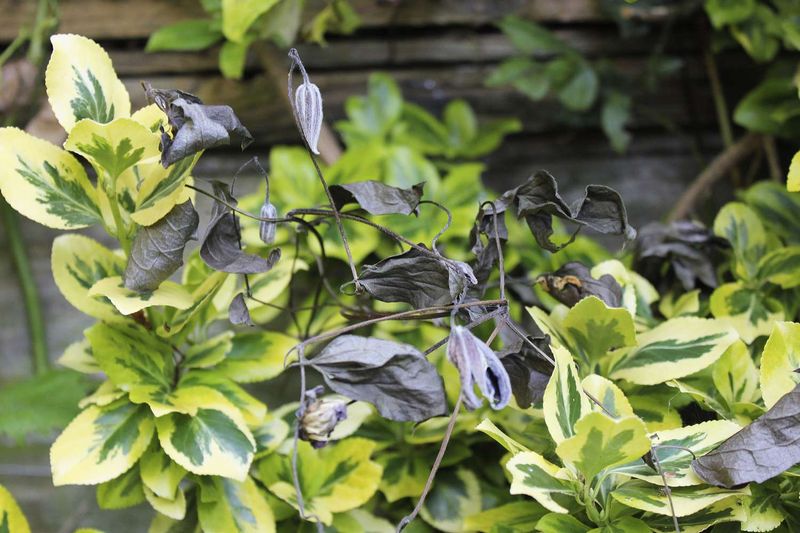
Some of the most alarming-looking clematis symptoms have nothing to do with soil fertility, and applying fertilizer to a plant dealing with disease, wilt, or cold injury can delay the correct response while adding unnecessary stress to an already struggling vine.
Green or pale petals that appear on the first flush of spring flowers sometimes cause real alarm, but they are often temporary. RHS plant health guidance explains that cold temperatures during flower development can cause petals to remain green or take on an unusual color, particularly in white- and pale-flowered cultivars.
If later flowers in the same season open with normal color, cold weather during that early flush was almost certainly the cause, and no feeding is needed.
Persistent green, distorted flowers throughout the entire season are a different matter. RHS clematis FAQs describe green flower disease, a phytoplasma-related condition that causes ongoing malformation and color loss in flowers across the whole plant.
There is no treatment for phytoplasma infection, and RHS advises removing and destroying affected plants to prevent spread. Fertilizer will not slow, reverse, or manage this condition.
Sudden wilt or rapid dieback of stems is another symptom that fertilizer cannot address. Missouri Botanical Garden’s guidance on clematis wilt describes how this fungal disease can cause stems to collapse quickly, often appearing first in large-flowered hybrids.
The correct response is to cut affected stems back to healthy tissue at or near soil level and dispose of them, not to feed the plant. University of Maryland Extension makes the broader point clearly: fertilizer will not reverse problems caused by disease, pests, drought, or unsuitable growing conditions.
Diagnosing the actual problem first protects both the plant and your time.
Follow a check-first plan for stronger future flowering
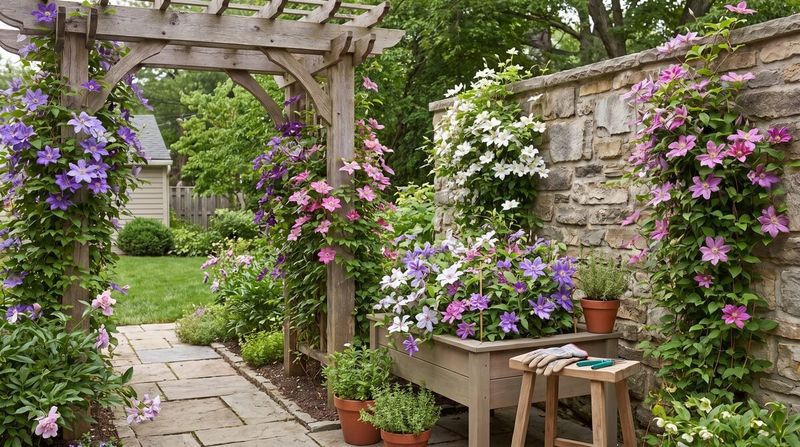
Pulling together everything in this guide into a workable sequence makes the process far less overwhelming. Start by confirming whether the flower size is actually smaller than the cultivar’s expected mature size, or whether faded color is simply a heat response during a hot stretch of weather.
Then check light exposure and watering habits before drawing any conclusions about nutrition.
Next, confirm the plant’s pruning group and whether it was pruned correctly this season. Incorrect pruning removes the stems that carry the next round of flowers, and no amount of fertilizer recovers that loss.
Look over the plant for signs of wilt, disease, or pest damage that would require a different response entirely. If poor growth has persisted across multiple seasons despite good conditions, a soil test is the most reliable way to determine whether a nutrient gap actually exists.
Clemson Extension, Illinois Extension, and University of Maryland Extension all frame soil testing as the appropriate foundation for any fertilizer decision.
When evidence genuinely supports feeding, use a balanced or low-nitrogen product at label rates, timed to the plant’s active growth period and pruning group, following RHS growing guidance or your regional extension service. Better conditions and well-timed care can absolutely support stronger future flowering – but the plant’s genetics, site, and health will always set the ceiling that fertilizer alone cannot raise.