
The One Thing North Carolina Coneflowers Need Before Summer Ends Or They Quit Reseeding For Good
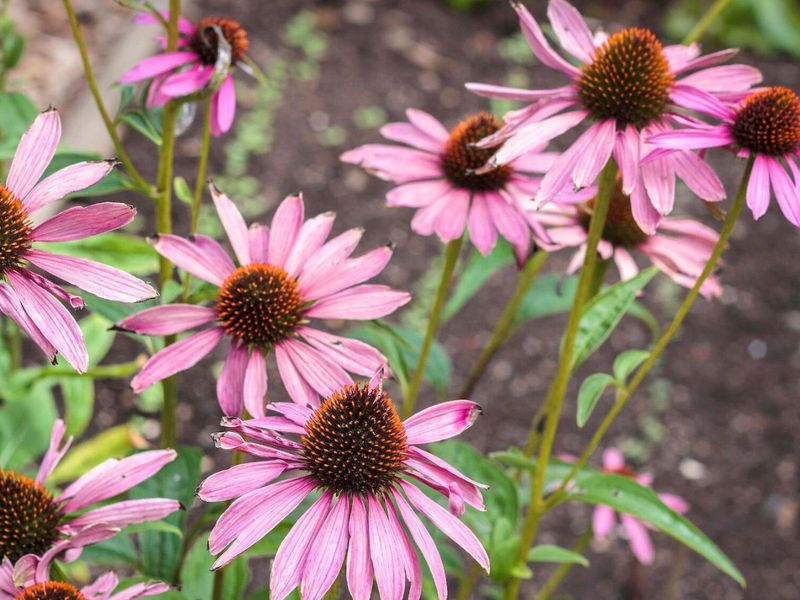
Purple coneflower is one of the most cheerful and wildlife-friendly plants a North Carolina yard can hold, and it has a quiet trick up its sleeve: it can scatter its own seed and come back year after year without any help from a seed packet. Most gardeners do not realize that one common habit, clipping off every spent bloom, can quietly shut down that process for the current season.
Learning when to put the pruners down is a small change that pays off in more coneflowers, more goldfinches, and a yard that takes care of itself a little more every summer.
Protect this season’s chance to reseed
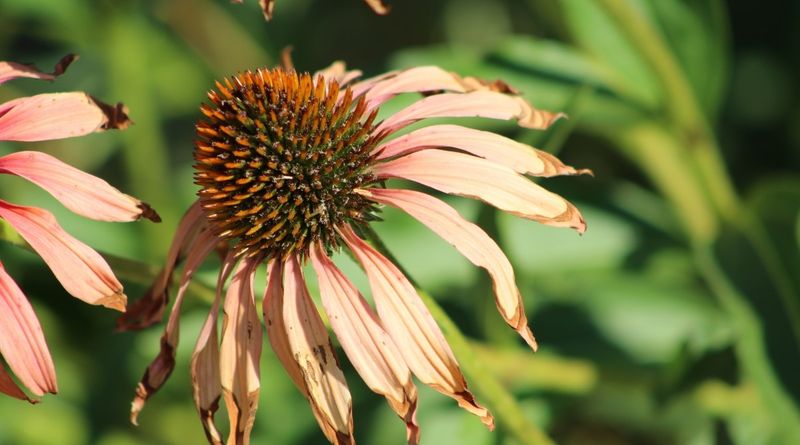
Purple coneflower earns its reputation as a low-maintenance perennial partly because it can reproduce on its own. When a bloom fades, the spiny central cone does not simply die.
It keeps developing, and if left alone, it can become a mature seedhead full of achenes that fall to the soil and give rise to next year’s plants. The trouble starts when gardeners remove every spent flower the moment petals droop, because cutting that head away also removes every seed that was still forming inside it.
The good news is that missing one season’s worth of seed production will not make a healthy, established coneflower permanently unable to reseed. Illinois Extension’s overview of coneflowers in the garden makes clear that the consequence of removing all spent heads is reduced or prevented seed production for that season, not a permanent change to the plant’s biology.
An established clump can survive and try again in future years.
For North Carolina gardeners, the useful window to act runs from late summer into early fall, though the exact timing shifts depending on whether your plants grow in the warmer Coastal Plain, the moderate Piedmont, or the cooler mountains. NC State Extension lists Echinacea purpurea as suited to all three of these regions, and bloom timing can vary noticeably across them.
Rather than watching the calendar, watch the plants. When you spot spent heads that are beginning to dry and brown, that is the signal to stop removing every one and let selected heads finish what they started.
Deadheading removes developing seed
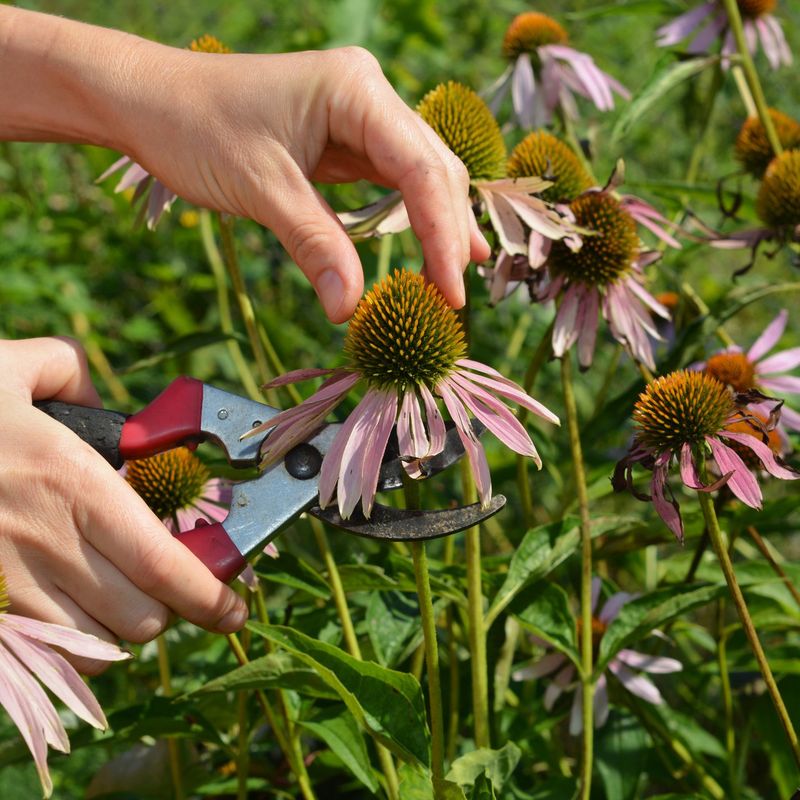
When a purple coneflower bloom finishes its showy phase, the petals droop and the central cone begins to harden and darken. Many gardeners see that wilted look and reach for the pruners, which is a perfectly reasonable instinct if the goal is a tidy bed or more flowers.
NC Cooperative Extension confirms that deadheading can encourage coneflowers to rebloom by redirecting the plant’s energy away from seed production. The tradeoff is real: more blooms now, fewer seeds later.
What happens inside that cone after the petals fall is the part most gardeners miss. The central disk is packed with developing achenes, the small, dry, one-seeded fruits that carry the next generation of plants.
Cutting the head away at that stage removes every one of those achenes before they have a chance to mature. NC State Extension’s pollinator garden guidance notes that most species in a wildlife-friendly planting are allowed to go to seed rather than being deadheaded, precisely because the seeds serve both reseeding and bird-feeding purposes.
NC State Extension identifies Echinacea purpurea as a plant that readily reseeds and specifically recommends leaving some flower heads to produce seed for birds. That guidance applies most directly to the straight species.
Hybrid coneflowers and named cultivars can behave differently, so the advice to leave heads for reseeding is best applied first and most confidently to true Echinacea purpurea rather than to every orange, yellow, or double-flowered cultivar in the bed. Knowing which plants you are working with helps you decide which heads are worth keeping.
Leave several healthy heads in place
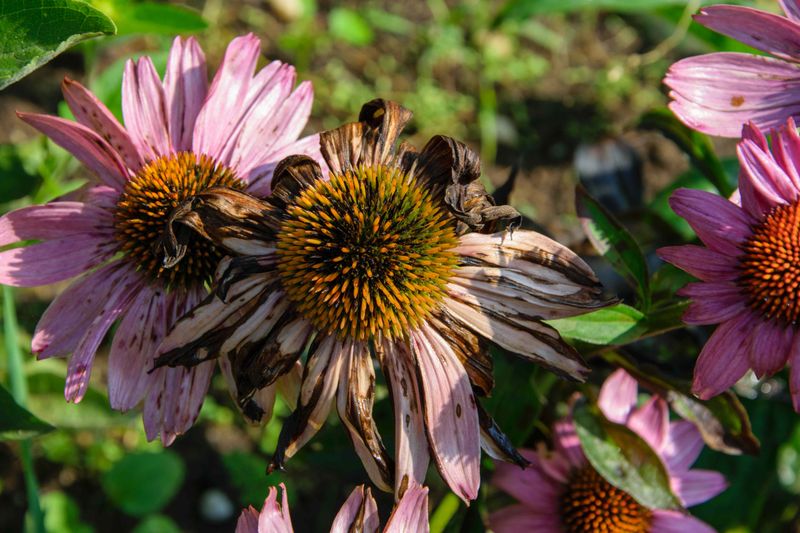
Putting the pruners away for a few selected heads is the single most direct action a gardener can take to support natural reseeding in purple coneflower. When a mature head dries on the plant, achenes eventually loosen and fall or are scattered by birds, landing in the soil around the parent plant.
That process requires no intervention beyond leaving the head alone long enough for it to finish.
NC State Extension’s pollinator garden guidance recommends allowing coneflowers to go to seed when self-seeding and wildlife support are priorities. The recommendation does not specify an exact number of heads to leave, and no fixed count applies to every garden.
A plant with six or eight spent heads might have two or three left to mature while the rest are removed; a smaller plant with only a few spent heads might have just one or two worth keeping. The goal is to ensure that at least some healthy heads can complete their development, not to follow a precise formula.
NC State Extension notes that Echinacea purpurea is easily propagated by seed and capable of reseeding itself in gardens, but that does not mean every head will produce a seedling or that seedlings will appear in predictable numbers. Soil conditions, moisture, competition from other plants, and seed predation all affect outcomes.
This recommendation also applies most reliably to the straight species. Hybrid coneflowers and named cultivars may self-sow, but their seedlings often differ from the parent in color or form, so leaving heads on a hybrid is not a reliable way to reproduce a specific look.
For true-to-type results from a cultivar, division is the more dependable method.
Read the seedhead instead of the calendar
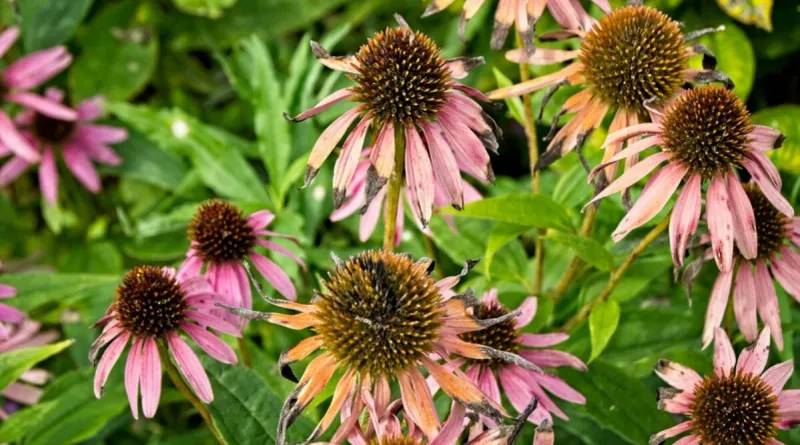
Gardeners who wait for a specific date before acting on their coneflowers will often wait too long or act too early. Bloom timing across North Carolina varies by region, by year, and by individual plant.
A coneflower in the warm Coastal Plain may finish blooming weeks before one growing in the cooler mountains, and a wet summer can shift the whole schedule forward or back. NC State Extension notes that Echinacea purpurea blooms from early summer into mid-fall, which means the seed-maturation window is just as variable.
The most reliable cue is what you can see on the plant itself. Rutgers Extension’s guide to native plant seed propagation lists Echinacea purpurea seed collection in late summer to early fall and describes brown or tan seedheads as a sign of ripeness.
A head that still looks green or retains some color is likely still maturing. A head that has turned dry, brown, or tan and feels firm to the touch is closer to ready.
Those visual cues are more useful than any date on a wall calendar.
USDA plant guide material on Echinacea suggests that mature achenes should separate from the head more readily than immature ones, though that guidance comes from a broader Echinacea guide rather than a test developed specifically for Echinacea purpurea, so treat it as a general indication rather than a definitive rule. If a head is dry and brown and achenes come away with light pressure, the seed is likely mature.
If they resist firmly, give the head more time. Gardeners who want to collect seed for planting elsewhere can cut those mature heads; gardeners who want natural reseeding can simply leave them in place and let the process unfold on its own.
Balance reblooming with reseeding
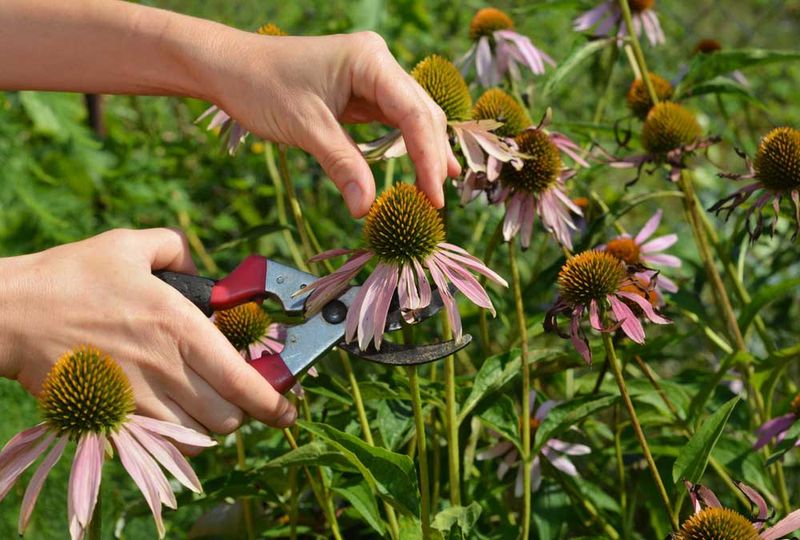
Reblooming and reseeding pull in opposite directions, and most gardeners want both. Cutting a spent head redirects energy toward new flower buds; leaving it allows the seed inside to finish developing.
Treating every spent head the same way means choosing one goal and giving up the other entirely. A head-by-head approach lets a garden pursue both at once.
NC Cooperative Extension’s guidance on deadheading confirms that removing spent flowers can encourage purple coneflower to produce additional blooms. That is a genuine benefit, especially earlier in summer when the season still has weeks of warmth ahead.
Later in the season, as nights cool and bloom energy begins to wind down, the calculus shifts. A head removed in late summer is less likely to be replaced by a new flower than one removed in June or July, making it a better candidate to leave for seed.
NC State Extension’s pollinator garden notes describe a practical middle path: deadhead some flowers to extend the bloom season while allowing others to go to seed for wildlife. Clemson Cooperative Extension also highlights the value of leaving coneflower heads for birds and the broader garden ecosystem.
For a North Carolina yard that values seasonal color, pollinators, and a degree of natural self-sufficiency, selective deadheading fits better than either extreme. Walk the bed, remove heads where you want more blooms, and leave others where you want seed.
The plant handles the rest.
Keep healthy seedheads for birds and winter habitat
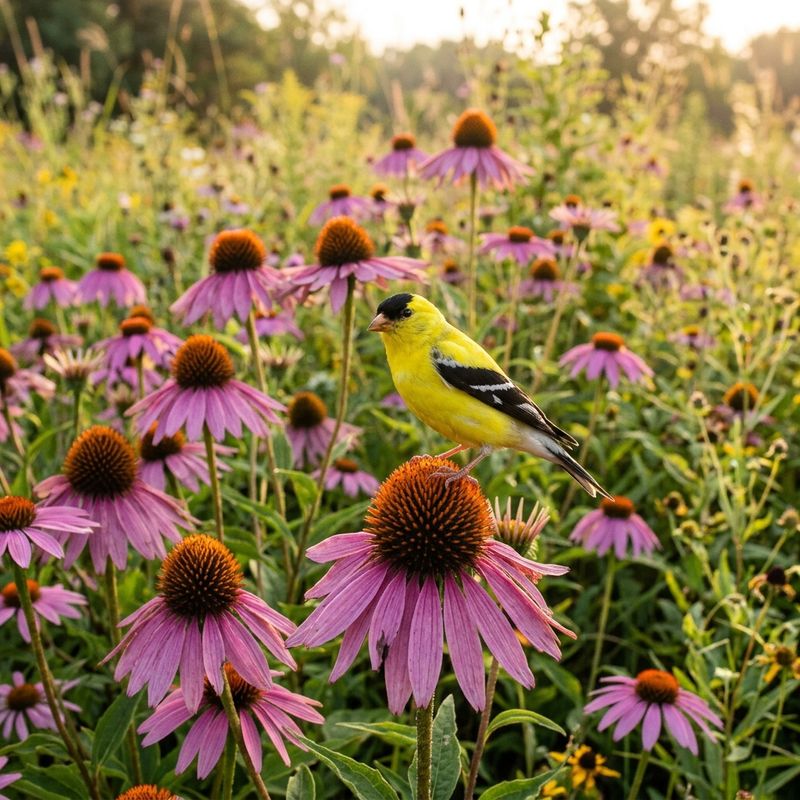
A coneflower seedhead left standing through fall and into winter does more than hold seeds for next year’s plants. Goldfinches are reliably drawn to them, clinging to the stiff cones and picking out achenes through the cold months when other food sources are harder to find.
NC State Extension specifically notes that coneflower seedheads provide food for birds and recommends leaving selected stems standing rather than cutting everything to the ground at season’s end.
The hollow stems that remain after the plant dies back offer a second benefit. Many native solitary bees use dead plant stems as overwintering sites, and stems left at roughly 12 to 24 inches above ground give those insects a place to shelter.
Clemson Cooperative Extension supports leaving coneflower structure standing for wildlife through winter, a practice that requires almost no extra effort and supports the kind of yard ecology most North Carolina homeowners are working toward.
Gardeners who want to collect seed for planting in a new spot or sharing with neighbors can do so before birds find the heads, but the process calls for a little care. USDA guidance recommends harvesting mature coneflower heads in fall, and Rutgers Extension confirms late summer to early fall as the general collection window.
When cutting heads, wear gloves. The central cones are stiff and their bracts are pointed; handling them bare-handed can be surprisingly uncomfortable.
Cut cleanly at the stem, let the heads dry fully in a paper bag if they are not already completely dry, and store the seed in a cool, dry place until planting time. For gardeners who simply want more coneflowers in the same bed, leaving the heads in place and letting birds and gravity do the work is the easier path.
Expect seedlings to vary
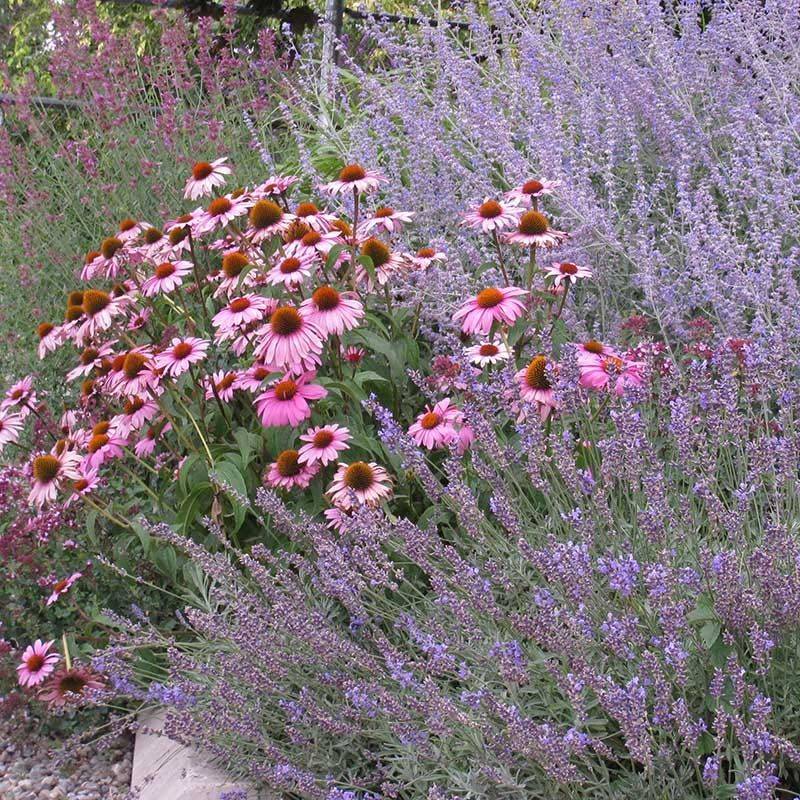
Natural reseeding from Echinacea purpurea can produce a satisfying patch of new plants, but the seedlings will not always look exactly like what you planted. That is worth knowing before you leave heads on the plant with specific expectations.
The straight species, true Echinacea purpurea, generally self-sows and produces seedlings that resemble the parent reasonably well. Clemson Cooperative Extension distinguishes the species from the wide range of hybrid coneflowers now available, noting that cultivars and hybrids may not come true from seed.
Iowa State University Extension explains that coneflower seedlings from hybrid or cross-pollinated plants may differ in color, form, or other traits from the parent plant. A named cultivar with deep orange or double flowers may produce seedlings that are pale pink or single-petaled, or something in between.
If you want to preserve a specific cultivar’s look, division or cuttings are more reliable than seed. Leaving heads on a hybrid is still worthwhile for birds and for adding more coneflowers to the yard in general, just not for replicating a particular named variety.
Germination itself can be uneven. Research published on Echinacea seed germination found that cold-moist stratification can improve germination rates, and related research on Echinacea seed dormancy confirms that germination behavior can vary considerably depending on seed source, age, and handling.
Seeds that fall naturally in the garden and overwinter in the soil often experience natural stratification on their own, which may help some germinate the following spring. But not every seed will sprout, and results vary from yard to yard.
The reasonable expectation is more coneflowers over time, not a guaranteed count or a precise replica of the parent plant.
Remove diseased plants instead
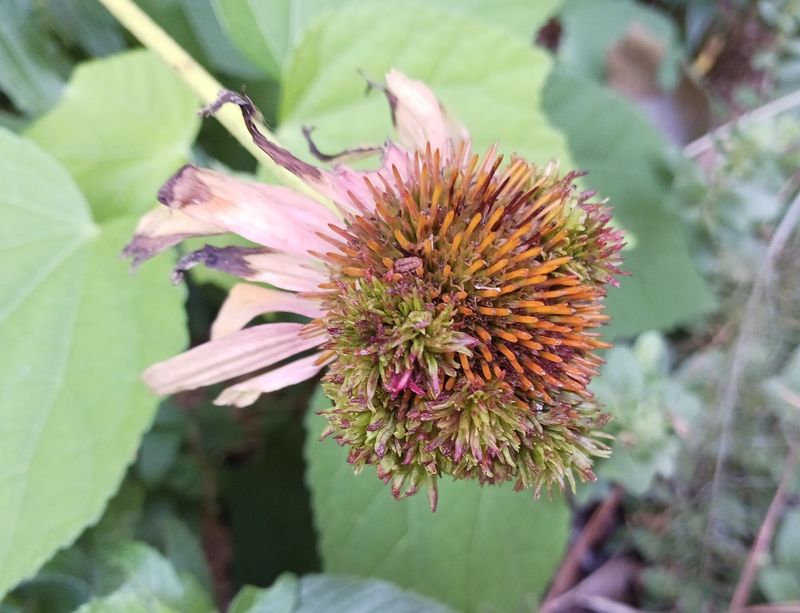
Leaving spent coneflower heads in place is good advice when the plants are healthy. When they are not, the same action can spread a problem through the rest of the garden.
Aster yellows is a disease caused by a phytoplasma and spread by leafhoppers, and purple coneflower is one of its more common hosts in North Carolina. Infected plants often show distorted or stunted flowers, strange greenish coloring where petals should be pink, or a generally malformed central cone.
Those symptoms are easy to confuse with drought stress or nutrient problems, so a closer look matters before deciding what to do.
NC Cooperative Extension recommends removing plants suspected of aster yellows and placing the debris in the trash rather than the compost pile. Composting infected material does not reliably destroy the phytoplasma, and leaving a diseased plant standing does not benefit birds or pollinators the way a healthy seedhead does.
The right stewardship call is removal, not preservation.
Knowing the difference between a healthy drying seedhead and a diseased plant keeps this guidance from being misapplied. A healthy spent head turns brown or tan, feels firm, and has a normal cone shape.
A diseased plant often looks wrong well before it finishes blooming, with distorted growth, unusual coloring, or flowers that never develop properly. When a head looks off, investigate before deciding to leave it.
Healthy, fully formed seedheads that are simply past their bloom stage are exactly what to leave standing. Plants with suspicious symptoms deserve a different response, and removing them protects the rest of the coneflowers in the bed.
Make the selective cut
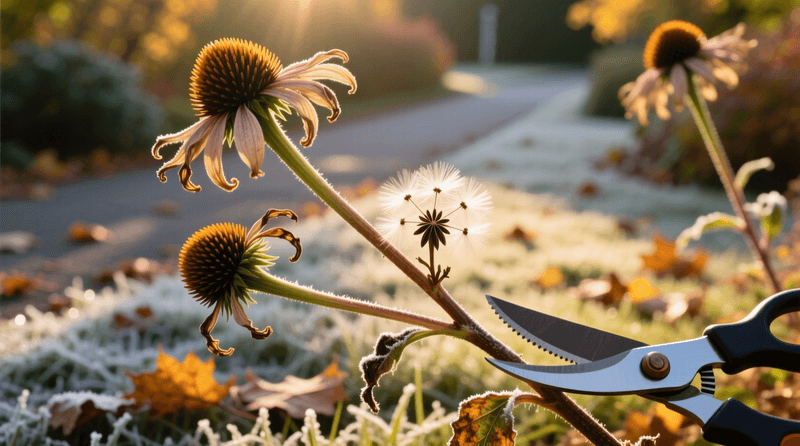
Walking your purple coneflower bed with a pair of pruners and a clear intention is all the technique this really requires. Look at each spent head individually.
Heads that are dry, brown, and firm are candidates to leave in place for reseeding and birds. Heads that are still green or fleshy can be removed if you want to encourage another round of blooms, though later in the season that reblooming payoff is less certain.
NC State Extension’s pollinator garden guidance supports this selective approach, allowing some flowers to go to seed while others are removed.
Rutgers Extension places the general seed-collection window for Echinacea purpurea in late summer to early fall, which aligns with the time most North Carolina gardeners will be making this call. NC State Extension confirms the species reseeds readily under suitable conditions, though results vary with soil, moisture, and site.
Missing one season of selective leaving will not end a healthy plant’s ability to reseed in future years, and no single head guarantees a seedling. The practice protects this year’s opportunity without demanding perfection.
A garden that holds a few dry coneflower cones through the fall is doing something right, both for the yard and for the goldfinches that will find them.