
If You’re Snipping Off Spent Petunia Flowers The Wrong Way, Here’s The Deadheading Mistake Slowing Your Next Blooms
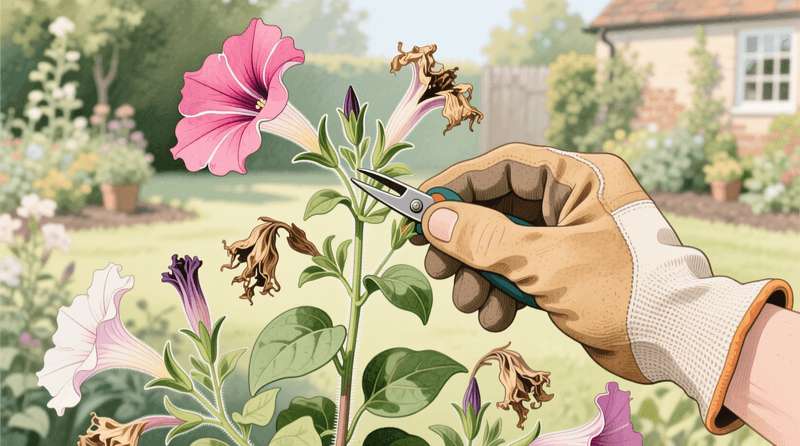
Petunias are one of the most rewarding flowers you can grow, but a small grooming habit done the wrong way can quietly slow down their rebloom. Many gardeners pull off the faded petals and call it done, not realizing they’ve left behind a hidden green structure that may compete with future flowering.
Once you know what to look for, fixing the habit takes less than a minute per stem.
The flower base matters more than the wilted petals
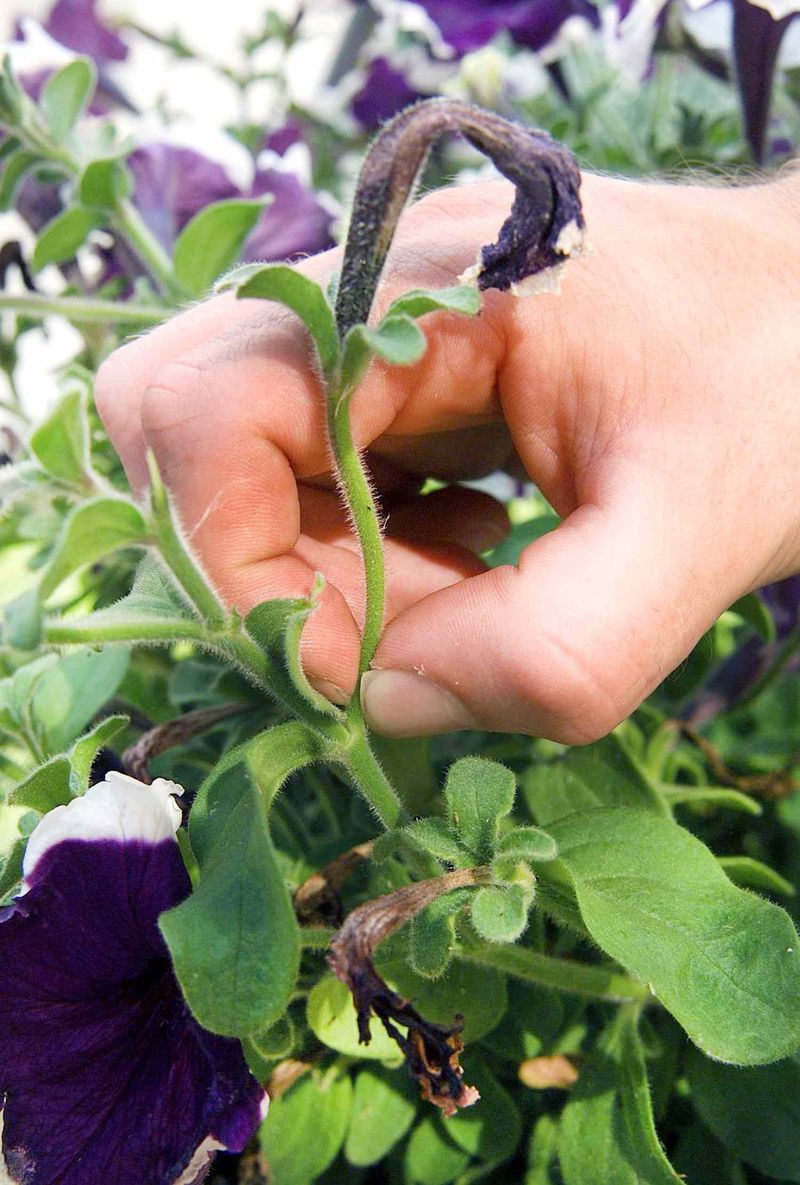
Petunia grooming looks simple from a distance: a faded flower appears, you pinch it off, and you move on. The trouble starts when the pinch stops at the petals.
Beneath those wilted, papery petals sits a small, firm, green structure attached directly to the flower stalk. That structure is the ovary, and the University of Florida IFAS explanation of flower parts confirms that the ovary is the part of the flower that can develop into a fruit or seed capsule after pollination and fertilization occur.
Not every faded petunia bloom contains seeds already in progress. Pollination has to happen first, and even then, fertilization and development take additional time.
But the ovary is present at the base of every flower, and leaving it attached to the stalk is the step that many gardeners skip without realizing it.
When you remove only the petals, that green base stays on the plant, still connected to the stalk. According to Mississippi State University Extension guidance on deadheading petunias, the seed-producing structure remains below the flower head, so truly effective deadheading means removing the faded flower together with that base, not just the colorful part you can see from across the yard.
For traditional, large-flowered, and double petunias, leaving that base behind may slow the plant’s return to flowering. The connection between the missed structure and delayed rebloom is real, but the effect varies by cultivar, growing conditions, and whether pollination actually occurred.
Treating this as the single cause of every sparse petunia oversimplifies the picture, but for susceptible types, the base is worth removing every time.
The consequence is slower rebloom, not dead flowers
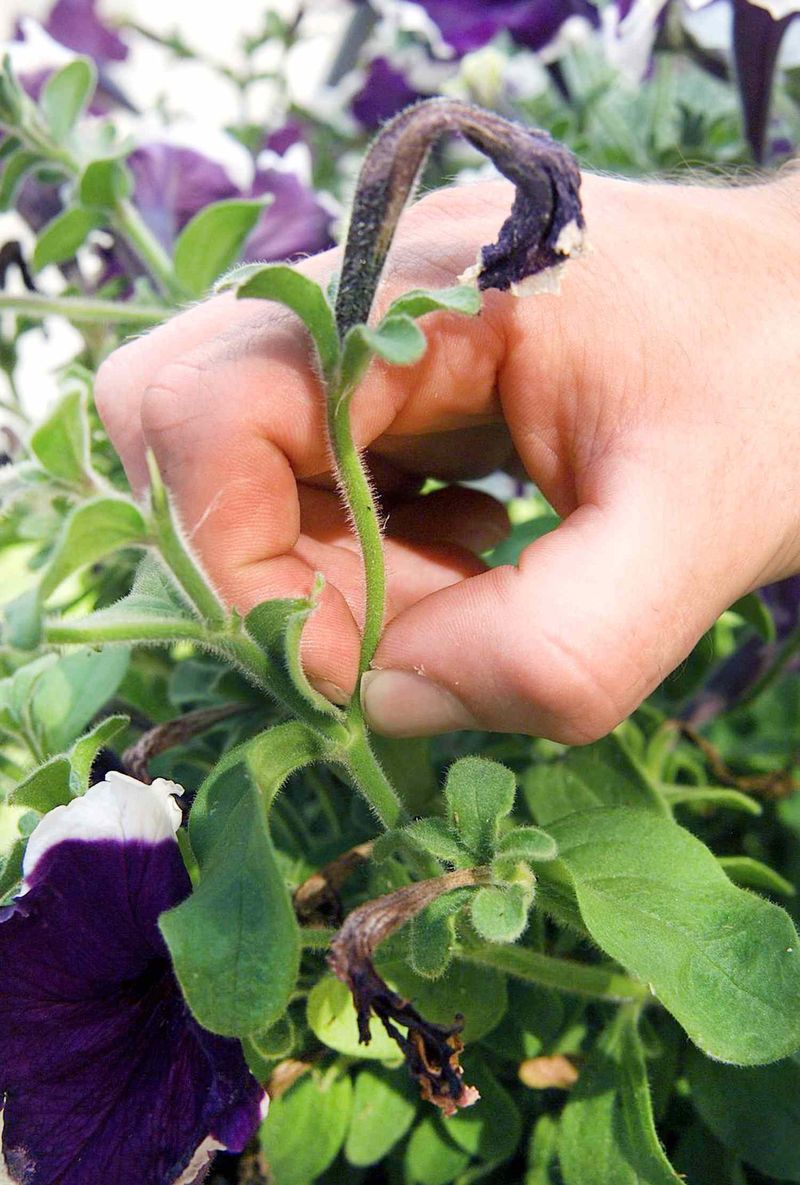
Headlines about deadheading sometimes make it sound as though one wrong snip will wipe out every flower bud on the plant. That is not what happens.
Leaving the green ovary or developing fruit attached after a bloom fades does not kill your petunia or destroy the next round of flowers. The realistic consequence, for cultivars that are sensitive to this, is that rebloom may come more slowly or less abundantly than it would if the structure were removed.
The reason involves how plants allocate resources. After pollination, a flower’s reproductive base can begin developing into a seed capsule.
For certain petunias, particularly older grandiflora types, large-flowered hybrids, and double varieties, that process may compete with the energy the plant would otherwise direct toward producing new buds. Mississippi State University Extension notes that deadheading can reduce seed formation and help traditional petunias maintain their flowering period, which is the practical upside of doing it correctly.
Even so, seed development is only one piece of the puzzle. Pollination has to occur before a seed capsule begins forming in earnest, and many petunias are not heavily pollinated in every garden situation.
Cultivar genetics, temperature, rainfall, soil fertility, watering consistency, and overall plant health all influence how freely a petunia blooms. University of Florida IFAS points out that sparse flowering can result from inadequate sunlight, poor nutrition, drought, or other stressors, not just grooming habits.
Correcting the deadheading technique is a worthwhile step for the right cultivars, but it works best when the plant is otherwise healthy and well-cared-for. A petunia under heat stress, sitting in waterlogged soil, or getting too little sun will not rebound simply because the ovary was removed.
The grooming fix is real; the expectation just needs to be calibrated to what deadheading can and cannot do.
Remove the flower, reproductive base, and stalk together
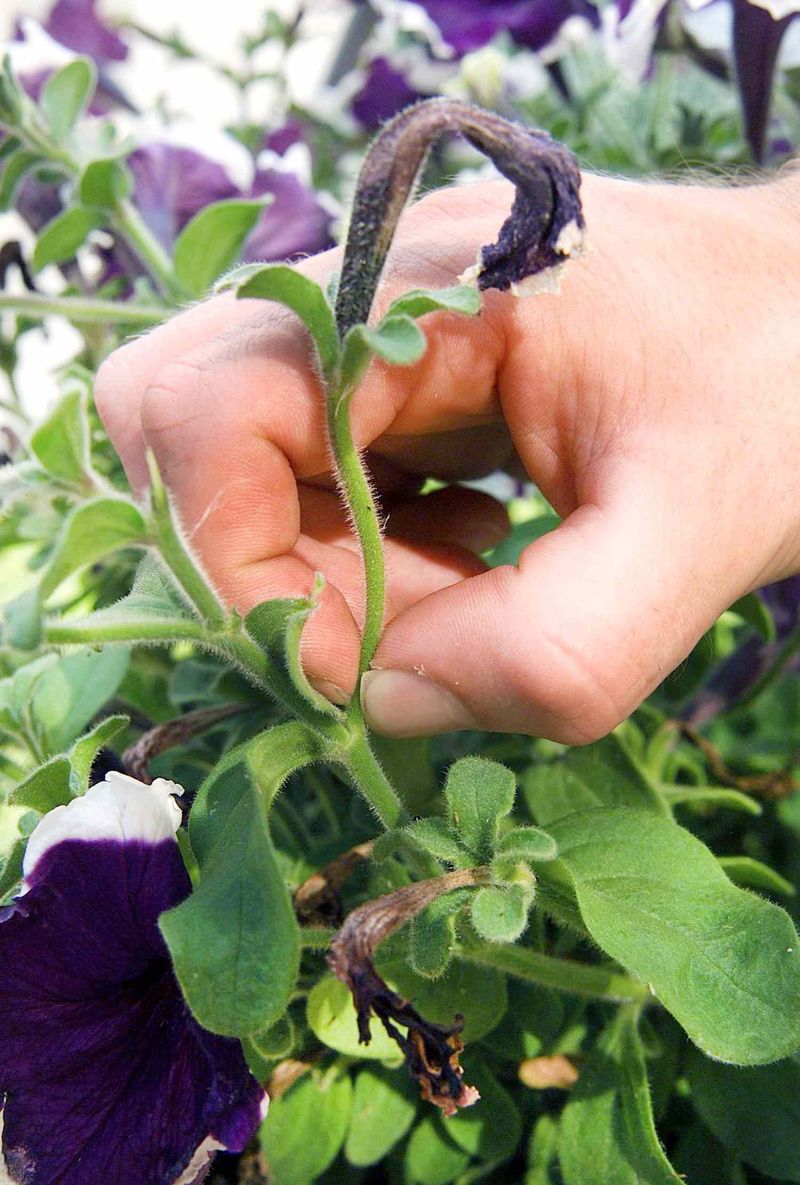
Getting the technique right is straightforward once you know what you are looking for. Wait until a petunia bloom is clearly fading: the petals look papery, limp, or have begun to drop.
At that point, follow the flower down to its stalk rather than grabbing just the petals.
Feel for the small, firm, green swelling at the flower’s base. That is the ovary or developing fruit.
Your goal is to remove the faded flower and that green base together, along with the stalk that supports them. Mississippi State University Extension recommends removing the stalk near its attachment point to the main stem, which takes the spent structure cleanly off the plant without leaving a stub.
For soft, thin petunia stems, your fingers work perfectly well. Pinch the stalk between your thumbnail and forefinger, just above where it meets the main stem or a healthy leaf, and snap it off cleanly.
If you prefer a tool, a clean pair of small scissors or pruning shears makes a neat cut with less tearing. Sharp tools are gentler on plant tissue than dull ones, so a quick wipe with rubbing alcohol and a pass over a sharpening stone before you start keeps the job tidy.
When a spent flower sits at the end of a longer stem rather than a short individual stalk, you have a bit more flexibility. Instead of cutting all the way back to the main stem, make the cut just above a healthy leaf node, a visible side shoot, or a small bud.
That way you preserve the plant’s branching structure and give the next flower a place to develop close to the cut.
One practical note: if any of the spent flowers show signs of gray mold, unusual spotting, or other disease symptoms, drop them directly into the trash rather than the compost bin. Diseased material in a compost pile can spread problems back to the garden.
Healthy spent flowers can be composted without concern.
Match the routine to the petunia cultivar
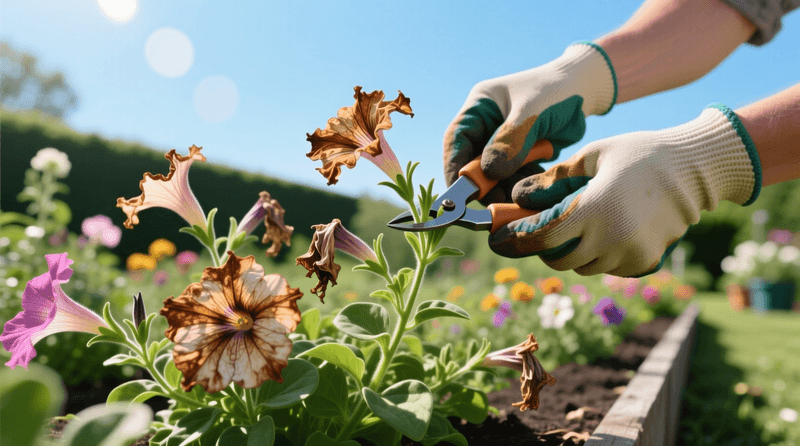
Not every petunia on the market needs the same grooming schedule, and treating them all identically can turn a helpful chore into an unnecessary one. The cultivar you are growing matters more than any calendar rule.
Traditional grandiflora petunias, large-flowered hybrids, and double-flowered varieties are the strongest candidates for routine deadheading. Their larger blooms tend to sit on the plant longer after fading, and the reproductive base is more prominent.
For these types, a roughly weekly inspection makes sense when spent flowers are accumulating. Walk the plant, remove anything that is clearly past its peak, and you have done what is needed.
University of Florida IFAS identifies large-flowered and double petunias as the types most likely to benefit from consistent deadheading.
Many modern petunias tell a different story. Milliflora varieties, spreading types, Wave petunias, and other newer hybrids have been bred to shed their spent flowers on their own, a quality called self-cleaning.
University of Wisconsin-Madison Extension notes that self-cleaning cultivars generally do not require routine deadheading for reliable flowering, which is a genuine difference from older types, not just a marketing claim.
Self-cleaning does not mean the plant is perfectly tidy at all times, though. An occasional spent bloom may stick around longer than usual, and a quick pass for appearance’s sake never hurts.
The point is that imposing a strict weekly deadheading routine on a self-cleaning Wave or spreading petunia is extra work that the plant does not need to bloom well.
When you are unsure which type you have, the plant tag is your first resource. If the tag lists the variety as self-cleaning or low-maintenance, follow that guidance and observe how the plant actually performs before committing to a regular deadheading schedule.
Let the plant’s behavior, not a generic rule, set the pace.
Use shearing when the plant has become leggy
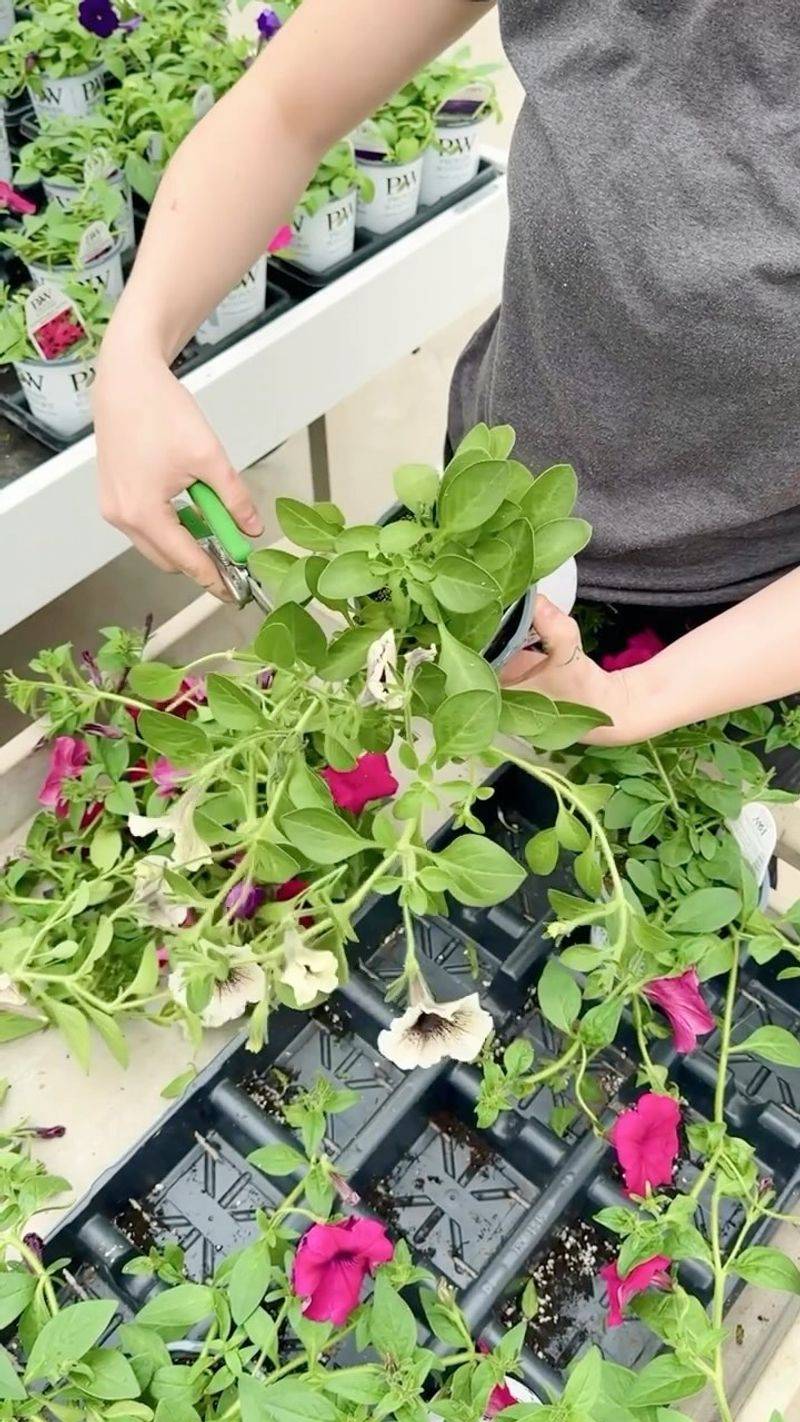
Removing individual spent flowers works well for a plant that is actively growing and blooming. When a petunia has stretched into long, bare stems with flowers only at the very tips, picking off those spent blooms one at a time will not bring back a full, bushy plant.
A different approach is needed.
Midseason shearing, sometimes called cutting back, is the rescue option for a leggy or exhausted petunia. University of Florida IFAS distinguishes this structural pruning from routine deadheading: while deadheading removes individual spent flowers, cutting back addresses the overall shape and length of the plant.
The goal is to shorten those long, bare stems enough that the plant redirects energy into new side shoots and fresh buds.
A practical approach is to cut back the longest stems by roughly one-third to one-half, making each cut just above a healthy leaf node or visible side shoot. University of Wisconsin-Madison Extension recommends watering and feeding the plant according to label directions after a significant cutback to support the recovery.
Avoid removing large amounts of healthy foliage all at once if the plant is already stressed.
The trade-off with heavier pruning is temporary. North Carolina Cooperative Extension notes that a cutback can take one to several weeks to produce a fresh flush of blooms, depending on how much was removed and what growing conditions are like.
Plan a cutback for a point in the season when you have time to wait for the recovery, rather than right before you need the plant looking its best.
Hard cutting is a seasonal rescue, not a substitute for regular grooming. Keep individual deadheading as the routine habit, and reserve shearing for the moments when the plant’s structure has genuinely gotten away from you.
Check growing conditions before blaming deadheading
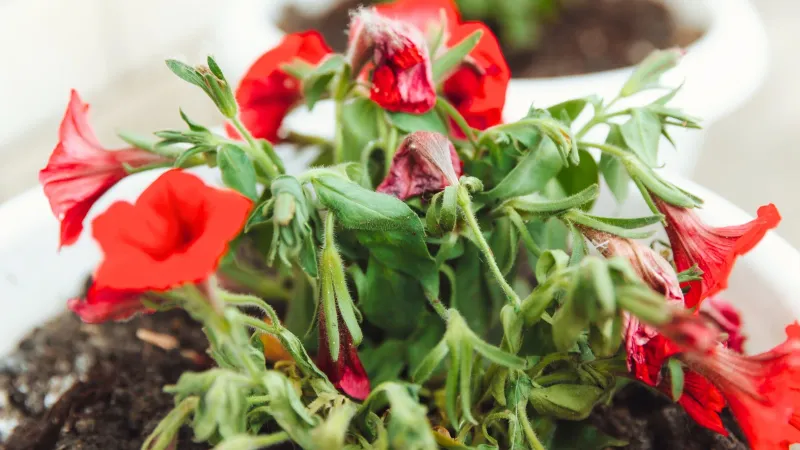
A petunia with thin, sparse flowering is not always a deadheading problem. Grooming is one variable among several, and skipping straight to snipping without checking the basics can leave the real cause unaddressed.
Running through a short checklist first saves time and protects the plant.
Start with light. Petunias generally need full sun, meaning at least six hours of direct sunlight per day.
University of Florida IFAS lists inadequate sunlight as a primary cause of reduced flowering. A plant that has been shaded out by nearby growth or moved to a shadier spot will bloom poorly regardless of how carefully you deadhead it.
Next, assess water and drainage. Petunias perform best in evenly moist, well-drained soil.
Containers dry out faster than in-ground beds, especially during summer heat, so check the soil moisture with your finger before watering rather than following a fixed schedule. Soggy, waterlogged soil is equally problematic: poor drainage can damage roots and limit the plant’s ability to support new blooms.
Look for standing water, compacted soil, or containers without adequate drainage holes.
Nutrition matters too, especially for container plants where water and nutrients are depleted quickly. Regular feeding according to the product label supports continued flowering, but overfertilizing a stressed plant can cause additional problems.
Follow label rates and timing rather than applying extra fertilizer hoping for faster results.
Beyond those basics, inspect the plant closely for pest and disease symptoms. University of Georgia Cooperative Extension notes that budworm caterpillars, in particular, feed directly on petunia buds and can cause dramatic bloom failure that looks like a cultural problem.
UC IPM’s petunia pest guide also points to root and crown rots, viruses, and other diseases that reduce flowering from the inside out. If the foliage looks off, the stems feel soft at the base, or tiny caterpillars are visible inside spent flowers, address the pest or disease issue before expecting any grooming improvement to take effect.
Deadheading supports a healthy plant. It cannot substitute for adequate light, appropriate water, sound drainage, timely feeding, and a plant that is free of serious pest or disease pressure.
Remove the base when needed, then let the plant set the pace
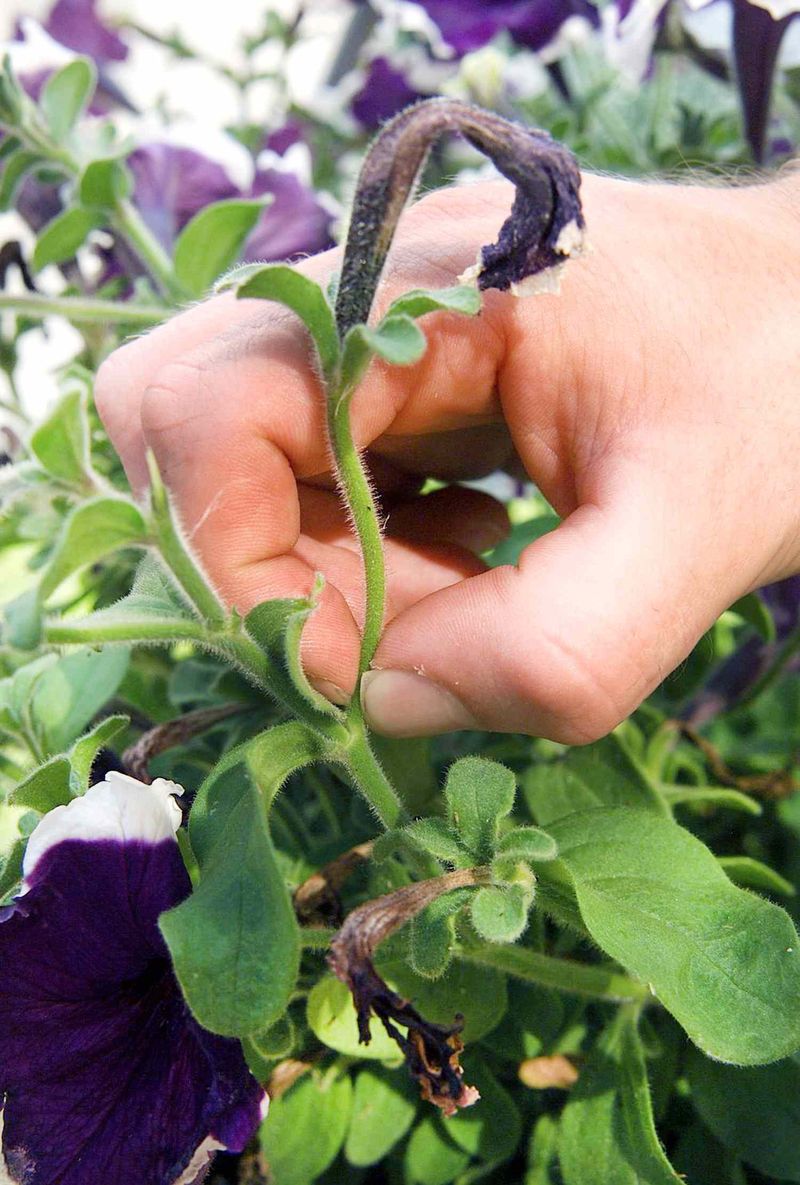
The practical fix is uncomplicated: when grooming a petunia that benefits from deadheading, do not stop at the wilted petals. Trace each faded flower back to its stalk, find the small green ovary or developing fruit at the base, and remove the whole spent structure together.
Mississippi State University Extension confirms that the seed-producing structure sits below the flower head and needs to come off with the rest of the spent bloom for deadheading to do its job.
Apply that routine to traditional, large-flowered, or double petunias with a roughly weekly inspection when spent flowers are building up. For spreading, Wave-type, milliflora, and other self-cleaning cultivars, University of Florida IFAS notes that routine deadheading is generally not required for reliable flowering, so let the plant tag and the plant’s own behavior guide how often you intervene.
Keep expectations realistic. Deadheading supports rebloom in susceptible cultivars rather than guaranteeing it.
If sparse flowering continues after you have corrected the technique, circle back to light, soil moisture, drainage, feeding, and a close look for pests or disease. A petunia that gets the right care from roots to stem tips will use every correctly removed spent flower as the small nudge it was always meant to be.