
How A Rain Barrel Can Reduce Tap-Water Use For Your North Carolina Container Garden This Summer
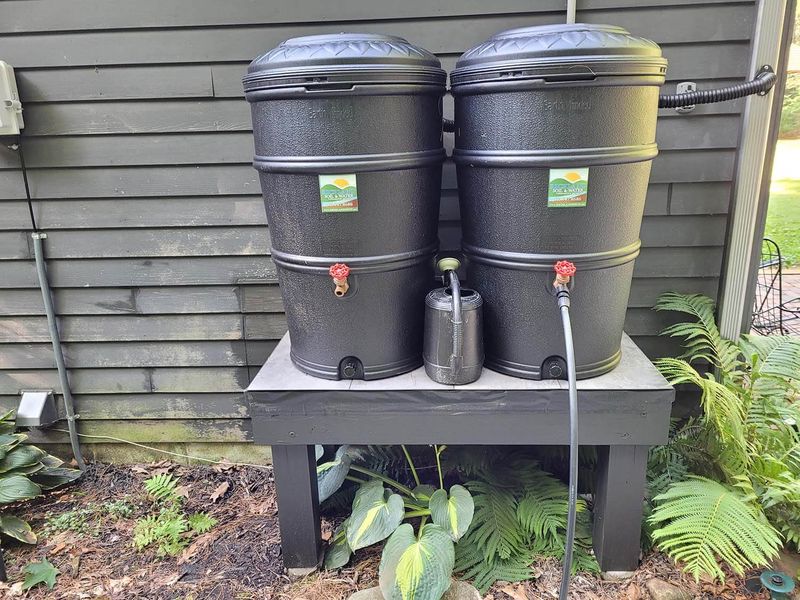
Catching rain off your roof and using it to water potted plants sounds almost too easy, and for a modest group of ornamental containers near a downspout, the basics really do work. A screened, elevated barrel connected to low-flow tubing can quietly deliver water between storms while your municipal tap stays off.
The catch is that one 55-gallon barrel has real limits, and a North Carolina summer can test every one of them. Getting the most out of this setup means understanding what the barrel can honestly do, building it right, and staying involved all season long.
What one barrel can—and cannot—water
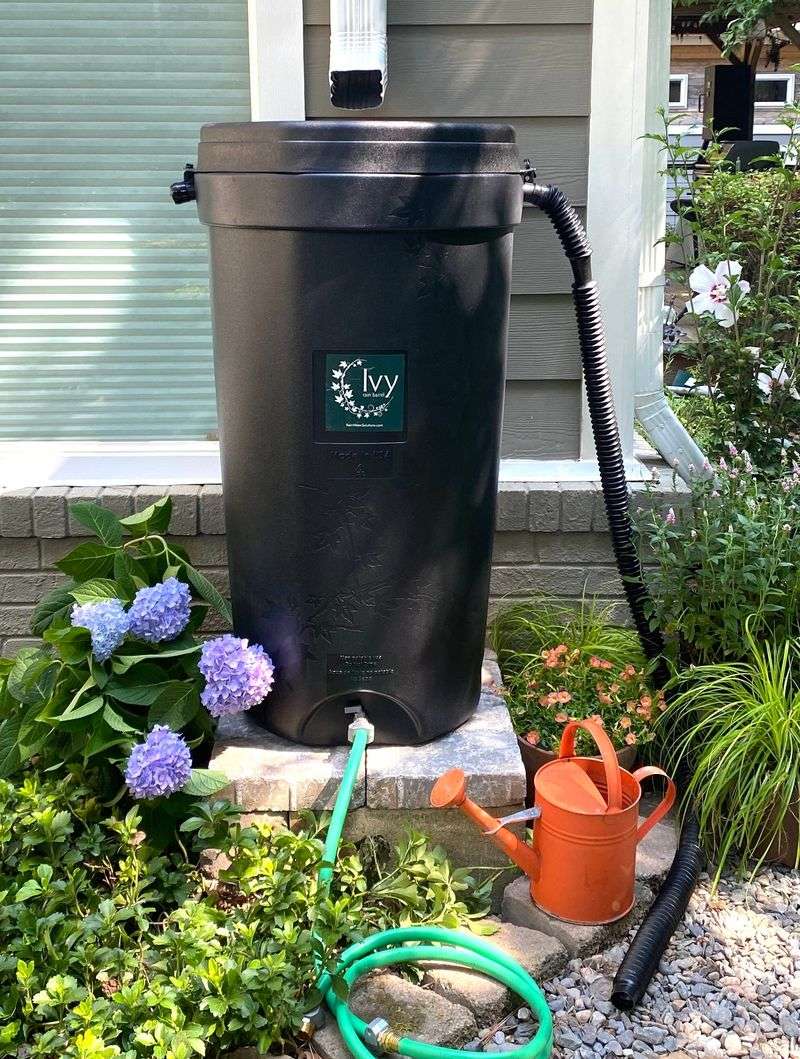
A 55- to 60-gallon rain barrel holds exactly that much water between refills, and not a drop more. Whether that supply stretches across two days or two weeks depends entirely on how many containers you have, how large they are, what is growing in them, how hot it gets, and how often rain tops the barrel back up.
NC State Extension guidance on container plants notes that mature outdoor containers may need watering at least daily, and that demand shifts with temperature, wind, light, humidity, pot size, pot material, growing medium, plant type, and growth stage. No single barrel capacity covers every combination.
The collection side of the equation can look encouraging on paper. Multiply your roof’s drainage area in square feet by the rainfall in inches, then multiply by roughly 0.6 to 0.62, and you get approximate gallons collected.
A 1-inch rain falling on 1,000 square feet of roof could yield around 600 gallons, far more than one barrel holds. Oregon State University’s rainwater harvesting guide uses this same formula as a planning tool, not a performance guarantee, and the same caution applies here.
Your barrel fills and overflows well before a substantial storm ends, so most of that potential harvest must be safely diverted elsewhere.
What the barrel genuinely offers is a way to reduce tap-water use for a small, nearby group of containers during periods when rain regularly replenishes the supply. NC DEQ identifies rain barrels as especially suitable for residences and small buildings as a supplemental irrigation source.
Treat the barrel as a supplement that cuts municipal water use under the right conditions, not as a device that replaces the hose for an unspecified number of pots through an entire summer.
Choose a short, safe path from downspout to pots
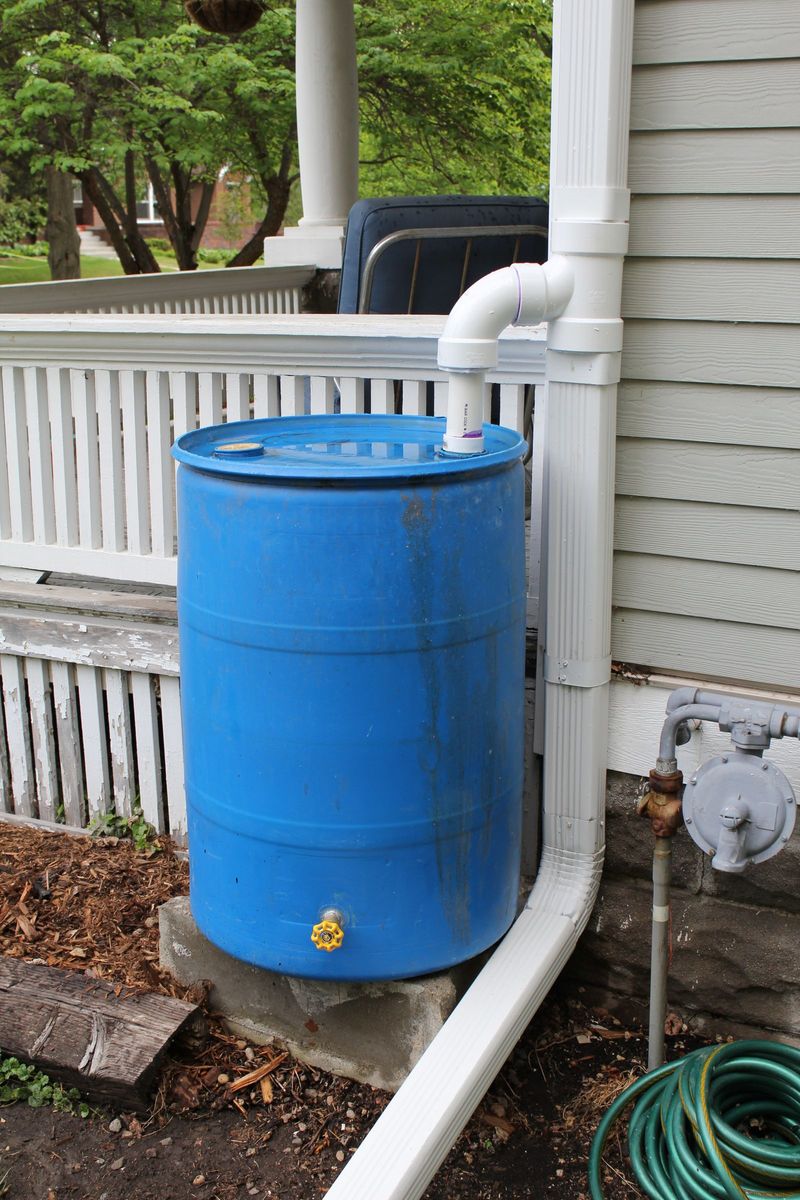
Placing the barrel directly beside the downspout keeps the inlet connection simple and reduces the chance of a long, awkward hose run just to fill it. From there, the containers should be as close as practical.
Every extra foot of tubing between the barrel outlet and a pot adds friction and reduces the already modest flow that gravity provides. NC State’s food garden design guidance notes that gravity flow with standard pressure may require the tank outlet to be roughly 10 feet above the garden for reliable delivery.
A typical backyard stand raises the barrel only 12 to 36 inches, so the system works best with short runs, compatible low-flow hardware, and careful testing.
The stand itself deserves serious attention before you fill the barrel for the first time. Clemson Extension’s rainwater harvesting guidance reports that a full 55-gallon barrel weighs more than 450 pounds, and that a typical stand produces approximately 0.4 psi per foot of elevation.
That combination means the support must be level, structurally sound, and rated for the load. Stacked bricks, uneven pavers, or a lightweight plastic stand are not adequate.
Pressure-treated lumber frames or purpose-built metal stands anchored to a flat, stable surface are far safer choices.
Overflow planning is not optional. A barrel fills quickly during a moderate North Carolina storm, and unmanaged overflow beside the house can saturate the foundation, create a slip hazard on a sidewalk, or erode a planting bed.
NC State’s Rainscaping program recommends routing overflow to a stable lawn area, an established planting bed, a swale, or a small rain garden positioned away from the foundation, doors, and any slope prone to washing. NC DEQ’s rain barrel how-to echoes that guidance and treats a properly directed overflow line as a required component, not an afterthought.
Build around screens and low-flow irrigation
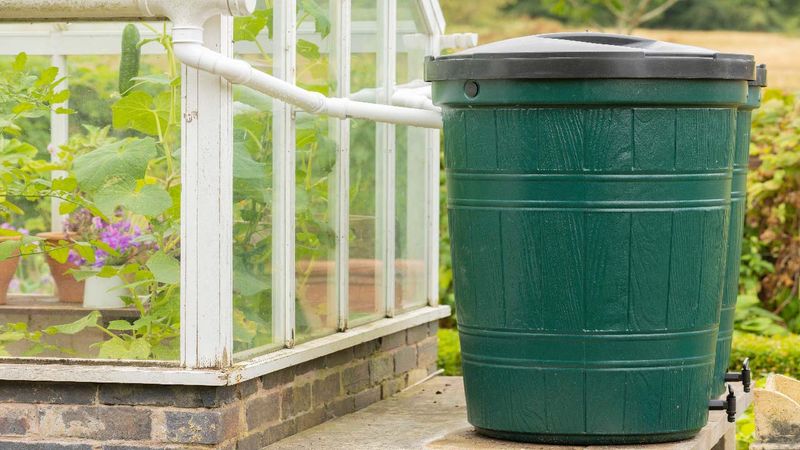
Every opening on the barrel needs a physical barrier. A secure lid or fine-mesh screen across the top, combined with a debris screen at the inlet where water enters from the downspout, keeps leaves, twigs, insects, and small animals out of the stored water.
Penn State Extension’s mosquito guidance emphasizes that physical exclusion is the most reliable way to prevent standing water from becoming a breeding site, and a well-screened barrel is far preferable to one that relies on chemical treatments or fish as the primary defense. Clean those screens and the gutters feeding them on a regular schedule so the inlet does not clog and overflow cannot back up.
On the delivery side, the hardware must match the pressure the system can actually produce. Alabama Cooperative Extension specifically recommends adjustable drip emitters for gravity-fed systems and warns that small barrels generally do not generate enough pressure for in-ground sprinklers.
Many soaker hoses carry a similar limitation. Conventional sprinklers and pressure-dependent zone timers designed for household water pressure will likely underperform or fail entirely at the low pressure a short stand provides.
Adjustable drip emitters or low-flow nozzles attached to flexible tubing are the components most likely to work reliably.
The overflow line is part of this system, not a separate concern. Route it to a stable lawn, planting bed, or swale before the barrel is ever filled.
Clemson Extension’s schoolyard rainwater guidance treats the overflow outlet as a core component of any barrel installation. No screen, no matter how fine, purifies roof runoff or makes the stored water potable.
The screen’s job is physical exclusion of debris and pests, nothing more.
Test every outlet before trusting the system
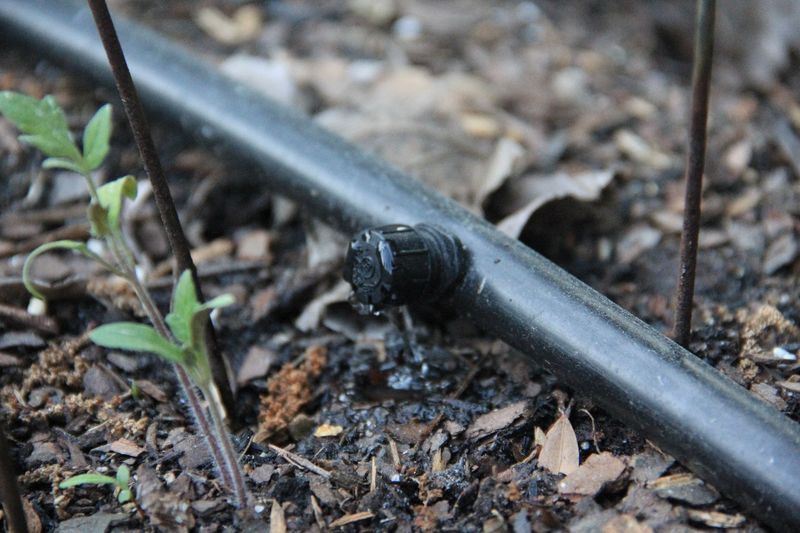
Running a quick test before the first hot week is not optional. Fill the barrel, open the outlet, and let the tubing run to each zone of containers for a measured period, say 15 or 30 minutes.
Check every pot to confirm it actually received water, not just the ones closest to the barrel. Alabama Cooperative Extension’s planning guidance underscores that gravity-fed systems must be calibrated to confirm adequate flow reaches each outlet, because low pressure means distant or elevated pots can receive far less water than nearby ones.
If a pot at the end of a run gets little or no flow, you have several options before giving up on that container. Shortening the tubing run, reducing the number of emitters on that line, adjusting the emitter to a lower flow rate, or repositioning the container closer to the barrel are all practical fixes.
Inspect every fitting and connection for drips or weeps during the test, because even small leaks reduce pressure further and waste stored water. Clemson Extension’s rainwater guidance recommends confirming that all components are compatible with the system’s operating pressure before relying on the setup.
The system also does not know when a pot is dry. Gravity moves water through the tubing, but it has no way to sense soil moisture unless you add a controller or sensor that is specifically rated to function at rain-barrel pressure.
Standard household irrigation timers are built for municipal water pressure and may not operate correctly at the low pressure a short stand produces. NC State’s container plant handbook makes clear that watering requirements change as plants mature and as weather shifts, which is why repeat checks during hot spells and growth surges are a required part of managing the system, not just a nice-to-have habit.
Reduce demand before expanding the setup
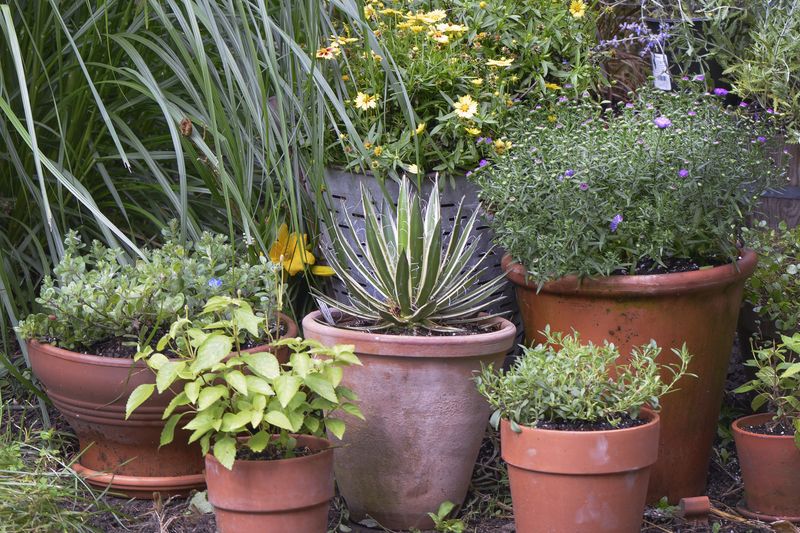
Choosing the right containers before connecting a single emitter can do as much for system reliability as any hardware upgrade. Larger pots hold more soil volume and dry out more slowly than small ones.
NC State’s container gardening guidance notes that porous materials like unglazed terra cotta, small pot sizes, and dark-colored containers all lose moisture faster, while glazed, light-colored, or double-walled pots slow evaporation. Matching pot material and size to what your barrel can realistically deliver is a smarter first move than trying to compensate with more tubing.
Exposure matters just as much as pot choice. Full sun and persistent afternoon wind can pull moisture out of a container faster than a low-flow emitter replaces it, especially during July and August in the North Carolina Piedmont or Coastal Plain.
Grouping pots with similar water needs together simplifies scheduling and reduces the chance that one thirsty plant drains the barrel before others get their share. A roughly 1-inch layer of surface mulch, where the plant and pot size allow, slows evaporation from the soil surface without compressing roots.
Mature fruiting plants and especially vigorous ornamentals are reasonable candidates to keep on a separate hose line rather than folding them into the barrel system. Their demand can spike unpredictably, and a single heavy feeder can empty a barrel before smaller, less demanding pots receive adequate water.
NC DEQ’s rainwater conservation guidance frames rain barrels as a supplemental tool for modest residential use, not a replacement for the full watering capacity of a pressurized system. Start with a conservative group of compatible, similarly sized ornamental containers, confirm the system works for them, and treat backup watering as a standing requirement whenever rainfall does not keep the barrel adequately filled.
Keep roof runoff out of the drinking-water category
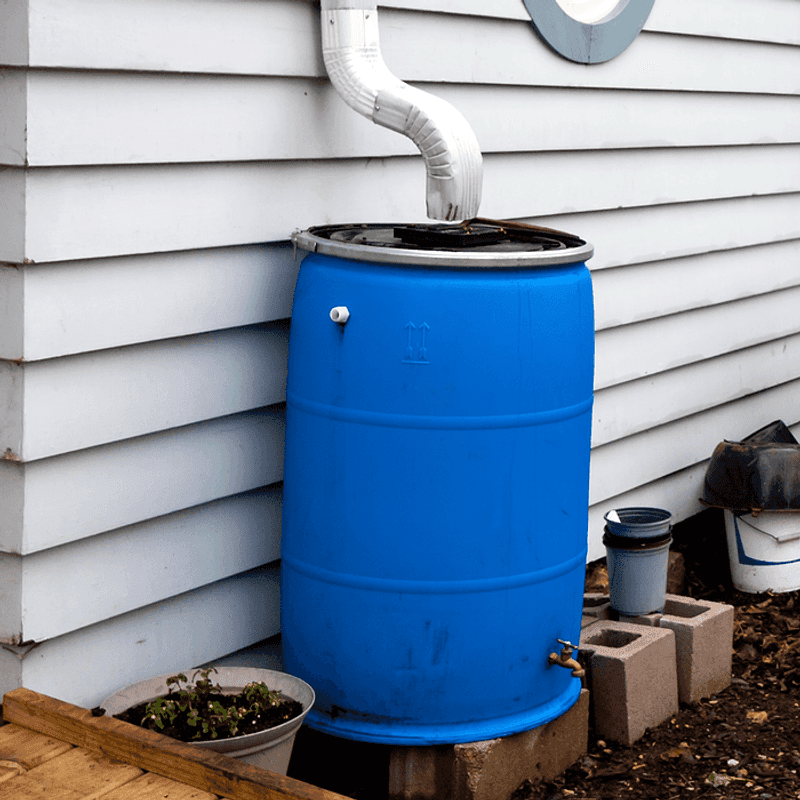
Roof runoff picks up whatever has landed on or washed off your roof since the last rain: bird droppings, dust, airborne particles, and compounds that leach from roofing materials and gutters. EPA’s rain barrel guidance identifies these contaminants as a reason to treat stored rainwater as nonpotable and to think carefully before using it on edible plantings.
Nothing about a standard garden barrel changes that status. The screen at the inlet keeps debris out; it does not filter bacteria, heavy metals, or chemical residues.
For most homeowners reading this, ornamental containers are the right and conservative application. Flowers, ferns, ornamental grasses, and similar plants carry no food-safety risk from soil-level drip irrigation with barrel water, and they benefit from the reduced mineral load compared to some municipal supplies.
If you want to use barrel water on vegetables or herbs, the risk-reduction steps matter: apply water only at the soil surface through drip tubing, install a first-flush diverter to discard the initial, most contaminated surge of runoff, never let barrel water contact the edible portion of a plant, and follow current local food-safety guidance. University of Minnesota Extension recommends using rain-barrel water primarily for ornamentals and advises caution before applying it to edibles.
University of Maryland Extension’s rainwater resource outlines additional steps including avoiding application close to harvest and washing produce with potable water.
Keeping this article’s scope limited to outdoor, nonpotable landscape irrigation is deliberate. Connecting a barrel to indoor plumbing, a building’s water supply, or any pressurized system can trigger plumbing code and local review requirements.
NC DEQ’s stormwater BMP manual for rainwater harvesting and North Carolina’s residential code provisions address those regulated uses separately. A garden barrel on a stand beside a downspout, feeding drip tubing to ornamental containers, stays comfortably outside that regulatory territory as long as it remains a standalone outdoor irrigation tool.
Monitor the barrel through rain, heat, and dry spells
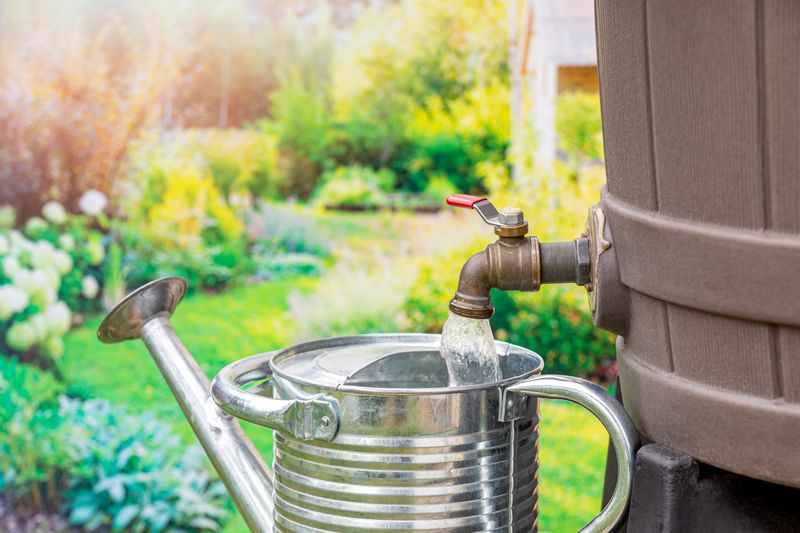
Setting up the barrel correctly is the beginning of the job, not the end of it. Gutters and the inlet screen need cleaning whenever debris builds up, which in a yard with mature trees can happen after every significant windstorm or heavy rain.
A clogged inlet slows or stops collection; a clogged overflow line turns the barrel into a dam that can direct water toward the foundation. Check both at the start of the season and after any storm that drops more than an inch.
NC DEQ’s water conservation guidance treats regular maintenance as an ongoing responsibility, not a one-time setup task.
The barrel’s water level is the most direct indicator of whether the system can keep up with demand. Check it every two to three days during hot, dry stretches, and more often when temperatures climb above 90 degrees or wind picks up.
NC State’s Rainscaping Series emphasizes using stored water before the next storm so the barrel has room to collect new rainfall rather than overflowing unused. A barrel that stays full and untapped becomes stagnant and loses its value as a water-conservation tool.
Penn State Extension’s rain barrel resource echoes this, noting that regular use is part of responsible barrel management.
Inspect the emitters, fittings, and tubing runs at least once a month. Algae and sediment can accumulate inside the barrel over a long summer, and small particles can block low-flow emitters with almost no visible warning.
Watch the plants directly: wilting, leaf curl, or dry soil in the morning are signs that a pot is not getting enough water regardless of what the timer or emitter setting suggests. When the barrel runs dry and no rain is forecast, switch to the hose without hesitation.
Penn State’s rain barrel information guide also advises following the manufacturer’s instructions for draining, disconnecting, or winterizing the barrel and all connected hardware before freezing temperatures arrive, since ice can crack barrels, split fittings, and damage tubing in a single hard freeze.
Use the barrel as a monitored supplement
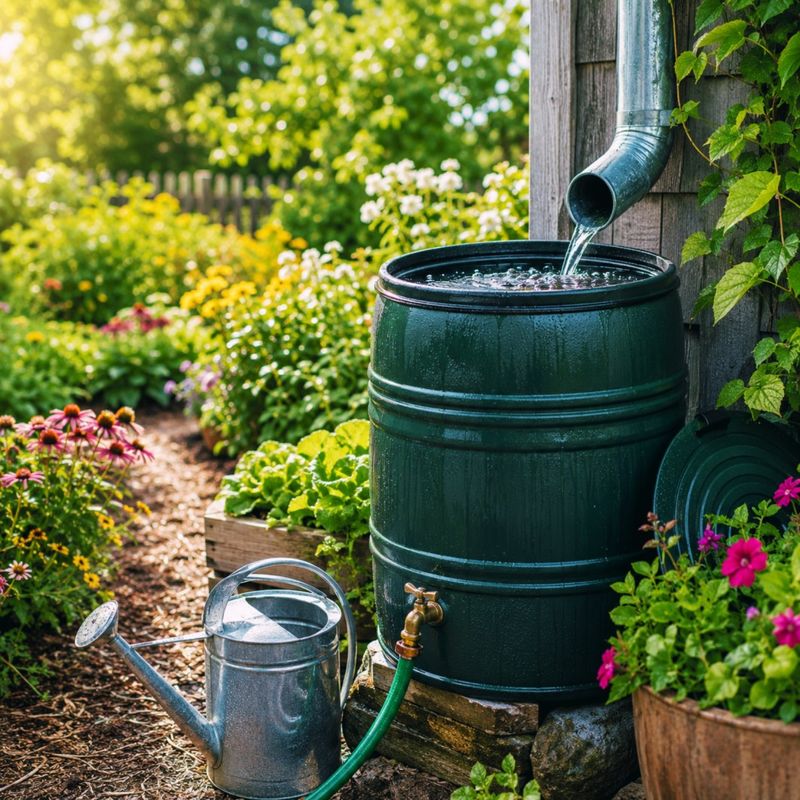
A screened, properly elevated barrel positioned close to a small group of ornamental containers can meaningfully reduce tap-water use and deliver low-flow irrigation after rain when the hardware, plant grouping, and overflow design fit the site. NC State’s food garden design guidance supports gravity-fed barrel systems for modest residential irrigation when placement and pressure are matched to compatible hardware.
The key phrase is “when conditions align.”
Getting there requires a safe, level stand rated for more than 450 pounds, a debris screen and secure lid, tested emitter output to every container, a correctly routed overflow line, and a commitment to checking the system regularly throughout the season. NC DEQ frames rain barrels as a supplemental residential tool, and that framing is the right one to carry into every watering decision you make with this setup.
One barrel cannot guarantee that every container stays watered through a full North Carolina summer. NC State’s container plant handbook is plain about the variability in daily watering demand, and a summer drought can empty a barrel faster than any emitter schedule anticipates.
The barrel earns its place on the patio not by eliminating the hose, but by making every gallon of rain count before you ever reach for it.