
If Your Tomatoes Suddenly Stop Setting Fruit, Here’s The Silent Signal Quietly Shutting Them Down
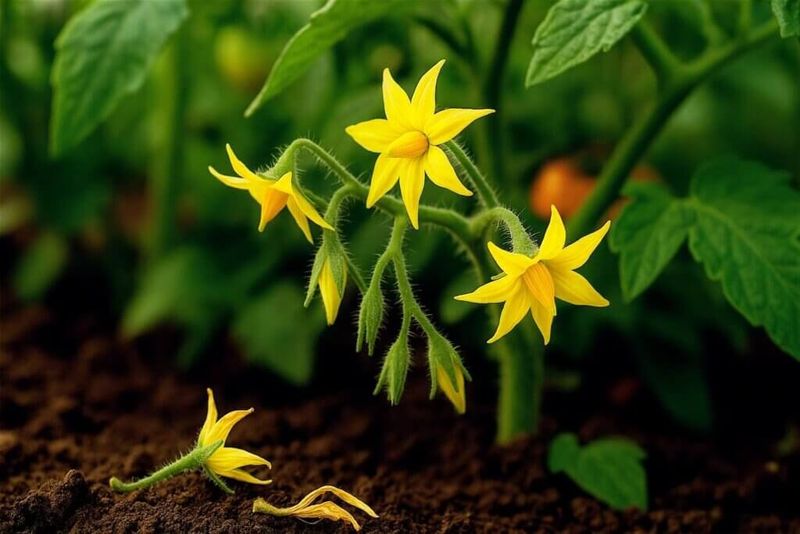
You walk out to check your tomato plants, see plenty of flowers, and expect a big harvest coming soon. Then the flowers start falling off without turning into tomatoes, and you’re left wondering what went wrong.
That frustrating pause in fruit production is called blossom drop, and it happens more often than most gardeners realize. Understanding what triggers it can help you respond with the right steps instead of reaching for the wrong fix.
Start with the flower, not the missing tomato
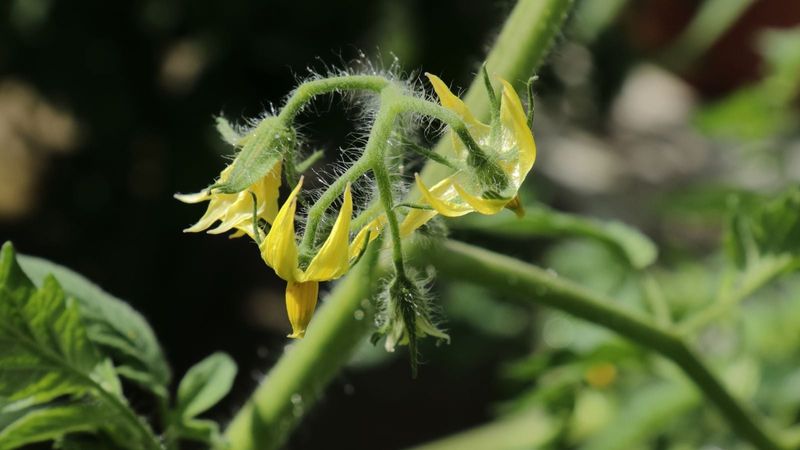
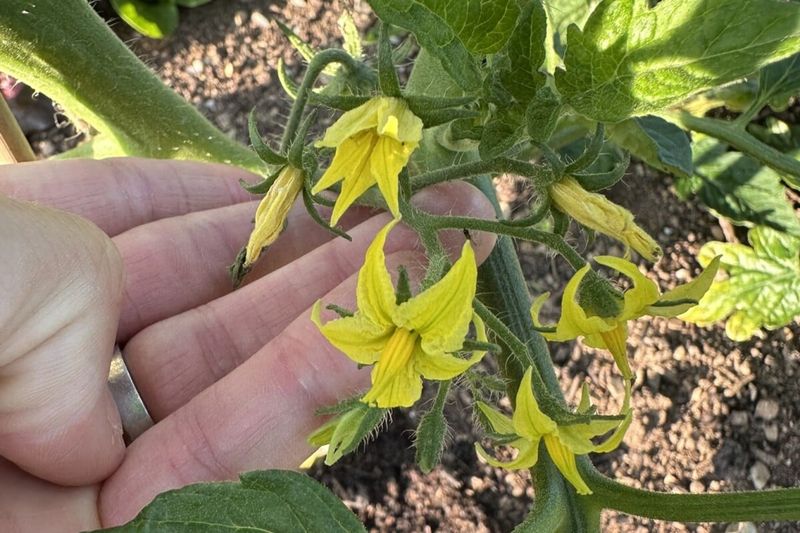
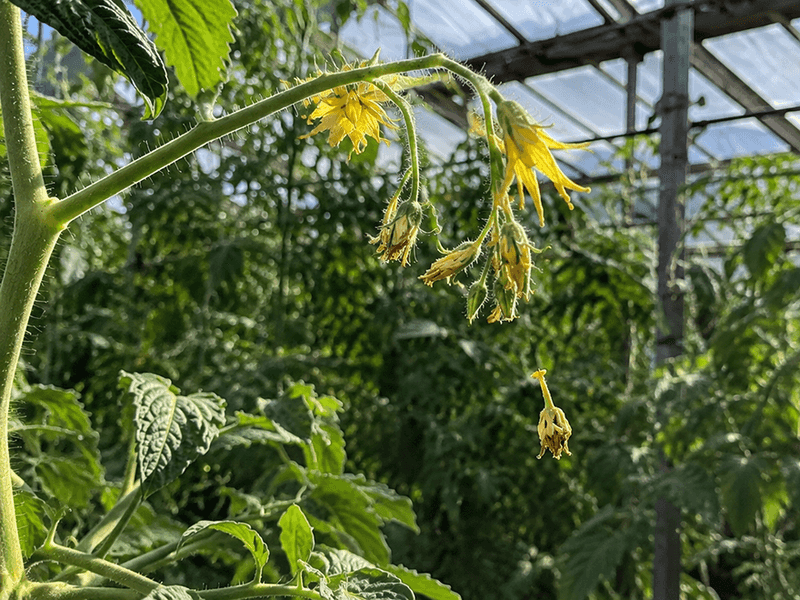
Blossom drop announces itself quietly. You notice fewer tomatoes forming even though the plant looks full and healthy, and when you look closely at the flower clusters, you find blooms that have dried out, turned brown or brittle, and fallen away before any fruit had a chance to develop.
Sometimes the stem attaching the flower to the plant, called the pedicel, shows a bit of yellowing before the flower lets go.
That yellowing pedicel gets a lot of attention from worried gardeners, but it is worth knowing upfront that a yellowing stem does not, by itself, tell you why the flower dropped. It is a commonly observed symptom that can accompany heat-related flower abortion, but it can show up alongside other causes too.
University of Minnesota Extension research on heat and vegetable crops describes this kind of flower failure as a stress response, not a single-cause event. Inspecting several blossoms across the plant gives you a better picture than focusing on one dropped flower.
When you check the flowers, the key question is whether failure is happening before any tomato forms at all. Flowers that dry up, go brittle, and fall away with nothing behind them are experiencing blossom drop.
Compare what you see with recent weather patterns, your watering routine, and the overall condition of the plant before drawing any conclusions.
Blossom drop is also different from problems that show up on tomatoes that have already started to grow. A dark, sunken, leathery patch on the bottom of a developing fruit is a separate condition called blossom-end rot, and it needs a different response entirely.
Sorting out which problem you are actually looking at is the right starting point, because the two conditions do not share the same cause or the same solution.
How sustained heat interrupts tomato fruit set
Tomato plants are remarkably productive under the right conditions, but their reproductive process is more fragile than their leafy growth suggests. Pollen development, pollen release, and fertilization all need to happen within a narrow window during flowering, and sustained heat can disrupt each of those steps in sequence.
When daytime temperatures stay roughly above 90 to 95 degrees Fahrenheit for several consecutive days, pollen quality can decline sharply. Warm nights compound the problem.
University of Maryland Extension guidance on poor tomato fruit set identifies nighttime temperatures that remain above approximately 70 to 75 degrees Fahrenheit as a significant risk factor, because the plant does not get the cooler rest period it needs to support normal reproduction. On the other end of the scale, cool nights below roughly 55 to 60 degrees Fahrenheit can also prevent pollen from developing properly, so heat is not the only temperature-related threat.
High relative humidity during the hours when pollen is being shed adds another layer of difficulty. When humidity climbs above about 80 percent, pollen can clump or stick inside the flower rather than moving freely to reach the stigma.
The result is fertilization failure even when the plant looks perfectly healthy from the outside. Penn State Extension’s overview of heat stress in tomatoes explains that heat can also shift plant hormone levels, including a rise in abscisic acid, which promotes flower abortion as a stress response.
None of these thresholds are universal cutoffs. Cultivar, wind exposure, plant water status, duration of heat exposure, and whether plants are growing outdoors or in a sheltered space all affect how much stress the plant can handle before flowers begin to abort.
A single hot afternoon is far less likely to cause widespread blossom drop than a week of days with highs above 90 degrees and nights that stay warm. A vigorous, green plant that loses flowers during a heat wave has not permanently shut down; it is responding to conditions that may improve.
Check the other causes before blaming the weather
Heat gets most of the blame for blossom drop, and often that blame is deserved during a midsummer pause. But before settling on the weather as the explanation, running through a short checklist of other possible contributors can save you from misreading the situation and responding the wrong way.
University of Missouri Extension’s frequently asked vegetable questions lists several non-heat causes of poor fruit set that are easy to overlook. Cool nights below about 55 to 60 degrees Fahrenheit can interfere with pollen development just as warm nights can.
High humidity during pollen shed, as noted earlier, can prevent normal release. Drought or uneven watering puts the plant under a different kind of stress that can also trigger flower abortion.
Too little direct sunlight, especially if a plant has been shaded out by neighboring growth, can limit the plant’s ability to support reproduction.
Excessive wind can physically dislodge flowers before they complete pollination. An oversupply of nitrogen from recent fertilizer applications can push the plant toward leafy growth at the expense of flowering and fruiting.
Herbicide drift from nearby lawn treatments or neighboring properties can cause distorted growth and flower failure that looks similar to environmental stress but has a different origin entirely.
Flower-feeding insects deserve a look as well. Thrips, which are tiny and easy to miss, can damage flowers directly and reduce fruit set without leaving obvious signs on the leaves.
If you notice unusual flower damage, stippling, or distorted growth alongside the blossom drop, inspect the flowers closely for insect activity.
A sudden pause during a stretch of sustained high temperatures supports an environmental-stress explanation. Unusual flower distortion, broader plant symptoms, or damage patterns that don’t match the weather point elsewhere.
A thermometer reading alone, without considering the full picture of recent conditions and plant appearance, is not enough to confirm what caused your flowers to drop.
Stabilize moisture at the roots
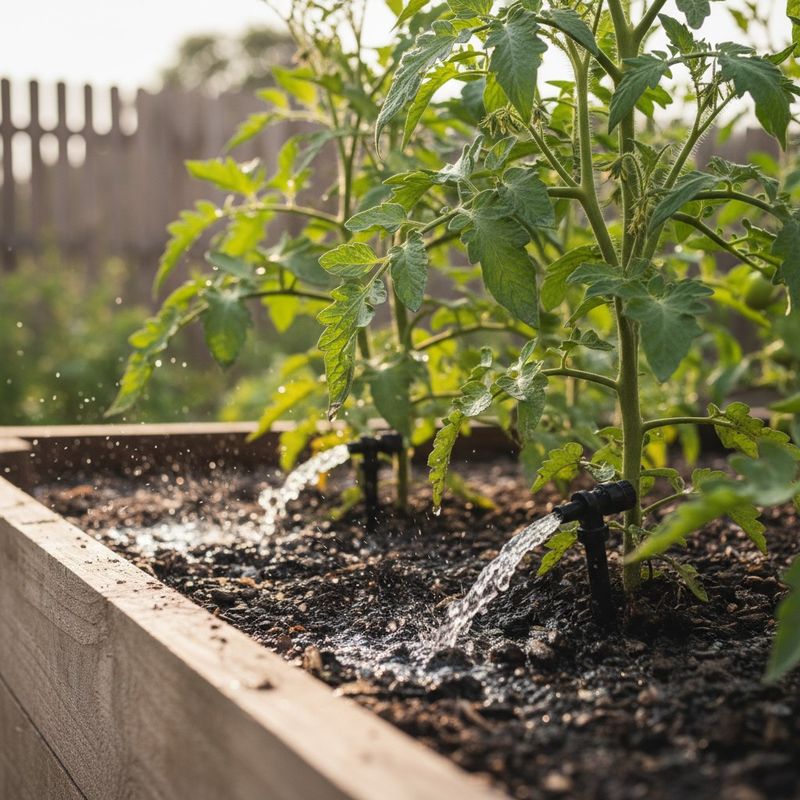
Once you have identified blossom drop and considered the likely causes, the most immediate practical step is making sure the root zone has steady, consistent moisture. Water stress on its own can trigger flower abortion, and it also amplifies the effects of heat, making a bad situation worse.
Getting watering right during flowering and early fruit development is one of the most protective things a home gardener can do.
Deep watering into the root zone is more effective than frequent, shallow sprinkling. The University of Georgia Cooperative Extension’s commercial tomato production handbook emphasizes that consistent soil moisture is especially critical during flowering, fruit set, and the early stages of fruit development.
Rather than watering on a fixed schedule, check moisture a few inches below the surface. If the soil is dry at that depth, the plant needs water; if it is still moist, hold off and check again the next day.
Soil type matters for how often you water. Sandy soils drain quickly and may need more frequent attention, while heavier clay soils hold moisture longer but can become compacted and waterlogged if overwatered.
Adjusting to your specific soil keeps the root zone in the range tomatoes prefer rather than swinging between wet and dry.
A 2 to 3 inch layer of mulch applied around the base of the plant, kept a few inches away from the stem itself, can significantly reduce evaporation, moderate soil temperature, and buffer the moisture swings that stress plants during hot weather. University of Arizona Cooperative Extension guidance on growing tomatoes supports drip irrigation or soaker hoses as practical tools for delivering water directly to the root zone without wetting the foliage.
Keeping leaves dry is a reasonable general habit in home gardens because wet foliage and water splashing onto leaves can create conditions that favor fungal disease, which adds a second problem on top of an already stressed plant.
Protect new flowers from additional heat
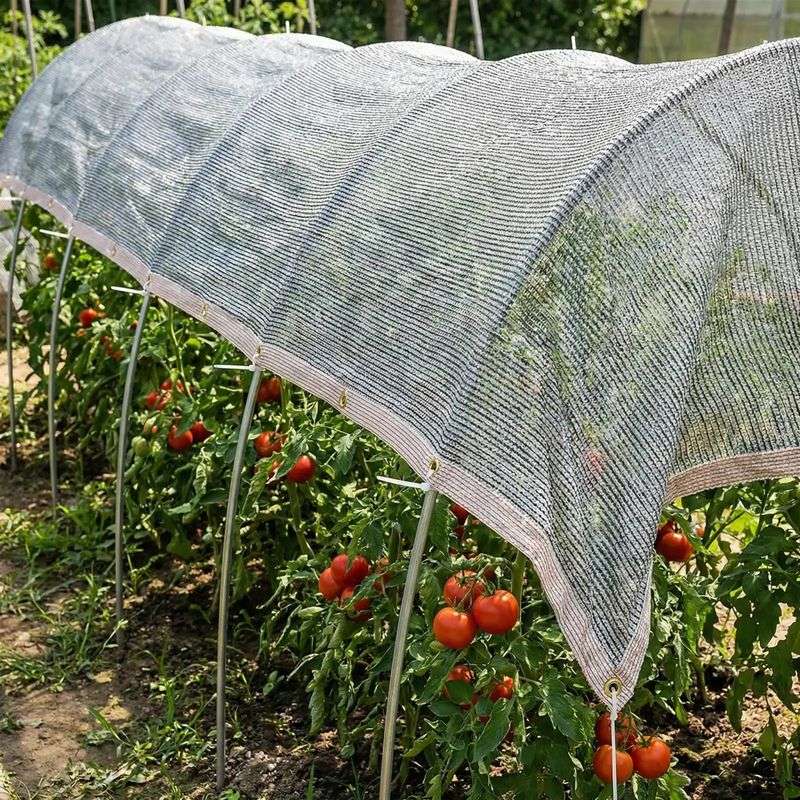
Stabilizing water is the first line of defense, but protecting flowers from additional heat exposure gives new blossoms a better chance of completing pollination before conditions disrupt the process again. Several practical approaches can reduce the heat load on your plants without requiring major changes to the garden.
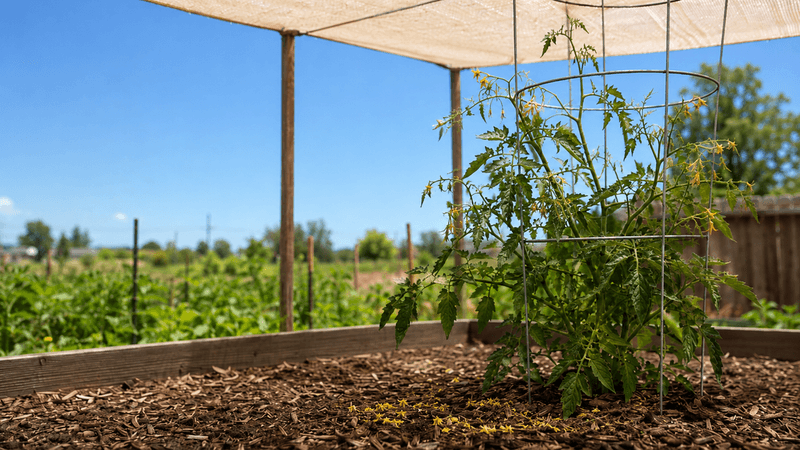
Temporary afternoon shade is one of the most accessible options. A shade cloth draped over a simple frame or stakes during the hottest hours of the day can meaningfully lower the temperature around the plant.
Arizona Cooperative Extension’s tomato growing guide suggests roughly 20 to 40 percent shade cloth for hot conditions, while noting that the right level depends on local climate and sun intensity. The key word is partial.
Dense shade that blocks most direct light will limit the plant’s ability to produce the energy it needs for flowering and fruit development, so the goal is to take the edge off afternoon heat without plunging the plant into shadow.
Plants with a naturally sheltered afternoon exposure, such as those positioned near a fence or structure that blocks late-day sun while still receiving full morning light, often fare better during heat waves than plants in full, unobstructed sun all day.
Pruning deserves a specific caution here. During a heat wave, removing large amounts of healthy foliage can backfire.
Arizona Cooperative Extension’s tomato planting and harvest guidance warns that leaves play an important role in protecting developing fruit from excessive sun and heat. Stripping the canopy to force new growth or encourage airflow during a hot stretch can expose fruit to sunscald, adding a new problem while the plant is already under stress.
All of these measures work forward, not backward. Shade cloth and canopy protection create better conditions for new flowers that are still forming.
Blossoms that have already dropped cannot be revived, and trying to compensate by aggressively pruning or repositioning the plant mid-season can do more harm than good.
Use gentle vibration only when pollen is available
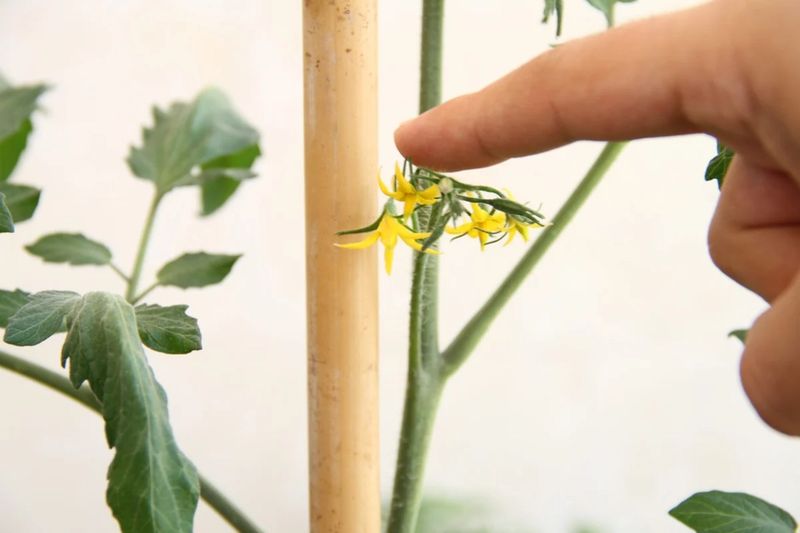
A common worry among gardeners who notice blossom drop is that their flowers are not getting pollinated because there are not enough bees around. For most outdoor tomato plants, that concern misses the actual mechanism.
Tomato flowers contain both male and female parts within the same flower, making them largely self-fertile. Wind or natural vibration typically moves pollen within the flower without any help from pollinators.
USDA Agricultural Research Service pollination research confirms that tomatoes generally do not depend on bees for ordinary outdoor fruit set the way some other crops do. Insects and mechanical vibration can contribute to pollen movement, but a garden without visible bee activity is not automatically a garden headed for blossom drop.
Where gentle vibration can genuinely help is in calm, sheltered conditions where wind is not doing its usual job. Greenhouses and high tunnels are the clearest examples, but a plant tucked against a wall or in a very still corner of a yard may also benefit.
In those settings, lightly tapping the flower clusters or the support cage with a finger or pencil during midday, when pollen is most likely to be shed, can help release pollen that is present but not moving.
University of Maryland Extension’s work on vegetable pollination underscores an important limit: vibration can only release pollen that has successfully developed and remains viable. When sustained heat has damaged pollen quality or prevented normal development, tapping flowers will not restore what is not there.
Thinking of manual vibration as a supplement for calm conditions rather than a remedy for heat stress keeps expectations realistic and prevents effort from being directed at a problem it cannot solve.
Avoid rescue treatments that target the wrong problem
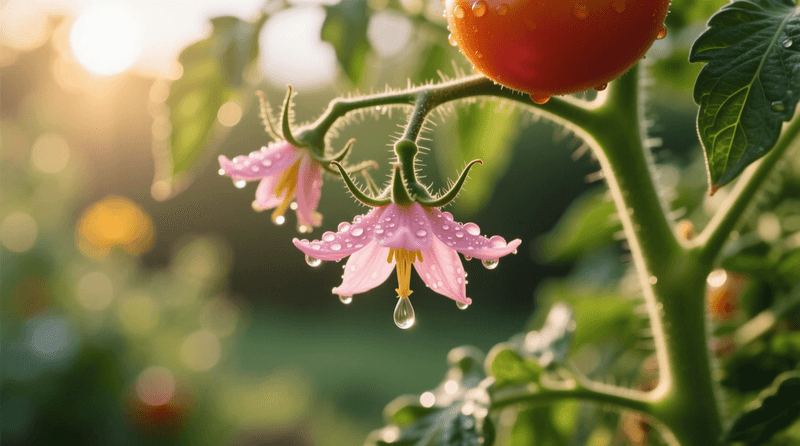
When tomatoes stop setting fruit, the temptation to reach for a product is understandable. Adding calcium, boosting phosphorus, applying a blossom-set spray, or cutting back the plant can all feel like decisive action.
Most of the time, though, those responses are aimed at the wrong problem and can make things harder on a plant that is already stressed.
Blossom drop does not signal a calcium shortage. Calcium-related advice is more relevant to a separate condition called blossom-end rot, which is a dark, sunken lesion that forms on the bottom of a tomato that has already begun to grow.
Illinois Extension’s tomato guidance describes blossom-end rot as a calcium-uptake or calcium-distribution problem within a developing fruit, commonly promoted by inconsistent water supply rather than by a simple lack of calcium in the soil. Adding calcium to address blossom drop, a pre-fruit failure with different causes, does not address what is actually happening.
Phosphorus and other fertilizers carry a similar caution. Penn State Extension’s seedling-to-fruit tomato guide notes that excess nitrogen can push the plant toward lush foliage while delaying or reducing flowering and fruit set.
Fertilizer decisions are most defensible when based on a soil or tissue test, not on the assumption that poor fruit set automatically means a nutrient deficiency. Adding nutrients without evidence of a shortage can be unnecessary or counterproductive.
Blossom-set hormone sprays deserve careful consideration rather than reflexive use. Oklahoma State University Extension’s column on tomato blossom drop explains that these products may offer limited help in some cool-weather situations where fruit set stalls, but they generally perform poorly during high-heat conditions.
Any product used on edible crops must carry a label specifically approving that use, and the EPA’s labeling requirements make clear that the current label governs dosage, timing, and application precautions. Following the label is not optional.
Heavy pruning during a heat wave carries its own documented risk. Removing large amounts of foliage exposes developing fruit to direct sun and additional heat, which can cause sunscald.
Arizona Cooperative Extension’s harvest guide supports keeping the canopy intact during hot stretches so the plant’s own leaves can buffer the fruit from the worst of the heat.
Wait for a better flowering window
After addressing moisture, shade, and canopy protection, the most productive thing left to do is wait. A healthy tomato plant that has been under heat stress is not finished for the season.
University of Arizona Extension seasonal garden guidance confirms that plants commonly resume setting new fruit after temperatures return to a more manageable range. The flowers that already dropped cannot be recovered, but the plant will generate new flower clusters as conditions improve.
Keeping up with consistent root-zone watering and maintaining whatever shade protection you have in place during the wait gives new blossoms the best possible start. Resist the urge to intervene aggressively while the plant is still under stress.
Patience during a heat wave is genuinely one of the more useful strategies available.
If repeated heat waves are a regular feature of your summers, it may be worth planning ahead for next season. University of Maryland Extension identifies several cultivars with better heat tolerance, including Solar Set, Solar Fire, Sunmaster, Florida 91, Sunchaser, Arkansas Traveler, Homestead 24, and Hazelfield Farm.
No cultivar eliminates the risk entirely, and regional availability varies, but starting with a variety selected for your climate gives you a meaningful advantage before the first flower opens.
The practical action plan comes down to a short list: inspect your flowers and confirm blossom drop is what you are seeing, review the sustained weather patterns of the past week or two, stabilize soil moisture with deep watering and mulch, protect the canopy from aggressive pruning, and give the plant time to reach a better flowering window. A tomato plant that drops its flowers during a heat wave is not failing permanently; it is waiting, just like you are, for conditions to shift.