
The One Thing North Carolina Gardeners Do In Fall After Japanese Beetles Or They Come Back Worse Next Summer
Japanese beetles can strip leaves from roses, grapes, and fruit trees all summer long, and when the adults finally disappear in late summer, it feels like the problem is over. But underneath your lawn, the next chapter may already be underway.
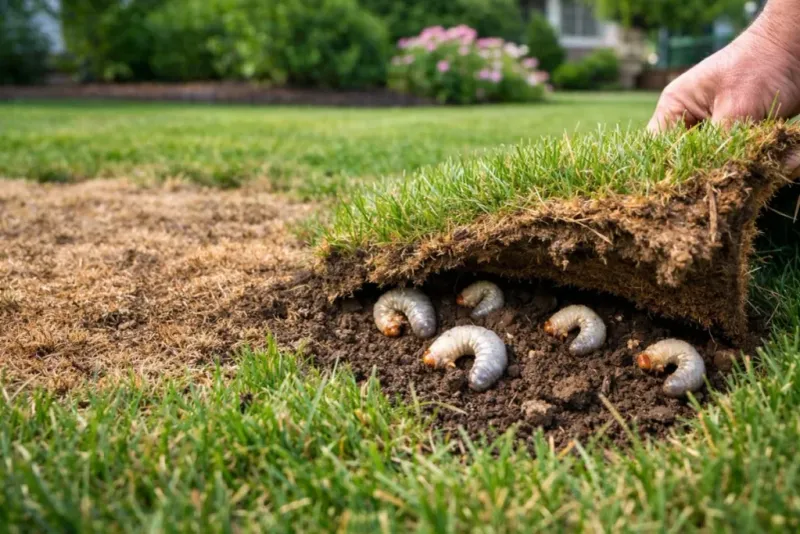
Female beetles lay eggs in the soil, and the grubs that hatch from those eggs feed on grass roots before settling in for winter. Knowing what is actually happening in your turf right now gives you the best shot at protecting your lawn without wasting time or money on treatments that may not be needed.
The beetle’s next stage remains underground
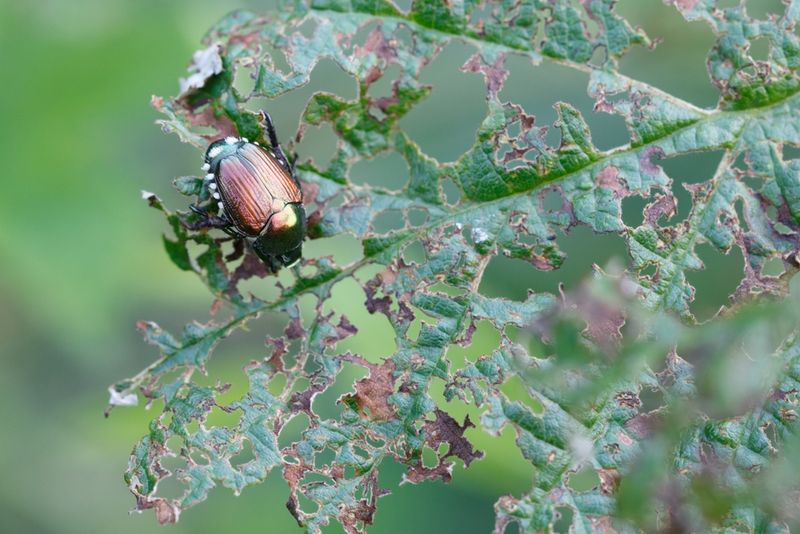
Adult Japanese beetles are hard to miss when they are active, clustering on ornamental plants and skeletonizing leaves through summer. What is easier to overlook is what happens after they disappear.
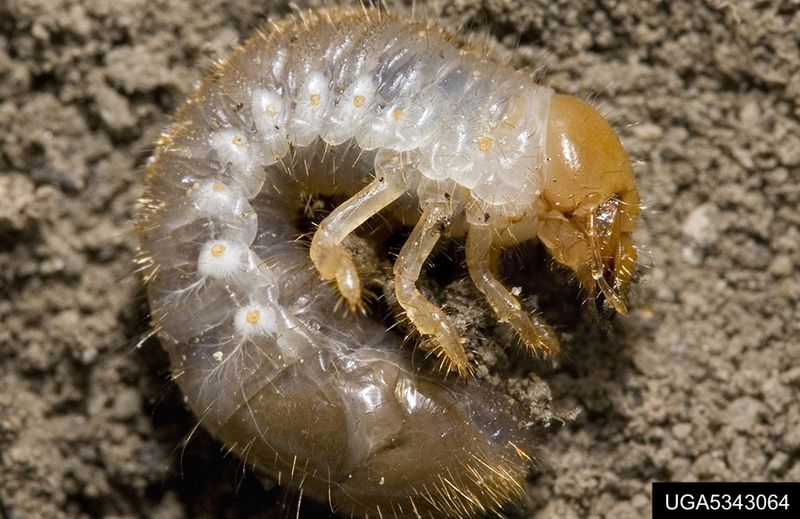
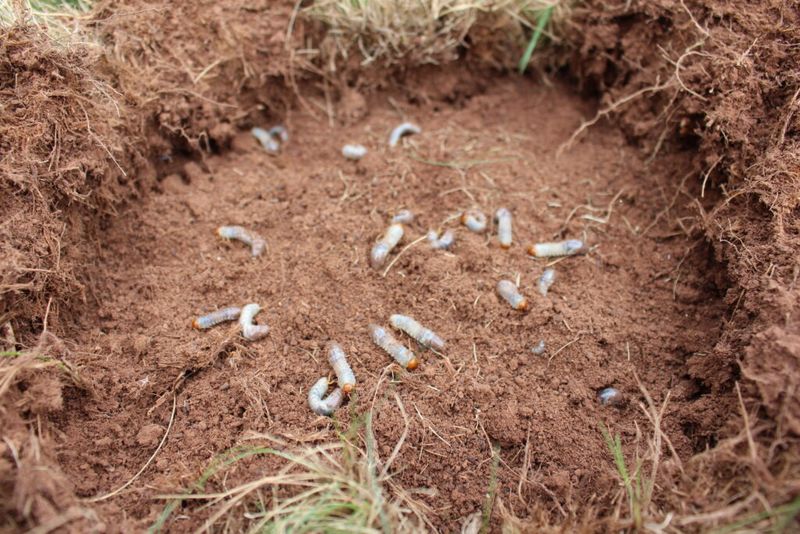
Female beetles burrow roughly two to four inches into the soil during summer to lay their eggs, and those eggs hatch in approximately eight to fourteen days. The resulting grubs, which are pale, C-shaped larvae, begin feeding on grass roots almost immediately.
According to NC State Extension’s Japanese beetle factsheet, this pest typically completes one generation per year. That single annual cycle means the grubs present in your lawn right now are the same ones that will emerge as adults next summer, assuming they survive the winter.
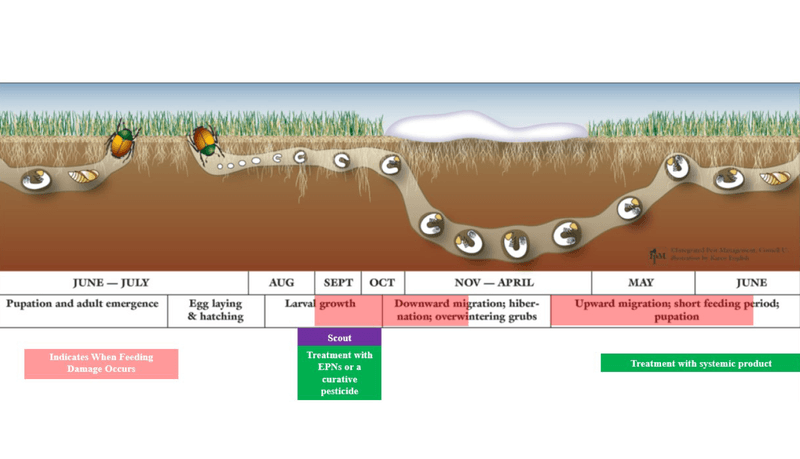
As soil temperatures drop in fall, grubs move deeper into the ground, stop feeding, and go dormant until spring warmth pulls them back toward the surface.
The USDA’s program manual notes that grub survival depends heavily on soil moisture and temperature during egg-laying and early larval development. A dry summer can reduce egg and young-grub survival on its own.
That variability matters because it means a yard that hosted a lot of adult beetles in July does not automatically contain a damaging grub population by September. Checking the lawn rather than assuming the worst is the only way to know what you are actually dealing with.
Understanding this underground timeline is what makes fall a useful window for lawn assessment. The grubs are still near the surface and actively feeding before the soil cools, which is exactly when a careful inspection can tell you whether your turf is at risk and whether any response is warranted.
Start with the lawn, not the flowers
Seeing beetles on your roses or grape vines is alarming, but that sight alone does not tell you much about what is happening underground. Adult Japanese beetles are strong fliers and can travel significant distances from wherever they emerged.
The beetles feeding on your ornamental plants may have hatched from a neighbor’s lawn, a nearby roadside, or a pasture several properties away.
As Iowa State University Extension explains, adult beetles and the grubs that produced them often use completely different host areas. A yard full of beetle damage on flowers and shrubs is not reliable evidence of a grub problem in that same yard’s turf.
Treating your lawn based only on what you see on your ornamentals is a guess, not a diagnosis.
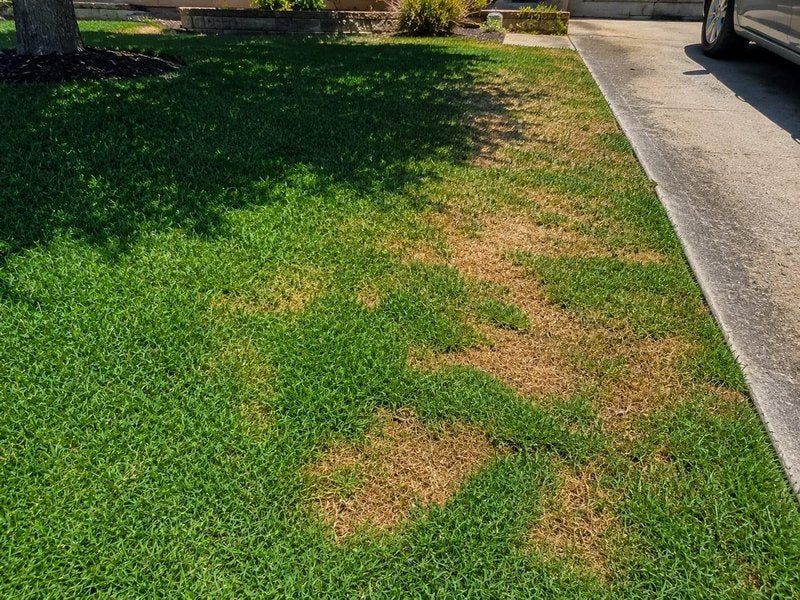
Turf symptoms also deserve careful interpretation before any action is taken. Yellowing, thinning, browning, or spongy grass that lifts away from the soil can result from grub feeding, but the same symptoms appear with drought stress, fungal disease, chinch bugs, other soil insects, and even animal digging.
Skunks and armadillos, for example, will dig up turf when they detect grubs, and their digging can cause considerable damage on its own.
NC State’s turf arthropod guide recommends inspecting damaged turf directly rather than drawing conclusions from what is happening on nearby plants. The lawn is where the actual evidence lives.
Pulling back a section of turf and looking at the soil and roots gives you real information that no amount of beetle-watching on your flower beds can provide. That inspection is where a useful fall response actually begins.
Sample several sections of turf

Grubs do not spread themselves evenly across a lawn. They tend to concentrate in patches, which means a single sample pulled from one spot can easily miss a problem or make a minor one look worse than it is.
Taking multiple samples from different areas, especially near the edges of any yellowing or thinning, gives a much more accurate picture of what is actually happening in the soil.
The scouting method recommended in NC State’s turfgrass pest management manual is straightforward. Use a flat spade or a large knife to cut three sides of a roughly one-square-foot section of turf, then fold the flap back like a hinged door.
Examine the upper three to four inches of soil and the underside of the root mat carefully. Count every grub you find in that section, note their size and appearance, and then set the sod back in place and water it in so the roots can re-establish.
Choosing where to sample matters almost as much as how many samples you take. Focus on spots where the turf already looks stressed, thin, or off-color, and also check a few areas that look healthy for comparison.
If the lawn has had skunks or other animals digging at it recently, sample near those disturbance areas too, since digging animals are often tracking grub concentrations.
NC State’s organic lawn care and IPM guidance reinforces the same point: because grubs cluster unevenly, several samples spread across the lawn are needed before you can draw any reasonable conclusion about the overall population. Three to five samples across different zones is a reasonable starting point for a typical residential yard.
Record your counts from each sample separately rather than averaging them right away, since a high count in one area and a low count in another tells a different story than a uniform moderate count across the whole lawn.
Use the count as one part of the treatment decision
Once you have counts from multiple samples, the numbers become a starting point for a decision, not an automatic trigger for treatment. Reference thresholds exist to help frame that decision, but none of them apply universally to every lawn in every condition.
An older NC State turfgrass pest management manual puts an average threshold of roughly five grubs per square foot as a point where damage becomes more likely in managed turf, while USDA’s Japanese beetle handbook uses more than ten grubs per square foot as a general treatment indicator. The gap between those two figures reflects how much site conditions can shift the calculus.
Grub species identification belongs in that calculus too. North Carolina lawns host several white-grub species, including masked chafers, green June beetles, May and June beetles, and Asiatic garden beetles alongside Japanese beetles.
NC State’s white grubs in turf publication notes that control timing and product effectiveness differ among these species, so treating every white grub as a Japanese beetle can lead to a mismatched response. If you are unsure which species you have, your local NC Cooperative Extension office can help with identification.
Beyond species and count, several other factors influence whether treatment makes sense. Drought-stressed turf is more vulnerable at a lower grub density than healthy, well-watered grass.
A high-value lawn that would be expensive to replace justifies a lower action threshold than a low-traffic area you plan to reseed anyway. Active wildlife digging, such as skunks tearing up turf nightly, signals a grub concentration worth addressing even if your sample counts land in a gray zone.
The point of all this context is to avoid the reflex of treating every grub found. Low populations in healthy turf often cause no meaningful damage and do not warrant a pesticide application.
A threshold-based, species-informed decision protects your lawn without creating unnecessary risk to the soil, water, or yard wildlife you care about.
Treat only while the grubs remain reachable
Timing a grub treatment correctly matters as much as deciding whether to treat at all. Grub-control products fall into two broad categories: preventive and curative.
Preventive products are designed to be applied before or around the time eggs are laid and hatch, typically in summer, so they are already in the soil when young grubs begin feeding near the surface. By fall, that window has usually closed.
Curative products work differently. According to NC State’s arthropod pests of North Carolina turf guide, curative treatments can be effective in late summer or early fall when grubs are still small, near the surface, and actively feeding.
Once soil temperatures drop and grubs move deeper to overwinter, most curative products become significantly less effective or stop working altogether. A treatment applied too late is money and product wasted, with potential environmental exposure added for no benefit.
Regional variation across North Carolina means there is no single calendar date that applies everywhere. Grubs in the Coastal Plain may remain near the surface and feeding later into fall than grubs in mountain counties, where soil cools earlier.
Piedmont yards fall somewhere in between. University of Minnesota Extension’s Japanese beetle guide reinforces the same timing principle: effectiveness depends on grub size and activity, not the calendar month.
Use soil temperature and observed grub behavior from your samples to judge whether the window is still open in your specific yard.
If your samples show small, actively feeding grubs and your counts and site conditions justify treatment, act promptly and follow the product label exactly. Waiting too long after confirming a problem is one of the more common reasons fall treatments underperform.
The right response at the right moment protects the turf; the same product applied two months too late mostly just creates runoff risk.
Protect the rest of the yard during treatment
Deciding to treat is only the first part of a responsible response. How you treat matters just as much for the health of the broader yard and its wildlife.
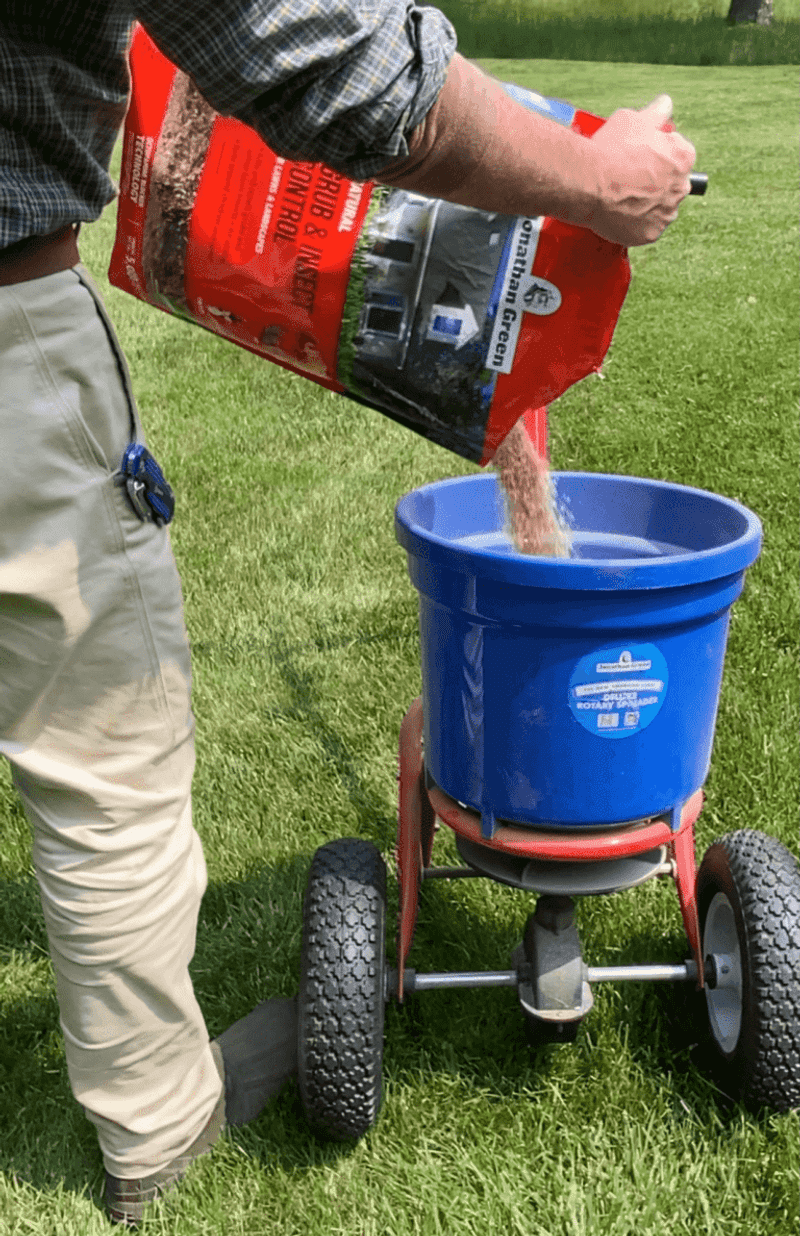
Start by confirming that any product you choose is labeled for the pest you identified and for the specific turf type in your yard. Labels are legal documents, and using a product in any way that contradicts the label is both ineffective and illegal.
Spot-treat the areas where your samples showed damaging populations rather than blanket-applying across the entire lawn. NC State’s water quality and home lawn care guide explains why this matters beyond just cost savings: pesticides applied to large areas of turf can move into stormwater, reach wells, and affect streams and other waterways, particularly on slopes or after heavy rain.
Treating only where the problem is confirmed keeps that risk proportionate.
Pollinator safety requires specific attention. The EPA’s pollinator protection guidance emphasizes checking product labels for bee precaution statements and avoiding applications to or near flowering plants when pollinators are active.
If your lawn has flowering weeds mixed in, mow before applying a granular product so blooms are removed and foraging bees are not exposed.
A few widely discussed alternatives deserve honest assessment. Japanese beetle traps are not a reliable population-control tool.
NC State’s Japanese beetle factsheet notes that traps can actually draw more adults toward the plants you are trying to protect, and they have little measurable effect on the grub population that follows. Milky spore, a naturally occurring bacterium sometimes sold as a long-term solution, has not shown consistent results in recent university research trials, so treating it as a guaranteed fix overstates what the evidence supports.
Beneficial nematodes can affect Japanese beetle grubs under ideal conditions, but they require the correct species, careful handling, adequate soil moisture, and protection from heat and ultraviolet light. Results vary widely.
Fall rototilling may reduce grub numbers in cultivated agricultural beds, but tearing up an established residential lawn to kill grubs causes more damage than a moderate grub population typically would. NC State’s pesticide use and safety guidance recommends checking for wildlife nests and avoiding sensitive areas before any application, a step that protects the box turtles, ground-nesting birds, and beneficial insects that share your yard.
A protected lawn cannot block incoming beetles
Protecting your turf from grub damage is a worthwhile goal, and a well-timed, threshold-based treatment can genuinely help preserve the health of your lawn. What it cannot do is guarantee that adult Japanese beetles will leave your ornamental plants alone next summer.
That distinction matters, and understanding it prevents disappointment and unnecessary repeat treatments.
Adult beetles are capable fliers. They can emerge from neighboring lawns, roadsides, field edges, pastures, and any number of untreated areas and travel to your yard to feed on the plants they prefer.
Iowa State University Extension states this directly: treating your lawn for grubs will protect the turf itself but will not prevent adult beetles from feeding on your landscape plants the following year. The USDA APHIS Japanese beetle resource similarly frames this as a regional management challenge that extends well beyond any single property.
That reality does not make fall inspection pointless. A healthy, well-rooted lawn is more resilient to whatever stress comes next season, whether that is grub feeding, drought, or foot traffic.
Knowing your grub population was low or absent last fall also helps you interpret what you see next summer with clearer eyes. If beetles return to your ornamentals in force but your turf looks fine, you have good reason to suspect they flew in rather than hatched from your soil.
The most useful habit to carry forward is annual monitoring rather than automatic treatment. Scout in late summer or early fall, count what you find, factor in turf condition and site context, and decide from there.
Some years will call for action; many will not. Consistent observation over time gives you a far more accurate picture of your yard’s actual beetle pressure than any single treatment ever could.
A lawn you understand is easier to protect than one you simply spray on a schedule.