
What North Carolina Voles Are Quietly Doing Under Your Mulch Beds Before You Ever See Them
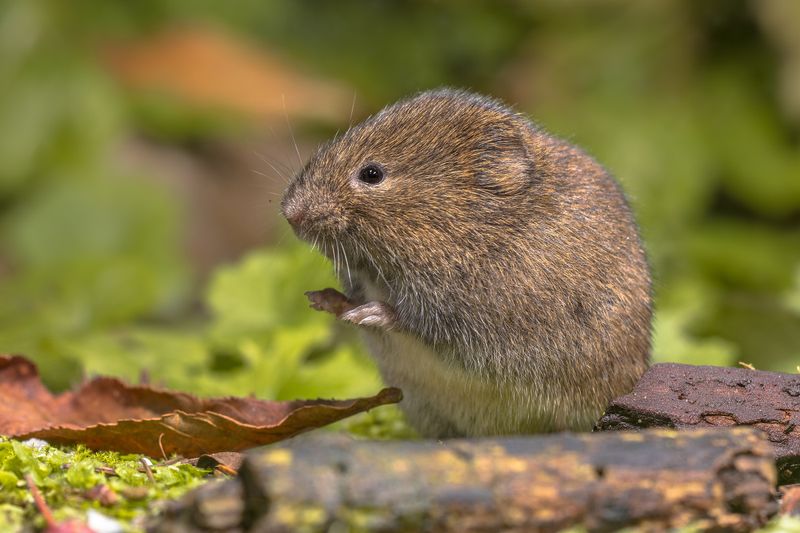
Something may be moving beneath your mulch beds right now, and you would never know it from the surface. Pine voles in North Carolina spend most of their lives underground, tunneling through soil and root zones before any visible damage appears.
Understanding what these small animals do out of sight gives you a real head start on protecting the trees, shrubs, and ornamentals you have worked hard to grow.
Pine voles may build a hidden road network beneath the bed
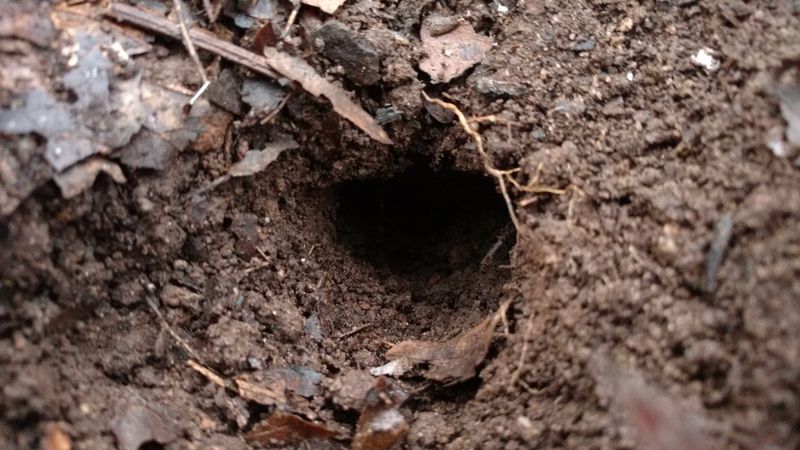
Beneath a tidy mulch bed, a pine vole may be moving through a network of tunnels that most homeowners will never see until a plant starts to fail. NC State Extension’s guidance on voles in turf identifies pine voles (Microtus pinetorum) and meadow voles (Microtus pennsylvanicus) as the two primary species damaging turf and ornamental plants in North Carolina, and the two behave very differently from each other.
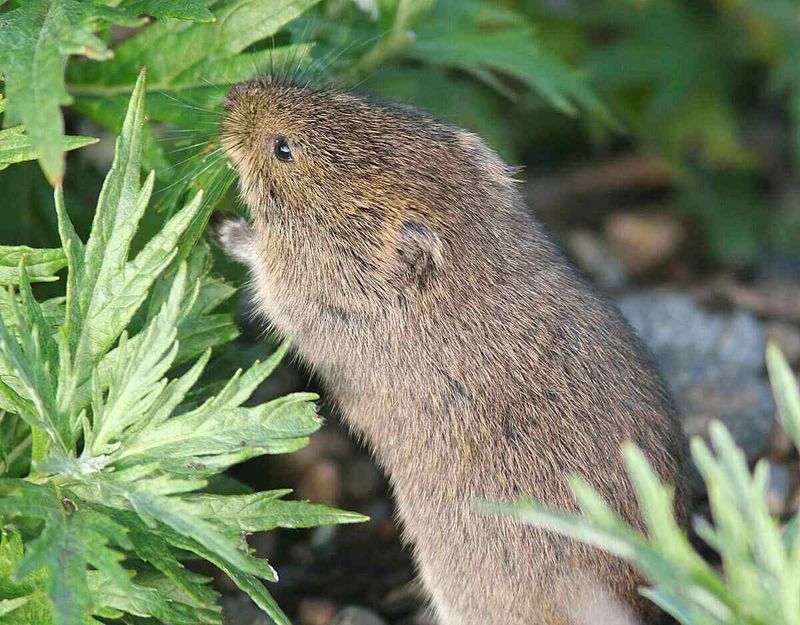
Pine voles are small, roughly three inches long, with tiny eyes and ears suited to a life mostly lived underground. They construct extensive burrow systems through soil, leaf litter, and the loose material beneath heavy mulch, traveling toward roots and plant crowns without surfacing.
Because their activity stays hidden, a homeowner may notice a shrub wilting or a young tree declining for weeks before any animal is spotted.
Meadow voles tell a different story. They are generally larger, with more visible eyes and ears, and they commonly feed and travel aboveground, leaving the flattened grass runways that gardeners sometimes notice running through lawns or along bed edges.
Meadow voles can also use underground tunnels, but their activity is more likely to leave surface evidence. The hidden-underground-tunneling picture fits pine voles far more precisely, so this article focuses on that species while noting where meadow vole behavior overlaps or differs.
Plant decline appearing before any animal sighting is one of the clearest signals that underground activity may be involved. A root system or crown can sustain significant damage before the plant shows stress, and by the time yellowing leaves or sudden wilting appears, the tunneling may have been underway for some time.
Knowing this helps homeowners look for the right clues rather than waiting for a vole to appear in the open.
When mulch becomes cover instead of decoration
Mulch earns its place in a North Carolina yard. Applied correctly, it holds soil moisture, moderates temperature swings, suppresses weeds, and protects roots from summer heat and winter cold.
The concern is not mulch itself but what happens when too much of it accumulates in the wrong places.
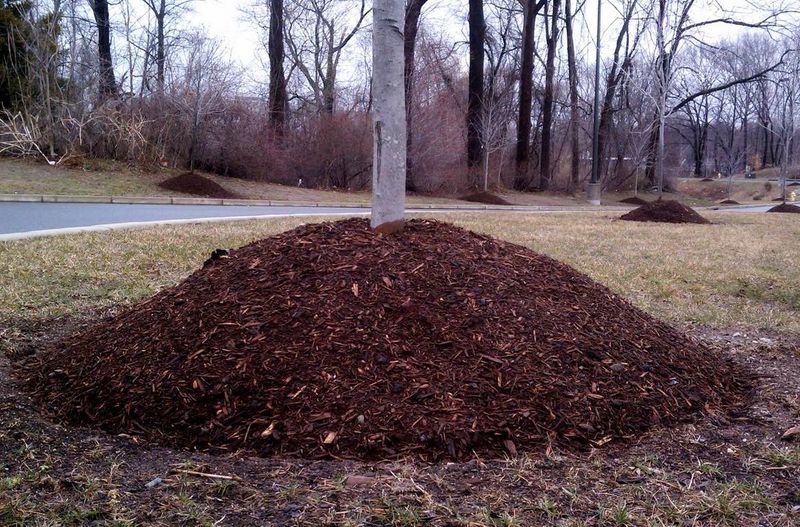
Excessive depth, dense ground cover, and mulch piled directly against trunks or crowns can transform a beneficial layer into a protected corridor. NC State’s Extension Gardener Handbook wildlife chapter notes that voles are drawn to areas with dense vegetative cover, and a thick, undisturbed mulch layer can provide exactly that kind of concealment.
Weeds, fallen leaves, and overgrown ground cover layered on top of mulch compound the problem by adding more material for small animals to move through unseen.
The path from the outer bed to a plant’s root crown becomes much shorter when mulch runs continuously from the bed edge to the trunk. NC State’s woody ornamentals guidance recommends keeping mulch at two to three inches around woody plants and pulling it clear of trunks and crowns entirely.
A bed that exceeds four inches of depth, or that contacts bark, creates a damp, sheltered zone that is far more hospitable to voles than a properly maintained layer.
Penn State Extension’s mulching guidance reinforces this by warning against “mulch volcanoes,” the habit of piling material higher and higher around a trunk rather than spreading it outward. Beyond the vole concern, deep mulch against bark keeps wood continuously moist and can contribute to decay.
Pulling mulch back to expose the root flare and redistributing the excess outward addresses both issues at once, without removing the mulch bed entirely.
The damage often appears before the culprit does
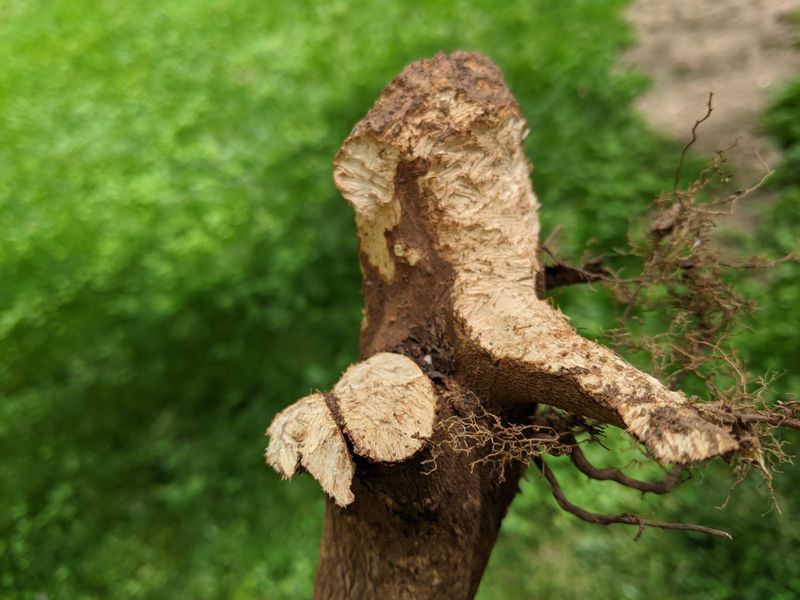
Girdled stems, gnawed root crowns, and suddenly weakened shrubs are often the first real clues that something has been working underground. By the time those signs appear, the animal responsible may have been active for weeks.
Knowing what to look for speeds up the diagnosis considerably.
NC State’s wildlife guidance and Penn State Extension’s vole resource both describe a cluster of signs worth checking near and beneath mulch. Shallow tunnels just below the surface, small burrow openings about the diameter of a golf ball, clipped vegetation near ground level, rice-grain-shaped droppings, and narrow irregular gnaw marks around stems at or below the soil line are all worth noting.
Injured roots and damaged crowns may only be visible once mulch is carefully pulled back.
The pattern of damage can help narrow down the species. Pine voles are more likely to injure roots and crowns underground, so the most telling signs often hide beneath the surface.
Meadow voles, by contrast, are more commonly linked to flattened grass runways, clipped stems above ground, and feeding visible at the surface. Both species can girdle woody stems, but the location of the gnawing, whether above or below the mulch line, offers a useful clue.
A single tunnel or one chewed stem is not enough to confirm vole activity. NC State’s voles-in-turf resource points out that other animals can produce similar signs, so a confident identification requires a combination of evidence: tunnel or runway structure, clipped vegetation, droppings, gnaw marks, and root or crown injury together.
One sign in isolation should prompt closer inspection, not immediate action.
What else could be moving under the mulch?
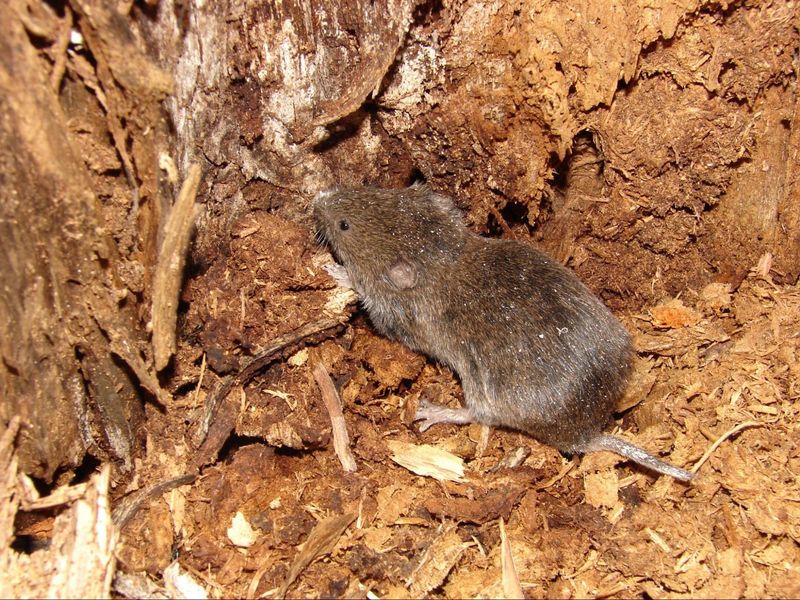
Before reaching for a trap or calling a pest control company, take a step back and confirm what animal is actually responsible. Several creatures common to North Carolina yards can create holes, tunnels, runways, or plant injuries that look similar at first glance.
Oregon State University Extension’s guide on identifying moles, voles, and gophers is a useful reference for sorting out these animals. Moles are often the first creature homeowners blame when tunnels appear, but moles primarily eat earthworms and other soil invertebrates rather than plant roots.
The tunnels and raised ridges moles leave behind can, however, provide ready-made pathways that voles later move through, which is one reason plant damage and mole-style tunneling sometimes appear in the same area.
Penn State Extension’s mole resource reinforces this distinction: if roots or crowns are being chewed, moles are almost certainly not the direct cause. Mice, rabbits, and pocket gophers can also produce gnaw marks, clipped stems, or burrowing activity that mimics vole damage.
Rabbits tend to leave clean, angled cuts on stems rather than the narrow, irregular gnawing more typical of voles. Mice create smaller burrow openings and are more likely to be found inside structures than actively tunneling through a landscape bed.
Mountain residents face an additional consideration. The southern rock vole occurs above approximately 3,800 feet in a few western North Carolina counties and is listed as a Species of Special Concern by the state, as noted in NC Wildlife Resources Commission vole guidance.
A homeowner in Avery, Mitchell, or Watauga County who is uncertain whether the animal in question is a common pine or meadow vole should seek species identification from NC Wildlife or a licensed Wildlife Control Agent before taking any lethal action. Misidentifying a protected species can have legal consequences, and the cautious step costs very little.
Inspect the soil line before disturbing the bed
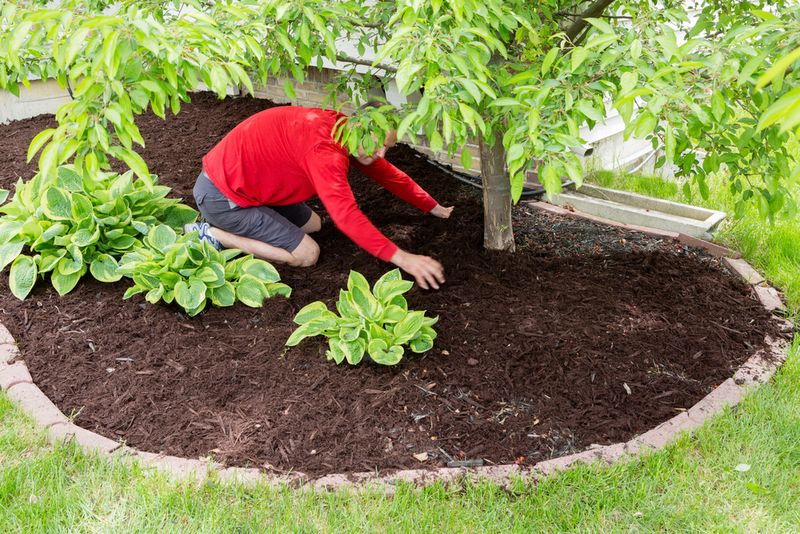
A careful look at the soil line around each vulnerable plant tells you far more than scanning the surface of the mulch from a standing position. Young trees, shrubs, fruit plants, and ornamentals are the most likely targets, and the most useful evidence is usually within a few inches of where the stem meets the ground.
Start by gently pulling mulch back from the base of each plant you want to check. Use your hands rather than a tool to avoid cutting roots or disturbing the crown.
Look for gnaw marks around the stem at or just below the soil line, any soft or sunken areas in the bark, signs of root disturbance, and the small burrow openings or droppings described in the previous section. Penn State Extension’s vole guidance recommends inspecting at the soil line specifically because that is where vole gnawing most often concentrates on woody plants.
NC State’s wildlife chapter advises checking for active damage before deciding on a management response, since a plant that was injured months ago and has since recovered calls for a different response than one being actively fed upon right now. If you find the root flare buried under what appears to be compacted soil rather than mulch, do not try to excavate it yourself with a shovel.
Penn State’s mulching guidance notes that a root flare buried in soil may signal a planting or grade problem, and that situation is better handled with help from a certified arborist than by a homeowner digging around an established root system.
Work through the bed methodically, checking each plant individually rather than making a broad judgment about the whole area. A single damaged plant in an otherwise healthy bed points toward a localized problem, while several plants showing similar injuries across a wide area suggests something more widespread that may need a different response.
Reset the bed to remove the easiest shelter
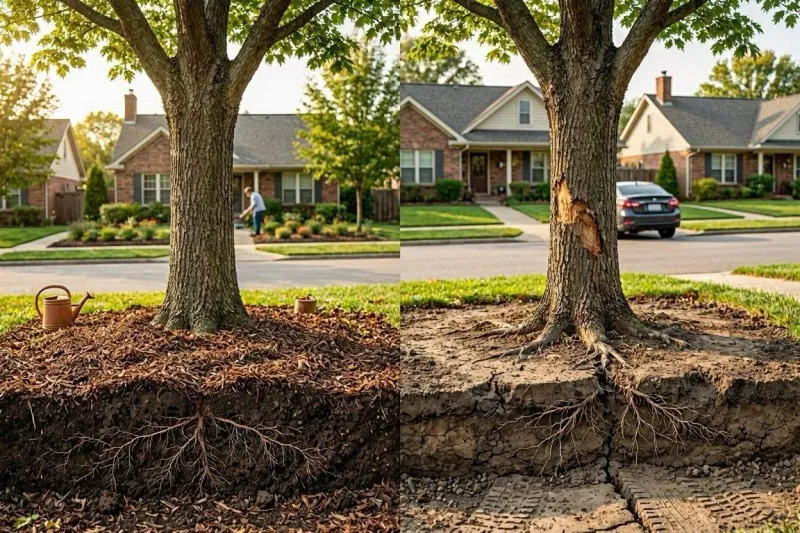
Fixing the habitat does not mean tearing out the mulch bed. Correcting depth, clearing cover from trunks, and tidying the surrounding area removes the conditions that make a bed attractive to voles while keeping all the benefits that proper mulch provides.
For perennial landscape beds, NC State’s planting guidance recommends about three to four inches of mulch and advises against exceeding four inches. Around woody ornamentals, NC State’s woody ornamentals chapter narrows that recommendation to two to three inches.
If your beds have crept past those depths over several seasons of topdressing, rake the excess outward toward the drip line rather than removing it entirely. Spreading material thinner over a larger area keeps roots protected without creating the dense, undisturbed layer that offers shelter.
Clearance around trunks matters as much as overall depth. NC State’s wildlife guidance recommends at least six inches of mulch-free clearance around woody plants as a general practice.
For a young or particularly vulnerable tree that has already shown signs of vole activity, that recommendation becomes more protective: pull mulch back a full foot from the trunk and keep that zone clear. The six-inch standard suits established, healthy plants; the one-foot ring is the right choice when a plant is at risk or actively being damaged.
Beyond the mulch itself, NC State’s voles-in-turf resource notes that reducing dense grass, weeds, fallen debris, and overgrown ground cover near problem areas cuts down on the food and concealment voles rely on. Mow grass edges close to beds, pull weeds before they establish, and rake out accumulated leaf litter in fall.
These steps can meaningfully reduce vole activity in a localized area, though they should be understood as reducing opportunity rather than guaranteeing that an established population will leave.
Protect individual plants before considering lethal control
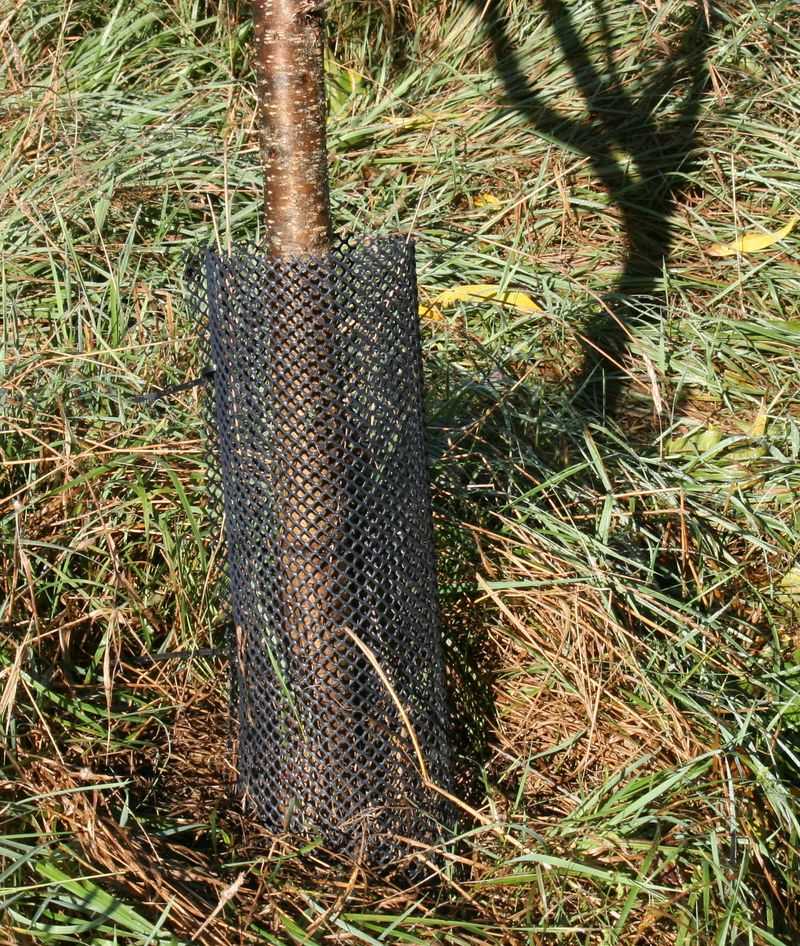
Hardware cloth around a high-value plant is one of the most straightforward protective steps a homeowner can take, and it works independently of whether voles are ever trapped or removed from the broader area. Use mesh no larger than one-quarter inch so pine voles cannot pass through the openings.
Cut the mesh into a cylinder wide enough to leave room for the trunk to grow over the next several years, and bury it approximately six to eight inches below the soil surface so animals cannot burrow underneath. NC Wildlife Resources Commission vole guidance describes this approach as targeted exclusion for individual plants, not a strategy that removes voles from the surrounding area.
If habitat correction and exclusion have not stopped active damage to a localized spot, trapping is an option for small areas, but North Carolina law applies. NC Wildlife’s guidance states that a depredation permit is required for trapping voles in the state.
Contact NC Wildlife Resources Commission or a licensed Wildlife Control Agent to confirm current permit requirements before setting any trap, because regulations can change. The NC Wildlife depredation page at NC Wildlife’s depredation regulations is the appropriate starting point.
NC State’s wildlife chapter describes mouse snap traps placed at right angles to active runways and covered with a shingle or similar object to keep pets and birds away from them. Reaching a pine vole’s underground run may require carefully excavating into the tunnel before placing the trap.
Meadow vole traps can be set directly across surface runways. Check traps daily and reset them until no captures occur for a full week.
NC State’s voles-in-turf resource notes that trapping is generally impractical across large areas, particularly for meadow voles with their wider home ranges.
Registered pesticides are legal for pine and meadow voles in North Carolina, but the label is the law. NC State’s Animal Damage Control manual and your local Cooperative Extension office can help verify which products are currently registered for this use.
Place bait only where children, pets, and nontarget wildlife cannot access it, and follow EPA guidance on safely using rodent bait products, which includes promptly removing any carcasses to reduce secondary poisoning risks to scavenging birds and mammals. Loose poison scattered through a bed is never appropriate.
No repellent, ultrasonic device, or homemade remedy has been shown to reliably reduce vole damage, so skip those steps and focus on what the evidence actually supports.
Manage cover now and monitor what returns
Keeping a mulch bed healthy and reducing vole opportunity are not competing goals. The same practices that protect plant roots, including correct mulch depth, cleared trunks, and tidy edges, also remove the conditions that make a bed a convenient shelter for small burrowing animals.
A practical monitoring habit costs almost nothing. Every few weeks during the growing season, pull back a small section of mulch near your most vulnerable plants and check the soil line.
Look for the combination of signs covered earlier: tunnels, droppings, gnaw marks, and root or crown injury together. A single clue is worth watching; several clues together call for action.
NC State’s wildlife guidance and NC State’s voles-in-turf resource both frame the response as proportional: confirm the animal, correct the habitat, protect high-value plants, and escalate through legal channels only if damage continues.
A well-tended mulch bed is still the right choice for a North Carolina yard. The goal is not to eliminate mulch but to apply it in a way that serves your plants rather than the animals working beneath them.
Catching a problem while it is still localized is almost always easier than managing one that has had a full season to develop unnoticed.