
What It Really Means When Stink Bugs Start Slipping Into Your North Carolina Home As Fall Arrives
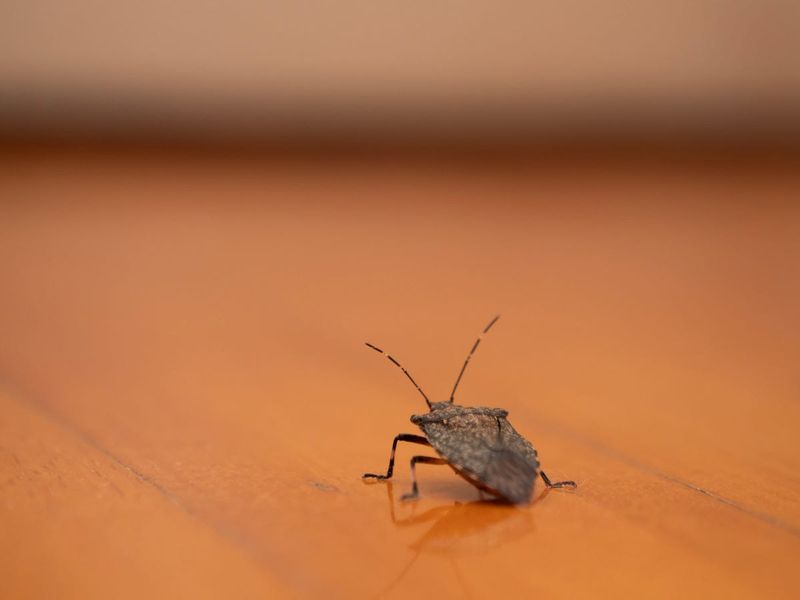
Every fall, North Carolina homeowners start finding shield-shaped bugs crawling across windowsills, clustering on sunny walls, and turning up in attics or spare rooms. For many people, that sudden appearance feels alarming, like something has gone wrong with the house.
Understanding why it happens, and what it actually means, makes the whole situation a lot easier to manage.
The fall arrival is a seasonal signal, not an indoor infestation
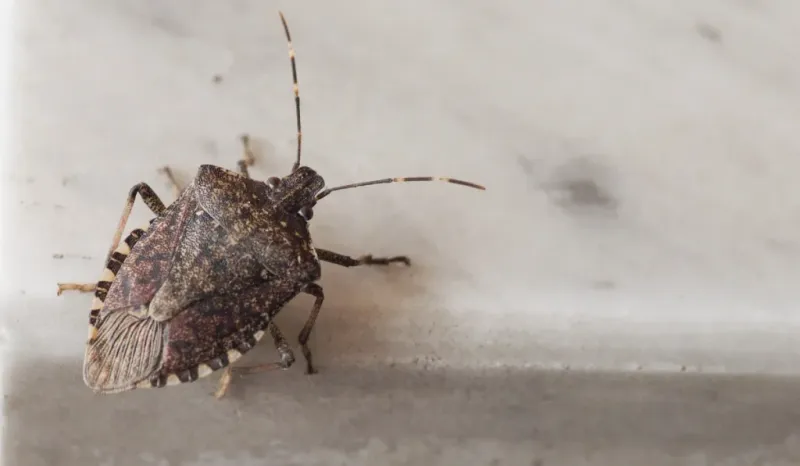
Adult brown marmorated stink bugs spend spring and summer feeding outdoors on plants, fruits, and garden crops. As late summer shifts toward fall, shorter days and cooling temperatures trigger a behavioral change: the insects stop feeding and begin searching for a dry, sheltered spot to spend the winter.
Your house is simply one of the most attractive options in the neighborhood.
Before entering a structure, BMSB often gather on the south- or west-facing exterior walls where afternoon sun keeps surfaces warm. NC State Extension’s overview of BMSB in North Carolina confirms that adults seek protected overwintering sites beginning in September and October, though late August arrivals are possible depending on elevation, weather, and local conditions.
Once inside, they tuck into quiet corners and generally remain inactive until warmth returns in spring.
This seasonal movement is not the same as a home infestation. BMSB overwintering indoors do not feed, reproduce, or lay eggs inside the structure.
A handful of bugs on a windowsill is a sign that fall has arrived, not that something is wrong with the house.
Regional variation matters here, too. The fall home-invasion pattern is most strongly established in North Carolina’s Piedmont, foothills, and mountain counties.
NC State reports BMSB confirmed in 80 of the state’s 100 counties, but notes the species has not become as prevalent along the Coastal Plain. A homeowner in Buncombe or Forsyth County may see dozens of insects on a warm October afternoon, while someone in Pender or Brunswick County may encounter only a few.
Neither experience is universal, and a quiet fall does not mean the insects are gone for good.
Which stink bug is showing up?
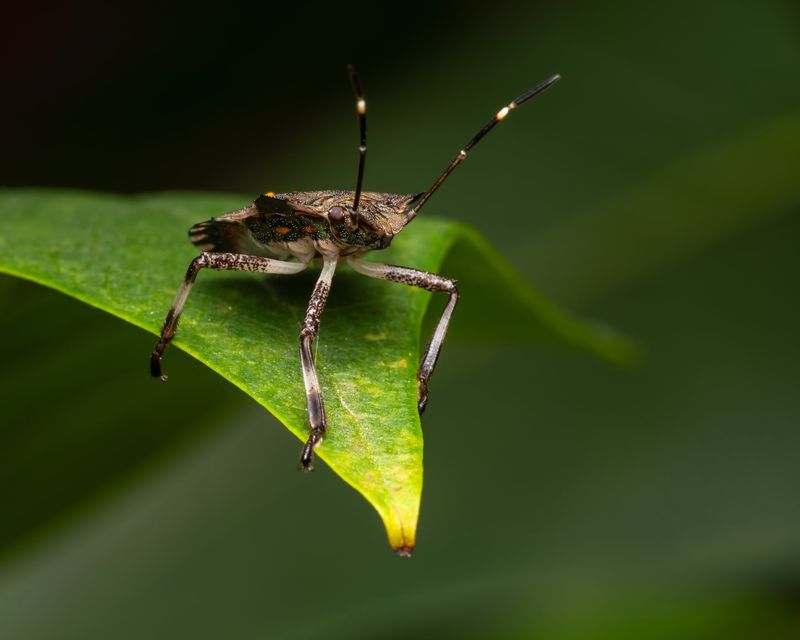
Not every shield-shaped bug that wanders through a door gap is the brown marmorated stink bug. North Carolina is home to several native stink bug species, and some of them are actually beneficial.
Rushing to treat a problem before knowing which insect you have can mean targeting the wrong species entirely.
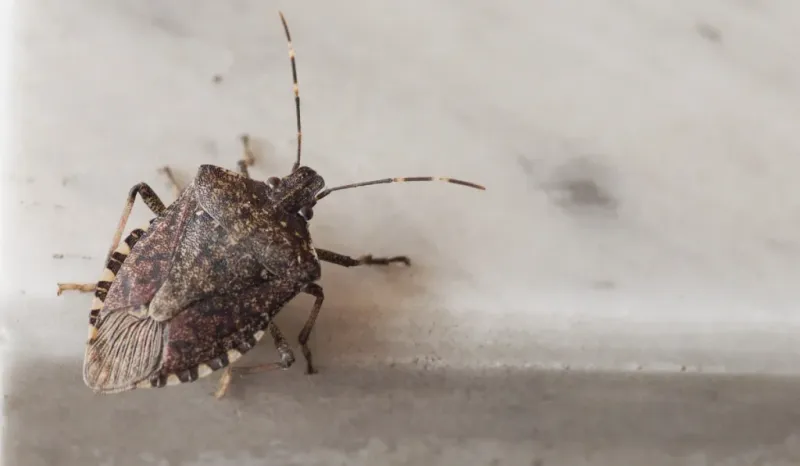
According to NC State Extension’s identification guide for BMSB, adult brown marmorated stink bugs are roughly 5/8 of an inch long, mottled brown on top, and lighter underneath. The most reliable field mark is the antennae: BMSB has alternating light and dark bands along the length of each antenna.
The outer edge of the abdomen also shows alternating light and dark banding. If you cannot see those antenna bands clearly, hold off on a firm identification.
Native brown stink bugs, which are also common in North Carolina yards, look superficially similar but generally lack those distinctive white antenna bands. Green stink bugs are easier to separate by color alone.
More importantly, some native species, including spined soldier bugs, are predators that feed on caterpillars, beetle larvae, and other pest insects. Killing every shield-shaped bug you encounter without checking for antenna bands can remove beneficial insects from your yard.
Identification does not need to be perfect to take reasonable action. If the bug is mottled brown, roughly the right size, and found clustering near windows or on exterior walls in late summer or fall, BMSB is the likely candidate.
When in doubt, capture the insect in a sealed jar rather than crushing it, and compare it to a reference photo from NC State Extension before deciding how to proceed. That small pause can protect the native insects that are actually working in your yard’s favor.
Where they get in and where they disappear
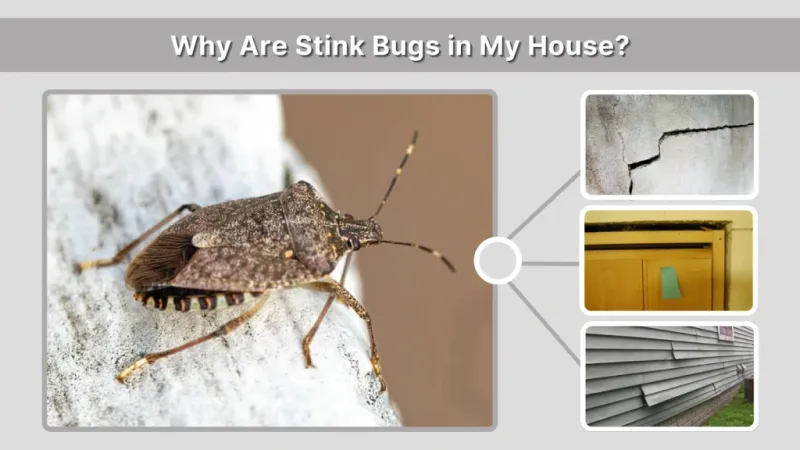
BMSB can squeeze through an opening as small as approximately 3 by 7 millimeters, which is roughly the size of a pencil eraser. That means the gap under a slightly warped door, a torn corner of a window screen, or the space where a utility pipe passes through siding is wide enough to serve as an entry point.
NC State Extension’s BMSB FAQ lists the most common routes: gaps around window and door frames, damaged or missing screens, spaces around utility pipes and faucets, gaps in siding joints, foundation cracks, unscreened attic vents, and open or unprotected chimney flues.
Crawl-space access points are another frequent entry route that homeowners overlook. A crawl-space door that does not seal tightly, or a vent cover with a broken screen, can admit dozens of insects on a warm fall afternoon.
The bugs do not need a large gap; they need a gap that connects to a dry, dark, undisturbed interior space.
Once inside, BMSB scatter toward the quietest parts of the structure. Attics are a common first destination because they are warm from stored solar heat, dark, and rarely disturbed.
Wall voids, crawl spaces, the space behind baseboards and window trim, and the area around ceiling light fixtures and exhaust fans are all typical hiding spots. EPA guidance on BMSB also notes that bugs may settle behind furniture, inside closets, or near other sheltered corners.
Knowing these locations turns a vague nuisance into a useful inspection map. Walking the exterior of the house with a flashlight and a tube of caulk, checking every one of those points, is a far more productive response than spraying indoors and hoping the problem resolves itself.
What their presence does—and does not—mean for your home
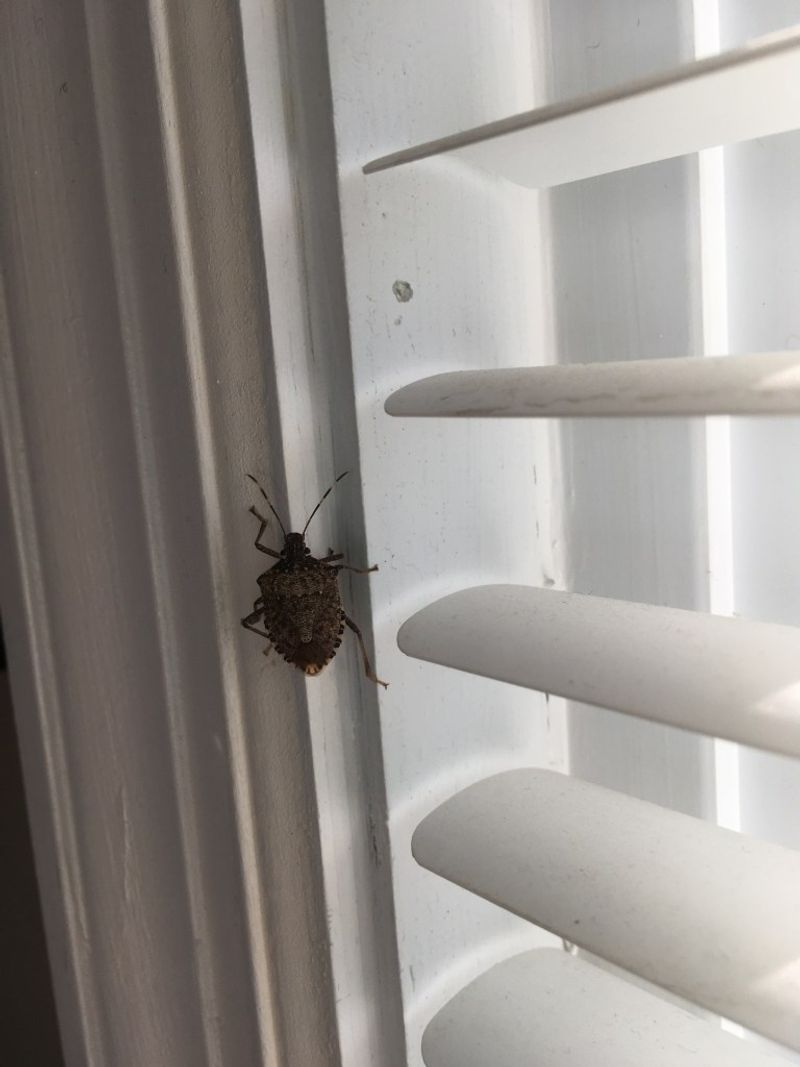
Finding stink bugs indoors tends to trigger a mental checklist of worst-case scenarios: rotting wood, a moisture problem, a growing population reproducing in the walls. The good news is that none of those fears match what BMSB actually do once they are inside.
NC State Extension’s FAQ on BMSB is clear on this point: overwintering adults do not feed, reproduce, or lay eggs indoors. They are waiting, not establishing a colony.
BMSB do not chew wood, damage insulation, bite people, sting, suck blood, or transmit mammalian disease. Ordinary indoor sightings are a nuisance, full stop.
The one exception worth noting is scale: very large accumulations, the kind that occasionally develop in attics or wall voids in heavily infested areas, can sometimes interfere with mechanical equipment such as heat pumps or small engines if insects find their way into components. That scenario is uncommon and is not a risk posed by a few bugs on a windowsill.
Health effects for most people are also minimal. EPA’s stink bug resource page notes that some sensitive individuals may experience allergy-like reactions to the defensive chemicals BMSB release, or to shed material left behind during overwintering.
Crushing a bug can intensify that exposure because the odor compounds are released in higher concentration. People with respiratory sensitivities or known insect allergies should handle indoor bugs carefully and avoid crushing them.
For the vast majority of North Carolina households, the practical reality is straightforward: a stink bug on the curtain is annoying, not dangerous. The house does not need emergency treatment, and the insects will not multiply indoors over winter.
The most effective fix starts before fall
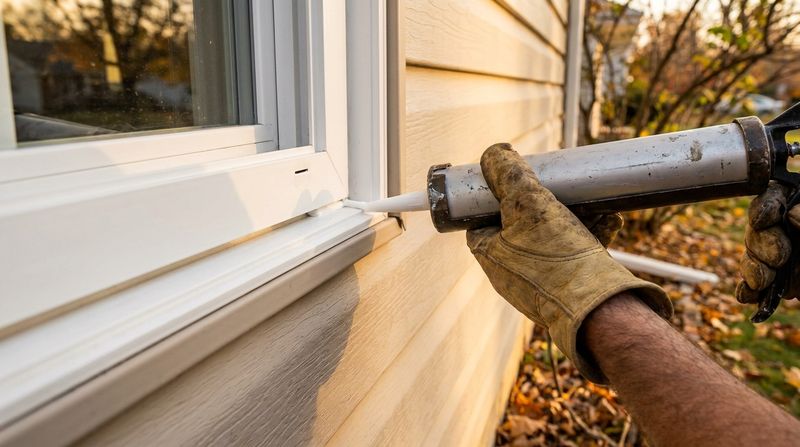
Mechanical exclusion, sealing the openings bugs use to enter, is the most consistently recommended prevention approach for BMSB. It is also the one that works across seasons without creating secondary risks for people, pets, or yard wildlife.
The catch is timing: the work needs to happen in summer, after overwintered bugs have left the house in spring but before the late-August-to-fall return.
NC State Extension’s BMSB FAQ specifically warns against sealing the home in fall, winter, or early spring, because doing so can trap insects that are already inside the wall voids or attic. Bugs sealed inside may eventually find their way into living areas as temperatures fluctuate, which is the opposite of the intended result.
Summer is the right window: the overwintered generation has moved back outside to feed and reproduce, the entry points are accessible, and there are no insects to accidentally trap.
The checklist for a thorough exclusion job covers more ground than most homeowners expect. Repair or replace torn and ill-fitting window and door screens.
Install or repair door sweeps on all exterior doors, including garage side doors. Apply weather stripping around door frames where daylight is visible.
Caulk gaps around window frames, door frames, and siding joints. Seal where utility pipes, electrical conduit, and outdoor faucets pass through the exterior wall.
Check foundation vents and crawl-space access points for damaged screens or gaps. Screen attic vents with fine-mesh hardware cloth.
Inspect the chimney flue and cap.
BMSB can use an opening as small as 3 by 7 millimeters, so the standard is tighter than most people assume. A gap that looks minor from the outside may be a reliable entry point for dozens of insects.
Working through this checklist during a dry June or July weekend, before the bugs begin congregating on exterior walls, is the single most durable investment a North Carolina homeowner can make against fall stink bug arrivals.
How to remove the bugs already indoors
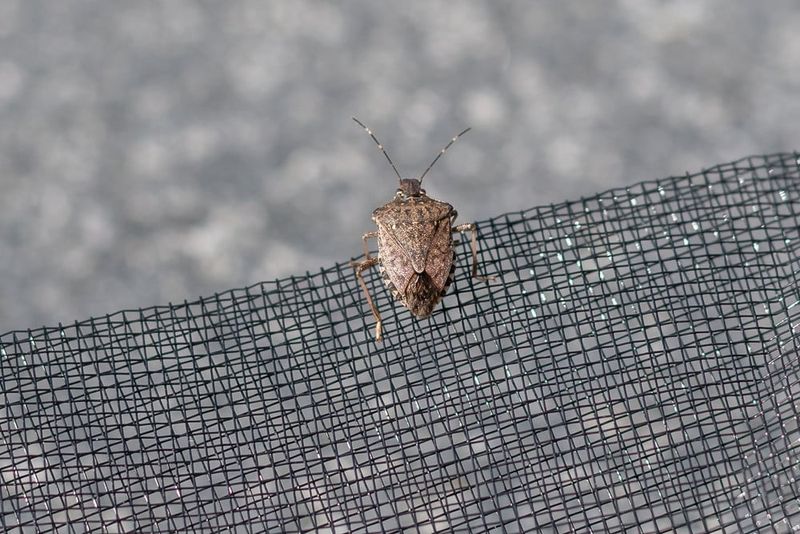
When stink bugs are already inside the house, the goal is removal without triggering the defensive odor. Crushing a BMSB releases the chemical compounds that give the insect its name, and the smell can linger on fabric, carpet, and hands.
NC State Extension recommends two reliable removal methods: capturing individual bugs in a jar and drowning them in soapy water, or vacuuming them with a vacuum that can be emptied easily afterward.
For the jar method, slide a piece of cardboard under the bug, tip it into a container of dish soap and water, and seal the lid. The soapy water breaks the surface tension and kills the insect quickly without releasing much odor.
For vacuuming, a handheld shop vac or a dedicated vacuum with a removable canister works better than a household vacuum with a bag, because the odor can transfer to the bag and persist for weeks. NC State advises freezing the vacuum container or bag before disposal when appropriate, which reduces odor during the emptying process.
Releasing bugs outdoors alive is not a good solution. EPA guidance notes that live-released BMSB may simply return to the same exterior wall and re-enter through the same gaps.
Killing the insects during removal is the more complete answer.
A light-and-soapy-water trap, a shallow pan of soapy water placed under a lamp in a darkened room, can collect additional bugs overnight and is a reasonable supplemental tactic. Treat it as a collection aid rather than a solution to the underlying entry problem.
Trapping bugs already inside does not prevent new ones from arriving, and it works best alongside, not instead of, the exclusion work described in the previous section.
Why more spraying is not the same as more control
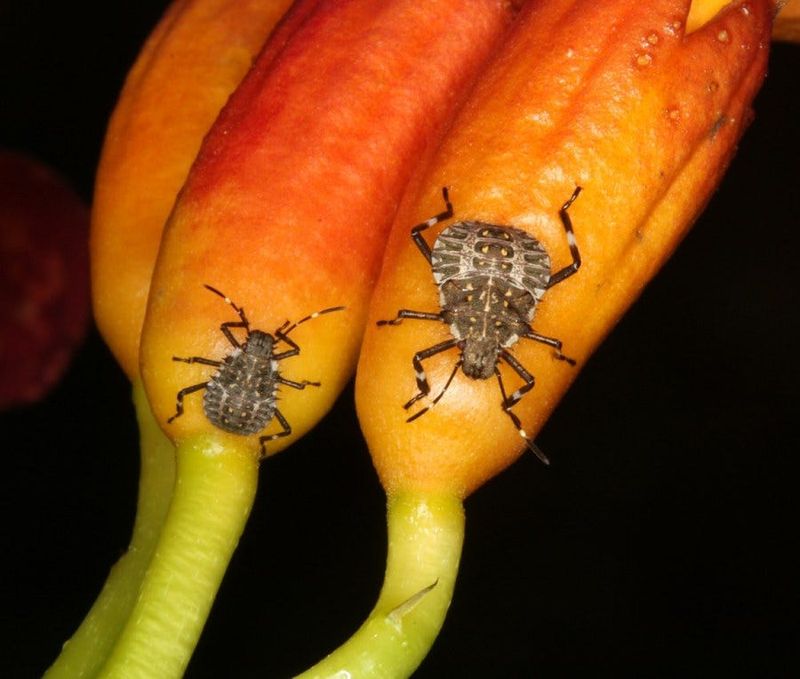
Reaching for a spray can feels like decisive action, but indoor aerosols and foggers have a real limitation with BMSB: they kill insects that are exposed to the product, but they do not stop additional bugs from emerging out of wall voids or entering from outside. EPA’s BMSB guidance emphasizes physical exclusion and removal over indoor spraying precisely because sprays address the symptom rather than the source.
Exterior perimeter sprays present a different set of trade-offs. Penn State Extension’s research on BMSB management describes outdoor residual treatments as providing limited or short-lived relief: sunlight and rain degrade the active ingredient, and new insects continue arriving from surrounding vegetation throughout the fall movement period.
Any exterior product must be registered for that specific use and applied exactly according to the label. Increasing the concentration or frequency beyond label directions does not improve results and creates unnecessary risk.
Indoor foggers carry their own concerns. EPA’s indoor air quality resource on pesticides notes that indoor pesticide misuse, including foggers used in enclosed spaces without adequate ventilation, can create air-quality and health risks for the people living in the home.
Crack-and-crevice sprays applied broadly and without a specific target are similarly discouraged.
For North Carolina homeowners who maintain wildlife-friendly yards, the outdoor spray decision carries additional weight. EPA’s pollinator protection guidance recommends minimizing pesticide use overall, treating only the specific target area, avoiding applications when pollinators are active, and keeping products away from water and wildlife habitat.
Broad perimeter spraying near flowering plants, rain gardens, bird feeders, or wooded edges can expose bees, butterflies, and other non-target insects to compounds they cannot avoid. A targeted, label-compliant exterior application on a specific entry point is a different proposition from routine perimeter spraying around the whole yard.
Turn this season’s sightings into next summer’s checklist
The bugs showing up this fall are delivering a useful message: somewhere on the exterior of the house, there is a gap worth finding. Use this season’s sightings as a diagnostic tool.
Note which rooms they appear in first, which windows they cluster near, and which walls face south or west. That pattern points directly to where the exclusion work should focus next summer.
The action sequence is straightforward. Identify the insect before treating it, since not every shield-shaped bug is BMSB and some native species are beneficial.
Remove current visitors with soapy water or a vacuum rather than crushing them. Avoid live-releasing them outdoors.
Then, once overwintered bugs have departed in spring, work through the exclusion checklist on the exterior before late August arrives. NC State Extension’s BMSB overview and the accompanying FAQ are solid starting points for building that checklist.
A fall appearance does not mean the house has a moisture problem, a structural flaw, or a worsening regional outbreak. It means fall has arrived and the insects are behaving exactly as their biology predicts.
On the plant side, NC State’s research on BMSB host plants identifies invasive species like tree-of-heaven and paulownia as plants whose removal may reduce nearby BMSB habitat. Native trees such as dogwood, maple, and walnut should stay; they support far more of the wildlife your yard depends on than any single pest species could justify removing.
Stink bugs have been part of North Carolina fall for long enough now that the best response is a prepared one, not a panicked one.