
Why North Carolina Crape Myrtle Bark Peels Every Summer And What That Peeling Is Really Telling You
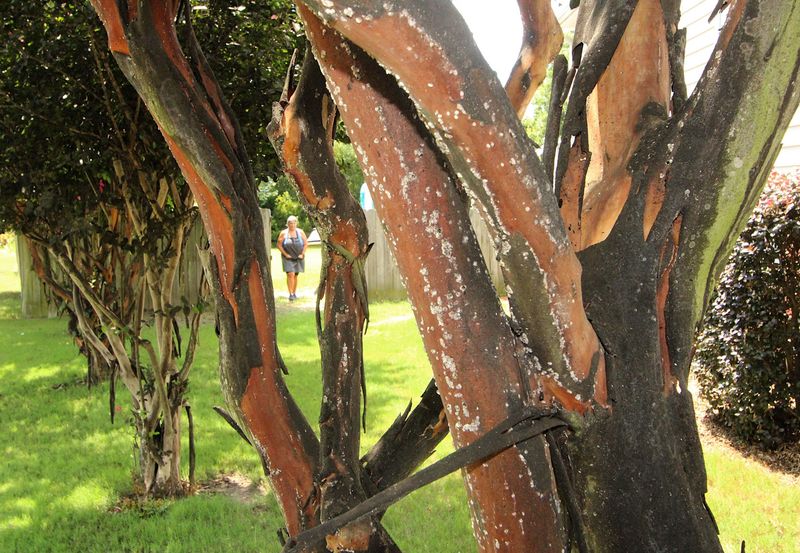
Walk past a crape myrtle in a North Carolina yard during July and you might stop cold watching strips of bark curl away from the trunk like old paint. Most homeowners assume something has gone badly wrong, but that reaction is usually the opposite of what the tree is telling you.
Peeling bark on a crape myrtle is often a normal feature, not a warning sign, though knowing when to take a closer look matters just as much as knowing when to relax.
Crape myrtles often peel in summer—but not every tree does
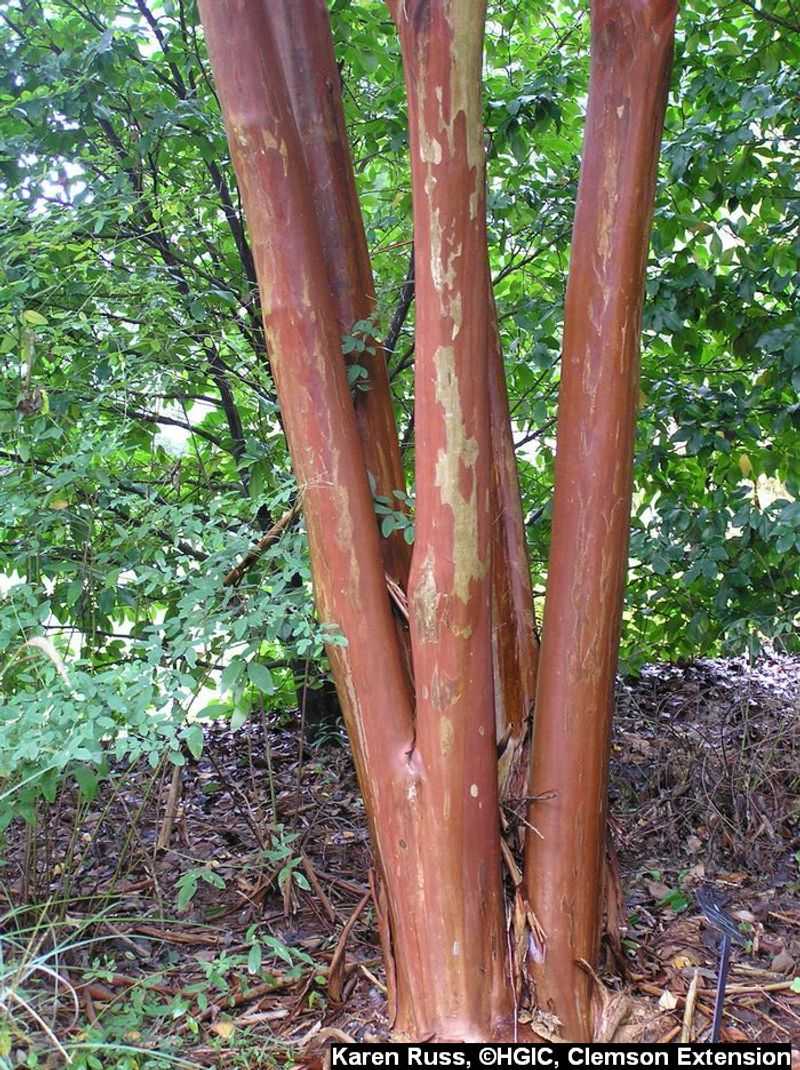
Seeing bark fall from a crape myrtle in your yard can feel alarming, especially when you notice it happening right in the middle of summer. The reassuring reality is that many crape myrtles shed their outer bark as a natural characteristic, and summer is one of the most common times homeowners notice it happening.
NC State Extension reports that crape myrtles commonly shed bark around early July, with some varieties shedding more or releasing larger pieces than others.
That said, the title of this article overstates things a bit. Not every crape myrtle peels every summer, and the amount of shedding a homeowner sees can vary quite a bit from tree to tree.
University of Florida Extension notes that some crape myrtle varieties exfoliate in summer, which confirms that summer shedding is a real and documented pattern, even if it is not a universal rule that applies to every plant.
What the sources agree on is that this peeling is called exfoliating bark, and it is a built-in characteristic of the species rather than a response to an injury or disease. NC State describes the process as normal and possibly associated with active growth, though the timing and amount have not been pinned to a single proven cause.
The key takeaway here is that peeling alone does not prove your tree is healthy or unhealthy. Bark appearance is one piece of a larger picture, and the rest of the tree needs to be part of any honest assessment.
New bark creates the crape myrtle’s changing colors
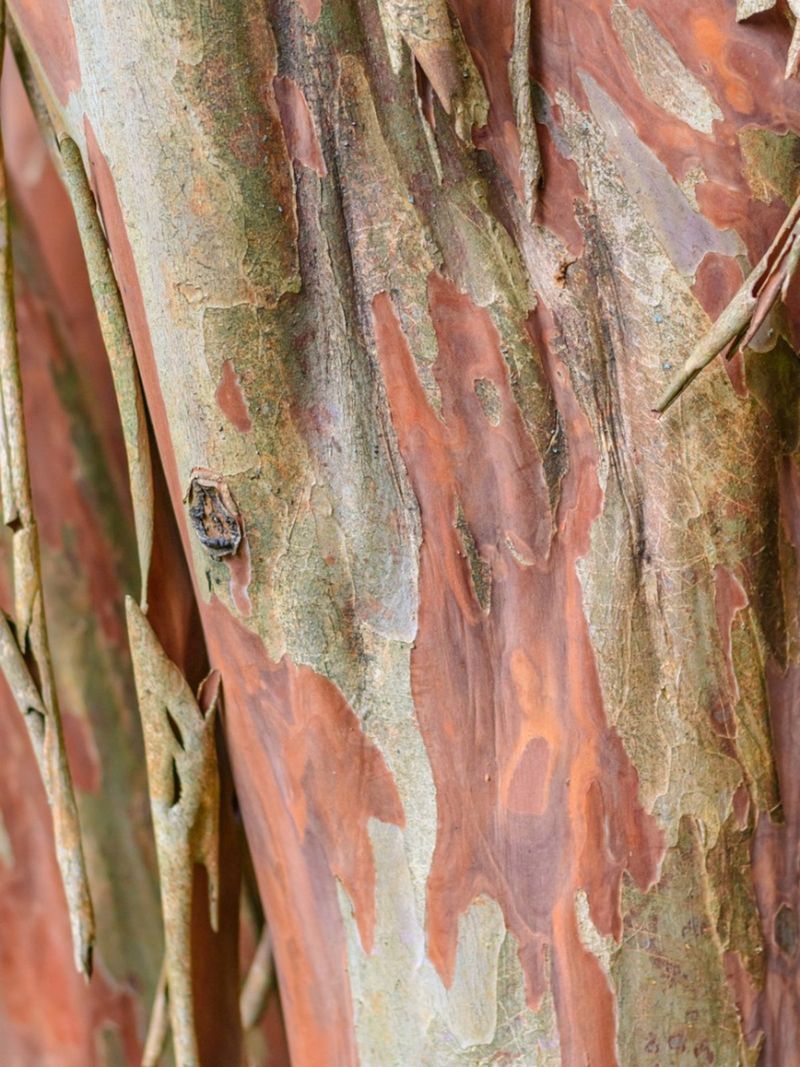
One of the most striking things about a crape myrtle that is actively shedding bark is what gets revealed underneath. Loose outer strips peel back to expose newer bark that can range from smooth cinnamon and orange to burgundy, gray, tan, or brown, depending on the plant.
The NC State Extension Gardener Plant Toolbox describes crape myrtle bark as naturally thin, smooth, peeling, and exfoliating, with older stems becoming smooth and exfoliating over time.
The color variation is not a fluke or a sign of stress. It is part of what landscape designers and homeowners prize about these trees, particularly in winter when foliage is gone and the trunk becomes the focal point.
NC State’s Sampson County Extension highlights the attractive bark as one of the reasons crape myrtles remain a popular landscape choice across the state.
The newer bark beneath the shed strips is typically smooth rather than rough or cracked. That smooth texture is an important visual clue.
University of Georgia Extension’s crape myrtle culture guide confirms that the ornamental appeal of these trees includes their multicolored, peeling bark, which develops as the outer layer naturally separates. When the exposed surface looks clean and smooth, that appearance is consistent with ordinary exfoliation rather than bark damage.
Cultivars determine how dramatic the shedding looks
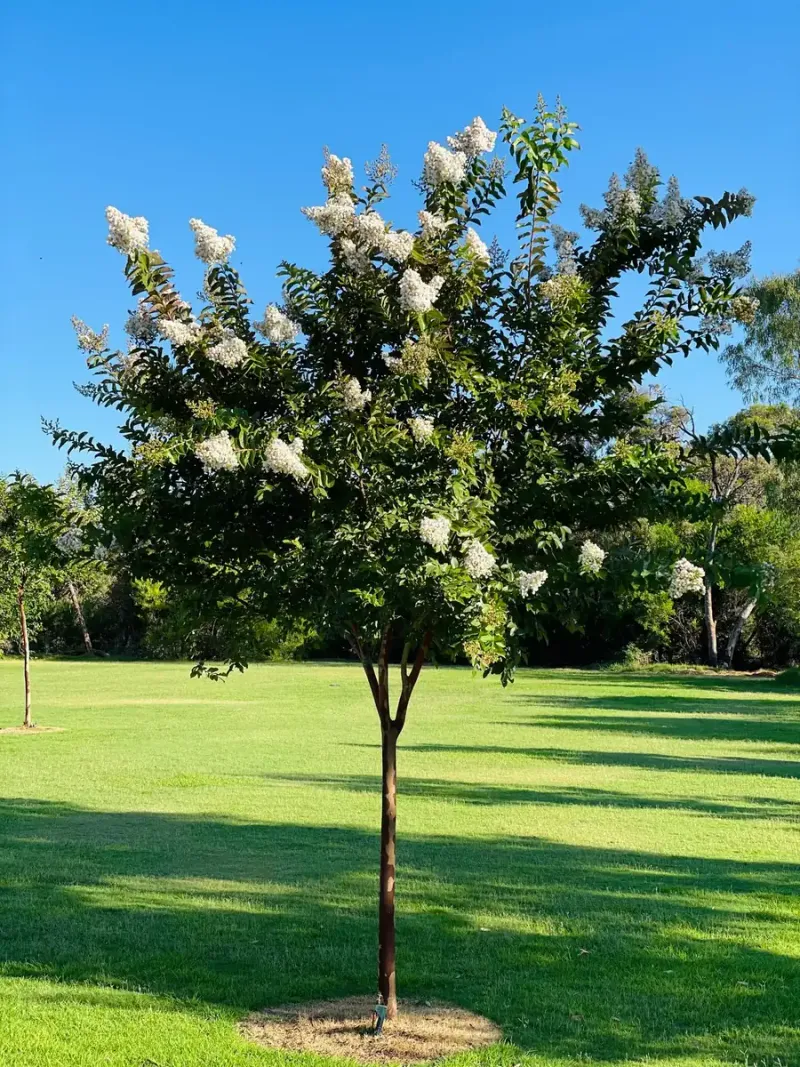
Standing in a neighborhood where several crape myrtles line the street, you might notice that one tree is dropping large, papery sheets of bark while the tree three houses down shows almost no visible peeling at all. That difference is not random.
Documented cultivar variation plays a major role in how much bark a crape myrtle sheds and how conspicuous those shed pieces look. NC State Extension confirms that some varieties shed more bark and in larger pieces than others, which means a neighbor’s dramatically peeling tree and your own barely-shedding tree can both be perfectly normal.
Cultivar records back this up at the research level as well. The U.S.
National Arboretum’s Lagerstroemia cultivar checklist documents exfoliating bark as a named cultivar characteristic, which shows that plant breeders and horticulturists have long recognized it as a trait that varies predictably from one selection to the next.
Summer is a common time to notice shedding, but treating it as a fixed annual deadline would be a mistake. Timing and visibility can vary, and the available sources point to cultivar differences as the most documented reason for that variation.
If your crape myrtle sheds dramatically one year and less the next, or if a newly planted tree barely peels while a more established one in the same yard sheds heavily, cultivar identity is the most likely explanation worth exploring before assuming something has changed with the tree’s health.
Compare the bark with the whole tree
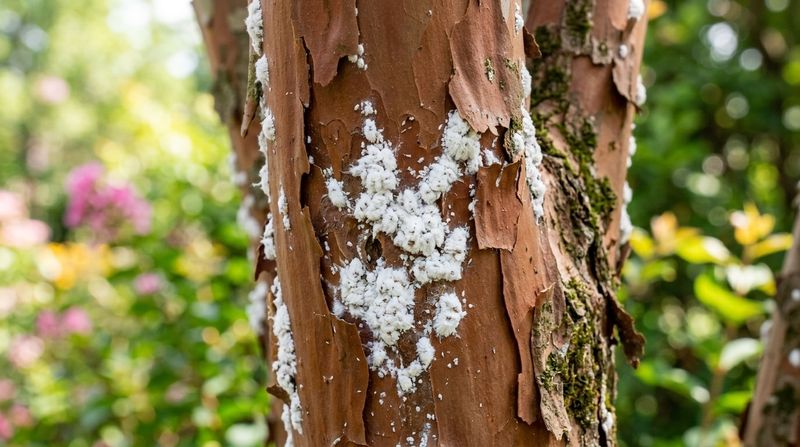
Bark appearance alone is not enough to tell you whether a crape myrtle is thriving or struggling. A more reliable approach treats the bark as one part of a full inspection rather than a standalone test.
Start by looking at the exposed surface after peeling occurs. NC State’s plant profile describes healthy crape myrtle bark as smooth and exfoliating, so smooth, colored bark on a tree with normal foliage, active new growth, and regular flowering is consistent with ordinary exfoliation.
The picture changes when other symptoms appear alongside the bark loss. Cracking, sunken tissue, severe discoloration, sap oozing from the bark, exposed wood, or noticeable dieback in the canopy all call for a closer look.
UC IPM’s guidance on sunburn damage explains that bark injured by sun exposure can eventually peel and may invite secondary attacks from boring insects or decay fungi, which means peeling on a stressed or sun-damaged tree looks similar to normal exfoliation but carries a very different meaning.
Walk around the entire tree rather than focusing only on the most visible side. Check whether the foliage looks full and green, whether new shoots are growing at a normal pace, and whether the tree is flowering as expected for the season.
Declining leaf size, sparse flowering, or a general loss of vigor alongside unusual bark loss suggests something beyond normal exfoliation is at work.
These observations guide further investigation, but they do not establish a diagnosis by themselves. If multiple warning signs are present, the next step is identifying a specific cause before taking any action.
Bark appearance paired with overall tree condition gives you a much clearer starting point than bark alone ever could.
Bark scale is one important cause of unusual bark loss
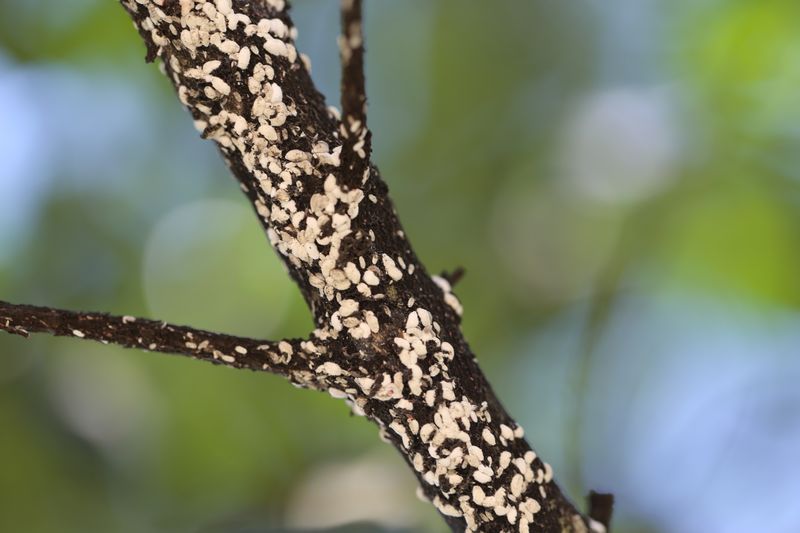
Not every case of crape myrtle bark loss traces back to normal exfoliation, and one important North Carolina concern is crape myrtle bark scale. This pest has spread across many parts of the state and deserves attention when bark loss appears alongside other unusual symptoms.
NC State Extension’s homeowner guide on bark scale reports that in many parts of North Carolina all life stages of the pest may be present throughout the year, with at least two generations annually and likely more in warmer areas.
The warning signs of bark scale are specific enough that a careful homeowner can usually spot them. Look for white or gray felt-like wax, cottony egg sacs, and scale encrusting the trunks, branch crotches, and smaller twigs.
Mississippi State University Extension’s identification guide notes that the pest feeds mainly on twigs, branches, and trunks rather than leaves, which helps distinguish it from other insects that produce similar symptoms.
Honeydew secreted by scale insects can coat bark surfaces and foster thick black sooty mold, but sooty mold alone does not confirm bark scale. Aphids also produce honeydew and sooty mold, and they feed primarily on leaves rather than bark.
Seeing black mold on the trunk is a reason to look more carefully for the characteristic waxy or cottony scale coverings, not a reason to assume the cause is already identified.
Heavy bark scale infestations can reduce a tree’s overall vigor, delay leafing out in spring, reduce flowering, and result in smaller flower clusters. Clemson Extension’s bark scale fact sheet documents these effects while making clear that the expected outcome for most homeowners is a weakened and less attractive tree rather than automatic death.
Bark scale is a serious concern worth addressing, but other causes of abnormal bark loss, including sunburn injury, cankers, drought stress, and physical damage, also belong on the list of possibilities when peeling looks unusual.
Inspect first and leave firmly attached bark alone
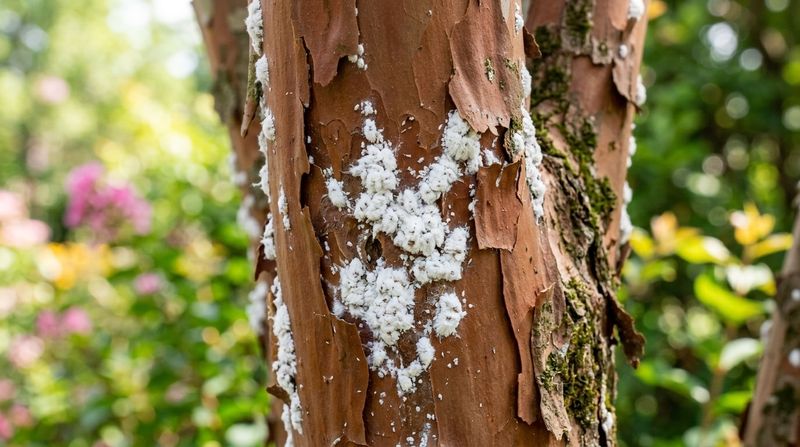
Once you have finished inspecting the tree, the first practical rule is simple: leave bark that is still firmly attached exactly where it is. University of Florida Extension guidance on peeling bark distinguishes naturally loose bark from bark that is still attached, and warns against removing bark unnecessarily.
Pulling or scraping attached bark can open wounds that invite pests and disease organisms, turning a non-problem into a real one.
For bark strips that have already fallen to the ground on their own, NC State Extension’s practical recommendation is straightforward: rake them up. No special treatment is needed for ordinary exfoliation, and there is no benefit to leaving shed strips piled around the base of the tree.
If the inspection does raise a concern about bark scale, the response should still start with nonchemical steps before reaching for a pesticide. NC State’s bark scale management guide for homeowners identifies several options worth considering first: removing heavily infested branches where that is practical, washing scale insects from the bark surface with a soft brush and water, and protecting beneficial predators such as parasitic wasps and lady beetles that naturally suppress scale populations.
Reflexive insecticide use is worth avoiding for two reasons. First, normal exfoliation does not warrant any chemical treatment at all.
Second, broad sprays intended for mosquitoes or other insects can kill the beneficial predators that help keep bark scale in check. NC State specifically flags imidacloprid as a systemic insecticide that may contaminate flower parts visited by bees and other beneficial insects when applied to a flowering tree, which is a real risk during summer when crape myrtles are typically in bloom.
Any chemical decision must follow the current product label and comply with North Carolina pesticide regulations. Labels change, and what was approved last season may carry new restrictions this year.
Confirm current guidance with your local NC Cooperative Extension office before applying anything to a tree that pollinators are actively visiting.
Use a simple rule before you worry
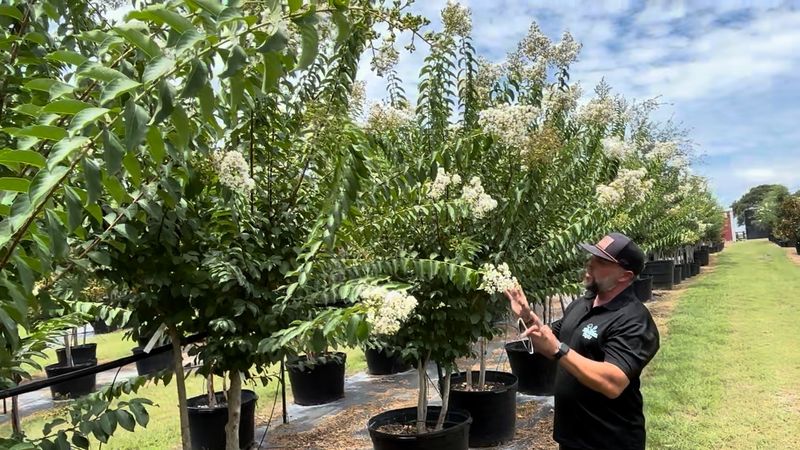
A practical decision rule makes the whole process easier to remember. Smooth, loose, colorful bark on a crape myrtle that is otherwise putting out normal foliage, new growth, and flowers is almost always ordinary exfoliation that needs no treatment.
NC State Extension and the NC State Plant Toolbox both describe this as a recognized natural characteristic of the species.
Switch to closer inspection mode when you spot unusual texture, white or gray waxy material, cottony masses, persistent black mold, cracking, sap ooze, exposed wood, dieback, or a general decline in the tree’s energy. Those signs together, especially any combination of waxy scale coverings and mold, call for the kind of targeted response outlined in NC State’s bark scale homeowner guide.
Remember that not every crape myrtle peels every summer, that cultivar differences can make normal shedding look dramatic, and that firmly attached bark should stay in place. A crape myrtle shedding loose strips to reveal smooth, colorful bark beneath is usually doing exactly what it was always going to do.