
Why North Carolina Homeowners Should Never Casually Move An Established Crape Myrtle
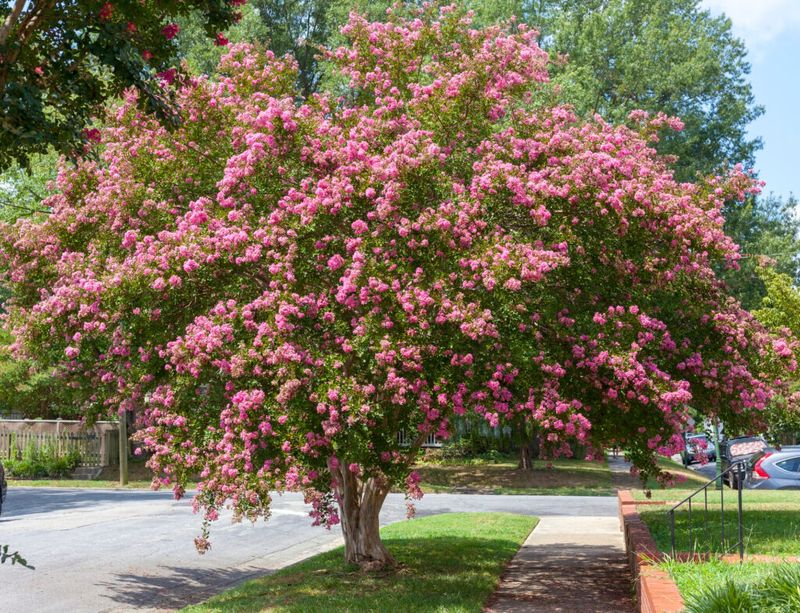
Crape myrtles are one of the most beloved trees in North Carolina yards, known for their showy summer blooms and striking bark. But when one ends up planted in the wrong spot, many homeowners reach for a shovel and figure they can simply move it.
That impulse can cost you the tree. Understanding why a casual relocation is so risky, and what a real transplant actually involves, can save you from a mistake that takes years to regret.
The warning is about casual moves, not an absolute botanical ban
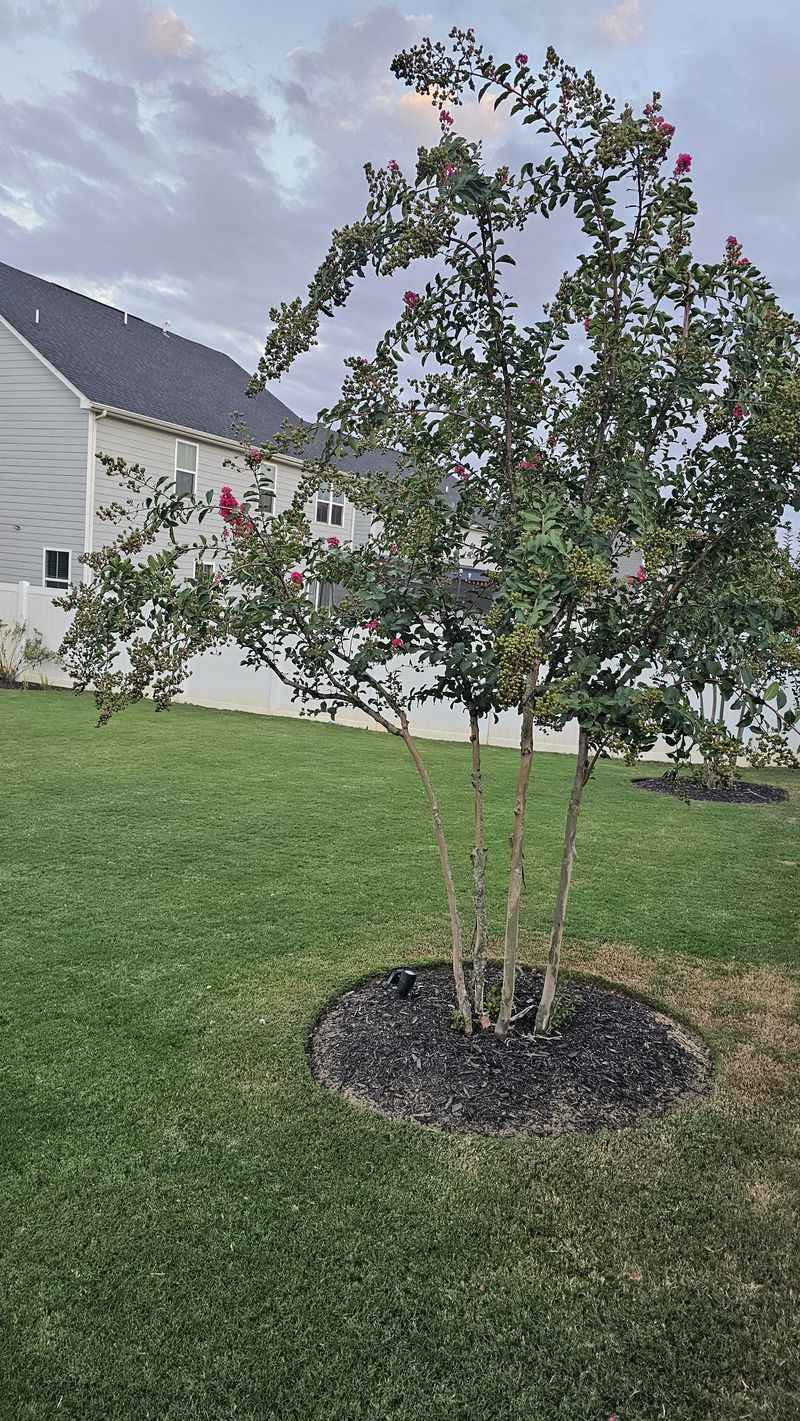
Plenty of gardening advice floats around that makes moving an established crape myrtle sound like a flat-out impossibility, but that framing goes further than the facts support. The real warning is narrower and more practical: you should not treat an established crape myrtle the way you would a potted shrub you bought last spring.
Grabbing a shovel on a Saturday afternoon and digging around the trunk is not a transplant plan, and for a tree that has been in the ground for several years, it is a reliable way to lose it.
Extension horticulturists and arborists are careful about this distinction. Clemson Extension guidance on transplanting established trees and shrubs describes the process as difficult, labor-intensive, and best handled by professionals when the plant has reached a meaningful size.
That is a warning about preparation and scale, not a botanical death sentence. A carefully planned professional move, with advance root pruning, proper timing, correct planting, and sustained aftercare, may give an established tree a real chance at surviving and eventually recovering.
The decision framework is straightforward. As a crape myrtle grows larger and more established, the root system it depends on spreads wider and deeper.
Moving it requires capturing enough of that root system to sustain the canopy above, and the gap between what a homeowner can realistically dig and what the tree actually needs grows with every year the tree stays in the ground. NC Cooperative Extension acknowledges that moving an oversized crape myrtle is an option, while also noting that replacing it with a compact cultivar may be more practical.
The honest question is not whether the tree can ever be moved, but whether your specific tree, in your specific yard, is a reasonable candidate for relocation or whether another approach makes more sense.
Why a shovel cannot capture an established tree’s working roots
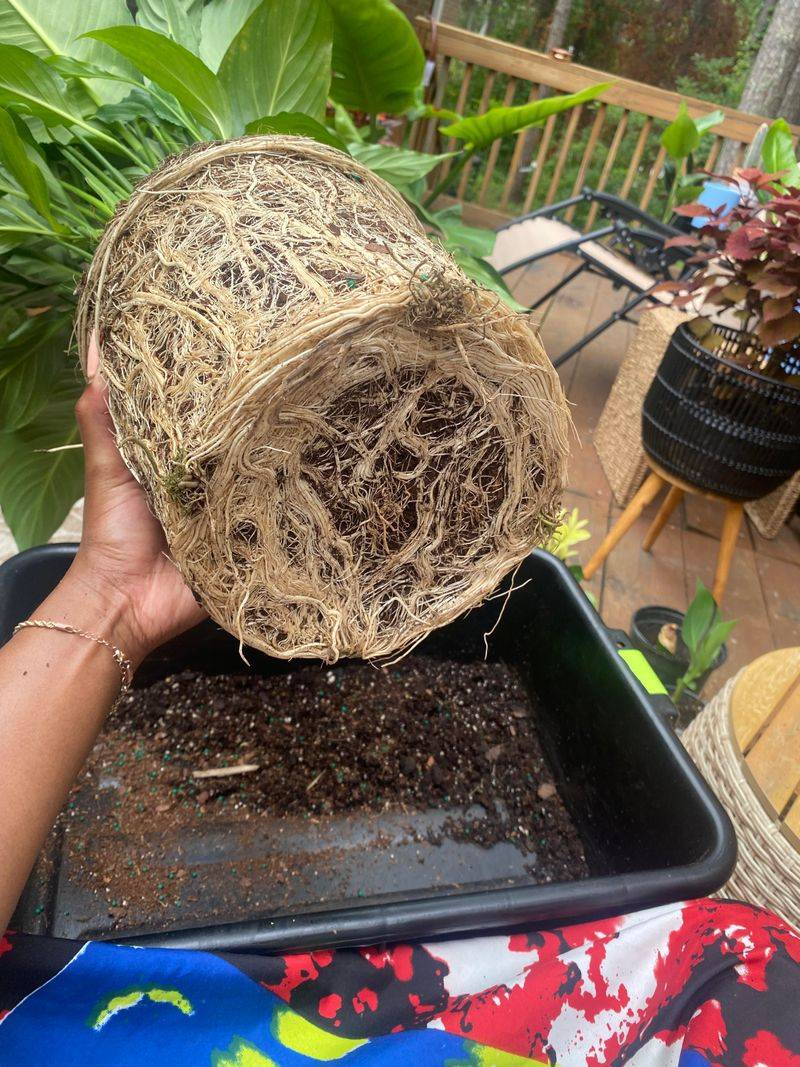
Roots are not simply anchors. The fine, hair-like absorbing roots near the outer edges of a tree’s root zone are responsible for pulling in most of the water and nutrients the tree uses every day.
When you dig up an established crape myrtle with a shovel, you are not preserving that system. You are cutting through it at whatever circle your shovel can manage, leaving the working roots behind in the ground while the trunk and canopy go to the new location.
University of New Hampshire Extension explains that transplanting destroys a substantial portion of the fine absorbing roots, and that the tree must then try to supply its full canopy with a fraction of its former root capacity. The result is transplant shock, a condition that can show up as wilting, leaf scorch, branch dieback, reduced growth, or delayed flowering.
A tree can look stressed and still push through, or it can appear to stabilize in the first season and then quietly decline over the next one or two years as it fails to regenerate enough roots to stay ahead of its water demand.
The gap between what the eye can see and what the tree actually needs is the core problem. Preserving the trunk, branches, and even the bark display does not preserve the root system that supports them.
Colorado State University Extension notes that roots on established trees extend well beyond the canopy edge, often far beyond what any homeowner can practically excavate. A crape myrtle that has been in the ground for a decade may have roots spreading 15 to 20 feet from the trunk, and a shovel circle that fits in your yard captures only a small fraction of that network.
Crape myrtle is a tough plant that can resprout after significant damage, but resprouting is not the same as recovering the original tree. A tree that loses most of its root system and then pushes new growth from the base or from surviving branches is working from a deficit, and its long-term performance, flowering, structure, and bark character may never match what the established specimen offered before the move.
Size, cultivar, and site conditions determine the real risk
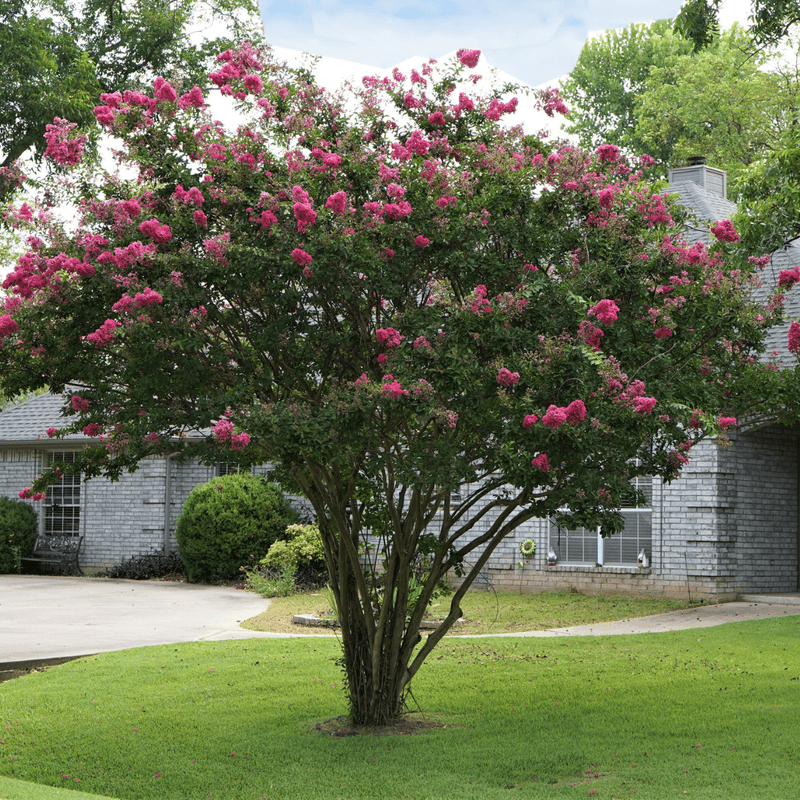
Crape myrtle is not one plant. NC State Extension’s plant profile for Lagerstroemia indica notes that common crape myrtle ranges from roughly 6 to 30 feet tall and wide, with cultivars spanning everything from knee-high shrubs to small trees with multi-story canopies.
A recently planted dwarf cultivar in its second year in the ground is a very different transplant candidate than a 20-year-old specimen with a six-inch trunk and a canopy that shades half the backyard. Applying a single rule to both situations leads to bad decisions in both directions.
What actually determines risk is a combination of factors: trunk diameter, canopy spread, age, overall health, soil type, drainage, site access, and how far the tree needs to travel. A tree in compacted clay soil with poor drainage already has a stressed root system; adding transplant shock to that picture raises the stakes considerably.
A crape myrtle in loose, well-drained sandy soil with a healthy canopy and no prior stress may recover more readily if the move is handled correctly. Neither outcome is guaranteed, but the variables matter.
North Carolina gardeners also need to account for where in the state they are gardening. NC State Extension notes that cultivar hardiness varies across the state, and that some commonly planted Lagerstroemia indica types may not reliably survive in colder mountain locations.
Hybrids with Lagerstroemia fauriei parentage tend to perform better at higher elevations. If you are moving a crape myrtle to a new site, that new site needs to suit the cultivar you are moving, not just the general idea of a crape myrtle.
A tree that survived twenty mild winters in a Wilmington yard may not be the right plant for a new location in Boone, regardless of how carefully the transplant is executed.
A viable transplant begins months before the tree leaves the ground
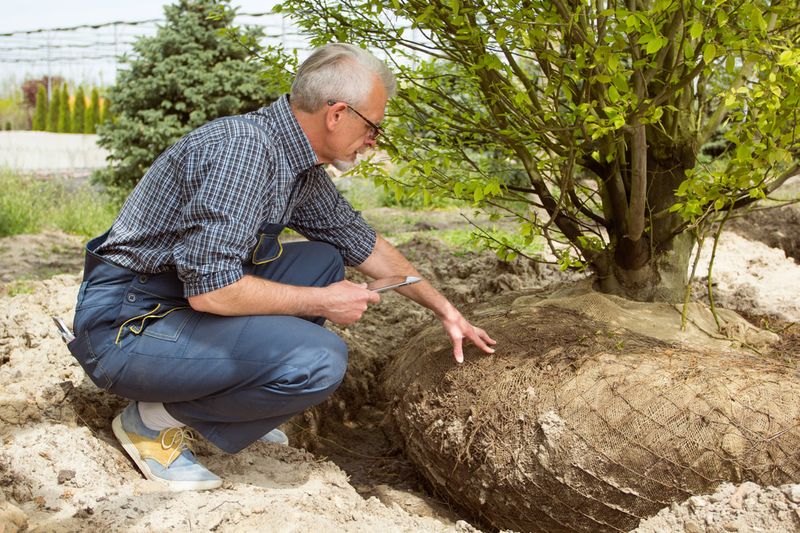
One of the clearest signs that a planned transplant is different from an impulsive dig is what happens before anyone picks up a shovel. Advance root pruning, the practice of cutting the soil in a circle around the future root ball well before the actual move, encourages the tree to grow new feeder roots inside the zone that will eventually be lifted.
Those new roots give the tree a better chance of sustaining itself after excavation. Without that preparation, the root ball going to the new location contains mostly structural roots, with very few of the fine absorbing roots the tree depends on.
Clemson Extension’s transplanting guidance and University of Florida IFAS guidance on root pruning field-grown trees both emphasize that root pruning should be planned well in advance, not improvised on the same day as the move. Depending on the tree’s size and condition, the recommended lead time ranges from several months to a year or more.
Treating root pruning as a quick preliminary step right before digging defeats its purpose entirely.
Timing the actual move matters just as much. Crape myrtles are deciduous, and Iowa State University Extension notes that the dormant season is generally the preferred window for moving deciduous trees, when leaf-out has ended and water demand drops.
For most of North Carolina, that points toward a late-fall-to-early-winter window, adjusted for local weather and soil conditions. Mississippi State Extension’s crape myrtle publication echoes the dormant-season preference specifically for this species.
Summer heat, drought, and active growth all add pressure to a root system that is already working at reduced capacity after a move.
Before the tree comes out of the ground, two things should already be done: the new hole should be dug and ready, and the tree should be thoroughly watered over the preceding days. University of Georgia Extension emphasizes that a well-hydrated tree handles the stress of excavation better than one that is already dry.
Every hour the root ball sits exposed is time the fine roots spend drying out, so having the destination ready before the first shovel cut is not a convenience, it is part of the plan.
When the root ball requires equipment, call a qualified professional
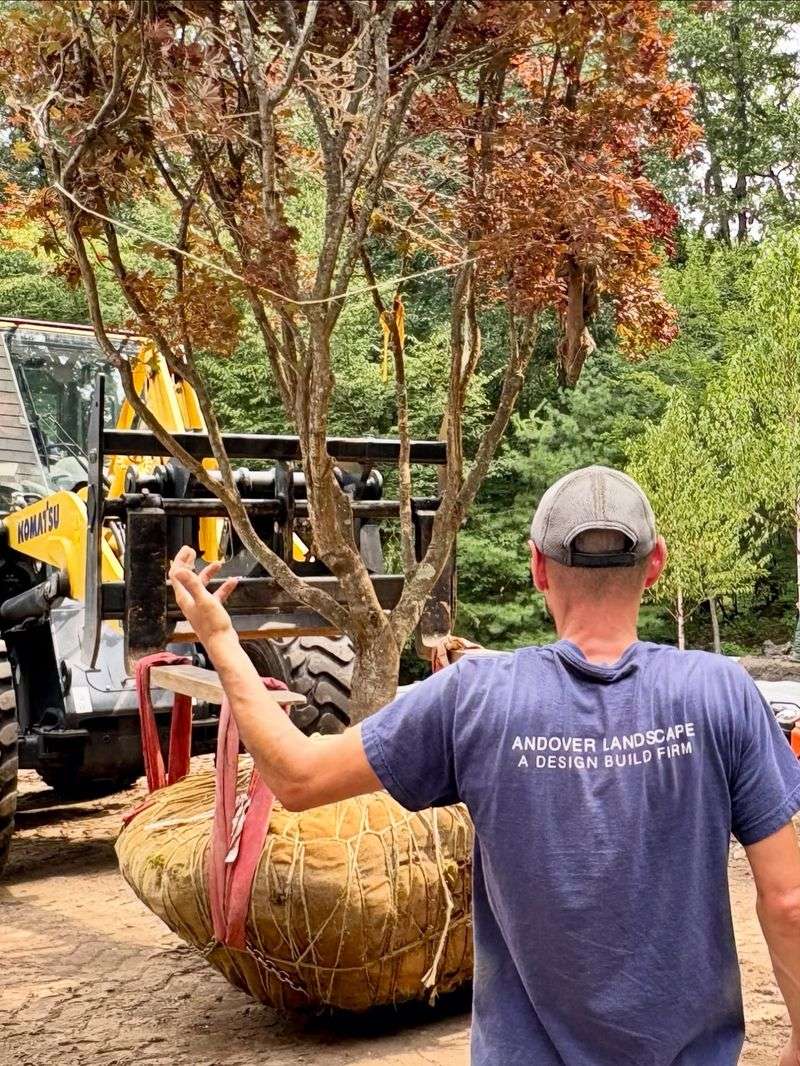
There is a meaningful difference between moving a crape myrtle that has been in the ground for two or three years and relocating a specimen that has been growing for a decade or more. Smaller, recently established trees may be manageable with careful hand digging and a committed crew.
Larger trees are a different category of project entirely. A root ball large enough to sustain a well-established crape myrtle can weigh hundreds of pounds, and lifting, transporting, and setting it without collapsing it or injuring anyone requires equipment: a tree spade, skid steer, crane, or rigging, depending on the size and site.
University of Florida IFAS guidance on transplanting established trees describes large-tree relocation as a planned operation that includes site assessment, root-ball design, careful lifting, transport, correct planting, and a recovery plan. That is not a description of a homeowner project.
When the scale of the move exceeds what can be done safely and correctly by hand, the right call is to contact a qualified arborist or experienced tree-transplanting contractor. The ISA’s Find an Arborist directory is a reasonable starting point for locating credentialed professionals in your area, though credentials reflect training and standards, not a guarantee of any particular outcome.
Safety considerations extend beyond the tree itself. Before any digging begins, call 811, the national dig-safe notification service, to have underground utilities marked.
Buried lines can be closer to the surface than you expect, and a shovel through a gas or electrical line creates a hazard that has nothing to do with horticulture. OSHA’s landscaping hazard guidance and OSHA’s tree care inspection guidance both flag power lines, suspended loads, and heavy equipment as serious injury risks in tree work.
Never work beneath a suspended root ball, and keep everyone clear of power lines during any lift or transport. These are not precautions to skip when the tree looks manageable.
Correct planting and patient aftercare improve the odds
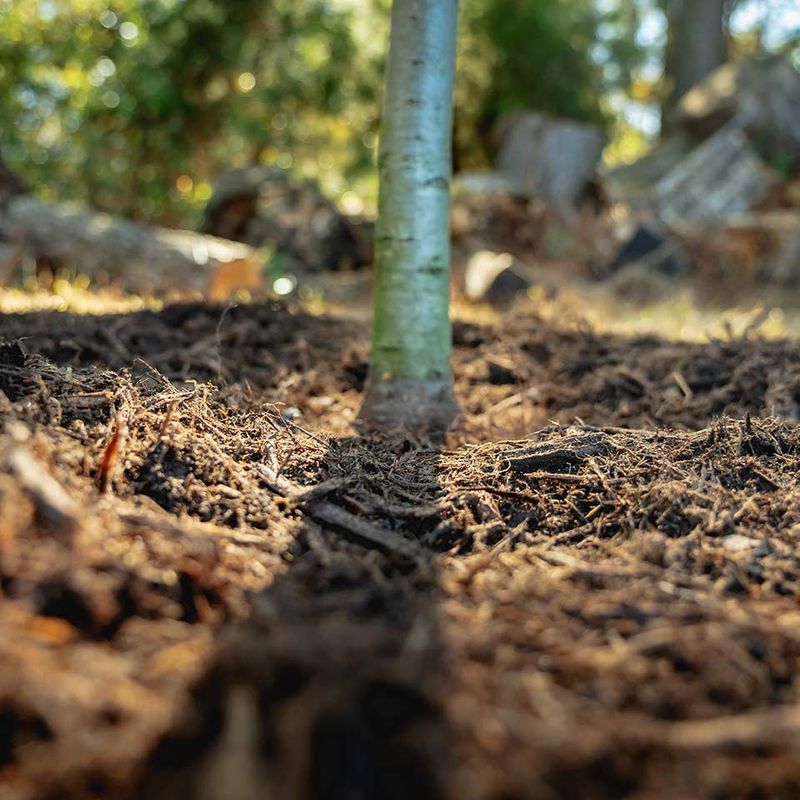
Getting the tree to the new location is only the midpoint of the project. How it goes into the ground and how it is cared for over the following seasons will do as much to determine the outcome as anything that happened during the dig.
The root ball must stay intact and moist from the moment excavation begins until the tree is set in its new hole. Roots that dry out during transport or sit exposed for hours lose viability, and no amount of post-planting irrigation will restore them.
Planting depth is one of the most consequential decisions in the process. ANSI A300 standards for planting and transplanting require the trunk flare to be set at or slightly above finished grade.
Planting too deeply buries the flare, restricts oxygen to the root zone, and creates chronic stress that can slowly kill a tree over several years. Clemson Extension identifies deep planting as one of the most common and preventable causes of transplant failure.
Match the original depth as closely as possible, and resist the urge to mound soil around the base.
After planting, water consistently across the entire root zone, not just at the trunk. Penn State Extension’s guidance on watering newly planted trees recommends applying water broadly and allowing the soil to partially dry between waterings rather than keeping it constantly saturated.
Overwatering in compacted or poorly drained soil deprives roots of oxygen and can be just as damaging as drought. Larger transplanted specimens may need supplemental irrigation through two or more growing seasons before the root system has recovered enough to sustain the canopy on its own.
Apply a broad, shallow layer of mulch over the root zone to conserve moisture and reduce competition from grass, but keep mulch several inches away from the trunk and root flare. Penn State Extension’s mulching guidance warns against mulch volcanoes, the common practice of piling mulch against the bark, which traps moisture and invites decay.
On the pruning question, University of Florida IFAS extension advice on transplanted trees and the NC State Extension Gardener Handbook both advise against automatically topping or heavily cutting the canopy to compensate for root loss. Removing healthy foliage strips the tree of the stored energy and photosynthetic capacity it needs to regenerate roots.
Limit pruning to dead, broken, or crossing branches, and let the tree direct its resources toward recovery.
Keeping the tree may be smarter than moving it

When a crape myrtle has outgrown its space, the choice is not always between moving it and losing it. NC Cooperative Extension’s crape myrtle pruning guidance explicitly names proper reduction pruning as an option when relocation is not practical, and it distinguishes that approach from the widespread and damaging habit of topping.
Reduction cuts remove branches back to a lateral that can take over the growing role, gradually reducing the canopy’s overall size without leaving stubs, destroying the tree’s natural form, or triggering the dense, weakly attached regrowth that topping produces. Done correctly and consistently over time, reduction pruning can bring a crape myrtle into better proportion with its space without the risk and expense of a transplant.
Replacement is the other honest option. NC State’s crape myrtle plant profile documents cultivars ranging from compact shrubs under three feet tall to large specimens approaching 30 feet.
If the tree in your yard is the wrong size for its location, planting a cultivar selected for the available space from the start removes the problem permanently and lets the new plant develop its natural form without constant intervention.
Both alternatives rest on the same principle that applies to the transplant question: the best time to avoid this decision is before planting. Match the cultivar to the mature space available, not the size of the tree at the nursery.
Any move that does become necessary should be treated as a high-risk professional project with advance planning, proper timing, and a realistic understanding of what the tree may look like on the other side. A crape myrtle that has settled into a yard for years is worth protecting carefully, not gambling away on an improvised weekend dig.