
What North Carolina Blueberries Often Need In Late Winter To Improve Crop Balance And Berry Size
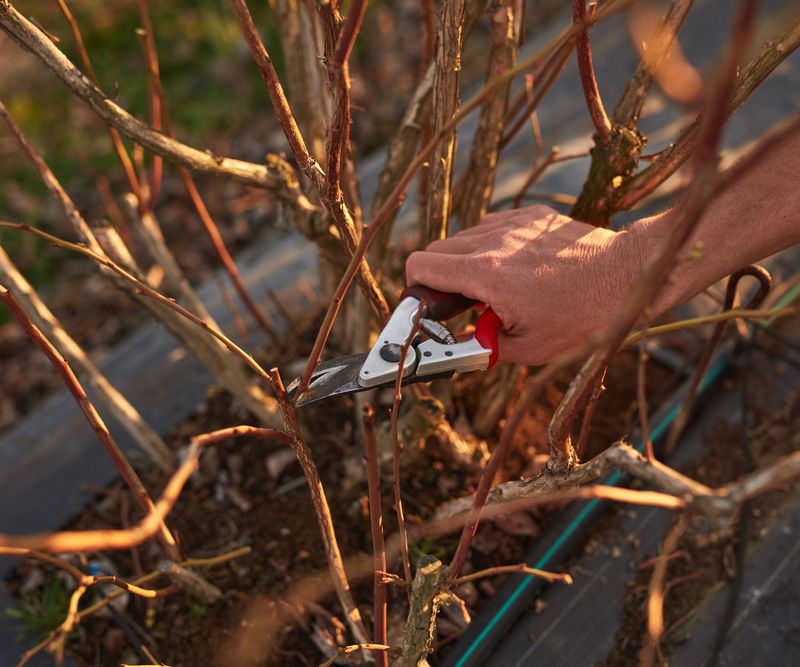
Blueberry bushes that push out lush green growth but deliver fewer berries each season are a familiar frustration for North Carolina backyard growers. Selective pruning during the dormant season is one late-winter task that can genuinely help when crowding or an overloaded cane structure is part of the problem.
But leafy growth and thin harvests have several possible causes, and pruning alone cannot fix all of them. Understanding what pruning can and cannot do is the first step toward getting more from your bushes this year and for years ahead.
A leafy bush can have several explanations
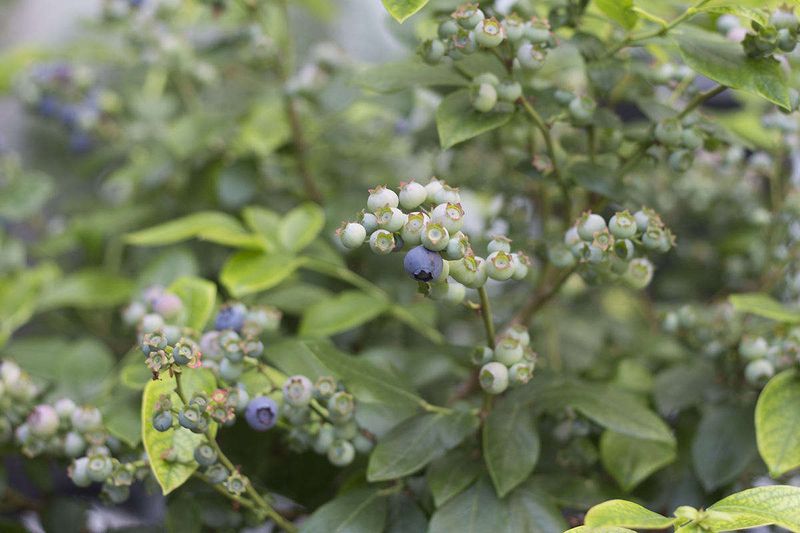
Seeing a blueberry bush covered in leaves while the berry count drops can feel like a mystery, but the scene does not point to a single cause. An overloaded, crowded, or aging mature bush is one possible explanation for small berries or declining productivity, but lush foliage alone does not diagnose that condition.
Several other factors can tip the balance toward leaves and away from fruit.
Blueberries form flower buds on wood that grew the previous season, so the quality and position of last year’s shoots directly shapes this year’s crop. When a mature bush carries too many weak, crowded, or poorly positioned canes, selective pruning can remove that excess growth, open the center, and encourage the vigorous replacement canes that carry better fruit the following year.
NC State Extension’s small-fruits handbook recommends dormant-season pruning as a standard annual practice for mature bushes, with the goal of balancing crop load and preserving productive wood rather than maximizing the number of buds left on the plant.
Pruning can improve crop balance and potentially improve berry size and future productivity when crowding or overcropping is the relevant cause. What it cannot do is correct unsuitable soil pH, chronic shade, drought stress, pollination failure, a cultivar poorly matched to your region, spring freeze injury, or active disease.
NC State’s fertilizer guidance also warns that too much nitrogen can push excessive shoot growth and reduce flowering, so a leafy bush may reflect a fertilizer habit rather than a pruning gap.
Shade, drought, single-variety plantings, poor pollination conditions, and cultivar-region mismatch are all documented causes of weak fruit set in southeastern blueberry plantings. Pruning is one useful management tool in a broader diagnostic picture, not a guaranteed explanation or a guaranteed cure.
Use the dormant-season window, not a statewide deadline
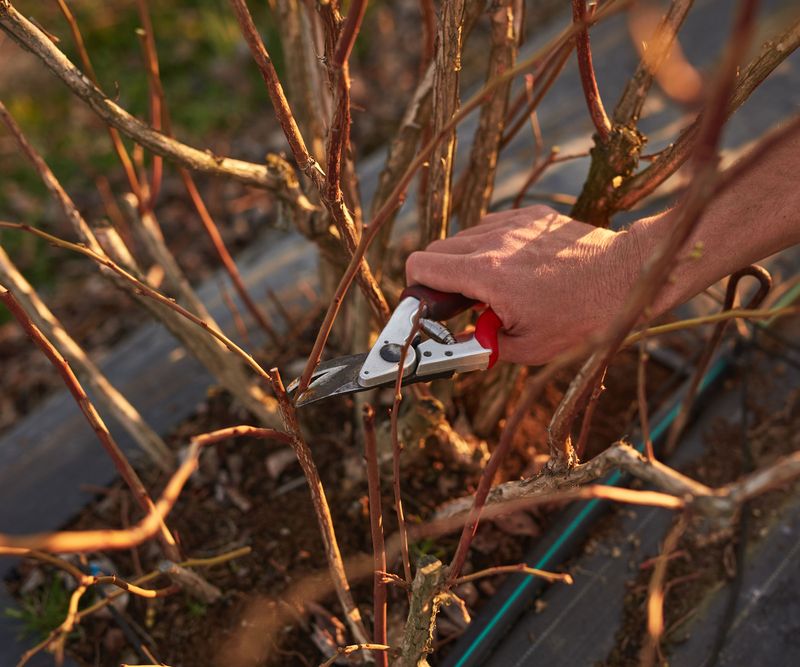
Timing dormant pruning around a single statewide calendar date is a recipe for mistakes because North Carolina stretches from the warm, sandy Coastal Plain to the cold ridges of the Blue Ridge Mountains. What matters is the plant’s condition, not the date on the calendar.
Prune while the bush is still dormant and leafless, generally during winter, and aim to finish before substantial spring growth gets underway.
NC State’s blueberry production guide lists November through March as the winter pruning window and notes that late winter is especially well-suited for mountain growers. Pruning later in the dormant season in the mountains can help growers spot cold injury that appeared after an early-winter cut, so damage is removed rather than left to decay or spread.
In warmer parts of the state, including much of the Piedmont and the Coastal Plain, buds may begin swelling noticeably earlier than in mountain locations. Once substantial green growth is pushing, structural pruning becomes less practical and removes actively growing tissue.
Watching the bush rather than the calendar gives a more reliable signal.
A practical approach for most North Carolina growers is to plan pruning toward the end of the dormant period, while stems are still bare but buds are beginning to swell slightly, and to adjust that window earlier or later depending on local conditions and the cultivar being grown. Southeast IPM guidance reinforces that dormant timing varies by location and year, and that flexibility within the dormant window is more important than hitting a fixed date.
Start at the base and open the bush from within
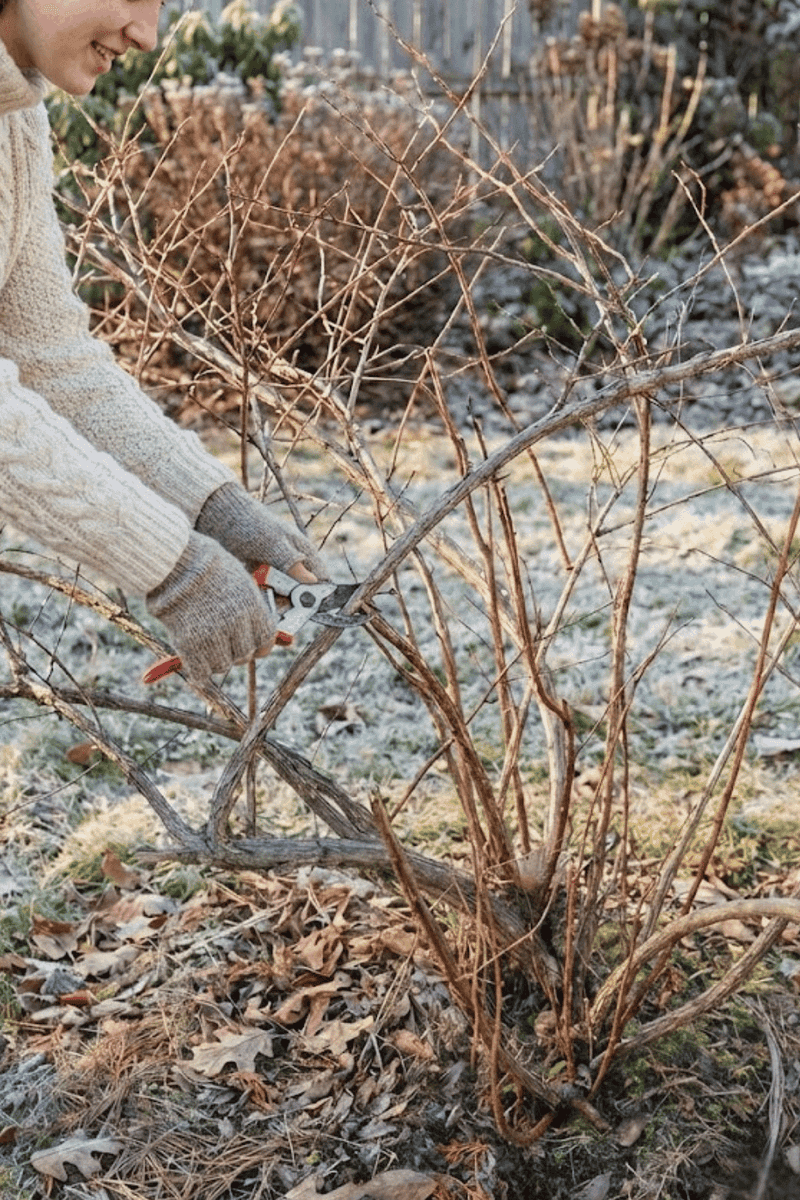
Before touching the upper canopy of a blueberry bush, work from the ground up. Beginning at the base gives a clearer picture of the plant’s structure and prevents you from cutting away healthy upper wood before you have seen what is happening below.
The first pass removes growth that weakens the bush, blocks airflow, or positions fruit where it contacts soil.
Pull away any suckers or shoots arising well outside the main crown. These draw resources from the central plant without contributing well-positioned fruiting wood.
Next, look for canes that angle out at a low angle close to the ground, crossing canes that rub against each other and create bark wounds, and any branches so close to the soil that fruit would rest on it at harvest time. Removing these opens the interior, reduces the chance of fungal problems fueled by poor air circulation, and makes the rest of the pruning work easier to see and execute.
NC State’s small-fruits guidance identifies this basal cleanup as the starting point of a proper annual pruning sequence, not an optional finishing touch.
Selective removal is the goal here, not indiscriminate shortening of every cane or a fixed percentage of the whole bush. Cutting back the tips of canes without removing the problematic wood at the base leaves the structural problems in place while reducing next season’s fruiting sites.
Clean cuts at the point of origin, flush against the parent cane or at ground level, leave no stub for disease to enter.
For large canes at the base, long-handled loppers give cleaner cuts with less effort than hand pruners. Using the right tool for the diameter of the wood reduces tearing and keeps cuts precise, which matters most when working close to the crown where healing is slowest.
Renew old canes and keep the strongest fruiting wood
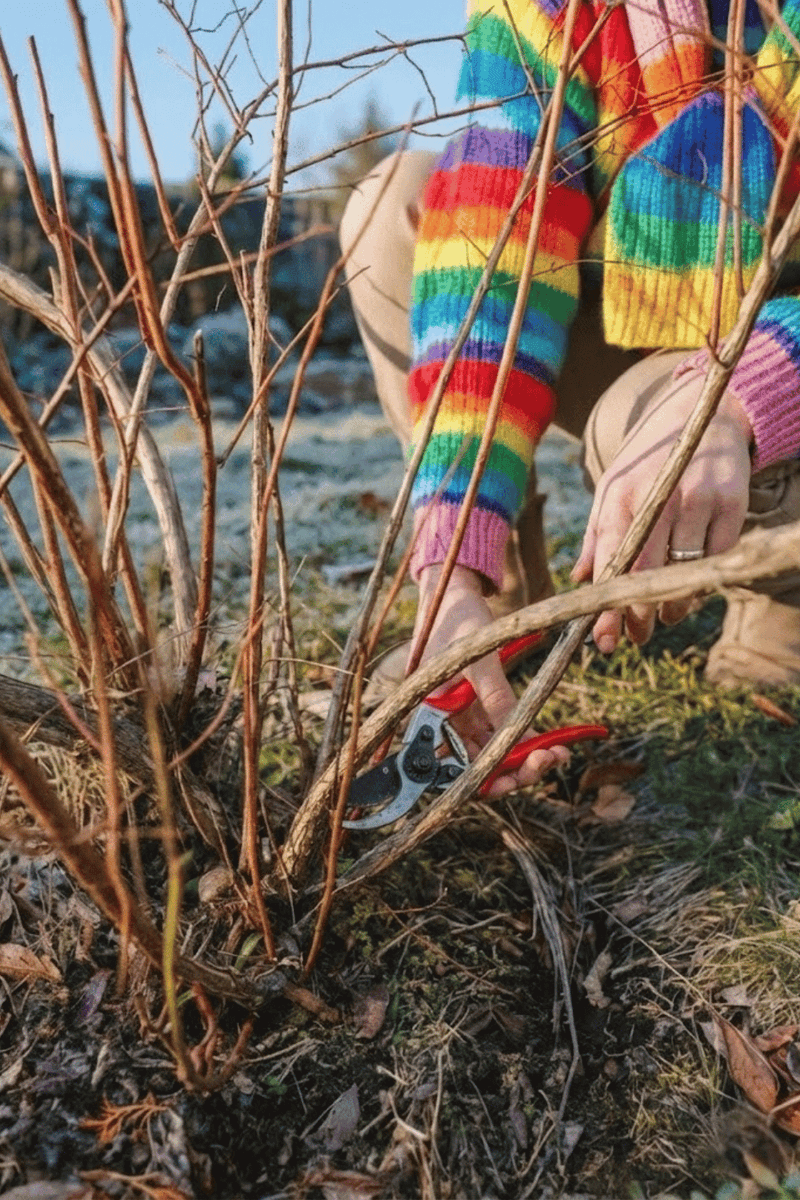
Color and texture tell a useful story about a blueberry cane’s age and productivity. Older wood tends to be gray, rough, and heavily branched, while newer vigorous canes typically show smoother bark with a reddish or greenish tint.
Learning to read those signals helps you decide which canes earn a place in the renewed bush and which ones have given most of what they can give.
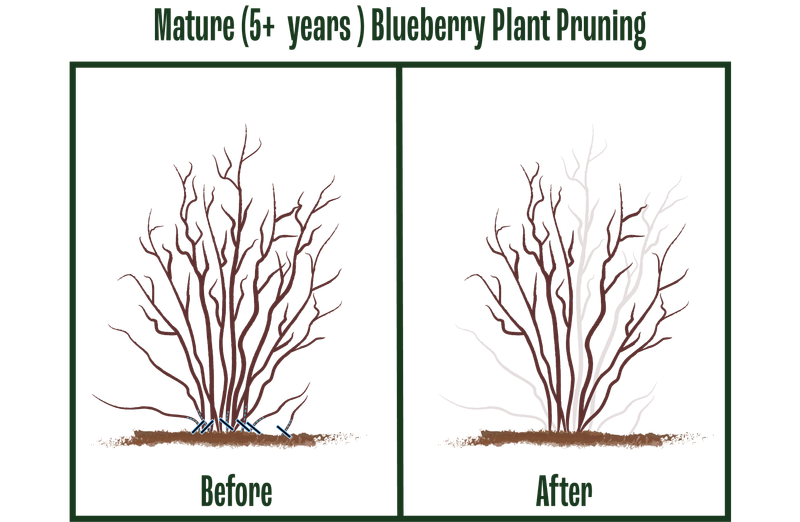
For a mature bush, removing one to three of the largest, oldest canes from the center each dormant season keeps the plant cycling through productive wood without gutting its structure in a single season. NC State’s home garden blueberry guide recommends maintaining a mix of cane ages so vigorous young canes are always coming up behind the older ones being phased out.
Removing one or two of the most spent canes each year is a gentler renewal than a sudden dramatic cut, and it keeps the bush productive through the transition.
After removing the oldest canes, turn attention to what NC State calls matchstick wood: the fine, repeatedly branched, twiggy growth that accumulates on older wood and at the tips of canes that have been heading-cut in previous years. NC State’s small-fruits handbook notes that this type of growth tends to carry many small fruiting sites, producing clusters of undersized berries rather than fewer, larger, well-developed fruit.
Selectively thinning the most crowded matchstick growth reduces the number of competing fruit sites and directs resources toward the stronger ones that remain.
The goal is not to remove all existing fruiting wood. A mature bush still needs to carry a reasonable crop this season.
The aim is to preserve a mix of cane ages and stronger fruiting positions while clearing out the weakest and most congested wood. Blanket removal of one-third of the entire bush regardless of cane age, vigor, or position does not serve that goal as well as thoughtful, selective cuts do.
Thin flower buds according to the plant’s age and vigor
Flower-bud thinning is a separate action from cane pruning, and it serves a different purpose. Removing canes changes the plant’s structure and future shoot production.
Removing flower buds reduces the crop load on the wood that remains. Both matter, but they work on different timescales and require different decisions.
When a mature blueberry bush sets more flower buds than it can support well, the result is often a large number of small, poorly developed berries and canes that finish the season too depleted to set a strong bud load for the following year. NC State’s small-fruits handbook recommends removing at least one-third of flower buds as a general management target for mature bushes.
For mature highbush types specifically, NC State’s home garden guide suggests reducing the flower-bud load by about 50%. These are practical targets, not universal rules that apply equally to every cultivar, every age class, or every level of plant vigor.
Rabbiteye bushes, which are broadly adapted to the Piedmont and Coastal Plain, and highbush types, which are more suitable for colder mountain sites, do not receive identical treatment. NC State’s blueberry production guide for local sales operators notes that detailed fruiting-shoot thinning is more critical for highbush types, while rabbiteyes may need more attention to excessively tall or limber shoots and suckering.
Adjusting your approach to the type of bush in your yard gives better results than applying a single formula.
Young and newly planted bushes follow a different rule entirely. University of Georgia’s home garden blueberry guide recommends removing all flowers or flower buds during the first growing season so the plant puts its energy into root and shoot establishment rather than fruit.
A vigorous second-year plant may carry a limited crop, but the priority remains structural development. Research on southern highbush blueberries supports the importance of balancing flower and leaf buds for long-term productivity, though outcomes vary by cultivar and growing system.
Deliberately reducing crop load on a mature bush is not a failure of nerve; it is a choice to trade some fruit this season for a healthier, more productive plant next year.
UGA’s blueberry fruit set and development guide reinforces that overcropping stresses the plant and reduces the quality of both the current crop and the following year’s bud set, which is the mechanism behind the slow decline many growers notice in unpruned, overloaded bushes.
Check the site before blaming the pruning
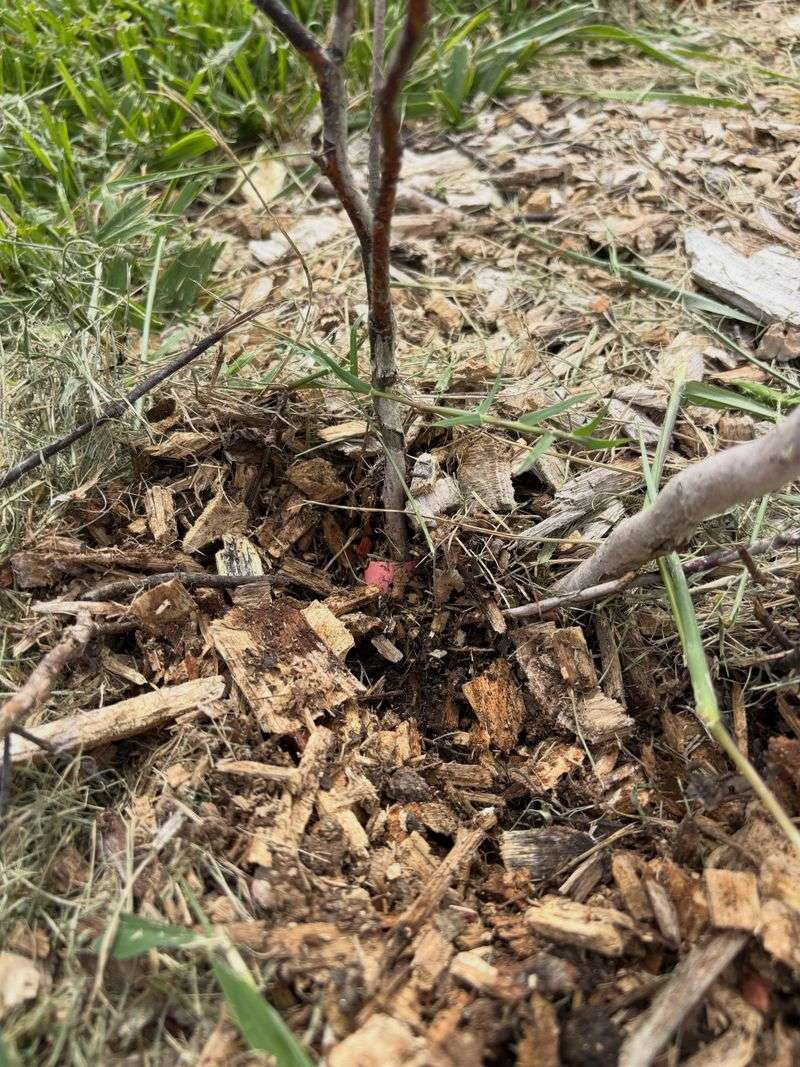
Pruning a bush carefully and on time is satisfying, but it will not rescue a plant that is fighting the wrong soil, the wrong location, or a missing pollinator. Running through a short site checklist before the growing season starts can save a full year of waiting to find out whether the pruning helped.
Cultivar fit is the first question. Rabbiteye blueberries are broadly adapted to the Coastal Plain and Piedmont but are not recommended for higher mountain sites where winters are colder.
Highbush types handle mountain conditions better. NC State’s blueberry production guide is explicit that rabbiteye and highbush types are not interchangeable across the state’s regions.
Growing the wrong type for your elevation and climate can limit production regardless of how carefully you prune.
Pollination is the second check. Rabbiteye bushes in particular need at least two compatible cultivars with overlapping bloom periods nearby.
A single bush, or two cultivars whose bloom windows barely overlap, can produce abundant flowers that set almost no fruit. NC State’s small-fruits handbook makes cross-pollination a standard requirement, not an optional upgrade.
Soil pH deserves a test before any amendment is applied. Blueberries need acidic conditions, generally in the pH 4.5 to 5.0 range, and many North Carolina home soils are too alkaline for optimal growth.
High pH causes poor nutrient uptake and iron chlorosis. NC State’s soil testing guide explains how to collect and submit a sample before adding sulfur, lime, or fertilizer.
Adding lime to a soil that is already at the wrong pH for blueberries can make the problem significantly worse.
Excess nitrogen deserves its own mention. NC State’s fertilizer guide for trees and shrubs warns that overfertilizing with nitrogen can promote excessive shoot growth and reduce flowering, which means a leafy, low-fruiting bush may be overfed rather than underpruned.
Do not add nitrogen fertilizer to a leafy bush without a test or clear evidence of deficiency.
Shade, drought, disease-related fall leaf loss, and spring freezes round out the list. Published research on blueberry defoliation documents that premature fall leaf loss reduces flower-bud formation and can cut the following year’s yield, so a bush that lost leaves early last September may carry a thin crop this summer regardless of how well it was pruned.
NC State’s freeze damage guide notes that spring freezes can injure flowers and developing ovules even when outward damage is not immediately visible, and NC State’s leaf disease publication covers the foliar pathogens that can cause early defoliation in the first place. Pruning is one tool in a larger diagnostic kit, and the site often tells you more than the canes do.
Use clean tools and skip routine sprays
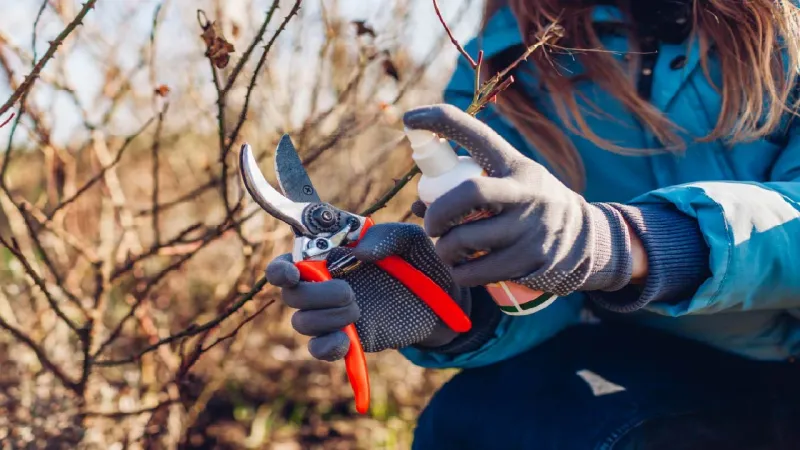
Sharp, clean tools make every pruning cut safer for the plant and easier for the grower. Ragged cuts from dull blades tear bark rather than slicing it cleanly, leaving larger wounds that heal more slowly and are more vulnerable to infection.
Matching the right tool to the cane diameter reduces tearing and keeps the work precise.
NC State’s small-fruits handbook recommends long-handled loppers for large canes and hand pruners for smaller finishing cuts. Cuts should be clean and should not leave stubs, because stubs die back and create entry points for decay and disease.
Finishing each cut flush against the parent cane or at ground level is a small habit that pays off across the life of the plant.
When moving between bushes that show signs of disease or between obviously infected wood and healthy wood on the same plant, sanitize tools between cuts. NC State’s organic gardening handbook recommends cleaning and disinfecting tools as part of routine disease prevention.
NC State’s scale insect guide for blueberry also advises sanitation when managing pest-affected material. Pruned material from diseased canes should be bagged and disposed of rather than added to a compost pile, where pathogens may survive.
Resist the temptation to coat pruning cuts with neem oil or other oil-based sprays as a precaution. NC State’s blueberry leaf disease publication specifically notes that oil-based sprays, including neem products, are not recommended for blueberry disease management because they can damage the protective wax layer on leaves and increase spotting.
Similarly, NC State’s insect control guidance warns against applying bee-toxic pesticides to blooming plants that attract pollinators. Once flowers open, any pesticide application should be evaluated carefully against its label and all pollinator restrictions before use.
Use this winter’s pruning to guide next year’s diagnosis
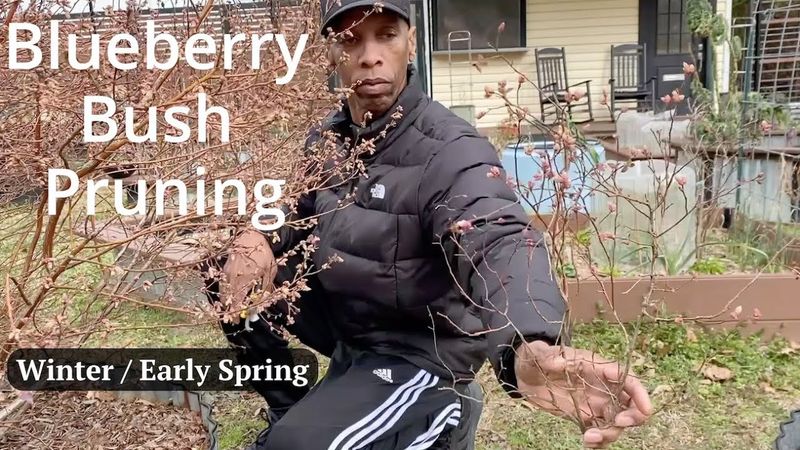
Pruning a dormant blueberry bush during the regionally appropriate late-winter window is a productive annual habit, but the real value builds over multiple seasons. Each time you work through a bush, you learn something about how it grew the previous year: which canes stayed vigorous, where crowding crept back in, and whether the flower-bud load looks proportionate to the plant’s size and health.
After this winter’s pruning, track what you observe through the growing season. Note whether bloom overlap between your cultivars looks adequate, whether the fruit that sets develops well or drops early, and whether leaves stay on the plant into fall or begin dropping prematurely.
NC State’s leaf disease guide can help you connect early fall defoliation to specific pathogens that reduce next year’s bud set, giving you a more complete picture than pruning alone provides. NC State’s home garden blueberry guide and the small-fruits handbook together offer a full-season reference for matching observations to management decisions.
The goal is balance: a manageable crop on healthy wood, with enough leaf area and cane vigor to set a solid bud load for the following year. A well-pruned bush that still delivers a thin harvest is telling you to look beyond the pruning shears.