
The Reason North Carolina Gardeners Are Tucking Lemongrass Right Beside The Patio This Summer
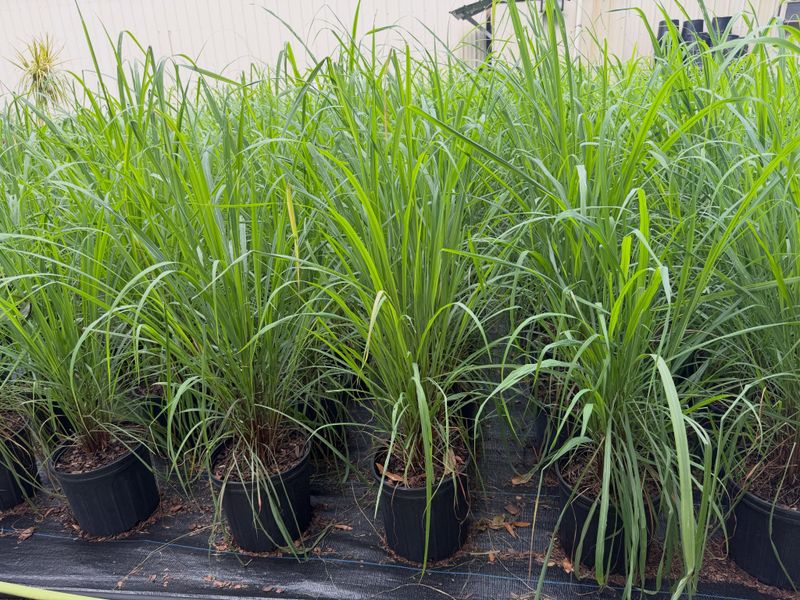
A single potted plant is showing up beside patios all over the North Carolina Piedmont and Coastal Plain this summer, and it smells like fresh lemonade every time the breeze moves through it. Culinary lemongrass, Cymbopogon citratus, grows into a tall, fountain-shaped clump that looks good, smells incredible, and hands you ingredients for dinner without a trip to the store.
Gardeners who try it once tend to keep it right where they planted it, and for good reason. This article explains exactly what the plant offers, how to grow it in a container through a Carolina summer, and where its popular mosquito reputation falls short of the facts.
Lemongrass earns its place beside the patio
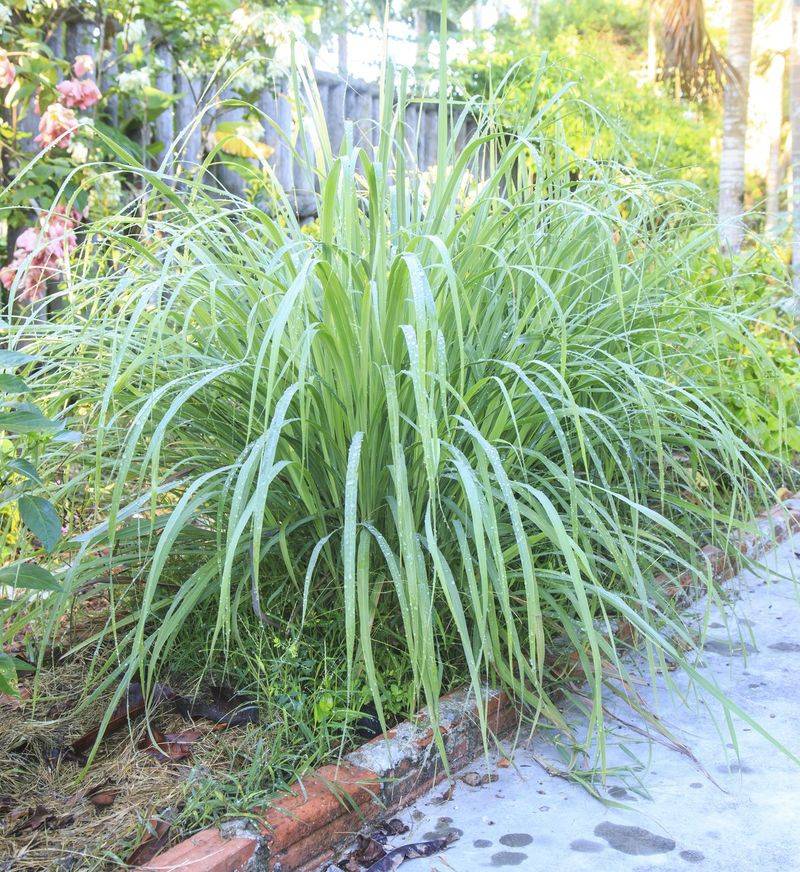
Pull a leaf from a lemongrass clump and rub it between your fingers, and the sharp, clean scent of lemon hits you immediately. That sensory payoff is one of the clearest reasons gardeners keep this plant within arm’s reach of where they sit, eat, and cook outdoors.
The clump grows in a graceful fountain shape, with long, arching blades that add soft vertical texture to a patio edge without crowding the space.
Mature plants reach roughly 2 to 4 feet tall and 2 to 3 feet wide, according to the NC State Extension Gardener Plant Toolbox. That scale fits a large container beautifully, making it a practical choice for a patio corner or the edge of an outdoor dining area.
The plant fills space without overwhelming it, and the fountain form stays attractive through the whole growing season.
Beyond looks and fragrance, proximity matters for another reason: the lower stalks are edible. Keeping the pot beside the patio means you can step outside during meal prep, snap off a stalk, and bring it straight to the kitchen.
That convenience is the real argument for placing this plant next to where you spend summer evenings rather than tucking it into a back garden bed.
The plant thrives in the heat that North Carolina summers deliver reliably. It does not ask for much fussing once it is established in a sunny spot with consistent moisture.
For gardeners who want a container plant that earns its space through multiple contributions at once, lemongrass is hard to argue with.
Choose culinary lemongrass, not a citronella look-alike
At a garden center in July, the labels can get confusing fast. Plants marketed as “mosquito plant,” “citronella plant,” or even just “lemongrass” sometimes turn out to be entirely different species.
Knowing which plant you are actually buying matters before you get it home.
Culinary lemongrass is Cymbopogon citratus, a clumping grass native to India and Sri Lanka. It is not the same plant as citronella grass, which is commonly Cymbopogon nardus or a closely related Cymbopogon species.
The two belong to the same genus and share a similar lemon-forward scent, but they are distinct plants with different uses. Citronella grass is the commercial source of citronella oil; culinary lemongrass is what cooks actually use in the kitchen.
The confusion compounds with a third plant: the so-called citronella geranium, a scented geranium that is sometimes sold in hanging baskets under a “mosquito plant” tag. It looks nothing like a grass and has no established culinary use.
Gardeners who buy it expecting lemongrass stalks for cooking will be disappointed.
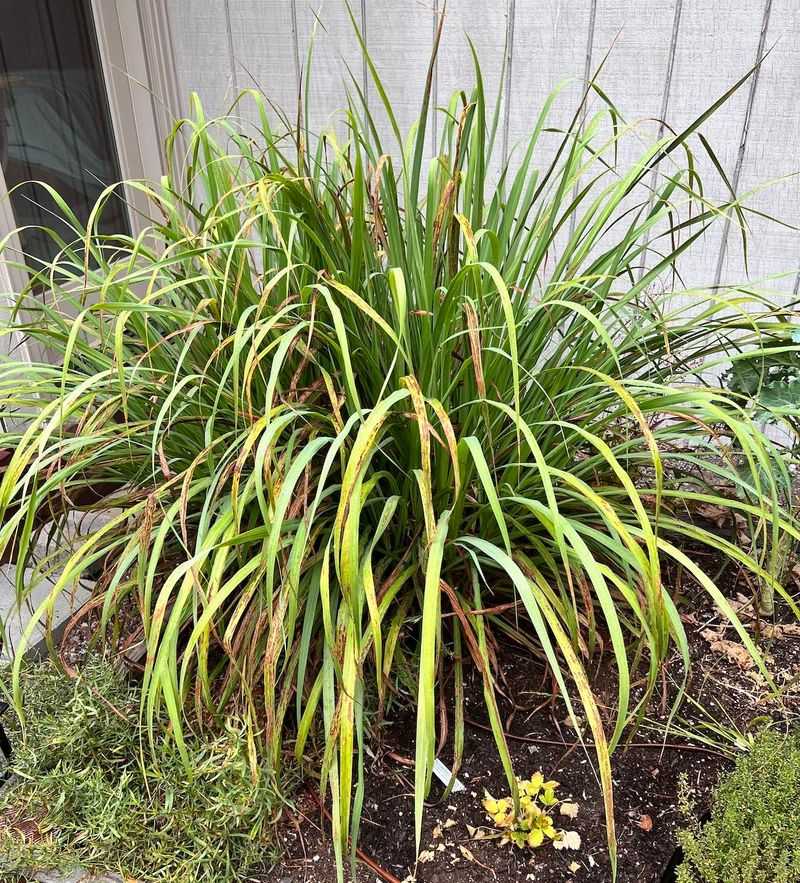
When shopping, look for the botanical name Cymbopogon citratus on the tag. The plant should look like a grass with flat, long, gray-green blades and a slightly bulbous base at the lower stalks.
Rub a leaf gently and you should get a strong, clean lemon scent rather than a rosy or camphorous one. If the tag says only “citronella” without a species name, ask the nursery staff for clarification before purchasing.
Getting the right plant from the start saves frustration and makes every other step in this article actually apply to what is sitting on your patio.
Use a sunny container to match North Carolina’s seasons
North Carolina’s regional variation matters more than most gardeners expect when it comes to lemongrass. NC State Extension lists Cymbopogon citratus for the Coastal Plain and Piedmont, rating it for zones 8b through 11b.
The Mountain region is not included in that range, which means gardeners in Asheville or Boone should treat lemongrass as a warm-season container plant rather than a landscape perennial, moving it indoors well before temperatures drop.
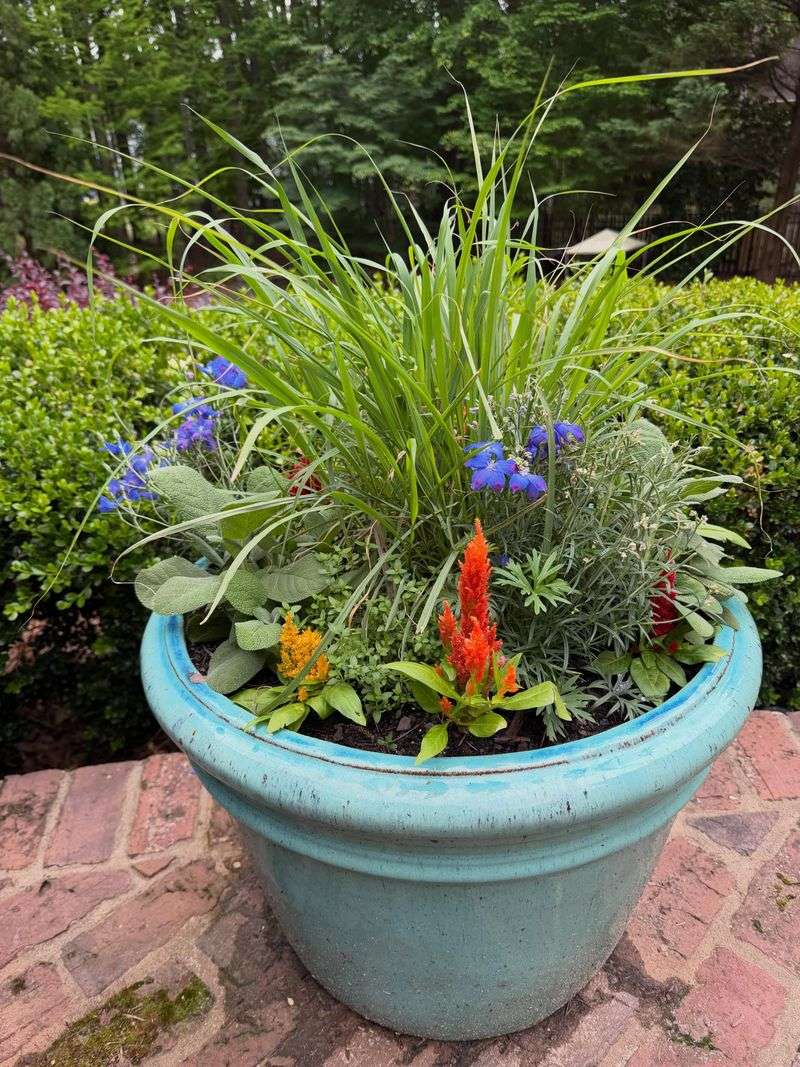
Coastal Plain and Piedmont gardeners have more flexibility, but a container is still the smartest setup across the state. A pot gives the plant room to develop its full fountain shape while preserving the option to relocate it when cold weather arrives.
Choose a container large enough to comfortably hold a clump that can reach 2 to 4 feet tall and 2 to 3 feet wide, with drainage holes at the bottom to prevent waterlogged roots.
Sun is non-negotiable. Lemongrass needs about six or more hours of direct light each day to grow vigorously and produce the aromatic oils that make the leaves worth brushing past.
A south- or west-facing patio edge typically works well. Shaded spots against a house wall tend to produce weaker, leggier growth with less fragrance.
Soil should drain freely but stay moderately moist. Container mixes dry out faster than garden beds, especially during a Piedmont August when temperatures regularly push into the nineties.
Position the pot where you will notice it daily so moisture checks become routine rather than an afterthought. A plant sitting in full Carolina sun in a clay pot on a concrete patio can go from moist to bone dry in a single hot afternoon, so checking the soil every day or two during peak summer is a reasonable habit to build early in the season.
Build the pot around sun, drainage, and steady moisture
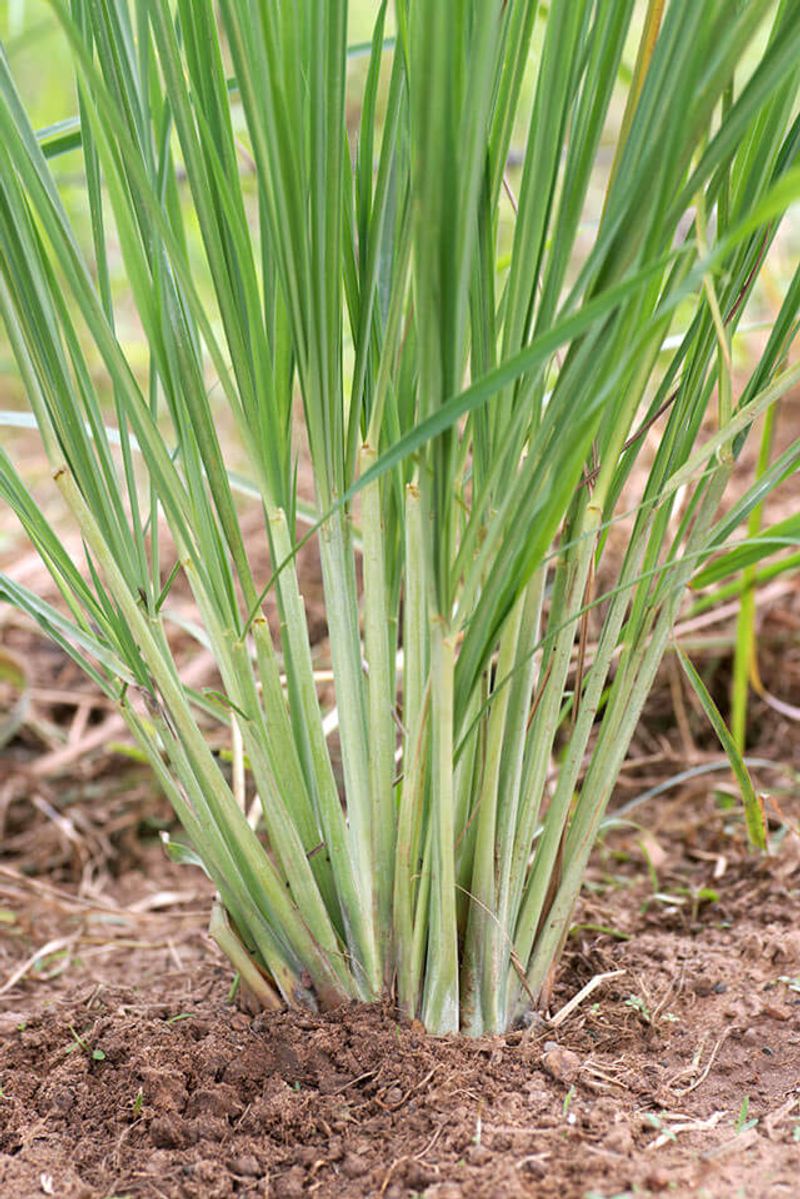
Timing the planting correctly makes a real difference. Wait until the danger of frost has fully passed before moving lemongrass outside or transplanting it into a container.
In most of the North Carolina Piedmont and Coastal Plain, that window opens reliably in mid-April, though mountain gardeners should wait until late May or early June to be safe. Starting too early and catching a late frost can set the plant back significantly.
Select a container with drainage holes at the bottom – this is not optional. Lemongrass roots sitting in standing water will rot, and a soggy container undoes all the work of choosing good soil.
A well-draining potting mix works better than heavy garden soil in a pot. Fill the container so the base of the plant sits at roughly the same depth it occupied in its nursery pot.
Spacing depends on what size clump you want at maturity. The NC State Extension Gardener Plant Toolbox notes a planting-space range of roughly 12 inches to 3 feet, depending on desired mature size.
A smaller container with tighter spacing produces a compact accent; a larger container with more room allows the full fountain shape to develop. Neither approach is wrong – it depends on how much patio real estate you want to give the plant.
One safety note that rarely appears on plant tags: mature lemongrass leaf blades can be sharp along the edges. RHS growing guidance recommends wearing gloves when dividing, cutting back, or working with a large clump.
A pair of leather or thick fabric garden gloves takes a few seconds to put on and prevents the kind of small cuts that sting for days. Keep gloves nearby whenever you plan to divide the clump or trim back old growth at the end of the season.
Harvest the stalks where outdoor cooking happens
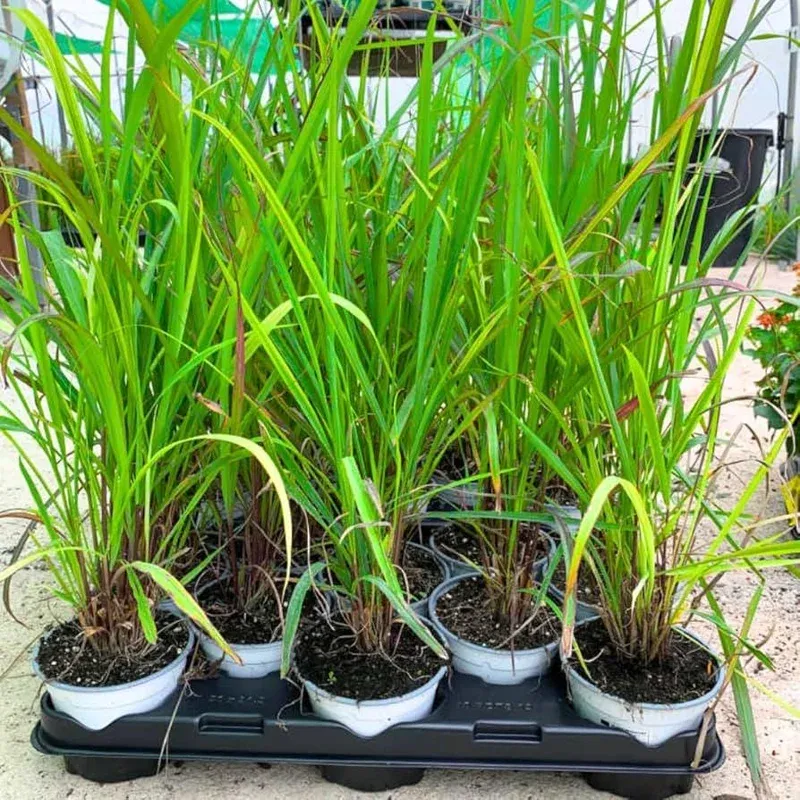
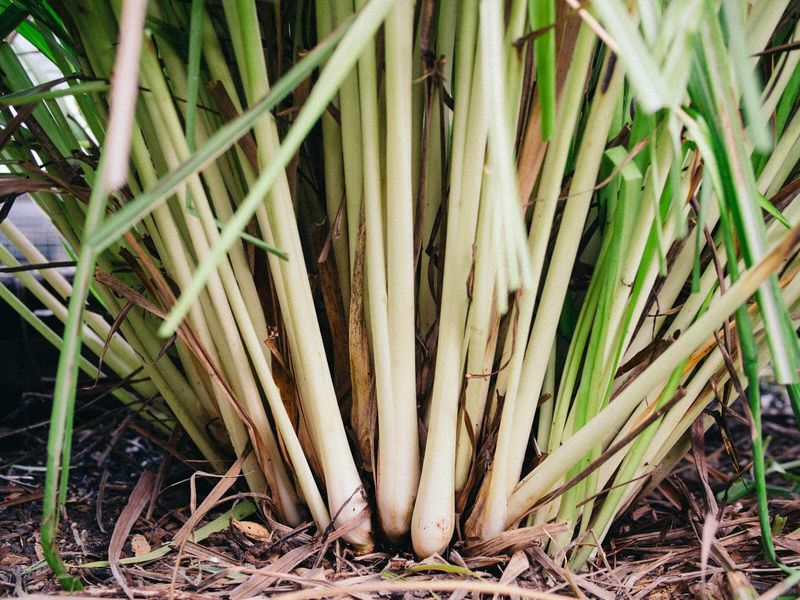
Keeping lemongrass beside the patio is partly a practical kitchen decision. The thick, swollen lower stalks are the part used in cooking, and having the plant within a few steps of the grill or outdoor prep area makes that harvest genuinely convenient.
According to the NC State Extension profile for Cymbopogon citratus, the plant is used in Thai, Vietnamese, Cambodian, and other Southeast Asian cuisines, where the lower stalks contribute a bright, citrusy flavor to soups, curries, marinades, and grilled dishes.
Harvest by cutting or twisting off outer stalks at the base when they are thick enough to feel substantial. Peel away the tough outer layers to reach the more tender inner portion, which is the part most recipes call for.
The leaves, while too fibrous to eat directly, work well steeped in hot water for a light lemon-flavored tea or added to a pot of simmering broth for fragrance.
Penn State Extension’s guide to lemon-scented herbs notes that lemongrass leaves can also contribute fragrance in dried arrangements and sachets. That versatility means the plant earns its spot even on nights when you are not cooking a stir-fry.
The scent alone, released when guests brush past the clump on the way to a patio chair, adds something to the outdoor experience that a purely decorative plant cannot match.
Placing the pot near where outdoor meals happen is not just convenient – it connects the garden to the table in a way that makes the growing season feel worthwhile. A plant that delivers texture, fragrance, and usable ingredients from the same container beside your patio is genuinely pulling its weight through the summer.
Separate lemongrass’s scent from mosquito protection
Lemongrass has a strong mosquito reputation, and the story behind it is more complicated than most gardening social posts let on. Studies have examined lemongrass oil, extracts, topical formulations, and concentrated blends under laboratory and field conditions – and some of those results are genuinely promising.
A 2002 study on lemongrass oil formulations found repellent activity under tested concentrations, but that work involved a formulated topical product, not a living plant sitting in a pot outdoors.
A separate field study tested a blend of lemongrass and cinnamon bark oils as a spatial repellent, finding measurable results in that specific combination and setting. That field study is evidence about a tested oil blend under field conditions – not proof that a potted lemongrass plant alone creates a protective zone around a patio.
The distinction matters because the jump from “this oil blend worked in a study” to “put the plant by your chair and skip the bug spray” is not supported by the research.
A controlled evaluation of intact ornamental plants found that lemongrass actually attracted mosquitoes in a laboratory orientation test rather than repelling them. Wind, temperature, mosquito species, plant size, and whether the leaves have been bruised all affect how much aromatic compound reaches the air around the plant and how any given mosquito responds to it.
NC State Extension states plainly that claims for mosquito-repellent landscape plants placed around a porch or deck are not supported by scientifically based tests. Plants or devices that emit repellent chemicals are also unlikely to work well in high winds, which are common on open Carolina patios in summer.
For real protection, CDC recommends EPA-registered repellents containing active ingredients such as DEET, picaridin, IR3535, or oil of lemon eucalyptus/PMD, used according to the label. Note that lemongrass oil is not equivalent to oil of lemon eucalyptus – CDC distinguishes registered OLE/PMD products from unregistered pure essential oils.
Removing or covering containers that hold standing water weekly is also a core household control measure that costs nothing and actually works.
Overwinter the plant and place it responsibly
When nighttime temperatures start dropping toward freezing, the container beside the patio needs to come inside. NC State Extension specifically advises overwintering lemongrass as a container plant and notes that it should not be allowed to dry out during that period.
A bright indoor location – a south-facing window or a sunroom – gives the plant enough light to hold on through winter without active growth. Water it less frequently than in summer, but do not let the root zone go completely dry for extended periods.
Mountain region gardeners should move the container indoors earlier than Piedmont or Coastal Plain gardeners, since temperatures in the western part of the state can drop hard and fast in September and October. Treat lemongrass as a warm-season guest in those areas rather than a plant that can fend for itself through a mountain winter, even in a sheltered spot.
On the question of wildlife and ecosystem value, lemongrass is a non-native plant originally from India and Sri Lanka. The NC State profile notes that it does not flower, and the reviewed sources do not document it as a native-pollinator plant or a host plant for North Carolina wildlife.
Gardeners who want documented ecosystem benefits – supporting native bees, providing host plants for butterflies, or feeding birds – will get more from native flowering plants such as coneflowers, native asters, or wild bergamot. That is not a criticism of lemongrass as a culinary accent; it is simply an honest description of what the plant does and does not contribute to the local ecosystem.
Pet owners need one clear piece of information before placing this plant anywhere on the property. ASPCA lists Cymbopogon citratus as toxic to dogs, cats, and horses, with essential oils and cyanogenic glycosides identified as toxic principles.
Keep the pot where pets cannot chew the leaves or stalks, and never apply concentrated lemongrass essential oil to animals. With that precaution in place, the plant earns a long-term spot beside the patio for its scent, its form, and the stalks it puts within reach of anyone who loves to cook outdoors.
The mosquito problem still needs bug spray and a dry yard – but the lemongrass handles everything else remarkably well.